Category Archives: book reviews

#BookReview ‘How to be Both’ by Ali Smith #art #historical

I admire Ali Smith, own quite a few of her books, so it was without hesitation that I stared to read How to be Both knowing it is an ‘experimental’ novel, a twisting, spiralling tale which has been shortlisted, longlisted, and won awards up the ying-yang. Ali SmithI wasn’t prepared for the first 20-30 pages [it’s difficult to be accurate on a Kindle] which completely lost me. Complete non-sequiturs, verse, stream of consciousness. Rambling, with little context. If it had been an unknown author I would have run out of patience, but it’s Ali Smith so I stuck with it and fell into the story of Francescho. The writing is beautiful, atmospheric, still a little short on fact for me: a child [boy or girl?] with artistic talent, whose father is a skilled brickmaker. The story of the child Francescho twists and twirls with that of the adult Francescho, a Renaissance painter of frescoes, who in his own quiet way challenges the status quo.
If you love books about artists, you will enjoy this one. In a brothel, Franchescho paints the women rather than laying with them, and becomes known for this. As he paints, he remembers the words of ‘the great Alberti’. “The great Alberti says that when we paint the dead, the dead man should be dead in every part of him all the way to the toe and finger nails, which are both living and dead at once : he says that when we paint the alive the alive must be alive to the very smallest part, each hair on the head or the arm of an alive person being itself alive : painting, Alberti says, is a kind of opposite to death…”
Just at the point when you wonder where Francescho’s story is going, Part Two starts. And what a contrast. 21st century. George is a modern-day teenager, grieving for her mother, remembers a visit they made to Italy because her mother was drawn to see a fresco by an unknown artist. There, they discover elements of the fresco which we saw Franchescho paint, their modern-deay interpretation, and Franchescho’s reason for painting them.
Through George’s eyes, and through her conversations with Mrs Rock, the school counsellor, we see the binary nature of the world: boy/girl, truth/lies. Is this the ‘both’ of the title? Mrs Rock says a truth teller is “usually someone with no power, no social status to speak of, who’d take it upon themselves to stand up to the highest authority when the authority was unjust or wrong, and would express out loud the most uncomfortable truths, even though by doing this they would probably even be risking their life.”
This is a book to read and read again. Complex, challenging and beautiful, this is not an easy read, it demands concentration, but it is worth it.

Click the title to read my reviews of other books by Ali Smith:-
AUTUMN #1SeasonalQuartet
WINTER #2SeasonalQuartet
SPRING #3SeasonalQuartet
SUMMER #4SeasonalQuartet
COMPANION PIECE #5SeasonalQuartet

If you like this, try:-
The Miniaturist by Jessie Burton
The Signature of All Things by Elizabeth Gilbert
‘Girl in Hyacinth Blue’ by Susan Vreeland

And if you’d like to tweet a link to THIS post, here’s my suggested tweet:
#BookReview HOW TO BE BOTH by Ali Smith http://wp.me/p5gEM4-1HE via @SandraDanby

#BookReview ‘The Betrayal’ by Laura Elliot #family #secrets #mystery

The Betrayal by Laura Elliot is a well-written study of a teenage relationship which, when it falters and is left to fester into adulthood, can mess up a whole family.Laura Elliot

Slow-moving for me until towards the end, its billed as a ‘gripping novel of psychological suspense’ but to me seemed more of a family drama. At its heart is an examination of the marriage breakdown between two empty-nesters, Jake and Nadine, who are then messed around by Karin, the ex-friend from hell. Yes, there is a stalker. Yes, there are accidents and co-incidences. There are some colourful sections to Jake and Nadine’s viewpoints which I enjoyed reading – the band Shard, Alaska, the container village – but these seemed like diversions when I spent a long time waiting to find out what the actual betrayal was. Perhaps an insight into Karen’s mind would have helped to balance Jake and Nadine’s story.

Read my review of STOLEN CHILD, also by Laura Elliot.

If you like this, try:-
The Accident‘ by CL Taylor
Butterfly Barn by Karen Power
‘The House at the Edge of the World’ by Julia Rochester

And if you’d like to tweet a link to THIS post, here’s my suggested tweet:
#BookReview THE BETRAYAL by Laura Elliot http://wp.me/p5gEM4-1K1 via @SandraDanby

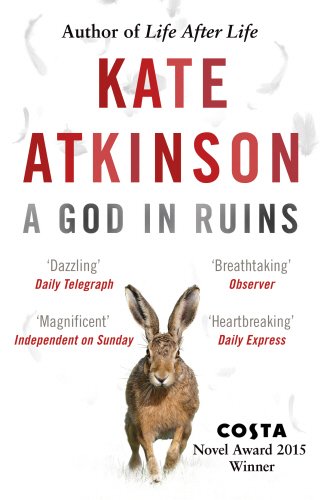
#BookReview ‘A God in Ruins’ by Kate Atkinson #WW2

If the best recommendation for a novel is that, once you finish it, you want to start reading it all over again, then this is my recommendation for A God in Ruins by Kate Atkinson. The story of Teddy Todd reeled me in until I was reading late into the night.

Kate AtkinsonTeddy is brother to Ursula Todd, who featured in Atkinson’s Life after Life, but this is not a sequel. More a companion piece, one book informs the other but stands up fully on its own. Read either first, it doesn’t matter. This is a book about war – the Second World War, the daily grind of Teddy’s life as a bomber pilot – and the effect this experience has on the rest of his life. War doesn’t happen and then go away, it colours lives and affects them until death, mostly unnoticed or misunderstood by relatives. And so we see Teddy’s life, told in a chopped up manner with excerpts from his childhood, war, early marriage and fatherhood, and as a much-loved grandfather. I don’t think I’m giving much away here to say he survives the war, but Atkinson’s descriptions of his bomber sorties are realistic, we feel the cold, the fear, the near-misses, the camaraderie, the determination and discomfort. Reading the bibliography at the back of the book, her research was thorough but it never shouts out from the page. Details are included because they are important to Teddy’s life, not because they happened.
Kate Atkinson remains a ‘go to’ author for me, I buy every book she writes.

Read my reviews of these other books by Kate Atkinson:-
BIG SKY #5JACKSONBRODIE
DEATH AT THE SIGN OF THE ROOK #6JACKSONBRODIE
LIFE AFTER LIFE
NORMAL RULES DON’T APPLY
SHRINES OF GAIETY
TRANSCRIPTION

… and try the #FirstPara of EMOTIONALLY WEIRD

If you like this, try:-
The Aftermath’ by Rhidian Brook
The Light Years’ by Elizabeth Jane Howard
After the Bombing’ by Clare Morrall

And if you’d like to tweet a link to THIS post, here’s my suggested tweet:
#BookReview A GOD IN RUINS by Kate Atkinson via @SandraDanby http://wp.me/p5gEM4-1IK

My ‘Porridge & Cream’ read: JG Harlond

Welcome to the first in a new series in which one author chooses his/her ‘Porridge & Cream’ book. What is a ‘Porridge & Cream’ book? It’s the book you turn to when you need a familiar read, when you are tired, ill, or out-of-sorts, where you know the story and love it. Where reading it is like slipping on your oldest, scruffiest slippers after walking for miles. Where does the name ‘Porridge & Cream’ come from? Cat Deerborn is a character in Susan Hill’s ‘Simon Serrailler’ detective series. Cat is a hard-worked GP, a widow with two children and she struggles from day-to-day. One night, after a particularly difficult day, she needs something familiar to read. From her bookshelf she selects Love in A Cold Climate by Nancy Mitford. Today I am pleased to welcome historical novelist, JG Harlond.

“My ‘Porridge & Cream’ novels are the House of Níccolò series by the late Scots author Dorothy Dunnett. In the 1970s I became hooked on her 16th century Game of Kings series featuring the exquisite Francis Crawford of Lymond. Then in the 1980s, Dunnett began the 15th century House of Níccolò series about a flawed Flemish apprentice Claes, who becomes a Venetian banker with his own mercenary army; he’s successful in everything but with his family and the one woman he loves. The gifted, but not good-looking Claes/Níccolò, travels the world, seeking answers and finding trouble. JG Harlond

“The first book is Níccolò Rising, which I read while living in Italy and studying part-time in a Medici building. Later we moved to Holland and I was able to visit Bruges then other locations in the European novels. I was intrigued by the sophistication of the financial manoeuvring behind the Medici banking network, and disturbed by how Níccolò’s life is shaped by a father and grandfather, who refuse to accept him. The stories essentially chart how Níccolò seeks his legitimacy while desperately trying to find his own son. In the process he becomes involved in manipulating the international politics of Christendom and beyond.

“I pick up one of these books every year or so. This month it was Race of Scorpions, about the would-be King of Cyprus and the start of the sugar industry. Why – because aspects of the story relate to research for my next Ludo da Portovenere novel (although this is circa 17th century), but mostly because I was stressed by deadlines for other work and I needed a comfort read. What stays in my memory are the settings. I like separating the narrative layers, as well; trying to work out what Níccolò is up to. What pulls me back most though, is the quality of Dunnett’s writing. And yes – as an author, I am very influenced by Dunnett’s plots, characters and prose.”

About The Chosen Man by JG Harlond [Penmore Press] 
JG Harlond

Early spring 1635, a storm and pirate raid interrupt rogue Italian merchant Ludovico da Portovenere’s routine voyage from Constantinople to Amsterdam, disrupting his plans and entangling others in a secret commission that has life-changing, devastating results for all concerned.  Power and intrigue in international politics and the domestic sphere, The Chosen Man is a fictional version of what may have caused the Dutch scandal known as ‘tulip mania’; it also shows us how decisions made in high places can have terrible repercussions on innocent lives.

JG Harlond’s Bio
JG Harlond grew up in the West of England, studied and worked in various countries and is now settled in rural Andalucía, Spain. For the best part of 30 years, she taught in International schools in Europe. Encouraged by positive reviews for her first work of fiction, Jane re-wrote it as The Empress Emerald then completed a linked prequel, The Chosen Man. She is currently working on The Chosen Man trilogy, charting the international espionage and adventures of the charismatic rogue Ludo da Portovenere around 17th century Europe. Jane writes fiction for Penmore Press and educational material for OUP.

JG Harlond’s links
Website
Facebook
Love historical fiction? Find new historical novelists at The Historical Writers Association
JG Harlond’s publisher, Penmore Press

porridge_and_cream__rainyday_111_long


What is a ‘Porridge & Cream’ book? It’s the book you turn to when you need a familiar read, when you are tired, ill, or out-of-sorts, where you know the story and love it. Where reading it is like slipping on your oldest, scruffiest slippers after walking for miles. Where does the name ‘Porridge & Cream’ come from? Cat Deerborn is a character in Susan Hill’s ‘Simon Serrailler’ detective series. Cat is a hard-worked GP, a widow with two children and she struggles from day-to-day. One night, after a particularly difficult day, she needs something familiar to read. From her bookshelf she selects ‘Love in A Cold Climate’ by Nancy Mitford. Do you have a favourite read which you return to again and again? If so, please send me a message via the contact form here.


Discover the ‘Porridge & Cream’ books of these authors:-
Judith Field
Jane Lambert
Shelley Weiner

JG Harlond


Níccolò Rising’ by Dorothy Dunnett [UK: Penguin]

And if you’d like to tweet a link to THIS post, here’s my suggested tweet:
Why does author @JaneGHarlond love RACE OF SCORPIONS by Dorothy Dunnett? #books via @SandraDanby http://wp.me/p5gEM4-1Jz

#BookReview ‘The Audacious Mendacity of Lily Green’ #romance #contemporary

The title of The Audacious Mendacity of Lily Green by Shelley Weiner suggests this tale is about telling the truth and telling lies, a clever novel of social comment which made me smile frequently at the spot-on observations. Beneath the smiles though, are layers of contradictions, degrees of untruths and some wicked humour. Shelley Weiner Lily Green is 34 and a virgin, both in terms of sexuality and deception [circumstances that seem a little unrealistic for her age, but stick with it]. Lily tells her domineering mother that she is engaged to be married, and the story takes off as Lily’s combination of innocence and intuitive reasoning kicks in. Her unsympathetic mother departs on a holiday with ‘the girls’ and once she is gone, Lily wonders who Eva really is. “… Lily had a sense of her mother in masquerade – a series of costumes in which she’d played suburban wife, then grieving widow, and now crone in glad rags. Were the outfits like onion leaves with nothing inside, or as now seemed fleetingly possible, was there someone real beneath the camouflage.”
Just as Lily doesn’t know her mother, she also doesn’t know herself. She tears cuttings from women’s magazines – how to lose weight, how to cook lobster, how to seduce a man – as if she is casting around for behaviour which will give her a clue to her own identity. So she sets off from Hatch End… to London, a journey of 18 miles, hardly a grand adventure. But that’s the point; Lily could make this journey from the house she shares with her mother, but she lacks the self-confidence and ability to assert herself. She knows neither herself, nor her mother, and therefore flounders to find a place in the world. But as she invents a life and personality for herself, she meets other people who tell the truth and tell lies: how can she distinguish between them?
A funny novel which can be read on two levels: a quick poolside read for your holiday, or a social commentary which as you read it will make you review how much you tell the truth. And do you really know your own mother?
CLICK HERE TO READ MORE ABOUT THIS BOOK AT AMAZON

If you like this, try:-
The Girls’ by Lisa Jewell
‘One Step Too Far’ by Tina Seskis
59 Memory Lane’ by Celia Anderson

And if you’d like to tweet a link to THIS post, here’s my suggested tweet:
#BookReview THE AUDACIOUS MENDACITY OF LILY GREEN by @shelleyweiner via @SandraDanby http://wp.me/p5gEM4-1Ie

#BookReview ‘All Change’ by Elizabeth Jane Howard #historical #WW2

All Change is a leap forward in time; the fourth book in ‘The Cazalet Chronicles’ by Elizabeth Jane Howard left us in 1947 but this, the last in the series, runs from June 1956 to December 1958. Much has changed in the 11 years after VE Day: Queen Elizabeth succeeds to the throne after the death of her father King George VI, there are eight million refugees within Germany’s borders, President Eisenhower is elected. And in the world of the Cazalets, there is death too. Elizabeth Jane HowardThis final book is an examination of the nature of love that persists despite pain and trouble. The cousins experience difficulties in love – affairs, divorce, misguided attachments and betrayal – while their parents are fractured by the failure of the family timber business. Suddenly there is no money: houses must be sold, servants let go after years of service, meals cooked and houses cleaned without help. Family love persists through this dark time and, as throughout the war, the Cazalet family emerges out the other side, shaped differently for the next decade.
Reading the last book in a well-loved series is always a mixed feeling: delight and loss. So it is with wonder that I consider how Elizabeth Jane Howard wrote this final book of the series when she was 90, completing it before she died in January 2014.

Read my reviews of the other books in ‘The Cazalet Chronicles’:-
THE LIGHT YEARS #1CAZALET
MARKING TIME #2CAZALET
CONFUSION  #3CAZALET
CASTING OFF #4CAZALET 

If you like this, try:-
‘The Garden of Angels’ by David Hewson
‘One Moonlit Night’ by Rachel Hore
‘Dear Mrs Bird’ by AJ Pearce

And if you’d like to tweet a link to THIS post, here’s my suggested tweet:
#BookReview ALL CHANGE by Elizabeth Jane Howard via @SandraDanby http://wp.me/p5gEM4-1CK

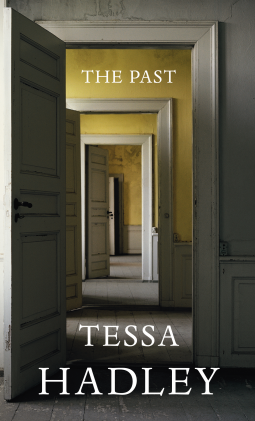
#BookReview ‘The Past’ by Tessa Hadley #contemporary

The first conclusion I reached about The Past by Tessa Hadley is that she really loves this house and the surrounding countryside, because the description is sumptuous. Hadley writes as if it is a real place, well-known, personal. I enjoy reading books where setting is atmospheric, almost like the addition of a character. Tessa HadleyThis is a story of a family reunion, four siblings – a brother and his three sisters, plus various children, partners, hangers-on – who get together for three hot summer weeks at their grandparents’ decaying house, the house they jointly inherited and must decide what to do with. Alongside this reunion we are told of the young children’s games of fantasy revolving around a dilapidated cottage in the woods, and the adolescent romance of Molly, 16 year old daughter of Roland, with Kasim the hanger-on and son of an ex-partner of Alice. Are you still with me? Unfortunately I found the characters not particularly likeable, perhaps more investigation of their pasts would have helped me with this. Instead Part Two, the only passage set in the past, belongs to Jill, mother of the four adult children and long deceased. The ramifications of Jill’s storyline on her children in the present day impacted so lightly that there was no dramatic effect, almost as if the author shied away from adding drama.
I wanted to like this book, but for me it never really got started in terms of plot. The writing is lovely, the description of house and nature is sumptuous, but it felt rather as if the author transferred her own love for the house and nature in general onto the sisters, as all three sisters at some time or another observe nature’s beauty. Unfortunately it felt a bit samey.
For me, the book was an anti-climax. Things promised but not delivered, hints leading to nothing. I admit to being baffled by the storyline involving Pilar – Roland’s Argentine wife – one of the junta’s disappeared children, now being pressurised to confirm her real identity. Pilar’s story contributes little to the family dynamic, only in that she confides her dilemma not to her husband but to her sister-in-law Harriet. Harriet subsequently mistakes Pilar’s friendship for something more.
Ultimately this is beautifully written but slow. Unlike Colm Tóibín, who also writes slow people-focussed novels of domestic detail, this left me feeling unsatisfied.

If you like this, try:-
Nora Webster’ by Colm Tóibín
‘Unsettled Ground’ by Claire Fuller
‘Chosen Child’ by Linda Huber

And if you’d like to tweet a link to THIS post, here’s my suggested tweet:
#BookReview THE PAST by Tessa Hadley http://wp.me/p5gEM4-1Jn via @Sandra Danby 

#BookReview ‘Did You Ever Have a Family’ by Bill Clegg #contemporary

Everyone by now must know the premise of Did You Ever Have a Family by New York literary agent Bill Clegg. A vacation home explodes, a family is wiped out. This is the story of those who remain, of grief, of memories and regret, of resentments and prejudice. Bill CleggThis is a very affecting novel, it feels almost voyeuristic, invading the privacy of those who are grieving. It is clear that Bill Clegg writes from the heart, from his own experience, not only of grief but of the Connecticut landscape, the setting, and the secondary theme of drug use. This novel is a study of how ordinary life can be torn apart by tragedy, so mind-blowing that the irrelevance of real life must stop. But daily life doesn’t stop, not really, day follows night, as June discovers as she drives from east to west coast.
This is one of those books I will buy as hardback. I want to keep it, and re-read it often.

Read my review of another Bill Clegg novel, THE END OF THE DAY.

If you like this, try:-
A Little Life’ by Hanya Yanagihara
If I Knew You were Going to be this Beautiful I Never Would Have Let You Go’ by Judy Chicurel
We Are Water’ by Wally Lamb

And if you’d like to tweet a link to THIS post, here’s my suggested tweet:
#BookReview DID YOU EVER HAVE A FAMILY by Bill Clegg http://wp.me/p5gEM4-1JN via @SandraDanby

#BookReview ‘The Killing Lessons’ by Saul Black #crime

The Killing Lessons by Saul Black is an intense thriller that opens with a murder particularly tough to read because it features a woman and her two children at an isolated farmhouse. Why is it so horrible? The three are vulnerable, the countryside seems threatening, the snowy landscape is forbidding, and there seems no escape. Saul BlackI had mixed feelings about this book. I enjoyed the story and the efficient writing, I disliked the scenes of violence and skipped past them. The two killers are cold, ceaseless, unforgiving and unstoppable.
There are three story strands: the killers and their psychological battle for power; the daughter Nell, who flees and takes shelter; and the homicide detective Valerie Hart, troubled, alone, regretting a broken relationship [don’t all detectives these days?].
This book is more than its violence, more interesting are the predicament of Nell, and Valerie’s reaction to the appearance of her ex-lover. All three story strands are about trust: betraying it, losing it, and learning to trust again.

If you like this, try:-
Wolf’ by Mo Hayder
Eeny Meeny’ by MJ Arlidge #1HELENGRACE
Wilderness’ by Campbell Hart #1ARBOGAST

And if you’d like to tweet a link to THIS post, here’s my suggested tweet:
#BookReview THE KILLING LESSONS by Saul Black http://wp.me/p5gEM4-1HA via @SandraDanby

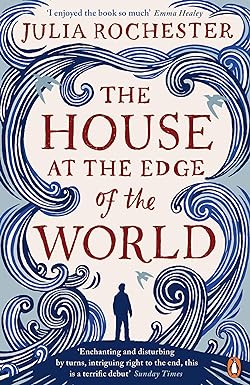
#BookReview The House at the Edge of the World’ by Julia Rochester #mystery

The premise of The House at the Edge of the World by Julia Rochester is great. One night, on his way home from the pub, Morwenna and Corwen’s father stops to pee over the cliff edge. And falls. Their lives are never the same again. Julia RochesterThe house of the title is the Venton family home on the Devon coastline, and this book is imbued with the history of this family, woven together with real family stories, family myths of things that may have happened, and coastal history. The twins’ grandfather, Matthew, is something of a recluse, working on the family history and painting an enormous map of the local area. Cameos of local places, people and events are featured on the map. Again and again, as the twins grow up [they are 18 when the story starts] they each run away to different places. Finally events draw them back to their childhood home, their grandfather and his map, as if drawn by a magnet and still wondering what really happened to their father.
I grew up by the seaside, and the town where they live is drawn so clearly the memories flooded back: the beach huts, the seagulls, the cliff top paths, the dropped ice cream cones. Morwenna and Corwen are difficult characters to connect to, but fascinating, and I was drawn into their stories. For the first half of the book, I wasn’t sure where it was going, but then the narrative speeded up and I couldn’t put it down. I had a faint idea of what may happen, but was surprised by the ending which is something that [at the beginning] I thought would never occur. The writing is atmospheric, the details about Morwenna’s book binding were mesmerising. The author doesn’t shy away from writing about the dark thoughts that real people think but don’t admit to, and this adds depth to an intriguing ‘what if’ story. If you like your characters to be ‘nice’, don’t read this.
A fascinating and unusual story.
CLICK HERE TO READ MORE ABOUT THIS BOOK

If you like this, try:-
‘Elizabeth is Missing’ by Emma Healey
‘Kings and Queens’ by Terry Tyler
‘The Ballroom’ by Anna Hope

And if you’d like to tweet a link to THIS post, here’s my suggested tweet:
#BookReview THE HOUSE AT THE EDGE OF THE WORLD by Julia Rochester via @SandraDanby http://wp.me/p5gEM4-1Go