Category Archives: book reviews

#BookReview ‘The Knife with the Ivory Handle’ by Cynthia Bruchman #historical

A black man takes shelter in a train carriage amongst the animals. He has been shot and has no tongue. Two children are travelling from a Brooklyn orphanage to Illinois to start a new life on a farm. All three are on the same train. And so begins The Knife with the Ivory Handle, a lyrical tale by Cynthia Bruchman, of Illinois in 1900 which knits together the stories of Annette and Jonathan, Casper and priest Father Kelly. Cynthia BruchmanIt is clear from the first chapter that the author has intimate knowledge of this period in history. The Brooklyn orphanage is a real place on the page – the nuns, daily routine and quiet corridors – as is St Bede’s Abbey later in the book. The Spring Valley Race Riot of 1903 did happen, and the locations from Bureau, LaSalle and Kane Counties are real places. Cynthia Bruchman [below] writes with confidence, placing her story and characters in a setting she researched for her Masters degree. But do not think I mean that the book is full of unnecessary historical detail, the research is not a heavy presence but colours the story of Annette, Jonathan, Casper and Father Kelly. It is the characters I care about. Will Jonathan become an artist? What do the old woman’s cards of fortune mean and what does the future hold for Annette? Does Father Kelly’s destiny lie in the priesthood? And will Casper ever get home to his wife and son Clementine and Petey? There is just enough exposition to help us understand the characters, with enough left unsaid to create intrigue.
The children are particularly well-drawn. Jonathan knows his sister is hungry. “He knew all of her moods by observing her eyes and hands and feet. These parts expressed how she felt inside quite thoroughly, although she was unaware of it.” Annette and her brother were left at the orphanage by their father when she was four, their mother had died during childbirth. Annette tries to remember that day. “Her father rippled in her mind like a gray shirt on a clothes line.”
This is a period of American history of which I know little and I read this novel quickly. It is an intricate tale told with subtlety and enough twists to be surprising.

If you like this, try:-
Summertime’ by Vanessa Lafaye
An Appetite for Violets’ by Martine Bailey
Rush Oh!’ by Shirley Barrett

And if you’d like to tweet a link to THIS post, here’s my suggested tweet:
#BookReview THE KNIFE WITH THE IVORY HANDLE by Cynthia Bruchman http://wp.me/p5gEM4-17s via @SandraDanby 

A poem to read in the bath… ‘Digging’

Today’s poem is about the gulf between two generations, father and son. In our upwardly-mobile society today, we should all take a moment to consider our origins and those of our parents and grandparents: what were they doing when they were the age we are now, where were they living, what was their daily routine?

[photo: thepoetryfoundation.org]

[photo: thepoetryfoundation.org]

Because of copyright restrictions I am unable to reproduce the poem in full, but please search it out in an anthology or at your local library.

‘Digging’
Between my finger and my thumb
The squat pen rests; snug as a gun.

Under my window, a clean rasping sound
When the spade sinks into the gravelly ground:
My father, digging…

I am an author, my father was a farmer, his father was a farmer. They milked cows, I write stories.

Click here to hear Seamus Heaney read the poem in full.
Read Heaney’s biography here at The Poetry Foundation. If you don’t know this website, it is a wonderful resource about poetry.
To learn more about Heaney, read Dennis O’Driscoll’s Stepping Stones: Interviews with Seamus Heaney [Faber], click here for the Amazon link.

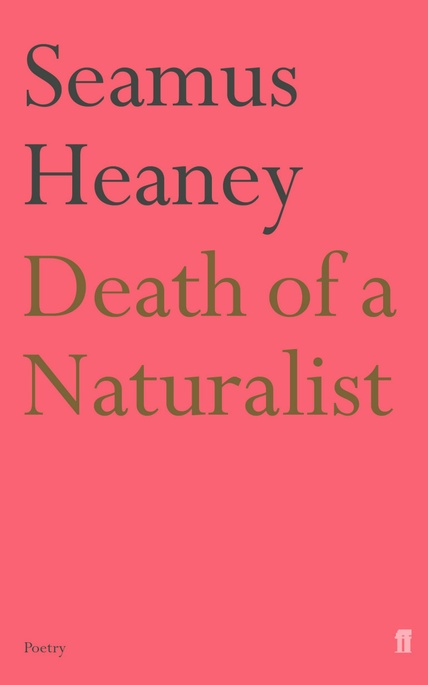
death of a naturalist by seamus heaney 19-6-14


‘Death of a Naturalist’ by Seamus Heaney [Faber]

#BookReview ‘The Miniaturist’ by Jessie Burton #historical #Amsterdam

The Miniaturist by Jessie Burton is an intriguing treasure box of a story. Eighteen-year-old Nella starts her new life as a married woman at her husband’s home in Amsterdam. He is a wealthy merchant and it is an arranged marriage. But Nella finds herself in a world she did not expect: a husband never at home, an abrupt and unwelcoming sister-in-law, two servants who behave as if life on the Herengracht is full of secrets. Nella feels always at a disadvantage. Jessie BurtonJohannes Brandt’s wedding gift to his wife is a cabinet, a kind of empty doll’s house for a young woman, a miniature of their home intended to be used by a young woman to learn how to run a home. “The accuracy of the cabinet is eerie, as if the real house has been shrunk, its body sliced in two and its organs revealed.” It frightens her but she is unable to formulate why. There is other disturbing imagery to suggest life in the house is not as it first appears. On the dark walls there are paintings of dead animals and at Nella’s first public outing as a wife, to the Silver Guild dinner, Nella meets Agnes Meermans. Agnes wears pearls in her hair, “The pearls are the same size as milk teeth.” Odd.
Nella orders her first miniature objects from a craftsman, a miniaturist, and the story burst into life after a slowish start. First, the three objects Nella orders are chosen as symbols of defiance against her new life. Secondly, the package is delivered by the intriguing Jack Philips of Bermondsey. Who is Jack, is he the miniaturist? Or does the title of the book refer to Nella? How else does the miniaturist know what is happening in Nella’s home, and her mind?
One thing is clear, everything in this book – and in the house on the Herengracht – is not as it seems. I raced through this.

Read my review of THE CONFESSION, also by Jessie Burton.

If you like this, try:-
Rush Oh!’ by Shirley Barrett
The Penny Heart’ by Martine Bailey
The Knife with the Ivory Handle’ by Cynthia Bruchman

And if you’d like to tweet a link to THIS post, here’s my suggested tweet:
#BookReview THE MINIATURIST by Jessie Burton via @SandraDanby http://wp.me/p5gEM4-17B

Book review: The Art of Baking Blind

The Art of Baking Blind by Sarah Vaughan 9-6-14If you like making cakes, you’ll enjoy this book. It’s full of recipes, ingredients, mixing, kneading, weighing and baking. The Art of Baking Blind by Sarah Vaughan is a two tier story. In the 1960s, Kathleen Eaden’s husband owns a supermarket and she becomes an overnight marketing sensation. Now, a baking competition is announced in Eaden’s Monthly, the supermarket’s own magazine. Four women and one man reach the final.

The book reminded me of the Julia Child film, Julie & Julia, starring Amy Adams and Meryl Streep. In an attempt to emulate Julia Child, played by Streep, Adams cooks her way through Child’s cookbook. In a similar way, this story is told with Kathleen Eaden as its spine. Her diary entries and excerpts from her books feature heavily. Baking is at the centre of the story. It is a lightweight, enjoyable, holiday read.

Two confessions from me. One, I kept getting the women muddled – the only one I was clear about was Jenny. Two, I was slightly niggled that we didn’t get the point of view of the male competitor, Mike, until quite a way in. I missed his voice. Disappointingly, Mike remains a mystery, lightly-drawn, unsatisfying. Sarah Vaughan [below] writes with confidence about baking, I just know she baked the cakes and pies she writes about.

[photo: hodder]

[photo: hodder]

There are lots of innuendos about kneading dough and rising temperatures. All five competitors seem to lack love and sex, leading me to the rather simplistic assumption that baking replaces sex, which seems a little unfair. So which question made me turn the page – who will win the competition, what is Karen’s secret, or who will shag who? Rather contrarily, the sections I enjoyed reading belonged to Kathleen Eaden because it was obvious that all was not as the supermarket marketing image suggested.

By the end I could have done with less cake description. I was left with a feeling of irony that there were competitors seeking to be the new Mrs Eaden, when the real Mrs Eaden was a marketing invention. All four women – and Mike – must re-examine who they are and what they want.

If you want to watch a video about how to make perfect pie crust, something which features heavily in the book, watch Nana’s video at You Tube here.
Follow Sarah Vaughan on Facebook here.
To read how Sarah Vaughan got published, click here.

‘The Art of Baking Blind’ by Sarah Vaughan [pub. in the UK on July 3, 2014 by Hodder & Stoughton]

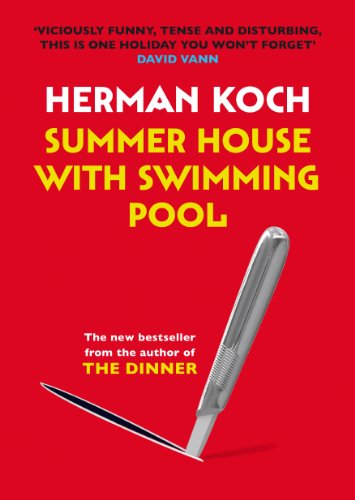
#BookReview ‘Summer House with Swimming Pool’ by Herman Koch #mystery #suspense

In Summer House with Swimming Pool by Herman Koch, Dr Marc Schlosser is popular with his patients because he doesn’t tell them they smoke too much or drink too much, he doesn’t tell them to lose weight, he doesn’t lecture them. So he becomes a popular general practitioner amongst the arty set. They invite him to their premieres, he doesn’t want to go. Herman KochBasically, he takes the easy way out; if a patient presents with a symptom he doesn’t recognise or is disgusting, he refers the patient to a specialist. Except Ralph Meier, the famous actor. Although Marc doesn’t like Ralph, he is sucked into the actor’s entourage.
This is the story of one summer when Marc’s family stays at the summer villa rented by Ralph. Throw their wives into the mix, two teenage Meier sons and two teenage Schlosser daughters, plus a film director and his decorative girlfriend, summer heat, a swimming pool and a beach, and you can see trouble looming. It’s how Marc reacts to that trouble that makes the story. I found myself thinking ‘he’s not really going to do that is he? Oh, he has.’
Marc is a very unreliable narrator, skilfully handled by Koch. I didn’t trust him, I didn’t like him, but he made me laugh. His intolerances and lack of patience struck a chord with me [which should get me worried!]. Is it a story of medical incompetence or murder, I will let you decide. It is certainly a story of misunderstandings. The people are unlikeable, but the story draws you on. It is an excellent book to throw into the discussion about why all characters in fiction must be nice: we are not all nice, we all have light and dark in us, we all have habits we would rather keep to ourselves. So fiction should be populated by realistic characters.
But I am pleased Dr Marc Schlosser is not my doctor.

If you like this, try:-
The Bear’ by Claire Cameron
Stolen Child’ by Laura Elliot
Whistle in the Dark’ by Emma Healey

And if you’d like to tweet a link to THIS post, here’s my suggested tweet:
#BookReview SUMMER HOUSE WITH SWIMMING POOL by Herman Koch via @SandraDanby http://wp.me/p5gEM4-11c

#BookReview ‘In Ark’ by Lisa Devaney #clifi #climatechange #scifi

It is 2044 and New Yorkers are living through The Change. This is the world of In Ark, by Lisa Devaney. Food is mostly artificial or fresh and prohibitively expensive, a cab costs $600 and they cannot go outside in summer without protective clothing. Lisa DevaneyThis is the life Mya Brand leads, until she is abducted and taken to The Ark, an eco-survivalist commune. Once there, she must face the demons of her past life and make a difficult decision about her future. Should she stay and be safe, but not see her family and friends ever again? Or should she walk away from the commune and risk a difficult life and an early death as the climate worsens?
In Ark is part of the cli-fi, or climate fiction, genre featuring titles such as Solar by Ian McEwan and State of Fear by Michael Crichton. This is the first of three cli-fi novels about The Ark planned by this American indie author. The context is fascinating and I can see it working well as a movie. Devaney writes with precision about climate change and the effect this has on day-to-day life, as well as on society as a whole. It is clear that Devaney is an enthusiast for her genre. I would have liked The Ark to be more sinister, perhaps that will come in Book Two. It reminded me a little of the world created by Veronica Roth in Divergent, though I must point out that In Ark is most definitely an adult book rather than YA. There are a couple of vividly-written drug-fuelled sex scenes which are the sort that teenage readers would read and re-read, and some adults too.
Overall the concept of the trilogy is very different from anything else I have read, the plotting did seem a trifle slow but that is partly because the society needs to be explained so the story in Book Two and Book Three can progress.
If you like science fiction, fantasy or dystopian fiction, then try cli-fi.

If you like this, try:-
Divergent’ by Veronica Roth #1DIVERGENT
The Magicians’ by Lev Grossman #1THEMAGICIANS
The Queen of the Tearling’ by Erika Johansen #1TEARLING

And if you’d like to tweet a link to THIS post, here’s my suggested tweet:
#BookReview IN ARK by Lisa Devaney http://wp.me/p5gEM4-15H via @SandraDanby

A poem to read in the bath… ‘Lost Acres’

I often read poetry, often in the bath, so this is the first of an occasional series sharing with you my discoveries. I often read them aloud, which for some reason seems to aid my understanding and stress the rhythm of the language.

My first poem is by Robert Graves [1895-1985] a writer known in the UK for his First World War poems and his war memoir Goodbye to All That. His novel I, Claudius won literary prizes and has been turned into numerous television series and films. Graves [below] was Professor of Poetry at Oxford from 1961-1966. robert graves 13-6-14My favourite is ‘Lost Acres’. Because of copyright restrictions I am unable to reproduce the poem in full, but please search it out in an anthology or at your local library.

‘Lost Acres’
These acres, always again lost
By every new ordnance-survey
And searched for at exhausting cost
Of time and thought, are still away.

This makes me think of rural Yorkshire where I grew up in The Sixties, roaming the fields free to explore, never thinking about lines on a map or county boundaries.

For more about this collection of Graves’ poems, click here.

selected poems by robert graves 13-6-14


‘Selected Poems’ by Robert Graves [faber and faber]

#BookReview ‘The Silent and the Damned’ by @RobWilsonwriter #crime #Spain

The Silent and the Damned is second in the Javier Falcón series by Robert Wilson. Santa Clara is a wealthy neighbourhood of Seville where people stay inside their elegant air-conditioned homes and don’t mix much with their neighbours. Very un-Spanish. And then people start dying. Robert WilsonFirst, a husband and wife. Was it one murder and a suicide, or a double-murder? Falcón investigates only to find, living opposite the murdered couple, the wife of his last murder victim [in The Blind Man of Seville]. And this is how Robert Wilson neatly intertwines the back story from the first novel, bringing forward the things a new reader needs to know. Falcón has moved on since then, gone are the formal suits, now he wears a shirt and chinos and seems more relaxed, more at peace with himself. But this is a detective novel, and detectives are traditionally troubled souls so it is not long before the cracks appear.
The deaths keeping coming in the 40° heat, Falcón must deal with the impending marriage of his ex-wife plus the growing suspicion that all is not well at police headquarters. There are links to characters in the first book, dodgy characters, further crimes are hinted at. Will he be allowed to continue his investigation, or will higher powers decree his case unviable? And does Javier Falcón have the mental energy left to care?
An excellent follow-up to The Blind Man of Seville. 

Here are my reviews of the other books in the Javier Falcón series:-
THE BLIND MAN OF SEVILLE #1FALCÓN
THE HIDDEN ASSASSINS #3FALCÓN
THE IGNORANCE OF BLOOD #4FALCÓN

If you like this, try:-
The Killing Lessons’ by Saul Black
The Returned’ by Jason Mott
Wolf’ by Mo Hayder

And if you’d like to tweet a link to THIS post, here’s my suggested tweet:
#BookReview THE SILENT AND THE DAMNED by @RobWilsonwriter http://wp.me/p5gEM4-OY via @SandraDanby

#BookReview ‘The Unfinished Symphony of You and Me’ by Lucy Robinson #romance

The Unfinished Symphony of You and Me by Lucy Robinson is about Sally Howlett, wardrobe mistress at the Royal Opera House, who sings opera… in the wardrobe. Lucy RobinsonSally grows up on a council estate in Stourbridge, decidedly not a centre of opera appreciation. Playing on the radio she hears an aria from Madame Butterfly and is entranced. It is the beginning of a lifelong obsession which leads to her not singing opera at the Royal Opera House but there working as a wardrobe mistress. The story of Sally’s life story is told by weaving together the strands of her childhood with her emotionally-repressed family, her life as a wardrobe mistress, a short visit to New York to work costumes for a production at The Met, and now as Sally begins to study opera. I found the combination of chick-lit and girl-about-town bad language and the opera strand to be rather strange. What kept me reading? The storyline, I wanted to know what happens in New York to make Sally study opera at the RCM when she can’t get beyond singing in the wardrobe.
What are the big themes trying to get out? A few life lessons. That helping others is all well and good, but you must do things for yourself and not simply to please someone else. That family loyalty is important, but you also owe a duty to yourself. To never give up. And finally, Sally learns that it is not just her that struggles for self-belief, everyone does. When she understands this, she becomes an adult and an opera singer.
A page-turning read for your summer holiday suitcase.
CLICK HERE TO READ MORE ABOUT THIS BOOK AT AMAZON

If you like this, try:-
The Audacious Mendacity of Lily Green’ by Shelley Weiner
‘The Art of Baking Blind’ by Sarah Vaughan
Butterfly Barn’ by Karen Power

And if you’d like to tweet a link to THIS post, here’s my suggested tweet:
#BookReview THE UNFINISHED SYMPHONY OF YOU AND ME by Lucy Robinson via @SandraDanby http://wp.me/p5gEM4-13g

#BookReview ‘Elizabeth is Missing’ by Emma Healey #crime #dementia

Can there be a more unreliable narrator than an 81-year old woman with dementia? Elizabeth is Missing by Emma Healey is a brilliant debut. Emma HealeyMaud lives on her own, she has carers visiting, they leave prepared food for her and tell her not to use the cooker. But she does love toast. There is a rebelliousness about Maud which immediately made me connect with her. She reminded me of my mother, who suffered from dementia. I was impressed with the way Maud’s condition is portrayed, in convincing detail, slowly deteriorating as the story progresses. Maud writes herself notes, as memory prompts, and keeps them in her pockets and around the house. The note she re-reads most often is ‘Elizabeth is missing’. Elizabeth is Maud’s friend, and she is not at her house. The story has a cyclical motion as Maud finds the note, goes out to hunt for Elizabeth, and then is told by someone that Elisabeth is not missing, that she is fine. And then Maud finds the note again, and the cycle re-starts.
Interwoven with Maud’s search for Elizabeth, is a narrative strand set in 1946 when she lives with her parents and lodger Douglas. People are displaced as a population comes to terms with the end of the conflict, a poor economy, returning soldiers who are not the husbands they were when they went away to fight. Post-war rationing makes meals difficult, people grow vegetables, forage for fruit, make their own clothes. Maud’s older sister Sukey is good at dressmaking and she gives Maud items to wear. The sisters are close. And then Sukey disappears, no-one knows where she has gone, including her husband Frank.
I am a little unsure how a reader will react if they have no experience of dementia. Maud’s thought processes are, by the nature of her illness, repetitive. But her memories are key to understanding the mystery of Sukey’s disappearance. You, I, the reader, is the detective. It is up to us to sift through the clues, keeping them and discarding them.
In the background, throughout the novel, is the attitude of people towards dementia sufferers. The impatience, the lack of empathy, the unwillingness to understand someone obviously not in their full senses, and also the kindness, gentleness, the fondness, the helpfulness of strangers. For example the police sergeant who repeatedly takes down the information when Maud reports Elizabeth as missing.
“‘Same as usual?’ he says, his voice sounding metallic through the speakers.
‘Usual?’ I say.
‘Elizabeth, is it?’ He nods, as if encouraging me to say a line in a play.
‘Elizabeth, yes,’ I say, amazed. Of course, that’s what I’ve come for. I’ve come for her.”
It is a nice touch that he appears at the end of the story, closing the circle.

And read my review of WHISTLE IN THE DARK, also by Emma Healey.

If you like this, try:-
‘Etta and Otto and Russell and James’ by Emma Hooper
‘Yuki Chan in Bronte Country’ by Mick Jackson
The Girls’ by Lisa Jewell

And if you’d like to tweet a link to THIS post, here’s my suggested tweet:
#BookReview ELIZABETH IS MISSING by Emma Healey http://wp.me/p5gEM4-11S via @SandraDanby