#BookReview ‘Nat Tate: An American Artist 1928-1960’ by William Boyd #historical #art

A fictitious biography of a non-existent artist, this is an entertaining novella which I read in one sitting. Nat Tate: an American Artist 1928-1960 by William Boyd‪ has been on my to-read list forever. William Boyd‪What a stir it caused when it was published in 1998. The New York art world soon realised it had been set-up. The first edition appeared with endorsements from Gore Vidal and David Bowie but with hindsight the clues are there. Logan Mountstuart features as a friend of Tate and regular Boyd readers will recognise the protagonist of Boyd’s novel Any Human Heart published in 2002. So, a piece of mischief.
If you’ve read any art biography, or one of those weighty ‘exhibition books’ that accompany major art shows, the tone of this story will be familiar to you. Lots of references to famous artists, the process, the tortured creativity, the successes and setbacks – shown here by Tate’s reverence for American poet Hart Crane – the mentors, financial backers and agents. But there never was an artist called Nat Tate. The book features Tate’s art and photographs from his life but which originate for Boyd whose satire asks questions about the morals and values of the art world, as topical today as in 1998.
An enjoyable novella, beautifully-written in the style of the ‘art biography,’ a confirmation of Boyd’s flexibility and skill as a writer. A convincing hoax. Something different.

Here are my reviews of other books by William Boyd:-
ANY HUMAN HEART
LOVE IS BLIND
ORDINARY THUNDERSTORMS
SWEET CARESS
THE BLUE AFTERNOON
THE DREAMS OF BETHANY MELLMOTH
TRIO
WAITING FOR SUNRISE

… and try the first paragraph of ARMADILLO.

If you like this, try these:-
How to be Both’ by Ali Smith
The Girl in the Painting’ by Renita d’Silva
Life Class’ by Pat Barker

And if you’d like to tweet a link to THIS post, here’s my suggested tweet:
#BookReview NAT TATE: AN AMERICAN ARTIST 1928-1960 by William Boydhttps://wp.me/p2ZHJe-6tQ via @SandraDanby

COMING SOON… THE NEXT BOOK I REVIEW WILL BE:- Suzanne Collins

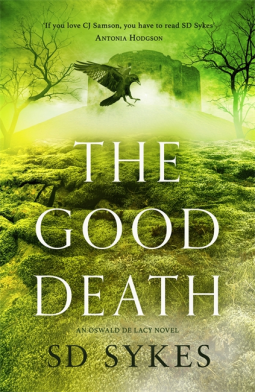
#BookReview ‘The Good Death’ by @SD_Sykes #historical #mystery

The Good Death is fifth in the Oswald de Lacy historical mystery series by SD Sykes and it feels like the last. That is only my guess but there is a ‘rounding of the circle’ to the story, answering questions raised in the first novel. I read it quickly, and sort of guessed the mystery but not quite. SD SykesThe story is told in two timelines as Oswald in 1370 sits at the bedside of his mother, who is dying. She clutches to her breast a letter which she will not show him. Instead she demands he tell her the truth of what happened in 1349 when Oswald was an eighteen-year-old novice monk, prior to where Plague Land, first novel in this series, begins. Sent by his mentor in the infirmary, Brother Peter, to gather herbs in the woods, Oswald meets a terrified girl who runs from him into a fast-flowing river where she drowns. Oswald carries her body to the village and discovers that other young girls have disappeared, never seen again, but no one in authority will investigate. Plague is reported in neighbouring villages and everyone wants to stay close to home. Only the beautiful widow Maud Woodstock listens to Oswald’s concerns and, flattered by her attention, he decides to investigate.
Brief passages are spent at Somerhill Manor in 1370 – Oswald’s mother is dying but still manipulative, his wife is bored, a house guest is irritating and his sister is jealous of the time he spends with their mother – but the bulk of the story takes place in 1349. Oswald is forced to remember an incident in his past that he would rather forget, when as a teenager he becomes an enthusiastic investigator. He jumps to conclusions based on prejudice, generalisations and gossip, putting himself in danger, but finding each possible suspect is innocent. As his list of potential murderers gets shorter, the danger to Oswald – from the murder, and also from the approaching plague – increases. But what if the murderer is someone he doesn’t know or doesn’t consider a likely suspect.
This series has got better with every book and if this is the last, it will be a loss. Sykes tells Oswald’s story in a fast-moving engaging way that is rooted in its medieval time of violence, patriarchy, misogyny and forbidden passions.
Excellent.
CLICK HERE TO READ MORE ABOUT THIS BOOK

Click the title to read my reviews of the first three books in this series:-
PLAGUE LAND #1 OSWALDDELACY
THE BUTCHER BIRD #2 OSWALDDELACY
CITY OF MASKS #3 OSWALDDELACY
THE BONE FIRE #4 OSWALDDELACY

If you like this, try:-
‘Moonlight and the Pearler’s Daughter’ by Lizzie Pook
‘Wakenhyrst’ by Michelle Paver
‘Heresy’ by SJ Parris

And if you’d like to tweet a link to THIS post, here’s my suggested tweet:
#BookReview THE GOOD DEATH by @SD_Sykes https://wp.me/p2ZHJe-6xU via @SandraDanby

COMING SOON… THE NEXT BOOK I REVIEW WILL BE:- William Boyd‪
#BookReview ‘House of Grace’ by @PMOsborneWriter #familysaga #romance

Grace Granville, teenager and budding fashion designer, falls in love and makes a choice which takes her a long way from her privileged, familiar world. House of Grace is first in the ‘House of Grace’ family saga trilogy by Patricia M Osborne. Patricia M OsborneGrace’s story starts in 1950 as she leaves boarding school in Brighton and travels to Lancashire to stay with her best friend from school, Katy. Coming from a sheltered childhood with a strict father and little emotional closeness, Grace is keen to make her own way in life. But when she sees the new Katy, free from the restrictions of school rules –  she smokes, has a boyfriend who she disappears into the bushes with – Grace is shocked, and intrigued. Katy’s family, though wealthy, are friendly, emotionally open and mix with people from different backgrounds. Completely the opposite to Grace’s parents. When Grace meets Katy’s cousin Jack, a coal miner’s son, she falls in love. Their summer romance is brought to an abrupt halt by Grace’s father who insists she marry one of the eligible suitors he has lined up for her. He is adamant that her new life as a wife and mother must begin now. But Grace, having seen the freedom of Katy’s family life, now knows there’s another way. She loves Jack and still dreams of designing and making clothes. The decision she makes changes everything.
House of Grace is a story of social conflict at a time when women, exploring freedoms glimpsed during World War Two, wanted more than a domestic bliss as imagined by men. This is an easy-to-read family saga of a young woman’s life, which I read over a weekend, with clearly-drawn characters and striking parallels between the social classes and inequalities of the 1950s and 60s. This is a more a family story rather than a focus on the battle to established Grace’s fashion business, this happens in the background and I was quite curious to know more about it.
A quick refreshing read, ideal if you need a change of pace. I really enjoyed it and am intrigued to read the next in the trilogy, The Coal Miner’s Son, and to find out what’s in store for Grace’s children, George and Alice.
CLICK HERE TO READ MORE ABOUT THIS BOOK

If you like this, try:-
A Daughter’s Hope’ by Margaret Kaine
The Orphan Twins’ by Lesley Eames
Pattern of Shadows’ by Judith Barrow

And if you’d like to tweet a link to THIS post, here’s my suggested tweet:
HOUSE OF GRACE by @PMOsborneWriter #bookreview https://wp.me/p2ZHJe-6wu via @SandraDanby

COMING SOON… THE NEXT BOOK I REVIEW WILL BE:- SD Sykes

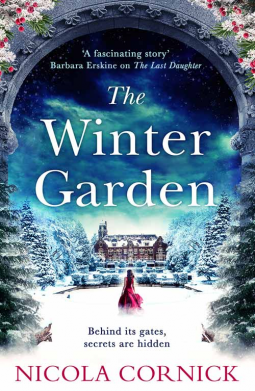
#BookReview ‘The Winter Garden’ by @NicolaCornick #historical

A timeslip novel that slips effortlessly between now and 1605, The Winter Garden by Nicola Cornick is an intriguing mixture of the Gunpowder Plot, garden history, archaeology and spookiness. Nicola CornickLucy, recovering from a viral illness that has forced her to give up her career as a professional violinist, is recuperating at Gunpowder Cottage, home of her absent Aunt Verity. Verity has commissioned a garden archaeologist to investigate links to the original house on the land, said to have belonged to Robert Catesby, one of the Gunpowder plotters, and his wife Catherine. Lucy, weak and depressed, is upset to find her bolthole is not as isolated as she expected. But she soon becomes pulled into the mystery of the garden and the story of the Catesbys. When Lucy gets the chills and sees the figure of a woman in a cloak and the outline of a beautiful winter garden full of snow and frost, she’s unsure if she is hallucinating and on medication that doesn’t agree with her. As Finn, the architect, and Johnny his assistant, explain more about their discoveries, Lucy finds herself pulled into the mystery and becomes a researcher of historical documents. More visions, and a dead bouquet left threateningly in her kitchen, add to the tension.
In both time narratives there is personal grief, loss and the togetherness of family and friends. Lucy is in limbo, emotional and full of indecision. Just like Catherine Catesby. Following the clues, Lucy regains her emotional strength as she asks difficult questions, faces opposition and rediscovers her bravery.
In 1605, Anne Catesby must pick up the pieces after the sudden deaths of her husband William, daughter-in-law Catherine and eldest grandson William. Her grieving son Robert, always a flighty, strong-willed boy, leaves his youngest son Robbie with his mother and disappears to London. Anne, already short of money because of fines imposed on Catholic families such as the Catesbys by King James I, struggles to live from day to day. And in the background is Anne’s brooding brother-in-law Thomas Tresham, Robert’s godfather, who is involved in the mysterious Order of the Knights Hospitallers of St John of Jerusalem. There are hints of lost treasure, which may, or may not, be buried in the garden.
I found the clues at times sketchy and unrealistic and the names of the various houses and estates added to this confusion, though Cornick is constrained at times by historical fact.
An unusual story which kept me returning to the book to read more. There’s a particularly strong cast of supporting characters including Lucy’s sister Cleo, Finn the architect with his dog Geoffrey, and brooding siblings Gabriel and Persis. The two timelines melt into each other as the mystery progresses and I didn’t, as is often the case with dual narrative novels, prefer one story to the other. Cornick is a wonderful novelist who tells a good fictional story built on strong historical foundations and doesn’t allow her historical knowledge to bully its way into the reader’s mind.

Read my reviews of these other novels by Nicola Cornick:-
THE FORGOTTEN SISTER
THE LAST DAUGHTER
THE OTHER GWYN GIRL

If you like this, try:-
‘Plague Land’ by SD Sykes #1OswalddeLacy
‘The Lady of the Ravens’ by Joanna Hickson #1QueensoftheTower
‘The French Lesson’ by Hallie Rubenhold

And if you’d like to tweet a link to THIS post, here’s my suggested tweet:
#BookReview THE WINTER GARDEN by @NicolaCornick https://wp.me/p2ZHJe-6w1 via @SandraDanby

COMING SOON… THE NEXT BOOK I REVIEW WILL BE:- Patricia M Osborne
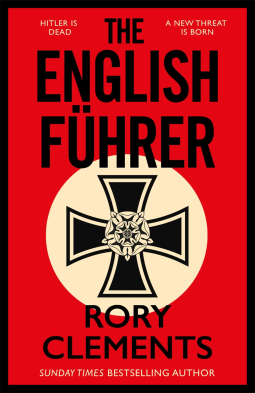
#BookReview ‘The English Führer’ by Rory Clements #thriller #WW2

It is autumn 1945 and Cambridge history professor Tom Wilde, American citizen, has returned to his daytime job. The war is over. Or is it. The English Führer, seventh in the Tom Wilde spy series by Rory Clements, hits the ground running as a Japanese submarine waits off the coast of Norfolk. Rory ClementsYet again, Tom and his wife Lydia are in danger. But Lydia is living in a hostel in London as she trains as a doctor – pretending to be a single woman in order to qualify for study – while Tom and Johnny have a new housekeeper at home in Cambridge. When the quiet Norfolk village next to an American airbase is subjected to a strange plague, its residents dead and dying, Wilde finds himself pulled back into the world of the security services. He calls on familiar faces – Philip Eaton of MI6, ‘Dagger’ Templeman of MI5, old friend and GP Rupert Weir and Bill Donovan, Wilde’s old boss of America’s wartime security service, Office of Strategic Services [OSS] – and new ones, some of whom may not be who they appear to be. As a spy during the war, Tom has grown used to dissembling but acting a role is a new territory for Lydia who must convincingly appear to be unmarried and not a mother, or be thrown out of St Ursula’s Hospital Medical School. New characters include Lydia’s fellow medical student, room-mate and addict of spy stories Miranda March; Danny Oswick, new history student with a dodgy moustache and even dodgier past; and widow Syliva Keane who moves into the Wilde house as Tom’s new housekeeper in Cambridge but who disappears once a week.
As previously, Wilde must work out who to trust, treading a fine line between wrong and right, to get to the heart of the truth. What is a Japanese biological weapon doing in England and who are the plotters? Japanese. Fascists. Communists. The clues are myriad and the web woven by Clements is at times impenetrable, the story telling is compelling.
A series that is so addictive that when you finish one book you want to start the next immediately.

Click the title to read my reviews of the other books in the Tom Wilde series:-
CORPUS #1TOMWILDE
NUCLEUS #2TOMWILDE
NEMESIS #3TOMWILDE

HITLER’S SECRET #4TOMWILDE
A PRINCE AND A SPY #5TOMWILDE
THE MAN IN THE BUNKER #6TOMWILDE
A COLD WIND FROM MOSCOW #8TOMWILDE

And from the Sebastian Wolff series:-
MUNICH WOLF #1SEBASTIANWOLFF

If you like this, try:-
‘The Diamond Eye’ by Kate Quinn
The Partisan’ by Patrick Worrall
An Officer and a Spy’ by Robert Harris

And if you’d like to tweet a link to THIS post, here’s my suggested tweet:
#BookReview THE ENGLISH FÜHRER by Rory Clements https://wp.me/p2ZHJe-6tH via @SandraDanby

COMING SOON… THE NEXT BOOK I REVIEW WILL BE:- Nicola Cornick
#BookReview ‘A Dangerous Business’ by Jane Smiley #historical #mystery

Gold Rush California 1851. In Monterey, young women are going missing. Assumed to be whores, the authorities take no notice. So two prostitutes Eliza and Jean decide to investigate the disappearances. The principal suspects are their clients. A Dangerous Business by Jane Smiley is a book I didn’t want to put down, not in the way a thriller makes you want to read one more page but with a curiosity about Eliza’s prospects. Jane SmileyInspired by Edgar Allen Poe’s fictional detective Dupin – which Jean insists is pronounced ‘DuPANN’ – they begin to look for clues, looking at their surroundings more cautiously than ever before. Eliza re-reads Poe, ‘What struck her the most about Dupin was that he could look at all sorts of injury and destruction and still keep thinking in what you might call a cold and logical way.’ At times they investigate more by instinct than clue, but Smiley keeps us interested in Eliza. She is the heart of the book. She tells the story as she seeks clues in between doing business with her clients.
Life in Monterey is free and wild. People come and go without notice, ships arrive and leave, ranchers build houses in wild country, which means plenty of customers for Eliza at Mrs Parks’ establishment. The two women are unsure how many other girls are presumed to have left town but are really dead. After they find a body hidden beneath bushes, Eliza suspects everyone. The friends explore remote tracks up the hillsides on rented horses and this experience is to prove useful.
Both women are taking in a pause in their lives, rootless, with no reason to return home, they are earning a living while deciding what to do next and where to go. Eliza swings between finding the occasional client attractive and then wondering if he is the murderer. Jean, who works in a brothel for the female trade, occasionally dresses as a man and passes convincingly on the street in her disguise. She toys with the idea of a life on the stage in San Francisco. Smiley is an expert at building character layer on layer. She is also good at letting the girls’ imaginations run wild though this is not a crime story with threat and danger around every corner.
More a historical mystery than a crime novel, A Dangerous Business is a different subject for Smiley. But at the heart of the novel are her observations of women’s lives, the experience of women on the edge of civilization in Gold Rush California and what it means to be a woman alone at this time.
CLICK HERE TO READ MORE ABOUT THIS BOOK AT AMAZON

Click the title below to read my reviews of other novels by Jane Smiley:-
A THOUSAND ACRES
SOME LUCK [LAST HUNDRED YEARS #1]
EARLY WARNING [LAST HUNDRED YEARS #2]
GOLDEN AGE  [LAST HUNDRED YEARS #3]

If you like this, try:-
Frog Music’ by Emma Donoghue
The Dance Tree’ by Karen Millwood Hargrave
‘At The Edge of The Orchard’ by Tracy Chevalier

And if you’d like to tweet a link to THIS post, here’s my suggested tweet:
#BookReview A DANGEROUS BUSINESS by Jane Smiley https://wp.me/p2ZHJe-6sa via @SandraDanby

COMING SOON… THE NEXT BOOK I REVIEW WILL BE:- Rory Clements

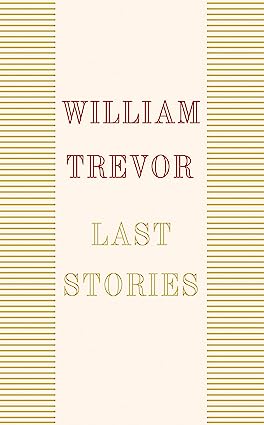
#BookReview ‘Last Stories’ by William Trevor #shortstories

The books of William Trevor have delighted me over many years, his novels and short stories are all excellent. Last Stories is the last of his short stories, published in 2018, two years after his death. They are masterful. His a such an observer of human nature, sensitive to emotion, the fickleness and unpredictability of human nature, and the longevity of longing. William TrevorTen stories. Each touching. Trevor focusses on the solitary people, quiet, often overlooked but each with emotional turmoil beneath the surface. Trevor digs deep to reveal the things unseen. The stories are simple, mostly involve two people, and revolve around love, loss and guilt. Most are poignant.
In ‘The Women,’ two women stand at the side of the hockey pitch and watch the schoolgirls play. They concentrate on one girl in particular. Cecilia, sent away to school by her widowed father who wants to her grow up as a girl surrounded by girls, is aware of the attention but puzzled by it.
‘Giotto’s Angels’ tells the story of two lost, lonely people, whose lives converge by accident. A man with poor memory stops people on the street, asking if St Ardo’s church is nearby. No one can help him, except a woman standing in a doorway who misreads his signals and assumes he wants female company. The two walk together, each consumed by their own understanding of the situation, completely wrong in their assumptions.
In ‘The Unknown Woman,’ a priest visits the home of Harriet Balfour to tell her Emily Vance has died in a street accident. He found Harriet’s name on a list of Emily’s cleaning clients. He can find no one who knows her but Harriet can tell him nothing of Emily’s life. Trevor explores the gap remaining when someone dies, especially the death of someone private, whose life touches only lightly they people met.
If you enjoy reading Elizabeth Strout, Mary Lawson, Anita Shreve and similar writers, please try William Trevor. His writing is concise, beautiful but also sharply observed.
CLICK HERE TO READ MORE ABOUT THIS BOOK AT AMAZON

For a taster of William Trevor’s novels, click the titles below to read the opening paragraphs of:-
DEATH IN SUMMER
TWO LIVES: READING TURGENEV & MY HOUSE IN UMBRIA

If you like this, try:-
‘All the Rage’ by AL Kennedy
Separated from the Sea’ by Amanda Huggins
‘The Dreams of Bethany Mellmoth’ by William Boyd

And if you’d like to tweet a link to THIS post, here’s my suggested tweet:
#BookReview LAST STORIES by William Trevor #bookreview https://wp.me/p2ZHJe-6s0 via @SandraDanby

COMING SOON… THE NEXT BOOK I REVIEW WILL BE:- Jane Smiley
#BookReview ‘The Elopement’ by @AuthorTracyRees #historical

When society beauty Rowena Blythe elopes with an unsuitable artist’s assistant, the repercussions ripple throughout the household and the local community. The Elopement, like other novels by Tracy Rees, is packed with social comment. She shows that while society in 1897 was lived under strict class differences, people were more similar than they realised. Tracy ReesRees tells the story of three women who live in close proximity to each other in Highgate, North London. Housemaid Pansy Tilney works six days a week at Garrowgate Hall, home to the Blythe family and run with a rod of iron by the mistress, Maud Blythe. Rowena, the only daughter of the house, is intended for a suitable marriage if only Maud can find a suitable husband that Rowena will deem to accept. Rowena and her best friend Verity love nothing more than to gossip, especially about those they see as unfashionable, plain, weak or boring. One of their targets is single mother Olive Westfallan. The Westfallen family lives at the opposite side of Hampstead Heath to the Blythes. There is history between the two families as the patriarchs – Rowena and Olive’s fathers – fell out long ago. Olive, who is as rich if not richer than Rowena, pays no notice to gossip about her unusual circumstances. As a single unmarried woman, she adopted a daughter Clover and gave home to a ward, Angeline. She is a working mother, as head of her own charitable foundation she helps less fortunate people take a step up in life, through education, employment or financial aid. There are not two people more different than Rowena and Olive.
Rees brings the three women together in the most unusual of circumstances. Each is facing a life-changing decision and each is prevaricating. Rowena must choose a husband. Pansy must leave Garrowgate Hall and find new employment as the man she loves holds a secret unfulfilled passion for Rowena. Olive must consider whether to accept a marriage proposal from a man she likes, perhaps loves, but isn’t sure if she loves him enough or whether his attitude to life fits hers. These are dilemmas of the time, England on the cusp of the twentieth-century saw the cause of women evolving rapidly. Rees presents opportunities to her three characters, each must be brave in making their decision.
A novel about the solidarity, and also bitchiness, of women. Not all are as they seem. Some get what they want, others don’t know what they want. As the constraints of society’s expectations are loosened, new chances become available, to rich and poor alike. Rowena, who had it all, falls in love with an unsuitable man – an artist, foreign and poor ­– and pays the price for her impetuous decision.
I’ve loved every Tracy Rees novel I’ve read so far. The Elopement didn’t disappoint. It is in fact a sequel to Rees’s The Rose Garden [see below for a link to my review] but it isn’t necessary to read the first to enjoy The Elopement. Each woman must find a way to break free of the limitations of their sex and find a brighter future. So much more than a historical romance.
CLICK HERE TO READ MORE ABOUT THIS BOOK

Click the title below to read my reviews of other novels by Tracy Rees:-
AMY SNOW
DARLING BLUE
THE HOUSE AT SILVERMOOR
THE ROSE GARDEN

If you like this, try:-
After Leaving Mr Mackenzie’ by Jean Rhys
The Walworth Beauty’ by Michèle Roberts
The Ninth Child’ by Sally Magnusson

And if you’d like to tweet a link to THIS post, here’s my suggested tweet:
THE ELOPEMENT by @AuthorTracyRees #bookreview https://wp.me/p2ZHJe-6p9 via @SandraDanby

COMING SOON… THE NEXT BOOK I REVIEW WILL BE:- William Trevor

#BookReview ‘Joe Country’ by Mick Herron #spy #thriller

In a consistently high-quality series, Joe Country by Mick Herron is as good as all the rest in the Slough House series. The roll call of regular characters is headed by the incorrigible Jackson Lamb, who is so wrong he is right. And at this point in the series we know Lamb is sharper than he looks. Mick HerronIn this sixth instalment of the reject spies, Louisa takes time off to hunt for the missing teenage son of former lover, the now dead spy Min Harper. Meanwhile in the office, new recruit Lech is rumoured to have been sent to Slough House because child porn was found on his Regent’s Park computer. How can these two events possibly be connected?
It’s another puzzle for the slow horses to figure out, ably supported by ex-dog Emma Flyte and threatened by the re-appearance of a baddie from a previous book. Herron’s stories run so quickly they feel a little like gobbling down food and wishing you’d taken time to enjoy the individual flavours. A couple of times I checked back to make sure I was correctly remembering a seemingly small incident or inconsequential remark that turned out to be not so small. The quickfire wit is a hallmark of Herron’s style and the running jokes, many political, transfer from book to book. One of the most popular highlighted phrases in the Kindle version of this novel is, ‘If you want your enemy to fail, give him something important to do. This stratagem – known for obscure historical reasons as ‘The Boris.’
The action moves from London – where River attends the funeral of the ‘OB,’ his former-spy grandfather, and office manager Catherine Standish has taken to buying a bottle of wine every day on the way home from work – to Wales. With the Fitbit coordinates of Lucas Harper’s last location, Louisa heads west while her Slough House colleagues check the movements of a suspicious character spotted at the OB’s funeral. As always, Lamb knows exactly what is going on everywhere but unleashes his reject spies out into the field when they are supposed to be doing boring desk jobs. When Louisa goes missing in Wales, Lamb sends the slow horses to find her.
Excellent. I raced through it.

Click the title to read my reviews of the previous books in the Slough House series:-
SLOW HORSES #1SLOUGHHOUSE
DEAD LIONS #2SLOUGHHOUSE
REAL TIGERS #3SLOUGHHOUSE
SPOOK STREET #4SLOUGHHOUSE
LONDON RULES #5SLOUGHHOUSE
SLOUGH HOUSE #7SLOUGHHOUSE
BAD ACTORS  #8SLOUGHHOUSE

If you like this, try:-
Never’ by Ken Follett
Panic Room’ by Robert Goddard
The Accident’ by Chris Pavone

And if you’d like to tweet a link to THIS post, here’s my suggested tweet:
#BookReview JOE COUNTRY by Mick Herron https://wp.me/p2ZHJe-6mo via @SandraDanby

COMING SOON… THE NEXT BOOK I REVIEW WILL BE:- Tracy Rees

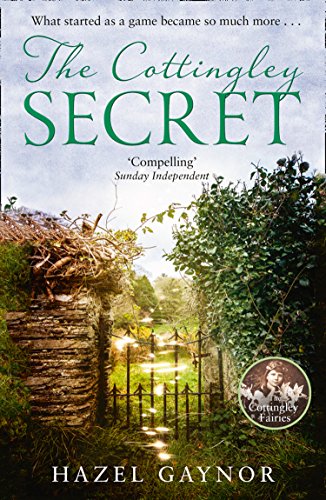
#BookReview ‘The Cottingley Secret’ by @HazelGaynor #historical #fairies

I won a signed paperback of The Cottingley Secret by Hazel Gaynor in a Twitter promotion on #NationalNorthernWritersDay and it’s been sitting on my to-read shelf for a while. I picked it up one weekend when searching for a comforting, absorbing read, and that’s what it is. Hazel GaynorTold in dual timeline, it is partly based on the true story of the two young girls who photographed fairies at the bottom of their garden, combined with a fictional imagining of a 21st century bookbinder who inherits a bookshop in Ireland. The story is slow to start and it’s a while before the fairy connection between the two strands is established. But hang in there.
In 1917, Frances Griffiths and her mother travel from South Africa to Cottingley, Yorkshire. They will stay with Frances’ aunt, uncle and cousin while her father goes off to fight the Great War. Frances soon settles into life with her older cousin Elsie and together the two play imaginary games. Until one day Frances sees fairies beside the beck at the back of the house, ‘…the first flash of emerald, then another of blue, then yellow, glimpsed out of the corner of my eye. Not dragonflies. Not butterflies. Something else.” After confiding in Elsie, Frances blurts out her secret to her mother who doesn’t believe her. None of the adults do. What follows is an innocent attempt to prove the adults wrong, an attempt which spirals out of control. Soon Mr Arthur Conan Doyle, creator of Sherlock Holmes, is involved and the possibility of confessing their secret becomes impossible.
In present day Ireland, Olivia Kavanagh arrives in her hometown of Howth on a sad journey. Her grandfather Pappy has died. Olivia feels helpless as she visits grandmother Nana, who suffers from dementia and lives in a local nursing home. But Pappy has left a letter and a surprise for Olivia. He has left her his secondhand bookshop, Something Old, and Bluebell Cottage. But Olivia lives and works in London as a rare book restorer and is due to marry fiancé Jack in a few weeks.
This is a novel about the need for hope at a time of upheaval and uncertainty, both in the midst of war in 1917 and for Olivia in the 21st century. ‘If we believe in fairies, perhaps we can believe in anything,’ says Frances’ mother. If they can believe in the end of the war, they can believe in the return of loved ones and the resumption of normal life.
As a childhood lover of Cicely Mary Barker’s Flower Fairies, I found this novel to be a wonderful read. Gaynor knits together the wonder of the fairies with the darker themes of world war, and the modern challenges facing Olivia who is lost but doesn’t know it.

Read my reviews of these other novels by Hazel Gaynor:-
THE BIRD IN THE BAMBOO CAGE
THE LAST LIFEBOAT … and try the #FirstPara of THE LAST LIFEBOAT.

If you like this, try:-
The Mermaid and Mrs Hancock’ by Imogen Hermes Gowar
The Good People’ by Hannah Kent
The Ninth Child’ by Sally Magnusson

And if you’d like to tweet a link to THIS post, here’s my suggested tweet:
#BookReview THE COTTINGLEY SECRET by @HazelGaynor https://wp.me/p2ZHJe-6nz via @SandraDanby