#BookReview ‘A Town Called Solace’ by Mary Lawson #mystery #smalltown

My favourite book of the year so far is also the discovery of a new author to love. A Town Called Solace is the fourth novel by Mary Lawson. The previous three have been nominated for, and won, many awards and much acclaim. I’m not sure how I have overlooked her but I’m now planning to catch-up. Mary LawsonSuch a quiet book with a powerful emotional punch, the story is set in a solitary lakeside town in northern Canada in 1972. It is a story of mistakes made and paid for, longed-for recompenses, the complexities of child/parent relationships and how things can so easily go wrong. Most of all it is about deep love, understanding and forgiveness. Told through the experiences of three people – eight-year old Clara, widow Elizabeth who is seriously ill in hospital, and Liam who appears one day and moves into the house next door to Clara’s family.
Clara has a key to Mrs Orchard’s house next door so she can feed the shy cat Moses and spend time playing with him so he won’t be bored alone. Clara prefers this to being at home because her older sister Rose has run away and her parents aren’t telling her the truth of what is happening. We learn Elizabeth’s story as she lays in bed struggling to breathe, remembering her life with husband Charles and a wrong she committed decades earlier which she still fiercely defends. Liam has recently split with his wife, left his job as an accountant, and comes to the town of Solace to take possession of a house, a surprise inheritance from someone he knew long ago. These three stories are wound together with builder Jim, policeman Karl, library assistant and ice cream maker Jo, and the sullen waitress at the Hot Potato cafe.
Like my favourite authors – Elizabeth Strout, Anne Tyler, Penelope Lively, Jane Smiley – Lawson has the ability to write about complex emotions with an easy style set in everyday situations that are believable, that could be happening to you, or someone you know. I immersed myself in the story, only towards the end did I appreciate Lawson’s deft plotting and subtle management of character. She writes about the ugliness of human behaviour with a beauty that helps you to understand the human dilemma, to look at the whole picture and see the person behind the actions.
A novel to treasure.

Here’s my review of THE OTHER SIDE OF THE BRIDGE, also by Mary Lawson.

If you like this, try:-
Summerwater’ by Sarah Moss
The House at the Edge of the World’ by Julia Rochester
The Last of the Greenwoods’ by Clare Morrall

And if you’d like to tweet a link to THIS post, here’s my suggested tweet:
#BookReview A TOWN CALLED SOLACE by Mary Lawson https://wp.me/p5gEM4-5lF via @SandraDanby

#BookReview ‘Jane Austen A Life’ by Claire Tomalin #books #writerslife

As a lifelong Jane Austen fan, how I wish I had read this biography years ago. So many details from Jane’s life, her observations in letters to sister Cassandra and comments about Jane by her own relatives shed a spotlight on characterisations and situations portrayed in her novels. Jane Austen: A Life by Claire Tomalin was first published in 1997. Claire TomalinLimited by the destruction of so many of Jane’s own letters, Tomalin builds a picture of Jane’s life from the accounts of her family and acquaintances, and of life at that time in Georgian England. The amount of research done must be formidable but Tomalin sets her story of Jane Austen’s daily life against her literary progress, including the times when she was unable to write. She is revealed as having a sparkling and at times dry wit, perhaps more Lizzie Bennet than Emma Woodhouse.  Also interesting is the account of first her father then her brother Henry at getting her books published. On Jane’s death, Cassandra was sole proprietor of Jane’s copyright though Henry continued to negotiate with publishers.
Any writer will be familiar with the reactions of one’s closest relatives to the publication of a new book. The excitement from some quarters, the bemusement from others, and Jane Austen experienced exactly the same. Mrs Austen described Fanny in Mansfield Park as ‘inspid’. It also made me pause to realise that by the age of twenty five, Austen had already written Northanger Abbey, Sense and Sensibility and Pride and Prejudice. But this was followed by a ten year pause in which she wrote nothing. Only in 1809 did she return to her former pattern of working. What happened to cause this creative halt? Jane’s father retired and so the family were forced to leave the rectory at Steventon; Jane and Cassandra moved with their parents to Bath. Many letters from this difficult time are missing. Tomalin suggests Jane became depressed. She also lacked the physical space and time to write; their lodgings in Bath, frequent outings to the Devon and Dorset coast, and attendance expected at social events, all prevented Jane from writing.
Such is the detail in this wonderful biography that it is difficult to choose highlights. It has made me determined to re-read Austen’s novels now, in the order in which they were written.

Try the #FirstPara of PRIDE AND PREJUDICE here and learn about the first edition of PRIDE AND PREJUDICE, first published in 1813.

If you’re a Jane Austen fan, try these two ‘extension’ novels by Molly Greeley:-
THE CLERGYMAN’S WIFE
THE HEIRESS

If you like this, try:-
Charlotte Bronte: A Life’ by Claire Harman
Howard’s End is on the Landing’ by Susan Hill
An Education’ by Lynn Barber

And if you’d like to tweet a link to THIS post, here’s my suggested tweet:
#BookReview JANE AUSTEN A LIFE by Claire Tomalin https://wp.me/p5gEM4-4k9 via @SandraDanby

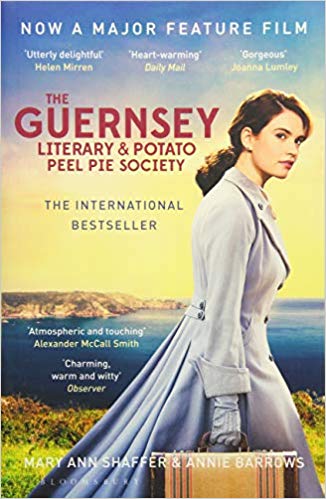
#BookReview ‘The Guernsey Literary & Potato Peel Pie Society’ #romance #WW2

I prefer to come to a book without reading reviews so I can make up my own mind. But sometimes there is a book that I missed in its early days but which goes onto be hugely popular. The Guernsey Literary & Potato Peel Pie Society by Mary Ann Shaffer & Annie Barrows is such a book. Mary Ann Shaffer & Annie BarrowsThe story is told in letter form, a structure I admit to having doubts about before I started reading. But the manner in which the letters flow and the information is dripped in means there are no information gaps, no repetitions. It is 1946 and writer Juliet Ashton receives a letter from a man in Guernsey who by chance owns a book that once belonged to her. And so begins Juliet’s correspondence with Dawsey Adams and his fellow members of the Guernsey Literary and Potato Peel Pie Society. Dawsey encourages other members to write to Juliet with their own experiences of the German occupation of the island. And so we hear from the nice, and not-so-nice characters.
What could be a superficial account of the islanders’ lives becomes a cleverly managed tale of a community that survives by mutual support, generosity, toughness, bravery and above all kindness. As letter after letter arrives from different people, we build up full pictures of the incidents that happened. Although there is a romantic thread to this tale – the rather full-of-himself Mark Reynolds – this is really a story about the survival of an island community throughout a time of unimagined difficulty.
At first Juliet is entranced by the islanders’ stories but as they write more letters she wants to meet them in person, both to put faces to her correspondents and to scout the possibility of writing a book about their experiences. The book is split into two parts; in part one, Juliet is in London; in part two she travels to Guernsey. The story takes places during nine months of 1946; this feels a tight time span for some of the emotional relationships to develop and at times the familiarity and trust seemed to progress in leaps rather than steps, but perhaps this is understandable post-war when people grasped at chances of normality and happiness.
The title suggests this is a nice, quirky read – and it places it did make me chuckle – but it also tells of brutality, torture and death and the lasting after-effects of war.
I was left wishing I hadn’t read it yet and that I had it to look forward to. Just the book to re-read when your spirit needs a lift.
CLICK HERE TO READ MORE ABOUT THIS BOOK AT AMAZON

Read why novelist and poet Claire Dyer chooses THE GUERNSEY LITERARY & POTATO PEEL PIE SOCIETY as her ‘Porridge & Cream’ comfort read.

If you like this, try:-
Pattern of Shadows’ by Judith Barrow
After the Party’ by Cressida Connolly
The Book of Lies’ by Mary Horlock

And if you’d like to tweet a link to THIS post, here’s my suggested tweet:
#BookReview THE GUERNSEY LITERARY & POTATO PEEL PIE SOCIETY by Mary Ann Shaffer & Annie Barrows https://wp.me/p5gEM4-47C via @SandraDanby

#BookReview ‘The Cornish Village Murder’ by Fiona Leitch #crime #cosycrime

The Cornish Village Murder by Fiona Leitch is the second Nosey Parker cosy mystery and the first I’ve read, in fact I read it when it was originally called A Brush with Death. Jodie Parker, ex-Metropolitan police officer, and newly single mum has returned home to Cornwall. It’s the week of Penstowan’s inaugural arts festival and Jodie, no longer working for the police, is doing the catering. The festival’s main attraction is painter Duncan Stovall, famous for his Penstowan series of sea paintings. Fiona Leitch This is a story with instant fizz. Written in the first person, Jodie’s, I loved the sly sometimes saucy asides that pull you straight into the jokes, the personalities and the action. If it were an item of food on a menu catered by Jodie, this book would be a mash-up of a Cornish saffron bun slathered with butter and clotted cream, a mug of steaming tea and a glass of scrumpy. Cornwall is a part of the book’s DNA, not just the dialect of the Penstowan residents or the food but the wonderful descriptions of coastal scenery that make you want to get into the car and head south on the M5.
When a visiting author is found dead at the bottom of the cliffs Jodie can’t resist sticking her nose in and asking questions, much to the annoyance of DCI Nathan Withers and the irritation of Jodie’s daughter Daisy and mum Shirley.
This is a silky read, one of the best of its genre I’ve read. A brilliant community of family, friends and townspeople, a beautiful seaside setting, with a witty detective, plotted on two levels. The foundation is Jodie’s life settling into the town of her childhood, a triangular-shaped romantic entanglement, and her burgeoning new catering business. Overlaying this is the case in which she becomes entangled; the art world, not just the creation of art but the finance, promotion, sales and investment.
I particularly enjoyed the joshing with childhood friends Debbie and Tony, including lots of cultural references from the Eighties that are lightly handled without huge signposts saying ‘laugh here’.
Read it and chuckle.
CLICK HERE TO READ MORE ABOUT THIS BOOK AT AMAZON

And here’s my review of the first in the series:-
THE CORNISH WEDDING MURDER #1NoseyParker

If you like this, try:-
Magpie Murders’ by Anthony Horowitz [#1SusanRyeland]
A Deadly Discovery’ by JC Kenney [#4 AllieCobb]
‘Tea for Two at the Little Cornish Kitchen’ by Jane Linfoot [#2LittleCornishKitchen]

And if you’d like to tweet a link to THIS post, here’s my suggested tweet:
#BookReview THE CORNISH VILLAGE MURDER by Fiona Leitch https://wp.me/p5gEM4-5lq via @SandraDanby

#BookReview ‘Beneath the Keep’ by Erika Johansen #fantasy #Tearling

Beneath the Keep by Erika Johansen is the standalone prequel novel to her Tearling trilogy, the first of which was excellent, the second good, the third disappointing. Beneath the Keep is every bit as good as the first novel, if not better. If you haven’t read the trilogy, read this first. It’s a rollercoaster ride, a dystopian story of a country at war, the rich denying the poor, drought, famine, rebellion, cruelty and the hope of a True Queen who may exist at some time in the future. Many names are familiar from the trilogy, many are completely new. Erika JohansenChristian is twenty. An orphan, he was born in the Creche, the labyrinth of tunnels beneath the Tear’s capital city New London. The Creche is only one layer of the underground and it is not the worst, in some dark places unimaginable horrors take place. Since he was a small child, Christian has been a fighter. Now he is a legend, unbeaten, still alive unlike the many he defeated. It is a deadly game of kill or be killed. He cares only for one person. As small children he and fellow orphan, now prostitute, Maura were sold together into slavery, together they learned how to survive. Christian is pragmatic, Maura dreams of going ‘topside’, to see the sky and the stars.
Princess Elyssa is heir to the Tear throne but she has a problem. She dislikes her mother Queen Arla and her politics, struggles to perform her royal duties and pay homage to the Church which she believes to be corrupt. Elyssa becomes sympathetic to the secret resistance group, Blue Horizon. As they give food and tools to the poor, Blue Horizon spreads the word about the coming of a True Queen. But as Elyssa becomes outspoken she becomes dangerous, not just to her mother but to a group of criminals including a white witch who can read and control minds.
Meanwhile in the rural Almont, harvests are failing and landowners try to recoup their losses by demanding more money from their tenant farmers. One young woman fights back, and so a rebellion is born.
The climax is a fantastic set piece bringing together all the story strands. I sat up late at night to finish the book. Yes some of it is back story for the trilogy but there are so many twists and turns and new character insights that I surrendered to the ride. If you’re reading it knowing nothing of the Crossing, the Tearling and the mythology of the series, I envy you the discovery of this absorbing chronicle.
In Beneath the Keep, Johansen shows us the underworld of the trilogy. Underground, it is dark, terrifying, dehumanising. She gives us hope while also showing the horror.
CLICK HERE TO READ MORE ABOUT THIS BOOK

Click the title to read my reviews of Johansen’s Tearling Trilogy:-
THE QUEEN OF THE TEARLING [#1 TEARLING]
THE INVASION OF THE TEARLING [#2 TEARLING]
THE FATE OF THE TEARLING [#3 TEARLING]

If you like this, try:-
The Bear and the Nightingale’ by Katherine Arden [#1 Winternight trilogy]
Children of Blood and Bone’ by Tomi Adeyemi [#1 Legacy of Orisha]
La Belle Sauvage’ by Philip Pullman [#1TheBookofDust]

And if you’d like to tweet a link to THIS post, here’s my suggested tweet:
#BookReview BENEATH THE KEEP by Erika Johansen https://wp.me/p5gEM4-5lm via @SandraDanby

#BookReview ‘The Blessing’ by Nancy Mitford #satire #historical

The Blessing by Nancy Mitford tells of the wartime romance and marriage of young Englishwoman Grace Allingham and dashing Frenchman Charles-Edouard de Valhubert. Both are aristocratic but from completely different backgrounds. How, you wonder, could this marriage possibly work. Mitford has great fun with the gulf of understanding between the two nationalities, still recovering after the war. Nancy MitfordAt the beginning of the war, Grace’s fiancé Hughie goes off to fight. Despite being engaged, she falls head over heels in love with the flirtatious Frenchman Charles-Edouard and marries him. A fortnight after their wedding, Charles-Edouard returns to Cairo. Nine months later, Grace gives birth to a boy, Sigismond. The war years pass by. Grace ‘lived in a dream of Charles-Edouard, so that as the years went by he turned, in her mind, into somebody quite divorced from all reality and quite different from the original.’ Even when peace is declared, Charles-Edouard’s return is announced and delayed, announced and delayed. Always, there is a gap between expectation and reality. Not all is as it seems.
When he finally returns, he collects his wife and now five-year-old son and takes them to live in France, first at the family seat Bellandargues in Southern France, later in Paris. And now the English/French comedy begins as Grace, and her English Nanny, adapt to French cuisine, foreign customs and the shockingly decadent manners and unspoken rules of French society.
When Grace discovers the truth of her husband’s idea of marriage – including a permanent mistress and various casual affairs – she returns to her father’s London home with Sigi in tow. And now the funniest part of the novel begins. As both sides of the family encourage the couple to reconcile, Sigi is convinced he will benefit materially from having two separate parents, gaining more attention, more gifts and general spoiling. And so he proves himself efficiently cunning in keeping his parents apart.
It took me a long time to work out the meaning of the title, so I won’t give away the secret here. I found the start slow but the question of if and when Grace will realise the truth of Charles-Edouard kept me reading, until I realised I wanted them to reunite. The funniest characters are Sigi – who I wanted to slap whilst at the same time cheerfully cheering him on – and Nanny, who stoutly refuses French food and cooks in the nursery over a spirit lamp.
Written from personal experience – Mitford both lived in Paris and had a long affair with a Frenchman – I found the humour unsentimental and non-PC so perhaps the funnier for that.
CLICK HERE TO READ MORE ABOUT THIS BOOK

Read my reviews of these other novels by Nancy Mitford:-
CHRISTMAS PUDDING
HIGHLAND FLING
LOVE IN A COLD CLIMATE
THE BLESSING
THE PURSUIT OF LOVE
WIGS ON THE GREEN

Read the first paragraph of THE PURSUIT OF LOVE here.

If you like this, try:-
How to Stop Time’ by Matt Haig
Stanley and Elsie’ by Nicola Upson
Mothering Sunday’ by Graham Swift

And if you’d like to tweet a link to THIS post, here’s my suggested tweet:
#BookReview THE BLESSING by Nancy Mitford https://wp.me/p5gEM4-46K via @SandraDanby

#BookReview ‘A Deadly Discovery’ by @JCKenney1 #cosycrime #crime

Needing a change one day, as I sometimes crave a calming walk in the green countryside, I picked up cosy mystery A Deadly Discovery by JC Kenney. Knowing the book was fourth in a series, I didn’t know what to expect. JC KenneyLiterary agent Allie Cobb lives in Rushing Creek, Indiana where her life revolves around her clients, their manuscripts, taking her cat Ursi for a walk, family and friends. Having previously investigated local murders, and being injured in the process, before this book starts Allie had promised her nearest and dearest that she would drop her private investigating. But when a body turns up in the local woods, everyone wonders if it could be a girl who disappeared twenty ago. As Allie asks questions around town, tensions with the police department arise with suspicions of clues missed at the time of the original disappearance.
This is a different style of whodunnit in that the story is firmly anchored and clues processed in the head of detective Allie. This is a tell-don’t-show style that sinks us into Allie’s daily life and concerns, the reader must unravel the clues from the seemingly ordinary. Of course this is a mystery story so clues, and red herrings, can be anywhere.
Diving into a series mid-way has its benefits and issues. I’m sure I missed lots of references to characters and past stories that would help my reading of Allie’s detecting and understanding of Rushing Creek. From page one a lot of names and relationships are introduced, featured in the previous novels, that I struggled to remember. A character cast at the beginning would help.
Kenney has created a believable small-town world at Rushing Creek where lives, secrets, resentments and loves have been entwined since birth. It reminded me of Charlotte Hinger’s Lottie Albright genealogical mystery series, set in another American small town. When everyone knows everyone else, secrets are not simply embarrassing or shameful. They can be deadly.
An easy, gentle read without a confusing tangle of multiple suspects. I guessed the murderer well before Allie’s big reveal scene, which owed much to the trend of Poirot. I finished it feeling curiously unattached from the people involved, perhaps because Allie dominates the story so thoroughly.
CLICK HERE TO READ MORE ABOUT THIS BOOK AT AMAZON

If you like this, try:-
Deadly Descent’ by Charlotte Hinger
‘Agatha Raisin and the Quiche of Death’ by MC Beaton
Murder at Catmmando Mountain’ by Anna Celeste Burke

And if you’d like to tweet a link to THIS post, here’s my suggested tweet:
#BookReview A DEADLY DISCOVERY by @JCKenney1 https://wp.me/p5gEM4-5lg via @SandraDanby

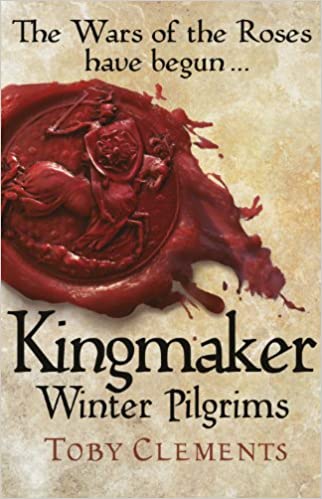
#BookReview ‘Winter Pilgrims’ by Toby Clements #historical

This is the first of a four-book series about the Wars of the Roses. Toby Clements is a new author for me, I admit to picking up the paperback by mistake in a bookshop when browsing and am happy to find an unknown historical author to explore. Winter Pilgrims is the first of the four novels, telling the well-documented story of the Lancaster versus York wars through the eyes of two fictional people on the edge of the action. Toby ClementsIn February 1460, at a priory in Lincoln, two people flee from marauding soldiers. Despite living yards apart in the same priory Brother Thomas and Sister Katherine have never met until this morning, their previously segregated lives are to be entwined as they escape danger only to encounter new threats. And some old ones.
At first I worried that the plot was moving slowly and felt occasionally drowned by detail, but I stuck with it and was rewarded. By the end – and it’s a long book, the paperback is 560 pages – I wanted to starting reading the second novel straight away. Clements excels at historical detail, particularly soldiers and fight scenes, living conditions and basic human detail. Both characters are conflicted by their religious backgrounds, the things they must do to survive frequently challenge their faith. Life in the real world is brutal, dirty, dangerous and poor. Neither have the personalities of victims. Thomas trains as an archer, Katherine – adopting the male persona as Kit – proves to be an adept surgeon.
Making snap decisions takes them to unknown places with sometimes reliable, sometimes untrustworthy people. Along the way they become involved in some of the key battles of the year as their story is set within the broader framework of civil war. Over the years I have read a lot about the Wars of the Roses due to an early fascination via Shakespeare, but still find it disorientating and so was disappointed with the map and superficial character list. But the story of Thomas and Katherine kept me turning the pages late at night, just one more chapter.
A good book to lose yourself in.

Read my review of the next in this series:-
BROKEN FAITH #2KINGMAKER

If you like this, try:-
The Evening and the Morning’ by Ken Follett
The Lady of the Rivers’ by Philippa Gregory
The Burning Chambers’ by Kate Mosse

And if you’d like to tweet a link to THIS post, here’s my suggested tweet:
#BookReview WINTER PILGRIMS by Toby Clements https://wp.me/p5gEM4-5iY via @SandraDanby

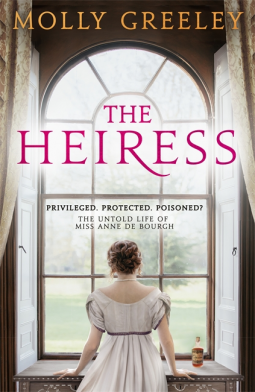
#BookReview ‘The Heiress’ by @MollyJGreeley #historical #romance

An intriguing premise for this second novel by Molly Greeley which re-imagines the story of a minor character in Jane Austen’s Pride and Prejudice. In The Clergyman’s Wife it was Charlotte Collins, in The Heiress it’s the turn of Anne de Bourgh. Molly GreeleyWell-written in a slightly modernised style of Austen, it is easy to slip into the head of Lady Catherine de Bourgh’s sickly daughter who at first sight seems an unpromising protagonist. But keep reading. Greeley starts with the birth of a daughter to a young married couple. In order for this book to work you have to both forget Austen’s portrayal of Anne, to sink yourself into the life of this delicate child, but also to remember the original. That is the path to enjoying the asides, thoughts and occasionally darting but puzzling urges that Anne experiences growing up. Scenes I looked forward to, critical in Pride and Prejudice, were skirted over here in favour of new material. Familiar characters occur, some more importantly than others – Darcy, Colonel Fitzwilliam, Mr Collins – but this is 100% Anne’s story.
Sickly from birth, Anne is dosed twice daily with laudanum drops. She is protected from exertion, emotions and unspecified dangers of the outside. Playing the piano is too strenuous, novels and poetry too emotional. Then when she is twelve after an unsuccessful treatment of sea bathing, Anne’s life change when a governess arrives. This is not yet the nodding Mrs Jenkinson from Austen but Miss Hall, a young woman determined to teach her unschooled young pupil what she needs to know to be the future mistress of Pemberley and Rosings.
This is a story of laudanum addiction, the tentacles of the drug’s control preventing any small rebellion by Anne, any protestation that she feels healthy before her curative drops are administered and only weak afterwards. Cocooned from emotion, her true personality smothered, Anne lives at a distance from those closest to her. An article in a newspaper is to be the catalyst for change. But change of any kind takes immense courage, needing a confrontation with her controlling mother. Greeley gives Lady Catherine a moment of redemption though as we, and Anne, catch a glint of history that explains the elderly woman portrayed by Austen and challenged so gleefully by Lizzie Bennet.
For Anne to fulfill Miss Hall’s objective of being a fit mistress of the estate of Rosings, she must do more than break free of drugs. She must discover the truth of who she is.
A fascinating exploration of one woman’s search for freedom in a time of female subjugation to men, when females were labelled as delicate with little diagnosis or review, when many women were unable to live alone or manage their own inheritance. At times surprising, the detail of The Heiress is Austen-like but the emotions are of the twenty-first century.

Click here to read my review of THE CLERGYMAN’S WIFE, also by Molly Greeley.

If you like this, try:-
Cecily’ by Annie Garthwaite
The Cottingley Secret’ by Hazel Gaynor
The Almanack’ by Martine Bailey

And if you’d like to tweet a link to THIS post, here’s my suggested tweet:
#BookReview THE HEIRESS by @MollyJGreeley https://wp.me/p5gEM4-5l4 via @SandraDanby

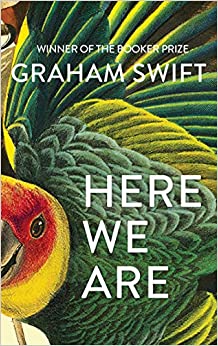
#BookReview ‘Here We Are’ by Graham Swift #theatre #Brighton

What a delightful slim story is Here We Are by Graham Swift. On the surface it’s a simple tale of a summer season at the theatre at the end of Brighton Pier in 1959. It’s a tale about a magician and his assistant. It’s also a tale about perception and delusion, truth and lies, what is real and an illusion. Graham Swift When young magician Ronnie Deane gets a job for a seaside summer season, he advertises for an assistant. Evie White has experience in the chorus line but has never worked for a magician before. They are both on a steep learning curve. Their guide in Brighton is Ronnie’s friend Jack Robbins, compere, listed on the bill as Jack Robinson. ‘Some patter, some gags, some of them smutty, a bit of singing, some dancing, some tapping of his heels.’ As Ronnie and Evie, listed as ‘Pablo & Eve’, perfect their act, work their way up the bill, they go out as a foursome in the evenings with Jack and his latest girl. They change so frequently Evie can’t keep track of their names, instead thinking of them simply as ‘the Floras’.
This is principally Ronnie’s story, how at the age of eight he left his mother and was evacuated to safety in Oxford. There he found a new home, new parents and a magician to share all the secrets and tricks of the trade. By the end of the war, when Ronnie returns home to London and to his mother, he is a man who knows what job he wants to do.
Like all Swift’s stories, this can be read on many levels. At its simplest it is about a love triangle.
Only 208 pages, it is a short novel. The language is beautiful with not an unnecessary word. Not much may happen, but as the events of 1959 unfold Swift tells us the story of Ronnie’s childhood and how it impacts on the man he has become. The lies told to prevent hurt, the lies told for self-protection, lies told for unknown reasons, and some lies which may actually be the truth. As unknowable as Ronnie’s Famous Rainbow Trick. Unpretentious, at its heart lies a mystery that is in itself mysterious.
CLICK HERE TO READ MORE ABOUT THIS BOOK AT AMAZON

Here’s my review of Swift’s MOTHERING SUNDAY.

If you like this, try:-
A View of the Harbour’ by Elizabeth Taylor
The Gustav Sonata’ by Rose Tremain
Redhead by the Side of the Road’ by Anne Tyler

And if you’d like to tweet a link to THIS post, here’s my suggested tweet:
#BookReview HERE WE ARE by Graham Swift https://wp.me/p5gEM4-5iB via @SandraDanby