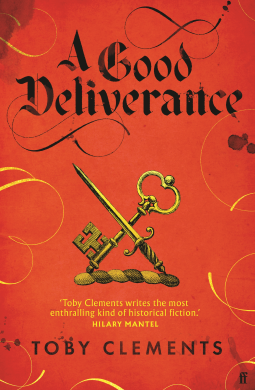
#BookReview ‘A Good Deliverance’ by Toby Clements #historicalfiction

A Good Deliverance by Toby Clements is many things, many stories. A story of one man’s life. Of the writing of a great courtly chronicle. Of wins and losses on foreign battlefields. Of the relationship of an imprisoned old man and the young boy who brings his food. Above all, it is about the power of story. Toby ClementsThe prison confession of Sir Thomas Malory, writer of Le Morte d’Arthur, husband, father, landowner, soldier, courtier, politician and hopeless romantic, is wittily told, bringing a new perspective to the Wars of the Roses. Thomas, an admirer of knightly tales, honorable battles, courtly love, is in his fifties when he is arrested and imprisoned at Newgate jail. These are times of political and civil unrest. His offence is unknown to him and while expecting the step of his lawyer bringing news of a pardon, he awaits his execution. The person he sees most frequently is the twelve year old son of the prison warder. This boy brings his food twice a day, he also brings gossip and curiosity. And so in his tales to this boy, Malory tells the story of his life.
For a story that essentially takes place within four walls, this is a dynamic book that I didn’t want to put down. Clements has created a fictional character from a real man of whom little is known. Historians have a variety of possible noblemen who may have been the real Malory and this gives Clements plenty of room to create a character full of love, of conflict, of ambition often misjudged or misplaced, and of optimism. His life has been a perilous one full of sieges and battles in foreign countries, of disputes with unworthy lords, of brushes with royalty, of falling in love, sometimes unwisely. It is in short an echo of the courtly tales of love and honour surrounding King Arthur and the Knights of the Round Table. The prison boy, desperate for Malory to get to the tale about fighting at Agincourt alongside King Henry V, is treated to retellings of tourneys and swords, of ships and duels and strange lands. He also learns his letters.
When the boy is absent at his duties, Malory’s story continues chronologically for the reader as the bits between the battles and feuds are retold. The pile of papers in his coffer demonstrates that Malory is rewriting the legends of Arthur, Lancelot etc. As he tidies, amends, obfuscates, shortens and lengthens the Arthurian myths, how, we should wonder, is he editing his own life story and why. To make it more entertaining for the boy, to gild his own legacy, to prove his innocence of whatever crime of which he is accused.
This is a funny, clever, entertaining story about a well-known period of English history, told from an unusual perspective. In Malory, Clements has created a sympathetic character who means the best but often fails to live up to his own dreams.
Engaging. Entertaining. Unusual.
PS. Despite the sudden ending, this is rumoured to be the first of two books about Thomas Malory.

Read my reviews of the first two Kingmaker novels by Toby Clements:-
WINTER PILGRIMS #1KINGMAKER
BROKEN FAITH #2KINGMAKER

If you like this, try:-
Cecily’ by Annie Garthwaite
‘A Column of Fire’ by Ken Follett #3KINGSBRIDGE
‘The King’s Messenger’ by Susanna Kearsley 

And if you’d like to tweet a link to THIS post, here’s my suggested tweet:
#BookReview A GOOD DELIVERANCE by Toby Clements https://wp.me/p2ZHJe-8Aa via @SandraDanby

COMING SOON… THE NEXT BOOK I REVIEW WILL BE:- Helena Dixon

#BookReview ‘The King’s Messenger’ by Susanna Kearsley #historical #romance

In 1613, England and Scotland are united under the rule of James I. But a young prince is dead and there are rumours of poisoning. A messenger appointed by the king is sent north on a secret mission to return a suspect to London to face trial. It took me a while to settle into the story of The King’s Messenger by Susanna Kearsley but once I did I didn’t want to put it down. Susanna KearsleyIt’s a wonderfully immersive tale, effectively a road trip from Leith to London of an ill-fitting group of people. Andrew Logan, the messenger in his distinctive red garb, his captive Sir David Moray who had been the Prince Henry’s companion, a scrivener Laurence Westway, his daughter Phoebe and Hector Reid a young stable boy and would-be king’s messenger. On the road they are pursued by Moray’s cousin Patrick Graeme, the fourth laird of Inchbraikie, and a band of armed men determined to return the prisoner to safety in Scotland.
As the journey progresses we learn more of the backstory in flashbacks. Happier times when Moray was with the young Prince Henry, eldest child of James I of England [and I of Scotland] and grandson of Mary Queen of Scots. It is a story steeped in the history of its time, the harsh realities of court life and of being a royal child, and the heartwarming relationship between a courtier and a prince. How can it have gone so wrong that Moray is arrested for the murder of his charge. Sir David has no intention of standing trial but how will he escape the always watchful Logan. Phoebe Westaway, who has a historic antagonistic relationship with Logan, carries a love token given to her by a neighbour in London. She is of the party at her own invitation, worried for the welfare of her elderly father. Logan tells no one that he is a seer, he has visions of things to come and sees wraiths, or ghosts, which may offer warnings of danger.
Everyone, it seems, is keeping secrets. Except Hector who wears his heart on his sleeve. Everyone has a hidden agenda. Trust is thin on the ground for a group of people who must live at close quarters twenty-four hours a day.
As the miles pass by, this book is difficult to put down. It’s a page-turning 17th century adventure comprising court politics, royal history, deadly pursuit through the border country and a slow-burn romance worthy of Diana Gabaldon.
A well-researched book, don’t miss the author’s notes at the end explaining her research. It’s my first novel by Susanna Kearsley, now I want to read more.

If you like this, try:-
The Almanack’ by Martine Bailey #1TABITHAHART
A Rustle of Silk’ by Alys Clare #1GABRIELTAVERNER
Lord John and the Private Matter’ by Diana Gabaldon

And if you’d like to tweet a link to THIS post, here’s my suggested tweet:
#BookReview THE KING’S MESSENGER by Susanna Kearsley https://wp.me/p2ZHJe-8yN via @SandraDanby

COMING SOON… THE NEXT BOOK I REVIEW WILL BE:- Toby Clements

#BookReview ‘The Hidden Girl’ by Lucinda Riley & Harry Whittaker #suspense #mystery

The Hidden Girl by Lucinda Riley & Harry Whittaker is a story of family secrets across the generations, love and shame, jealousy and courage. Sweeping from the wild and beautiful Yorkshire moors to the horrors of occupied Poland in World War Two, it covers huge themes. Lucinda Riley & Harry WhittakerTwo teenage girls grow up as neighbours on the wild Yorkshire moors. Fifteen when the story begins, Leah Thompson is quiet and shy. She loves the moors, the Brontës, the wildness and doesn’t realise how beautiful she is. Desperate to help her mother Doreen support her father, who is crippled by arthritis and unable to work, Leah helps out at the nearby farmhouse where Rose Delancey is attempting to restart her career as an artist. Rose has two children. Miles, a dark-haired loner who haunts the moors with his camera when he’s home from university. His adopted younger sister Miranda, who is at school with Leah, is brash but vulnerable, and longs to escape the boring moors. Into this rural world, Rose’s nephew Brett arrives for the summer holidays. Travelling from his school at Eton, Miles and Miranda are unaware of their cousin’s existence. They’ve never met his father David Cooper, Rose’s estranged brother, who is a wealthy businessman. Teenage hormones become entangled and hearts are broken.
When a chance encounter catapults Leah into the glamorous international world of modelling, Miranda is determined to find wealth and success too. Ironically both women find themselves the focus of controlling, possessive men; a disturbing theme throughout the book. The story sweeps from Yorkshire to the South of France, New York to Milan, taking in the worlds of international modelling, photography and art. This is a story of the misuse of power, abuse, betrayal and violence that travels across the generations to the modern day. Told through the eyes of Leah and Miranda, and of brother and sister David and Rosa in World War Two Poland, this is an immersive novel to sink into. It reminded me of Penny Vincenzi’s doorstop-sized novels which lock you into the world of the characters so you can’t stop turning the pages. Except this has a harder edge.
The first Lucinda novel I’ve read since her death, The Hidden Girl is a rewrite by her son Harry of an earlier Lucinda novel. It has the clear identity of a Lucinda book, her voice is clear throughout. There is though more looseness in storyline with some of the most important action reported rather than shown directly, which makes it feel rushed and at a distance. The themes are familiar from the Seven Sisters series: truth in relationships, abuse of power, family secrets, hidden pasts and repressed violence. With myriad twists, turns, misunderstandings and betrayals, it filled an entire weekend’s reading.

Read my reviews of the first seven novels in Lucinda Riley’s ‘Seven Sisters’ series:-
THE SEVEN SISTERS #1SEVENSISTERS
THE STORM SISTER #2SEVENSISTERS
THE SHADOW SISTER #3SEVENSISTERS
THE PEARL SISTER #4SEVENSISTERS
THE MOON SISTER #5SEVENSISTERS
THE SUN SISTER #6SEVENSISTERS
THE MISSING SISTER #7SEVENSISTERS

… plus my reviews of these standalone novels, also by Lucinda Riley:-
THE BUTTERFLY ROOM
THE LOVE LETTER
THE GIRL ON THE CLIFF

If you like this, try:-
Inheritance’ by Nora Roberts #1LOSTBRIDETRILOGY
‘Water’ by John Boyne #1ELEMENTS
‘Nutshell’ by Ian McEwan

And if you’d like to tweet a link to THIS post, here’s my suggested tweet:
#BookReview THE HIDDEN GIRL by Lucinda Riley & Harry Whittaker https://wp.me/p2ZHJe-8ya via @SandraDanby

COMING SOON… THE NEXT BOOK I REVIEW WILL BE:- Susanna Kearsley
#BookReview ‘The Silent Resistance’ by Anna Normann #WW2

The German occupation of Norway is a new World War Two location for me so I was looking forward to reading The Silent Resistance by Anna Normann. It tells the story of three generations of women in one family who live outside the town of Haugesund. Anna NormannAnni Odland’s husband Lars is a seaman on the Atlantic convoys. She survives day to day with her young daughter Ingrid in an isolated house outside town, and Guri, Anni’s goat-keeping mother-in-law who lives at a nearby farm. They are tough women. Haugesund is a coastal place where wives are used to the absences of their seafaring men. But Lars was at sea when the Germans attacked and hasn’t been home since. This a woman’s story of bravery under duress, of resisting the enemy despite living under occupation, being at constant risk of danger or betrayal, while caring for her innocent but curious daughter. Woven through its pages is the eternal wartime conflict of romance.
The ugliness of war contrasts starkly with the beauty of the Norwegian coast. Normann examines what constitutes loyalty, and betrayal, in wartime circumstances. The family’s life changes when a German is billetted at Anni and Ingrid’s home. Anni’s story is intense, showing her loyalty to Ingrid and her determination to continue her work with the local resistance group. But she has limited power, must take decisions in impossible circumstances and decide between compromises that only have bad outcomes. A brave woman. At all times she seeks to protect Ingrid’s innocence, an almost impossible task when children are plunged into such a nightmare scenario. When the war ends, Ingrid is seven and can remember nothing but war. Anni has disappeared and no one can answer Ingrid’s questions.
The first three-quarters of the wartime story is told in detail, the later explanation of the decades after the war in contrast seems rushed. Action takes place from the 1940s to 1980s. Viewpoints are concentrated on Anni and Ingrid at varying points through the decades, often going back and forth in time. A chronological order might have maintained for longer the mystery of Anni’s destiny and explore the impact on the family of Anni and Lars’ decisions. I also longed to hear a contrasting point of view from outside the family, to add depth to the portrayal of life under German rule and an outsider’s view of the family.
The Silent Resistance is an emotional story of the cruelty of war and the separations it forces. Even those who fight for their country are not immune to unjustified wrongs. There is a heartbreaking twist that defies belief that it actually happened. The Author’s Note at the end supplies vital historical context.

If you like this, try:-
‘The Collaborator’s Daughter’ by Eva Glyn
‘The Guernsey Literary & Potato Peel Pie Society’ by Mary Ann Shaffer & Annie Barrows
Daughters of War’ by Dinah Jefferies #1DAUGHTERSOFWAR

And if you’d like to tweet a link to THIS post, here’s my suggested tweet:
#BookReview THE SILENT RESISTANCE by Anna Normann https://wp.me/p2ZHJe-8zv via @SandraDanby

COMING SOON… THE NEXT BOOK I REVIEW WILL BE:- Lucinda Riley & Harry Whittaker

#BookReview ‘When the Germans Come’ by David Hewson #WW2 #thriller

Dover in 1940 is a town on the edge of invasion, hovering, waiting. When the Germans Come by David Hewson is a World War Two story not cut from the usual cloth of wartime thrillers. David HewsonSet in the East Kent garrison town, the part of Britain nearest to France and  suspected to be the landing point when the Germans come, this is a murder mystery. After the evacuation of some mothers and children, most locals stay put surrounded by the military and by chancers arriving in town to make a living from the soldiers. For the locals, determined not to be turned out of their homes by Nazis, it’s a matter of when not if the Germans invade. ‘No one cares a damm about anything except Jerry and when he’s going to come.’
Hewson takes his time establishing the state of play in the town, who is who. The two central characters are Louis Renard, English despite the French name, he is a Scotland Yard detective who suffered a head injury during the Dunkirk evacuation and is newly arrived in Dover. Renard is living with his elderly aunt and still suffers from flashbacks to Dunkirk and a terrible case he was investigating in London. Canadian foreign correspondent Jessica Marshall arrives in town looking for an edgy story, something to make her name.
Both are treated with suspicion as foreigners, incomers, by the military and the locals, considered possible German informers or spys. Renard is restricted in his job by the lack of support, no coroner, no pathologist, just a desk, a telephone and a willing junior. Marshall is suffocated by the reporting restrictions imposed by Captain David Shearer at Dover’s Ministry of Information. Renard is curious about Shearer, ‘He appeared to have a remit which ran far wider than controlling information in and out of the town.’ Better to do your job and don’t ask questions, is the unspoken advice to Renard. Marshall is similarly limited by Shearer, allowed only to write puff pieces to raise morale.
The pace increases when the body of a woman is found in a top secret location. It is a clifftop hideout designed for use as a resistance cell if the worst happens, one of Churchill’s Auxiliary Units. Renard and Marshall ignore warnings to stay clear of the site. Annoyed the body is moved and the location cleaned, both ask awkward questions, both just want to do their job. But this is wartime and in Dover there are layers of secrets, the military installations, the newcomers like Shearer and local criminals looking to make money from war. And spies. Spies for the allies, possibly spies for the Germans. The harder Renard and Marshall push for the truth, the quicker the cracks appear.
When the Germans Come is a detective story set during wartime when priorities are transformed. What is more important, the war or the murder of a woman? Moral dilemmas are explored as everyday dislikes and resentments intensify during wartime, movement and information restrictions imposed, prejudices reinforced. It is cauldron of rumour in which assumptions take flight. Through it all, Renard never forgets he is first and foremost a policeman. He refuses to allow war to stop him doing his job and in the process finds himself again after the horror of Dunkirk.
Slow to start, the tension tightens and tightens until I read late into the night. The ending is so abrupt, I suspect another Louis Renard installment.

Read my review of THE GARDEN OF ANGELS, also by David Hewson.

If you like this, try:-
Corpus’ by Rory Clements #1TOMWILDE
The Secret Shore’ by Liz Fenwick
The Silence in Between’ by Josie Ferguson

And if you’d like to tweet a link to THIS post, here’s my suggested tweet:
#BookReview WHEN THE GERMANS COME by David Hewson https://wp.me/p2ZHJe-8xr via @SandraDanby

COMING SOON… THE NEXT BOOK I REVIEW WILL BE:- Anna Normann

#BookReview ‘The Blue of You’ by Amanda Huggins @troutiemcfish #contemporary

I read the 120-page novella The Blue of You by Amanda Huggins in an afternoon, drawn into the story by her exploration of relationships old and new, the imprints of the former on a fresh start. Amanda HugginsIn 2010, a tragedy in her northern hometown sends Janey south to London. A lost friend, a parting from her first love. When she returns alone to Langwick Bay years later, she’s still lost and searching for something. Janey is at sea emotionally and geographically, but her hometown is her anchor. It is the death of her friend Alice when they were teenagers that magnetically brings Janey home. The loss is painful still and, after spending the intervening years stabbing her guilt with the sharp tip of a knife, she seeks resolution. Alice died at Christmas and Janey’s annual celebrations ever since have been loaded with grief and regret. The Blue of You takes place in the lead up to Christmas 2022.
Not sure if she will resettle permanently in Langwick Bay, Janey begins to heal when she meets Tom Inglewood, a coble fisherman who is part of a group of local men trying to preserve the traditional way of fishing. ‘Tom has never told me how he feels in the everyday language I know, has never used the word love, but has shown me his love every day – there is love in mending nets, in advising and helping the lads in the village, there is love in the way he watches and reads the sky and the sea. He knows love better than I do.’ Tom’s solid presence, his undemanding acceptance of Janey and his unspoken but visible love for her, help her to think clearly of Alice and, for the first time as a adult, to explore what really happened.
The Blue of You is firmly anchored in its location. Huggins is a northern writer and her love of the place shines out on every page. Janey has always missed home, longs to return, but now she is back she’s not sure what, or who, she’s looking for. Only that she wants to make peace with her past, and move on. But the locals don’t recognise her, assuming her to be yet another incomer who doesn’t appreciate or have interest in the local way of life. When she does meet an old acquaintance, it doesn’t go as expected.
Finally she beings to talk about Alice. ‘Every detail is clear as day in my head, but the words stick to my tongue like glue the moment I start to speak.’ She talks to Stella, Alice’s mother; to Rory, her first love; and to Tom, who encourages her to remember with fondness not regret.
This is a story of sadness and hope told with delicacy and sensitivity, a coming to terms with difficult memories. Of recognising the impossibility of moving on until the truth is faced.

Read my reviews of other work by Amanda Huggins:-
Novellas
ALL OUR SQUANDERED BEAUTY
CROSSING THE LINES
Short stories
AN UNFAMILIAR LANDSCAPE
BRIGHTLY COLOURED HORSES
EACH OF US A PETAL
SCRATCHED ENAMEL HEART
SEPARATED FROM THE SEA
Poetry
THE COLLECTIVE NOUNS FOR BIRDS

If you like this, try:-
Did You Ever Have a Family’ by Bill Clegg
Smash all the Windows’ by Jane Davis
When All is Said’ by Anne Griffin

And if you’d like to tweet a link to THIS post, here’s my suggested tweet:-
#BookReview THE BLUE OF YOU by Amanda Huggins @troutiemcfish https://wp.me/p2ZHJe-8wa via @SandraDanby

COMING SOON… THE NEXT BOOK I REVIEW WILL BE:- David Hewson
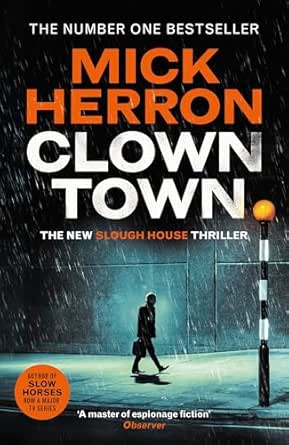
#BookReview ‘Smoke and Ashes’ by Abir Mukherjee @radiomukhers #crime #historical #India #Raj

Captain Sam Wyndham is having a bad week. His opium addiction is keeping him awake at night. Two murders bearing the same grisly modus operandi have occurred. Non-violent protests by the Indian self-rule movement are intensifying, and the Prince of Wales is due to arrive in Calcutta. Smoke and Ashes by Abir Mukherjee starts at a pace and doesn’t stop. Abir MukherjeeThe story starts on December 21, 1921. Calcutta is a smouldering tinderbox of political unrest about to ignite. Wyndham and Sergeant ‘Surrender-not’ Banerjee expect the worst, both fear personal repercussions. Bannerjee’s family is close to one of the protest leaders, Chitta-Ranjan Das, while Wyndham fears for the safety of his Anglo-Indian ex-girlfriend Annie. When a Goan nurse is murdered, her body bears grisly wounds that Wyndham has seen only days before on another dead body. Except this was at an opium den. At first sight he’s not sure if the body is real or a fever dream. Second, his career will be over if he admits where he was. So not even Surendranath knows about the dead Chinaman found in the notorious Tangra district. Only Wyndham knows there may be a serial killer in Calcutta.
Mukherjee excels at highlighting the dichotomies, similarities and moral dilemnas of this huge continent with a population of 269 million ruled by a small number of British officials and military. Behaviour and manners play their part, in a way. When a protest demonstration takes place just before a newly-introduced curfew is due to start, the protestors and Gurkha soldiers observe each other. ‘It was still some minutes before six, and the troops stood their ground, bound by the rules of the curfew. The fact that the demonstration itself was illegal had been conveniently overlooked by all concerned. As usual, the whole thing felt like a game where both parties agreed which rules applied and which could be discounted. Rules, after all, were important.’
Wyndham and Bannerjee are caught in the moral trap experienced by those working for the Raj out of necessity but whose hearts are with the protestors. ‘To see a man as your enemy, you needed to hate him, and while it was easy to hate a man who fought you with bullets and bomns, it was bloody difficult to hate a man who opposed you by appealing to your own moral compass.’ When there’s a third murder, it begins to feel like revenge. But what for, and who is next. When they discover the answer they have minimal time to stop the attacker. Calcutta is grinding to a halt, Prince Edward is arriving, the protestors are gathering. Thousands could die. The last hundred pages are a breathless sprint.
This series is maturing nicely. Smoke and Ashes is a fascinating book, cleverly constructed with a pair of lead characters you care about. It’s a classic whodunnit set within the broader landscape of India’s political and social upheaval. Smoke and Ashes is third in this fascinating Raj-era police procedural series. Next is Death in the East.

Here are my reviews of the first two books in the Wyndham & Banerjee series:-
A RISING MAN #1WYNDHAM&BANERJEE
A NECESSARY EVIL #2WYNDHAM&BANERJEE

If you like this, try:-
‘The Pure in Heart’ by Susan Hill #2SIMONSERRAILLER
‘Shroud for a Nightingale’ by PD James #4ADAMDALGLIESH
An Expert in Murder’ by Nicola Upson #1JOSEPHINETEY

And if you’d like to tweet a link to THIS post, here’s my suggested tweet:
#BookReview SMOKE AND ASHES by Abir Mukherjee @radiomukhers https://wp.me/p2ZHJe-8zc via @SandraDanby 

COMING SOON… THE NEXT BOOK I REVIEW WILL BE:- Amanda Huggins
#BookReview ‘The Instrumentalist’ by Harriet Constable #historicalfiction #Venice

18th century Venice. A baby is posted through a hole in the wall at Ospedale della Pietà, a hospital for orphaned girls. She is one of many left there, mostly by sex workers. They are fed, educated and, if they have the aptitude, they learn a musical instrument. The Instrumentalist by Harriet Constable imagines the life story of Anna Maria della Pietà. Harriet ConstableBased on a real violinist, Anna sees musical notes as colours swooping, swirling, dancing. She believes fiercely that she is special but this ferocity also makes her vulnerable. In her relationship with her music master she is looking for musical success but secretly hopes to find a father-figure. Unnamed, I assume the maestro to be Antonio Vivaldi. Little is known about the real Anna Maria and this frees Constable to imagine her life, her successes, failures, challenges and betrayals.
Anna is a precocious violinist at the age of eight, her ambition and zeal to succeed is familiar nowadays but I’m not sure how typical it was for an orphan in 18th century Venice. The language occasionally drifts into modern-day vocabulary and grammar. Understanding that her life can only be changed if she joins the figlie di coro, the ospedale‘s orchestra, Anna Maria becomes accomplished at playing the violin and in musical composition. There are riches to be gained when the orchestra performs, donations to the ospedale from wealthy donors, gifts for the performers. The stakes are high, girls who fail are quickly married off. Friends are sacrificed.
In places, the writing is indulgent; repetitive description is pretty but doesn’t move the story along. Two-thirds through is a different phase showing the real Venice and the dirt and injustice beneath the wealth and beauty. The perfume made of jasmine distilled in pig fat, used for a week before being discarded. The hand-made lace cuffs and handkerchiefs made in a sweatshop. Shimmering red silk and the red blood of a newly killed piglet. A reminder of the binary life of girls at the ospedale; gifts and benefits come with musical excellence, musical failure means housework, training in lacework, laundry or being sold into marriage.
An intense novel set within a constricted building in a city that is at once beautiful and threatening. Every baby girl left at the ospedale must find a way to survive in an unforgiving world but will always wonder if her mother will return to her. I finished The Instrumentalist wishing the story was broader, focussing equally on the three childhood friends, Anna Maria, Paulina and Agata and not just on Anna Maria.

If you like this, try:-
‘The Glassmaker’ by Tracy Chevalier
‘City of Masks’ by SD Sykes #3OSWALDDELACY
‘The Garden of Angels’ by David Hewson

And if you’d like to tweet a link to THIS post, here’s my suggested tweet:
#BookReview THE INSTRUMENTALIST by Harriet Constable https://wp.me/p2ZHJe-8v3 via @SandraDanby

COMING SOON… THE NEXT BOOK I REVIEW WILL BE:- Abir Mukherjee

#BookReview ‘Rainforest’ by Michelle Paver #suspense #mystery

Set in Mexico in the 1970s, Rainforest by Michelle Paver is an intoxicating mixture of unrequited love, tropical rainforest, Mayan culture, drugs and obsession. When Simon Corbett joins a scientific expedition in the South American jungle, he takes with him a strange talisman to remind him of a former love. Michelle PaverOstensibly, Simon joins the team as entomologist, a specialist in insects, keen to find new species of mantids. He wants to get his life back, get his career on track again, face up to his demons. Really, he is running way from guilt. He feels responsible for the death of Penelope, a woman with whom he formed an attachment, though she died in a car accident when Simon was miles away. Gradually his backstory is revealed as Simon writes a journal, explores the rainforest and gets to know his fellow explorers. They’re a strange bunch with odd habits and secrets, just like Simon himself. He sees the rainforest, and his mantids, as his saviours. ‘If only I too could believe that I can contact the dead. That I could see her, touch her one last time. If only, if only, if only. That’s why I can’t sleep. That’s why I need the jungle. If anything can save me, it’s my mantids. We’re in this together, my beauties. It’s you and me against the world.’ It takes a while for the full story of Simon’s relationship with Penelope to become clear and we only ever have his side of the story.
Paver’s description is beautiful, but always one step away, hidden by a leaf, a shadow, there is an unknown threat. Perhaps a snake, a nest of fire ants, a bullet ant, howler monkeys, a caiman, a Mayan shaman, the ghost of the shaman’s dead brother. The worst threats are in Simon’s mind, his dreams at night, his imagination. Paver has written an eerie tale encompassing unrequited love, stalking, paranoia, loneliness, social isolation and ineptness. Simon’s nightmares are so real the line begins to blur so that I question is it really happening or is he imagining everything. The rainforest is an unreal world, unsettling, easy to lose oneself in, even if you’re healthy. And Simon is definitely vulnerable. But decidedly stubborn.
Underlying it all is the how the way of life of indigenous peoples is being threatened by westerners invading their rainforest environment. At best it is a thoughtless, arrogant disregard for the native people, at worst an exploitative, abusive motivation that threatens not just the people who live in the deep jungle but the natural world, its fauna and flora, no matter how beautiful or strange. Trees are felled, habitat destroyed, artefacts stolen.
I loved the rainforest setting, the description is faultlessly fabulous. I found it more difficult to connect with Simon. At times I felt a little in despair of his self-destructive streak, a compulsion to indulge in his painful memories, always choosing the path of pain rather than the one towards recovery. Like poking a wound with a needle. Where is the threat? In the rainforest surrounding the camp on all sides, or inside Simon?
How far will a man go to avoid bad memories? The truth is wherever you go, the memories go with you and so does the danger. When you’re lost in the rainforest, something beautiful can kill you, or something invisible, or something inside your head. Michelle Paver writes brilliant ghost stories set in extreme physical conditions. The Arctic in Dark Matter and the Himalayas in Thin Air, both are 4* books for me; and the 5* Wakenhyrst set beside the bleak East Anglian fens. All of them play with the concept of what is real and what is imagined. If it’s not real, does that means it’s not dangerous?
Very good. Though I didn’t particularly like Simon, I was still thinking about him days after finishing the book.

And read my reviews of these other novels by Michelle Paver:-
THE OUTSIDERS #1GODS&WARRIORS
THIN AIR
VIPER’S DAUGHTER #7WOLFBROTHER
WAKENHYRST

If you like this, try:-
‘The Snakes’ by Sadie Jones
‘The Hoarder’ by Jess Kidd
The Ice’ by Laline Paull

And if you’d like to tweet a link to THIS post, here’s my suggested tweet:
#BookReview RAINFOREST by Michelle Paver https://wp.me/p2ZHJe-8uH via @SandraDanby

COMING SOON… THE NEXT BOOK I REVIEW WILL BE:- Harriet Constable

Great Opening Paragraph 141… ‘David Copperfield’ #amreading #FirstPara

“Whether I shall turn out to be the hero of my own life, or whether that station will be held by anybody else, these pages must show. To begin my life with the beginning of my life, I record that I was born (as I have been informed and believe) on a Friday, at twelve o’clock at night. It was remarked that the clock began to strike, and I began to cry, simultaneously.”
Charles DickensFrom ‘David Copperfield’ by Charles Dickens

Here’s the #FirstPara of another novel by Charles Dickens:-
A TALE OF TWO CITIES 

Try one of these 1st paras & discover a new author:-
Affinity’ by Sarah Waters 
Death in Summer’ by William Trevor 
1984’ by George Orwell 

And if you’d like to tweet a link to THIS post, here’s my suggested tweet:
#FirstPara DAVID COPPERFIELD by Charles Dickens #books #amreading https://wp.me/p2ZHJe-7gC via @SandraDanby