#BookReview ‘Dissolution’ by CJ Sansom #Tudor #detective

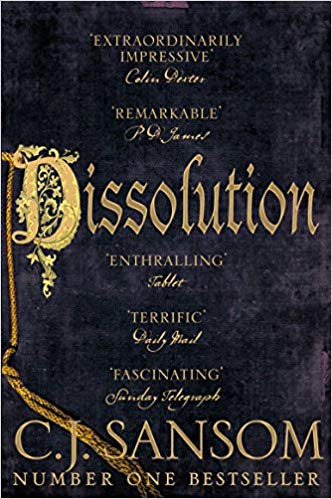
Oh my goodness why have I taken so long to read the Shardlake series by CJ Sansom? I was absolutely gripped by Dissolution, first in this Tudor series of mysteries featuring Matthew Shardlake, commissioner for Thomas Cromwell. And now I want to read all the others. CJ SansomIt is 1537. Henry VIII is king and supreme head of the Church of England. A year has passed since Anne Boleyn was beheaded and her successor as queen, Jane Seymour, has just died following childbirth. Cromwell’s team of investigators, or commissioners, are reviewing every monastery across the land. The dissolution of these institutions is expected as Catholic worship is reformed and anglicised. Lawyer Shardlake is sent by Cromwell to the monastery of Scarnsea on the Sussex coast where the investigating commissioner Robin Singleton has been murdered. Cromwell wants a quick solution to the murder so he can tell the king the problem and solution at the same time, and so puts pressure on Shardlake to find the murderer within days.
Shardlake is a great central character; a hunchback, as a boy he turned to his studies when sports and girls seemed impossible. ‘My disability had come upon me when I was three, I began to stoop forward and to the right, and no brace could correct it. By the age of five I was a true hunchback, as I have remained to this day.’ At Scarnsea, Shardlake needs all his bravery and perseverance to unravel Singleton’s murder. There is only one person he can trust, his servant Mark Poer. Everyone else is a suspect. Sansom twists a variety of motives to make every person at Scarnsea a potential murderer and as the story is told totally from Shardlake’s viewpoint, we must consider each piece of new evidence with him. Everyone at the monastery knows their way of life is threatened and some monks fear the changes. But there have been sexual misdeeds in the past, drinking, gambling and, Shardlake comes to suspect, financial fraud too.
When the snow falls, Scarnsea is cut off from the outside world. Shardlake’s investigation is systematic, interviewing monks, examining correspondence, visiting the crime scene, checking financial records, considering potential scenarios. There is a creepiness about the monastery which made me shiver as Shardlake shivered, and not not just from the extreme cold. Threat is ever present, made gloomier by the adjacent marshes.
Dissolution is a terrific book. The historical setting and details are authentic; Shardlake is a compelling protagonist, caught as he is between light and shade, between what he wants to do and what he knows he should do; and the murderer is not obvious.

And here are my reviews of other novels by CJ Sansom:-
DOMINION
DARK FIRE #2SHARDLAKE
SOVEREIGN #3SHARDLAKE
REVELATION #4SHARDLAKE
HEARTSTONE #5SHARDLAKE
LAMENTATION #6SHARDLAKE

If you like this, try:-
‘The Last Hours’ by Minette Walters #1BLACKDEATH
‘The Witchfinder’s Sister’ by Beth Underdown
‘The Ashes of London’ by Andrew Taylor #1FIREOFLONDON

And if you’d like to share a link, try:
#BookReview DISSOLUTION by CJ Sansom https://wp.me/p5gEM4-3zp via @SandraDanby

My Porridge & Cream read: Kathryn Haydon @HaydonKathryn #romance #books

Today I’m delighted to welcome romance author Kathryn Haydon. Her ‘Porridge & Cream’ read is The Prophet by Kahlil Gibran.

“I have chosen The Prophet by Kahlil Gibran because this is a book that speaks to me, soul to soul. The words reach out over the years and touch me as though they were written yesterday. It is the East speaking to the West in the manner of Rabindranath Tagore’s famous Gitanjali. Magical and mystical, with a wonderful cadence! Every human condition known to mankind is illustrated by beautiful verse. Kathryn Haydon“I first came upon this little book in the mid 1990’s. Quite by chance, really – although what is chance and what is really synchronicity? While doing a counselling course with the Exeter branch of the W.E.A., I attended a residential weekend on the edge of Dartmoor. We (students) were invited to bring along a special poem to read out, or a few lines from a book to share with the group. It didn’t matter what, so long as the words had significance and meaning. Someone read from The Prophet – I forget who – and I was spellbound. This is a flavour of what I heard:
“You are the bows from which your children as living arrows are sent forth.
The Archer sees the mark upon the path of the infinite, and He bends you with His might that His arrows may go swift and far.
Let your bending in the Archer’s hand be for gladness;
For even as He loves the arrow that flies, so He loves also the bow that is stable.”
“As soon as I could, I bought a copy for myself. It’s only a slim volume, sitting unpretentiously on my bookshelf, there to be dipped into whenever I feel need. What triggers a need? A myriad of things, from happiness to loss and the deep sadness of bereavement – and all life experiences in between.” Kathryn HaydonAmazon

Kathryn’s Bio
I am a West Country girl who loves to write, a romantic novelist published by Mezzanotte. The red earth of Devon is steeped in my bones, the county’s glorious coast and countryside my inspiration.  To date, I have two books published, both in the medical romance genre as befits a retired nurse! I write the kind of stories you won’t want to put down – real page turners, with characters who tug at your heart strings. Books with a feel-good factor, although please have a box of tissues at the ready because I suspect you’ll need them. My storylines pick-up emotive issues.

Kathryn’s links
Twitter
Facebook
Mezzanotte Publishing

Kathryn’s latest book Kathryn HaydonPalliative care nurse, Melanie Smythe is focussed on two things: the job she loves at Greenways Hospice and helping care for her twin nieces. There is no room for romance. In the past she’s been let down and the experience has left her wary. Melanie fears history will repeat itself. Then a chance encounter with new locum GP, Luke McGrath makes her think maybe he’s the one to change all that. There are differences between them, but the smouldering hot doc makes her pulse race. However, Melanie is holding something back and this leads to a misunderstanding. Angry and hurt, Luke severs their relationship. Will they be able to fix what’s been broken?
Amazon

What is a ‘Porridge & Cream’ book? It’s the book you turn to when you need a familiar read, when you are tired, ill, or out-of-sorts, where you know the story and love it. Where reading it is like slipping on your oldest, scruffiest slippers after walking for miles. Where does the name ‘Porridge & Cream’ come from? Cat Deerborn is a character in Susan Hill’s ‘Simon Serrailler’ detective series. Cat is a hard-worked GP, a widow with two children and she struggles from day-to-day. One night, after a particularly difficult day, she needs something familiar to read. From her bookshelf she selects ‘Love in A Cold Climate’ by Nancy Mitford. Do you have a favourite read which you return to again and again? If so, please send me a message.

Discover the ‘Porridge & Cream’ books of these authors:-
Julie Christine Johnson’s choice is ‘Pride and Prejudice’ by Jane Austen
Jane Cable chooses ‘A Horseman Riding By’ by RF Delderfield
‘Race of Scorpions’ by Dorothy Dunnett is chosen by JG Harlond

 And if you’d like to tweet a link to THIS post, here’s my suggested tweet:
Why does romance author @HaydonKathryn re-read THE PROPHET by Kahlil Gibran? #books https://wp.me/p5gEM4-3PC via @SandraDanby

#BookReview ‘File under Family’ by Geraldine Wall #genealogy #mystery

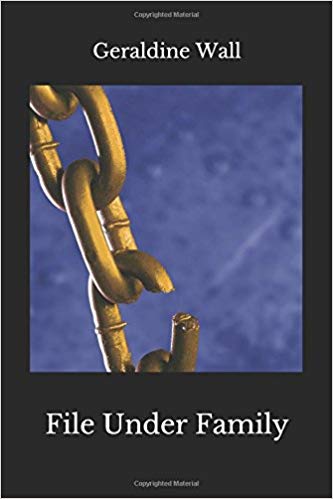
Anna Ames is a trainee probate genealogist working for Triple H, Harts Heir Hunters, and File under Family is the first in a series of genealogy mysteries about Anna by Geraldine Wall. When Margaret Clark dies Anna is charged with finding her missing heir, daughter Briony. The trail leads abroad and unleashes an international social media campaign, reveals sexual abuse in prison and considers how enthusiasm can conflict with client confidentiality. Geraldine Wall Wall introduces the character of Anna and her family life which I am sure will continue to feature throughout the series. While she faces problems balancing work with studying for her Diploma in Genealogy qualification, these are nothing when compared to Anna’s stress at home. Her husband Harry has early-onset dementia so Anna’s father George has moved in to help with caring for Harry and their two teenagers, Ellis and Faye. Faye has a new Russian boyfriend who wants to take her to Russia with him. Ellis is auditioning for a role in the school panto while George is investigating his spiritual side and writing poetry. Worst of all, as Harry’s condition gradually deteriorates he becomes increasing aggressive towards Anna. Into this walks an unattractive stranger.
I found the first couple of chapters disorientating as the story pitches straight into Anna’s day with minimal explanation of her job. But the story settles down and the mystery of Briony’s whereabouts kept me reading. I particularly liked the characters of Margaret’s friends, Joan and Diane, and the importance of Bob the dog in the family dynamics. Anna’s home life is at times a little over-complicated as each family member has their own drama. Anna is a positive character, strongly defending her own family and trying to do her best for her client, albeit crossing the line at times and getting into trouble. This only serves to endear her as a convincing character. However the last quarter of the novel, after Briony’s case is solved, seemed to meander almost as if it was merging straight into book two in the series.
Not so much a genealogical mystery, more a family drama enriched by Anna’s job as a probate genealogist.

Here’s my review of the next in this series by Geraldine Wall:-
FILE UNDER FEAR #2ANNAAMES

If you like this, try:-
‘The Cheesemaker’s House’ by Jane Cable
‘The Lie of the Land’ by Amanda Craig
‘The Ghost of Lily Painter’ by Caitlin Davis

And if you’d like to tweet a link to THIS post, here’s my suggested tweet:
#BookReview FILE UNDER FAMILY by Geraldine Wall https://wp.me/p5gEM4-3Aw via @SandraDanby

A #poem to read in the bath… ‘I loved her like the leaves’

The sense of loss in this Japanese poem is unquenchable. Written by Kakinonoto Hitomaro in 7th century Japan, it speaks of emptiness so great there is no hope or comfort. Hitomaro was a poet of the Asuka period [538-710], serving as court poet to the Empress Jitō, and is considered to be one of the four greatest poets in Japanese history along with Fujiwara no Teika, Sōgi and Bashō.

Kakinonoto Hitomaro

Kakinomoto Hitomaro by Kikuchi Yosai

‘I loved her like the leaves,
The lush green leaves of spring
That pulled down the willows
on the bank’s edge
where we walked
while she was of this world.
I built my life on her.
But man cannot flout
the laws of this world.
To the shimmering wide fields
hidden by the white cloud,
white as white silk scarf
she soared away like the morning bird,
hid from our world like the setting sun.
The child, the gift she left behind –
he cries for food; but always
finding nothing that I might give him,
I pick him up and hold him in my arms.
On the pillow where we lay,
My wife and I, as one,
I pass the daylight lonely till the dusk,
the black night sighing till the dawn.
I grieve and grieve and know no remedy.
I ache and know no road where I might meet her.

[NB. This poem features in two editions of poems that I own and, owing to different translations, there are variations]

The poem features in many anthologies, including my own The Picador Book of Funeral Poems and The Penguin Book of Japanese Verse.
Amazon


Read these other excerpts, and perhaps find a new poet to love:-
‘Alone’ by Dea Parkin
‘A thousand years, you said’ by Lady Heguri
‘After a row’ by Tom Pickard

And if you’d like to tweet a link to THIS post, here’s my suggested tweet:
A #poem to read in the bath: ‘I loved her like the leaves’ by Kakinonoto Hitomaro https://wp.me/p5gEM4-3dY via @SandraDanby

#BookReview ‘Pleasures’ by Helen J Christmas @SFDPBeginnings #thriller #romance

Part three of a London-based thriller series, Pleasures by Helen J Christmas takes up immediately where books one and two left off. The ‘Same Place Different Place’ series ticks all the thriller boxes. Chases, disguises, London gangsters, phone tapping, dodgy politicians and policemen, threats, kidnapping, lovable victims and baddies to hate. Helen J ChristmasBook two ends in 1987, Pleasures picks up the story in the same year. Do not read Pleasures without having read books two and three first as you will miss so many references. In a nutshell, in Beginnings Eleanor Chapman is on the run with her son Eli after Eli’s father was murdered after witnessing the killing of a politician. In Visions, Eleanor and Eli have settled in the quiet village of Aldwyk, hopeful of remaining under the radar from the gang who see her as a dangerous witness. But a bitter property deal brings an old enemy to the village.
The handling of the backstory in Pleasures is at times repetitive, exacerbated perhaps by the fact that this book starts immediately after the previous story finished. The old enemy is back in another controversial property deal in the town where Eleanor now lives. The heavies are brought in to threaten Eleanor Bailey, now married to Charlie, and their family. There is a 12 year gap between books one and two, adding fresh air to the plot and enabling the cast of children to grow into early teens. Only months pass before the ending of book two and start of book three. The children are embarking on girlfriend/boyfriend angst, all of which Christmas blends naturally into the story. The Eighties setting is done particularly well, not just random details but made relevant to the plot. There is also the return of an old adversary who adds spice to the mix as he goes straight; but has he really become a responsible businessman, or is it just a front. Eleanor, understandably, is haunted by past threats and is over-protective of son Eli.
At 556 pages this is a long book, very long for a thriller. The first, Beginnings, 314 pages. The second, Visions, 486 pages. There is a fair amount of summarising what has happened and repeating of the threats faced. The story really starts moving as the midway point is neared and the second half is a page-turner as threat after threat, hinted at for so long, begins to happen and Eleanor’s carefully constructed world begins to unravel.
The teenagers are growing up, there’s lots of adolescent angst, snogging and groping. Avalon and William are my favourite characters and I enjoyed the late Eighties references. I wished for a new threat, or a twist on the old one, and admit to expecting a significant death. But perhaps that will come in book four.

Click the title to read my reviews of the first two books in this series:-
BEGINNINGS #1SAMEFACEDIFFERENTPLACE
VISIONS #2SAMEFACEDIFFERENTPLACE

If you like this, try:-
‘Corpus’ by Rory Clements #1TOMWILDE
‘The Accident’ by CL Taylor
‘The Blood Detective’ by Dan Waddell #1BLOODDETECTIVE

And if you’d like to share a link:
#BookReview PLEASURES by Helen J Christmas @SFDPBeginnings https://wp.me/p5gEM4-3ym via @Sandra Danby

#BookReview ‘Winter of the Heart’ by EG Parsons #historical #romance

Winter of the Heart by EG Parsons is a good old-fashioned romance about bad choices and second chances involving a heroine who is afraid to love again, a widower grieving for what he has lost and a violent husband, set in post-Civil War South Carolina. EG Parsons In 1876,Megan Connors starts a new life as a schoolteacher on a ranch at Willow Creek. Finding the children eager to learn, she hopes her dreams of a good life are coming true. Except for her boss, the rude ranch owner Charles Donavan, glamorous neighbour Alicia who expects to marry Charles, and a ghostly presence. When romance starts to blossom, Megan must admit she is not free to marry. When her former husband William arrives to claim her, Megan must leave with him and return to their home in Clearwater, Virginia.
The second half of the novel is a tale of survival. Megan plans her escape from William’s house but with winter approaching she gets lost and wanders into the mountains. Encounters with a bear, bandits and snow leave her almost dead. Meanwhile Charles realises his behaviour to Megan was harsh. He leaves his ranch and with the help of confidential investigator James Marshall, investigates Megan’s story. Marshall sends a man into the mountains to search for Megan but, growing impatient, Charles follows. Is Megan dead, or is she sheltering in one of the remote homesteads cut off by snow until spring comes.
I read this quickly on a plane and thoroughly enjoyed it.
CLICK HERE TO READ MORE ABOUT THIS BOOK

If you like this, try:-
‘Barkskins’ by Annie Proulx
‘The Knife with the Ivory Handle’ by Cynthia Bruchman
‘Summertime’ by Vanessa Lafaye

And if you’d like to tweet a link to THIS post, here’s my suggested tweet:
#BookReview WINTER OF THE HEART by EG Parsons https://wp.me/p5gEM4-3yz via @Sandra Danby

First Edition: ‘Lord of the Flies’ by William Golding #oldbooks

A moral for all times about self-governance, Lord of the Flies was the first novel of schoolteacher William Golding. It tells the story of a group of British schoolboys stranded on an uninhabited island and their disastrous attempts to govern themselves. It was not an instant hit, going out of print in the USA a year after publication, but it went onto be a bestseller.

William Golding

Faber original UK cover 1954

In the middle of an unspecified war, a plane crashes on a remote island in the Pacific. Fair-haired Ralph believes that grown-ups will come to rescue them, but Piggy says they should get organised. “Put first things first and act proper.” The novel explores the conflicting human impulses towards civilisation, social order, living according to the rules, with the pursuit of power. It is abrilliantly observed study of teenagers free of the usual rules and conventions imposed by adults.
Artwork for the first UK Faber edition [above], published on September 17, 1954 is by Anthony Gross. The current Faber edition [below] was first published in 1997. Buy here.

William Golding

Faber 1997 current ed

The story
During a wartime evacuation, a British aeroplane crashes on an isolated island in the Pacific Ocean. The only survivors are adolescent boys. Two boys – fair-haired Ralph, and spectacles-wearing Piggy – find a conch which Ralph uses as a horn to draw all the boys into one place. As Ralph appears responsible for bringing them all together, he commands some authority over the boys and is elected chief, despite not winning the votes of a boys’ choir led by Jack. In the early days the boys discover a source of food in fruit and wild pigs. But Piggy quickly becomes the butt of jokes and the initial sense of order disappears as the boys become idle. Their time is spent having fun and developing paranoias about the island; particularly a ‘beast’ that they all begin to believe exists.

The films
There have been three film adaptations based on the book. In 1963, Peter Brook’s Lord of the Flies was supported by Golding. In 1976 there was a Filipino television film called Alkitrang Dugo, the third Lord of the Flies film in 1990 was directed by Harry Hook.

Other editions 

If you like old books, check out these:-
‘Ulysses’ by James Joyce
‘101 Dalmations’ by Dodie Smith
‘The Sea, The Sea’ by Iris Murdoch

And if you’d like to tweet a link to THIS post, here’s my suggested tweet:
First Edition: LORD OF THE FLIES by William Golding #oldbooks https://wp.me/p5gEM4-3G7 via @SandraDanby

#BookReview ‘Wigs on the Green’ by Nancy Mitford #humour #satire

When office worker Noel Foster inherits three thousand three hundred and fourteen pounds from an aunt and sets his heart on finding a girl to marry, his friend tells him, ‘It’s such a fearful gamble. Much better put the money on a horse and be out of your misery at once.’ And so starts Wigs on the Green, the third novel by Nancy Mitford. But as well as a social satire of the upper class circles in which she moved, as in her previous novels, in Wigs on the Green Mitford had a more personal target in mind: the fascist pretensions of her sisters Unity and Diana. The sisters disliked the novel; it caused a family rift and was not republished within Mitford’s lifetime [she died in 1973]. Nancy Mitford Money and sex are at the heart of the story; the spending and gaining of money, the marrying into money, and the pursuit of sex seemingly regardless of the eligibility and marital status of the intended. Noel and his friend Jasper Aspect go to Chalford in search of the young heiress, Eugenia Malmains. Their first glimpse of the over-enthusiastic fascism-obsessed Eugenia is as she gives a public speech on behalf of the Union Jack Movement to the Chalford villagers, ‘Britons, awake! Arise! Oh, British lion!’. This is the first of Mitford’s novels to transition from the Twenties, with tales of the chaotic partying and shenanigans of the Bright Young Things, into the Thirties and the rising threat of fascism in Europe. The fascination with National Socialism, the jackboots and roaring nationalism portrayed in Wigs on the Green was actually happening as the blackshirts of Oswald Mosley – husband of Mitford’s sister Diana – gained in popularity. Read today, this is still funny but I also found uncomfortable parallels with the 21st century nationalism of Brexit. For this reason alone, Wigs on the Green is worth reading. Mitford excels at comic portrayals of characters verging on ridiculous but with the capacity for self-deception we may recognise in real people.
Noel falls in lust with local beauty Mrs Lace. Meanwhile, two mysterious young ladies, Miss Smith and Miss Jones, check into the village pub The Jolly Roger, soon followed by two men in raincoats. The two men, and two women, all suspect these to be detectives. As Noel starts to resent the way Jasper runs up bills on Noel’s tab and not his own, Jasper mischievously hints to Mrs Lace that Noel is something other than he appears. He likes to be treated as a normal person, he hints, because of course he is very special. This leads her to believe Noel is an exiled Balkan prince. Noel and Jasper sign up for Eugenia’s party and are now addressed by her as Union Jackshirt Foster and Union Jackshirt Aspect. Meanwhile Eugenia is brought into conflict with friends of Mrs Lace, the thespians and artists from nearby Rackenbridge. As political differences widen and unsuitable sexual conquests are sought, the climax comes at an event originally intended as Eugenia’s coming-out party – a pageant at Chalford Park when everyone comes together to act out the visit of George III and Queen Charlotte – which evolves into a Union Jack Movement event instead. Chaos is the result.
There are moments of sharp social observation and moments that made me chuckle. The political satire is cutting, but stays in the background; Mitford had to tread a fine line in order to avoid being sued by her brother-in-law.

Read my reviews of these other novels by Nancy Mitford:-
CHRISTMAS PUDDING
HIGHLAND FLING
LOVE IN A COLD CLIMATE
PIGEON PIE
THE BLESSING
THE PURSUIT OF LOVE

Read the #FirstPara of THE PURSUIT OF LOVE

If you like this, try these:-
‘The Light Years’ by Elizabeth Jane Howard #1CAZALET
‘The Secrets of Gaslight Lane’ by MRC Kasasian #4GOWERDETECTIVE
‘The Bone Church’ by Victoria Dougherty

And if you’d like to tweet a link to THIS post, here’s my suggested tweet:
#BookReview WIGS ON THE GREEN by Nancy Mitford https://wp.me/p5gEM4-340 via @SandraDanby

#BookReview ‘The Clockmaker’s Daughter’ by Kate Morton #historical #romance

Kate Morton is strongest when writing about houses, houses with history, atmospheric, beautiful, brooding houses. Birchwood Manor in The Clockmaker’s Daughter is haunted by what happened there. A death, a theft, a drowning. The truth is a complicated tale of twists and turns, Morton gives us numerous characters from slices of history from a Pre-Raphaelite group of artists to National Trust-like ownership today. Kate Morton
The mystery starts from page one, the Prologue, told in the voice of an unknown woman remembering her arrival at Birchwood Manor with Edward. When the rest of the house party leave, ‘I had no choice; I stayed behind.’ Is she a ghost? Cut straight to today and archivist Elodie who unpacks an old leather satchel finds inside a photograph of a woman and an intriguing sketchbook. Leafing through the pages she stops dead, seeing a drawing of a house she knows though she has never been there. It featured in a bedtime story told by her mother. Is it a real place? Does it have magical powers as local tales suggest? ‘It is a strange house, built to be purposely confusing. Staircases that turn at unusual angles, all knees and elbows and uneven treads; windows that do not line up no matter how one squints at them; floorboards and wall panels with clever concealments.’
The mysteries of the drawing, the house, the girl in the photograph and a missing blue diamond are told in multiple viewpoints from 1862 to today. Four big mysteries to unravel means complicated threads woven between the years and the characters and I was tempted to keep notes of who said what and lost track of the year, a couple of times. At the end, I was left with a couple of outstanding questions but nothing to spoil my enjoyment of the book. I found the title rather misleading as Birdie the clockmaker’s daughter, though being one of the key characters, is not the only essential component. The house though is at the centre of everything.
We follow the story of Elodie, whose mother died when she was six and who is about to be married. Of Birdie, who lost her mother when she was four and was left with a baby farmer and trained as a pickpocket. Of Ada Lovegrove who is essentially abandoned by her parents who bring her from India and dump her at Birchwood House, now a school for young ladies. Of Leonard Gilbert, survivor of the Great War, who comes to Birchwood to write a biography of the Pre-Raphaelite artist Edward Radcliffe. Of Jack Rolands who is living now at Birchwood and seems to be searching for something. Of Lucy Radcliffe, Edward’s little sister, and my favourite character. Lucy, a curious little girl, encouraged by her brother to improve her mind by reading, was ‘learning fast that she knew a lot less about her own motivations than she did about the way the internal combustion engine worked.’
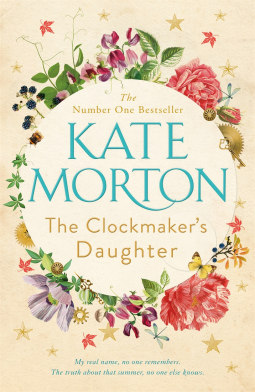
Piece by piece, Elodie unravels the true story. The story switches quickly between narrators which can be disorientating and it is only towards the end that some links fit into the bigger picture which makes it a little frustrating. Morton does not write short novels, this is 592 pages, and at times I wanted to cut superfluous detail to get to the meat of the story. A beautiful cover, though.

And here’s my review of another novel by Kate Morton:-
THE DISTANT HOURS

If you like this, try
‘The Man Who Disappeared’ by Clare Morrall
‘The Silent Companions’ by Laura Purcell
‘The Ballroom’ by Anna Hope

And if you’d like to tweet a link to THIS post, here’s my suggested tweet:
#BookReview THE CLOCKMAKER’S DAUGHTER by Kate Morton https://wp.me/p5gEM4-3yi via @SandraDanby

#BookReview ‘The Comforts of Home’ by Susan Hill @susanhillwriter #crime

Another Simon Serrailler novel by Susan Hill? I admit to excitement at this, the ninth outing for the Lafferton detective. It is three years since the eighth novel, The Soul of Discretion, and I feared Hill wanted to write about other things and there would be no more. And now, The Comforts of Home. I saved it to read on holiday, in the same way as a child I saved my favourite chocolate bar from my Christmas Selection Box. To be enjoyed at leisure. Susan HillI admit to forgetting how The Soul of Discretion ended, so the beginning was rather a shock but also fascinating. After life-changing surgery, Serrailler goes to the remote Scottish island of Taransay to convalesce. The descriptions of this bleak but beautiful place made me want to go there. He is quickly accepted by the tight-knit community where mutual support is a necessity, where consequently everyone knows everyone else’s lives in minutiae, but where you know a death is inevitable. As temporary cop-in-charge, given the local force’s short-handedness, Serrailler uncovers a secret no one had guessed.
Serrailler’s injury beings a new layer of damage to his solitary wounded soul, he would rather get up and face the day rather than sit and talk to a counsellor. One of the secrets of this successful series is the combination of crime with the family story of Simon and his sister Cat. Cat is finding locum work unsatisfying and is looking for a new challenge. Her new marriage, to Serrailler’s boss Kieran, is happy and the only shadow on the horizon is the return from France of her irascible father Richard.
Add to this mixture a local arsonist, a mother who presses for the reopening of the investigation of her daughter’s disappearance, a convicted murderer, a rookie detective constable, and Cat’s teenage son Sam who can’t decide what he wants to do with his life, and Hill delivers her clever blend of crime, detection and domestic daily life.
Excellent. A masterclass is how to write a thriller which keeps you reading, makes you love the familiar characters, never tells you what’s happening but let’s you work it out, and poses moral dilemmas.

Read my reviews of the other novels in the series:-
THE VARIOUS HAUNTS OF MEN #1SIMONSERRAILLER
THE PURE IN HEART #2SIMONSERRAILLER
THE RISK OF DARKNESS #3SIMONSERRAILLER
THE VOWS OF SILENCE #4SIMONSERRAILLER
THE SHADOWS IN THE STREET #5SIMONSERRAILLER
THE BETRAYAL OF TRUST #6SIMONSERRAILLER
A QUESTION OF IDENTITY #7SIMONSERRAILLER
THE SOUL OF DISCRETION #8SIMONSERRAILLER
THE BENEFIT OF HINDSIGHT #10SIMONSERRAILLER
A CHANGE OF CIRCUMSTANCE #11SIMONSERRAILLER

And also by Susan Hill, HOWARD’S END IS ON THE LANDING

If you like this, try:-
‘Cover Her Face’ by PD James #1ADAMDALGLIESH
‘One False Move’ by Harlan Coben
‘Wilderness’ by Campbell Hart #3ARBOGAST

And if you’d like to tweet a link to THIS post, here’s my suggested tweet:
#BookReview THE COMFORTS OF HOME by Susan Hill @susanhillwriter https://wp.me/p5gEM4-3yc via @SandraDanby