#BookReview ‘Agatha Raisin and the Vicious Vet’ by MC Beaton #cosycrime

Re-bound dates are never a good idea, and Agatha Raisin and the Vicious Vet by MC Beaton starts with retired PR supremo and now amateur sleuth Agatha feeling spurned by sexy neighbour James Lacey. MC BeatonOn the re-bound, she goes out for dinner with the village’s new flirtatious vet, Paul Bladen. It soon turns out that he dislikes cats, although he does seem to have a penchance for middle-aged ladies.
When he drops dead, seemingly of an unfortunate accident, Agatha refuses to accept it is not murder. And so the second novel in the prolific Agatha Raisin series sets off at a pace, as Agatha tries to spend time with James Lacey without drooling.
They ignore police warnings not to ask questions where it is inappropriate, and after breaking into the bank, and snooping around the dead man’s house, they think they find evidence of wrongdoing. Except it is not quite the wrongdoing that they expected.
Another easy-to-read detective romp by MC Beaton, charming to read with your feet up on a rainy Sunday afternoon. Formulaic, yes. But very funny.

Read my review of other books in this series:-
AGATHA RAISIN AND THE QUICHE OF DEATH #1AGATHARAISIN
AGATHA RAISIN AND THE POTTED GARDENER #3AGATHARAISIN
AGATHA RAISIN AND THE WALKERS OF DEMBLEY #4AGATHARAISIN
AGATHA RAISIN AND THE MURDEROUS MARRIAGE #5AGATHARAISIN

If you like this, try:-
‘Etta and Otto and Russell and James’ by Emma Hooper
‘Cover Her Face’ by PD James #1ADAMDALGLIESH
‘The Funny Thing About Norman Foreman’ by Julietta Henderson

And if you’d like to tweet a link to THIS post, here’s my suggested tweet:
#BookReview AGATHA RAISIN AND THE VICIOUS VET by MC Beaton http://wp.me/p5gEM4-1K6 via @SandraDanby
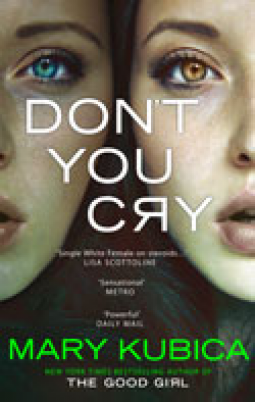
#BookReview ‘Don’t You Cry’ by Mary Kubica @MaryKubica #mystery #suspense

Don’t You Cry explores how easy it is to make assumptions and how this guesswork is so often wrong. This is the third novel by Mary Kubica, all thoughtful mysteries, carefully written and detailed. It took me longer to get into this one, but Kubica spends time drawing the characters and I was prepared to go along with her. Mary KubicaThere are two narrators. In Chicago, Quinn’s roommate disappears. After a couple of days waiting for Esther to return and wondering if she has done anything to upset her, Quinn starts to poke around looking for answers. The first things she finds are confusing, they contradict the Esther she knows, or thinks she knows. And then she starts to wonder what Esther is hiding. Quinn’s voice is alternated with Alex, a young man who lives in the small town where he grew up on the shore of Lake Michigan. He is a nice guy, who passed up on college for a boring low-paid in a rundown lakeside café so he can care for his drunken father. He takes lunch to Ingrid, a housebound elderly lady and stays to eat with her, and to play cards. One day, he goes to work and sees a girl with distinctive, ombre hair. There is something about her that captures his imagination. The girl, in his head he calls her Pearl, is watching the house next door to Ingrid, which is the office of a psychologist.
Nothing is what it seems. I raced through the last few pages as the answers came thick and fast. The twists and turns are clever but, compared with Kubica’s other two novels, this feels baggy and would benefit from an edit to improve the pace and cut repetitions.

Read my reviews of two other novels by Mary Kubica:-
PRETTY BABY
THE GOOD GIRL

If you like this, try:-
‘Pretty Is’ by Maggie Mitchell
‘The Lost Girl’ by Sangu Mandanna
‘The Accident’ by CL Taylor

And if you’d like to tweet a link to THIS post, here’s my suggested tweet:
#BookReview DON’T YOU CRY by Mary Kubica @MaryKubica by @SandraDanby http://wp.me/p5gEM4-21l

#BookReview ‘Dark Aemilia’ by Sally O’Reilly #historical

Shakespeare, tick. Possible identity of the Dark Lady, tick. Supernatural, witches and demons, tick. Stinking, plague-ridden London, tick. The Globe, white-faced boy actors dressed in velvet, smoke, whistles and special effects, tick. This is Dark Aemilia by Sally O’Reilly. Sally O'ReillyBased on a foundation of history, O’Reilly tells the fictional story of real-life Aemilia Bassano and her love affair with William Shakespeare. There is no documentary evidence that this affair took place, but O’Reilly’s imagination conjures a rich story in which the setting of Elizabethan London is vibrant and believable. Wherever Aemilia goes – in an apothecary’s shop, in the audience at The Globe or standing at the edge of a plague pit – you can see, smell and hear her London.
Aemilia is something of a feminist, in that she struggles against men her whole life for the freedom to live her own life. Orphaned at 12 she becomes mistress to Lord Hunsdon [readers of Philippa Gregory’s The Other Boleyn Girl will be interested to know that Hunsdon was the real-life Henry, son of Mary Boleyn] but during an affair with Shakespeare, Aemilia falls pregnant. Hunsdon arranges a marriage for her to her cousin Alfonso Lanyer, and so Aemilia’s destiny is determined at each stage by men. Father, protector, husband, lover and son.
She is a fascinating character, a woman of her time or before her time? As a poet and a lover, her influence on Shakespeare is at the core of this book. But then with her son dying of the plague, she turns to witchcraft and so the wilder element of the story takes off. I admit to skipping some of these sections. For me, the interesting plot was Aemilia, Shakespeare, the Globe and the writing of Macbeth and consequently for me the book could have been shorter.

If you like this, try:-
‘The Quick’ by Lauren Owen
‘The Taxidermist’s Daughter’ by Kate Mosse
‘A Dangerous Business’ by Jane Smiley

And if you’d like to tweet a link to THIS post, here’s my suggested tweet:
#BookReview DARK AEMILIA by Sally O’Reilly via @SandraDanby http://wp.me/p5gEM4-1RK

A poem to read in the bath… ‘Runaways’

Today’s poem to read in your bath is from Red Tree, the debut poetry collection by Yorkshire poet Daniela Nunnari.

[photo: valleypressuk.com ]

[photo: valleypressuk.com ]

Because of copyright restrictions I am unable to reproduce the poem in full, but please search it out in an anthology or at your local library.

‘Runaways’

Run away with me.

We’ll drive down roads
With old stone walls.
We’ll close our eyes
By waterfalls,
And listen.

You’ll how me how to skim a stone
And how to pick the perfect one.
I’ll catch the icy river ripples,
Frozen like February, in my phone.’

So evocative of new love, the exhilaration and freedom of getting away from it all. The countryside and nature feature in examination of the fantasy/reality elements of a daily relationship.

My other favourites in this edition? ‘Optrex’, ‘Buoy’ and ‘There’s Something in the Trees’.

For more about Daniela Nunnari and publisher Valley Press, click here.

red tree by daniela nunnari 24-7-15


‘Red Tree’ by Daniela Nunnari [UK: Valley Press] 

Read these other excerpts and find a new poet to love:-
‘Cloughton Wyke I’ by John Wedgwood Clarke
‘Alone’ by Dea Parkin
‘Sometimes and After’ by Hilda Doolittle

And if you’d like to tweet a link to THIS post, here’s my suggested tweet:
Daniela Nunnari’s RUNAWAYS http://wp.me/p5gEM4-1HI Today’s #poem to read in the bath: chosen by @SandraDanby

SaveSave

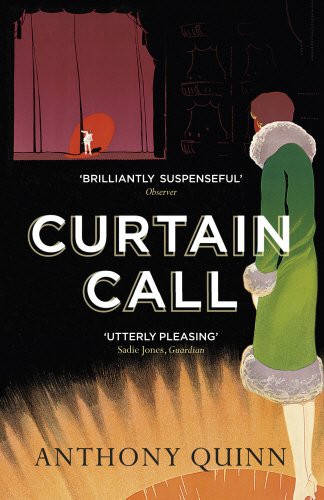
#BookReview ‘Curtain Call’ by Anthony Quinn #historical #1930s

The 1930s come alive in Curtain Call by journalist Anthony Quinn, I stepped into his world and felt as if I was there. An effortless read, I was plunged into the worlds of Stephen Wyley, artist; Nina Land, actress; the gloriously-named Madeline Farewell, hostess; Jimmy Erskine, theatre critic; and Tom Tunner, Erskine’s assistant. Anthony Quinn The setting is a time of looming war, royal crisis, blackshirts and strict homosexuality laws. It is not an easy novel to categorize: there are murders, but it is not a detective novel; we see the world of art and theatre and prostitution, but it is not a novel about art etc. Packed with period detail, with not one detail too many, this is written with a light hand and a clever plot. It starts with a romantic assignation and chance encounter in a hotel with a murderer, known in the newspapers as the Tiepin Killer. This meeting of only seconds, brings together the key characters and kickstarts the murder plotline.
Curtain Call is the predecessor, not prequel, to Quinn’s novel Freya.

Click the titles to read my review of other novels by Anthony Quinn:
FREYA
HALF OF THE HUMAN RACE
MOLLY & THE CAPTAIN
OUR FRIENDS IN BERLIN
THE MILLIONAIRE WALTZ
THE MOUTHLESS DEAD
THE RESCUE MAN
THE STREETS

If you like this, try:-
‘The Light Years’ by Elizabeth Jane Howard  #1CAZALET
‘At Mrs Lippincote’s’ by Elizabeth Taylor
‘The Heat of the Day’ by Elizabeth Bowen

And if you’d like to share a link:
#BookReview CURTAIN CALL by Anthony Quinn http://wp.me/p5gEM4-1Xu via @Sandra Danby

First Edition: Watership Down

It is a book which begun as a tale told by a father to his two daughters. Surely everyone has read Watership Down by Richard Adams.

Watership Down

[photo: Wikipedia]

The story
In Southern England lives at Sandleford Warren, a community of rabbits. They live in their natural environment but anthropomorphized so they have their own voices, culture, language, proverbs and mythology. This is a book which rewards re-reading. Fiver, the runt of the litter, is also a seer. When he forsees the destruction of their warren, Fiver and and his brother Hazel try to convince the other rabbits to flee with them. Unsuccessful, they set out on their own with 11 other rabbits to search for a new home. Hazel, previously an unimportant member of the warren, finds himself leader of the group. Fiver has visions about a safe place to settle, and so they find Watership Down. But still, they are not safe.

First UK edition Watership DownThe first UK edition was published in November 1972 by Rex Collings. At the time, Collings famously wrote to an associate, “I’ve just taken on a novel about rabbits, one of them with extra-sensory perception. Do you think I’m mad?”

The book took Adams two years to write and went on to win two children’s fiction awards for Adams – the Carnegie Medal and the Guardian Children’s Fiction Prize, one of only six authors to do the double.

The film Watership DownIn 1978 there was an animated film, well-known for two things: Hazel, voiced by John Hurt, and Art Garfunkel’s hit single Bright Eyes. Watch the trailer here.

The current UK edition
The current UK edition, published by Puffin Books in 2014, features illustrations by David Parkins. This [below] is the original 1973 Puffin paperback edition. Watership DownOther books by Richard Adams
Tales from Watership Down – the sequel, published 25 years later.

The Plague Dogs [1977] – about two dogs which escape animal testing. The first edition features location maps  by Alfred Wainwright, fellwalker and author.

Shardik [1974] – Kelderek is a young hunter who pursues a bear believing it to be Shardik, the giant bear god. Hunter and bear are unwillingly drawn into the politics of the Beklan Empire. Shardik, the height of two men, has curved claws longer than a man’s head.

Watership Down


‘Watership Down’ by Richard Adams [UK: Puffin] Buy here

If you like old books, check out these:-
‘Pride and Prejudice’ by Jane Austen
‘The French Lieutenant’s Woman’ by John Fowles
‘Alice’s Adventures in Wonderland’ by Lewis Carroll

And if you’d like to tweet a link to THIS post, here’s my suggested tweet:
First Edition: WATERSHIP DOWN by Richard Adams #oldbooks via @SandraDanby http://wp.me/p5gEM4-1Y4

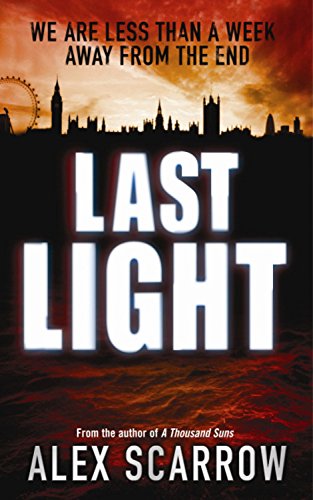
#BookReview ‘Last Light’ by Alex Scarrow #thriller #dystopian #adventure

I’m sure that you, like me, watch end-of-the-world scenarios in films and wonder ’what would I do?’ That’s the thought I had reading Last Light by Alex Scarrow. Oil consultant Andy Sutherland writes an investigate report for a client about what would happen if the world’s oil suppliers were cut off. Ten years later, the trigger points he identified start to happen. Alex Scarrow Within hours, society breaks down. Andy is in Iraq, his wife Jenny has packed her stuff ready to move out of the family home and has gone to Manchester for a job interview. Their daughter Leona is at university in Norwich and son Jacob at private school. They could not be more widely spread. The instinct of the, newly separated, parents, is to get back to their children. The children long for the security of their parents. While in the background, the unknown group causing the chaos has sent Ash to find Leona.
The pages of this turn so rapidly you could read it in one sitting on a long haul flight. Excellent stuff. It’s clear that Scarrow is fascinated by the ‘Peak Oil’ scenario at the centre of the story, and it shows on every page. As each of the Sutherland family learns the hard way not to trust anyone, we wonder if they [and society in general] can possibly survive.

And here’s my review of the sequel, AFTERLIGHT #2LASTLIGHT

If you like this, try:-
‘In Ark’ by Lisa Devaney
‘The Last of Us’ by Rob Ewing
‘The Ship’ by Antonia Honeywell

And if you’d like to share a link:
#BookReview LAST LIGHT by Alex Scarrow via @SandraDanby http://wp.me/p5gEM4-1Pn

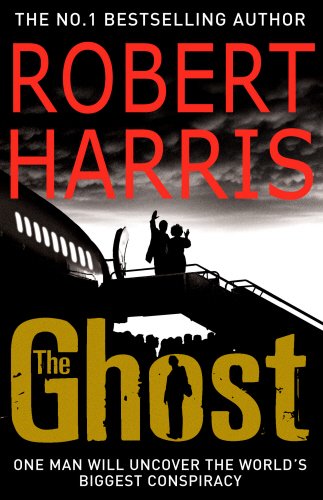
Great Opening Paragraph 86… ‘The Ghost’ #amreading #FirstPara

“The moment I heard how McAra died I should have walked away. I can see that now. I should have said, ‘Rick, I’m sorry, this isn’t for me, I don’t like the sound of it,’ finished my drink and left. But he was such a good storyteller, Rick – I often thought he should have been the writer and I the literary agent – that once he’d started talking there was never any question I wouldn’t listen, and by the time he had finished, I was hooked.”
Robert HarrisFrom ‘The Ghost’ by Robert Harris

Read my reviews of these other thrillers, also by Robert Harris:-
AN OFFICER AND A SPY
MUNICH
PRECIPICE
V2

Try one of these #FirstParas & discover a new author:-
‘Far From the Madding Crowd’ by Thomas Hardy 
‘That They May Face the Rising Sun’ by John McGahern 
‘Bel Canto’ by Ann Patchett 

And if you’d like to tweet a link to THIS post, here’s my suggested tweet:
#Books #FirstPara THE GHOST by Robert Harris @Robert_Harris #books via @SandraDanby http://wp.me/p5gEM4-1V9

#BookReview ‘The Marriage Certificate’ by Stephen Molyneux #genealogy #mystery

The Marriage Certificate by Stephen Molyneux is a mystery story combining family secrets with turn of the century British history: the Boer War, the Great War, the merchant navy, the changing role of women and attitudes to illegitimacy. Stephen MolyneuxIt is the story of two couples – the bride and groom, Louisa and John, best man Frank and bridesmaid Rose – at a wedding on January 15, 1900; their lives, loves, dangers and tragedies. Running alongside is a modern-day strand. In 2011, amateur genealogist Peter Sefton finds the marriage certificate of Louisa and John’s wedding in an antiques shop and his curiosity is piqued. As he researches the names on the certificate, we also see their lives unfolding in a rapidly-changing world as the 19th century turns into the 20th. The men leave home to fight, while the women stay at home. War brings a change of life, but social mores remain Victorian.
Meanwhile, an elderly man dies alone in London. Without relatives, Harry Williams is listed on the Bona Vacantia list of unclaimed estates. In 2011, a professional heir hunting company starts to research Williams’ life in the hope of finding distant relatives and earn a share of the money. How will Highborn Research’s investigation coincide with Peter’s? Is there a connection to Laura and John? And who will inherit Harry Williams’ money?
This is not a thrilling page-turner with rapid action on every page, instead it is a slow-burning story rooted in historical detail which, for me, came alive in the final 100 pages. Perhaps this is due to the writing style, which can be a little formal and repetitive, and the author’s tendency to include tiny details. I did wonder whether the storyline was based on real people, the genealogical detail is fascinating and it is clear the author knows the research procedure, its twists and turns. I read this over one weekend, and found myself sitting up late to read to the end. Incidentally, the last page leaves the story hanging – but don’t be tempted to look!

If you like this, try:-
‘The Blood Detective’ by Dan Waddell 1BLOODDETECTIVE
‘Hiding the Past’ by Nathan Dylan Goodwin #1MORTONFARRIER
‘In the Blood’ by Steve Robinson

And if you’d like to tweet a link to THIS post, here’s my suggested tweet:
#BookReview THE MARRIAGE CERTIFICATE by Stephen Molyneux via @SandraDanby http://wp.me/p5gEM4-1YO

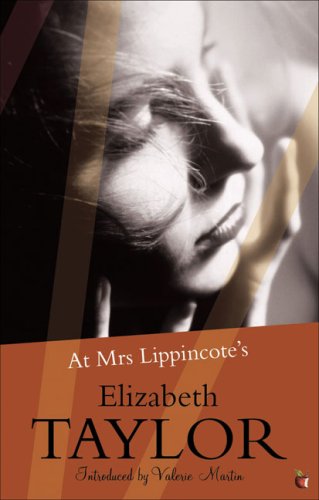
#BookReview ‘At Mrs Lippincote’s’ by Elizabeth Taylor #historical

Oh the delight at discovering a new author. I can’t remember where I stumbled across Elizabeth Taylor, but she seems to be the “novelist’s novelist” with fans ranging from Valerie Martin and Kingsley Amis to Sarah Waters, Jilly Cooper and Elizabeth Jane Howard. At Mrs Lippincote’s is Taylor’s debut novel, first published in 1945. Elizabeth TaylorIt is a minutely observed account of a family in wartime, following the story of Roddy who, posted away from London, rents a house from a widow, Mrs Lippincote. The landlady remains ever-present in the house through her family photographs on the mantelpiece and her possessions in the cupboards. Julia’s life has a transitory feel, she is where she is because of her husband and war, war which is ever-present on every page, and she is curious about the life of the Lippincote family. This is not a war novel about bombs and sirens, it is the snapshot of a normal family living in abnormal times.
The Davenants live at Mrs Lippincote’s with their sickly, seven-year-old book-obsessed son Oliver, and Roddy’s cousin Eleanor. Eleanor, in love with her cousin, finds new friends via a fellow schoolteacher. Julia becomes close to the Wing Commander, Roddy’s boss, while Oliver makes friends with the boss’s daughter Felicity. The latter is an expert at identifying the type of military aircraft flying overhead, a revelation for Oliver who is in the process of re-living the life of Alan Breck Stewart in RL Stevenson’s Kidnapped. His love of books is shared with his mother who constantly refers her real life situation to that of the Brontes and their fictional characters.
Roddy in turn is exasperated by his wife. ‘When he had married Julia, he had thought her woefully ignorant of the world; had looked forward, indeed, to assisting her development. But she had been grown up all the time; or, at least, she had not changed. The root of the trouble was not ignorance at all, but the refusal to accept. ‘If only she would!’ he thought now, staring at her; ‘If only she would accept.’ At a time when women are, for the second time in decades, assuming the jobs of men during wartime, Julia is trapped in a domestic life determined for her by her husband and his boss.
There are 11 Elizabeth Taylor novels waiting to be read, plus numerous short stories, and this makes me happy.

Read my reviews of other books by Elizabeth Taylor:-
A VIEW OF THE HARBOUR
A WREATH OF ROSES
ANGEL
IN A SUMMER SEASON
THE SLEEPING BEAUTY

If you like this, try:-
‘The Paying Guests’ by Sarah Waters
‘The Light Years’ by Elizabeth Jane Howard #1CAZALET
‘Life After Life’ by Kate Atkinson

And if you’d like to tweet a link to THIS post, here’s my suggested tweet:
#BookReview AT MRS LIPPINCOTE’S by Elizabeth Taylor via @SandraDanby http://wp.me/p5gEM4-1Pf