A poem to read in the bath… ‘Forgetfulness’

The two first lines of this Hart Crane poem [below] grabbed me, will grab anyone in their middle years who starts to forget the odd thing, will grab anyone who has watched by as a loved on is taken by dementia.

[photo: poetryfoundation.org]

[photo: poetryfoundation.org]

‘Forgetfulness’
Forgetfulness is like a song
That, freed from beat and measure, wanders.
Forgetfulness is like a bird whose wings are reconciled.
Outspread and motionless, –
A bird that coasts the wind unwearyingly.
 

Forgetfulness is rain at night,
Or an old house in a forest, – or a child.
Forgetfulness is white, – white as a blasted tree,
And it may stun the Sybil into prophecy,
Or bury the Gods.

I can remember much forgetfulness.

This is the first Crane poem I read, found in an anthology. He committed suicide in 1932 at the age of 32, but that hasn’t stopped him being hailed as ‘influential’. His most ambitious work is The Bridge, an epic poem described as being similar to TW Eliot’s The Waste Land.

Hart Crane


‘The Complete Poems of Hart Crane’ by Hart Crane [Liveright] 

Read these other excerpts and find a new poet to love:-
‘Cloughton Wyke I’ by John Wedgwood Clarke
‘Runaways’ by Daniela Nunnari
‘Lost Acres’ by Robert Graves

And if you’d like to tweet a link to THIS post, here’s my suggested tweet:
A #poem to read in the bath: ‘Forgetfulness’ by Hart Crane http://wp.me/p5gEM4-1Ma via @SandraDanby

SaveSave

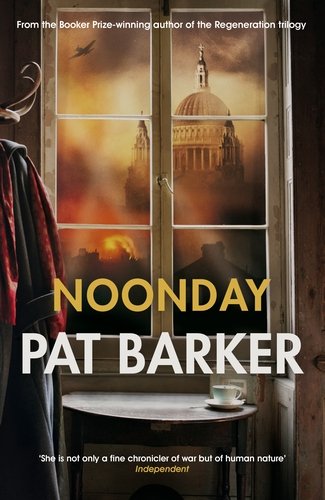
#BookReview ‘Noonday’ by Pat Barker #WW2 #historical

It seems inevitable that the final novel in a trilogy which started with the Great War should end with the Blitz, and that the theme should be death. Death, grief, guilt at being alive, guilt at longing for death, and guilt at wishing another dead. Noonday is a fitting end to the ‘Life Class’ trilogy by Pat Barker, the tale of three young artists – Elinor Brooke, Paul Tarrant and Kit Neville – which started on the verge of the Great War in Life Class, and continued through the war in Toby’s Room. But although the context is war, there are a lot of other things going on. Pat BarkerThe story opens with Elinor at the country home of her mother, who is dying. The assorted relatives wait, in the scorching heat, for death to arrive. Also present is Kenny, an evacuee sent from London to avoid death by bombing. So, the shadow of death is present from the very first page. Don’t forget about Kenny, he is important, particularly in the impact he has on Paul Tarrant – now Elinor’s husband. Paul’s connection with this sorry out-of-place boy leads him to a meeting with a medium, Bertha Mason. This is a story thread criticised by some readers as being irrelevant – and perhaps it is in that it doesn’t connect with either Elinor or Kit – but for me it falls within the theme of grief in war when it is common to not see the body of your loved one. Death, in war, surrounds everyone daily, is expected daily, but is not easier to accept. Perhaps it is understandable that in these circumstances, without a body to bury, communicating with ghosts becomes popular.
As with Life Class and Toby’s Room, the lives of the three protagonists are entwined like snakes. Elinor and Kit are London ambulance drivers, Paul is an air raid warden by night and official war artist by day. The Blitz is the fourth character on the page. The final third of the book is an intense description of the firebombing of the City, an experience which Barker describes with simplicity, urgency, and not a spare word.
Barker is one of my favourite living authors because she writes with such detail about small things, seemingly insignificant ordinary things, but which in her hands and in the context of her story, add layers of meaning. She pays equal attention to the lives of her three main protagonists, the interaction of their lives, and how their desires and motivations impact on each other. She does not step away from sharing an unpleasant thought or action, she tells it as it is, and for this she is a clear voice in a modern world of fiction in which characters often seem too ‘nice’. But that is not realistic and it is not Pat Barker’s way.

For my reviews of other Pat Barker novels, click the title below:-
ANOTHER WORLD
BLOW YOUR HOUSE DOWN
DOUBLE VISION
LIFE CLASS #1LIFECLASS
TOBY’S ROOM #2LIFECLASS
THE SILENCE OF THE GIRLS #1WOMENOFTROY
THE WOMEN OF TROY #2WOMENOFTROY
THE VOYAGE HOME #3WOMENOFTROY
UNION STREET

If you like this, try:-
‘Mrs Sinclair’s Suitcase’ by Louise Walters
‘The Paying Guests’ by Sarah Waters
‘Midnight in Europe’ by Alan Furst

And if you’d like to share this post, try:
#BookReview NOONDAY by Pat Barker via @SandraDanby http://wp.me/p5gEM4-1Rf

Great Opening Paragraph 81… ‘Fair Exchange’ #amreading #FirstPara

“In her youth Louise Daudry, née Geuze, had committed a wicked and unusual crime. At that time, autumn 1792, she wanted money very badly, so she put aside her knowledge that what she was doing was wrong and would hurt others. She told herself that virtue was a luxury the poor could not afford. She let herself be persuaded that no one would ever find out.” Michèle RobertsFrom ‘Fair Exchange’ by Michèle Roberts

Read my reviews of two novels by Michèle Roberts:-
FAIR EXCHANGE
THE WALWORTH BEAUTY

Try one of these #FirstParas & discover a new author:-
‘Hard-Boiled Wonderland and the End of the World’ by Haruki Murakami
‘Possession’ by AS Byatt
‘A Bouquet of Barbed Wire’ by Andrea Newman

And if you’d like to tweet a link to THIS post, here’s my suggested tweet:
#Books #FirstPara FAIR EXCHANGE by Michèle Roberts http://wp.me/p5gEM4-1Ob via @SandraDanby

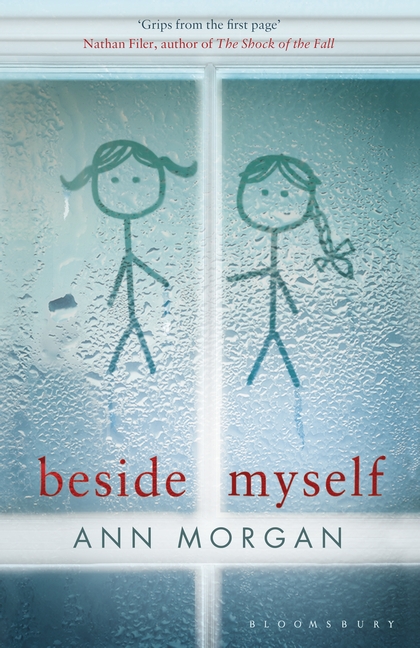
#BookReview ‘Beside Myself’ by Ann Morgan #mystery #identity

Beside Myself by Ann Morgan is a novel about identity, about identical twin sisters. Do you recognise what is fake and what is true? One sister is prettier and cleverer than the other, and she is unkind to her twin who seems downtrodden, bullied, teased and not so bright. Then a childhood prank goes wrong which affects the two girls for the rest of their lives. Ann Morgan Helen and Ellie play a cruel trick on a neighbour, they swap clothes and re-do their hairstyles appropriately (Helen wears a plait, Ellie is in bunches) and act like the other one does – Helen assertive, Ellie cowering. It is Helen’s idea, but when it is time to swap back Ellie refuses. Beside Myself is thoughtful, at times creepy and disturbing.
The story is told from Ellie’s point of view, that is Ellie who used to be Helen:-
Hellie – Ellie who became Helen – is now a TV presenter.
Helen – who is now Smudge/Ellie – is struggling with mental health problems.
Confused, I was a little.
After the switch, both girls seem to be accepted without question by friends and family, despite their obvious personality differences. Their mother has met a new man and is not taking much notice of what her daughters do. Even so, the mother’s blindness is a little hard to believe. There is a soggy section in the middle of the book with stream-of-consciousness rambles which I could have done without. I also admit at times to pausing and double-checking which girl I was reading about.
Without giving away the conclusion, it is pertinent to say there is a dramatic turning point which makes the girls revisit their childhood, the swap, and other family memories; and so as adults they make sense of who they are today. Many things are explained and, though I didn’t find either girl particularly likeable, they are much more alike than either appreciate.
This is a psychological portrait of sisters, identity and mental illness, rather than a thriller so don’t expect dramatic action.

If you like this, try:-
‘The Last Days of Rabbit Hayes’ by Anna McPartlin
‘All My Puny Sorrows’ by Miriam Toews
‘Wolf Winter’ by Cecilia Ekback

And if you’d like to tweet a link to THIS post, here’s my suggested tweet:
#BookReview BESIDE MYSELF by Ann Morgan via @SandraDanby http://wp.me/p5gEM4-1Qu

#BookReview ‘Original Sin’ by PD James #crime

I am never disappointed when I pick up an Adam Dalgliesh mystery, I know what I will get with PD James: excellent plotting, thoughtful characterization, an impossible maze of clues, patient description and scene setting, and deep literary references. Original Sin delivers, and it also gives life to London and the River Thames. PD James This is the ninth outing for James’ poet detective, Commander Dalgliesh, the taciturn, thoughtful, policeman with the stare which is as hard-as-nails. His colleagues respect him but cannot say they either know or like him. He is mysterious, and thereby hangs the fascination he holds for readers.
The first death at Peverell Press, a traditional publishing house located in a Venetian-style house beside the Thames, is a suicide, the body found by a new employee. The same employee has the misfortune to find another dead body later in the book. There are a lot of dead bodies at Peverell Press, and there is also a prankster. Proofs wrongly amended, illustrations disappear, appointments cancelled. When the managing director, Gerard Etienne, is found dead of carbon monoxide poisoning, upstairs in the little archive room, the death is considered suspicious enough to call in the police.
This is a complicated web of a story, James weaves together the current and back stories of the key Peverell employees, their alibis, their affairs and petty spats, their lies and secrets. Is the murderer and the prankster the same person, and what of the suicide? Is that connected? Essentially the building where Peverell Press is based, Innocent House, provides a closed-room mystery: the murderer must come from within the company but although some are haughty, others unlikeable and the rest just gossips, someone there must have done it.
Did I guess? No. The motive is fascinating, though I could have done with a few more hints earlier on.

Click the title to sample the first paragraph of ORIGINAL SIN.

Read my reviews of the other Adam Dalgliesh mysteries:-
COVER HER FACE #1ADAMDALGLIESH
A MIND TO MURDER #2ADAMDALGLIESH
UNNATURAL CAUSES #3ADAMDALGLIESH
SHROUD FOR A NIGHTINGALE #4ADAMDALGLIESH
THE BLACK TOWER #5ADAMDALGLIESH
DEATH OF AN EXPERT WITNESS #6ADAMDALGLIESH
A TASTE FOR DEATH #7ADAMDALGLIESH
DEVICES AND DESIRES #8ADAMDALGLIESH
A CERTAIN JUSTICE #10ADAMDALGLIESH
DEATH IN HOLY ORDERS #11ADAMDALGLIESH
THE MURDER ROOM #12ADAMDALGLIESH … read the first paragraph HERE
THE LIGHTHOUSE #13ADAMDALGLIESH
THE PRIVATE PATIENT #14 ADAMDALGLIESH

Here are my reviews of the two Cordelia Gray mysteries:-
AN UNSUITABLE JOB FOR A WOMAN #CGRAY1
THE SKULL BENEATH THE SKIN #CGRAY2

And another PD James novel:-
INNOCENT BLOOD

If you like this, try:-
‘The Blind Man of Seville’ by Robert Wilson #1FALCÓN
‘A Death in Valencia‘ by Jason Webster #2MAXCAMARA
‘I Refuse‘ by Per Petterson

And if you’d like to tweet a link to THIS post, here’s my suggested tweet:
#BookReview ORIGINAL SIN by PD James via @SandraDanby http://wp.me/p5gEM4-1CX

#BookReview ‘Toby’s Room’ by Pat Barker #WW1 #historical

As the second book of a trilogy by Pat Barker, Toby’s Room can be read also as a standalone novel. The Toby of the title is the brother art student Elinor Brooke, whose story is told in Life Class. This story starts further back in time with a secret shared by the siblings, something not hinted at in the first book. In fact this whole book is about secrets, things hidden for shame, war too horrible to talk about, fear and emotions to be ashamed of, and things simply not spoken. Society was very different then, pragmatism coloured everyday lives, people did what they had to and tried to forget the bad things. Pat BarkerToby is reported ‘Missing, Believed Killed’, a parcel of his belongings is returned. Elinor believes the true story is being hidden and enlists fellow art student Paul Tarrant – who returned from Ypres injured and is now an official war artist – to help. She believes another war artist, Kit Neville, who served with Toby, must know the truth but refuses to say. Kit suffered a horrific face injury and is being treated at Queen Mary’s Hospital in Sidcup. Visiting Kit there they find not only Kit but Henry Tonks, their intimidating professor at the Slade School of Art.
The facial reconstructions at Sidcup are well documented, not least by the medical drawings of patients by Tonks and his team. Once again, Barker uses a true story and seamlessly inserts her fictional characters. And yet again, Barker combines a study of individuals at war while considering the role of art in conflict. As official war artists, Kit and Paul struggle with the limitations they are given, the portrayal of reality is forbidden. As I read every page of this book, the image which stayed in my mind was Paul Nash’s ‘We Are Making a New World’ (see below).

Paul Nash

(c) Tate; Supplied by The Public Catalogue Foundation

For my reviews of other Pat Barker novels, click the title below:-
ANOTHER WORLD
BLOW YOUR HOUSE DOWN
DOUBLE VISION
LIFE CLASS #1LIFECLASS
NOONDAY #3LIFECLASS
THE SILENCE OF THE GIRLS #1WOMENOFTROY
THE WOMEN OF TROY #2WOMENOFTROY
THE VOYAGE HOME #3WOMENOFTROY
UNION STREET

If you like this, try:-
‘Stay Where You Are and Then Leave’ by John Boyne
‘The Inheritance of Solomon Farthing’ by Mary Paulson-Ellis
‘The Ways of the World’ by Robert Goddard #1WIDEWORLD

And if you’d like to share this post, try:
#BookReview TOBY’S ROOM by Pat Barker via @SandraDanby http://wp.me/p5gEM4-1Qx

#BookReview ‘The Book of Lies’ by Mary Horlock #Guernsey #WW2

What is the truth and what is a lie? Is a fib a lie, is an omission a lie? And what would make you lie? To save yourself, to save a loved one? Is it okay to lie in war? I read The Book of Lies by Mary Horlock without keeping the title in my mind, but at the end I knew what the title meant. Mary Horlock The island of Guernsey is the setting for this family story told through the eyes of two children: in 1985, Catherine is 15; in 1940, her uncle Charlie is 12. He sees the German soldiers arrive to occupy the small island; a generation later, Cat still feels the after-effects of the lies told then. More lies are being told now, the difficulty is in identifying truth from lies.
Cat is central to the novel. She is an irreverent narrator who tells us not only her own story but also the history of the island and her family’s war story. She was told both stories by her father, and now that he is dead Cat wishes she had asked him more questions. Cat’s voice is a true teenager, her banter is littered with humour, insecurity, crushes, curiosity and indignation. Charlie’s story is told in flashbacks, but mostly through the transcripts of tapes made of his conversation with his brother Emile, Cat’s father’, telling the truth of what happened to him.
Keep reading, the twists and turns of this family, its tricks and lies, its love and secrets, ends in a twist I didn’t see coming. Forty-five years later, the truth still hurts.

If you like this, try:-
Mrs Sinclair’s Suitcase by Louise Walters
‘A Week in Paris’ by Rachel Hore
‘The Light Years’ by Elizabeth Jane Howard #1CAZALETCHRONICLES

And if you’d like to tweet a link to THIS post, here’s my suggested tweet:
#BookReview THE BOOK OF LIES by Mary Horlock http://wp.me/p5gEM4-1LQ via @SandraDanby

A poem to read in the bath… ‘The Cinnamon Peeler’

This is one of the most sensuous poems I have read, it conjures up love and desire and… cinnamon. By Michael Ondaatje [below], better known for novel and film The English Patient, it is an assault of the senses. I first read it in the anthology Staying Alive edited by Neil Astley [UK: Bloodaxe]. That’s why I love anthologies, I own all three of the Astley trilogy: Staying Alive, Being Alive and Being Human. All are excellent, a great way of finding new poets, great to dip in and out of.

Michael Ondaatje

[illustration: newyorker.com & Patrick Long]

Because of copyright restrictions I am unable to reproduce the poem in full, but please search it out in an anthology or at your local library.

‘The Cinnamon Peeler’
If I were a cinnamon peeler
I would ride your bed
And leave the yellow bark dust
On your pillow.
 

Your breast and shoulders would reek
You could never walk through markets
Without the profession of my fingers
Floating over you. The blind would
Stumble certain of whom they approached
Though you might bathe
Under rain gutters, monsoon.

To listen to The Cinnamon Peeler, read by Michael Cerveris for The Poetry Foundation, click here.

Michael Ondaatje


‘The Cinnamon Peeler: Selected Poems’ by Michael Ondaatje [UK: Bloomsbury] 

Read these other excerpts and find a new poet to love:-
‘The Dead’ by Billy Collins
‘Elegy of a Common Soldier’ by Dennis B Wilson
‘Poems’ by Ruth Stone

And if you’d like to tweet a link to THIS post, here’s my suggested tweet:
A #poem to read in the bath: ‘The Cinnamon Peeler’ by Michael Ondaatje http://wp.me/p5gEM4-1M4 via @SandraDanby

SaveSave

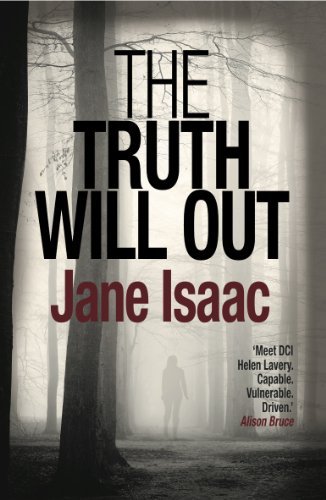
#BookReview ‘The Truth Will Out’ by Jane Isaac @JaneIsaacAuthor #crime

A great beginning, it made me want to check that the loft space of our house is sealed and inaccessible from outside. In The Truth Will Out by Jane Isaac, the lives of two young women are never the same again after a holiday to Italy. Jane IsaacThe truth of their trip dawns on them on their way home, and the days after their return are fraught. One is attacked, the other flees. Detective Chief Inspector Helen Lavery is on the case, hindered by the appearance of a central police team led by her ex-lover [odd that so many crime novelists feel the need to add a romance theme, is this because so many crime novels are read by women?]. So, a good combination of tension: will the baddies catch up with Eva, will the attacker strike again, and how will Helen cope with seeing her ex?
A competent crime thriller with a female detective who, refreshingly, is not an alcoholic, on the verge of a nervous breakdown or being bullied by male officers. A few plot weaknesses aside – I never fully bought-into Eva’s flight and lack of concern about Naomi – this was a good tale though perhaps it could have been a little shorter. A slightly lacklustre final few pages.

If you like this, try:-
‘An Uncertain Place’ by Fred Vargas #8COMMISSAIREADAMSBERG
‘The Accident’ by CL Taylor
‘Angel with Two Faces’ by Nicola Upson #2JOSEPHINETEY

And if you’d like to tweet a link to THIS post, here’s my suggested tweet:
#BookReview THE TRUTH WILL OUT by Jane Isaac @JaneIsaacAuthor http://wp.me/p5gEM4-1Iw via @SandraDanby

My ‘Porridge & Cream’ read: Shelley Weiner

Today I am pleased to welcome novelist, Shelley Weiner who will share her ‘Porridge & Cream’ read.

“Tiring of a well-worn book is like outgrowing a friendship, or a fashion statement, or a taste for cheap confectionary – depressing but, sadly, a fact of life. We change, our tastes change, the priorities that seemed so immutable ten years ago can alter or become irrelevant And so, having scoured my bookshelves to find a ‘Porridge & Cream’ read, I had to conclude that the old faithfuls by the authors I chose (sorry Carol Shields, apologies Jane Smiley …) no longer moved me.

Shelley WeinerI might have darted back to Dickens, to Austen, to Tolstoy, for classics of that calibre are beyond fatigue. Instead I consoled myself with a movie – the excellent screen adaptation of Colm Tóibín’s Brooklyn – and a large tub of popcorn. And as I sat in the darkness imbibing salty kernels and Irish angst, I recalled the spare beauty of Tóibín’s prose and resolved to return to the novel.

Which I did.

And – relief upon relief – it’s as I remembered it; as simple and quiet and engrossing as when I devoured it on publication eight years ago. It’s the kind of writing I identify with and aspire towards, confirming for me the power of understatement.

Brooklyn focuses on young Eilis, who ventures from the limitations of small-town Ireland to the strangeness and dislocation of New York. It’s a story of immigration, a rite of passage tale that reminds me how the deepest and most important universal truths can resonate through discipline and restraint. Tóibín has the rare ability to disappear into the heart and mind of his character; his lack of authorial ego means that no point does the reader stop to admire his turn of phrase or philosophical astuteness. We’re with Eilis entirely – feeling for her, laughing and crying with her, identifying in the most profound way with her plight. Tóibín revisits the same small-town community in the excellent Nora Webster – a more recent and slightly darker work, satisfyingly alluded to in Brooklyn.”

About ‘A Sister’s Tale’ by Shelley Weiner [Constable]
Shelley WeinerMia is dumpy, earthy and responsible, while her sister Gabriella is flighty and spoilt – a prima donna. Middle aged, their lives in a mess, they find themselves alone together in a parched Israeli town. Is it the promised land or a last resort? As the sisters wait together in the sultry heat for something, anything, to happen, they watch each other and remember. They think back to their isolated Jewish childhood in London; the devastation of their father’s sudden death; their mother languishing hopelessly in bed. They conjure up Mia’s Irish Catholic romantic lover, father of her child; and Gabriella’s well-heeled and ‘suitable’ husband. Meanwhile, at the entrance to their flat, an unexpected visitor arrives in time for a fish supper. A Sisters’ Tale is a wicked yet poignant story about the complex and powerful bond between sisters.

Shelley Weiner’s Bio
Shelley Weiner’s novels include A Sisters’ Tale, The Last Honeymoon, The Joker, Arnost, and The Audacious Mendacity of Lily Green.
Her 60-minute guides to writing fiction are published by The Guardian. She is a regular tutor for the Faber Academy and trusted mentor on the Gold Dust Mentoring Scheme. She has presented workshops for Guardian Masterclasses, Norwich Writers Centre, and the Cheltenham Literary Festival. A former Fellow of the Royal Literary Fund, Shelley has also taught fiction for – among others – Birkbeck College, Anglia Ruskin University, the Open University, the British Council, and Durham University Summer School.

Shelley Weiner’s links
Website
Facebook
Twitter

porridge_and_cream__rainyday_111_long


What is a ‘Porridge & Cream’ book? It’s the book you turn to when you need a familiar read, when you are tired, ill, or out-of-sorts, where you know the story and love it. Where reading it is like slipping on your oldest, scruffiest slippers after walking for miles. Where does the name ‘Porridge & Cream’ come from? Cat Deerborn is a character in Susan Hill’s ‘Simon Serrailler’ detective series. Cat is a hard-worked GP, a widow with two children and she struggles from day-to-day. One night, after a particularly difficult day, she needs something familiar to read. From her bookshelf she selects ‘Love in A Cold Climate’ by Nancy Mitford. Do you have a favourite read which you return to again and again? If so, please send me a message via the contact form here.


Discover the ‘Porridge & Cream’ books of these authors:-
Jane Cable
JG Harlond
Jane Lambert

Shelley Weiner


‘Brooklyn’ by Colm Tóibín [UK: Penguin]

And if you’d like to tweet a link to THIS post, here’s my suggested tweet:
Why does author @shelleyweiner love BROOKLYN by Colm Toibin? via @SandraDanby #books http://wp.me/p5gEM4-1QZ