#BookReview ‘Some Luck’ by Jane Smiley #historical #familylife

It is 1920, the eve of Walter Langdon’s 25th birthday and he is walking the fields of his Iowa farm. The first two pages of Some Luck by Jane Smiley are a wonderful description of him watching a pair of owls nesting in a big elm tree. And so starts the first book in the ‘Last Hundred Years’ trilogy about the Langdon family. Chapter-by-chapter it tells of the family’s life, their farm, the ups and downs of daily life, births and deaths, and always the land.  Jane SmileyAt first it feels as if not much is happening. Smiley is so good at the detail: of Walter farming, Rosanna doing the laundry, babies being born, growing into toddlers and then pupils walking the track to the tiny school where they are taught with their neighbours in one classroom, all ages together. Steadily the chapters, and years, march on. The eldest child Frankie goes away to college and then to war, becoming a sniper in Africa and Europe. His younger brother Joe shows no inclination to leave the farm. Lillian, ‘God’s own gift’, the beautiful daughter, meets a man and goes to Washington DC. And so more babies arrive into the Langdon’s household, and the family’s life expands from Iowa as this next generation lives in a world
I came to this book fresh after reading A Thousand Acres and eager for more. Reading Jane Smiley is a little like reading a novel by Colm Tóibín. Both writers excel at the detail, building the story slowly, like layers of frost thickening on a window in winter which starts off looking cloudy and finishes as an intricate design. As a reader, I trust both authors to deliver in the end. Will I be reading the next two books in the trilogy? Definitely. Some Luck is a book to be read over a quiet winter weekend, hunkered down on the sofa with an endless supply of mugs of hot chocolate. Don’t read it in short snatches, it deserves more than that and it will get beneath
CLICK HERE TO READ MORE ABOUT THIS BOOK AT AMAZON

Click the title below to read my reviews of other novels by Jane Smiley:-
A DANGEROUS BUSINESS
A THOUSAND ACRES
EARLY WARNING [LAST HUNDRED YEARS #2]
GOLDEN AGE  [LAST HUNDRED YEARS #3]

If you like this, try:-
‘Life Class’ by Pat Barker
‘Rush Oh!’ by Shirley Barrett
‘The Museum of You’ by Carys Bray

And if you’d like to tweet a link to THIS post, here’s my suggested tweet:
#BookReview SOME LUCK by Jane Smiley http://wp.me/p5gEM4-1m7 via @SandraDanby

Great opening paragraph 62… ‘The Impressionist’ #amreading #FirstPara

“One afternoon, three years after the beginning of the new century, red dust which was once rich mountain soil quivers in the air. It falls on a rider who is making slow progress through the ravines which score the plains south of the mountains, drying his throat, filming his clothes, clogging the pores of his pink perspiring English face.”
Hari KunzruFrom ‘The Impressionist’ by Hari Kunzru

Try one of these #FirstParas & discover a new author:-
‘Sacred Hearts’ by Sarah Dunant
‘Possession’ by AS Byatt
‘Death in Summer’ by William Trevor

And if you’d like to tweet a link to THIS post, here’s my suggested tweet:
#Books #FirstPara THE IMPRESSIONIST by @harikunzru http://wp.me/p5gEM4-eQ via @SandraDanby

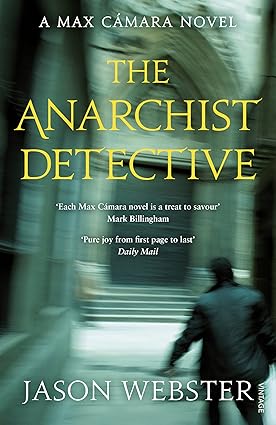
#BookReview ‘The Anarchist Detective’ by @Jwebsterwriter #crime #Spain

The Anarchist Detective was the first of the Jason Webster detective series about Max Cámara that I read. It’s not the first in the series, but the third, though this wasn’t a problem, I didn’t feel a lack of back-story. Jason Webster Two story strands combine; a saffron scam, and unearthing the truth about Max’s great-grandfather in the Spanish Civil war [not much of a surprise that, for an author who has written non-fiction about the war]. But there was something missing, for me, something I couldn’t put my finger on. The plot was fine, the history was fine and no doubt accurately portrayed. It was only when I finished the book that I realized what my difficulty was: Max is a Spanish character, written by an Englishman. Albeit an Englishman who lives in Spain, is married to a Spaniard and who speaks the language fluently. But not a Spaniard and I think in this, very Spanish political, emotional, subject, that showed.
I can see a television series here, along the lines of Falcón based on Robert Wilson’s Seville detective Javier Falcón. I can picture the scene in the saffron village in La Mancha, very photogenic. Jason Webster will write a rich series of Max Cámara novels, I’m sure.
CLICK HERE TO READ MORE ABOUT THIS BOOK AT AMAZON

Read my reviews of other books in Webster’s Spanish detective series:-
OR THE BULL KILLS YOU #1MAXCÁMARA
A DEATH IN VALENCIA #2MAXCÁMARA
BLOOD MED #4MAXCÁMARA

If you like this, try:-
The Blind Man of Seville’ by Robert Wilson
The Pure in Heart’ by Susan Hill
Jellyfish’ by Lev D Lewis

And if you’d like to tweet a link to THIS post, here’s my suggested tweet:
#BookReview THE ANARCHIST DETECTIVE by @Jwebsterwriter via @SandraDanby http://wp.me/p5gEM4-1dc

#BookReview ‘A Thousand Acres’ by Jane Smiley #contemporary #family

This is one of those books that I should have read years ago. I don’t know why I didn’t, and I wish I had. the latest book by Jane Smiley, Some Luck, is the first of a new trilogy and is currently sitting on my Kindle waiting to be read. But first, I felt I should read that book I wish I’d read years ago: A Thousand Acres. You know: the one that won the Pulitzer, the one that mirrors King Lear, etc etc. Jane SmileyThe setting is Iowa, remote farmland. The first page took me straight to that wonderful description of In Cold Blood, Truman Capote’s description of Kansas, more remote farmland. ‘The village of Holcomb stands on the high wheat plains of western Kansas, a lonesome area that other Kansans call ‘out there’.’
Being a farmer’s daughter, I was soon immersed in the detail of the Cook family’s daily life on their Iowa farm ‘out there’: the drainage of the land, spreading manure, moisture levels, the hogs, the purchase of a new tractor, yields, profit and loss.
Smiley had my attention straight away. Overlaid over the groundwork of farming are the daily lives of the family members: Larry, the aging father, and the two daughters, Rose and Ginny and their husbands, who stayed on the farm. A peripheral character is Caroline, the third daughter, the one who got away, now a lawyer, who visits her father but doesn’t interact much with her sisters. Both farming sisters are used to tragedy: Rose is recovering from breast cancer, Ginny has suffered five miscarriages. But they get on with life, because that’s the pragmatic approach to life they were taught.
Then two things happen and everything changes. Out of the blue, Larry says he is leaving the thousand acre farm to Rose and Ginny, nothing to Caroline. And the son of a neighbouring farmer, who had gone to Canada to avoid the Vietnam draft, returns. From this point, the family slowly unravels as the traumatic past stories are told alongside the unfolding modern-day traumas, set against the empty Iowa horizon and a neighbourhood where there are no secrets.
I couldn’t put this book down although it is in no way a page-turning thriller. It’s all about the characters: I wanted to know what happened to them in the past as children that turned them into the adults they are now. Is family everything? Will they stay together and keep the thousand acres together? There is a new generation of Cook children, Rose has two daughters. Will the thousand acres be preserved for them to inherit, or will they escape the empty landscape of rural Iowa as Caroline did?
CLICK HERE TO READ MORE ABOUT THIS BOOK AT AMAZON

Click the title below to read my reviews of other novels by Jane Smiley:-
A DANGEROUS BUSINESS
SOME LUCK [LAST HUNDRED YEARS #1]
EARLY WARNING [LAST HUNDRED YEARS #2]
GOLDEN AGE  [LAST HUNDRED YEARS #3]

If you like this, try:-
Housekeeping’ by Marilynne Robinson
Love is Blind’ by William Boyd
Poor Caroline’ by Winifred Holtby

And if you’d like to tweet a link to THIS post, here’s my suggested tweet:
#BookReview A THOUSAND ACRES by Jane Smiley via @SandraDanby http://wp.me/p5gEM4-1kk

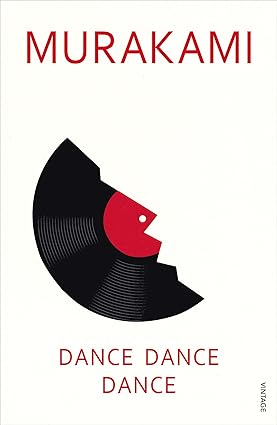
Great opening paragraph 61… ‘Dance Dance Dance’ #amreading #FirstPara

“I often dream about the Dolphin Hotel.
In these dreams, I’m there, implicated in some kind of ongoing circumstance. All indications are that I belong to this dream continuity.
The Dolphin Hotel is distorted, much too narrow. It seems more like a long, covered bridge. A bridge stretching endlessly through time. And there I am, in the middle of it. Someone else is there too, crying.
The hotel envelops me. I can feel its pulse, its heat. In dreams, I am part of the hotel.”
Haruki Murakami From ‘Dance Dance Dance’ by Haruki Murakami

Read these #FirstParas from other books by Haruki Murakami:-
HARD-BOILED WONDERLAND AND THE END OF THE WORLD
NORWEGIAN WOOD
THE WIND-UP BIRD CHRONICLE

Try one of these #FirstParas & discover a new author:-
‘Armadillo’ by William Boyd
‘Perfume’ by Patrick Suskind
‘Couples’ by John Updike

And if you’d like to tweet a link to THIS post, here’s my suggested tweet:
#Books #FirstPara DANCE DANCE DANCE by Haruki Murakami http://wp.me/p5gEM4-m3 via @SandraDanby

Great opening paragraph…61

haruki murakami - dance dance dance 10-6-13“I often dream about the Dolphin Hotel.

In these dreams, I’m there, implicated in some kind of ongoing circumstance. All indications are that I belong to this dream continuity.

The Dolphin Hotel is distorted, much too narrow. It seems more like a long, covered bridge. A bridge stretching endlessly through time. And there I am, in the middle of it. Someone else is there too, crying.

The hotel envelops me. I can feel its pulse, its heat. In dreams, I am part of the hotel.”
‘Dance Dance Dance’ by Haruki Murakami [translated from the Japanese by Alfred Birnbaum]

#BookReview ‘If I Knew You Were Going to be This Beautiful..’ by Judy Chicurel #contemporary

The early ‘70s, Comanche Beach, Long Island. An American rural seaside community where the teens hang about and young men return home from Vietnam. Jobs are scarce, the young are leaving for the city, and teenager Katie loves a veteran who seems disconnected from the world. This novel by Judy Chicurel has the longest title I’ve ever come across. The full title is If I Knew You Were Going to be This Beautiful, I Never Would Have Let You Go. I’m intrigued whether it was the author’s choice or the publisher’s. I can just hear the conversations about front cover design. Judy ChicurelKatie has finished school and is hanging around town for the summer, drinking egg cream sodas at Eddy’s during the day, spending lazy nights at the lounge in The Starlight Hotel. As she and her friends worry about ‘doing it’ and hickeys and mascara, their love interest is split into boys and soldiers. The girls continue to have crushes on the best-looking guys with bleached hair and suntanned arms, but they struggle to connect with these flawed men [mentally and physically flawed] who have seen American and Vietnamese blood bloom in rivers so it looks like lilies. “I see this, like… this giant… blossom, the biggest blossom I’ve ever seen, right on the river, like this unbelievably beautiful flower just floating on the river, getting bigger and bigger, like it was taking over the river, right?” Like the river was a big, fucking, flowing flower!”
The narrative spine of the book is Katie’s longing for Luke, a crush on an older boy who goes away to fight and comes back a man, solitary, silent. As her friends get pregnant and marry, Katie continues to long for Luke to look at her, to speak to her. This is a tender picture of growing up, becoming an adult, slowly like Katie or suddenly like Luke. Cut into Katie’s narrative are the stories of the people around her, all come together to draw a picture of a decaying seaside community in 1972 at a time when America struggled to cope with returning veterans maimed in mind and limb. A well-written debut. I will watch out for the next novel by Judy Chicurel.

If you like this, try:-
A Sudden Light’ by Garth Stein
Vinegar Girl’ by Anne Tyler
Summertime’ by Vanessa Lafaye

And if you’d like to tweet a link to THIS post, here’s my suggested tweet:
#BookReview IF I KNEW YOU WERE… by Judy Chicurel http://wp.me/p5gEM4-1gL via @SandraDanby

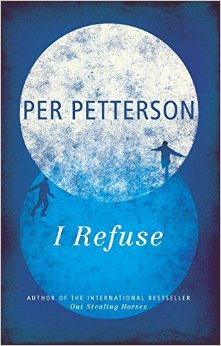
#BookReview ‘I Refuse’ by Per Petterson #contemporary

I Refuse is the story of the friendship and un-friendship of two Norwegian men, their boyhood and manhood, told retrospectively as they meet by chance in 2006 on a bridge in early morning after many years apart. This subtle book is the first I have read by Per Petterson. Per Petterson Jim and Tommy are school friends, living in a small town outside Oslo. Both have difficult home lives. Jim lives with his single mother, a staunch Christian. Tommy’s mother disappears one night into the snow and as the eldest he copes with a violent father and three younger siblings. The two boys unite, until at 18 they are friends no more…
At that moment on the bridge, when the two men recognize each other, I wondered what had happened to separate them for 35 years. We learn the stories of their childhood and the hours before that meeting on the bridge, through their own flashbacks plus the voices of Tommy’s sister Siri, their mother Tya and his guardian Jonsen. Small incidents, unintended actions, everyday words, throwaway insults – the stuff of everyday life – all combine to affect the two boys in ways that last with them through adulthood. Things are said and unsaid.
Petterson’s style is distinctive, a long sentence followed by a short sharp sentence of five or six words used for emphasis. Occasionally I re-read a sentence and got more from it, Petterson’s perception of life is multi-layered and this is a novel which will reward re-reading. He has a way of putting his finger straight on the core point. In 2006 Jim is thinking of his own death, though at this point in the story the reader doesn’t know if he is actually ill or just contemplating mortality. “He knew that one day soon she would get over it and to everyone’s surprise, would have put it behind her, forgotten it already, or hidden it inside herself, the size of a shirt button.” Just as we don’t know if Jim is dying, we also don’t know who the ‘she’ refers to. “He dragged himself along on his knees, the cross was heavy and sharp against his shoulder. I’m so thirsty, he thought and they give me only vinegar to drink.”
The title I Refuse refers to both boys who refuse to compromise, refuse to forgive, refuse to forget. When they are 18, Jim and Tommy talk about friendship, “… it will last if we want it to. It depends on us. We can be friends for as long as we want to.”
I have another new author to explore.
CLICK HERE TO READ MORE ABOUT THIS BOOK AT AMAZON

If you like this, try:-
Doppler’ by Erlend Loe
The Horseman’ by Tim Pears [#1 West Country Trilogy]
Under a Pole Star’ by Stef Penney

And if you’d like to tweet a link to THIS post, here’s my suggested tweet:
#BookReview I REFUSE by Per Petterson http://wp.me/p2ZHJe-1gh via @SandraDanby

#BookReview ‘The Surfacing’ by Cormac James #historical #Arctic

The Surfacing by Cormac James is a consuming book about life on the edge of life, life on the edge of death. When you stand at that edge, there is not much difference between the two. Cormac JamesIn the 1850s, the Impetus sets out into the Arctic. It is part of a rescue party to find the missing Franklin expedition. Delays on shore, including parties and flirtation with the local girls on Greenland, mean the ship is late at the muster and is assigned the most difficult sector to search. Part way into their journey, they discover a stowaway. This woman changes the life of everyone on board, particularly second in charge Lieutenant Morgan. At first she is an intruder in their male world, then she is a nuisance, but finally they accept Miss Rink as one of them. And all the time, winter draws in and the ice clamps around their boat. And Miss Rink is pregnant.
They are caught in the ice for the winter. Ice is a character in the novel; it moves, it seems to breath, it thaws and re-freezes. Their lives depend on the ice. The options are endlessly reviewed, always tempered by the thought that they – the rescuers – are in need of rescuing themselves. And if they were, by some miracle this far north, to stumble on Franklin, would they be able to help the stranded crew?
I felt myself drawn into their daily lives, the need for routine and tasks in the long dark freezing cold days when there is nothing to do. The French cook made me smile, he promises them feasts at mealtimes and serves up mush. And all the time, the story is told by Morgan. His difficulties with Captain Myer, his friend Doctor DeHaven, and with Miss Rink.
Will they survive? Will they discover Franklin, or will they in turn be rescued? This is a wonderful novel, a very different read for me. The Arctic has such a presence, James describes the sea, the ice, the barren mountains and the extreme weather, with language at the same time poetic and powerful. Above all, it is a story of fatherhood as Morgan slowly accepts that Miss Rink’s child is his. In the midst of danger, trapped by the ice which pushes their boat so high above the ice’s surface that it must be supported by wooden posts, a new life is born.

If you like this, try:-
‘Under a Pole Star’ by Stef Penney
‘Burial Rites’ by Hannah Kent
‘Thin Air’ by Michelle Paver

And if you’d like to tweet a link to THIS post, here’s my suggested tweet:
#BookReview THE SURFACING by Cormac James http://wp.me/p5gEM4-1fE via @SandraDanby

A poem to read in the bath… ‘Winter Song’

I came first to the war poets when I studied English Literature at university in London. We read them all: Owen, Sassoon, Graves, Brooke. I think it’s fair to say that in my early twenties I didn’t ‘get them’, not really. Wilfred Owen [below] composed his war poems between January 1917 when he was first sent to the Western Front, and November 1918 when he was killed. Only four of his poems were published during his lifetime. He is agreed to be the finest of the English poets writing about the First World War.

[photo: poetryfoundation.org]

[photo: poetryfoundation.org]

Instead of his most famous poems, ‘Dulce et Decorum Est’ and ‘Anthem for Doomed Youth’, I have chosen ‘Winter Song’. Written in October 1917, it immediately conjures up for me a Paul Nash painting [below] called ‘We are Making a New World’, painted in 1918 and on display in London at the Imperial War Museum. Paul Nash - We are Making a New World 19-6-14‘Winter Song’
The browns, the olives, and the yellows died,
And were swept up to heaven; where they glowed
Each dawn and set of sun till Christmastide,
And when the land lay pale for them, pale-snowed,
Fell back, and down the snow-drifts flamed and flowed.

From off your face, into the winds of winter,
The sun-brown and the summer-gold are blowing;
But they shall gleam again with spiritual glinter,
When paler beauty on your brows falls snowing,
And through those snows my looks shall be soft-going.

A quick search on Amazon revealed that a new copy of my edition of The Collected Poems of Wilfred Owen would cost me £110, a used one £0.01.

For an interesting review by the BBC of the role poetry plays in our view of the First World War, click here.
To read The Poetry Foundation’s biography of Owen, click here.

the collected poems of wilfred owen 19-6-14a


‘The Collected Poems of Wilfred Owen’ [Chatto & Windus]