Tag Archives: American authors

First Edition: ‘The Crying of Lot 49’ by Thomas Pynchon #oldbooks

I admit here that I read Thomas Pynchon’s post-modern novella The Crying of Lot 49 at university and enjoyed it without really understanding it. First published in 1966, it tells the story of Oedipa Maas and what happens after her ex-partner dies. Pynchon had fun creating wonderful character names, so unusual and clever they reminded me of Charles Dickens – Oedipa’s partner is Pierce Inverarity, her husband is Wendell “Mucho” Maas, Oedipa’s lawyer Metzger works for Warpe, Wistfull, Kubitschek and McMingus, and in a bar she meets Mike Fallopian. The plot is labyrinthine, it is a Marmite book, love it or hate it, and I suspects features on many people’s lists of unfinished books. It does, however, have some interesting cover design.

Thomas Pynchon

US 1st ed JB Lippincott & Co 1966

The first edition in the USA was published by JB Lippincott & Co [above]. The current Vintage Classics edition [below] was published in 1996. Buy here

Thomas Pynchon

Vintage 1996 current ed

The story
In brief, Oedipa’s ex partner Pierce has died and she is named as co-executor of his will. The catalyst to the story is her discovery of a set of stamps which may, or may not, have been used by a secret underground postal delivery system called the Trystero. As she travels around California meeting a host of eccentric characters, Oedipa discovers that the Trystero was defeated in the eighteenth century by a real postal system, Thurn and Taxis. However Trystero went underground and survived into the 1960s by using secret mailboxes disguised as regular waste bins displaying its slogan W.A.S.T.E [We Await Silent Tristero’s Empire] and its symbol, a muted post horn. Without proof, Oedipa fluctuates between believing, and not believing, in the Trystero. Is she imagining it, or is it a practical joke?

Other editions 
My copy, bought for university, is still on my shelf today. It’s the Picador 1979 edition.

If you like old books, check out these:-
‘An Ice Cream War’ by William Boyd
‘Jane Eyre’ by Charlotte Bronte
‘Lord of the Flies’ by William Golding

And if you’d like to tweet a link to THIS post, here’s my suggested tweet:
First Edition: THE CRYING OF LOT 49 by Thomas Pynchon #oldbooks https://wp.me/p5gEM4-3Gt via @SandraDanby

#Bookreview ‘The Marriage Plot’ by Jeffrey Eugenides #romance

The title of this, the third novel by Pulitzer Prize-winning author Jeffrey Eugenides, refers to the entanglements of three students and the plotting of Victorian romance novels. The Marriage Plot tells of the romantic, sexual, philosophical, religious and literary coming togethers/going aparts of a literature student Madeleine Hanna, scientist Leonard Bankhead and theology student Mitchell Grammaticus at Brown University in 1982 America. Jeffrey EugenidesIt is a tale of youthful assumptions, experimentations, dreams and disappointments. Perhaps it is a tale which will strike a chord with people of the same age as Madeleine, Leonard and Mitchell, rather than those who are older.
None of the three main characters are particularly likeable and at times the book gets bogged down in literary theory, philosophy, science and religious theory. Leonard is brilliant but a manic depressive, something which colours the entire book. The portrayal of his illness is convincing and shows the knife edge of pharmaceutical dosage needed to maintain a healthy mental balance. Leonard yo-yo’s back and forth, coping and not coping, at times allowing his manic tendencies to win. Madeleine accuses him of liking being depressed all the time. Mitchell is the idealistic one who goes to India to work for Mother Theresa’s Calcutta hospice and confronts some unpalatable truths. In comparison, Madeleine seems rather spoiled. Both men dote on her however and this is the spine which holds the story together: who will Madeleine finally choose?
Eugenides describes mundane things so beautifully. “Outside, the temperature, which had remained cold through March, had shot up into the fifties. The resulting thaw was alarming in its suddenness, drainpipes and gutters dripping, sidewalks puddling, streets flooded, a constant sound of water rushing downhill.” Simple writing at its best. But at other times the writing feels manic and not just in Leonard’s sections. There is an authorial indulgence with many clever asides from the plot and characters. I soon learned to read these parts slightly out-of-focus, not worrying for example that I didn’t grasp Leonard’s sections on yeast or Mitchell’s constant references to Something Beautiful for God, Malcolm Muggeridge’s book about Mother Theresa. The last third of the book passed much quicker than the first two.
The Marriage Plot is ambitious, as Middlesex was, and rightly so, but is perhaps the inevitable ‘difficult’ book after such a huge success. This will not deter me from reading Eugenides again.

Click the title to read the first paragraph of MIDDLESEX, also by Jeffrey Eugenides.

If you like this, try these:-
‘If I Knew You Were Going to Be This Beautiful, I Never Would Have Let You Go’ by Judy Chicurel
‘A Sudden Light’ by Garth Stein
‘Barkskins’ by Annie Proulx

And if you’d like to tweet a link to THIS post, here’s my suggested tweet:
#BookReview THE MARRIAGE PLOT by Jeffrey Eugenides via @SandraDanby http://wp.me/p5gEM4-2yP

#BookReview ‘Gilead’ by Marilynne Robinson #classic #Americanwriters

Gilead by Marilynne Robinson is a read like no other. A slow, contemplative journey through the memories of one man’s life, as he waits to die. In 1956, the Reverend John Ames writes a letter to his young son. It tugs the heartstrings. Marilynne Robinson Robinson writes with a clear unadorned style drawing heavily on biblical texts but it is not a religious tract, it is the story of a man’s life, his memories, his regrets and loves. The first few lines grabbed me and didn’t let me go. Do not start reading this book if you are feeling impatient. Some passages are easy and quick to read, others deserve more thought. It unwinds slowly like a length of thread, telling us the story of John Ames, his father and grandfather, the legacy of the Ames family which has been inherited by the Reverend’s seven-year old son.
I am not religious and some of the references will have passed me by. In the first half of the novel, I would think ‘oh no not another section about religion’, but as I read deeper into the book I became drawn into the stories of John Ames and his forebears and how their beliefs shaped their lives. I wanted to know what happened to John Ames Boughton, the troublesome son of his best friend and fellow reverend. I wanted to know how the Reverend Ames met his second wife. Some of the questions posed are not answered until the very end.
It is a peaceful novel, set against the backdrop of Fifties Iowa, which draws on local history including the Underground Railroad. Robinson draws a picture of the Gilead community, the people, their kindnesses, their grievances. She paints a clear picture. ‘We were very pious children from pious households in a fairly pious town.’
At times, the writing was so sublime I re-read. For example, ‘Sometimes I have loved the peacefulness of an ordinary Sunday. It is like standing in a newly planted garden after a warm rain. You can feel the silent and invisible life.’
Gilead, the second novel by Marilynne Robinson, won two prizes in 2005: the Pulitzer Prize for Fiction, the National Book Critics Circle Award. I came to it with trepidation, having respected the writing style of her first novel, Housekeeping but struggled with the pace of the narrative.
CLICK HERE TO READ MORE ABOUT THIS BOOK AT AMAZON
Try the #FirstPara of GILEAD here.

Read my reviews of Robinson’s other novels:-
HOME
HOUSEKEEPING
JACK

If you like this, try:-
‘Barkskins’ by Annie Proulx
‘Did You Ever Have a Family?’ by Bill Clegg
‘The Past’ by Tessa Hadley

And if you’d like to tweet a link to THIS post, here’s my suggested tweet:
#BookReview GILEAD by Marilynne Robinson via @SandraDanby http://wp.me/p5gEM4-2Cb

#BookReview ‘Anything is Possible’ by Elizabeth Strout @LizStrout #contemporary

Anything is Possible by Elizabeth Strout is an extraordinary book about normal people living normal lives. On the outside, people live private, God-fearing lives, they get by, they smile, they work. Inside, they hide secrets, horror, misgivings, sadness and love. With the same vision and delicacy she displayed in My Name is Lucy Barton, Strout tells us about the people of Amgash, Illinois, the small rural town where Lucy Barton grew up. Elizabeth StroutIn Anything is Possible, as in real life, threads of small town life are tangled together, generation after generation, each seemingly isolated but all connected by invisible tendrils of family, neighbourhood, school, farming. The shared history of living together through the years in close proximity, a community where everyone knows everyone else, their shame, their success, their failure, their betrayal and loyalty, is a community it is impossible to escape. Where adolescent misdemeanours, which may or may not have happened, are remembered as fact and decades of distrust attached. But as well as secrets and shame, there is redemption and love for those who face change and find a way to the other side.
This is more a collection of inter-connecting stories rather than a novel with a single narrative spine, but it is finely written with care and grace. A companion novel to My Name is Lucy Barton, it is not essential to have read that novel first but in some ways it does help.
There are nine chapters each focussing on one character and each, you realize at the end, are firmly entwined like the roots of a closely-planted grove of trees. In the first we see Tommy Guptill, elderly now, but once the caretaker at Lucy’s school. In the second, school counsellor Patty Nicely is insulted by student Lila Lane, daughter of Lucy’s sister Vicky. And so the stories keep coming as you gradually build up a picture of the Amgash citizens. After seventeen years away, writer Lucy is drawn back to the dirt-poor family farm where her brother Petie still lives. There, like the other characters in this novel, she discovers how your history cannot be left behind because it is hard-wired within you.
In her portrayals of these straightforward straight-talking Amgash citizens, Strout poses questions for the reader and does not give answers, expect to do some work yourself when reading her novels.

Read my reviews of these other books by Elizabeth Strout:-
AMY & ISABELLE
LUCY BY THE SEA
MY NAME IS LUCY BARTON
OH WILLIAM!
OLIVE KITTERIDGE
OLIVE, AGAIN

If you like this, try:-
‘A Thousand Acres’ by Jane Smiley
‘The Stars are Fire’ by Anita Shreve
‘Barkskins’ by Annie Proulx

And if you’d like to tweet a link to THIS post, here’s my suggested tweet:
#BookReview ANYTHING IS POSSIBLE by Elizabeth Strout @LizStrout http://wp.me/p5gEM4-2TA via @SandraDanby

#BookReview ‘Darktown’ by Thomas Mullen #crime

Darktown by Thomas Mullen is a gripping book. A combination of the social history of black Americans in post-war pre-civil rights USA, and crime story, it tells the story of the first black policemen in Atlanta, Georgia, in 1948 and the physical, emotional and moral challenges they faced. Thomas Mullen Page after page, and they turned quickly, I was astonished by what happened and the knowledge that similar events really took place. It is a commentary on racial divides in the USA that the summer (2016) this novel about white police brutality was published, white policemen are still shooting and mistreating black citizens.
Politics aside, I read so quickly because the story of Officer Lucius Boggs and the case of the murdered Jane Doe grabbed me and made me resent the moments I wasn’t with them on the page. Twined together are the stories of Boggs and Police Officer Denny Rakestraw; one black cop, one white cop, both dissatisfied with the rules they must police and with the way black people, cops and citizens, are denigrated, both disturbed that the dead Jane Doe has been ignored. Boggs and Rake investigate alone and off-duty, risking suspension plus hatred and injury at the hands of fellow policemen. When they find themselves looking for the same witnesses, they find it difficult to trust. This is a time of corrupt cops and officials, when black people do not expect to have their rights upheld and Mullen shows the suspicion and mistrust of black citizens for the new police officers.
Darktown is a both a depressing story and one which offers a hint of hope. A hint, mind. It is a book which stays with you.
One of the best books I’ve read this year.
CLICK HERE TO READ MORE ABOUT THIS BOOK AT AMAZON

If you like this, try:-
‘Nightfall’ by Stephen Leather [Jack Nightingale #1]
Butterfly on the Storm’ by Walter Lucius
An Uncertain Place’ by Fred Vargas [Commissaire Adamsberg #8]

And if you’d like to tweet a link to THIS post, here’s my suggested tweet:
#BookReview DARKTOWN by Thomas Mullen via @SandraDanby http://wp.me/p5gEM4-2bT

#BookReview ‘We Are Water’ by Wally Lamb @WallyLambAuthor #contemporary

We Are Water by American author Wally Lamb is the examination of a family riven by differences, tragedy and horrors, how they first avoid then finally admit the truths and shame, in order to face the future. It is a story about looking forwards, not back. Wally LambI loved the storyline set-up in the Prologue, elderly artist and curator Gualtiero Agnello recalls the discovery of a self-taught artist, Josephus Jones, a poor black man in the Sixties with a raw untapped gift. But then as the story develops, Jones is not centre stage. The focus is on Annie Oh, another untutored artist discovered by Agnello, who lived in the same house where Jones lived in a shed out back and where he died in a well. Murder or accident, it is never proven.
Via the Oh family, Lamb explores the imbalance of family life, its events and consequences. When she is small. Annie loses her mother in a flood which devastates the town of Three Rivers in Connecticut. This flood is based on a real-life event though the town is fictional. Growing up, Annie is subjected to abuse which remains unspecified for a long time. The reader comes to realise she was abused, but not how or why. Annie’s husband Orion knows only that she had a difficult childhood. As a psychology professor, he suspects a tough childhood but backs-off challenging her about it.
Raising her three children – Ariane, Andrew and Marissa – Annie is a strict mom who occasionally hits her son, but never her daughters. In an escape from motherhood she starts to make art in the basement of the house, using materials foraged from refuse. When a New York art agent sees her work, this is the catalyst for change. Annie leaves Orion and falls in love with her agent, Viveca. This action puts the focus on all the fissures within the Oh family and raises various issues they have denied and hidden. Andrew finds God, Marissa is a jobbing actress and an alcoholic, Ariane conceives by artificial insemination. When they gather for the wedding of Annie and Viveca, a sequence of events brings the past to life again and the secrets and horror come crashing back.
Lamb’s focus on family reminds me of the novels of Anne Tyler and Jane Smiley, although of course he is a man writing a woman’s point of view. Once I got over my disappointment at not reading more about Josephus Jones I enjoyed this, at times difficult, novel.

If you like this, try:-
‘Did You Ever Have a Family’ by Bill Clegg
‘A Little Life’ by Hanya Yanagihara
‘If I Knew You Were This Beautiful, I Never Would Have Let You Go’ by Judy Chicurel

And if you’d like to tweet a link to THIS post, here’s my suggested tweet:
#BookReview WE ARE WATER by Wally Lamb @WallyLambAuthor via @SandraDanby http://wp.me/p5gEM4-2ps

#BookReview ‘Early Warning’ by Jane Smiley #historical #familylife

Early Warning opens with a funeral, Frank Langdon, the patriarch. A funeral is a great introduction to the characters, a reminder of Some Luck, the first part of this trilogy. This, the second instalment by Jane Smiley of the life of Frank and Rosanna Langdon’s family, focuses on their children and grandchildren. And it is a sprawling family. Not just who they are but WHO they are, their relationships, their quirks, their oddities. Jane SmileySmiley is an excellent observer of human behaviour, she reminds me of Jane Austen’s interpretation of family connections, secrets, tensions and disguised emotions. And it is all written in such an unassuming, subtle way. The death of a parent is a landmark in anyone’s life, a reminder of mortality, and in this book we see the maturing of the five Langdon children – ambitious, tricksy Frank; farmer Joe; home-maker Lilian; academic Henry; and youngest Claire. Smiley has a way of writing these characters from birth to maturity, through changing times, the social and political upheavals of Sixties and Seventies America, without losing the essence of personality. And what a cast it is to handle. Not once did I lose the thread of who was who, except with the appearance towards the end of a character called Charlie. I examined the family tree at the front of the book, no Charlie. The mystery is answered at the end, and sets up part three of the trilogy, Golden Age.
Frank and Andy’s troubled marriage produces troubled children: Janet who becomes entwined in a dodgy religious sect, argumentative twins Michael and Ritchie. Joe has to manage not only the family farm but also the additional land inherited by his wife. The Cold War affects grain prices and he considers whether to borrow money to plant seed when the crop may not earn enough to fulfil the loan. Lillian and Arthur’s son Tim goes off to Vietnam, meanwhile Arthur continues to cope with the emotional stress of his Government intelligence job and what comes with it, the prior knowledge of horrible secrets, dirty tricks and bribes. Henry confronts his sexuality, but will he tell his conservative family? Claire, the youngest, marries a doctor who wants to control her life, and that of their sons, in a protective instinct which becomes overwhelming.
It is impossible to summarize a plot which strides the Kennedy assassination, Watergate, the Civil Rights movement and AIDS, but Smiley handles the transition – with one year for each chapter – with ease.
This is a big book [over 700 pages] but few big books are this easy and pleasurable to read. Jane Smiley has already won the Pulitzer, with this trilogy she enters the territory of ‘greatest living’ American author.
CLICK HERE TO READ MORE ABOUT THIS BOOK AT AMAZON

Click the title below to read my reviews of other novels by Jane Smiley:-
A THOUSAND ACRES
SOME LUCK [LAST HUNDRED YEARS #1]
GOLDEN AGE  [LAST HUNDRED YEARS #3]

If you like this, try:-
‘A Town Called Solace’ by Mary Lawson
‘A Spool of Blue Thread’ by Anne Tyler
‘Gilead’ by Marilynne Robinson

And if you’d like to tweet a link to THIS post, here’s my suggested tweet:
#BookReview EARLY WARNING by Jane Smiley http://wp.me/p5gEM4-217 via @SandraDanby

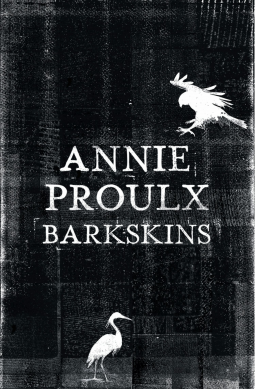
#BookReview ‘Barkskins’ by Annie Proulx #historical

This story of the North East American forests begins with two men who arrive in New France from Europe. It is 1693 and they find work wielding axes, chopping down trees. Barkskins by Annie Proulx ends in 2013 with their English, French and Indian descendants learning about the disappearance of the native trees and plants. It is a chastening story but throughout, Proulx’s descriptions of trees enable you to see and smell them. Annie ProulxProulx’s reputation precedes her: the Pulitzer Prize, Brokeback Mountain, The Shipping News etcetera. For me she is one of the classic American authors but refuses to be pigeonholed. Barkskins is a huge tome, starting with René Sel and Charles Duquet’s struggles to survive, their contrasting stories and the subsequent lives of their families. Barkskins is more the story of the forests than of the Sel and Duquet/Duke families and their subsequent timber business.
The natural world has a huge part to play in this novel. The trees breathe on every page, as the settlers fight the forests and the native Indian tribes struggle to understand the newcomers. It ticks so many boxes: indigenous culture, sea voyages, logging, trade with China, herbal remedies, Dutch merchant vessels, the plundering of nature for man’s thoughtless consumption. Each generation of the Sel and Duquet families experiences the evolution of colonial power, demand for timber for construction, war, ships and railways, and this shows us the passing centuries.
There is humour, brutality, and beautiful description of the natural world. The depth of research is clear on every page and at 736 pages, it demands patient reading. But if you allow Proulx to pull you into her stories, it is worth the commitment. But perhaps it would be more easily digestible as a trilogy of novels. There was a disproportionate amount of time spent on the lives of René Sel and Charles Duquet, while the modern-day Sels and Dukes were covered too quickly for me. At the beginning I remembered who was related to who, but as the generations passed quickly I lost track. This could easily be corrected by the addition of a family tree or character list at the front of the book. And a map.
CLICK HERE TO READ MORE ABOUT THIS BOOK

If you like this, try:-
Summertime’ by Vanessa Lafaye
The Knife with the Ivory Handle’ by Cynthia Bruchman
The Last Runaway’ by Tracy Chevalier

 And if you’d like to tweet a link to THIS post, here’s my suggested tweet:
#BookReview BARKSKINS by Annie Proulx via @SandraDanby http://wp.me/p5gEM4-24o

#BookReview ‘My Name is Lucy Barton’ by Elizabeth Strout @LizStrout #contemporary

My Name is Lucy Barton is a gem of a little novel by Elizabeth Strout. I read it in one sitting on a winter’s afternoon, drawn into the life of Lucy Barton. Lucy looks back, ostensibly telling the story of her nine-week stay in hospital and an unexpected visit by her mother, when in fact she tells the story of her life. Mothers and daughters, no two relationships are alike and no woman can make assumptions about another’s experience as either mother or daughter. Stranded in her hospital bed, Lucy remembers her childhood and tries to make sense of it. Elizabeth StroutEconomically [208 pages] and beautifully written, this is the first of Elizabeth Strout’s novels I have read. I have of course heard of Olive Kitteridge but did not realize it is a Pulitzer winner, and so have the treat awaiting me. Strout writes about the everday, the ordinary, the normal [and not-so-normal] and sees the truth behind what is and isn’t said.
Lucy is a kind of everywoman. Through her Strout examines the mother-daughter relationship with an acute eye which will make you examine your own relationships. Lucy tells the story of her hospital visit and her mother’s appearance with the benefit of hindsight, looking back at her childhood, her daughters and female friendships. Sometimes she is baffled, other times she joins the dots and makes acute observations while her mother remembers their life in extreme poverty. There are hints to things in the past which are never confirmed, this is a book as much about what is not said as about what is. In revisiting her childhood, trying, and mostly failing, to get her mother to talk about it, Lucy learns that although your upbringing shapes who you are, that shaping continues throughout your life.
I thought about this book for days afterwards.

Read my reviews of these other books by Elizabeth Strout:-
AMY & ISABELLE
ANYTHING IS POSSIBLE
LUCY BY THE SEA
OH WILLIAM!
OLIVE KITTERIDGE
OLIVE, AGAIN

If you like this, try:-
The Language of Others’ by Clare Morrall
A Spool of Blue Thread’ by Anne Tyler
How to Belong’ by Sarah Franklin

And if you’d like to tweet a link to THIS post, here’s my suggested tweet:
#BookReview MY NAME IS LUCY BARTON by Elizabeth Strout @LizStrout http://wp.me/p5gEM4-1SL via @SandraDanby

#BookReview ‘Did You Ever Have a Family’ by Bill Clegg #contemporary

Everyone by now must know the premise of Did You Ever Have a Family by New York literary agent Bill Clegg. A vacation home explodes, a family is wiped out. This is the story of those who remain, of grief, of memories and regret, of resentments and prejudice. Bill CleggThis is a very affecting novel, it feels almost voyeuristic, invading the privacy of those who are grieving. It is clear that Bill Clegg writes from the heart, from his own experience, not only of grief but of the Connecticut landscape, the setting, and the secondary theme of drug use. This novel is a study of how ordinary life can be torn apart by tragedy, so mind-blowing that the irrelevance of real life must stop. But daily life doesn’t stop, not really, day follows night, as June discovers as she drives from east to west coast.
This is one of those books I will buy as hardback. I want to keep it, and re-read it often.

Read my review of another Bill Clegg novel, THE END OF THE DAY.

If you like this, try:-
A Little Life’ by Hanya Yanagihara
If I Knew You were Going to be this Beautiful I Never Would Have Let You Go’ by Judy Chicurel
We Are Water’ by Wally Lamb

And if you’d like to tweet a link to THIS post, here’s my suggested tweet:
#BookReview DID YOU EVER HAVE A FAMILY by Bill Clegg http://wp.me/p5gEM4-1JN via @SandraDanby