Tag Archives: Barbara Erskine

#BookReview ‘The Story Spinner’ by Barbara Erskine @Barbaraerskine #historical

The Story Spinner by Barbara Erskine is an absorbing time-lapse story which combines the lost romance between a Welsh princess and a Roman general with a modern-day archaeological-investigation, all knitted together by mythical connections, visions and a disappearing dog. Barbara ErskineThere are two distinct storylines. Cadi, ‘the observer, the unseen diarist, the only witness. The Novelist. The story spinner,’ is a modern-day poet with a mystic sensitivity to the people who lived on the ancient site next to her Welsh cottage. Supposed to be writing poetry based on a Welsh myth, instead she finds herself free-writing prose based on visions of the life of Elen, a Welsh princess living in 382AD. Little is known of her life as she appears in few historical documents. So when Cadi imagines Elen as a teenager, she unlocks the story of her marriage to a Roman general.
Cadi has always suspected that the meadow next to her cottage is the site of an ancient army camp. When she starts to hear marching footsteps and the sounds of soldiers on the move, she calls in her druid uncle, Professor Meryn Jones. Their excitement at the potential discovery is deflated by the news that the unknown owner of the meadow is seeking planning permission for a housing development. Draft plans show houses built right up to the hedge in Cadi’s back garden. Bereft at losing her sense of peace and isolation and being unable to walk in the beautiful meadow, she throws herself into investigation. During the day she talks to town planners and archaeologists. At night she sits with pen and notebook writing the story of Elen’s life. In channelling the story of Elen, Cadi also discovers fascinating characters including Branwen, a wise woman.
The unveiling of Elen’s life as a teenage bride and young mother, a Welsh princess who must subjugate herself to the authority of her husband, develops alongside the modern-day investigation into the meadow. Complicating the issue is the re-appearance in the village of Cadi’s ex, Ifan, who throughout their relationship was bullying and threatening. Cadi is afraid he is stalking her again.
This is a tale with complicated connections that Erskine handles with skill. I enjoyed this very much though it’s a trifle long for me, there are sections towards the end that I wanted to move a little quicker. Overall an unusual, compelling read.

Here’s my review of THE DREAM WEAVERS, also by Barbara Erskine.

If you like this, try:-
The Prophet’ by Martine Bailey #2TABITHAHART
The Confessions of Frannie Langton’ by Sara Collins
The Mermaid and Mrs Hancock’ by Imogen Hermes Gowar

And if you’d like to tweet a link to THIS post, here’s my suggested tweet:
#BookReview THE STORY SPINNER by Barbara Erskine @Barbaraerskine https://wp.me/p2ZHJe-8Fb via @SandraDanby

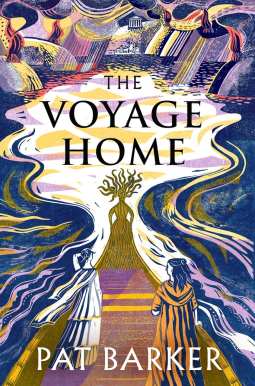
COMING SOON… THE NEXT BOOK I REVIEW WILL BE:- Pat Barker
#BookReview ‘The Dream Weavers’ by @Barbaraerskine #historical

I like the timeslip construction and so The Dream Weavers by Barbara Erskine caught my eye. Although well-established, she’s a new author for me as I explore more historical fiction. I admit to looking for more novels without technology and the mores of the modern world. A bit of escapism. Barbara ErskineSet in two different centuries – Anglo-Saxon England 788AD and the English/Welsh border in 2021 – The Dream Weavers is about the romance of a young English noblewoman and a Welsh prince who meet as Offa’s Dyke is being built. Eadburh and Elisedd are sent by their fathers to ride out along the construction line and report back on progress, but over a few days they fall in love. The dyke is a symbol throughout the book, of rivalries and divisions, of tribes seeking separation rather than acceptance of differences. Eadburh’s father King Offa meant it to be a permanent border line between the two countries but in the centuries after it was built it fell into disrepair. In the modern strand of the story – told by Beatrice Dalloway whose husband Mark is canon treasurer of nearby Hereford Cathedral – the dyke is a bit of a mystery, difficult to find, often missing or destroyed, invisible in the rural landscape.
I liked the history, the myths, the hunting down of secrets and particularly the exploration of how history’s perception of the past can be mistaken. Historians make judgements based on the information available to them at the time, but often they may be unaware that what they believe are historical facts are in reality assumptions, lies, cultural misunderstandings, political interpretations or written by chroniclers with personal agendas. This theme is embodied in the character of historian Simon Armstrong, a specialist in the Anglo-Saxon period, who has rented a cottage in the isolated countryside near the dyke to finish writing his latest book. But Simon has a problem, his cottage seems to have a ghost and his landlady calls Bea for help. Bea is a mystic who has an affinity with ghosts and has studied folklore and the supernatural, a hobby which sits uneasily alongside her husband’s job. As Bea investigates the mysterious voice and noises in and around the cottage, Simon’s two children arrive to stay. Teenager Emma seems delicately susceptible to the supernatural and is drawn into Bea’s dreaming. The connections between Bea and Emma with the Welsh borders of 788AD strengthen and both find it difficult to stay in the 21st century, at increasing danger to themselves.
This felt like a long read but when I finished it and checked I was surprised to see it is only 512 pages. Nowhere near the books I think of a ‘long read’ – Hanya Yanagihara’s A Little Life [737 pages], Kate Mosse’s Labyrinth [752] and itself a timeslip tale, or Ken Follett’s The Pillars of the Earth [a stonking 1104 pages]. The links between the timeslip sections became repetitive with Bea sitting down, falling asleep and dreaming a lot of times and at all times of day. This stop-start rhythm took me away from the historical story. I enjoyed all Eadburh’s sections, following her from the first meeting with Elisedd through their whirlwind romance to all that followed. So the modern-day sections of Bea seemed intrusive. But of course this is a timeslip story so it is set in two different time zones, and today’s accepted storytelling method is to introduce a threat to your key character. Bea’s modern-day strand features a cathedral volunteer who at first seems a nosy woman, interfering, disliking the new canon’s wife and possibly fancying Mark herself. But Sandra Bedford is not all she seems and her role towards the end was not what I was expecting.
I was held to the last page by the telling of a tragic love story set in Anglo-Saxon times. I wanted to know what happened to Eadburh and Elisedd – did their love last, did they meet again – and cared less for the other characters.
Having discovered a new author, I plan to go back to the beginning and read Erskine’s debut novel, The Lady of Hay.

If you like this, try:-
The Crows of Beara’ by Julie Christine Johnson
The Evening and the Morning’ by Ken Follett
The Ninth Child’ by Sally Magnusson

And if you’d like to tweet a link to THIS post, here’s my suggested tweet:
#BookReview THE DREAM WEAVERS by @Barbaraerskine https://wp.me/p5gEM4-5md via @SandraDanby