Tag Archives: timeslip novels

#BookReview ‘The Valley of Ravens’ by Barbara Erskine @Barbaraerskine #historical

Two healers, one in the 21st century the other in the thirteenth, are unjustly harrassed. The Valley of Ravens by Barbara Erskine is the third book by this author that I’ve read. All are timeslip novels, all a completely different blending of contemporary and history. Erskine is quickly becoming addictive. Barbara Erskine The two women, who live in the same house centuries apart, are victims of persecution. Eve, desperate to escape from a stalker in Suffolk, a retired GP who doesn’t believe in natural healing, has moved secretly to a lonely Welsh valley. How does her stalker find out her address in the Valley of the Ravens? Little does Eve know that her rundown cottage, T ŷ’r Wrach, is known locally as the Witch’s House and carries an ancient curse. As she gets to know her neighbours and begins the renovations, strange things begin to happen. Small gifts. Noises in the night. Is it her stalker, or does the house have a ghost? And why are local men reluctant to visit the cottage?
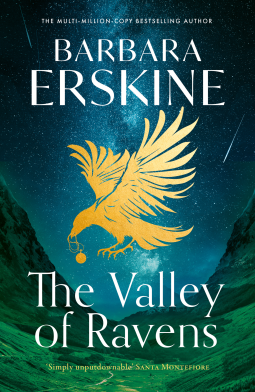
Alys, who lived in the house in 1260, attends the wounded in the aftermath of a battle where she treats the last Prince of Wales, Llewellyn. A lasting friendship grows and, when he is near the Valley of the Ravens, Llewellyn visits Brother Afan, a holy man living in a nearby cave, and Alys at T ŷ’r Wrach where he eats her bread and honey. When he is killed, Alys is wrongly blamed by her neighbours for betraying Llewellyn, Prince of Gwynedd, Lord of Snowdon and of Aberffraw, to the English king Edward I. It is rumoured the prince paid her for witchcraft. Llewellyn’s death is grisly and Alys has a critical role to play in what happens next. As the story of each woman unfolds, trying to understand their persecutors and struggling to survive, it becomes clearer why Alys is still present at Eve’s house. She made a vow to the prince which she attempted to fulfill.
The Valley of Ravens is a masterful blending of ancient and modern, romance, superstition, witchcraft and Welsh history. Atmospheric, spooky, rooted in Welsh nature and tradition.
This is a long book but I didn’t want to put it down. Prince Llewellyn’s story is true, but Eve, Alys, T ŷ’r Wrach and the Valley of the Ravens are fictional.

Read my reviews of other novels by Barbara Erskine:-
THE DREAM WEAVERS
THE STORY SPINNER

If you like this, try:-
‘The Royal Rebel’ by Elizabeth Chadwick #1JEANETTEOFKENT
Days Without End’ by Sebastian Barry #1DAYSWITHOUTEND
‘Disobedient’ by Elizabeth Fremantle

And if you’d like to tweet a link to THIS post, here’s my suggested tweet:
#BookReview THE VALLEY OF RAVENS by Barbara Erskine @Barbaraerskine https://wp.me/p2ZHJe-a4v via @SandraDanby

COMING SOON… THE NEXT BOOK I REVIEW WILL BE:- Robert Thorogood
#BookReview ‘The Fourth Queen’ by Nicola Cornick @NicolaCornick #historical #timeslip #Tudor

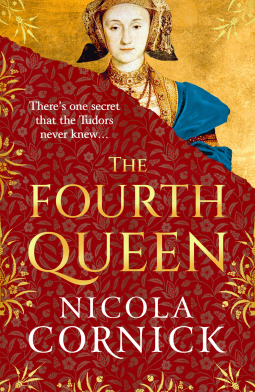
The Fourth Queen by Nicola Cornick is my favourite book of the year. An intriguing timeslip novel split between the present day and Tudor England, the queen of the title is Anna of Cleves, the fourth wife of Henry VIII. Two women, Jenna now and Marris in in the 16th century, are bound by this one queen and one secret. To Jenna’s horror, that secret may be uncovered by a 21st century archaelogical dig. Nicola CornickEngland 1539. Three sisters. Loyalty. Betrayal. Secrets. Danger. Dissolution. After the death of Jane Seymour, King Henry VIII must marry again and a match is sought with the German princess Anna of Cleves. Marris, Bridget and Rose, the only remaining nuns at Winterhill Priory, are about to be evicted from the priory that has been their home since they were orphaned. Marris knows it is her responsibility to keep her sisters safe and so accepts an offer of marriage from the new owner of their old home. Due for demolition, the site will be rebuilt using stone from the priory by Sir William Sharington. It is to be his home, Winterhill Hall.
England, present day. Three sisters. Loyalty. Lies. Secrets. Rivalry. Jealousy. Jenna feels responsible for her two younger sisters, Bree and Molly, despite their independence. The two strands, modern and historical, are knitted together by retrocognition; the knowledge of a historical event which could not have been learned or inferred by normal means. Why does Jenna have such deep knowledge of Marris’s life? She thinks, ‘The past was such a tangled web and none of it could be allowed to come out, because once one part of it started to unravel, everything would fall apart.’ An encounter with financier Owen Power forces her to reconsider everything she thinks she knows and wants, every red line she has drawn about the past.
The Fourth Queen is by far the best timeslip novel I’ve read. Impossible to review without giving away some great twists. Bravo.

Read my reviews of these other novels by Nicola Cornick:-
THE FORGOTTEN SISTER
THE LAST DAUGHTER
THE OTHER GWYN GIRL
THE WINTER GARDEN

If you like this, try:-
‘The Queen’s Painter’ by Wendy Holden
‘Shadows in the Ashes’ by Christina Courtenay
‘The Story Spinner’ by Barbara Erskine

And if you’d like to tweet a link to THIS post, here’s my suggested tweet:
#BookReview THE FOURTH QUEEN by Nicola Cornick @NicolaCornick https://wp.me/p2ZHJe-9XY via @SandraDanby

COMING SOON… THE NEXT BOOK I REVIEW WILL BE:- Frances Brody
#BookReview ‘The Last Daughter’ by Nicola Cornick @NicolaCornick #historical

A modern-day disappearance is combined with myths and a famous historical mystery, knit together in The Last Daughter by Nicola Cornick. Nicola CornickThis is a time-slip story involving true characters in history, a magical stone – the Lovell Lodestar – and the legend of The Mistletoe Bride. The latter is story of sorrow and grief attributed to many English mansions and stately homes in which a bridegroom and his bride, tired of dancing at their wedding, play hide and seek. She disappears and is never found until a skeleton is discovered many years later. It is eleven years since Caitlin Warren disappeared, presumed dead. Her twin sister Serena still struggles to move on from her loss, a feeling magnified by the lack of evidence and Serena’s worry that the cognitive amnesia she has suffered since that night may obscure the truth. When a skeleton is discovered during an archaeological dig at Minster Lovell, the country house where the sisters’ grandparents lived and where Caitlin disappeared, the memories come flooding back. Told in two timelines – Serena, present day; and Anne FitzHugh in the 15th century. Anne’s mother is from the powerful Neville family, a major power during the Wars of the Roses. Five-year old Anne is to be betrothed to eight-year-old Francis Lovell, best friend of Richard of Gloucester, younger brother to the Yorkist King Edward IV. History combines with myth when Anne is told the ghostly story of The Mistletoe Bride who disappears into a different place, a different time.
Serena returns to Minster Lovell Hall in Oxfordshire in an attempt to confront her hidden memories and to be interviewed by the police. There she encounters old friends and visits her grandfather Dick, now suffering from dementia. How can Serena in the 21st century be connected to Anne FitzHugh and what bearing could this have on Caitlin’s disappearance?
A complex story full of so many twists, mysteries and myths that I occasionally floundered. When I surrendered to the flow of the story and stopped worrying about a few gaps and implausible connections, the pages flew by. I finished it wondering if the story would be stronger with slightly less myth and more of Anne and Francis.

Read my review of these other novels by Nicola Cornick:-
THE FORGOTTEN SISTER
THE FOURTH QUEEN
THE OTHER GWYN GIRL
THE WINTER GARDEN

If you like this, try:-
The Dream Weavers’ by Barbara Erskine’
The Almanack’ by Martine Bailey
The Cursed Wife’ by Pamela Hartshorne

And if you’d like to share a link:
#BookReview THE LAST DAUGHTER by Nicola Cornick @NicolaCornick https://wp.me/p5gEM4-5ri via @SandraDanby

#BookReview ‘The Dream Weavers’ by Barbara Erskine @Barbaraerskine #historical

I like the timeslip construction and so The Dream Weavers by Barbara Erskine caught my eye. Although well-established, she’s a new author for me as I explore more historical fiction. I admit to looking for more novels without technology and the mores of the modern world. A bit of escapism. Barbara ErskineSet in two different centuries – Anglo-Saxon England 788AD and the English/Welsh border in 2021 – The Dream Weavers is about the romance of a young English noblewoman and a Welsh prince who meet as Offa’s Dyke is being built. Eadburh and Elisedd are sent by their fathers to ride out along the construction line and report back on progress, but over a few days they fall in love. The dyke is a symbol throughout the book, of rivalries and divisions, of tribes seeking separation rather than acceptance of differences. Eadburh’s father King Offa meant it to be a permanent border line between the two countries but in the centuries after it was built it fell into disrepair. In the modern strand of the story – told by Beatrice Dalloway whose husband Mark is canon treasurer of nearby Hereford Cathedral – the dyke is a bit of a mystery, difficult to find, often missing or destroyed, invisible in the rural landscape.
I liked the history, the myths, the hunting down of secrets and particularly the exploration of how history’s perception of the past can be mistaken. Historians make judgements based on the information available to them at the time, but often they may be unaware that what they believe are historical facts are in reality assumptions, lies, cultural misunderstandings, political interpretations or written by chroniclers with personal agendas. This theme is embodied in the character of historian Simon Armstrong, a specialist in the Anglo-Saxon period, who has rented a cottage in the isolated countryside near the dyke to finish writing his latest book. But Simon has a problem, his cottage seems to have a ghost and his landlady calls Bea for help. Bea is a mystic who has an affinity with ghosts and has studied folklore and the supernatural, a hobby which sits uneasily alongside her husband’s job. As Bea investigates the mysterious voice and noises in and around the cottage, Simon’s two children arrive to stay. Teenager Emma seems delicately susceptible to the supernatural and is drawn into Bea’s dreaming. The connections between Bea and Emma with the Welsh borders of 788AD strengthen and both find it difficult to stay in the 21st century, at increasing danger to themselves.
This felt like a long read but when I finished it and checked I was surprised to see it is only 512 pages. Nowhere near the books I think of a ‘long read’ – Hanya Yanagihara’s A Little Life [737 pages], Kate Mosse’s Labyrinth [752] and itself a timeslip tale, or Ken Follett’s The Pillars of the Earth [a stonking 1104 pages]. The links between the timeslip sections became repetitive with Bea sitting down, falling asleep and dreaming a lot of times and at all times of day. This stop-start rhythm took me away from the historical story. I enjoyed all Eadburh’s sections, following her from the first meeting with Elisedd through their whirlwind romance to all that followed. So the modern-day sections of Bea seemed intrusive. But of course this is a timeslip story so it is set in two different time zones, and today’s accepted storytelling method is to introduce a threat to your key character. Bea’s modern-day strand features a cathedral volunteer who at first seems a nosy woman, interfering, disliking the new canon’s wife and possibly fancying Mark herself. But Sandra Bedford is not all she seems and her role towards the end was not what I was expecting.
I was held to the last page by the telling of a tragic love story set in Anglo-Saxon times. I wanted to know what happened to Eadburh and Elisedd – did their love last, did they meet again – and cared less for the other characters.

Here are my reviews of other timeslip novels by Barbara Erskine:-
THE STORY SPINNER
THE VALLEY OF RAVENS

If you like this, try:-
The Crows of Beara’ by Julie Christine Johnson
The Evening and the Morning’ by Ken Follett #PREQUELKINGSBRIDGE
The Ninth Child’ by Sally Magnusson

And if you’d like to tweet a link to THIS post, here’s my suggested tweet:
#BookReview THE DREAM WEAVERS by Barbara Erskine @Barbaraerskine https://wp.me/p5gEM4-5md via @SandraDanby