Tag Archives: book review

#BookReview ‘The Women of Troy’ by Pat Barker #historical #myths

The Women of Troy is the second of the Trojan War novels by Pat Barker, telling the post-war story of Trojan woman Briseis, a trophy of war owned by Achilles. I loved the first, The Silence of the Girls, but wanted to hear the stories of more of the women. That’s what we get in this second book. Pat BarkerBriseis, now pregnant with Achilles’ child, is again narrator along with a new male voice, that of Pyrrhus, eldest son of Achilles and Briseis’ stepson. Now Achilles is dead Briseis belongs to Alcimus, charged by Achilles before his death with caring for his unborn child.
The story starts with Pyrrhus inside the wooden horse, constructed by the Greeks, to trick the Trojans. ‘Inside the horse’s gut: heat, darkness, sweat, fear. They’re crammed in, packed as tight as olives in a jar.’ It is Pyrrhus who kills Priam, king of the Trojans, and that murder echoes throughout The Women of Troy. As storms rage – punishment of the victorious Greeks by the Gods for their impious behaviour – the army and its captives are now trapped on the beach waiting for a chance to sail home. This enclosure at close quarters raises emotions, tensions, jealousies and pride. As Alcimus arranges games – chariot racing, archery, spear throwing, wrestling – Briseis acts as a mother-figure for the other women, all now slaves.
Barker explores the after-effects of war on the Trojan women during these empty days – Hecuba, widow of Priam, and Cassandra, her daughter; Andromache, wife of Hector now concubine to Pyrrhus – high-born Trojan women now slaves in the households of their Greek victors, as concubines, whores, cooks and housemaids.
The story is about survival on the edge of despair when women are secondary creatures deemed without opinions or rights, exploring how women individually and collectively find ways to live. There is bravery, despair, foolishness, obsession and madness. When the actions of Pyrrhus are questioned, Briseis must remember the events of one night when Achilles was alive. ‘Both of us [Briseis and Cassandra, another witness] were women – and a woman’s testimony is not considered equal to a man’s. In a court of law, if a man and woman disagree it’s almost invariably his version of events that’s accepted. And that’s in a courtroom – how much more so in this camp where all the women were Trojan slaves and the only real law was force.’
But this is also the story of Pyrrhus, a young man who struggles to match the reputation of a father he never felt close to, a father lauded as a God. These were brutal times when small mistakes were punished by death and Pyrrhus, who has few friends, takes risks and makes bad decisions.
This book works as a standalone story as well as companion to The Silence of the Girls. Both are magnificent examples of storytelling by an author at the peak of her writing. Faithful to the myths, Barker is an inventive writer who adds her own interpretations and twists.
Excellent, I whizzed through this in no time. Will there be a third novel? I hope so.

Read my reviews of other Pat Barker novels:-
THE SILENCE OF THE GIRLS #1WOMENOFTROY
LIFE CLASS #1LIFECLASS
TOBY’S ROOM #2LIFECLASS
NOONDAY #3LIFECLASS
DOUBLE VISION
ANOTHER WORLD
BLOW YOUR HOUSE DOWN
UNION STREET

If you like this, try:-
These Dividing Walls’ by Fran Cooper
A Thousand Acres’ by Jane Smiley
Vinegar Girl’ by Anne Tyler

And if you’d like to tweet a link to THIS post, here’s my suggested tweet:
#BookReview THE WOMEN OF TROY by Pat Barker https://wp.me/p5gEM4-5sm via @SandraDanby

#BookReview ‘The Blue Afternoon’ by William Boyd #historical

Having recently read and enjoyed Waiting for Sunrise by William Boyd, I checked to see how many of his books I have read. I’ve been a fan from the beginning and have read everything from the first, A Good Man in Africa in 1981 to Brazzaville Beach in 1990. Then there’s a gap between Brazzaville Beach and Any Human Heart in 2002. So, this year I plan to read the books in the intervening years. William Boyd First up is The Blue Afternoon. Published in 1993 and winner of the ‘Sunday Express Book of the Year’ and the ‘Los Angeles Book Prize for Fiction’, I had no idea of its subject. Boyd is like Rose Tremain, no book is like any other. Every one is an adventure.
The first part, set in Los Angeles in 1936,‪ suggests this is the story of a battle between two arguing architects. But it turns into something rather different. When Kay Fischer visits the site of her latest project, a perfectly proportioned house on a sloping site at 2265 Micheltorino, she notices an elderly man. Later at home, the same man pays her a visit and announces that he is her father. He asks for her help, to track down a person called Paton Bobby. He doesn’t explain why.
This is the story of Dr Salvador Carriscant’s life as a surgeon in Manila at the turn of the 20th century, a story also of murder, love, friendship and the building of an early flying machine. In 1902, Carriscant is a celebrated surgeon at the San Jeronimo hospital, a pioneer of the antiseptic methods of Joseph Lister. Meanwhile his anaesthetist, Pantaleon Quiroga, is building a flying machine in his nipa barn. Both are obsessives. When Carriscant falls in love, his obsession turns from surgery to Delphine Sieverance, the married object of his fantasies. This atmosphere of contentment and positivity is shattered when Paton Bobby, the local chief of police, asks Carriscant to attend the body of a murder victim. When the victim is identified as an American soldier, the case becomes political. The country is now ruled by the US after the recent Philippine-American war but guerrilla groups are active in rural areas. There is prejudice against the locals, suspicion of the Americans, poverty, ex-pat aristocracy and exploitation, but this is also a time of dynamic advances at the beginning of a new century.
Not Boyd’s best book but enjoyable none the less. There are slow passages where Boyd’s enthusiasm for the description of tiny details goes too far. In places I could have done with less technical information about architecture, surgery and the aerodynamics of flying. The story really gets going in the second, and largest section, set in Manila. The first and third parts in 1936 are almost irrelevant bookends and some of the final explanations stretch credibility.
But my, Boyd does write beautifully. ‘Inland, continents of dark plum-grey clouds were building, threatening the rain that João had promised, while out west, over the Atlantic, the afternoon sun shone with that silvery flinty brilliance you find over big oceans, light reflecting back from the huge expanse of shifting waters.’ And in an instant, I was sitting there too, a glass of cold, yellow wine in my hand.

My copy of The Blue Afternoon is a used, signed hardback, the Sinclair-Stevenson edition, with a rather lovely cover. William Boyd Here are my reviews of other books by William Boyd:-
ANY HUMAN HEART
LOVE IS BLIND
NAT TATE: AN AMERICAN ARTIST 1928-1960
ORDINARY THUNDERSTORMS
SWEET CARESS
THE DREAMS OF BETHANY MELLMOTH
TRIO
WAITING FOR SUNRISE
… and try the first paragraph of ARMADILLO.

If you like this, try these:-
Islands of Mercy’ by Rose Tremain
Barkskins’ by Annie Proulx
The Gustav Sonata’ by Rose Tremain

And if you’d like to tweet a link to THIS post, here’s my suggested tweet:
#BookReview THE BLUE AFTERNOON by William Boydhttps://wp.me/p5gEM4-5rC via @SandraDanby

#BookReview ‘The Missing Sister’ by Lucinda Riley #romance

Well, what I thought would be the final book, the seventh in the wonderful Seven Sisters series by Lucinda Riley, turns out not to be the last after all. The Missing Sister will be followed later this year by Atlas: The Story of Pa Salt. So, I finished this latest book with many questions remaining. This is an example of a family saga that you want to run and run. The publication of the eighth book sadly follows Lucinda Riley’s death in 2021, so the forthcoming eighth book will be based on Lucinda’s draft and completed by her son Harry Whittaker. Lucinda RileyThe seven sisters of the myth were Maia, Alcyone, Asterope, Celaeno, Taygete, Electra, and Merope. Their parents were Atlas, a Titan commanded by the god Zeus to hold up the earth, and Pleione, the mythical protectress of sailors. The Missing Sister is the story of Merope – Mary, or Merry, as she is called in the book – though it’s unclear whether she is lost, or simply ‘missing’ from the family because Pa Salt didn’t adopt her. The confusion over the first name adds to the twists in a book packed with twists and turns when the missing D’Aplièse sister is identified as either a mother and daughter, both called Mary. The pursuit begins with the announcement by the family lawyer that the missing sister is in New Zealand. Mary can be identified by the distinctive diamond and emerald ring she wears.
The story is told in various timelines. In the present day we hear the voices of recently-widowed Merry McDougal who leaves New Zealand on a Grand Tour around the world, of her daughter Mary-Kate left at home to run the prize-winning winery, and of the six D’Aplièse sisters who follow the clues. Plus two historical timelines – of Nuala Murphy, a farmer’s daughter in the West of Ireland in July 1920, a critical time in Irish independence; and of Mary O’Reilly starting in October 1955 in the Irish valley of Argideen.
Riley, herself Northern Irish, tells of a chapter in Irish history with a fascinating insight into the impact on a small rural community, the bravery, secrecy, divisions, the betrayals and deprivations. New to me was the ‘Cumann na mBan’, the Irish women’s volunteer movement, and its role not simply in feeding and clothing the fighting men but as couriers delivering not only messages but weapons. An inspiration to the Irish is Michael Collins, from Clonakilty in West Cork, close to where Riley sets her story. ‘The Big Fellow’ rose to be director of intelligence for the Irish Republican Army. Another real person appearing in the story is local Clogagh fighter Charlie Hurley.
My mind swirled with all the options. First of all, is Pa Salt really dead? If he’s alive, why lie to everyone and put them through so much grief? The concept of the adopted sisters raises multiple questions: who is this man, Pa Salt, who collected babies from around the world to care for them. And why does the story of Merope feel different from the others? So many new hints are dropped in this seventh novel, things that don’t add up. Most certainly this is a book to read having read the rest of the series – read as a standalone it will only disappoint.
I finished it with mixed feelings. It’s a long book [the hardcover is 816 pages] with scenes included that might have been shortened or deleted. I found the sisters’ determined pursuit of Mary at best eager but often selfish and inconsiderate. But the Irish sections are wonderful. It’s clear these were close to Riley’s heart which adds emotional depth and understanding. If you enjoy dual-timeline historical fiction combined with the globetrotting glamour of Penny Vincenzi, please pick up The Seven Sisters and start reading this series.

Read my reviews of some of the other novels in Lucinda Riley’s ‘Seven Sisters’ series:-
THE SEVEN SISTERS
THE STORM SISTER
THE SHADOW SISTER
THE PEARL SISTER
THE MOON SISTER
THE SUN SISTER

… plus my reviews of these standalone novels by Lucinda Riley:-
THE LOVE LETTER
THE GIRL ON THE CLIFF
THE BUTTERFLY ROOM

If you like this, try:-
The House on the Shore’ by Victoria Howard
Brooklyn’ by Colm Tóibín 
On a Night Like This’ by Barbara Freethy

And if you’d like to tweet a link to THIS post, here’s my suggested tweet:
#BookReview THE MISSING SISTER by Lucinda Riley https://wp.me/p5gEM4-5qu via @SandraDanby

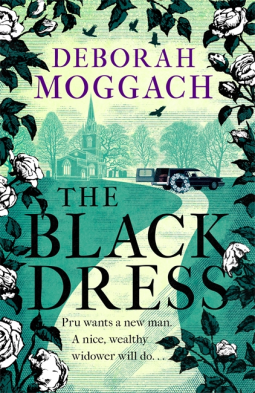
#BookReview ‘The Black Dress’ by Deborah Moggach #contemporary

If you like unpredictable storylines with twist after twist try The Black Dress, the latest by Deborah Moggach. Like her last, The Carer, it is much darker and less humorous than the publisher’s blurb suggests. It is difficult to pin down to a genre owing to the numerous twists, it is part-crime, part-family drama, part-romance, part-humorous though I’d didn’t find it to be a laugh-out-loud story. Deborah Moggach.Pru is 69 when her husband walks out; shedding his wife and his possessions, he goes to a silent retreat in Rutland. Pru’s friend Azra says she should’ve fought to get him back. But as Pru remembers the last few years with Greg she starts to question the veracity of her memories and wonders what he’d really been thinking. Feeling alone, son Max lives in Canada and daughter Lucy in Iceland, Pru stays on in the family home in Muswell Hill, surrounded by smug couples leading exactly the sort of life she used to enjoy. Only Pam who lives opposite, nastily nicknamed Pritt-Stick-Pam by Pru and Greg as they mock what they see as Pam’s neediness, sees Pru is struggling and tries to help. As Greg moves to their cottage in Dorset and they agree a clean break, Pru spends more time with Azra, depending on her confident ballsy outlook on life. And then Pru gets the biggest shock [so far] of her life.
The black dress of the title introduces the next phase of the story. When Pru sees the dress, so not her, in the window of a charity shop she buys it and starts attending the funerals of strangers. What follows is a string of assignations until one day she meets Calvin in the dentist’s waiting room. Pru falls in love. To avoid plot spoilers I will simply say that nothing is what it seems in this story.
The Black Dress is about loneliness and friendship, exploitation and manipulation, the danger of not appreciating what you have and how lack of self-awareness and self-honesty will catch up with you in the end. Some of the plot twists made me gasp and want to read on, others seemed misplaced and unrealistic – because, although this is fiction, we still need it to be rooted in the real world. One word of warning in case, like me, you read fiction to escape the real world, part of the story takes place during Covid-19 lockdown.
CLICK HERE TO READ MORE ABOUT THIS BOOK

Read my review of these other novels by Deborah Moggach:-
SOMETHING TO HIDE
THE CARER
TULIP FEVER

Read the first paragraph of THESE FOOLISH THINGS [now THE BEST EXOTIC MARIGOLD HOTEL] here.

If you like this, try:-
How to Belong’ by Sarah Franklin
The Hoarder’ by Jess Kidd
Mobile Library’ by David Whitehouse

And if you’d like to tweet a link to THIS post, here’s my suggested tweet:
#BookReview THE BLACK DRESS by Deborah Moggach https://wp.me/p5gEM4-5pX via @SandraDanby

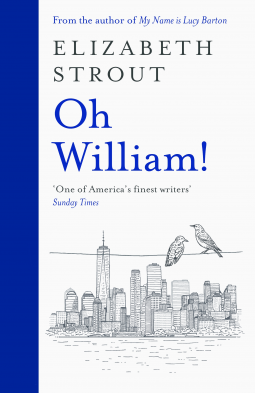
#BookReview ‘Oh William!’ by Elizabeth Strout @LizStrout #contemporary

What a gifted writer Elizabeth Strout is. Oh William! sees the return of Lucy Barton as she meets again her first husband, William, and reflects on love, loss, friendship and the fact that life can seem bewildering. Lucy’s voice is so real it seemed as if we were having a real conversation, face-to-face. Elizabeth StroutThis is the stream-of-consciousness story – complete with ums, ahs, meanderings and distractions – of a few months in Lucy’s life, after the death of her second husband David and when William’s latest wife, Estelle has just left him. Lucy and William were married for twenty years and have two daughters; that’s a lot of baggage. The connections that bind a married couple do not disappear after they are divorced, memories and experiences are inextricably linked. William, now 71, came home one day to find the flat looking odd, with gaps where things should be, and a note from his wife Estelle saying she had moved out. As he explains to Lucy, now a successful writer in her sixties, what has happened, she relives the moment she also left William, how she felt at the time and how she feels now. She calls him Pillie, he calls her Button. They spend more time together and their daughters ask if they are getting back together. In fact, they are investigating a family secret recently revealed when William is given the gift of an ancestry records service. As they travel back into the past of William and of his mother, Catherine Cole, Lucy recalls her own childhood, the neglect, the poverty, and considers how this shaped who she is today.
Strout has written a short, elegant story with hidden depths that draw you in. She explores the affections, regrets, irritations and resentments of a couple, once married, now sort-of friends. They are an everyman couple who loved each other, who were at times thoughtless, cruel, unforgiving and impatient but now show moments of heart-stopping fondness. Lucy recounts the road trip undertaken into William’s past except it is also a journey into her own past as the revelations of someone else’s secrets shed new insight into her own desperately sad childhood.
A novel about human flaws that shows how it’s almost impossible to know ourselves as others see us, as we can never thoroughly know someone else.
This is a companion novel to My Name is Lucy Barton, the first ever book by Strout I read, but each novel can be read independently.

Read my reviews of these other books by Elizabeth Strout:-
AMY & ISABELLE
ANYTHING IS POSSIBLE
LUCY BY THE SEA
MY NAME IS LUCY BARTON
OLIVE KITTERIDGE
OLIVE, AGAIN
TELL ME EVERYTHING

If you like this, try:-
Mum & Dad’ by Joanna Trollope
A Little Life’ by Hanya Yanagihara
In Another Life’ by Julie Christine Johnson

And if you’d like to tweet a link to THIS post, here’s my suggested tweet:
#BookReview OH WILLLIAM! by Elizabeth Strout @LizStrout https://wp.me/p5gEM4-5pB via @SandraDanby

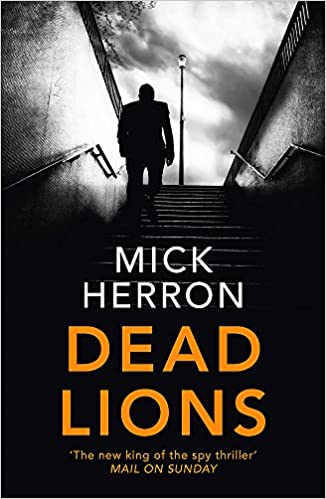
#BookReview ‘Dead Lions’ by Mick Herron #spy #thriller

No tuxedos, no superheroes, no gadgets. The Slough House spy thrillers by Mick Herron feature the spies who, having messed up, have been consigned to a dead-end department [in London, not Slough, but that’s the joke]. Dead Lions is second in the series. The title is taken from a kids’ party game, ‘You have to pretend to be dead. Lie still. Do nothing.’ Mick HerronWhen elderly retired streetwalker Dickie Bow, a spy good at following people on the street and discovering their secrets, turns up dead on a train near Oxford no-one takes much notice. Except Jackson Lamb, Slough House boss and pragmatist. The bloody-minded Lamb considers whether an old Soviet cold war tactic, planting sleeper agents in a foreign country to activate at a future date, is again being used. But who by, and why? What is there to gain? Herron populates his stories with many layers and in that they are John le Carré like. Le Carré had his own alcoholic, shambling agent in Alec Leamas and Jackson Lamb, like Leamas, is good at talking his way into unlikely places, places others would never expect to find answers. He also has a cynical sense of humour, rather like Len Deighton’s Harry Palmer.
While Lamb is checking up on Dickie Bow, his team of misfits at Slough House continue to do their day jobs – boring data input and administration, checking identity profiles, chained to their desks – not very well. It doesn’t take much to distract them. IT guy and social inadequate Roderick Ho has spotted a girl he fancies and is building an unflattering fake online profile for her boyfriend in the hope she will fall for Ho instead. Except Ho hasn’t spoken to her and doesn’t know he exists. Min Harper and Louisa Guy have been seconded by Spider Webb, a ‘suit’ from Regent’s Park MI5 headquarters, to do a security audit ahead of a meeting he has with a Russian oil billionaire at ‘The Needle’. Building survey, exits and entrances, surveillance, risks and threats. Basically, they have to write a report. Webb, who keeps the purpose of the meeting a secret, will handle the exciting stuff himself.
River Cartwright, visiting his former spy grandfather ‘the OB’, shares the news about Bow’s death. The OB recounts the story of Alexander Popov, a fake Russian who MI6 regarded as an invention to spread disinformation to the West. “If Moscow Centre said ‘Look at this’, the sensible thing was to look in the opposite direction,” says the OB. Lamb’s number two Catherine Standish, former alcoholic, avoids the temptation of the bottle by considering why a bald man on a rainy station platform would leave his hat on a train. Downstairs in a pokey office, Slough House’s two newest recruits Shirley Dander and Marcus Longridge, considered by the old lags as a spy for ‘Lady’ Di Taverner, irritate each other and resent their demotions. And so, the spies worry about being spied upon.
This is a wonderful smoke and mirrors story where nothing is at it seems. It starts with a death which the mainstream spies at the Park dismiss as irrelevant, but which Lamb’s band of rejects set out to solve. Herron’s plot mixes together the ambitious intelligence officers with the misguided and often not bright slow horses, so you won’t know who is on the right track.
Different. Wonderful. Difficult to put down.

Click the title to read my reviews of the other books in the Slough House series:-
SLOW HORSES #1SLOUGHHOUSE
REAL TIGERS #3SLOUGHHOUSE
SPOOK STREET #4SLOUGHHOUSE
LONDON RULES #5SLOUGHHOUSE
JOE COUNTRY #6SLOUGHHOUSE
SLOUGH HOUSE #7SLOUGHHOUSE
BAD ACTORS #8SLOUGHHOUSE

If you like this, try:-
Waiting for Sunrise’ by William Boyd
The Museum of Broken Promises’ by Elizabeth Buchan
The Secrets We Kept’ by Lara Prescott

And if you’d like to tweet a link to THIS post, here’s my suggested tweet:
#BookReview DEAD LIONS by Mick Herron https://wp.me/p5gEM4-5oF via @SandraDanby

#BookReview ‘The Garden of Angels’ by David Hewson #WW2 #thriller

David Hewson is a new author for me. The Garden of Angels is a combination of historical novel and World War Two thriller, written in a patient, multi-layered style which explores a moment in history through the lives of a small number of people. Hewson makes wartime Venice come alive in all its stench, beauty, cruelty, fear and starvation. David HewsonIt is 1943 and the locals are watching the news, following the Allies’ progress towards Rome, wondering how much longer they must wait to be free once more. Meanwhile the Germans search amongst the locals for partisans, traitors, communists. But most of all they search for Jews. A teenage boy, alone after his parents are killed in a bombing raid, must continue the business of the family firm, jacquard weavers of the most beautiful velvet. He must complete the commission his father won just before he died. He stays within the four walls of his home, whilst on the streets outside people are being killed. Until one day Paulo sees something that makes him determined to do something rather than stand by.
The story hinges on the modern-day relationship between a boy and his grandfather, encapsulated from page one as Nonno Paulo reads a bedtime story to five-year-old Nico. He reads from a true story from a history book and they discuss the nature of truth, the truth of death. Ten years later, in 1999 when Nonno Paulo is dying, he gives to Nico a series of letters telling the truth of his life in Venice in 1943 during the German occupation. No one knows Paulo’s real story.
In 1943, Venice is a closed city, tight-knit, full of secret spaces and places the Germans don’t know. It is both a place for hiding and a place for living under the eye of the Nazis and Black Brigades. Paolo shelters two partisans who are on the run. Brother and sister Vanni and Mika Artom are not hunted solely because they have killed Germans, but because they are Jews. Mika, unable to sit quietly by, finds a local resistance group and agrees to take part in a plot to murder a visiting VIP, Salvatore Bruno, a Jew who is betraying other Jews. Vanni, injured and hardly able to move, helps Paolo and his assistant Chiara to weave.
This is a powerful story that hooks you from the beginning and draws you in. I was still thinking about the book days after finishing it. It is not a regular war thriller though it has all the usual conventions. It is more about how we as humans act under extreme circumstances, what we do to survive, where we draw our red lines, when to stand aside and when to step in, how far we will go to win; surprisingly similar dilemmas for the occupiers and the occupied when all are ultimately ordinary people.

If you like this, try:-
A Beautiful Spy’ by Rachel Hore
The Heat of the Day’ by Elizabeth Bowen
Midnight in Europe’ by Alan Furst

And if you’d like to tweet a link to THIS post, here’s my suggested tweet:
#BookReview THE GARDEN OF ANGELS by David Hewson https://wp.me/p5gEM4-5pi via @SandraDanby

#BookReview ‘The War Child’ by @RenitaDSilva #WW2 #historical

Two women, two generations apart. In The War Child, Renita D‘Silva explores the connections between a mother and child, through danger and separation, self-sacrifice, unstoppable events and the pressures of modern life. Renita D‘SilvaD’Silva tells the dual timeline stories of Clara and Indira over many decades, setting the strength and promise of women across four decades against the twentieth century prejudices of chauvinism and racism. In London, 1940, teenager Clara is woken by her mother as their home is bombed. Her mother presses into Clara’s hand a necklace, a St Christopher’s medal, with the promise that it will always protect her. Orphaned, Clara is taken in by her aunt and begins helping at a local hospital treating injured soldiers. When nurses and doctors ignore a wounded Indian soldier because of the colour of his skin, Clara nurses him to health. When the war ends, she decides to fulfil a long-held promise to herself. Inspired by sitting on her father’s knee and listening to his stories of India, Clara takes a job as nurse companion to a delicate boy whose parents are re-locating to India. And there, she falls in love.
In India, 1995, 33-year old Indira is chairing a board meeting when she gets a message to ‘go to the hospital’. Fearing her young son is dying – he is in hospital for a minor surgical procedure – she finds her husband and son both well. The message refers to Indira’s father who has had a heart attack. Indira returns home to her parents, somewhere she hasn’t been much of late as she seeks to avoid their simplistic boring life, resenting their dissatisfaction with her life choices.
Sometimes raw and painful, always emotionally complex with surprising twists that make you gasp, The War Child is another brilliant book by my first-choice author for Indian historical romance. D’Silva is such a visual writer that India is a real place on the page, the colours and scents are both beautiful and challenging, her descriptions as full of contrasts as fresh guava sprinkled with chilli powder.

Read my reviews of these other novels by Renita D’Silva:-
A DAUGHTER’S COURAGE
A MOTHER’S SECRET
BENEATH AN INDIAN SKY
THE GIRL IN THE PAINTING
THE ORPHAN’S GIFT
THE SPICE MAKER’S SECRET

If you like this, try:-
The Tea Planter’s Wife’ by Dinah Jefferies
Call of the Curlew’ by Elizabeth Brooks
The Sapphire Widow’ by Dinah Jefferies

And if you’d like to tweet a link to THIS post, here’s my suggested tweet:
#BookReview THE WAR CHILD by @RenitaDSilva https://wp.me/p5gEM4-5mW via @SandraDanby

#BookReview ‘The Funny Thing About Norman Foreman’ by Julietta Henderson @JuliettaJulia1 #contemporary

The Funny Thing About Norman Foreman by Julietta Henderson is one of those delicious books you stumble on, not sure what to expect and end up loving. The Norman of the title is almost twelve and part of a future comedy duo with a five-year plan to perform at the Edinburgh Fringe. But when his comedic partner and best friend Jax dies, Norman has to think again. Julietta HendersonThe catchy first paragraph drew me straight in although I admit to being slightly disappointed when I realised it was by Sadie, Norman’s mum, and not Norman himself. But this feeling disappeared as I settled immediately into the two voices – single mum Sadie and psoriasis sufferer Norman – distinctive, real and very funny as they tell the tale of their two-person family as they face their grief and the Jax-sized hole left in their lives.
The five-year plan – Get to the Edinburgh Fringe, baby! Get famous. Get rich – was meant for a comedy duo. Norman’s problem is that Jax was the funny one. Norman is more Ernie than Eric and Sadie fears he will fail and emulate her own father who was a not very good comedian. But when she reads Norman’s re-written plan – Look after Mum. Find Dad. Get to the Edinburgh Fringe – she is stunned. ‘Finding out Norman wanted to find his father was almost as much of a shock to me as finding out I was pregnant had been. In fact, it managed to evoke pretty much the same feelings, from what I can remember. Same order, even. Bewilderment, denial, terror, followed by how the hell did this happen.’
Aided by the never-say-die attitude of Leonard, octogenarian old soldier and part-time cleaner at the garage where Sadie works, the trio embark on a road trip to Edinburgh in Leonard’s 1971 teal Austin Maxi. The route has various detours to meet the men who may, according to Sadie’s rather hazy memory, be Norman’s father. Various adventures are had along the way, their setbacks and triumphs aided by Leonard’s widespread knowledge gained at assorted classes at Penzance Community Centre.
This is a funny, sad, emotional story about grief, love and what family really means, with lots of laugh out loud moments. It’s about how prejudices and first impressions can lead you to make judgements about people you haven’t yet met. How those old-fashioned notions of determination, plodding on, making the best of it and being brave enough to take a chance, can lead to unexpected conclusions. Ultimately, it’s about how family is less about blood and more about who you let into your life.

If you like this, try:-
The Unlikely Pilgrimage of Harold Fry’ by Rachel Joyce
The Love Song of Miss Queenie Hennessy’ by Rachel Joyce
The Hen Who Dreamed She Could Fly’ by Sun-Mi Hwang

And if you’d like to tweet a link to THIS post, here’s my suggested tweet:
#BookReview THE FUNNY THING ABOUT NORMAN FOREMAN by Julietta Henderson @JuliettaJulia1 https://wp.me/p5gEM4-5my via @SandraDanby

#BookReview ‘The Man in the Bunker’ by Rory Clements #thriller #WW2

The Man in the Bunker by Rory Clements gripped me from beginning to end. It starts at the end of the Second World War when spy Tom Wilde thinks real life is beginning again. But the dilemma is in the book’s title. Who was the dead man in the bunker in Berlin? Were the burnt remains really that of Hitler? If not, where is he? Rory ClementsThis is the sixth in Clements’ thriller series about American historian-turned-spy Wilde who spends the war working for the English and American secret services, and each of them has been unputdownable. It is now late summer 1945 and the European war is over. Germany is defeated, in ruins, starving and with millions of Holocaust survivors, displaced people and refugees. The country has been carved up between the allied forces to bring security and discipline but it is a world in which it is easy to disappear, to reinvent yourself. It is a world in which lies are told for survival. As in the previous Wilde books, it is difficult to know who is telling the truth, who is lying and why. Clements is a consummate thriller writer who writes with emotional depth, political intrigue and historical research.
The action starts at a running pace and never stops. Two men are killed on a remote road in southern Bavaria. In Cambridge, history professor Tom Wilde is anticipating the arrival of new undergraduates and his wife Lydia is applying to study medicine. Then three visitors arrive with an incredible request. Wilde must find Adolf Hitler. At first Wilde laughs, then he refuses. That night, Lydia says he will regret refusing. The next day Wilde changes his mind. First, he questions some German scientists who are imprisoned near Cambridge, their rooms bugged, their conversations and gossip recorded. A clue leads Wilde to Garmisch where he teams up with the unpredictable Lieutenant Mozes Heck, a Dutch Jew who hates the Nazis. As they identify Nazis who were close to Hitler, their progress is continually impeded by the conditions in defeated Germany; starvation, bomb damage, medical crisis and the flood of Holocaust survivors and misplaced citizens. And by Heck’s secret, personal mission.
The ending is particularly intriguing. Is The Man in the Bunker the final book of the Tom Wilde story or will it morph into a Cold War series?

Click the title to read my reviews of the other books in the Tom Wilde series:-
CORPUS #1TOMWILDE
NUCLEUS #2TOMWILDE
NEMESIS #3TOMWILDE

HITLER’S SECRET #4TOMWILDE
A PRINCE AND A SPY #5TOMWILDE
THE ENGLISH FUHRER #7TOMWILDE

And from the Sebastian Wolff series:-
MUNICH WOLF #1SEBASTIANWOLFF

If you like this, try:-
Exposure’ by Helen Dunmore
V2’ by Robert Harris
The Second Midnight’ by Andrew Taylor

And if you’d like to tweet a link to THIS post, here’s my suggested tweet:
#BookReview THE MAN IN THE BUNKER by Rory Clements https://wp.me/p5gEM4-5o5 via @SandraDanby