Tag Archives: book review

#BookReview ‘The Secret Commonwealth’ by Philip Pullman @PhilipPullman #BookofDust #Lyra #fantasy

Oddly The Secret Commonwealth by Philip Pullman feels like the first of a trilogy rather than the second in The Book of Dust. Don’t get me wrong, I loved the book but the first half is taken up with world-building and the introduction of new characters, relationships and enmities. But this is the first time we see Lyra as a young woman ten or eleven years after we left her at the end of The Amber Spyglass, so much has changed. Oxford seems more modern, Lyra is surrounded by old friends and potential new enemies and, crucially, she is not getting on with her daemon Pan. Philip PullmanThis latter fact, at first unthinkable, is the power driving the narrative. When Pan despairs of Lyra, who he thinks has changed unrecognisably, he sets out to recover the thing he fears she has lost. Her imagination. And Lyra, being Lyra, charges off in pursuit. Except she doesn’t know where Pan is going. Both are driven by love.
Add to this a changing political landscape with a new generation of scholars, scientists, politicians, priests and criminals and it soon becomes clear that Lyra and Pan are separated from each other in an increasingly toxic and dangerous world. Meanwhile the farmers of roses and makers of rose oil are being persecuted across Asia. Prices are rising as rose farms are burned and those who make their living from the flowers are destitute. A new rose oil with powerful and mysterious properties has been discovered in the East, and the Magisterium wants it all.
There is a sense of inevitability that Lyra will embark on a new quest taking her to strange lands. Quite how everything connects together is not clear and that is Pullman’s magic, he tells us just enough to puzzle us, to keep the curiosity burning and the pages turning, without allowing us to become bored or impatient.
What an enjoyment to encounter old friends from His Dark Materials and some new ones made in La Belle Sauvage, the previous book in this second trilogy. I won’t name these friends as I don’t want to deprive you of the joy of meeting them again. As ever, this is a brilliantly imagined, intricately plotted world from Pullman with a modern story of refugees seeking safety from an oppressive and unforgiving regime. The refugees are fleeing the places through which Lyra and Pan are travelling. Will they be safe? Or will they be outwitted by old and new enemies.
Excellent.

Read my review of LA BELLE SAUVAGE, first in ‘The Book of Dust’ trilogy.

If you like this, try these:-
The Bear and the Nightingale’ by Katherine Arden #1WINTERNIGHT
‘The Queen of the Tearling’ by Erika Johansen #1TEARLING
‘Divergent’ by Veronica Roth #1DIVERGENT

And if you’d like to tweet a link to THIS post, here’s my suggested tweet:
#BookReview THE SECRET COMMONWEALTH by Philip Pullman @PhilipPullman https://wp.me/p5gEM4-4tn via @Sandra Danby

#BookReview ‘The Benefit of Hindsight’ by @susanhillwriter #crime

The Benefit of Hindsight is the tenth book in the Simon Serrailler series by Susan Hill and she covers a lot of ground. At the book’s heart, as with its predecessors, is the town of Lafferton and the Serrailler family. Crime, when it happens, affects so many people and Hill shows this effectively as more and more people are drawn into the aftermath. Susan HillThe themes of this book are post-traumatic-stress-disorder, pre-natal premonition and post-natal depression, art robbery and private v public healthcare. Written in a list it can seem clinical, but Hill is expert at winding together the personal lives of ordinary people so that you care about them. The continuity of the Serrailler family throughout the series adds the familiarity of real family issues that are not crime-related, just ordinary family stuff. Simon is struggling with the aftermath of his injury, not physically, but with panic attacks. His sister Cat has settled into her job with private GP service Concierge and it is Cat who meets two people central to the story; pregnant mum Carrie who unshakingly believes her baby will be born damaged; and Cindy, wife of businessman and charity supporter, Declan McDermid.
When a lonely house is burgled in a professionally assessed and organised operation, Simon’s team consults art and antique experts. A second burglary goes wrong, with far-reaching consequences for Simon. The meaning of the novel’s title is key to the plot affecting brother and sister, as Cat’s patient Carrie remains convinced the doctors are unable to diagnose the hidden disease of her newborn baby. As Carrie’s sense of despair deepens, her introverted husband Colin – who she fears would rather spend his time staring at his computer screen trading money, than talking to her – paces around the room ‘like a zoo animal’. The meaning of the book’s title is an indication that Hill is interested as much in the aftermath of a crime, as in the modus operandi of the crime itself. One of the reasons I enjoy this character-led series is the lack of gratuitous violence, I don’t need to skip paragraphs of gory description or violence. That is not to say the books are not thrilling, but they are deeper explorations of the motives, fears and reactions of everyone affected by crime. Importantly, Simon Serrailler is not a perfect policeman, a perfect man; occasionally he allows his own life and emotions to affect his decision-making and must face the consequences.
Susan Hill delivers yet another Serrailler book that does what it says on the tin. Well-written and plotted, familiar but with an unexpected twist, with Simon being strong and mysterious yet vulnerable.

Read my reviews of the other novels in the series:-
THE VARIOUS HAUNTS OF MEN #1SIMONSERRAILLER
THE PURE IN HEART #2SIMONSERRAILLER
THE RISK OF DARKNESS #3SIMONSERRAILLER
THE VOWS OF SILENCE #4SIMONSERRAILLER
THE SHADOWS IN THE STREET #5SIMONSERRAILLER
THE BETRAYAL OF TRUST #6SIMONSERRAILLER
A QUESTION OF IDENTITY #7SIMONSERRAILLER
THE SOUL OF DISCRETION #8SIMONSERRAILLER
THE COMFORTS OF HOME #9SIMONSERRAILLER
A CHANGE OF CIRCUMSTANCE #11SIMONSERRAILLER

And also by Susan Hill, HOWARD’S END IS ON THE LANDING

If you like this, try:-
‘A Rising Man’ by Abir Mukherjee #1WYNDHAM&BANERJEE
Elizabeth is Missing’ by Emma Healey
The Mystery of Three Quarters’ by Sophie Hannah #3POIROT

And if you’d like to tweet a link to THIS post, here’s my suggested tweet:
#BookReview THE BENEFIT OF HINDSIGHT by @susanhillwriter https://wp.me/p5gEM4-46A via @SandraDanby

#Bookreview ‘Hitler’s Secret’ by Rory Clements #thriller #WW2

Fourth in the Tom Wilde World War Two spy mysteries, Hitler’s Secret by Rory Clements hits the ground running and keeps the pages turning. The secret in question is a ten-year old girl who may or may not be the love child of Hitler. Klara has a false identity and is hidden but is now in imminent danger of exposure and murder. Rory ClementsWilde travels to Berlin disguised as a German-American motorcycle manufacturer in search of a business deal. His cover enables him to meet allies and search for Klara. Unsure of his mission from the beginning, Wilde imagines that everyone can see through his false identity, everyone is planning to kill him. Clements tells the story at breakneck speed, flicking from viewpoint to viewpoint. Martin Bormann, Hitler’s gatekeeper wants Klara dead and despatches a henchman, Otto Kalt. But it seems everyone touched by Klara’s story is at risk of death. As Wilde closes in on Klara’s hiding place, so do her killers. What ensues is a tense chase north across Germany towards the promised sanctuary of Sweden. And at all times it is assumed Hitler is unaware of the girl’s existence. But who else knows the secret?
At the heart of this story is trust. Believing loyalty expressed at time of war can be a treacherous decision and at times Tom feels everyone has an agenda except him. Even his allies have their own motivations, their own friends and loyalties. Expecting to collect a ‘package’ in Berlin, he is horrified to find he is collecting a girl; he feels duped and used by his spy chiefs. And as Tom runs, it is impossible for him to identify his pursuers. His judgement is seriously challenged and he trusts no-one. What is on the surface a matter of shaming the perfect Adolf Hitler, so popular with his German female citizens, is at the same time a fight between the most elite of German officials.
Familiar characters from earlier books in the series recur: Tom’s partner Lydia, American diplomat Jim Vandenberg and Wilde’s contact at British intelligence, Philip Eaton. History professor Wilde is an affecting amateur spy, diligently learning the role he is assigned but relying on his instincts to get him out of trouble. Of course, the best laid plan can go wrong but this time the plan is not organised in advance and Tom is on his own. He will sink or swim and the few he trusts do not know if he is alive or dead.

Click the title to read my reviews of the other books in the Tom Wilde series:-
CORPUS #1TOMWILDE
NUCLEUS #2TOMWILDE
NEMESIS #3TOMWILDE

A PRINCE AND A SPY #5TOMWILDE
THE MAN IN THE BUNKER #6TOMWILDE
THE ENGLISH FUHRER #7TOMWILDE

And from the Sebastian Wolff series:-
MUNICH WOLF #1SEBASTIANWOLFF

If you like this, try:-
The Ways of the World’ by Robert Goddard
Munich’ by Robert Harris
Five Days of Fog’ by Anna Freeman

And if you’d like to tweet a link to THIS post, here’s my suggested tweet:
#BookReview HITLER’S SECRET by Rory Clements https://wp.me/p5gEM4-47r via @SandraDanby

#BookReview ‘The Clergyman’s Wife’ by @MollyJGreeley #JaneAusten

If like me you are fascinated and disturbed by the decision of Charlotte Lucas to marry Mr Collins in Pride and Prejudice, then you will enjoy The Clergyman’s Wife by Molly Greeley. I felt immediately immersed in Charlotte’s world at Hunsford. Molly GreeleyI won’t summarise the background to this novel on the assumption that all readers will be fans of Pride and Prejudice. Suffice to say, this could so easily have slipped into negative territory, negativity about William Collins and Lady Catherine de Bourgh, but Greeley handles Austen’s characters with respect, taking the heritage of Charlotte’s situation and adding a fresh perspective on her future. We see Mr Collins from a new, sympathetic angle, and are given an insight into Charlotte’s decision to marry him, her family’s position and the limited options available to her.
I liked Charlotte extremely, a considered, thoughtful woman, given an impossible choice to make and often put into uncomfortable situations by the crassness of people around her. Charlotte however is not negative, she works out the positive thing to do rather than assign blame.
This is a Regency family drama structured around the meaning of love; all kinds of love, for your spouse, your parents and siblings, as a mother, for the people who are your responsibility, and for yourself. Although Charlotte lives a life constrained by geography, convention and manners, that does not mean she lacks freedom. It is a freedom of imagination, a freedom of the mind. So when she faces a situation which she never believed would befall her, it is a life-changing experience.
A delightful light read, I read it in one sitting in holiday, you most definitely must have read Pride and Prejudice first to get the most from the undercurrent of references. I can’t help but wonder what Jane Austen would think of it.

Click here to read my review of THE HEIRESS, also by Molly Greeley.

If you like this, try:-
Miss Austen’ by Gill Hornby
The Ballroom’ by Anna Hope
‘The Clockmaker’s Daughter’ by Kate Morton

And if you’d like to tweet a link to THIS post, here’s my suggested tweet:
#BookReview THE CLERGYMAN’S WIFE by @MollyJGreeley https://wp.me/p5gEM4-4sX via @SandraDanby

A poem to read in the bath… ‘Out Chasing Boys’ by Amanda Huggins #poetry

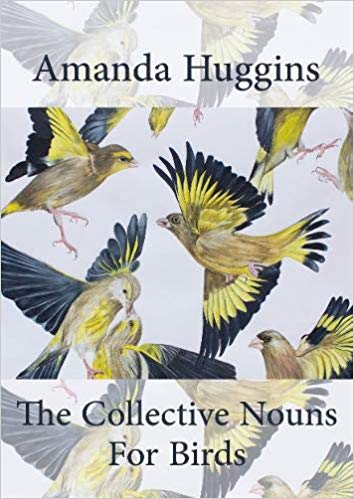
Recently published is this small poetry chapbook, The Collective Nouns for Birds by Amanda Huggins, with 24 poems. Huggins is an award-winning writer of flash fiction and short stories, so knowing her skill with the short form I looked forward to this first poetry chapbook with anticipation. And I wasn’t disappointed. I’ve chosen the first poem in the book as it struck a chord from my own childhood. I can smell the salt in the breeze, hear the lapping of the summer waves on the shore and taste the tang of vinegar as I lick my fingers after eating haddock and chips. Amanda HugginsThis poem is subject to copyright restrictions. Please search for the full poem in an anthology or at your local library. A ‘poetry chapbook’ is a slim pamphlet of poems, usually no more than 40 pages.

‘Out Chasing Boys’
We spent summer on the seafront,
two stranded mermaids
killing time.
We rolled up our jeans,
carried our shoes,
blew kisses at the camera
in the photo booth.
Always out, chasing boys,
as if we had forever.

Read my reviews of other work by Amanda Huggins:-
Novellas
ALL OUR SQUANDERED BEAUTY
CROSSING THE LINES
THE BLUE OF YOU
Short stories
AN UNFAMILIAR LANDSCAPE
BRIGHTLY COLOURED HORSES
EACH OF US A PETAL
SCRATCHED ENAMEL HEART
SEPARATED FROM THE SEA

Read these other excerpts and find a new poet to love:-
A Thousand Years You Said’ by Lady Heguri
The Cinnamon Peeler’ by Michael Ondaatje
‘After a Row’ by Tom Pickard

And if you’d like to tweet a link to THIS post, here’s my suggested tweet:
#Poetry ‘Out Chasing Boys’ by Amanda Huggins @troutiemcfish https://wp.me/p5gEM4-4v6 via @SandraDanby

#BookReview ‘The Moon Sister’ by Lucinda Riley #romance

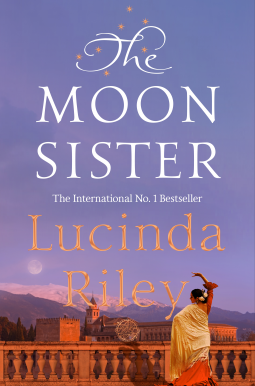
Fifth in the Seven Sisters series by Lucinda Riley, The Moon Sister is the story of Tiggy, wildlife conservationist and warm-hearted introvert. Each of the D’Apliese sisters is different with diverse skills, interests and hugely varying birth stories. Tiggy’s story alternates between a Highland estate where she is managing the rewilding of Scottish wildcats, and the flamenco world in Spain during the 1930s. Lucinda RileyThe Kinnaird Estate is a beautiful, isolated, wild place. The four wild cats move into their custom-built enclosure and Tiggy moves into a shared estate cottage with fellow worker Cal. Riley builds the Kinnaird community quickly and skilfully from new Laird Charlie to housekeeper Beryl and old retainer Chilly. It is Chilly – speaking in a muddled mixture of English, Spanish and Romani – who introduces the first hints of premonition, seeing and herbal remedies. He tells Tiggy she has healing hands. Caught up in the twists and turns of the Kinnaird family, the frictions in Charlie and Ulrika’s marriage and their tempestuous daughter Zara, Tiggy grieves for Pa Salt and is curious about her own birth family. In his farewell letter, Pa Salt tells her she comes from a gifted line of seers. She must go to Granada in Spain, to the gypsy area called Sacromonte, where she must knock on a blue door and ask for Angelina. Tiggy delays, unsure of the truth, attracted to Charlie. But when she is injured in a poaching incident on the estate, Tiggy feels upset, confused and wronged. She flies to Granada. This is a quick reminder that Tiggy, who lives the most normal, ordinary life of the sisters so far, is far from a normal girl and when times get tough, the D’Apliese wealth is ever-present.
The second storyline is that of Lucia, Tiggy’s grandmother, who rises from a tiny girl living in deepest poverty in Sacromonte to a world-famous flamenco dancer. Though Tiggy’s character and situation is appealing, I found Lucia a more difficult character. By nature energetic and stubborn, Lucia turns into a selfish, spoiled woman who rides roughshod over others. Exploited by her feckless father who keeps control of her money and career, Lucia’s few moments of caring for others were not enough for me to warm to her. But the world in which she lives, the Sacromonte community, the gypsy brujas, and the violence and depravities of the Spanish Civil War were fascinating to read. As with the stories of the other sisters, Riley concentrates most of the birth family story on a generation further back than the birth parents and there were times when I longed for less flamenco and more bruja. I also wanted to know Chilly’s story and how he came to work on a Scottish estate.
There are more teasers in this book about the truth of Pa Salt’s identity and death, but nothing concrete. There is also the reappearance of Zed Eszu, who can only be described as a sleazy millionaire cad, who first appeared in Maia’s story. What lies behind his fascination with the six D’Apliese sisters. And is Pa Salt really dead?

Read my reviews of some of the other novels in Lucinda Riley’s ‘Seven Sisters’ series:-
THE SEVEN SISTERS #1SEVENSISTERS
THE STORM SISTER #2SEVENSISTERS
THE SHADOW SISTER #3SEVENSISTERS
THE PEARL SISTER #4SEVENSISTERS
THE SUN SISTER #6SEVENSISTERS
THE MISSING SISTER #7SEVENSISTERS

… plus my reviews of these standalone novels, also by Lucinda Riley:-
THE BUTTERFLY ROOM
THE GIRL ON THE CLIFF
THE LOVE LETTER

If you like this, try:-
The Bear and the Nightingale’ by Katherine Arden
The Penny Heart’ by Martine Bailey
Rush-Oh!’ by Shirley Barrett

And if you’d like to tweet a link to THIS post, here’s my suggested tweet:
#BookReview THE MOON SISTER by Lucinda Riley https://wp.me/p5gEM4-46t via @SandraDanby

#BookReview ‘The Confession’ by Jessie Burton #romance #contemporary

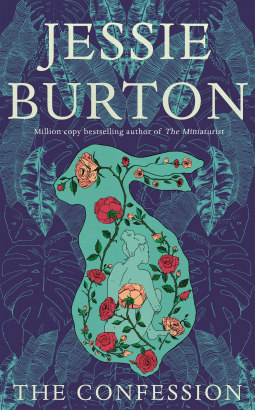
The Confession by Jessie Burton is her third novel after The Miniaturist, her successful debut. The Confession is a contemporary romance about relationships; mother/daughter, romantic, between friends. Are daughters destined to repeat the mistakes of their mothers, even if they have never met? Jessie BurtonThis is a dual timeline novel. In 2017, Rose Simmons never knew her mother, who left when she was a baby. Rose’s father has always been tight-lipped until now when he tells Rose that the famous but reclusive novelist Constance Holden may have the answers. Frightened of scaring off Constance with awkward questions, Rose instead gets a job as maid/companion for the reclusive novelist, now in her seventies and crippled by arthritis. Unexpectedly Rose comes to like and admire Connie so the longer she works for her the more impossible it is to admit to her deception [she is known to Connie as Laura Brown]. And all the time she wonders if Connie can see her mother’s face in her own. In 1982, we see the story of her mother and Connie. Part-time waitress and artist’s model Elise Morceau meets the enigmatic Connie on Hampstead Heath. When Connie’s first novel is made into a film, the two women go to LA. That’s where the lies start, the cracks appear. Connie is working, Elise is a hanger-on who learns to surf. The turning point comes when she begins to doubt Connie’s love.
At times, Elise and Rose were inter-changeable in my head. Both women are immature, unsure who they are, searching for something they cannot define except that they don’t have it. Elise is in her early twenties, while Rose is in her thirties. I had some sympathy with Rose’s boyfriend Joe and best friend Kelly who both lost patience with her. Both Rose and Elise seem to play at being adults, thinking they are the centre of the world, not understanding that their own actions also leave ripple effects that cause pain to other people. They obsess about being hurt but do not recognise the hurt they cause. Mother and daughter are both passive characters, drifting in their own lives, running away rather than confront difficult situations. Principally, the novel is about life choices, taking responsibility for one’s own life and own choices [and being passive, not making decisions, is a personal choice].
At the beginning I felt for Rose and her absence of self-identity, ‘I didn’t have a mum, and I’d never had her, so how could I miss something I’d never really lost?… I don’t tell people about the yearning. The wonder. I tell them, You can’t miss what you never had!’ But the pace of the first quarter is very slow, it picks up once Rose, aka Laura Brown, starts working for Connie in Hampstead. Ironically Rose finds her sense of self through the very mode of her deception; by creating a new personality and life for herself, assuming the face of Laura that she presents to Connie, Rose begins to understand who she is.
After really enjoying The Miniaturist, sadly The Confession left me feeling underwhelmed.

Read my review of THE MINIATURIST.

If you like this, try:-
Ghost Moth’ by Michele Forbes
‘If I Knew You Were Going to be This Beautiful, I Never Would Have Let You Go’ by Judy Chicurel
The Girl on the Cliff’ by Lucinda Riley

And if you’d like to tweet a link to THIS post, here’s my suggested tweet:
#BookReview THE CONFESSION by Jessie Burton https://wp.me/p5gEM4-46b via @SandraDanby

#BookReview ‘Our Souls at Night’ by Kent Haruf #love #loneliness

Our Souls at Night by Kent Haruf is a simple, straight talking, touching book about loneliness, love and longing late in life. One day Addie Moore suggests to her neighbour Louis Waters that he visit her house each night and sleep in her bed. Both are in their seventies, widowed, lonely and don’t know each other well. Acknowledging Addie’s bravery in asking the question, Louis arrives with his pyjamas and toothbrush in a bag. Kent HarufAnd so starts this touching novel about relationships, family and morality. Addie and Louis sleep side-by-side, not touching. They ignore the glances of neighbours, fearing censure. But the townsfolk nod and smile at them, while their own children disapprove. And so one generation seeks to control another.
When their new dynamic is disrupted by the arrival of Addie’s six-year-old grandson Jamie, Addie and Louis’s relationship enters a new stage. Jamie’s parents have separated and he is distressed. Addie’s son Gene has asked his mother to help. This new three-person family begins to slowly to heal itself, starting slowly by visiting a family of new born mice in Louis’ shed.
This is a short read, manageable in one sitting. The language is beautiful. Addie’s suggestion does not contain one redundant word. “I mean we’re both alone. We’ve been by ourselves for too long. For years. I’m lonely. I think you might be too. I wonder if you would come and sleep in the night with me. And talk.”
Haruf is non-judgmental; he doesn’t point fingers at the small-minded criticism, he simply shows how friendship can be a saviour for the elderly, lonely and forgotten.
A word about dialogue. There are no speech marks and I missed them. In some places it was difficult to know who was speaking, which made me stop and think and took me away from the emotion of the story. Which was a pity.
This is the first book by Haruf that I have read, and the last he wrote; now I’ll seek out the others. It was made as a film in 2017 featuring Robert Redford and Jane Fonda.

If you like this, try:-
‘The Only Story’ by Julian Barnes
‘The Stars are Fire’ by Anita Shreve
‘A Sudden Light’ by Garth Stein

And if you’d like to tweet a link to THIS post, here’s my suggested tweet:
#BookReview OUR SOULS AT NIGHT by Kent Haruf https://wp.me/p5gEM4-3rz via @SandraDanby

#BookReview ‘Miss Austen’ by Gill Hornby @GillHornby #JaneAusten #historical

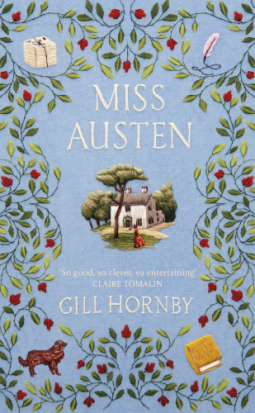
What a delicious first chapter there is to Miss Austen by Gill Hornby. Elderly Cassandra Austen arrives unannounced to visit a family friend in Kintbury, endures a parsimonious supper and a difficult evening without much conversation. Why, I wondered, is Cassandra there. And then at bedtime, comes a hint at her reason. Gill HornbyCassandra visits Isabella, a family friend who is grieving the death of her father. Cassandra’s objective, is to retrieve any incriminating letters between her sister Jane and Isabella’s mother, Eliza, before Isabella leaves the family vicarage. With both letter writers dead, and knowledge of the novelist Jane Austen more widely sought than ever before, Cassandra is anxious to protect Jane’s legacy.
What follows is a gentle telling of the sisters’ relationship as Hornby pieces together the real letters of the Austen sisters and the known biography of the family, combined with events and dialogue of her own imagination. This is a meandering read without a real focus, there is the imagined threat to Jane’s reputation as Cassandra searches for the missing letters under threat of exposure by her sister-in-law Mary. But this threat is not wholly formed and the story goes back and forth between Cassandra reading the letters at the dead of night, to key times in the life of Jane.
Not until three-quarters of the way through does the dilemma becomes personal to Cassandra. Until this point, it is oddly numb. Cassandra has been seeking private – and very personal – letters written to Eliza but instead finds letters that cast what she, Cassandra, believes to be a bad light on her own life. Not Jane’s. The stakes are raised and I wanted to see more than a snapshot of the man involved and don’t really care if he was a real person or the author’s invention.
Cassandra in her old age is dismissive of those who do not read or don’t appreciate the art of her sister’s books, and has a lack of interest in anyone not an Austen. ‘Those other mortals, whose poor veins must somehow pulse with no Austen blood in them, always appeared to her comparatively pale’. This quote reminded me of Marianne’s dismissal of Edward’s underwhelming reading of Shakespeare sonnets and made me want a 360 degree picture of Cassandra’s own life.
I finished Miss Austen reflecting on the difficulty of writing this novel. What an awkward task it is for an author, to balance biography and real letters with invention and how strong must be the impulse to stick with the truth. I longed for Hornby to take a bigger risk and show us more of the life, and loves, Cassandra may have had.

If you like this, try:-
After Leaving Mr Mackenzie’ by Jean Rhys
The Confessions of Frannie Langton’ by Sara Collins
Amy Snow’ by Tracy Rees

And if you’d like to tweet a link to THIS post, here’s my suggested tweet:
#BookReview MISS AUSTEN by Gill Hornby @GillHornby https://wp.me/p5gEM4-4iB via @SandraDanby

#BookReview ‘Howard’s End is on the Landing’ by @susanhillwriter #memoir

I selected this book off my to-read shelf where it has sat for at least two years and, on reading the first paragraph, knew I must read on. Howard’s End is on the Landing by Susan Hill is a gem of a memoir, a year in the life of a crime novelist who decides to read only the books on her bookshelves. But this is more than a review of books – it can be dipped in and out of, the chapters are conveniently short which makes you want to read ‘just another’ – because Hill attaches a personal story to each book, each author. Susan HillHill’s first novel was published when she was only eighteen, she lives an ordinary life but mixes with some breath-stopping names. She met and/or knew TS Eliot, EM Forster, Cecil Day Lewis, Penelope Fitzgerald, Ian Fleming, Iris Murdoch, Elizabeth Bowen; it is a mirror image of my reading list at university, except for the Bond. Above everything though, the book reveals Hill as a reader who devours everything from Dickens to WG Sebald, Anthony Trollope to Anita Brookner, John le Carre to Olivia Manning. Her bookshelves contain signed copies, first editions, expensive sets, anthologies and poetry, plus shabby cheap paperbacks bought at airports and train stations, or second hand in charity shops. She writes in her books, turns down the corners of pages, discovers things used years ago as bookmarks – bills, paid and unpaid; receipts; picture postcards; shopping lists. She is, like you and I, someone who loves reading books. I recognised her description of reading library books as a child.
“Although when I was a child and growing up I could borrow books every week from the library, there was a limit on the number to be taken at any one time and so, as there was not the money to buy many books either, I found myself reading, re-reading and re-reading again. If I liked a library book I simply got to the end, turned it round and began again. It was a bit like sweets. Until I was ten, sweets were rationed. I had a quarter of a pound a week and there were various ways in which they could be made to last. A sweet a day. Buy only boiled sweets which could be sucked for a long time. Suck half and re-wrap the rest until tomorrow. Occasionally I would have such a sugar-craving that I bought something that was gobbled up in a great burst of sweetness that exploded in the mouth like a firework and then was gone. Sherbet lemons were like that. Marshmallows did not last long.” I turned my library books round and began again, too. I also read my mother’s books. That’s how, as a young teenager, I discovered Mary Stewart.
This is a delightful slim paperback which made me want to re-read many novels first read forty years ago, and to try authors I have always meant to read such as Sebald and PG Wodehouse.

Read my reviews of the Simon Serrailler crime novels by Susan Hill:-
THE VARIOUS HAUNTS OF MEN #1SIMONSERRAILLER
THE PURE IN HEART #2SIMONSERRAILLER
THE RISK OF DARKNESS #3SIMONSERRAILLER
THE VOWS OF SILENCE #4SIMONSERRAILLER
THE SHADOWS IN THE STREET #5SIMONSERRAILLER
THE BETRAYAL OF TRUST #6SIMONSERRAILLER
A QUESTION OF IDENTITY #7SIMONSERRAILLER
THE SOUL OF DISCRETION #8SIMONSERRAILLER
THE COMFORTS OF HOME #9SIMONSERRAILLER
THE BENEFIT OF HINDSIGHT #10SIMONSERRAILLER
A CHANGE OF CIRCUMSTANCE #11SIMONSERRAILLER

If you like this, try:-
‘The Story’ ed. by Victoria Hislop
‘In the Midst of Winter’ by Isabel Allende
‘White Chrysanthemum’ by Mary Lynn Bracht

And if you’d like to tweet a link to THIS post, here’s my suggested tweet:
#BookReview HOWARD’S END IS ON THE LANDING by @susanhillwriter https://wp.me/p5gEM4-3t5 via @SandraDanby