Tag Archives: book review

#BookReview ‘The Secrets We Kept’ by Lara Prescott #Cold War #Pasternak

The Secrets We Kept by Lara Prescott is a mixture of Cold War thriller, romance and the true story of the publication of Dr Zhivago by Boris Pasternak. Set in the 1950s, this novel is about the power of the written word. So powerful that two nations try to outwit the other as a big new novel is set to be published; neither has any regard for the effects of their plans on the author. Lara PrescottThe two worlds are radically different, Prescott builds both convincingly. I can see Pasternak’s vegetable garden at his dacha, I can hear the typewriters in the Typing Pool at The Agency on National Mall in Washington DC. It is important to note that this is a blend of real events, real people and total fiction.
Irina is American, a first generation Russian-American, her father left behind in the Soviet Union as his pregnant wife departed for a new life in America. Irina’s Mama is a dressmaker, speaking Russian to Irina at home while making elaborate dresses for Russian immigrants. Irina never meets her father. Always an outsider, when she goes for a job interview in a typing pool Marla wears a skirt made for her by Mama. She gets the job in the Typing Pool at The Agency (the CIA) because she has something different to offer; she is trained for extra duties in the evening, acting as a messenger and learning tradecraft to avoid detection. Her job is at The Agency’s Soviet Russia Division, the ‘SR’.
In Moscow, Boris Pasternak is writing a novel and reading it aloud to his lover, Olga. One day Pasternak, deemed a threat by the authorities, is sent a warning: Olga is sent to a work camp for three years. When she returns home, his novel is finished. It is Dr Zhivago.
The Secrets We Kept is a fascinating read, a glimpse into the true story of Dr Zhivago’s publication and the role of the CIA in disseminating it to Soviet citizens. Structurally the pace did not hold up and slowed each time the story moved to Boris and Olga. But some interesting areas are covered – the treatment of homosexuals in the workplace and sexual manipulation between the ranks, the assimilation of first generation Americans, and the American obsession with communism.
Set at the time of Sputnik, Prescott is good at the contemporary culture, politics and the atmosphere of rivalry and impending threat of the Soviet Union. The clothes, the food, the films, the parties. The typists see and hear but don’t repeat, but are as capable of analysing and doing the jobs that the men are doing.
The ending fizzled out, perhaps because the book tries to do so much, possibly too much.

If you like this, try:-
An Officer and a Spy’ by Robert Harris
‘The Translation of Love’ by Lynne Kutsukake
‘The Museum of Broken Promises’ by Elizabeth Buchan

And if you’d like to tweet a link to THIS post, here’s my suggested tweet:
#BookReview THE SECRETS WE KEPT by Lara Prescott https://wp.me/p5gEM4-4tg via @SandraDanby

#Bookreview ‘Hitler’s Secret’ by Rory Clements #thriller #WW2

Fourth in the Tom Wilde World War Two spy mysteries, Hitler’s Secret by Rory Clements hits the ground running and keeps the pages turning. The secret in question is a ten-year old girl who may or may not be the love child of Hitler. Klara has a false identity and is hidden but is now in imminent danger of exposure and murder. Rory ClementsWilde travels to Berlin disguised as a German-American motorcycle manufacturer in search of a business deal. His cover enables him to meet allies and search for Klara. Unsure of his mission from the beginning, Wilde imagines that everyone can see through his false identity, everyone is planning to kill him. Clements tells the story at breakneck speed, flicking from viewpoint to viewpoint. Martin Bormann, Hitler’s gatekeeper wants Klara dead and despatches a henchman, Otto Kalt. But it seems everyone touched by Klara’s story is at risk of death. As Wilde closes in on Klara’s hiding place, so do her killers. What ensues is a tense chase north across Germany towards the promised sanctuary of Sweden. And at all times it is assumed Hitler is unaware of the girl’s existence. But who else knows the secret?
At the heart of this story is trust. Believing loyalty expressed at time of war can be a treacherous decision and at times Tom feels everyone has an agenda except him. Even his allies have their own motivations, their own friends and loyalties. Expecting to collect a ‘package’ in Berlin, he is horrified to find he is collecting a girl; he feels duped and used by his spy chiefs. And as Tom runs, it is impossible for him to identify his pursuers. His judgement is seriously challenged and he trusts no-one. What is on the surface a matter of shaming the perfect Adolf Hitler, so popular with his German female citizens, is at the same time a fight between the most elite of German officials.
Familiar characters from earlier books in the series recur: Tom’s partner Lydia, American diplomat Jim Vandenberg and Wilde’s contact at British intelligence, Philip Eaton. History professor Wilde is an affecting amateur spy, diligently learning the role he is assigned but relying on his instincts to get him out of trouble. Of course, the best laid plan can go wrong but this time the plan is not organised in advance and Tom is on his own. He will sink or swim and the few he trusts do not know if he is alive or dead.

Click the title to read my reviews of the other books in the Tom Wilde series:-
CORPUS #1TOMWILDE
NUCLEUS #2TOMWILDE
NEMESIS #3TOMWILDE

A PRINCE AND A SPY #5TOMWILDE
THE MAN IN THE BUNKER #6TOMWILDE
THE ENGLISH FUHRER #7TOMWILDE
A COLD WIND FROM MOSCOW #8TOMWILDE

And from the Sebastian Wolff series:-
MUNICH WOLF #1SEBASTIANWOLFF

If you like this, try:-
The Ways of the World’ by Robert Goddard
Munich’ by Robert Harris
Five Days of Fog’ by Anna Freeman

And if you’d like to tweet a link to THIS post, here’s my suggested tweet:
#BookReview HITLER’S SECRET by Rory Clements https://wp.me/p5gEM4-47r via @SandraDanby

#BookReview ‘The Clergyman’s Wife’ by Molly Greeley #JaneAusten

If like me you are fascinated and disturbed by the decision of Charlotte Lucas to marry Mr Collins in Pride and Prejudice, then you will enjoy The Clergyman’s Wife by Molly Greeley. I felt immediately immersed in Charlotte’s world at Hunsford. Molly GreeleyI won’t summarise the background to this novel on the assumption that all readers will be fans of Pride and Prejudice. Suffice to say, this could so easily have slipped into negative territory, negativity about William Collins and Lady Catherine de Bourgh, but Greeley handles Austen’s characters with respect, taking the heritage of Charlotte’s situation and adding a fresh perspective on her future. We see Mr Collins from a new, sympathetic angle, and are given an insight into Charlotte’s decision to marry him, her family’s position and the limited options available to her.
I liked Charlotte extremely, a considered, thoughtful woman, given an impossible choice to make and often put into uncomfortable situations by the crassness of people around her. Charlotte however is not negative, she works out the positive thing to do rather than assign blame.
This is a Regency family drama structured around the meaning of love; all kinds of love, for your spouse, your parents and siblings, as a mother, for the people who are your responsibility, and for yourself. Although Charlotte lives a life constrained by geography, convention and manners, that does not mean she lacks freedom. It is a freedom of imagination, a freedom of the mind. So when she faces a situation which she never believed would befall her, it is a life-changing experience.
A delightful light read, I read it in one sitting in holiday, you most definitely must have read Pride and Prejudice first to get the most from the undercurrent of references. I can’t help but wonder what Jane Austen would think of it.

Click here to read my review of THE HEIRESS, also by Molly Greeley.

If you like this, try:-
Miss Austen’ by Gill Hornby
The Ballroom’ by Anna Hope
‘The Clockmaker’s Daughter’ by Kate Morton

And if you’d like to tweet a link to THIS post, here’s my suggested tweet:
#BookReview THE CLERGYMAN’S WIFE by Molly Greeley https://wp.me/p5gEM4-4sX via @SandraDanby

#BookReview ‘The Ninth Child’ by Sally Magnusson @sallymag1 #historical #Scotland

The Ninth Child by Sally Magnusson is a Scottish historical mystery featuring a doctor’s wife, Queen Victoria, an infrastructure project to bring clean water to Glasgow from the wild and beautiful lochs, and the sithichean (fairies). Sally MagnussonIt is a story of water and the fate of two different women, both expecting their ninth child, and their husbands; one who is ignorant until the end, the other who looks the threat in the eye and shivers. The pregnant women, who have never met, are the Queen and Isabel, wife of Dr Alexander Aird, physician to the water construction project. The Airds live on the remote and basic construction site in a stone cottage called Fairy Knoll, alongside the drilling and tunnelling of the water project. There are two stories here – a historical saga about health and living conditions for the families which struggle both in Glasgow tenements and of the navvies that work on the water project; and a mystical story of a preacher stolen by the fairies in 1692 who returns 167 years later to talk and walk with Isabel Aird. His purpose is not clear but he is egged on by a fairy voice with whom he has made an unearthly deal. The link with Queen Victoria is tenuous and, after a strong introduction, this strand goes silent for a long time.
The tale is told by the Aird’s neighbour and servant Kirsty McEchern, alternating with Robert Kirke the preacher and, briefly, Prince Albert. At times the transition between viewpoints is sudden and confusing and I admit to skipping over some of the Robert Kirke passages. Sometimes his dialect merged into a following section by Kirsty and this took me away from the story. But I did like the character of Isabel Aird and the portrayal of her journey through the grief for her eight miscarriages. Inspired by contemporary women such as Florence Nightingale and Anne Lister, Isabel fights against her husband’s expectations that she pursue a gentlewoman’s traditional life. The juxtaposition of the Queen, Isabel and Kirsty demonstrates that women, whatever their class and education, face many of the same trials in life and have the similar mental and physical fortitude when called upon.
Magnusson is a confident writer in this period and I believed in the construction site she describes near Loch Chon and Loch Katrine. Many characters and incidents are based on real people and events including many places in the Trossachs national park which to this day bear fairy names. The Queen Victoria strand promised much but was under-used. I wished the story had more pace and for this reason the first three-quarters of the book was a 3* for me, rising to 4* for the last quarter which races along. A special mention goes to the glorious purple thistle cover.

If you like this, try:-
The Good People’ by Hannah Kent
‘The Threshold’ by Anna Kovacevic
‘The Crows of Beara’ by Julie Christine Johnson

And if you’d like to tweet a link to THIS post, here’s my suggested tweet:
#BookReview THE NINTH CHILD by Sally Magnusson @sallymag1 https://wp.me/p5gEM4-4sR via @SandraDanby

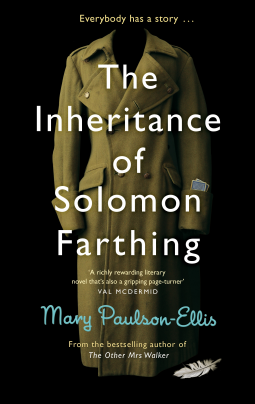
#BookReview ‘The Inheritance of Solomon Farthing’ by Mary Paulson-Ellis #WW1

A group of Great War soldiers is waiting for orders. During the last skirmishes of the war, men are still dying. Will the men receive orders to retreat or advance? Who will live or who will die? There are two strands to The Inheritance of Solomon Farthing by Mary Paulson-Ellis and the title refers to the second. A contemporary man in Edinburgh, an heir hunter, finds a pawn ticket amongst the possessions of Thomas Methven, an old soldier who died alone. Mary Paulson-Ellis This is a detailed story with many layers and many characters introduced as the two strands are told and hesitantly connected. At times the detail became confusing with so many descriptive repetitions I found myself skipping forwards. Paulson-Ellis writes scenes so well – the soldier’s gambling scene with the chicken is totally believable, and her portrayal of the foundling school in NE England is heart breaking. As Solomon tracks the life story of the deceased soldier, we see flashes of his own story, orphaned at seven and sent to live with his grandfather. Though interesting I found this distracting, it took me away from the story of the soldiers and added even more characters and family trees to remember.
The message is that the debts of the past do not disappear. Captain Godfrey Farthing is waiting, always waiting; to live to die, to advance, to retreat. He is simply trying to keep his men safe to the end of the war, which they suspect may come at any time. But Farthing’s intentions may be wrecked by enemy attack, by orders to attack, or by his own men themselves who are confined and bored. ‘A strange peace was coursing through his veins; that terrible calm that comes when a man knows the end is coming, but not in the way he had imagined when he began.’
Gambling is a continuous theme throughout the WW1 strand, and I lost track of the treasures gambled, won and lost, coveted, stolen and hidden. There are 11 soldiers involved, surely too many. Like The Lord of the Flies, the boredom of the men, their jealousies, petty rivalries and guns come to dominate their world, as if the war is already over. The treasures they gamble can be the smallest thing which to us may seem irrelevant but in war is crucial. Not monetary value as known at home, but representing an emotional or practical value.
Different rules apply during wartime and items that are significant then are cast into the spotlight when they survive across the generations to be found by modern day relatives. I admit to confusion about who was related to who and perhaps the cutting of a few peripheral characters would help. Given my interest in family history and WW1, I expected to love this book but longed for a firmer editing hand.

If you like this, try:-
Life Class’ by Pat Barker #1LIFECLASS
‘A Long Long Way’ by Sebastian Barry
Half of the Human Race’ by Anthony Quinn

And if you’d like to tweet a link to THIS post, here’s my suggested tweet:
#BookReview THE INHERITANCE OF SOLOMON FARTHING by Mary Paulson-Ellis https://wp.me/p5gEM4-4tz via @SandraDanby

A poem to read in the bath… ‘Out Chasing Boys’ by Amanda Huggins #poetry

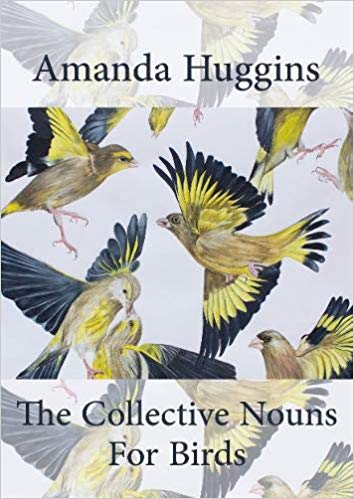
Recently published is this small poetry chapbook, The Collective Nouns for Birds by Amanda Huggins, with 24 poems. Huggins is an award-winning writer of flash fiction and short stories, so knowing her skill with the short form I looked forward to this first poetry chapbook with anticipation. And I wasn’t disappointed. I’ve chosen the first poem in the book as it struck a chord from my own childhood. I can smell the salt in the breeze, hear the lapping of the summer waves on the shore and taste the tang of vinegar as I lick my fingers after eating haddock and chips. Amanda HugginsThis poem is subject to copyright restrictions. Please search for the full poem in an anthology or at your local library. A ‘poetry chapbook’ is a slim pamphlet of poems, usually no more than 40 pages.

‘Out Chasing Boys’
We spent summer on the seafront,
two stranded mermaids
killing time.
We rolled up our jeans,
carried our shoes,
blew kisses at the camera
in the photo booth.
Always out, chasing boys,
as if we had forever.

Read my reviews of other work by Amanda Huggins:-
Novellas
ALL OUR SQUANDERED BEAUTY
CROSSING THE LINES
THE BLUE OF YOU
Short stories
AN UNFAMILIAR LANDSCAPE
BRIGHTLY COLOURED HORSES
EACH OF US A PETAL
SCRATCHED ENAMEL HEART
SEPARATED FROM THE SEA

Read these other excerpts and find a new poet to love:-
A Thousand Years You Said’ by Lady Heguri
The Cinnamon Peeler’ by Michael Ondaatje
‘After a Row’ by Tom Pickard

And if you’d like to tweet a link to THIS post, here’s my suggested tweet:
#Poetry ‘Out Chasing Boys’ by Amanda Huggins @troutiemcfish https://wp.me/p5gEM4-4v6 via @SandraDanby

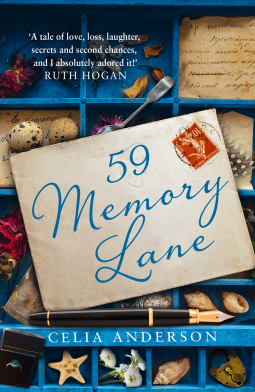
#BookReview ‘59 Memory Lane’ by Celia Anderson @CeliaAnderson1 #romance #contemporary

59 Memory Lane by Celia Anderson has a cozy tone reminding me immediately of MC Beaton’s Agatha Raisin series, but without the crime. Anderson has created the sort of feelgood destination you long to live in, to get away from it all. Pengelly is an isolated seaside village in Cornwall with an infrequent bus service. Celia AndersonWhen a local do-gooder starts an Adopt-a-Granny scheme pairing people together, 110-year old May Rosevere is paired with her eighty year old neighbour Julia. Except unbeknown to everyone else, these two women harbour a long held grudge against each other.
The central premise of the novel is that May’s long life – and she is free of the medical complaints experienced by other older characters in the book – is thanks to her magical ability to collect other people’s memories and extract energy from them; this is described as a kind of frission, naughtiness, a buzz. May, determined to reach her 111th birthday, steps up her ‘thought harvesting’ and so is delighted to learn that Julia has discovered a large collection of family letters going back decades.
This book has two major storylines spliced together – the feelgood seaside life in Pengelly and the adventures of the community, the romances, the illnesses, the community spirit; and the flip side, the unexplored darkness of May’s theft of other people’s memories. I found the latter quite difficult. It feels as if May is basically stealing other people’s lives; when she takes Julia’s letters, Julia becomes forgetful, vague and weak. May’s ‘thought harvesting’ is not clearly defined, described variously as a power, skill, ability, talent. May’s father tells her, as a child, about her ‘power’ but we see her doing nothing positive with it. It is not a force for good, she simply uses it for a feeling of well-being. In the beginning she gets her buzz from handling secondhand possessions at fairs and sales and by picking up rubbish and forgotten objects. But when did the stealing start?
The community at Pengelly is large and so the first half of the novel includes lots of scene setting and explanation of who is who. For this reason, this feels like the first novel in a series. The story really took off for me in the second half when May’s ‘talent’ comes back to bite her and she starts to feel guilty at taking people’s memories from them when it clearly causes damage. Anderson does an excellent job in creating the world of Pengelly, the community spirit for a village often cut-off, its residents have become supportive and innovative. There is romance for young and old, and support and friendship for everyone when illness strikes.
At the end I would have liked more explanations; to the mystery of Julia’s letters, the death of May’s husband, the mysterious Will who went off to be a priest, or the meaning of the missing ring. I can’t help but think this is a missed opportunity to turn this novel into something more than a Cornish village romance. Pengelly is definitely an escapist village with its beach walks, barbecues, cake, biscuits and mugs of hot chocolate, and it was good to see a cast of characters across the age spectrum, from six-year old Tamsin to 110 year-old May and lots of 50-80+, all getting along together. But I was left feeling I had been led, by the cover design, to expect one novel but got another.

If you like this, try:-
The Lost Letters of William Woolf’ by Helen Cullen
On a Night Like This’ by Barbara Freethy
Butterfly Barn’ by Karen Power

And if you’d like to tweet a link to THIS post, here’s my suggested tweet:
#BookReview 59 MEMORY LANE by Celia Anderson @CeliaAnderson1 https://wp.me/p5gEM4-46l via @SandraDanby

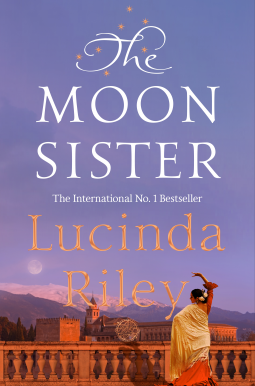
#BookReview ‘The Moon Sister’ by Lucinda Riley #romance

Fifth in the Seven Sisters series by Lucinda Riley, The Moon Sister is the story of Tiggy, wildlife conservationist and warm-hearted introvert. Each of the D’Apliese sisters is different with diverse skills, interests and hugely varying birth stories. Tiggy’s story alternates between a Highland estate where she is managing the rewilding of Scottish wildcats, and the flamenco world in Spain during the 1930s. Lucinda RileyThe Kinnaird Estate is a beautiful, isolated, wild place. The four wild cats move into their custom-built enclosure and Tiggy moves into a shared estate cottage with fellow worker Cal. Riley builds the Kinnaird community quickly and skilfully from new Laird Charlie to housekeeper Beryl and old retainer Chilly. It is Chilly – speaking in a muddled mixture of English, Spanish and Romani – who introduces the first hints of premonition, seeing and herbal remedies. He tells Tiggy she has healing hands. Caught up in the twists and turns of the Kinnaird family, the frictions in Charlie and Ulrika’s marriage and their tempestuous daughter Zara, Tiggy grieves for Pa Salt and is curious about her own birth family. In his farewell letter, Pa Salt tells her she comes from a gifted line of seers. She must go to Granada in Spain, to the gypsy area called Sacromonte, where she must knock on a blue door and ask for Angelina. Tiggy delays, unsure of the truth, attracted to Charlie. But when she is injured in a poaching incident on the estate, Tiggy feels upset, confused and wronged. She flies to Granada. This is a quick reminder that Tiggy, who lives the most normal, ordinary life of the sisters so far, is far from a normal girl and when times get tough, the D’Apliese wealth is ever-present.
The second storyline is that of Lucia, Tiggy’s grandmother, who rises from a tiny girl living in deepest poverty in Sacromonte to a world-famous flamenco dancer. Though Tiggy’s character and situation is appealing, I found Lucia a more difficult character. By nature energetic and stubborn, Lucia turns into a selfish, spoiled woman who rides roughshod over others. Exploited by her feckless father who keeps control of her money and career, Lucia’s few moments of caring for others were not enough for me to warm to her. But the world in which she lives, the Sacromonte community, the gypsy brujas, and the violence and depravities of the Spanish Civil War were fascinating to read. As with the stories of the other sisters, Riley concentrates most of the birth family story on a generation further back than the birth parents and there were times when I longed for less flamenco and more bruja. I also wanted to know Chilly’s story and how he came to work on a Scottish estate.
There are more teasers in this book about the truth of Pa Salt’s identity and death, but nothing concrete. There is also the reappearance of Zed Eszu, who can only be described as a sleazy millionaire cad, who first appeared in Maia’s story. What lies behind his fascination with the six D’Apliese sisters. And is Pa Salt really dead?

Read my reviews of the other novels in Lucinda Riley’s ‘Seven Sisters’ series:-
THE SEVEN SISTERS #1SEVENSISTERS
THE STORM SISTER #2SEVENSISTERS
THE SHADOW SISTER #3SEVENSISTERS
THE PEARL SISTER #4SEVENSISTERS
THE SUN SISTER #6SEVENSISTERS
THE MISSING SISTER #7SEVENSISTERS
ATLAS: THE STORY OF PA SALT #8SEVENSISTERS

… plus my reviews of these standalone novels, also by Lucinda Riley:-
THE BUTTERFLY ROOM
THE GIRL ON THE CLIFF
THE LOVE LETTER

… and by Lucinda Riley & Harry Whittaker:-
THE HIDDEN GIRL

If you like this, try:-
The Bear and the Nightingale’ by Katherine Arden
The Penny Heart’ by Martine Bailey
Rush-Oh!’ by Shirley Barrett

And if you’d like to tweet a link to THIS post, here’s my suggested tweet:
#BookReview THE MOON SISTER by Lucinda Riley https://wp.me/p5gEM4-46t via @SandraDanby

#BookReview ‘Mudlarking’ by Lara Maiklem @LondonMudlark #Thames #archaeology

Lara Maiklem is a mudlark. She can be found at low tide walking the beaches and mud of the River Thames, foraging, searching, collecting bits and pieces. And in the course of her memoir Mudlarking, she tells the history of the river. This is a personal history, not a novel. Lara MaiklemStarting at the tidal head near Teddington and heading east to the Thames Estuary, Maiklem has written an anecdotal guide to London’s river, the treasures which can be found buried in the mud, and tells the stories of the people [real and imagined] who once lived there. From the discarded Doves Type to broken clay pipes and glass bottle stoppers, she describes the objects she has found, their place in her collection, her methods of cleaning and preserving them. Along the way she consults experts and historians and forages with fellow mudlarks who each have their favourite places, their specialist objects to collect.
‘Modern mudlarks fall into two distinct categories,’ she explains. ‘Hunters and gatherers. I am one of the latter. I find objects using just my eyes to spot what is lying on the surface. Eyes-only foragers like me generally enjoy the searching as much as the finding, and derive pleasure from the simplest of objects: an unusually shaped stone, a colourful shard of pottery or a random blob of lead. There is an element of meditation to what we do, and as far as I’m concerned the time I spend looking is as important if not more so, that the objects I take home with me.’
At times the pace seemed a little slow – lots of descriptions of mud – but the nature of mudlarking itself is slow and contemplative. I enjoyed the insights into the river’s history, the anecdotes and fascinating detail not normally heard. A book to be enjoyed at a leisurely pace.

If you like this, try:-
The Ashes of London’ by Andrew Taylor #1FIREOFLONDON
Dissolution’ by CJ Sansom #1SHARDLAKE
The Walworth Beauty’ by Michèle Roberts

And if you’d like to tweet a link to THIS post, here’s my suggested tweet:
#BookReview MUDLARKING by @LondonMudlark https://wp.me/p5gEM4-4ft via @SandraDanby

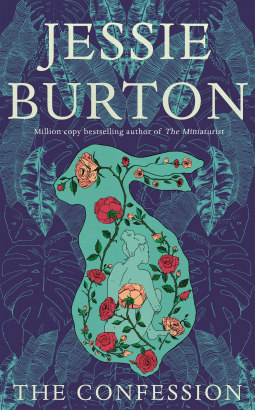
#BookReview ‘The Confession’ by Jessie Burton #romance #contemporary

The Confession by Jessie Burton is her third novel after The Miniaturist, her successful debut. The Confession is a contemporary romance about relationships; mother/daughter, romantic, between friends. Are daughters destined to repeat the mistakes of their mothers, even if they have never met? Jessie BurtonThis is a dual timeline novel. In 2017, Rose Simmons never knew her mother, who left when she was a baby. Rose’s father has always been tight-lipped until now when he tells Rose that the famous but reclusive novelist Constance Holden may have the answers. Frightened of scaring off Constance with awkward questions, Rose instead gets a job as maid/companion for the reclusive novelist, now in her seventies and crippled by arthritis. Unexpectedly Rose comes to like and admire Connie so the longer she works for her the more impossible it is to admit to her deception [she is known to Connie as Laura Brown]. And all the time she wonders if Connie can see her mother’s face in her own. In 1982, we see the story of her mother and Connie. Part-time waitress and artist’s model Elise Morceau meets the enigmatic Connie on Hampstead Heath. When Connie’s first novel is made into a film, the two women go to LA. That’s where the lies start, the cracks appear. Connie is working, Elise is a hanger-on who learns to surf. The turning point comes when she begins to doubt Connie’s love.
At times, Elise and Rose were inter-changeable in my head. Both women are immature, unsure who they are, searching for something they cannot define except that they don’t have it. Elise is in her early twenties, while Rose is in her thirties. I had some sympathy with Rose’s boyfriend Joe and best friend Kelly who both lost patience with her. Both Rose and Elise seem to play at being adults, thinking they are the centre of the world, not understanding that their own actions also leave ripple effects that cause pain to other people. They obsess about being hurt but do not recognise the hurt they cause. Mother and daughter are both passive characters, drifting in their own lives, running away rather than confront difficult situations. Principally, the novel is about life choices, taking responsibility for one’s own life and own choices [and being passive, not making decisions, is a personal choice].
At the beginning I felt for Rose and her absence of self-identity, ‘I didn’t have a mum, and I’d never had her, so how could I miss something I’d never really lost?… I don’t tell people about the yearning. The wonder. I tell them, You can’t miss what you never had!’ But the pace of the first quarter is very slow, it picks up once Rose, aka Laura Brown, starts working for Connie in Hampstead. Ironically Rose finds her sense of self through the very mode of her deception; by creating a new personality and life for herself, assuming the face of Laura that she presents to Connie, Rose begins to understand who she is.
After really enjoying The Miniaturist, The Confession left me feeling underwhelmed.

Read my review of THE MINIATURIST.

If you like this, try:-
Ghost Moth’ by Michele Forbes
‘If I Knew You Were Going to be This Beautiful, I Never Would Have Let You Go’ by Judy Chicurel
The Girl on the Cliff’ by Lucinda Riley

And if you’d like to tweet a link to THIS post, here’s my suggested tweet:
#BookReview THE CONFESSION by Jessie Burton https://wp.me/p5gEM4-46b via @SandraDanby