Tag Archives: book review

#BookReview ‘The Girl in the Painting’ by @RenitaDSilva #historical #India

When Renita D’Silva writes about India, it comes alive on the page. Her books are dual timeline family mysteries combining a modern day narrator with historical events set in India. With her latest, The Girl in the Painting, D’Silva tackles guilt, forgiveness and sati – when a husband dies, his widow burns with his body on the funeral pyre. It is her emotionally toughest novel yet and handled with sensitivity and balance. Renita D’SilvaThis is the story of three women – Margaret, Archana and Emma – pre-Great War in England, India in 1918 and England 2000. At the beginning, each woman is introduced in short chapters which made me long to dwell a while with each in turn, rather than jumping around. I was puzzled at how these three women, so different from each other, could be connected. Each has a deep sense of duty that, despite a longing to make her own decisions, is an anchor to a sometimes unwelcome, difficult, reality. Yet being impulsive and taking decisions without consideration for others often has far-reaching consequences. The early 20thcentury was a pivotal time in world history and a period of rapid change in the lives of women. Margaret’s family is separated tragically by war, Archana’s by impulsive love; both separations deeply affect these two young girls and reverberate throughout their whole lives. It is Emma in modern-day England who faces a moral and emotional decision of her own, who travels to India with her daughter to cast light on the story.
The emotional connection really kicked in for me when Margaret and Archana meet at the halfway point in the book. From that point, I didn’t want to put the book down. The parallel struggles in Margaret and Archana’s early lives, even though thousands of miles apart, demonstrate the commonality of being human. Tragedy does not strike the undeserving, the old, the unlikeable, the lazy; it strikes everyone without selection. But D’Silva’s story is not about tragedy; it is about what comes next, about taking a deep breath and moving forward.
There is an evocative portrayal of Archana’s village life, the daily grind of poverty juxtaposed with the fertility of flowers and fruits, exotic colours and birds; and the picture of slum children in Bombay who live beside the railway tracks. Neither is romanticised. I also enjoyed Margaret’s time as an artist and her transition to India, using her art as a promotional tool in the fight for Independence. The story covers a lot of history and there were times when I would have liked to immerse myself in a period, but the characters move onwards.
Given the title, The Girl in the Painting, I assumed the front cover design was of the specific painting. In fact there are a number of portraits in the novel and in my imagination none looks like the cover. So I prefer to think it is a portrait of Margaret in the garden at Charleston, welcomed by the Bloomsbury Group, free to allow her art to flourish, free to

Read my reviews of these other novels by Renita D’Silva:-
A DAUGHTER’S COURAGE
A MOTHER’S SECRET
BENEATH AN INDIAN SKY
THE ORPHAN’S GIFT
THE SPICE MAKER’S SECRET
THE WAR CHILD

If you like this, try:-
The Sapphire Widow’ by Dinah Jeffries
The Photographer’s Wife’ by Suzanne Joinson
Somewhere Inside of Happy’ by Anna McPartlin

And if you’d like to tweet a link to THIS post, here’s my suggested tweet:
#BookReview THE GIRL IN THE PAINTING by @RenitaDSilva https://wp.me/p5gEM4-3Tk via @SandraDanby


#BookReview ‘Clock Dance’ by Anne Tyler #contemporary #family

Every novel by Anne Tyler is a treat, I save them up, anticipate them. For me as a reader, she tells stories that seem ordinary but have exceptional depth, gentle stories which make me want to continue reading on into the night. For me as a writer, it is her I aim to emulate; her economy of word and scene, achieving depth without unnecessary diversion. So, to Clock Dance. Anne Tyler Told in three parts – 1967, 1977 and 2017 – this is the story of an ordinary woman, Willa Drake, to whom things outside normal life don’t happen. The three key events in her life – the disappearance of her mother, a marriage proposal, being widowed at 41 – are passive acts. Willa is not a proactive person. We meet her first as an eleven year-old, at home with her family; her emotionally-erratic mother, her passive, lovely father, her awkward younger sister Elaine. Willa takes on the motherly role, making a chocolate pudding, observing the ups and downs of her parents’ relationship with acute asides. At college, her boyfriend proposes to her and expects her to give up college and move across the country. In 2017, a confused phone call from the neighbour of her son’s ex-girlfriend sets in motion a chain of events that sees Willa gain a substitute grand-daughter but endanger her own marriage. Each time, Willa reacts to other people.
In Baltimore Willa and her second husband Peter move in with Denise who has been shot, and Denise’s nine-year-old daughter Cheryl and dog Airplane. It is an everyday story of a household, hospital visits, neighbours and community. Tyler’s observations of daily life are so spot-on, she tells the story in a way that makes it seem real, not a literary invention involving toil, plotting and rewriting. Without you noticing, time passes and people change so subtly it is impossible to put a finger on the point when the change started. Simple, complex, hugely perceptive.
This is a novel about meekly accepting your place in the world until the day arrives that you realise life is passing you by. Does Willa have the courage to find a new life? I was urging her on all the way. A 5* book for me.

Read my reviews of these other books by Anne Tyler:-
A SPOOL OF BLUE THREAD
FRENCH BRAID
LADDER OF YEARS
REDHEAD BY THE SIDE OF THE ROAD
VINEGAR GIRL

And read the first paragraphs of:-
DINNER AT THE HOMESICK RESTAURANT 
BACK WHEN WE WERE GROWN UPS

If you like this, try:-
‘Autumn’ by Ali Smith
‘The Stars are Fire’ by Anita Shreve
‘The Gustav Sonata’ by Rose Tremain

And if you’d like to tweet a link to THIS post, here’s my suggested tweet:
#BookReview CLOCK DANCE by Anne Tyler https://wp.me/p5gEM4-3J9 via @SandraDanby

#BookReview ‘The Rich Pay Late’ by Simon Raven #historical

It is the eve of the Suez crisis in the Fifties. Written in the Sixties with the benefit of hindsight of this political crisis, The Rich Pay Late by Simon Raven has a modern tone applicable to today’s culture. Greed, disloyalty, snobbishness are common. First of the ten novels in Raven’s ‘Alms for Oblivion’ series, in which a Dickensian cast of characters overlap with each other’s lives, each book is a self-contained story from the end of the Second World War to 1973.Simon RavenThe Rich Pay Late opens as Donald Salinger and Jude Holbrook, co-owners of an advertising agency, discuss the purchase of a financial magazine, Strix. Jude is ambitious but without money, Donald has the cash but is cautious. And so starts the combined theme of gambling/business/love in which everyone is for himself and taking calculated risks is a way of life. Structurally, it is an ensemble story rather than concentrating on one central character; Raven introduces characters with short glimpses, some of one paragraph, of people who start off separate from Donald and Jude until their entwined lives are revealed. Not one character is superfluous.
This is a short novel of 250 pages, but intense. Slow, rich, satirical, it portrays a depressing and bleak take on human nature. The blurred story builds and builds as the appalling characters become real; at times a little dry, I persevered and am pleased I did as the pace of the final third was quicker.
The narrative centres around the sale of Strix and subsequently on a political scandal about Strix’s new board member, Peter Morrison MP. When the magazine’s owner receives the offer to buy his company, Morrison’s vote takes on additional importance. But is he a benefit or a liability?
A tale of politics, media, love affairs and betrayal between a network of upper and upper-middle class men and women with names like Vanessa, Somerset and Jude. In places, the dark humour reminds me of Nancy Mitford’s later novels. There is some discussion amongst reviewers about the correct order in which to read the series, I’m sticking with Raven’s order. Written fourth, he placed this first in his series.

And here’s my review of the next book in the same series:-
FRIENDS IN LOW PLACES #2ALMSFOROBLIVION

If you like this, try:-
Freya’ by Anthony Quinn
Wigs on the Green’ by Nancy Mitford
Hangover Square’ by Patrick Hamilton

And if you’d like to tweet a link to THIS post, here’s my suggested tweet:
#BookReview THE RICH PAY LATE by Simon Raven via @SandraDanby https://wp.me/p5gEM4-3SY

#BookReview ‘The Girl on the Cliff’ by Lucinda Riley #mystery #romance

This is a tale of complicated choices, tragedy and mental instability combined with all the bad luck life can throw at you. Told simply at the beginning, the emotional intensity of The Girl on the Cliff by Lucinda Riley tightens and tightens like an old screw turned so hard it can’t be loosened. Until finally it gives way. Lucinda RileyVisiting her family in Ireland, Grania Ryan is running from pain. She has just miscarried and is upset with her boyfriend, Matt, for an unexplained reason. At home she sees a young girl walking on the cliffs and is curious about her. Aurora Devonshire is eight years old, she lives in the big house beside the sea, raised by an accumulation of governesses, nannies and household staff during the absence of her father Alexander. Grania is transfixed by the child, but her mother Kathleen is worried by any contact made with ‘that family.’ The Girl of the Cliff is the story of three generations of women in the two families, their loves, losses, sacrifices, cruelties and grudges. And throughout it all runs the mystery of why Grania cannot return to New York to her grieving and confused boyfriend.
Does history repeat itself? Can bad luck be passed genetically from generation to generation? Are some people just unlucky? And are some families destined to be intertwined across the centuries? This story of the Ryan and the Lisle families includes troubled love, ballet, wealth, poverty and orphaned children. Will the worldly-wise Aurora figure out the connections? Riley keeps the secrets of her characters, revealing each titbit carefully so you want to read ‘just one more page.’

Read my reviews of the first seven novels in Lucinda Riley’s ‘Seven Sisters’ series:-
THE SEVEN SISTERS #1SEVENSISTERS
THE STORM SISTER #2SEVENSISTERS
THE SHADOW SISTER #3SEVENSISTERS
THE PEARL SISTER #4SEVENSISTERS
THE MOON SISTER #5SEVENSISTERS
THE SUN SISTER #6SEVENSISTERS
THE MISSING SISTER #7SEVENSISTERS

… plus my reviews of these standalone novels, also by Lucinda Riley:-
THE BUTTERFLY ROOM
THE LOVE LETTER

If you like this, try:-
‘Butterfly Barn’ by Karen Power
‘The Crows of Beara’ by Julie Christine Johnson
‘Please Release Me’ by Rhoda Baxter

And if you’d like to tweet a link to THIS post, here’s my suggested tweet:
#BookReview THE GIRL ON THE CLIFF by Lucinda Riley http://wp.me/p5gEM4-2P4 via @SandraDanby

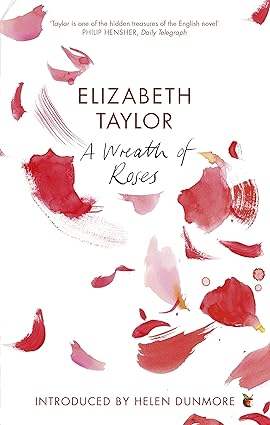
#BookReview ‘A Wreath of Roses’ by Elizabeth Taylor #historical

There are some novels that you want to start read again as soon as you’ve finished it. To appreciate the finer details, unravel sub-text, and simply to admire. A Wreath of Roses by Elizabeth Taylor had that effect on me. Elizabeth Taylor

It is described in reviews as ‘her darkest novel’. What fascinated me was the inter-play between the three key female characters, how they see each other, and themselves, how they behave individually and together. Multiple contradictions complicated by self-delusions and self-awareness. I don’t mean to seem cryptic. The story is simple, as is often the way with Taylor.
In that period after the Second World war when life begins to look normal, the undercurrents of the war experience are everywhere. Camilla and Liz are staying with Frances, Liz’s former governess, for their annual summer holiday. It is a habit forged by years with happy memories of podding peas and sharing stories. Except this year is different. Liz is now married and has brought her baby, Harry. Frances, an artist, is now painting dark tortured pictures rather than feminine florals and portraits. And Camilla has a shocking experience on her journey to stay with Frances; she witnesses a suicide at a train station that makes her melancholy, lonely and inadequate. She looks at herself in the dressing table mirror, ‘Her flesh was golden as an apricot; her hair, in contrast, looked tarnished and harshly bright.’
Taylor inserts three male characters as wedges into the cosiness of the three women. Camilla resents Arthur, Liz’s husband, for taking her friend away. Richard Elton, who with Camilla is there when the suicide happens, is staying at a pub in the village. Camilla feels sorry for him and at the same time attracted to him and will not listen to Liz’s instinctive uneasiness about him. Morland Beddoes is a collector of Frances’ work, he arrives in the village and stays at the same pub as Elton; he too feels uneasy about the man’s motivations. A friendly sort who finds himself the recipient of peoples’ woes, ‘Morland Beddoes was not in the last self-infatuated. He loved himself only as much as self-respect required, and the reason why he saw himself so clearly was that he looked not often, but suddenly, so catching himself unawares.’
This is a dark novel, but not in today’s meaning of psychological thriller. It is a study of ageing, friendship, the power of sexual tension, and it is sublimely written.

Read my reviews of other books by Elizabeth Taylor:-
A VIEW OF THE HARBOUR
ANGEL
AT MRS LIPPINCOTE’S
IN A SUMMER SEASON
THE SLEEPING BEAUTY

If you like this, try:-
‘All My Puny Sorrows’ by Miriam Toews
We Are Water’ by Wally Lamb
All the Birds, Singing’ by Evie Wyld

And if you’d like to tweet a link to THIS post, here’s my suggested tweet:
#BookReview A WREATH OF ROSES by Elizabeth Taylor https://wp.me/p5gEM4-3uV via @SandraDanby

#BookReview ‘The Storm Sister’ by Lucinda Riley #romance

Second in ‘The Seven Sisters’ series of adoption identity mysteries by Lucinda Riley, The Storm Sister is the story of the second oldest d’Aplièse sister, Ally. Very different from the first novel of the series which was set in hot and steamy Brazil, this book encompasses professional yacht racing, classical music and Norway. Lucinda RileyLike Maia’s story in The Seven Sisters, Ally’s tale starts with the death of their father Pa Salt. Ally reads his letter and ponders two clues. A small ornamental frog and a book from his library ‘by a man long dead named Jens Halvorsen’ lead her to Norway. This is an ambitious timeline, skipping back 132 years to 1875 and the fascinating story of Jens Halvorsen and Anna Landvik. What follows is a lovely tale of Anna being plucked from her mountain farm to sing the soprano’s part in the premiere of Grieg’s ‘Peer Gynt’, ghost-singing for an actress with an inferior voice. This performance kickstarts Anna’s career, and she settles into a new life in Christiania [modern-day Oslo] and falls in love. Of course, true love never runs smoothly and Anna continues to long for the hills of her homeland rather than the city streets. The Norwegian settings are wonderful and I wanted to stay with Anna’s life, Riley invests so much in this section it almost feels like a book-within-a-book. But The Storm Sister is an adoption mystery about Ally’s parentage, so despite loving the Anna storyline I started to wonder why Riley takes us so far back in time to the nineteenth century and the story of who in terms of age are Ally’s great-great-grandparents. When is she going to tell us about Ally’s parents and her adoption by Pa Salt?
Riley excels at the immersive detail of both sailing and singing. The inclusion of Grieg’s music and the story of Ibsen’s ‘Peer Gynt’ – which offers parallels of Peer with Jens – made me listen to the music. But three quarters of the way through the book, I started to lose interest. That surprised me; I haven’t felt that way with Riley’s other books. The mystery is thinly strung and additional storylines and characters added in the last quarter feel hurried and shoehorned in. I found myself worrying I’d missed something and started flicking back through the pages. It picks up again at the end of Ally’s story, finishing at a pace before the final chapter acts as a preview to the next book, the next sister’s story.
A doorstop of a book, The Storm Sister comes in at 720 pages. Darker than the first of the series, there are love affairs and betrayals, grief, tragedy and the depths of despair and cruelty. Each novel is the standalone story of one sister, but reading them order brings the cumulative benefits of understanding the six sisters who were raised together at Atlantis. Next in the series is The Shadow Sister, the story of Star.

Read my reviews of some of the other novels in Lucinda Riley’s ‘Seven Sisters’ series:-
THE SEVEN SISTERS #1SEVENSISTERS
THE SHADOW SISTER #3SEVENSISTERS
THE PEARL SISTER #4SEVENSISTERS
THE MOON SISTER #5SEVENSISTERS
THE SUN SISTER #6SEVENSISTERS
THE MISSING SISTER #7SEVENSISTERS

… plus my reviews of these standalone novels, also by Lucinda Riley:-
THE BUTTERFLY ROOM
THE GIRL ON THE CLIFF
THE LOVE LETTER

If you like this, try:-
The Beekeeper’s Daughter’ by Santa Montefiore
Butterfly Barn’ by Karen Power
The Crows of Beara’ by Julie Christine Johnson

And if you’d like to tweet a link to THIS post, here’s my suggested tweet:
#BookReview THE STORM SISTER by Lucinda Riley https://wp.me/p5gEM4-3Rs via @SandraDanby

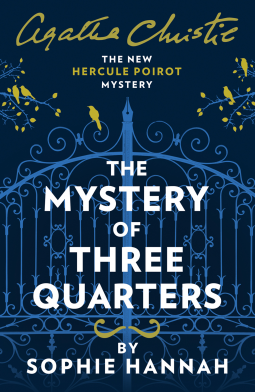
#BookReview ‘The Mystery of Three Quarters’ by Sophie Hannah @sophiehannahCB1 #crime #mystery

I am not a great lover of continuation series, books written by a new author after the death of the much-loved originator. It seems a cynical moneymaking move and I fear it will ruin my love of the original author’s books. I grew up loving Agatha Christie and have not, until now, been tempted to read the new Poirot stories by Sophie Hannah. But about to go on holiday, feeling tired and longing for something familiar but new, I picked up The Mystery of Three Quarters. And what a delight it is. Sophie HannahThe story starts as Poirot is challenged in turn by four strangers, each accusing him of naming them as a murderer. Affronted that fraudulent letters have been sent in his name, Poirot sets out to investigate. He suspects however that the supposed victim Barnabas Pandy does not exist. But Pandy does exist, or did, for 94-year old Barnabas Pandy is dead, drowned in his bath. Told by Poirot’s police sidekick, Inspector Edward Catchpool, this is a clever and mystifying story of Pandy, his two grand-daughters, and long-buried guilt and shame.
Hannah writes with ease and I slipped seamlessly into loving and believing in her Poirot. As with all good crime fiction, I had suspicions about the identity of the murderer but only during Poirot’s customary reveal did I connect together the unpredictable clues laid so carefully throughout the novel. And as always, it is satisfying to know I had guessed correctly. At 400 printed pages The Mystery of Three Quarters is longer than Christie’s Poirot novels, which come in at under 300 pages, but I flew through it in one day. Just the ticket for a holiday read.

And here’s my review of another Sophie Hannah Poirot book:-
THE KILLINGS AT KINGFISHER HILL #4POIROT

If you like this, try:-
The Silent Twin’ by Caroline Mitchell
‘An Uncertain Place’ by Fred Vargas #8COMMISSAIREADAMSBERG
A Death in the Dales’ by Kate Brody #7KATESHACKLETON

And if you’d like to tweet a link to THIS post, here’s my suggested tweet:
#BookReview THE MYSTERY OF THREE QUARTERS by Sophie Hannah @sophiehannahCB1 https://wp.me/p5gEM4-3yD via @Sandra Danby

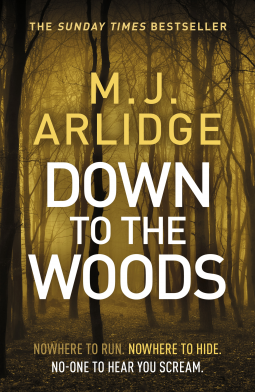
#BookReview ‘Down to the Woods’ by @mjarlidge #crimefiction

One thing you know to expect from a DI Helen Grace book; the first theory and suspect she comes up with will not be the killer, usually the second one isn’t either. And you believe her each time. So just when you are wondering who the killer can possibly be, the book races to its conclusion and you never guessed it though the clues are there. Down to the Woods is the eighth in the Grace series by MJ Arlidge. He is expert at twisting, turning, somersaulting the plot and part of the fun as a reader is figuring out the puzzle he has set. MJ ArlidgeIn the New Forest, campers are disappearing from their tents and being chased through the isolated woods before being killed. I didn’t dwell on the gruesome bits; I prefer the puzzle part of crime novels, the answers are always with the people. Apart from PD James and Susan Hill, this is the series of crime novels I keep on reading. Why? Because Helen Grace is an unusual heroine; she is strong but vulnerable, confident yet quaking inside, spiky but desperate for companionship. For the moment that support comes from her team. The secondary story of her DS, Charlie Brooks, continues. Charlie’s daughter Jessie is having nightmares and the household is short on sleep, while Charlie’s husband Steve wants another baby. And there is a new DS, tall, dark, motorbike riding DS Hudson. Local reporter Emilia Garanita is pushing for the big story, overstepping the line, being a nuisance, endangering herself, as usual.
Just when I was beginning to think Helen was less of a livewire, running into danger without thinking first, when she does exactly that. Down to the Woods is perhaps a little less explosive than the earlier books, but this is now a mature crime series and Helen is 45. The challenge for Arlidge is to come up with stories that keep us guessing right until the end without relying totally on Helen. Female characters – Helen, Charlie and Emilia – are undoubtedly Arlidge’s strength and it will be interesting to see if DS Joseph Hudson joins the team on a permanent basis.
One thing disappointed me. More than any previous book, there seemed to be a lot of repetition of stuff the reader can work out for herself; of the ‘if this happens then that might be next’ sort of question. No need for the summarising.

Read my reviews other books in this series:-
EENY MEENY #1HELENGRACE
POP GOES THE WEASEL #2HELENGRACE
THE DOLL’S HOUSE #3HELENGRACE
LIAR LIAR #4HELENGRACE
LITTLE BOY BLUE #5HELENGRACE
HIDE AND SEEK #6HELENGRACE
LOVE ME NOT #7 HELENGRACE

If you like this, try:-
‘Wolf’ by Mo Hayder
Nightfall’ by Stephen Leather
‘Hiding the Past’ by Nathan Dylan Goodwin

And if you’d like to tweet a link to THIS post, here’s my suggested tweet:
#BookReview DOWN TO THE WOODS by @mjarlidge https://wp.me/p5gEM4-3z6 via @SandraDanby

#BookReview ‘The Horseman’ by Tim Pears #historical #Devon

The Horseman by Tim Pears is an account of the slow, meandering life on an estate farm in rural Devon. It is 1911 when, for modern readers, the sinking of the Titanic is not far away and the Great War looms. Two children, born into very different worlds, grow up not far apart; both have a strong love of horses. This novel is billed as a coming-of-age tale but it is also a description of rural farming methods. Tim Pears Told in a month-by-month format, the seasons unfold in a remote Devon valley where the passing of time is marked by the weather and the tasks undertaken on the farm. There is a long list of characters and at the beginning I confused who was who, but gradually they settled into their roles. Leopold Sercombe is the youngest son of the master carter working on the tenant farm of a large estate. He longs to escape school every day to run home and help his father with the horses; these are working animals, cart horses and cobs, they are almost characters. We are there as Noble gives birth; as Leo’s father shares one of the secrets of his trade, the use of dried tansy to give his horses a glossy coat; and the day Leo is given a chance to break Noble’s unnamed colt. “The boy watched the colt, his young lean muscular beauty in motion, then turned and walked towards the fence. There was but one spectator there, sitting on the top pole, feet resting on the lower, a youth in a Homburg hat, shirt, breeches, and riding boots of a sort worn by the master and his kind.” Lottie, daughter of the master, the owner of the estate, challenges the way Leo is handling the colt. And so begins their shared love of horses.
This is a 4* book for me. Why not 5*? Because the relationship between the two children takes a long time to start happening and then ends explosively which seems out of kilter with the spirit and pace of the story; because the slow, slow pace of the story and the passages of overly detailed description at times felt like sections for a ‘how to use farm machinery book’. But Leo is an entrancing character; his gentle authority with horses, his silences and thoughtful behaviour, make it essential to read The Wanderers, second in the trilogy.
CLICK HERE TO READ MORE ABOUT THIS BOOK

If you like this, try:-
Barkskins’ by Annie Proulx
Anderby Wold’ by Winifred Holtby
Housekeeping’ by Marilynne Robinson

And if you’d like to tweet a link to THIS post, here’s my suggested tweet:
#BookReview THE HORSEMAN by Tim Pears https://wp.me/p5gEM4-3QE via @SandraDanby

#BookReview ‘When All Is Said’ by Anne Griffin #Irish #contemporary

This book stayed with me a long time after I finished it. Three words sum up When All is Said by Anne Griffin. Masterful. Emotional. Funny. It is the story of Maurice Hannigan as he sits at a bar one evening. He drinks a toast to five people and tells the story of his life. It is one of those Irish novels which makes your emotions tingle and say ‘yes, it is like that’, which makes tears prick your eyes and laughter rise in your chest. This is Griffin’s debut novel but she is an accomplished prizewinning writer who knows how to tell a story. It is unbearingly touching and will, without fail, make you cry. Anne GriffinMaurice is in the bar of the Rainsford House Hotel in Rainsford, Co Meath, Ireland. At the beginning we don’t know why he is there, the first few pages are an introduction to Maurice, how he feels his age, as he conducts an imaginary conversation with his son Kevin who lives in America. His first drink is a bottle of stout and as he drinks, he tells the story of his brother Tony and their childhood. A key incident in this section has reverberations throughout Maurice’s life and throughout this novel; a gentle reminder that we all may grow old, we may live in the same place or move away, but our childhood and our actions stay with us. We are introduced to Emily, owner of the hotel, and Svetlana, barmaid. Griffin has a talent with sense of place; she makes the hotel come alive.
Four more drinks follow. For Molly, a glass of Bushmills 21-year old malt. For Noreen, a bottle of stout. For Kevin, a rare whiskey, Jefferson’s Presidential Select. And for his wife Sadie, Maurice drinks a glass of Midleton whiskey. “Svetlana places my final drink down in front of me: Midleton, you can’t fault it. Majestic stuff. I look at it like she has just handed me the keys to a new harvester. It’s the autumn colours that get me. It’s the earth of it, the trees, the leaves, the late evening sky.”
As each story is told, Anne Griffin weaves in the present day so the two strands blend and the past explains Maurice’s situation, why he feels as he does, why he longs for what he longs for. This is a beautiful Irish novel about love, dyslexia, grumpiness, family, bullying, forgiveness and whiskey. I loved it and didn’t want it to end.

Read my review of LISTENING STILL, also by Anne Griffin.

If you like this, try:-
A History of Loneliness’ by John Boyne
Brooklyn’ by Colm Tóibín 
That They May Face the Rising Sun’ by John McGahern

And if you’d like to tweet a link to THIS post, here’s my suggested tweet:
#BookReview WHEN ALL IS SAID by Anne Griffin https://wp.me/p5gEM4-3Qg via @SandraDanby