Tag Archives: book review

#BookReview ‘Down to the Woods’ by @mjarlidge #crimefiction

One thing you know to expect from a DI Helen Grace book; the first theory and suspect she comes up with will not be the killer, usually the second one isn’t either. And you believe her each time. So just when you are wondering who the killer can possibly be, the book races to its conclusion and you never guessed it though the clues are there. Down to the Woods is the eighth in the Grace series by MJ Arlidge. He is expert at twisting, turning, somersaulting the plot and part of the fun as a reader is figuring out the puzzle he has set. MJ ArlidgeIn the New Forest, campers are disappearing from their tents and being chased through the isolated woods before being killed. I didn’t dwell on the gruesome bits; I prefer the puzzle part of crime novels, the answers are always with the people. Apart from PD James and Susan Hill, this is the series of crime novels I keep on reading. Why? Because Helen Grace is an unusual heroine; she is strong but vulnerable, confident yet quaking inside, spiky but desperate for companionship. For the moment that support comes from her team. The secondary story of her DS, Charlie Brooks, continues. Charlie’s daughter Jessie is having nightmares and the household is short on sleep, while Charlie’s husband Steve wants another baby. And there is a new DS, tall, dark, motorbike riding DS Hudson. Local reporter Emilia Garanita is pushing for the big story, overstepping the line, being a nuisance, endangering herself, as usual.
Just when I was beginning to think Helen was less of a livewire, running into danger without thinking first, when she does exactly that. Down to the Woods is perhaps a little less explosive than the earlier books, but this is now a mature crime series and Helen is 45. The challenge for Arlidge is to come up with stories that keep us guessing right until the end without relying totally on Helen. Female characters – Helen, Charlie and Emilia – are undoubtedly Arlidge’s strength and it will be interesting to see if DS Joseph Hudson joins the team on a permanent basis.
One thing disappointed me. More than any previous book, there seemed to be a lot of repetition of stuff the reader can work out for herself; of the ‘if this happens then that might be next’ sort of question. No need for the summarising.

Read my reviews other books in this series:-
EENY MEENY #1HELENGRACE
POP GOES THE WEASEL #2HELENGRACE
THE DOLL’S HOUSE #3HELENGRACE
LIAR LIAR #4HELENGRACE
LITTLE BOY BLUE #5HELENGRACE
HIDE AND SEEK #6HELENGRACE
LOVE ME NOT #7 HELENGRACE

If you like this, try:-
‘Wolf’ by Mo Hayder
Nightfall’ by Stephen Leather
‘Hiding the Past’ by Nathan Dylan Goodwin

And if you’d like to tweet a link to THIS post, here’s my suggested tweet:
#BookReview DOWN TO THE WOODS by @mjarlidge https://wp.me/p5gEM4-3z6 via @SandraDanby
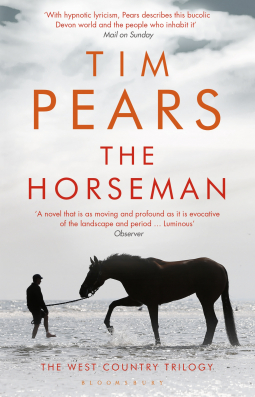
#BookReview ‘The Horseman’ by Tim Pears #historical #Devon

The Horseman by Tim Pears is an account of the slow, meandering life on an estate farm in rural Devon. It is 1911 when, for modern readers, the sinking of the Titanic is not far away and the Great War looms. Two children, born into very different worlds, grow up not far apart; both have a strong love of horses. This novel is billed as a coming-of-age tale but it is also a description of rural farming methods. Tim Pears Told in a month-by-month format, the seasons unfold in a remote Devon valley where the passing of time is marked by the weather and the tasks undertaken on the farm. There is a long list of characters and at the beginning I confused who was who, but gradually they settled into their roles. Leopold Sercombe is the youngest son of the master carter working on the tenant farm of a large estate. He longs to escape school every day to run home and help his father with the horses; these are working animals, cart horses and cobs, they are almost characters. We are there as Noble gives birth; as Leo’s father shares one of the secrets of his trade, the use of dried tansy to give his horses a glossy coat; and the day Leo is given a chance to break Noble’s unnamed colt. “The boy watched the colt, his young lean muscular beauty in motion, then turned and walked towards the fence. There was but one spectator there, sitting on the top pole, feet resting on the lower, a youth in a Homburg hat, shirt, breeches, and riding boots of a sort worn by the master and his kind.” Lottie, daughter of the master, the owner of the estate, challenges the way Leo is handling the colt. And so begins their shared love of horses.
This is a 4* book for me. Why not 5*? Because the relationship between the two children takes a long time to start happening and then ends explosively which seems out of kilter with the spirit and pace of the story; because the slow, slow pace of the story and the passages of overly detailed description at times felt like sections for a ‘how to use farm machinery book’. But Leo is an entrancing character; his gentle authority with horses, his silences and thoughtful behaviour, make it essential to read The Wanderers, second in the trilogy.

Here’s my review of RUN TO THE WESTERN SHORE, also by Tim Pears.

If you like this, try:-
Barkskins’ by Annie Proulx
Anderby Wold’ by Winifred Holtby
Housekeeping’ by Marilynne Robinson

And if you’d like to tweet a link to THIS post, here’s my suggested tweet:
#BookReview THE HORSEMAN by Tim Pears https://wp.me/p5gEM4-3QE via @SandraDanby

#BookReview ‘When All Is Said’ by Anne Griffin #Irish #contemporary

This book stayed with me a long time after I finished it. Three words sum up When All is Said by Anne Griffin. Masterful. Emotional. Funny. It is the story of Maurice Hannigan as he sits at a bar one evening. He drinks a toast to five people and tells the story of his life. It is one of those Irish novels which makes your emotions tingle and say ‘yes, it is like that’, which makes tears prick your eyes and laughter rise in your chest. This is Griffin’s debut novel but she is an accomplished prizewinning writer who knows how to tell a story. It is unbearingly touching and will, without fail, make you cry. Anne GriffinMaurice is in the bar of the Rainsford House Hotel in Rainsford, Co Meath, Ireland. At the beginning we don’t know why he is there, the first few pages are an introduction to Maurice, how he feels his age, as he conducts an imaginary conversation with his son Kevin who lives in America. His first drink is a bottle of stout and as he drinks, he tells the story of his brother Tony and their childhood. A key incident in this section has reverberations throughout Maurice’s life and throughout this novel; a gentle reminder that we all may grow old, we may live in the same place or move away, but our childhood and our actions stay with us. We are introduced to Emily, owner of the hotel, and Svetlana, barmaid. Griffin has a talent with sense of place; she makes the hotel come alive.
Four more drinks follow. For Molly, a glass of Bushmills 21-year old malt. For Noreen, a bottle of stout. For Kevin, a rare whiskey, Jefferson’s Presidential Select. And for his wife Sadie, Maurice drinks a glass of Midleton whiskey. “Svetlana places my final drink down in front of me: Midleton, you can’t fault it. Majestic stuff. I look at it like she has just handed me the keys to a new harvester. It’s the autumn colours that get me. It’s the earth of it, the trees, the leaves, the late evening sky.”
As each story is told, Anne Griffin weaves in the present day so the two strands blend and the past explains Maurice’s situation, why he feels as he does, why he longs for what he longs for. This is a beautiful Irish novel about love, dyslexia, grumpiness, family, bullying, forgiveness and whiskey. I loved it and didn’t want it to end.

Read my review of LISTENING STILL, also by Anne Griffin.

If you like this, try:-
A History of Loneliness’ by John Boyne
Brooklyn’ by Colm Tóibín 
‘Anderby Wold’ by Winifred Holtby

And if you’d like to tweet a link to THIS post, here’s my suggested tweet:
#BookReview WHEN ALL IS SAID by Anne Griffin https://wp.me/p5gEM4-3Qg via @SandraDanby

#BookReview ‘The Almanack’ by @MartineBailey #historical #mystery

In 1751, eleven days were lost as Britain aligned with the Gregorian calendar and this is the year in which Martine Bailey sets her third novel, The Almanack. An original mixture of historical mystery, detective novel and romance, it has time as its theme throughout. The passing of time and the fixedness of the past, the slippery unpredictability of the future, and the way our choices made today can impact on the time to come. Martine BaileyTabitha Hart is travelling north from London, home to a village near Chester, summoned by a plea from her mother. On route she is robbed and arrives at Netherlea in shredded clothing to find her mother recently drowned. Tabitha left Netherlea in disgrace and her return is not welcomed by village gossips and officials but she refuses to ignore worries about the nature of her mother’s death. Consulting her mother’s Vox Stellarum, the Chester almanack, she discovers handwritten notes outlining her fears of someone called ‘D’. A childhood friend now village constable, widower Joshua Saxton, offers solid, reliable support as Tabitha struggles to stay in the village, caring for Bess, the baby daughter she left behind with her mother. It is clear Joshua is fond of Tabitha but she does not return his affections; awkwardness complicated when she meets Nat Starling, lodger at Eglantine Hall, a writer of ‘penny oracles, horoscopes and dream lore.’ Tabitha starts to make connections between her mother’s suspicions and the predictions in the printed almanac, written by De Angelo. Could this be the ‘D’ who threatened her mother? But there are many people in the village with the initial ‘D’. Who can she trust?
Almanacks, or printed yearbooks, not only contained a calendar, festival dates, seasonal notes, sunrise and sunset times, planetary alignments, historical facts and other country lore but also riddles, predictions and horoscopes. Exactly the sort of thing hack Nat Starling writes to scratch a living. The theme of time breathes in every chapter, together with the lost eleven days in 1751 that confused the established seasonal calendar. Although the past cannot be changed, memories of the past may vary between people and written records can be amended to tell a different version of the truth. Lies told in the past may in the future be deemed historical fact. And so Starling thinks on the river of time: ‘If he was standing here in the now, then to the left, downriver, the past was disappearing away into the night. Time past could never be changed: what was done was done. If only the past did not stay fixed like dead flies in amber. If only he could live his life again.’
A thoroughly enjoyable historical mystery, there is so much detail in this book it will repay reading. I did not fully engage with the riddles – one precedes each chapter – based on original riddles, with the answers written at the back of the book. Bailey manages the twists and turns of the plot, efficiently hiding the identity of ‘D’ until I finally guessed correctly just before the end. This is Bailey’s third novel and another brilliant read, evidence of her mastery of her period and intricate plotting.

And here are my reviews of other novels by Martine Bailey:-
THE PROPHET #2TABITHAHART
AN APPETITE FOR VIOLETS
THE PENNY HEART

If you like this, try this:-
‘The Cursed Wife’ by Pamela Hartshorne
Orphans of the Carnival’ by Carol Birch
Dark Aemilia’ by Sally O’Reilly

And if you’d like to tweet a link to THIS post, here’s my suggested tweet:
#BookReview THE ALMANACK by @MartineBailey https://wp.me/p5gEM4-3QV via @SandraDanby

#BookReview ‘Blackberry and Wild Rose’ by Sonia Velton @Soniavelton #historical #Huguenot

Blackberry and Wild Rose, the debut novel of Sonia Velton, is entrancing. So many novels are hyped prior to publication but disappoint on reading. This does not. Carefully imagined and cleverly plotted, it kept me reading until the end. It reminded me of Tracy Chevalier’s early novels in which the reader is immersed in a historical world down to the smallest detail. Sonia VeltonBlackberry and Wild Rose tells the story of two women in eighteenth century Spitalfields, London, where the houses are full of weavers and looms clatter every hour of daylight, set alongside the everyday noise, bustle and smells of market stalls, shops, inns and bawdy houses. In 1768, Sara Kemp arrives in Spitalfields from the country, sent away from home by her mother for something she does not understand. Obviously alone and lost, she is taken up by Mrs Swann and put to work in her brothel. Esther Thorel is an Englishwoman married to a Huguenot master of silk. Dissatisfied with her life with a husband obsessed by his business, Esther paints naturalistic flowers which she longs to see reproduced in silk. Dismissed by her husband, instead she fulfils the role expected by her husband and does good works with other Huguenot wives. When the paths of the two women cross one day outside the Wig and Feathers tavern, the lives of many people change. Sara, trying to escape Mrs Swann, must pay an unaffordable sum of money for her freedom. Esther pays the debt and employs her as maidservant in her household. Esther’s husband Elias is unaware of Sara’s background. Both women are blind to each other’s plight. Esther sees Sara as a charitable case, simply helped; Sara despises Esther’s inability to see the truth in front of her nose. It is apparent that there is one set of rules for men, another for women. Though so different, Sara and Esther are essentially trapped by their sex and by their roles, and dependent on the prosperity of the Thorel silk business.
Eighteenth century silk weaving was a highly competitive business, threatened by the import of light, cheap printed cottons imported by the East India Company. As the margins of the masters, including Thorel, are cut, the wages of their journeymen weavers are cut too. The weavers gather together in ‘combinations’, early trade unions, to press their case. Some are militant, issuing ultimatums. Some are violent. As this instability threatens the Thorel livelihood, Esther and Sara individually set off on paths which lead them into a conflict which ends in death. Both must make decisions; to tell the truth and suffer, or to lie and survive.
The woman are credible, contradictory, selfish, generous, often peevish and unlikeable. They are not modern women, with the morals and expectations of modern life, placed into a historical setting. Although both are independent and often wilful, they are eighteenth century women and so may not be to the taste of some readers. The men are similarly selfish, ambitious, deceitful and nasty – with one or two exceptions – and utterly believable. These are not stereotypes, there are characters which redeem faith in human nature, but this is not a novel in which the role of women is enhanced from the factual truth of the time. The story ends with a trial at which the judge says, ‘I understand that all this is difficult for you – a servant and a woman – to understand…’ But the men in this story underestimate the women at their peril.
The story of Esther, silk designer, is loosely based on the real Anna Maria Garthwaite, whose patterns and silks can be seen in London’s Victoria & Albert Museum. The title of the novel is one of Esther’s designs. Excellent.

If you like this, try:-
The Cursed Wife’ by Pamela Hartshorne
The Mermaid and Mrs Hancock’ by Imogen Gowar Hermes
The Penny Heart’ by Martine Bailey

And if you’d like to tweet a link to THIS post, here’s my suggested tweet:
#BookReview BLACKBERRY AND WILD ROSE by Sonia Velton @Soniavelton https://wp.me/p5gEM4-3Q4 via @SandraDanby

#BookReview ‘Nemesis’ by Rory Clements #thriller #WW2

Nemesis by Rory Clements is the third in his Tom Wilde series which sees the American-born Cambridge professor tangle with more spies as Britain enters the Second World War. It is a page-turning read that I galloped through despite a few moments of confusion about who was double-crossing who; to the point where I started to distrust everyone except Tom. Rory ClementsIt is September 1939 and a strange time, the pause before war starts when sandbags are filled and the propaganda starts. Wilde, on holiday in southern France with girlfriend Lydia, negotiates the release of a former student, a brilliant chorister, from an internment camp. Marcus Marfield fought for the International Brigade in the Spanish Civil War and seems to be suffering from PTSD. Wilde returns him to Cambridge though feeling uneasy about the circumstances of Marcus’s release. Marcus’s behaviour is worrying. Clements includes many of the characters featured in the earlier two books, including British spy Philip Eaton, doctor Rupert Weir and fellow don Horace Dill.
Critical at this stage of the war was America joining the Allies but two unrelated incidents spread bad PR in the US; the ambassador in Paris escapes assassination and a British ship The Athenia, carrying American civilians, is sunk. On board are the wife and children of Jim Vandenberg, Tom’s contact at the US Embassy. As Jim waits for news of his wife and sons, strange things start to happen around Marcus Marfield and Tom is pulled into the investigation. Though unqualified, he has a skill for spying and takes to it eagerly, always riding his distinctive Rudge motorcycle.
This is a fun, gripping series set at a fascinating time in Britain’s history when each side was plotting to win the propaganda war and influence America. It tempts me to start reading Clements’ Elizabethan spy novels.

Click the title to read my reviews of the other books in the Tom Wilde series:-
CORPUS #1TOMWILDE
NUCLEUS #2TOMWILDE
HITLER’S SECRET #4TOMWILDE

A PRINCE AND A SPY #5TOMWILDE
THE MAN IN THE BUNKER #6TOMWILDE
THE ENGLISH FUHRER #7TOMWILDE
A COLD WIND FROM MOSCOW #8TOMWILDE

And from the Sebastian Wolff series:-
MUNICH WOLF #1SEBASTIANWOLFF

If you like this, try:-
A Hero in France’ by Alan Furst
An Officer and a Spy’ by Robert Harris
Day’ by AL Kennedy

And if you’d like to tweet a link to THIS post, here’s my suggested tweet:
#BookReview NEMESIS by Rory Clements https://wp.me/p5gEM4-3PU via @SandraDanby

#BookReview ‘Dissolution’ by CJ Sansom #Tudor #detective

Oh my goodness why have I taken so long to read the Shardlake series by CJ Sansom? I was absolutely gripped by Dissolution, first in this Tudor series of mysteries featuring Matthew Shardlake, commissioner for Thomas Cromwell. And now I want to read all the others. CJ SansomIt is 1537. Henry VIII is king and supreme head of the Church of England. A year has passed since Anne Boleyn was beheaded and her successor as queen, Jane Seymour, has just died following childbirth. Cromwell’s team of investigators, or commissioners, are reviewing every monastery across the land. The dissolution of these institutions is expected as Catholic worship is reformed and anglicised. Lawyer Shardlake is sent by Cromwell to the monastery of Scarnsea on the Sussex coast where the investigating commissioner Robin Singleton has been murdered. Cromwell wants a quick solution to the murder so he can tell the king the problem and solution at the same time, and so puts pressure on Shardlake to find the murderer within days.
Shardlake is a great central character; a hunchback, as a boy he turned to his studies when sports and girls seemed impossible. ‘My disability had come upon me when I was three, I began to stoop forward and to the right, and no brace could correct it. By the age of five I was a true hunchback, as I have remained to this day.’ At Scarnsea, Shardlake needs all his bravery and perseverance to unravel Singleton’s murder. There is only one person he can trust, his servant Mark Poer. Everyone else is a suspect. Sansom twists a variety of motives to make every person at Scarnsea a potential murderer and as the story is told totally from Shardlake’s viewpoint, we must consider each piece of new evidence with him. Everyone at the monastery knows their way of life is threatened and some monks fear the changes. But there have been sexual misdeeds in the past, drinking, gambling and, Shardlake comes to suspect, financial fraud too.
When the snow falls, Scarnsea is cut off from the outside world. Shardlake’s investigation is systematic, interviewing monks, examining correspondence, visiting the crime scene, checking financial records, considering potential scenarios. There is a creepiness about the monastery which made me shiver as Shardlake shivered, and not not just from the extreme cold. Threat is ever present, made gloomier by the adjacent marshes.
Dissolution is a terrific book. The historical setting and details are authentic; Shardlake is a compelling protagonist, caught as he is between light and shade, between what he wants to do and what he knows he should do; and the murderer is not obvious.
CLICK HERE TO READ MORE ABOUT THIS BOOK AT AMAZON

And here are my reviews of other novels by CJ Sansom:-
DOMINION
DARK FIRE #2SHARDLAKE
SOVEREIGN #3SHARDLAKE
REVELATION #4SHARDLAKE
HEARTSTONE #5SHARDLAKE
LAMENTATION #6SHARDLAKE

If you like this, try:-
‘The Last Hours’ by Minette Walters
‘The Witchfinder’s Sister’ by Beth Underdown
The Ashes of London’ by Andrew Taylor

And if you’d like to tweet a link to THIS post, here’s my suggested tweet:
#BookReview DISSOLUTION by CJ Sansom https://wp.me/p5gEM4-3zp via @SandraDanby

#BookReview ‘File under Family’ by Geraldine Wall #genealogy #mystery

Anna Ames is a trainee probate genealogist working for Triple H, Harts Heir Hunters, and File under Family is the first in a series of genealogy mysteries about Anna by Geraldine Wall. When Margaret Clark dies Anna is charged with finding her missing heir, daughter Briony. The trail leads abroad and unleashes an international social media campaign, reveals sexual abuse in prison and considers how enthusiasm can conflict with client confidentiality. Geraldine Wall Wall introduces the character of Anna and her family life which I am sure will continue to feature throughout the series. While she faces problems balancing work with studying for her Diploma in Genealogy qualification, these are nothing when compared to Anna’s stress at home. Her husband Harry has early-onset dementia so Anna’s father George has moved in to help with caring for Harry and their two teenagers, Ellis and Faye. Faye has a new Russian boyfriend who wants to take her to Russia with him. Ellis is auditioning for a role in the school panto while George is investigating his spiritual side and writing poetry. Worst of all, as Harry’s condition gradually deteriorates he becomes increasing aggressive towards Anna. Into this walks an unattractive stranger.
I found the first couple of chapters disorientating as the story pitches straight into Anna’s day with minimal explanation of her job. But the story settles down and the mystery of Briony’s whereabouts kept me reading. I particularly liked the characters of Margaret’s friends, Joan and Diane, and the importance of Bob the dog in the family dynamics. Anna’s home life is at times a little over-complicated as each family member has their own drama. Anna is a positive character, strongly defending her own family and trying to do her best for her client, albeit crossing the line at times and getting into trouble. This only serves to endear her as a convincing character. However the last quarter of the novel, after Briony’s case is solved, seemed to meander almost as if it was merging straight into book two in the series.
Not so much a genealogical mystery, more a family drama enriched by Anna’s job as a probate genealogist.

Here’s my review of the next in this series by Geraldine Wall:-
FILE UNDER FEAR #2ANNAAMES

If you like this, try:-
‘The Cheesemaker’s House’ by Jane Cable
‘The Lie of the Land’ by Amanda Craig
The Ghost of Lily Painter’ by Caitlin Davis

And if you’d like to tweet a link to THIS post, here’s my suggested tweet:
#BookReview FILE UNDER FAMILY by Geraldine Wall https://wp.me/p5gEM4-3Aw via @SandraDanby

#BookReview ‘Pleasures’ by Helen J Christmas @SFDPBeginnings #thriller #romance

Part three of a London-based thriller series, Pleasures by Helen J Christmas takes up immediately where books one and two left off. The ‘Same Place Different Place’ series ticks all the thriller boxes. Chases, disguises, London gangsters, phone tapping, dodgy politicians and policemen, threats, kidnapping, lovable victims and baddies to hate. Helen J ChristmasBook two ends in 1987, Pleasures picks up the story in the same year. Do not read Pleasures without having read books two and three first as you will miss so many references. In a nutshell, in Beginnings Eleanor Chapman is on the run with her son Eli after Eli’s father was murdered after witnessing the killing of a politician. In Visions, Eleanor and Eli have settled in the quiet village of Aldwyk, hopeful of remaining under the radar from the gang who see her as a dangerous witness. But a bitter property deal brings an old enemy to the village.
The handling of the backstory in Pleasures is at times repetitive, exacerbated perhaps by the fact that this book starts immediately after the previous story finished. The old enemy is back in another controversial property deal in the town where Eleanor now lives. The heavies are brought in to threaten Eleanor Bailey, now married to Charlie, and their family. There is a 12 year gap between books one and two, adding fresh air to the plot and enabling the cast of children to grow into early teens. Only months pass before the ending of book two and start of book three. The children are embarking on girlfriend/boyfriend angst, all of which Christmas blends naturally into the story. The Eighties setting is done particularly well, not just random details but made relevant to the plot. There is also the return of an old adversary who adds spice to the mix as he goes straight; but has he really become a responsible businessman, or is it just a front. Eleanor, understandably, is haunted by past threats and is over-protective of son Eli.
At 556 pages this is a long book, very long for a thriller. The first, Beginnings, 314 pages. The second, Visions, 486 pages. There is a fair amount of summarising what has happened and repeating of the threats faced. The story really starts moving as the midway point is neared and the second half is a page-turner as threat after threat, hinted at for so long, begins to happen and Eleanor’s carefully constructed world begins to unravel.
The teenagers are growing up, there’s lots of adolescent angst, snogging and groping. Avalon and William are my favourite characters and I enjoyed the late Eighties references. I wished for a new threat, or a twist on the old one, and admit to expecting a significant death. But perhaps that will come in book four.

Click the title to read my reviews of the first two books in this series:-
BEGINNINGS #1SAMEFACEDIFFERENTPLACE
VISIONS #2SAMEFACEDIFFERENTPLACE

If you like this, try:-
‘Corpus’ by Rory Clements
‘The Accident’ by CL Taylor
‘The Blood Detective’ by Dan Waddell

And if you’d like to tweet a link to THIS post, here’s my suggested tweet:
#BookReview PLEASURES by Helen J Christmas @SFDPBeginnings https://wp.me/p5gEM4-3ym via @Sandra Danby

#BookReview ‘Wigs on the Green’ by Nancy Mitford #humour #satire

When office worker Noel Foster inherits three thousand three hundred and fourteen pounds from an aunt and sets his heart on finding a girl to marry, his friend tells him, ‘It’s such a fearful gamble. Much better put the money on a horse and be out of your misery at once.’ And so starts Wigs on the Green, the third novel by Nancy Mitford. But as well as a social satire of the upper class circles in which she moved, as in her previous novels, in Wigs on the Green Mitford had a more personal target in mind: the fascist pretensions of her sisters Unity and Diana. The sisters disliked the novel; it caused a family rift and was not republished within Mitford’s lifetime [she died in 1973]. Nancy Mitford Money and sex are at the heart of the story; the spending and gaining of money, the marrying into money, and the pursuit of sex seemingly regardless of the eligibility and marital status of the intended. Noel and his friend Jasper Aspect go to Chalford in search of the young heiress, Eugenia Malmains. Their first glimpse of the over-enthusiastic fascism-obsessed Eugenia is as she gives a public speech on behalf of the Union Jack Movement to the Chalford villagers, ‘Britons, awake! Arise! Oh, British lion!’. This is the first of Mitford’s novels to transition from the Twenties, with tales of the chaotic partying and shenanigans of the Bright Young Things, into the Thirties and the rising threat of fascism in Europe. The fascination with National Socialism, the jackboots and roaring nationalism portrayed in Wigs on the Green was actually happening as the blackshirts of Oswald Mosley – husband of Mitford’s sister Diana – gained in popularity. Read today, this is still funny but I also found uncomfortable parallels with the 21st century nationalism of Brexit. For this reason alone, Wigs on the Green is worth reading. Mitford excels at comic portrayals of characters verging on ridiculous but with the capacity for self-deception we may recognise in real people.
Noel falls in lust with local beauty Mrs Lace. Meanwhile, two mysterious young ladies, Miss Smith and Miss Jones, check into the village pub The Jolly Roger, soon followed by two men in raincoats. The two men, and two women, all suspect these to be detectives. As Noel starts to resent the way Jasper runs up bills on Noel’s tab and not his own, Jasper mischievously hints to Mrs Lace that Noel is something other than he appears. He likes to be treated as a normal person, he hints, because of course he is very special. This leads her to believe Noel is an exiled Balkan prince. Noel and Jasper sign up for Eugenia’s party and are now addressed by her as Union Jackshirt Foster and Union Jackshirt Aspect. Meanwhile Eugenia is brought into conflict with friends of Mrs Lace, the thespians and artists from nearby Rackenbridge. As political differences widen and unsuitable sexual conquests are sought, the climax comes at an event originally intended as Eugenia’s coming-out party – a pageant at Chalford Park when everyone comes together to act out the visit of George III and Queen Charlotte – which evolves into a Union Jack Movement event instead. Chaos is the result.
There are moments of sharp social observation and moments that made me chuckle. The political satire is cutting, but stays in the background; Mitford had to tread a fine line in order to avoid being sued by her brother-in-law.

Read my reviews of these other novels by Nancy Mitford:-
CHRISTMAS PUDDING
HIGHLAND FLING
LOVE IN A COLD CLIMATE
PIGEON PIE
THE BLESSING
THE PURSUIT OF LOVE

Read the first paragraph of THE PURSUIT OF LOVE here.

If you like this, try these:-
‘The Light Years’ by Elizabeth Jane Howard
‘The Secrets of Gaslight Lane’ by MRC Kasasian
‘The Bone Church’ by Victoria Dougherty

And if you’d like to tweet a link to THIS post, here’s my suggested tweet:
#BookReview WIGS ON THE GREEN by Nancy Mitford https://wp.me/p5gEM4-340 via @SandraDanby