Tag Archives: book review

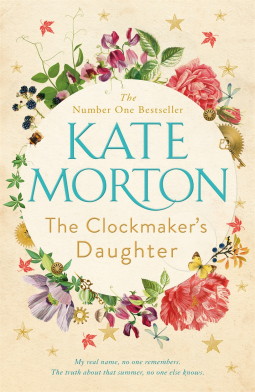
#BookReview ‘The Clockmaker’s Daughter’ by Kate Morton #historical #romance

Kate Morton is strongest when writing about houses, houses with history, atmospheric, beautiful, brooding houses. Birchwood Manor in The Clockmaker’s Daughter is haunted by what happened there. A death, a theft, a drowning. The truth is a complicated tale of twists and turns, Morton gives us numerous characters from slices of history from a Pre-Raphaelite group of artists to National Trust-like ownership today. Kate Morton
The mystery starts from page one, the Prologue, told in the voice of an unknown woman remembering her arrival at Birchwood Manor with Edward. When the rest of the house party leave, ‘I had no choice; I stayed behind.’ Is she a ghost? Cut straight to today and archivist Elodie who unpacks an old leather satchel finds inside a photograph of a woman and an intriguing sketchbook. Leafing through the pages she stops dead, seeing a drawing of a house she knows though she has never been there. It featured in a bedtime story told by her mother. Is it a real place? Does it have magical powers as local tales suggest? ‘It is a strange house, built to be purposely confusing. Staircases that turn at unusual angles, all knees and elbows and uneven treads; windows that do not line up no matter how one squints at them; floorboards and wall panels with clever concealments.’
The mysteries of the drawing, the house, the girl in the photograph and a missing blue diamond are told in multiple viewpoints from 1862 to today. Four big mysteries to unravel means complicated threads woven between the years and the characters and I was tempted to keep notes of who said what and lost track of the year, a couple of times. At the end, I was left with a couple of outstanding questions but nothing to spoil my enjoyment of the book. I found the title rather misleading as Birdie the clockmaker’s daughter, though being one of the key characters, is not the only essential component. The house though is at the centre of everything.
We follow the story of Elodie, whose mother died when she was six and who is about to be married. Of Birdie, who lost her mother when she was four and was left with a baby farmer and trained as a pickpocket. Of Ada Lovegrove who is essentially abandoned by her parents who bring her from India and dump her at Birchwood House, now a school for young ladies. Of Leonard Gilbert, survivor of the Great War, who comes to Birchwood to write a biography of the Pre-Raphaelite artist Edward Radcliffe. Of Jack Rolands who is living now at Birchwood and seems to be searching for something. Of Lucy Radcliffe, Edward’s little sister, and my favourite character. Lucy, a curious little girl, encouraged by her brother to improve her mind by reading, was ‘learning fast that she knew a lot less about her own motivations than she did about the way the internal combustion engine worked.’
Piece by piece, Elodie unravels the true story. The story switches quickly between narrators which can be disorientating and it is only towards the end that some links fit into the bigger picture which makes it a little frustrating. Morton does not write short novels, this is 592 pages, and at times I wanted to cut superfluous detail to get to the meat of the story. A beautiful cover, though.

And here’s my review of another novel by Kate Morton:-
THE DISTANT HOURS

If you like this, try
‘The Man Who Disappeared’ by Clare Morrall
‘The Silent Companions’ by Laura Purcell
‘The Ballroom’ by Anna Hope

And if you’d like to tweet a link to THIS post, here’s my suggested tweet:
#BookReview THE CLOCKMAKER’S DAUGHTER by Kate Morton https://wp.me/p5gEM4-3yi via @SandraDanby

#BookReview ‘The Comforts of Home’ by @susanhillwriter #crime

Another Simon Serrailler novel by Susan Hill? I admit to excitement at this, the ninth outing for the Lafferton detective. It is three years since the eighth novel, The Soul of Discretion, and I feared Hill wanted to write about other things and there would be no more. And now, The Comforts of Home. I saved it to read on holiday, in the same way as a child I saved my favourite chocolate bar from my Christmas Selection Box. To be enjoyed at leisure. Susan HillI admit to forgetting how The Soul of Discretion ended, so the beginning was rather a shock but also fascinating. After life-changing surgery, Serrailler goes to the remote Scottish island of Taransay to convalesce. The descriptions of this bleak but beautiful place made me want to go there. He is quickly accepted by the tight-knit community where mutual support is a necessity, where consequently everyone knows everyone else’s lives in minutiae, but where you know a death is inevitable. As temporary cop-in-charge, given the local force’s short-handedness, Serrailler uncovers a secret no one had guessed.
Serrailler’s injury beings a new layer of damage to his solitary wounded soul, he would rather get up and face the day rather than sit and talk to a counsellor. One of the secrets of this successful series is the combination of crime with the family story of Simon and his sister Cat. Cat is finding locum work unsatisfying and is looking for a new challenge. Her new marriage, to Serrailler’s boss Kieran, is happy and the only shadow on the horizon is the return from France of her irascible father Richard.
Add to this mixture a local arsonist, a mother who presses for the reopening of the investigation of her daughter’s disappearance, a convicted murderer, a rookie detective constable, and Cat’s teenage son Sam who can’t decide what he wants to do with his life, and Hill delivers her clever blend of crime, detection and domestic daily life.
Excellent. A masterclass is how to write a thriller which keeps you reading, makes you love the familiar characters, never tells you what’s happening but let’s you work it out, and poses moral dilemmas.

Read my reviews of the other novels in the series:-
THE VARIOUS HAUNTS OF MEN #1SIMONSERRAILLER
THE PURE IN HEART #2SIMONSERRAILLER
THE RISK OF DARKNESS #3SIMONSERRAILLER
THE VOWS OF SILENCE #4SIMONSERRAILLER
THE SHADOWS IN THE STREET #5SIMONSERRAILLER
THE BETRAYAL OF TRUST #6SIMONSERRAILLER
A QUESTION OF IDENTITY #7SIMONSERRAILLER
THE SOUL OF DISCRETION #8SIMONSERRAILLER
THE BENEFIT OF HINDSIGHT #10SIMONSERRAILLER
A CHANGE OF CIRCUMSTANCE #11SIMONSERRAILLER

And also by Susan Hill, HOWARD’S END IS ON THE LANDING

If you like this, try:-
Cover Her Face’ by PD James #1ADAMDALGLIESH
‘One False Move’ by Harlan Coben
Wilderness’ by Campbell Hart #3ARBOGAST

And if you’d like to tweet a link to THIS post, here’s my suggested tweet:
#BookReview THE COMFORTS OF HOME by @susanhillwriter https://wp.me/p5gEM4-3yc via @SandraDanby

#BookReview ‘La Belle Sauvage’ by Philip Pullman @PhilipPullman #BookofDust #Lyra #fantasy

I’m a great Philip Pullman fan so when word of his new series The Book of Dust was first announced, I was excited. La Belle Sauvage is volume one in the series and tells the story of eleven-year old Malcolm who lives beside the River Thames at The Trout pub at Godstow, near Oxford. One day, a baby arrives at the priory on the other side of the river. Called Lyra, mystery surrounds the child, her parentage, and why she is cared for by the nuns. Philip Pullman This of course is Lyra Belacqua, so familiar and beloved of Pullman’s His Dark Materials trilogy. La Belle Sauvage is the story of Malcolm’s fascination with the baby Lyra, his relationship with scholar Hannah Relf and his suspicions about a mysterious stranger who visits The Trout. Everyone dislikes this man, despite his ready smiles and chat, because of his daemon, a three-legged hyena. Common with the first book of every series, there is a certain amount of scene setting, the laying-down of foundations for the forthcoming books. Pullman takes time and care to develop the character of Malcolm, the love he has for his canoe La Belle Sauvage, his relationships with his parents, the nuns, and Alice who works in the kitchen. Every reader of His Dark Materials knows the story of the fight between Lyra’s parents and how she was hidden in a cupboard with a gyptian boatwoman. La Belle Sauvage starts after this, when Lyra is placed in the nunnery for her safety. Lurking threat is there on every page – a light mist at first, developing into a heavy presence which will not go away – as Pullman constructs a world in which research into Dust is in its early stages; a resistance group, Oakley Street, is formed to fight The Magisterium; and the League of St Alexander radicalises schoolchildren to inform on unbelievers.
I became very fond of Malcolm. Pullman has a way of writing child characters who stand at the edge of things; they are not the most popular, the high achievers or the butterflies; but they have potential, as all children do. Pullman creates thoughtful character arcs for his child characters so we see them change and grow, facing difficulties, making mistakes, learning and maturing. In Malcolm, more than with Lyra and Will in His Dark Materials, I was conscious of Pullman’s background as a teacher. I was cheering for Malcolm, for his ingenuity, his bravery, his kind heart, his sense of fairness and justice.
If you haven’t read Pullman because he ‘writes for children’, you are missing out. He creates characters you care about, he expertly drip-feeds mysterious information and lays a factual base which seems irrelevant at first reading but will be revealed as essential at moments of crisis, he manages the ebbs and flows of tension, and creates a mystical world that is believable. Every fact included has a significance. He is a writer of tremendous detail, patience and care.
Just read him.

Here are my reviews of the other two books in the ‘Book of Dust’ trilogy:-
THE SECRET COMMONWEALTH #2THE BOOKOFDUST
THE ROSE FIELD #3THEBOOKOFDUST

If you like this, try:-
‘Gregor the Overlander’ by Suzanne Collins #1UNDERLANDCHRONICLES
‘The Magicians’ by Lev Grossman #1THEMAGICIANS
‘Dark Earth’ by Rebecca Stott

And if you’d like to tweet a link to THIS post, here’s my suggested tweet:
#BookReview LA BELLE SAUVAGE by Philip Pullman @PhilipPullman https://wp.me/p5gEM4-3k9 via @SandraDanby

#BookReview ‘All Among the Barley’ by Melissa Harrison #nature

All Among the Barley by Melissa Harrison is set in a small world, the world of Wych Farm and the village of Elmbourne, in the inter-war years. The story is introduced by Edith June Mather, now an old lady, and transitions into the story of one summer when she was a teenager. Hanging over the first few pages is an unspoken warning that events so long in the past can be forgotten or recalled in error and that Edith may not be a reliable storyteller. Melissa HarrisonBut All Among the Barley  is more than a coming-of-age tale; it is a story of society adapting to change, a story which resonates today. It is 1933 in East Anglia and Edie Mather is thirteen years old, a clever well-read child who longs to fit in. She lives on the family farm where hardship is an everyday fact. Edie, balancing between childhood and womanhood, is unsure of what she should do with her life, unaware she has choices and at times overwhelmed by her seeming lack of power. Superstitions become real to her. This is a book combining the pragmatic facts of daily farm life, the looming presence of anti-semitism and fascism, with teenage volatility, fantasy and a little witchery. Into this tight-knit rural world walks city reporter Connie FitzAllen who is writing about the loss of the old rural ways. Connie becomes a catalyst for change for the whole community, not just Edie, and in ways not at first obvious. Despite initial distrust of strangers, the locals and Edie’s family become used to Connie’s presence and she becomes a stand-in older sister for Edie, dispensing advice and pushing behavioural boundaries.
Writing about nature with as light a hand as the flight of the birds she describes, Harrison combines agricultural change, rural poverty, the rise of anti-semitism, and the changing role of women. The role models available to Edie are her mother, who worked the land in place of men during the Great War but reverted to being a housewife afterwards; her sister Mary, married young and with a baby she is not sure she loves; and Connie, who tells Edie there is life outside Elmbourne. Harvest time approaches and decisions must be made; Edie’s father must sell his crop at the right time to get the best price while Edie, uncertain whose advice to listen to, receives a job offer based in the nearby town. In the heat of summer, reality merges with imagination and Edie loses the ability to judge what is real.
A beautiful and tragic novel flawed only by its slow descriptive pace and a rather sudden ending. I was left with the feeling that perhaps the author tackled too many issues for such a calm, contemplative novel.

If you like this, try:-
‘Ghost Wall’ by Sarah Moss
‘The Call of the Curlew’ by Elizabeth Brooks
‘Elmet’ by Fiona Mozley

And if you’d like to tweet a link to THIS post, here’s my suggested tweet:
#BookReview ALL AMONG THE BARLEY by Melissa Harrison https://wp.me/p5gEM4-3IW via @SandraDanby

#Bookreview ‘Call of the Curlew’ by Elizabeth Brooks #historical #WW2

Call of the Curlew by Elizabeth Brooks has the most fantastic sense of place. It is a haunting, atmospheric read that I didn’t want to put down. Tollbury Marsh is an ever-present character in the story too, quiet, empty, natural and ‘where a body could sink under that earth, slowly and inexorably, like an insect in a pot of glue.’ Elizabeth BrooksAn elderly woman sees a sign she has been awaiting and prepares to take her last walk, across the snowy marshes and into the sea. She imagines the freezing water creeping up her legs, planning how she will use her walking stick, loading her pockets with stones from the garden wall. And then she realises she has the wrong day, it is New Year’s Eve tomorrow, not today and she is a day too early. When a stranger appears, her plans are disrupted and the past must be faced.
Virginia Wrathmell arrives at Salt Winds, a house on the edge of the marshes, as a newly adopted orphan when she is ten. It is New Year’s Eve 1939. Her new parents, Clem and Lorna, seem ill at ease together and Virginia watches them from the banisters, trying to understand the adult tension which dominates the house. When a neighbour visits, Virginia takes an instant dislike to the way Max Deering’s eyes linger on her and this first impression of him does not improve as the weeks pass. The catalyst for change comes when a German fighter plane crashes on the marshes and Clem sets out with rope and torch to help. The wartime story is spliced with Virginia in 2015, her plans to wade into the marshes on hold. Slowly the mystery is unveiled; of what happened in the war that left such a lasting mark on Virginia so many decades later.
This is the first novel by Brooks that I have read. She writes with a poetic description that is engaging, particularly when describing the marshes and the natural world. ‘The stars were starting to poke through the sky, like silver pins through lilac silk.’ But she also writes with an eye to mystery and is adept at tantalising the reader. This is not a thriller, I hesitate to call it a mystery because the pacing is not intense. Rather this is an elegiac read about a delicate new family in wartime facing situations that would split apart the strongest of people.
Excellent.

If you like this, try:-
Shelter’ by Sarah Franklin
Life After Life’ by Kate Atkinson
The Good People’ by Hannah Kent

And if you’d like to tweet a link to THIS post, here’s my suggested tweet:
#BookReview CALL OF THE CURLEW by Elizabeth Brooks https://wp.me/p5gEM4-3y2 via @SandraDanby

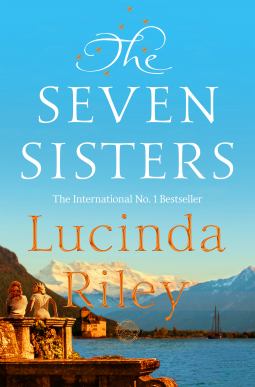
#BookReview ‘The Seven Sisters’ by Lucinda Riley #romance

In its scope, The Seven Sisters by Lucinda Riley reminds me of Eighties family mega-stories, paperbacks as thick as doorstops. This is the first in a series; the first five are already published. I recommend suspending your ‘instinct for the literal’ and throwing yourself into the world of the book. Some of the story set-up seems unrealistic – unbelievable wealth, mysterious father, beautiful adopted sisters – this is not a normal world. But I quickly became caught up in the historical story. Lucinda RileyPa Salt has died suddenly; he is the fabulously wealthy, secretive, reclusive adoptive father to six sisters whose origins are a mystery. Only when he has gone do they realise they should have asked him for information. Each of the sisters is given a clue and a letter. Also in the envelope is a triangular-shaped tile. The Seven Sisters is the story of the eldest D’Aplièse sister. Maia’s clue is a map reference that takes her to a crumbling mansion in Rio de Janeiro in Brazil where she meets an enigmatic elderly woman.
The book came alive for me with the story, eighty years earlier, of Izabela Rosa Bonifacio. Izabela, daughter of a nouveau riche coffee merchant in Rio, is facing an arranged marriage. Desperate to see more of the world before she settles down to a stifling life of marriage to a husband she doesn’t love, she persuades her father and fiancé to allow her to travel to Paris with her friend, Maria Elisa, daughter of architect Heitor da Silva Costa. This section of the novel enthralled me; the design and sculpting of the Cristo sculpture for the top of the Corvocado mountain, all based on historical fact.
I connected with Izabela in a way I didn’t with Maia. Maia uncovers the story of Izabela with the help of Brazilian author Floriano Quintelas, whose latest novel Maia has translated into French. In the course of her research, Maia must face the shadows of her own past, her regrets and shame, in order to move on. I enjoyed Izabela’s story but at the back of my mind I queried its relevance to Maia; Izabela was too old be her mother. I missed a direct connection to Maia and this frequently took me out of the world of the story.
That connection does come but as the story finished I was left with almost as many questions as at the beginning. The last chapter is devoted to the second sister, Ally, with new mysteries for the second book in the series.

Read my reviews of the other novels in Lucinda Riley’s ‘Seven Sisters’ series:-
THE STORM SISTER #2SEVENSISTERS
THE SHADOW SISTER #3SEVENSISTERS
THE PEARL SISTER #4SEVENSISTERS
THE MOON SISTER #5SEVENSISTERS
THE SUN SISTER #6SEVENSISTERS
THE MISSING SISTER #7SEVENSISTERS
ATLAS: THE STORY OF PA SALT #8SEVENSISTERS

… plus my reviews of these standalone novels, also by Lucinda Riley:-
THE BUTTERFLY ROOM
THE GIRL ON THE CLIFF
THE LOVE LETTER

… and by Lucinda Riley & Harry Whittaker:-
THE HIDDEN GIRL

If you like this, try:-
‘The Ship’ by Antonia Honeywell
‘Yuki Chan in Bronte Country’ by Mick Jackson
‘The Sapphire Widow’ by Dinah Jefferies 

And if you’d like to tweet a link to THIS post, here’s my suggested tweet:
#BookReview THE SEVEN SISTERS by Lucinda Riley https://wp.me/p5gEM4-3IB via @SandraDanby

#BookReview ’Ghost Wall’ by Sarah Moss #contemporary #mystery

Ghost Wall by Sarah Moss is a beautifully written short novel, more a novella at 160 pages. Set in the Nineties it is the story of a re-enactment conducted by a family and a university professor and his students who live in the woods in Northumberland to recreate the lifestyle of Iron Age man. Class issues run throughout; accent, education, north/south, but it is also a time of changes embodied in the character and changing sensibilities of seventeen year old Silvie. Sarah MossTold completely through the viewpoint of Silvie it juxtaposes the harsh Iron Age life with her own upbringing by authoritarian self-taught father Bill and bland mother Alison who has surrendered to her husband’s will, with the life of the Iron Age bog people. In almost a closed room setting more familiar from crime fiction, the group is thrown into close proximity living in difficult conditions with minimal food. As the story progresses the group becomes divided. The two adult men disappear to work on their ‘projects’ while Silvie’s mum stays in camp to cook and sit around. This leaves the students to their own devices to forage, harvest mussels and skinny dip. It is a haunting story as Silvie tries to mollify her father, who demands exacting behaviour and manners, while student Molly struggles to understand Silvie’s subservience. Tensions grow as Molly encourages Silvie to defy her father. Bill is a traditionalist, he admires Britain’s distant past as a preferred alternative to the modern world.
Ghost Wall is a creeping tale as your nerves tauten waiting for Silvie to be in trouble again, at times I wished for more about her parallel Bog girl. There are clever moments of relief such as the girls’ visit to the local Spar shop for cake and ice cream to relieve the tedium of gruel and rabbit. I was left with the feeling that Moss tried to shoehorn too many issues into a small space – class, male chauvinism, racism, idealism, sexuality, even Brexit, so I was left feeling she had a list of things to mention.
This is an unusual novel, beautifully written. A chilling read. Tense, but not a thriller. The climax when it happens is over quickly and I was left wanting more; the last page came as a surprise and I felt rather disappointed.

And here’s my review of another novel by Sarah Moss:-
SUMMERWATER

If you like this, try:-
‘Elmet’ by Fiona Mozley
‘The Good People’ by Hannah Kent
‘The Western Wind’ by Samantha Harvey

And if you’d like to tweet a link to THIS post, here’s my suggested tweet:
#BookReview GHOST WALL by Sarah Moss https://wp.me/p5gEM4-3As via @SandraDanby

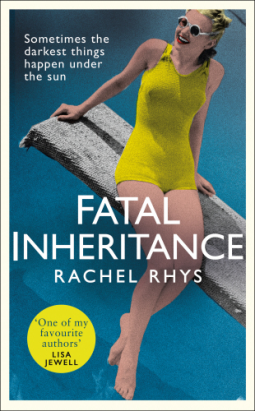
#BookReview ‘Fatal Inheritance’ by Rachel Rhys #romance #glamour

Fatal Inheritance by Rachel Rhys is a mystery set in the South of France three years after the end of World War Two. This is a glamorous place of sun and colours and beauty but which hides wartime shade and recriminations, canker beneath the luxury and smiles. Rachel RhysWhen Eve Forrester receives a solicitor’s letter promising ‘something to her advantage’, she leaves her husband in England and travels to Cap d’Antibes. Clifford disapproves of her journey, he thinks it inappropriate, a waste of time, doubts the veracity of the will of this mysterious Mr Guy Lester who Eve does not know. But Eve defies her husband and goes anyway, curious, listening to the inner voice which tells her there is more to life. This is a novel where you want to shout to the heroine, to encourage her onwards, to have strength to take a new path.
Eve inherits a part-share in the Villa La Perle at Cap d’Antibes, near neighbours are the Duke and Duchess of Windsor. Eve, in her ‘make do and mend’ clothing, is thrown into a glamorous social whirl of people she finds awkward, dismissive and arrogant. Rhys draws a layered picture of society where obvious wealth may hide troubled finances, make up and lipstick covers bruises, and smiles hide venom. It is a place where the locals avoid people and businesses which ‘helped’ the German occupiers, where memories of the war are fresh. In the middle of this, Eve struggles to understand her inheritance while delaying Guy Lester’s family from signing papers to sell the villa. And all the time, Eve wonders what Clifford is doing at home, knowing he disapproves of her being there, knowing he worries about the cost.
An entertaining novel in a beautiful, flawed setting – neatly mirroring the flawed people – not quite suspense, not quite a romance in the conventional sense. Rhys writes about women particularly well, not just Eve but the housekeeper Mrs Finch, actress Gloria Hayes, and fellow tourist Ruth Collett. I liked Eve, disliked her husband, and chuckled when the ‘love interest’ switched between surly to over-attentive. If I have one query, it is the solution to the mystery which comes rather out of left-field and left me feeling a little cheated. The ending, though, is unbelievably poignant. A great beach read.

And here’s my review of MURDER UNDER THE TUSCAN SUN, also by Rachel Rhys

If you like this, try:-
‘The Night Child’ by Anna Quinn
‘The Audacious Mendacity of Lily Green’ by Shelley Weiner
‘The Paying Guests’ by Sarah Waters

And if you’d like to tweet a link to THIS post, here’s my suggested tweet:
#BookReview FATAL INHERITANCE by Rachel Rhys https://wp.me/p5gEM4-3qA via @SandraDanby

My Porridge & Cream read: @janedavisauthor #books #literaryfiction

Today I’m delighted to welcome novelist Jane Davis. Her ‘Porridge & Cream’ read is The Prince of Tides by Pat Conroy.

“My list of favourite novels may change, but it is always topped by Pat Conroy’s, The Prince of Tides. Ignore the terrible film version – the book has everything. Family secrets, flawed characters, a doomed love affair.

“I read it for the first time many years before I contemplated writing, but it was books like this (and here I include the novels of John Irving and Michael Chabon) that must have sowed the seed.

“The first thing to say is that my choice is not your typical comfort read. The quote ‘We read to know that we are not alone’ is attributed to at least three different people. Perhaps that’s because it’s a universal truth. I find myself drawn to books about misfits and underdogs. (My latest ‘new favourite book’, Leonard and Hungry Paul by Ronan Hession, considers how gentle people survive in a world that is fast-paced and competitive.)

Jane DavisThe Prince of Tides has the power to transport the reader from the very first line.

My wound is geography. It is also my anchorage, my point of call.

“We know immediately that it is a novel about place. In fact, it’s a story where the setting is key. What unfolds in this epic and multi-layered family saga couldn’t have happened anywhere else. We know that a man is torn. Place is part of the narrator. It’s impossible for him to separate himself from it, and his family is part of its history. He is damaged, and it pains him to remain, but he cannot tear himself away.

I grew up slowly beside the tides and marshes of Colleton.

“To me, those lines are hypnotic. They seem to be saying, ‘Breathe. Pace yourself.’ Trust is established – or lost – so quickly. I can hear the narrator’s voice. He’s speaking directly to me. I don’t yet know the name Tom Wingo, but already I’m committed to accompanying him wherever his journey takes him. It is that simple.

“Because the story is told partly through conversations with Tom’s sister’s Savannah’s psychiatrist, it’s a story in which cause and effect is very much in evidence. In order to save his sister, Tom must break the promise that his mother extracted from her three children: never to reveal what happened on the island that night a man they refer to as “Callanwolde” escaped from prison. The call to action happens at a point when Tom has just learned that his wife is having an affair with a colleague, and so we meet him at what is already a low ebb. This may be a challenging read, but it’s also a story of survival, healing, honour and redemption. There is a sense that order is restored, and that is where the ‘comfort’ comes from.

“Odd though it may seem, I have never read another book by Pat Conroy. The Prince of Tides is so perfect, I’d be afraid of being disappointed. Instead, I return to it time and time again and never fail to uncover something that I’ve missed.”
Amazon UK

Jane Davis’s Bio
After her first novel Half-Truths and White Lies won an award established to find ‘the next Joanne Harris’, it took Jane a little while to work out that all she really wanted to be was a slightly shinier version of herself. Seven further novels followed, which straddle contemporary, historical, literary and women’s fiction genres, and have earned her comparisons to authors such as Kate Atkinson, Maggie O’Farrell and Jodi Picoult. Jane’s favourite description of fiction is ‘made-up truth’.

Jane Davis’s links
Website
Facebook 
Twitter
Pinterest
Get a FREE copy of her time-slip, photography-themed eBook, I Stopped Time, when you sign up to her mailing list

Jane Davis’s latest book
Jane DavisIt has taken conviction to right the wrongs.
It will take courage to learn how to live again.
For the families of the victims of the St Botolph and Old Billingsgate disaster, the undoing of a miscarriage of justice should be a cause for rejoicing. For more than thirteen years, the search for truth has eaten up everything. Marriages, families, health, careers and finances.

Finally, the coroner has ruled that the crowd did not contribute to their own deaths. Finally, now that lies have been unravelled and hypocrisies exposed, they can all get back to their lives.

If only it were that simple.
Amazon UK

What is a ‘Porridge & Cream’ book? It’s the book you turn to when you need a familiar read, when you are tired, ill, or out-of-sorts, where you know the story and love it. Where reading it is like slipping on your oldest, scruffiest slippers after walking for miles. Where does the name ‘Porridge & Cream’ come from? Cat Deerborn is a character in Susan Hill’s ‘Simon Serrailler’ detective series. Cat is a hard-worked GP, a widow with two children and she struggles from day-to-day. One night, after a particularly difficult day, she needs something familiar to read. From her bookshelf she selects ‘Love in A Cold Climate’ by Nancy Mitford. Do you have a favourite read which you return to again and again? If so, please send me a message.

Discover the ‘Porridge & Cream’ books of these authors:-
Rob V Biggs loves ‘Wind in the Willows’ by Kenneth Grahame
Linda Huber loves ‘A Cry in the Night’ by Mary Higgins Clark
Sue Moorcroft loves ‘A Town Like Alice’ by Nevil Shute

 And if you’d like to tweet a link to THIS post, here’s my suggested tweet:
Why does author @janedavisauthor re-read A PRINCE OF TIDES by PAT CONROY? #books https://wp.me/p5gEM4-3Br via @SandraDanby

#BookReview ‘The Turn of Midnight’ by Minette Walters #historical

You just know when the book you’ve just started reading is going to be 5*. For me, not many are. I read lots of good 3* and 4* books. I reserve 5* sparingly for the special ones. The Turn of Midnight by Minette Walters is one of those. It ticks so many boxes. Thriller, history, surprises, great characters and a tantalising bit of love from afar; Walters is a master storyteller. Minette Walters This is a story of a grim period in British history. The Black Death. Medieval England. Gruesome detail, and yet I stayed up late to finish it. Why, because she makes me love the characters and manages that delicate balancing act of giving me just enough historical detail to be interesting but not too much that it becomes tedious.
The Turn of Midnight is the sequel to The Last Hours which tells the story of the Black Death and its impact on the small Dorsetshire demesne of Develish. After the death of her husband from the plague his widow Lady Anne quarantines the demesne, introduces cleanliness routines and organises her healthy family, servants and serfs into a self-supporting and mutually-respectful society; unheard of in 1348. Woven into this story of survival is a romantic thread as Lady Anne and Thaddeus Thirkell, an illegitimate serf born on the demesne who Lady Anne has educated over the years to a standard of education greater than anyone else in the community excepting herself. Where The Last Hours is something of a closed room story with a tight-knit cast of characters and one location, The Turn of Midnight sees Thaddeus and a group of young men venture out into Dorsetshire to assess the dangers of the plague and the survival of other villages. When they return with a story of death, desertion and dereliction, a plan is formed to buy the neighbouring demesne of Pedle Hinton and so provide a home and farmland for the Develish citizens, the number of which has grown with the number of healthy wanderers they have adopted. But outside the demesne moat there are many enemies: bandits thieving and preying on the vulnerable, Norman soldiers who hate the English serfs, English serfs who hate anyone Norman, and corrupt priests, stewards and lords who swear they are acting in the name of God.
The plan is risky. Lady Anne and Thaddeus know that, although not robbing living people, they are taking possessions and gold which is not rightly theirs. It culminates in a struggle of religion, power and prejudice. Will common sense and the right of the people triumph? Whilst Lady Anne fights a battle against prejudice of her sex where she is better educated than the men who accuse her, Thaddeus similarly fights against prejudice of his worker roots and foreign tall dark physique.
Walters lives in Dorset and this shows in her sweeping creation of medieval Dorsetshire, she writes of the countryside, nature and the seasons with such surety you know she knows it well. This is a story of the first breaths of social mobility in a time of class hierarchy that prevented starving serfs from eating food meant for their lords, even though those lords are dead or have fled. Lady Anne’s common sense approach brings survival, health, basic education and hope for the future.
Excellent.

Read my reviews of two other historical novels by Minette Walters:-
THE LAST HOURS #1BLACKDEATH
THE PLAYERS
THE SWIFT AND THE HARRIER

If you like this, try:-
The French Lesson’ by Hallie Rubenhold
The Ashes of London’ by Andrew Taylor #1FIREOFLONDON
Foxlowe’ by Eleanor Wasserberg

And if you’d like to tweet a link to THIS post, here’s my suggested tweet:
#BookReview THE TURN OF MIDNIGHT by Minette Walters https://wp.me/p5gEM4-3xR via @SandraDanby