Tag Archives: book review

#BookReview ‘Purity’ by Jonathan Franzen #mystery #contemporary

I admit to feeling disappointed by Purity by Jonathan Franzen. The root of this disaffection is partly my high expectations, having loved The Corrections and Freedom, and partly the subject matter. Unlike his previous two novels, which focussed on an extended family, the central narrative of Purity is a young woman’s search for her father, a search which brings her into contact with some seriously dodgy people. Jonathan FranzenA large chunk of the novel is about Andreas Wolfe whose Sunlight Project brings light to the world by leaking secrets. His backstory as a young man in East Germany as the Wall crumbles is historically interesting but I found his character unpleasant. On his first foray into West Berlin, Wolfe meets a young American journalist, Tom Aberant, who becomes another constant throughout the book. Great chunks of the book are dedicated to Wolfe and Aberant’s relationships with, respectively Annagret and Annabel, who confusingly merged together in my mind.
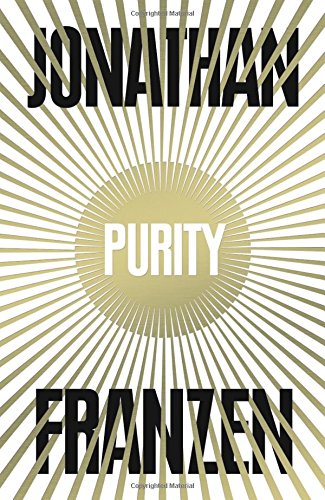
So what kept me reading? Pip, the Purity of the title, a young woman burdened by student debt and a curiosity about the identity of her father, is lured to Bolivia to work for the Sunlight Project, in the belief that she will find out the name of her father. Pip’s story inevitably becomes entwined with Wolfe and Aberant but at times it seemed as if Franzen was writing two separate novels, I wanted to skip the Wolfe parts and get back to Pip.
Purity is not just Pip’s real name, it is the big theme. Purity in terms of information freedom, in terms of intentions and objectives, and old-fashioned secrets and lies; and there are a lot of the latter two. All the characters are hiding something, or avoiding someone, or longing for someone, or seeking something unattainable; and all must consider whether, in seeking the truth, they actually want to hear it when they find it.
This is not a bad book, Franzen couldn’t write one, and parts of it are written beautifully. He has a wonderful economy of phrase sometimes which encapsulates a big observation in a few well-chosen words. Unfortunately for me, other parts of it were stodgy and over-long and I skipped over some paragraphs.
Is it an epic book? It is certainly big [576 pages, but not the 736 pages of Hanya Yanagihara’s A Little Life] but that is not in itself a problem, I like reading big books – big in terms of length, and subject matter. My real problem was that I didn’t engage with the characters, I didn’t care about them and found them at times over-the-top, verging on hysterical. I don’t need to like them, but I do need to care about them.
A full-fat novel with extra sugar and extra caffeine.

Read the #FirstParas of these two novels by Jonathan Franzen:-
FREEDOM
THE CORRECTIONS

If you like this, try:-
‘A Little Life’ by Hanya Yanagihara
‘A Spool of Blue Thread’ by Anne Tyler
‘Some Luck’ by Jane Smiley

And if you’d like to tweet a link to THIS post, here’s my suggested tweet:
#BookReview PURITY by Jonathan Franzen via @SandraDanby http://wp.me/p5gEM4-1Sq
#BookReview ‘Noonday’ by Pat Barker #WW2 #historical

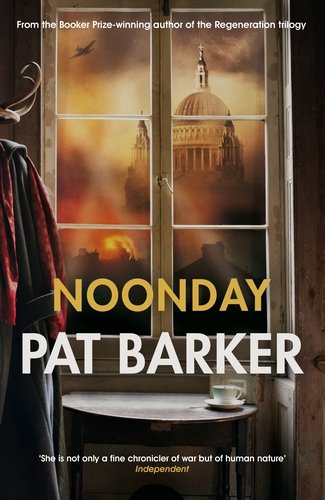
It seems inevitable that the final novel in a trilogy which started with the Great War should end with the Blitz, and that the theme should be death. Death, grief, guilt at being alive, guilt at longing for death, and guilt at wishing another dead. Noonday is a fitting end to the ‘Life Class’ trilogy by Pat Barker, the tale of three young artists – Elinor Brooke, Paul Tarrant and Kit Neville – which started on the verge of the Great War in Life Class, and continued through the war in Toby’s Room. But although the context is war, there are a lot of other things going on. Pat BarkerThe story opens with Elinor at the country home of her mother, who is dying. The assorted relatives wait, in the scorching heat, for death to arrive. Also present is Kenny, an evacuee sent from London to avoid death by bombing. So, the shadow of death is present from the very first page. Don’t forget about Kenny, he is important, particularly in the impact he has on Paul Tarrant – now Elinor’s husband. Paul’s connection with this sorry out-of-place boy leads him to a meeting with a medium, Bertha Mason. This is a story thread criticised by some readers as being irrelevant – and perhaps it is in that it doesn’t connect with either Elinor or Kit – but for me it falls within the theme of grief in war when it is common to not see the body of your loved one. Death, in war, surrounds everyone daily, is expected daily, but is not easier to accept. Perhaps it is understandable that in these circumstances, without a body to bury, communicating with ghosts becomes popular.
As with Life Class and Toby’s Room, the lives of the three protagonists are entwined like snakes. Elinor and Kit are London ambulance drivers, Paul is an air raid warden by night and official war artist by day. The Blitz is the fourth character on the page. The final third of the book is an intense description of the firebombing of the City, an experience which Barker describes with simplicity, urgency, and not a spare word.
Barker is one of my favourite living authors because she writes with such detail about small things, seemingly insignificant ordinary things, but which in her hands and in the context of her story, add layers of meaning. She pays equal attention to the lives of her three main protagonists, the interaction of their lives, and how their desires and motivations impact on each other. She does not step away from sharing an unpleasant thought or action, she tells it as it is, and for this she is a clear voice in a modern world of fiction in which characters often seem too ‘nice’. But that is not realistic and it is not Pat Barker’s way.

For my reviews of other Pat Barker novels, click the title below:-
ANOTHER WORLD
BLOW YOUR HOUSE DOWN
DOUBLE VISION
LIFE CLASS #1LIFECLASS
TOBY’S ROOM #2LIFECLASS
THE SILENCE OF THE GIRLS
THE WOMEN OF TROY
UNION STREET

If you like this, try:-
‘Mrs Sinclair’s Suitcase’ by Louise Walters
‘The Paying Guests’ by Sarah Waters
‘Midnight in Europe’ by Alan Furst

And if you’d like to tweet a link to THIS post, here’s my suggested tweet:
#BookReview NOONDAY by Pat Barker via @SandraDanby http://wp.me/p5gEM4-1Rf

#BookReview ‘Beside Myself’ by @A_B_Morgan #mystery #identity

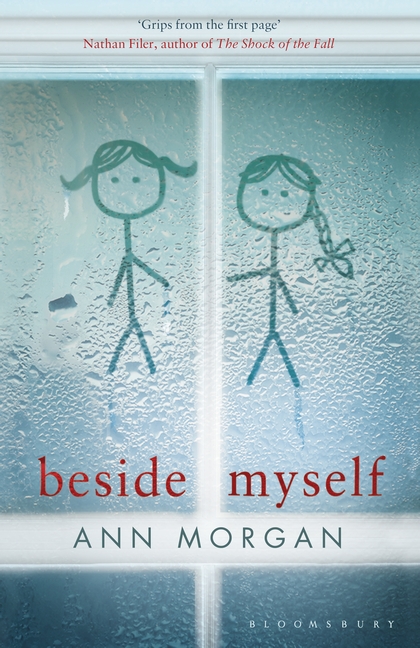
Beside Myself by Ann Morgan is a novel about identity, about identical twin sisters. Do you recognise what is fake and what is true? One sister is prettier and cleverer than the other, and she is unkind to her twin who seems downtrodden, bullied, teased and not so bright. Then a childhood prank goes wrong which affects the two girls for the rest of their lives. Ann Morgan Helen and Ellie play a cruel trick on a neighbour, they swap clothes and re-do their hairstyles appropriately (Helen wears a plait, Ellie is in bunches) and act like the other one does – Helen assertive, Ellie cowering. It is Helen’s idea, but when it is time to swap back Ellie refuses. Beside Myself is thoughtful, at times creepy and disturbing.
The story is told from Ellie’s point of view, that is Ellie who used to be Helen:-
Hellie – Ellie who became Helen – is now a TV presenter.
Helen – who is now Smudge/Ellie – is struggling with mental health problems.
Confused, I was a little.
After the switch, both girls seem to be accepted without question by friends and family, despite their obvious personality differences. Their mother has met a new man and is not taking much notice of what her daughters do. Even so, the mother’s blindness is a little hard to believe. There is a soggy section in the middle of the book with stream-of-consciousness rambles which I could have done without. I also admit at times to pausing and double-checking which girl I was reading about.
Without giving away the conclusion, it is pertinent to say there is a dramatic turning point which makes the girls revisit their childhood, the swap, and other family memories; and so as adults they make sense of who they are today. Many things are explained and, though I didn’t find either girl particularly likeable, they are much more alike than either appreciate.
This is a psychological portrait of sisters, identity and mental illness, rather than a thriller so don’t expect dramatic action.
CLICK HERE TO READ MORE ABOUT THIS BOOK

If you like this, try:-
‘The Last Days of Rabbit Hayes’ by Anna McPartlin
‘All My Puny Sorrows’ by Miriam Toews
‘Wolf Winter’ by Cecilia Ekback

And if you’d like to tweet a link to THIS post, here’s my suggested tweet:
#BookReview BESIDE MYSELF by @A_B_Morgan via @SandraDanby http://wp.me/p5gEM4-1Qu

#BookReview ‘Toby’s Room’ by Pat Barker #WW1 #historical

As the second book of a trilogy by Pat Barker, Toby’s Room can be read also as a standalone novel. The Toby of the title is the brother art student Elinor Brooke, whose story is told in Life Class. This story starts further back in time with a secret shared by the siblings, something not hinted at in the first book. In fact this whole book is about secrets, things hidden for shame, war too horrible to talk about, fear and emotions to be ashamed of, and things simply not spoken. Society was very different then, pragmatism coloured everyday lives, people did what they had to and tried to forget the bad things. Pat BarkerToby is reported ‘Missing, Believed Killed’, a parcel of his belongings is returned. Elinor believes the true story is being hidden and enlists fellow art student Paul Tarrant – who returned from Ypres injured and is now an official war artist – to help. She believes another war artist, Kit Neville, who served with Toby, must know the truth but refuses to say. Kit suffered a horrific face injury and is being treated at Queen Mary’s Hospital in Sidcup. Visiting Kit there they find not only Kit but Henry Tonks, their intimidating professor at the Slade School of Art.
The facial reconstructions at Sidcup are well documented, not least by the medical drawings of patients by Tonks and his team. Once again, Barker uses a true story and seamlessly inserts her fictional characters. And yet again, Barker combines a study of individuals at war while considering the role of art in conflict. As official war artists, Kit and Paul struggle with the limitations they are given, the portrayal of reality is forbidden. As I read every page of this book, the image which stayed in my mind was Paul Nash’s ‘We Are Making a New World’ (see below).

Paul Nash

(c) Tate; Supplied by The Public Catalogue Foundation

For my reviews of other Pat Barker novels, click the title below:-
ANOTHER WORLD
BLOW YOUR HOUSE DOWN
DOUBLE VISION
LIFE CLASS #1LIFECLASS
NOONDAY #3LIFECLASS
THE SILENCE OF THE GIRLS
THE WOMEN OF TROY
UNION STREET

If you like this, try:-
‘Stay Where You Are and Then Leave’ by John Boyne
The Inheritance of Solomon Farthing’ by Mary Paulson-Ellis
‘The Ways of the World’ by Robert Goddard

And if you’d like to tweet a link to THIS post, here’s my suggested tweet:
#BookReview TOBY’S ROOM by Pat Barker via @SandraDanby http://wp.me/p5gEM4-1Qx

#BookReview ‘The Book of Lies’ by Mary Horlock #Guernsey #WW2

What is the truth and what is a lie? Is a fib a lie, is an omission a lie? And what would make you lie? To save yourself, to save a loved one? Is it okay to lie in war? I read The Book of Lies by Mary Horlock without keeping the title in my mind, but at the end I knew what the title meant. Mary Horlock The island of Guernsey is the setting for this family story told through the eyes of two children: in 1985, Catherine is 15; in 1940, her uncle Charlie is 12. He sees the German soldiers arrive to occupy the small island; a generation later, Cat still feels the after-effects of the lies told then. More lies are being told now, the difficulty is in identifying truth from lies.
Cat is central to the novel. She is an irreverent narrator who tells us not only her own story but also the history of the island and her family’s war story. She was told both stories by her father, and now that he is dead Cat wishes she had asked him more questions. Cat’s voice is a true teenager, her banter is littered with humour, insecurity, crushes, curiosity and indignation. Charlie’s story is told in flashbacks, but mostly through the transcripts of tapes made of his conversation with his brother Emile, Cat’s father’, telling the truth of what happened to him.
Keep reading, the twists and turns of this family, its tricks and lies, its love and secrets, ends in a twist I didn’t see coming. Forty-five years later, the truth still hurts.

If you like this, try:-
Mrs Sinclair’s Suitcase by Louise Walters
A Week in Paris’ by Rachel Hore
‘The Light Years’ by Elizabeth Jane Howard #1CAZALETCHRONICLES

And if you’d like to tweet a link to THIS post, here’s my suggested tweet:
#BookReview THE BOOK OF LIES by Mary Horlock http://wp.me/p5gEM4-1LQ via @SandraDanby

#BookReview ‘The Truth Will Out’ by Jane Isaac @JaneIsaacAuthor #crime

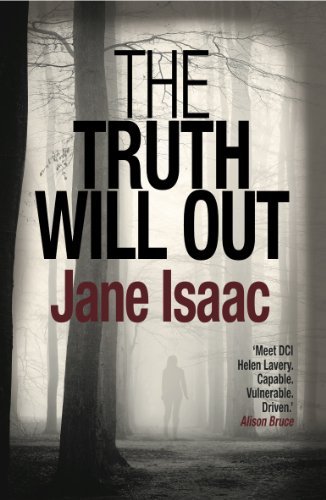
A great beginning, it made me want to check that the loft space of our house is sealed and inaccessible from outside. In The Truth Will Out by Jane Isaac, the lives of two young women are never the same again after a holiday to Italy. Jane IsaacThe truth of their trip dawns on them on their way home, and the days after their return are fraught. One is attacked, the other flees. Detective Chief Inspector Helen Lavery is on the case, hindered by the appearance of a central police team led by her ex-lover [odd that so many crime novelists feel the need to add a romance theme, is this because so many crime novels are read by women?]. So, a good combination of tension: will the baddies catch up with Eva, will the attacker strike again, and how will Helen cope with seeing her ex?
A competent crime thriller with a female detective who, refreshingly, is not an alcoholic, on the verge of a nervous breakdown or being bullied by male officers. A few plot weaknesses aside – I never fully bought-into Eva’s flight and lack of concern about Naomi – this was a good tale though perhaps it could have been a little shorter. A slightly lacklustre final few pages.

If you like this, try:-
An Uncertain Place’ by Fred Vargas #8COMMISSAIREADAMSBERG
‘The Accident’ by CL Taylor
Angel with Two Faces’ by Nicola Upson #2JOSEPHINETEY

And if you’d like to tweet a link to THIS post, here’s my suggested tweet:
#BookReview THE TRUTH WILL OUT by Jane Isaac @JaneIsaacAuthor http://wp.me/p5gEM4-1Iw via @SandraDanby

#BookReview ‘Master of Shadows’ by Neil Oliver #historical

Master of Shadows starts with a historical note about 1453 and the advance of the Ottomans on the eastern Christian empire of Constantinople. Rumoured to be among the city’s defenders was a Scot called John Grant. Author Neil Oliver takes the real life Grant and fictionalizes him in this, his debut novel; a novel rich in detail, historical context, colours and smells. Neil OliverIt starts with disparate snapshots: a boy lies in a meadow and feels invisible; a stranger arrives at a Scottish village; a woman, chopping wood, feels threatened; a young girl leaps from a high wall, expecting to die.
A Moorish solider, tall and imposing with his curved blade, arrives in Scotland at the castle of a Lord. Secretly he is seeking a specific woman. He had fought in wars alongside her husband and promised to keep her and their son safe if he should die. Badr becomes a surrogate father to the boy and teaches him everything he knows, later they fight side-by-side in battle. Leña lives amongst nuns. Given her name – which means ‘firewood’ in Spanish – I thought was a Spanish woman but in the memories of her childhood we learn she, too, has been to Scotland, and speaks French. So the mystery continues. The storylines are many and intriguing and for a long time I puzzled over how they connected. It is a story about the connections of blood, the duty owed to family. It is a long book (448 pages) but never seemed so long to be off-putting. There were passages a little too ‘history heavy’ for me, but I’m sure some readers will gobble it up.
All-in-all, a great debut. Not all historians can tell a page-turning fictional story, for some it takes three or four novels before they hit their stride, so I’m looking forward to Oliver’s next novel.
CLICK HERE TO READ MORE ABOUT THIS BOOK AT AMAZON

If you like this, try:-
‘The Surfacing’ by Cormac James
‘Gone Are The Leaves’ by Anne Donovan
‘Wilderness’ by Campbell Hart

And if you’d like to tweet a link to THIS post, here’s my suggested tweet:
#BookReview MASTER OF SHADOWS by Neil Oliver https://wp.me/p2ZHJe-1Qr via @SandraDanby

#BookReview ‘Due Diligence’ by DJ Harrison ‪@djharrison99‪ #crime

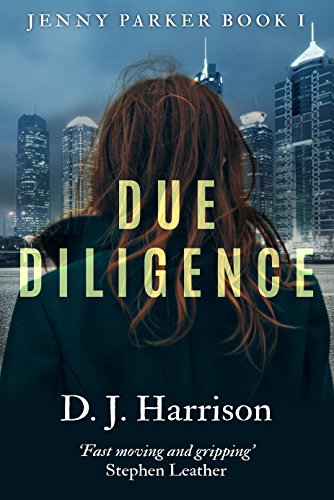
An accountant, at the beginning of a crime novel? Stick with it because what at first appears to be a quiet first chapter takes off with a briefcase full of cash and leads to money laundering, assault, murder and all sorts of financial shenanigans. Due Diligence is first in the Jenny Parker series by DJ Harrison. DJ HarrisonSet in the business world, and underworld, of Manchester, accountant Jenny Parker is sent to conduct due diligence of a company’s finances. That briefcase full of cash, £20,000, is the beginning of the trouble for Jenny which sees her lover dead and risks her marriage, her son, and her life.
A quick-moving story, Jenny is a likeable heroine who finds toughness she never knew was harboured within herself. The storyline jolts around a little but DJ Harrison has drawn a support network around Jenny, including the wonderful security boss Gary. The financial and business background is well constructed, and the fraud all too believable.

If you like crime, try:-
‘Business as Usual’ by EL Lindley
‘An Uncertain Place’ by Fred Vargas
‘Eeny Meeny’ by MJ Arlidge #1HELENGRACE

And if you’d like to tweet a link to THIS post, here’s my suggested tweet:
#BookReview DUE DILIGENCE by ‪DJ Harrison @djharrison99‪ https://wp.me/p2ZHJe-1Qj via @SandraDanby

#BookReview ‘Life Class’ by Pat Barker #WW1 #historical

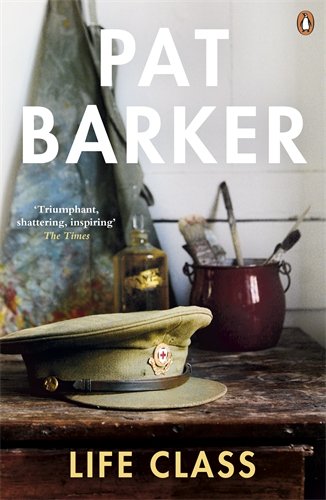
Pat Barker is one of my top five novelists. She writes sparingly with not a word wasted, but creates a world so real with detail and characterization. Life Class is the first of her #LifeClass trilogy of novels which tell the story of brother and sister Elinor and Toby, and Elinor’s fellow art students Paul and Kit, through the Great War. I first read this book when it was published in 2007 and devoured it. I have re-read it now to refresh my memory of the story and characters, before I read the newly published third volume of the trilogy, Noonday. Pat BarkerThe story starts in 1914 in a life-drawing class at the Slade School of Art in London. The class is taken by Professor Henry Tonks, a real-life character, artist and surgeon. Barker weaves her fictional story around the true story of Tonks, the Slade, and the outbreak of the Great War. For student Paul Tarrant, the presence of Tonks is intimidating, as he struggles to find his identity as an artist. This is a novel about young people and their journey from youth to maturity via art and love, brutally influenced by the horrors of war. Interwoven with Paul’s story – he volunteers as an ambulance driver and goes to Ypres, working in a hospital – is that of Elinor Brooke, fellow art student. Elinor’s journey to adulthood is different, given that she is a woman at a time when middle-class women are not expected to have a career. She remains in London, continues to paint and mixes with the society group of Lady Ottoline Morrell, another true character, mixing with pacifists, conscientious objectors and the Bloomsbury Group.
Essentially, this is a triangular love story set into the structure of war. As the students struggle to define themselves as artists, their safe world collapses around them and the abnormal becomes normal. As Paul undertakes gruesome nursing tasks, he questions the purpose of war art and what it can achieve. As his life becomes surreal, so he is cast adrift from his former life without context to judge either his ability as an artist, or his humanity in the face of war. Are some things simply too horrific to paint?

For my reviews of other Pat Barker novels, click the title below:-
ANOTHER WORLD
BLOW YOUR HOUSE DOWN
DOUBLE VISION
TOBY’S ROOM #2LIFECLASS
NOONDAY #3LIFECLASS
THE SILENCE OF THE GIRLS
THE WOMEN OF TROY
UNION STREET

If you like this, try:-
‘A Long Long Way’ by Sebastian Barry
‘The Lie’ by Helen Dunmore
‘Wake’ by Anna Hope

And if you’d like to tweet a link to THIS post, here’s my suggested tweet:
#BookReview LIFE CLASS by Pat Barker http://wp.me/p5gEM4-1Q3 via @SandraDanby

#BookReview ‘Liar Liar’ by @mjarlidge #crimefiction

I loved the ending… a tasty titbit to make me anticipate the fifth book in the series by MJ Arlidge about Southampton detective Helen Grace. Don’t start reading an MJ Arlidge novel, unless you have nothing to do but read. Because the story moves so fast you won’t want to put it down. Liar Liar is the fourth in Arlidge’s Helen Grace series set in Southampton, UK. MJ ArlidgeArlidge is an expert storyteller, he has created two likeable female detectives – DI Helen Grace and DC Charlie Brooks – and put them in a real, gritty, believable setting.
The writing is graphic. The theme of this book is fire – there’s an arsonist on the loose in Southampton, setting serial fires – so the description of fire in all its stages and its after effects is at times graphic. Is someone trying to cover up a crime? Could it be a revenge attack on one person disguised by multiple fires? Or is it an insider with a grudge?
It is a quick read, 448 pages. Arlidge writes TV drama and his skill at keeping the tension going is clear on every page.

Read my reviews other books in this series:-
EENY MEENY #1HELENGRACE
POP GOES THE WEASEL #2HELENGRACE
THE DOLL’S HOUSE #3HELENGRACE
LITTLE BOY BLUE #5HELENGRACE
HIDE AND SEEK #6HELENGRACE
LOVE ME NOT #7HELENGRACE
DOWN TO THE WOODS #8 HELENGRACE

If you like this, try:-
Big Sky’ by Kate Atkinson
‘Wolf’ by Mo Hayder
‘An Uncertain Place’ by Fred Vargas

And if you’d like to tweet a link to THIS post, here’s my suggested tweet:
#BookReview LIAR LIAR by @mjarlidge http://wp.me/p5gEM4-1PW via @SandraDanby