Tag Archives: book review

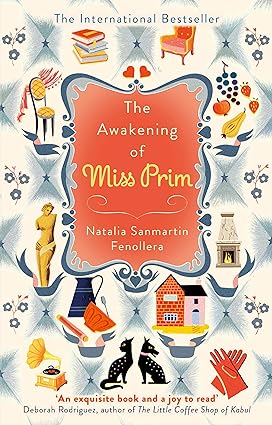
#BookReview ‘The Awakening of Miss Prim’ by Natalia Sanmartin Fenollera #contemporary

The title, The Awakening of Miss Prim, gives away the storyline of this charming tale by Spanish journalist Natalia Sanmartin Fenollera. Miss Prim is to be awakened. The assumption is that the catalyst for this awakening is love. But that is to over-simplify a thoughtful tale of self-knowledge, or maturing as an adult, about making the leap from intellectual maturity to emotional maturity. Natalia Sanmartin FenolleraPrudencia Prim is a librarian who begins a new job in a private house in the village of San Ireneo de Arnois, in an un-named country. Even when I had finished the book I was still unclear in which country it is set, though this does not affect the storytelling at all. Miss Prim is to catalogue the private library of a man who is never named, but is known simply as The Man in the Wingchair.
San Ireneo is an unusual village, it feels as if you are taking a step back in time. “That morning she urgently needed to buy notebooks and labels. The day before, she had had a small disagreement with her employer, the fifth since her arrival at the house. He’d come into the library and declared that he didn’t want her to use a computer to catalogue the books.” So, a computer, it is a contemporary tale then.
The discussions beside the fireplace between Miss Prim and The Man in the Wingchair range widely, from literature and philosophy to the quality of life in the village. And the neighbours, who all have wonderfully exotic names such as Herminia and Hortensia. The women seem to run the village, and have formed a club to support each other and they tackle problems together. Their meetings are always characterised by cake, tea and toast. Miss Prim finds this inclusiveness difficult to handle, she resents interference and in the beginning finds the atmosphere claustrophobic. She is an independent, well-qualified young woman, who knows her own mind. She does not need anyone else and is not looking for love. Of course not!
This is a delightful tale which ranges from classical literature to art to the philosophy of education. One of my favourite scenes is when Miss Prim takes The Man in the Wingchair to task for not including Little Women in his library, lamenting the loss of his nieces in not being able to read the story of the Meg, Jo, Beth and Amy.
CLICK HERE TO READ MORE ABOUT THIS BOOK AT AMAZON

If you like this, try:-
Paper Cup’ by Karen Campbell
The Perfect Affair’ by Claire Dyer
The Language of Others’ by Clare Morrall

And if you’d like to tweet a link to THIS post, here’s my suggested tweet:
#BookReview THE AWAKENING OF MISS PRIM by Natalia Sanmartin Fenollera http://wp.me/p5gEM4-11v via @SandraDanby
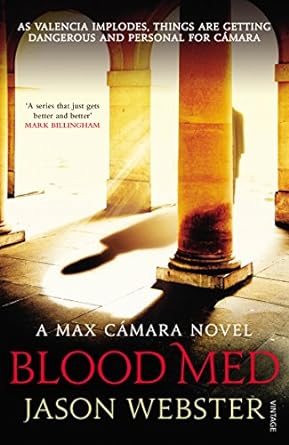
#BookReview ‘Blood Med’ by @Jwebsterwriter #crime #Spain

Page one, Spain waits, the king lies dying. There is the feeling of a nation on the edge. In Valencia, there are homeless on the street, immigrants are being harassed, the police department faces cutbacks despite rumblings of public unrest, and there are not enough drugs for the sick. Blood Med is the fourth in the Cámara Valencia-based detective series by Jason Webster. Jason WebsterThere are two deaths and Cámara and his colleague Torres are given one case each, the hidden agenda is that one of the two men must be made redundant. One death is suspected suicide, the other a brutal murder. In the way of crime fiction, you know there will be a connection but that connection is of course invisible at the beginning.
The detective, orphaned young and raised by his grandfather, now lives in Valencia with elderly Hilario plus Max’s girlfriend, journalist Alicia. Both Hilario and Alicia have key roles in this story. Hilario is a huge influence on Max’s approach to life, and he often recalls his grandfather’s fondness for proverbs when he finds himself in a sticky situation. ‘Visteme despacio que tengo prisa’ he tells himself when he feels the investigation is being rushed. It translates as ‘Dress me slowly, I’m in a rush.’ He feels the investigation has tunnel vision; that it is being rushed and would benefit from a step back. ‘If he could have his way he would send everyone home for the rest of the day to switch off. Go to the beach, go wherever. And have sex – with someone else if possible. If not, whatever. If helped clear the mind.’
This is the most accomplished Cámara novel so far, the setting in Valencia is so strong and the political background feels very real. The ‘corralito’ described [the government decree to close the banks] feels very real.
CLICK HERE TO READ MORE ABOUT THIS BOOK AT AMAZON

Read my reviews of other books in Webster’s Spanish detective series:-
OR THE BULL KILLS YOU #1MAXCÁMARA
A DEATH IN VALENCIA #2MAXCÁMARA
THE ANARCHIST DETECTIVE #3MAXCÁMARA

If you like this, try:-
The Long Drop’ by Denise Mina
Snow White Must Die’ by Nele Neuhaus
An Uncertain Place’ by Fred Vargas #8CommissaireAdamsberg

And if you’d like to tweet a link to THIS post, here’s my suggested tweet:
#BookReview BLOOD MED by @Jwebsterwriter via @SandraDanby http://wp.me/p5gEM4-10N

#BookReview ‘An Appetite for Violets’ by Martine Bailey @MartineBailey #historical

The beginning: it is 1773. Kitt, a brother who seeks his disappeared sister, arrives at an Italian villa to find it abandoned, the dinner table laid with forgotten cakes and sweetmeats. You think the story of An Appetite for Violets by Martine Bailey will be about Kitt’s sister Lady Carinna but she is a bit-player. The real story belongs to her under-cook Obedience, Biddy, Leigh, forced to accompany her mistress on a Grand Tour to the Continent. Martine BaileyAfter this first short section at the Villa Ombrosa, the story starts at Mawton Hall in 1772 where the servants are surprised by the arrival of their new mistress, without her elderly husband. Lady Carinna asks Biddy to copy her favourite violet sweets bought from an expensive London store. Although Biddy is an honest cook she is not a craftswoman, and her attempt produces “shocking poor copies of the originals.” She is rescued by the Indonesian footman Mr Loveday who provides a box of original sweets to substitute for Biddy’s home-made variety. Pleased with the sweets Lady Carinna gives Biddy a rose silk gown. Trying on the dress, Biddy gets a glimpse of a life so different from her own.
This experience bonds the two servants, a bond which lasts throughout their journey to Italy. Biddy and Loveday each have their own way of escaping the demands of their mistress, and they vow to support each other no matter what happens. But then they start overhearing secrets, Loveday reads the letters he is bidden to deliver, and Biddy becomes entwined in Carinna’s plan of deception.
Bailey admits to being fascinated by food, and every chapter of Biddy’s is preceded by an excerpt from The Cook’s Jewel, an old household book of recipes, which she takes with her on the journey. As she travels through France and then Italy, Biddy begins to add her own recipes which are linked to the next part of her tale. And it is a tale of excess, guilt and deception, ideally suited to the language of food. As the carriage leaves Mawton Hall at the beginning of the journey, Biddy thinks of her sweetheart Jem left behind, “I pulled down my cap and wept, like a bag of whey that drips without end.”

And here are my reviews of other novels by Martine Bailey:-
THE ALMANACK #1TABITHAHART
THE PROPHET #2TABITHAHART
THE PENNY HEART

If you like this, try:-
The Art of Baking Blind’ by Sarah Vaughan
The Fountains of Silence’ by Ruta Sepetys
The Swift and the Harrier’ by Minette Walters

And if you’d like to tweet a link to THIS post, here’s my suggested tweet:
#BookReview AN APPETITE FOR VIOLETS by Martine Bailey @MartineBailey http://wp.me/p5gEM4-10C via @SandraDanby

#BookReview ‘The Blind Man of Seville’ by @RobWilsonwriter #crime #Spain

The first time I heard of the Javier Falcón books by Robert Wilson was when the first was dramatized on TV, and unfortunately I missed it. So it was with anticipation that I turned to the first of the four books, The Blind Man of Seville. Robert Wilson My first impression was that it was the longest detective book I’d read in a while, but the reason for this soon became apparent: the back story in Tangiers. In a note at the back of the book, Wilson directs his readers to the full-length diaries he wrote for Francisco Falcón, Javier’s late father, artist, Tangiers resident and key character in The Blind Man of Seville.
It is a complicated novel, entangling the Spanish legal system, bullfighting, the worlds of art and restaurants, Seville, Tangiers and the theme which lurks just below the surface of everyday Spain: the Spanish Civil War. There is something about the first murder which slowly tips Inspector Falcón towards mental breakdown. Like all detectives, the interest lies in his frailties, how he overcomes them and manages to do the day job, how he outwits the criminal mind.
Francisco’s diaries are fascinating; an insight into the Spanish Legion, its time in Morocco and Russia, the brutality and hardships, the sense of brotherhood. At times as Javier reads his father’s story, the story churns his guts; mine too. Anyone who has read anything about the Civil War will anticipate some of the brutality. Wilson skilfully weaves this storyline into the modern-day hunt for a murderer.
This is far from a formulaic detective story. Wilson writes about heavy subjects with a confident hand, and creates atmosphere easily. “The hotel had suffered in the intervening half-century. There was a glass panel missing from one of the doors in his room. Paint peeled off the metal windows. The furniture looked as if it had taken refuge from a violent husband. But there was a perfect view of the bay of Tangier and Falcón sat on the bed and gaped at it, while thoughts of deracination spread through his mind.”

Here are my reviews of the other books in the Javier Falcón series:-
THE SILENT AND THE DAMNED #2FALCÓN
THE HIDDEN ASSASSINS #3FALCÓN
THE IGNORANCE OF BLOOD #4FALCÓN

If you like this, try:-
Snow White Must Die’ by Nele Neuhaus
No Time for Goodbye’ by Linwood Barclay
A Fatal Crossing’ by Tom Hindle

And if you’d like to tweet a link to THIS post, here’s my suggested tweet:
#BookReview THE BLIND MAN OF SEVILLE by @RobWilsonwriter http://wp.me/p5gEM4-P1 via @SandraDanby

#BookReview ‘Allegiant’ by Veronica Roth #YA #fantasy

The tone of Allegiant, the third in the ‘Divergent’ trilogy by Veronica Roth, is different. Tris lives in Chicago where every citizen belongs to one of five factions, each representing a human virtue. But Tris doesn’t fit in and is searching for a new world. Veronica RothKey to the change of tone in this book is a change in point-of-view, which is split for the first time; between Tris and Tobias [Four]. Getting a male perspective is interesting, and I guess Veronica Roth took this approach to add more tension to the storytelling. It certainly highlights the lack of communication between the two. But at times, I lost track of whose thoughts I was reading.
The book is full of strong female characters, but not strong in a good way. Evelyn, head of the factionless; Edith Prior, Tris’s ancestor, whose mystery hangs over this third book. The world Tris knew in Divergent and Insurgent has been shattered by violence so she and Tobias set out beyond the fence to find a new world. Except the new world is not green fields, but just as violent and unequal as the world they are escaping.
CLICK HERE TO READ MORE ABOUT THIS BOOK

Click the title to read my reviews of the other books in this series:-
DIVERGENT #1DIVERGENT
INSURGENT #2DIVERGENT

If you like this, try:-
The Bear and the Nightingale’ by Katherine Arden #1WinternightTrilogy
Dark Earth’ by Rebecca Stott
The Secret Commonwealth’ by Philip Pullman #2TheBookOfDust

And if you’d like to tweet a link to THIS post, here’s my suggested tweet:
#BookReview ALLEGIANT by Veronica Roth via @SandraDanby http://wp.me/p5gEM4-Pt

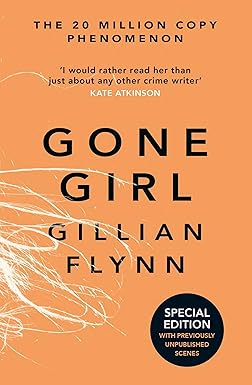
#BookReview ‘Gone Girl’ by Gillian Flynn #thriller

I feel like the last person to read Gone Girl by Gillian Flynn. I don’t know why I didn’t read it earlier, I like clever thrillers, but somehow I just didn’t get around to it. I was partly put off by the range of reviews of Amazon, I must admit, from 5 stars to 2 stars. It is definitely a Marmite book: love it or hate it. But then the publicity for the film started and I always like to read the book before I see the film, so… I got it from the library. Gillian FlynnGone Girl is about the fracturing of a five-year old marriage. We get both points of view: Nick the husband, Amy the wife. Basically one day, Amy disappears. There are signs of a struggle in the house. Nick goes predictably quickly from being lost husband to prime suspect. I have to admit. I did not like Amy from page one of her diary, her language is so OTT and flowery. “I am fat with love! Husky with ardor! Morbidly obese with devotion! A happy, busy bumblebee of marital enthusiasm.” Ugh. Neither was I overly keen on Nick, I guess overall I found it overwritten and both characters seemed self-indulgent.
It’s impossible to review this book without spoilers, so I will stop there. Suffice to say, I raced through it, I enjoyed it. I enjoyed it enough to read more by the same author.
Gone Girl practically spawned a new genre: twisty marriage thrillers. To understand the genre, you have to start with this book. I bet Gillian Flynn didn’t know what she was starting.

If you like this, try:-
‘Wolf Winter’ by Cecilia Ekback
Stolen Child’ by Laura Elliot
Wolf’ by Mo Hayder

And if you’d like to tweet a link to THIS post, here’s my suggested tweet:
#BookReview GONE GIRL by Gillian Flynn http://wp.me/p5gEM4-Yp via @SandraDanby

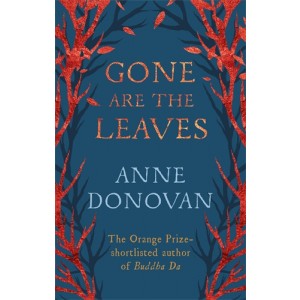
#BookReview ‘Gone are the Leaves’ by Anne Donovan #historical

I had a shaky start with Gone are the Leaves by Anne Donovan. It is written in Scottish dialect which I could simply not ‘hear’ in my head. The thought of reading a whole book in this language was intimidating so when I got to the first, short section in the voice of the music master I welcomed it with relief. I kept having to stop and re-read a sentence, to work out what it said. I persevered, and the voice slowly started to settle in my ear. I’m glad I didn’t give up but I’m not convinced about the wisdom of writing 80% of the book in dialect. I fear a lot of readers will be lost along the way. Anne DonovanA young French boy meets a young Scottish girl. Deirdre is a seamstress at a laird’s house in Scotland. “My father was neither owermuckle nor poor, and we were all in the service of our Laird and His Lady one way or anither, our lives thirled to theirs.” She is destined to use her skills in the convent embroidering church vestments. Feilamort is an orphan who can sing like an angel. Both must make difficult decisions about their futures. She is 13, with growing limbs which seem too big for her body; he doesn’t know his age or his beginnings.
Part I is set in Scotland, a Scotland dead and drab according to the Laird’s Lady and Signor Carlo, the Italian music master. Deirdre on the other hand celebrates the countryside, seeing beyond the dullness to the beauty and recognising the signs of life in death. She sees a fallen tree, the wood torn and splintered. “Yet its branches had put out shoots which were growing in the sun; some tiny, others starting tae open. The buds on other trees were pink and green but these were greeny-grey, like sage leaves, ghostly and unhealthy looking, drab and straggly as if unlike tae live, but living. By some miracle, a deid tree deprived of roots and water, had put forth shoots and, in its dying breath, desired tae pour out life.”
Deirdre’s mother considers the options for her daughter, the nunnery or marriage to a local lad. “Some [folk] need tae be close by others all the time; they intertwine like the ivy, grow where they touch. And some, like the clow that grows on the rocks above the sea, need space, they maun be in the open and feel the wind and rain and sun on them. And that is like you, Deirdre.”
Nature is at the heart of this novel. Action is not in the nature of Father Anthony, the priest who is such a significant influence on the lives of both children. “He was a craft designed for a gently flowing river on a delightful summer’s day, “ writes Donovan [above], “lacking the strength and stamina for storm-tossed waters.”
The plot has some twists and turns along the way, and the weather is used to symbolise Deirdre’s churning emotions. “Frae where we stood I couldna see the watter only hear the clash and scud of the waves, imagine the sweel and sway of it. The lighting was above us noo, shooting lang witchy fingers of siller across the sky, a gowtsie sky, the green of a sick plant, violet-edged.”
This book rewards patient reading, so choose the right time to read it.

If you like this, try:-
An Appetite for Violets’ by Martine Bailey
Girl in Hyacinth Blue’ by Susan Vreeland
Dark Aemilia’ by Sally O’Reilly

And if you’d like to tweet a link to THIS post, here’s my suggested tweet:
#BookReview GONE ARE THE LEAVES by Anne Donovan https://wp.me/p2ZHJe-YN via @SandraDanby

#BookReview ‘Citadel’ by @katemosse #historical

I read a lot of books. Amongst those with the strongest sense of place, the ones that linger in my imagination, are the Languedoc trilogy by Kate Mosse. Citadel, the third novel in the series, is set in ad342 and 1942 during World War Two. Unusually with a trilogy, you don’t have to have read the other two books in order to enjoy this one. Certainly it is some years since I read Labyrinth and Sepulchre and the details are hazy, each book stands on its own. Kate MosseI enjoyed this book immensely. The story centres on a small group of women who fight against the Nazi regime and who, by the very fact that they are women, are able to slip unnoticed along the night-time streets of occupied Carcassonne. The Prologue describes ‘the woman known as Sophie’ and the reader is left to wonder, which of the women in the story is ‘Sophie’?
I must point out that the story is slow to get going, I had to be patient, but I trusted Mosse. It did make me question whether my attention span is shortening, I hope not. If it is I must read longer novels to re-stretch my brain.
A note in the 2014 edition, which I read, explains that the story was inspired by a plaque in a village near Carcassonne, commemorating the ‘martyrs of Baudrigues’. Days before the Languedoc was freed by its own people, as the Nazis were fleeing, 19 prisoners were killed, two women are to this day still unidentified. These facts started Mosse wondering who those women were: that was her starting point for Citadel.
It is clear that both time strands are set in the same place, the countryside of the Languedoc, the forests, the mountains, its people and language, and the weather, anchors the reader firmly in southern France. In ad342, Arinius is looking for a hiding place. You know not what for, only that it must be safe for ‘centuries’. “He had no particular destination in mind, only that he had to find somewhere distinctive and sheltered, somewhere where the pattern of the ridges and crests might retain their shape for centuries to come… Forests might be cut down or burn or drowned when a river bursts its banks. Fire and word and flood. Only the mountains stood firm.”
CLICK HERE TO READ MORE ABOUT THIS BOOK AT AMAZON

And here are my reviews of other novels by Kate Mosse:-
THE BURNING CHAMBERS #1JOUBERT
THE CITY OF TEARS #2JOUBERT
THE TAXIDERMIST’S DAUGHTER

If you like this, try:-
‘Dominion’ by CJ Sansom
‘Homeland’ by Clare Francis
‘Midnight in Europe’ by Alan Furst

And if you’d like to tweet a link to THIS post, here’s my suggested tweet:
#BookReview CITADEL by @katemosse ‏via @SandraDanby http://wp.me/p5gEM4-Xt

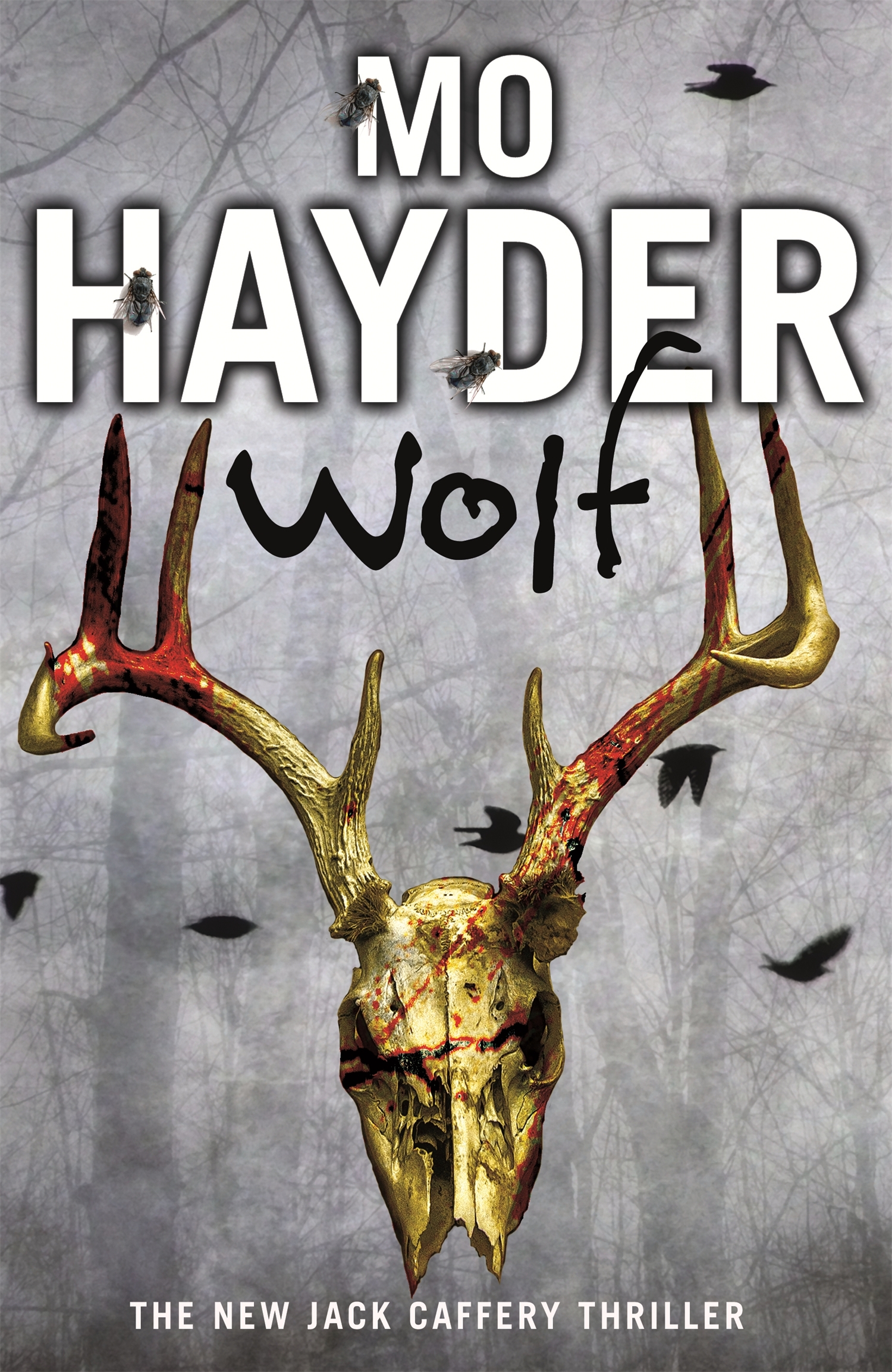
#BookReview ‘Wolf’ by Mo Hayder #thriller #crime

I am new to Mo Hayder and her detective Jack Caffrey so didn’t know what to expect from Wolf. This was a spine-tingling ride from page one. Mo HayderI read the book over two days, putting it down for a break but unable to resist picking it up again. I do not like being frightened but I do like tension, and Hayder knows her subject her so well that I could feel the depth of her knowledge behind every word. So from the disturbing beginning with five-year-old Amy who gets lost in the woods, I stuck with it. And I am glad I did. I will now go back to the beginning and read her debut novel Birdman, the first in the Jack Caffrey series. Wolf is the seventh.
The story centres on the Anchor-Ferrers family: Oliver who has just had heart surgery, replacing a heart valve with that of a pig; his wife Matilda; and troubled daughter Lucia. Oliver needs to convalesce after his surgery and so the family go to their isolated country house, the location 14 years previously of the murder of two teenagers, one of them Lucia’s boyfriend. The house and the family’s memories of what happened are central to the story of Wolf. We piece together facts about the past and present, as Hayder feeds the reader the information in an expert manner calculated to add to the tension. What exactly did happen to Lucia’s boyfriend, what is Oliver’s mysterious job, has the murderer being released from prison, what is Wolf, and why does Hayder start the story with Amy?
The big question for me: why is this family still living in the isolated house with all its bad memories?

If you like this, try:-
Wilderness’ by Campbell Hart #1ARBOGAST
Shroud for a Nightingale’ by PD James #4ADAMDALGLIESH
‘Snow White Must Die’ by Nele Neuhaus

And if you’d like to tweet a link to THIS post, here’s my suggested tweet:
#BookReview WOLF by Mo Hayder http://wp.me/p5gEM4-QE via @SandraDanby

#BookReview ‘The Accident’ by @callytaylor #thriller

The Accident by CL Taylor is the story of an abusive relationship, an accident and a mental breakdown. The action takes place in 1990-1992 and the present day. The tension winds up in both strands so you don’t want to put down the book. I found myself picking up my Kindle every spare five minutes, just to read a few more pages. There is a sense of expectant horror: ‘surely that’s not going to happen,’ ‘surely she’s not going to do this, or that.’ CL TaylorCharlotte, the fifteen year old daughter of Sue and Brian Jackson, is in a coma. Apparently she stepped off the pavement in front of a bus. As Sue and Brian sit by their daughter’s hospital bed, they disagree about what happened. Brian thinks it’s an accident, Sue worries Charlotte had some sort of problem she couldn’t discuss with her parents. And so begins the re-telling of Sue’s dark past, about the demons she struggles with, and the determination she has to fight the past interfering with her present life. The unravelling of the truth puts pressure on the Jacksons’ marriage and Sue’s sanity. The two parents deal with the tragedy in their own way and Sue, emotionally vulnerable, starts to imagine all sorts of scenarios.
From the first page, the pace is fast. “Coma. There’s something innocuous about the word, soothing almost in the way it conjures up the image of a dreamless sleep. Only Charlotte doesn’t look as though she’s sleeping to me.” It is every parent’s nightmare: an accident, a coma. But Sue must unravel the mystery without any help from Charlotte.
CLICK HERE TO READ MORE ABOUT THIS BOOK AT AMAZON

Read my reviews of these other thrillers by CL Taylor:-
THE ESCAPE
THE LIE

If you like this, try:-
Jellyfish’ by Lev D Lewis
‘The Bone Church’ by Victoria Dougherty
‘Wolf Winter’ by Cecilia Ekback

And if you’d like to tweet a link to THIS post, here’s my suggested tweet:
#BookReview THE ACCIDENT by @callytaylor http://wp.me/p5gEM4-Wj via @SandraDanby