Tag Archives: book review

#BookReview ‘The Accident’ by CL Taylor @callytaylor #thriller

The Accident by CL Taylor is the story of an abusive relationship, an accident and a mental breakdown. The action takes place in 1990-1992 and the present day. The tension winds up in both strands so you don’t want to put down the book. I found myself picking up my Kindle every spare five minutes, just to read a few more pages. There is a sense of expectant horror: ‘surely that’s not going to happen,’ ‘surely she’s not going to do this, or that.’ CL TaylorCharlotte, the fifteen year old daughter of Sue and Brian Jackson, is in a coma. Apparently she stepped off the pavement in front of a bus. As Sue and Brian sit by their daughter’s hospital bed, they disagree about what happened. Brian thinks it’s an accident, Sue worries Charlotte had some sort of problem she couldn’t discuss with her parents. And so begins the re-telling of Sue’s dark past, about the demons she struggles with, and the determination she has to fight the past interfering with her present life. The unravelling of the truth puts pressure on the Jacksons’ marriage and Sue’s sanity. The two parents deal with the tragedy in their own way and Sue, emotionally vulnerable, starts to imagine all sorts of scenarios.
From the first page, the pace is fast. “Coma. There’s something innocuous about the word, soothing almost in the way it conjures up the image of a dreamless sleep. Only Charlotte doesn’t look as though she’s sleeping to me.” It is every parent’s nightmare: an accident, a coma. But Sue must unravel the mystery without any help from Charlotte.

Read my reviews of these other thrillers by CL Taylor:-
THE ESCAPE
THE LIE

If you like this, try:-
‘The Lamplighters’ by Emma Stonex
‘The Bone Church’ by Victoria Dougherty
‘Wolf Winter’ by Cecilia Ekback

And if you’d like to tweet a link to THIS post, here’s my suggested tweet:
#BookReview THE ACCIDENT by CL Taylor @callytaylor http://wp.me/p5gEM4-Wj via @SandraDanby 

#BookReview ‘Frog Music’ by Emma Donoghue #historical

I came to Frog Music knowing nothing about it other than it was written by Emma Donoghue who wrote Room. So it was something of a surprise to discover Frog Music is a historical crime story set in San Francisco in 1876 and loosely based on true events. Emma DonoghueI loved it. Every page pulses with the colour of the time. In the summer of 1876, San Francisco is a vibrant and bustling city living through an intense heatwave and smallpox epidemic. Donoghue starts her story with the murder of Jenny Bonnet, frog-catcher, who is shot through an open window. Her friend Blanche Beunon, a burlesque dancer, must find the murderer and avoid being killed herself, whilst tracking down her own missing baby. The pace is fast and San Francisco is portrayed as a third character; switching from the bawdy House of Mirrors where Blanche dances, to smelly noisy Chinatown where she lives.
The notion of chance is explored. What if the two women had never met. One day, Blanche is knocked down in the street by a young man on a bicycle. “Black anterlish handbars, that’s all she has time to glimpse before the gigantic spokes are swallowing her skirts.” Except it is not a young man, it is a young woman wearing trousers. Jenny continues to dress this way despite being pursued by the law and attracting disapproval wherever she goes. To the end, Jenny remains a bit of a mystery to Blanche and to the reader, “…As if Jenny has a prickly city self who gets into slanging matches in bars, and a country self who’s at rest, somehow.”
Donoghue tells the story in two parallel threads which alternate. First is the story of Jenny’s death at San Miguel Station, a dusty settlement outside the city, and Blanche’s struggle to identify the murderer. The second narrative tells how the two women met and the events which occurr before they arrive at the rural saloon where the murder takes place. Blanche is not an amateur detective, she is simply a woman who sees her friend murdered. She is determined to find the murderer, before the murderer kills her.
Blanche moves in a world on the edge of society, just a day’s work from hunger or homelessness. The line between hunger and honesty, deceit or crime and a full stomach, is one Blanche becomes familiar with. She wants a better life, as a woman she is ambitious and saves her money, but her life choices make her vulnerable and her decisions come back to haunt her.
This is a very assured creation of a colourful period in history, peppered with French influence, dialect and songs.

Read my reviews of these other Donoghue novels:-
AKIN
THE PULL OF THE STARS
THE WONDER

Read the first paragraph of ROOM.

If you like this, try:-
Barkskins’ by Annie Proulx
The Last Runaway’ by Tracy Chevalier
Summertime’ by Vanessa Lafaye

And if you’d like to tweet a link to THIS post, here’s my suggested tweet:
#BookReview FROG MUSIC by Emma Donoghue http://wp.me/p5gEM4-TH via @SandraDanby

#BookReview ‘The Aftermath’ by @Rhidianbrook #WW2

1946. Post-war Germany, Hamburg. The Aftermath by Rhidian Brook is a gentle novel with an emotionally difficult core: the adjustment of two families, one German one English, to the landscape of rubble a year after the end of the Second World War. Broken country, broken families, broken minds. The title refers to the aftermath of the war and also to the aftermath of events in the lives of both families. Both are grieving and are in new territory, geographically and emotionally. They are proud and unsure. Together, will they heal? Rhidian BrookThe English family: Colonel Lewis Morgan is occupied with the Occupied while his newly-arrived wife Rachael prevaricates, “I don’t know. It was suffix and prefix to her every other thought. This indecision was becoming her signature.” Their son Edmund has no such doubts, facing a challenging encounter with the teenage girl upstairs involving a glimpse of knickers and a steaming pisspot, he then ventures beyond the house’s garden into forbidden territory and meets the local feral youth.
The German family: Herr Lubert, a widower, and his daughter move upstairs when the Morgans arrive in the requisitioned house. Ironically Stefan Lubert is an architect, surrounded by broken buildings, but works instead in a factory while waiting for his papers to arrive which will allow him to practise again. School is closed so Frieda is on the ‘rubble runs’, clearing bricks and rubbish, where she mixes with the feral youth.
They all make their own adjustments to the new situation and for a while it is a quiet, polite tussle for power. Rachael makes changes in the house; she moves plants and drapes a modest cloth over a nude sculpture. She sets herself rules about not fraternising with the Germans, who she believes need punishing. She disagrees with Herr Lubert about a Mies van der Rohe chair which he explains is a Bauhaus design, functionality stripped to simplicity. She says it is uncomfortable.
It is as if each family is trying the other on for size, it is a fascinating observation of ordinary people in extraordinary times. Lewis reflects on the logic of the tasks he must perform: “They blow up a soap factory which employed two thousand Germans, made something everyone needed and had no military value whatsoever and, in return, the Russians send the Germans bread. It was like balancing Hell’s ledger.”
The cover of the book is an attractive, calm monotone and the story is also told in a calm tone; but underneath the emotions are building. As the initial discomfort eases, passion rises.

Read my review of another Rhidian Brook novel:-
THE TESTIMONY OF TALIESIN JONES

If you like this, try:-
The Translation of Love’ by Lynne Kutsukake
Homeland’ by Clare Francis
The Ways of the World’ by Robert Goddard

And if you’d like to tweet a link to THIS post, here’s my suggested tweet:
#BookReview THE AFTERMATH by @Rhidianbrook via @SandraDanby http://wp.me/p5gEM4-So

#BookReview ‘Holes’ by Louis Sachar #YA #mystery

Holes by Louis Sachar has been sitting on my shelf forever but I picked it up this week when I exhausted my Kindle’s battery. How lovely to hold an actual book again. I know this is a book for tweens, but I’d heard such good things about it that I wanted to see for myself. Louis Sachar I loved the premise: that Stanley is wrongly found guilty of stealing a pair of trainers and is sent to a juvenile correction camp where the punishment is to dig a hole a day. Five feet deep and five feet wide. Every day. It is supposed to be character-building, but Stanley thinks there is another agenda. “There is no lake at Camp Green Lake. There once was a very large lake here, the largest lake in Texas. That was over a hundred years ago. Now it is just a dry, flat wasteland.”
It is a story about finding out who you are, standing up to bullies and finding your bravery. “Out on the lake, rattlesnakes and scorpions find shade under rocks and in the holes dug by the campers.”
Woven in with the day-to-day tale of hole-digging is the background to Stanley’s unlucky family; unluckiness blamed on his no-good-dirty-rotten-pig-stealing-great-great-grandfather. Stanley is a kind of every-boy, who helps a boy worse off than himself and ends up challenging the system.  And Sachar ties up the loose-ends brilliantly.
Not just for kids.

Read my review of THE CARDTURNER, also by Louis Sachar.

If you like this, try:-
The Ship’ by Antonia Honeywell
The Choir’ by Joanna Trollope
The Mystery of Three Quarters’ by Sophie Hannah #3Poirot

And if you’d like to tweet a link to THIS post, here’s my suggested tweet:
#BookReview HOLES by Louis Sachar http://wp.me/p5gEM4-K1 via @SandraDanby

#BookReview ‘Insurgent’ by Veronica Roth #YA #fantasy

Insurgent, second in the fantasy trilogy by Veronica Roth, is action-led and the pace fairly trips along. Everyone living in the post-dystopian city of Chicago belongs to one of five factions, each represents a human virtue. When the factions disagree, there is a struggle for power. Veronica RothHeroine Tris is a complex mixture of two factions: her upbringing in Abnegation [considerate, selfless] and her adopted faction Dauntless [brave, daring, reckless]. This dangerous mixture gets her into trouble and that drives the story along. She is confrontational, brave, but often makes questionable decisions. She distrusts Four’s father and believes he is misleading them: ‘…sometimes, if you want the truth, you have to demand it.’ Demand, not ask: this tells me more about Tris than about Four’s father Marcus.
As this is the second novel of the trilogy there is more time for characterisation, we see more of Tris’s inner world in Insurgent compared with Divergent. She is maturing into her divergent personality, ‘I drift off to sleep, carried by the sound of distant conversations. These days its easier for me to fall asleep when there is noise around me. I can focus on the sound instead of whatever thoughts would crawl into my head in silence. Noise and activity are the refuges of the bereaved and guilty.’ And she is both.
I had difficulty keeping track of the huge list of characters and longed for a cast list. But more importantly is the lack of clarity about the main enemy: who is it? There’s lots of infighting to keep track of too, petty squabbles some of which have carried forward from the first book and which I had forgotten. I made the mistake of not reading the books back-to-back which would have really helped.
Tris’s confusion reminded me of my teenage years, confusion is universal: ‘Sometimes I feel like I am collecting the lessons each faction has to teach me, and storing them in my mind like a guidebook for moving through the world. There is always something to learn, always something that’s important to understand.’ Like all young people, Tris must learn there is no cut-off date by which she will have learned everything, adults continue to learn until they die.

Click the title to read my reviews of the other books in this series:-
DIVERGENT #1DIVERGENT
ALLEGIANT #3DIVERGENT

If you like this, try:-
Beneath the Keep’ by Erika Johansen #prequelTearling
Children of Blood and Bone’ by Tomi Adeyemi #1LegacyofOrisha
La Belle Sauvage’ by Philip Pullman #1TheBookOfDust

And if you’d like to tweet a link to THIS post, here’s my suggested tweet:
#BookReview INSURGENT by Veronica Roth via @SandraDanby http://wp.me/p5gEM4-Po

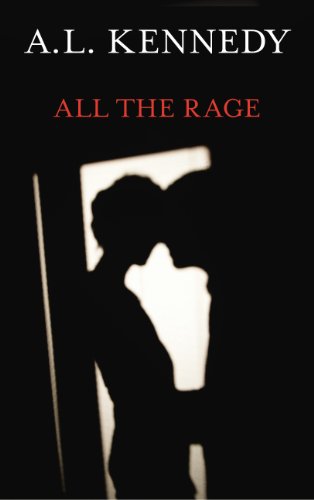
#BookReview ‘All the Rage’ by AL Kennedy #shortstories

What a treat is All the Rage. Twelve stories about love by the inimitable AL Kennedy. Love:  looking for it, losing it, exploring what love is. Instead of describing the stories, I want to celebrate her writing. The way she tells us so much in just one or two sentences. AL Kennedy‘Late in Life’ features  an older couple waiting. They are waiting in a queue at the building society, waiting for him to pay off her mortgage, in a coming-together of two lives. She provocatively eats a fig, being sexy for him “to pass the time.” Despite his hatred of public show, he watches her, “he is now-and-then watching.” He gives her “the quiet rise of what would be a smile if he allowed it. She knows this because she knows him and his habits and the way the colour in his eyes can deepen when he’s glad, can be nearly purple with feeling glad when nothing else about him shows a heat of any kind.”
In ‘The Practice of Mercy’, Dorothy is lost, alone and approaching old age and contemplating her relationship. “She realised once more, kept realising, as if the information wouldn’t stick, realised again how likely it was that someone you’d given the opening of leaving, someone you’d said was free to go, that someone might not discover a way to come back.”
‘All the Rage’ is set on a train platform. A couple are delayed, travelling home from Wales, stuck waiting for a train that never comes. Kennedy tells us everything about their relationship by describing their suitcase. “Inside it, their belongings didn’t mix – his shirts and underpants in a tangle, Pauline’s laundry compressed into subsidiary containments. They had separate sponge bags too. Got to keep those toothbrushes apart.”
Simon, the narrator of ‘Run Catch Run’, considers his unnamed dog, he is at once a child teaching his puppy and also an adult with a mature awareness of inevitability. “His dad had suggested she could be called Pat, which was a joke: Pat the dog. Simon didn’t want to make his dog a joke.”
She shows us so much, in so few sentences.

And click the title to read my reviews of these other AL Kennedy books:-
DAY
SERIOUS SWEET

If you like this, try:-
The Story’ ed. Victoria Hislop
An Unfamiliar Landscape’ by Amanda Huggins
Last Stories’ by William Trevor

And if you’d like to tweet a link to THIS post, here’s my suggested tweet:
#BookReview ALL THE RAGE by AL Kennedy http://wp.me/p5gEM4-NL via @SandraDanby

#BookReview ‘The Returned’ by @JasonMott #suspense #mystery

When Harold opens the door to a strange man and boy, he sees someone he knew he would never see again. “Synapses kicked on in the recesses of his brain. They crackled to life and told him who the boy was standing next to the dark-skinned stranger. But Harold was sure his brain was wrong.” On that day, the lives of Harold and his wife Lucille change as they become involved in the whirlwind which is the return of people from the dead. This is the beginning of The Returned by Jason Mott. Jason MottThere is a sense of brooding throughout this novel, starting small with the uncomfortable disbelief the elderly couple feel as their dead 8-year old son walks in the door. How can it be Jacob who died more than 40 years earlier? Is he/it an imposter? All over the world, the dead are returning. Soon the numbers become threatening, new phrases are coined: The Returned, the True Living. Communities cannot cope with the new arrivals who need feeding and housing, who bring with them old resentments, unfinished business. Not all reunions are happy. For some Returned there are no reunions. There is a dark sense of inevitability that it is all going to go wrong, as Connie Wilson says: “Everything was moving toward the coming terror. She felt it. It was inevitable now, like when the earth is dry and barren, the trees gray and brittle, the grass brown and parched – something must change.”
People look for an explanation: the Church has none. They look for a plan: the Government has none. The slow slide of disintegration is told through the eyes of the elderly couple, Harold and Lucille Hargreave, as they grapple with deep questions: what are the Returned, are they real, are they ghosts, what rights do they have? This book is at the same time a glimpse of a dystopian society, and at the same time an examination of death and grieving, of our attitudes to honour and betrayal.
The wish of a grieving person is to see the dead person just once more, but Jason Mott has created a world where people achieve that dying wish and then don’t want it. This book asks a lot of difficult questions, ones we would rather not hear.

If you like this, try:-
The Quick’ by Lauren Owen
The Threshold’ by Anita Kovacevic
A Sudden Light’ by Garth Stein

And if you’d like to tweet a link to THIS post, here’s my suggested tweet:
#BookReview THE RETURNED by @JasonMott via @SandraDanby http://wp.me/p5gEM4-Om

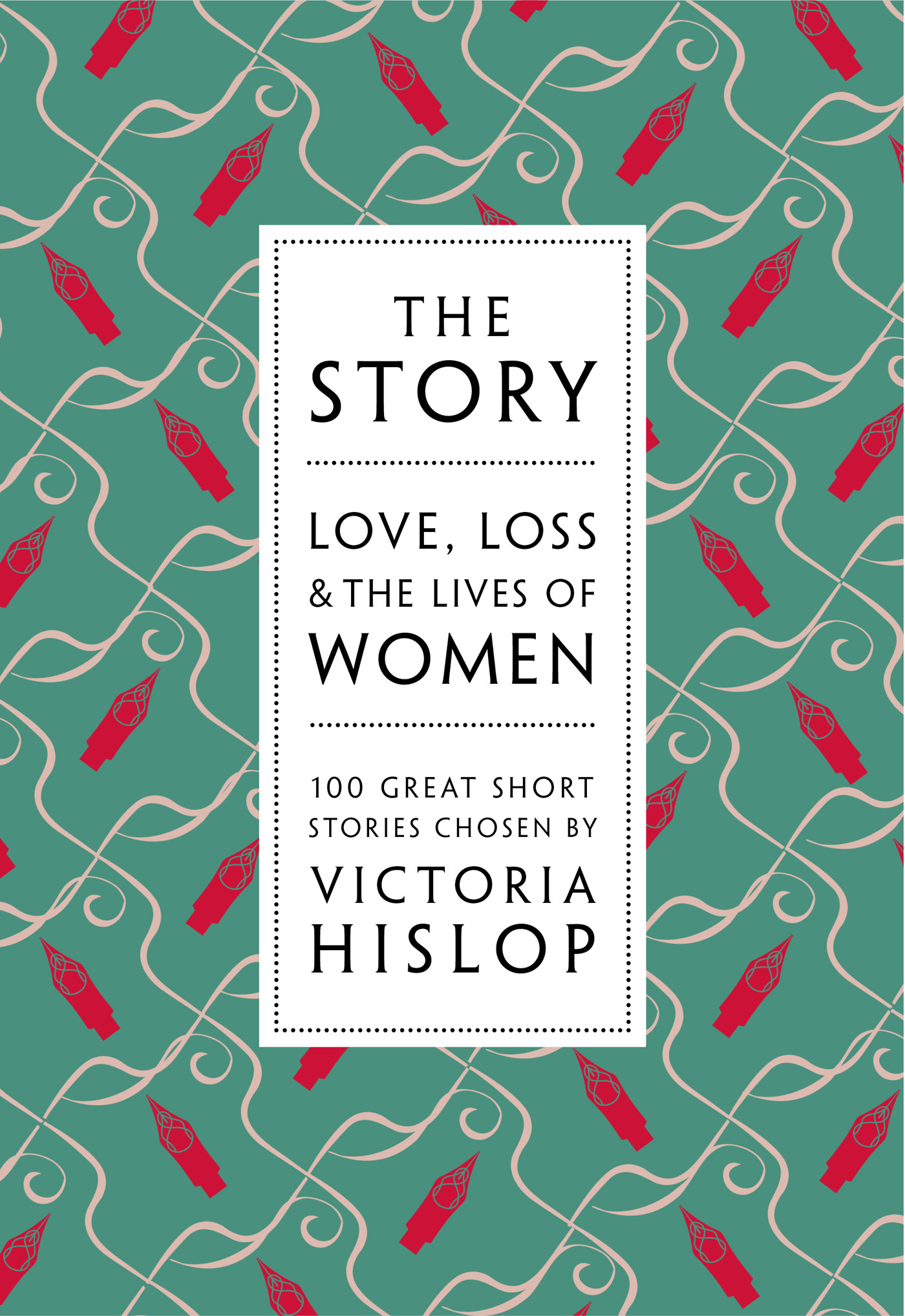
#BookReview ‘The Story’ by Victoria Hislop @VicHislop #shortstories

I read The Story: Love, Loss & the Lives of Women, edited by novelist Victoria Hislop, on my Kindle, without really appreciating just how much reading was involved for 100 stories. It’s not like holding a hefty book. But I enjoyed every single one of them. Some of the authors were well-known, others were new to me. Some made me laugh out loud (I’m thinking of Dorothy Parker here), others stopped my breath with sadness. I discovered authors I want to explore further: one of the reasons I have always loved short stories.Victoria HislopThe short story form is fascinating. As a reader I am very demanding, like anthology editor Victoria Hislop I want to be instantly grabbed by a story. “Readers are allowed to be impatient with short stories,” she writes. “My own patience limit for a novel which I am not hugely enjoying may be three or four chapters. If it has not engaged me by then, it has lost me and is returned to the library or taken to a charity shop. With a short story, three or four pages are the maximum I allow (sometimes they are only five or six pages long in any case). A short story can entice us in without preamble or background information, and for that reason it had no excuse. It must not bore us even for a second.”
So, my favourite stories? Hislop has divided her selection into three sections so I have chosen three from each.

LOVE:
Jeanette Winterson’s ‘Atlantic Crossing’ – the gentle story of love and longing at a distance. My favourite story of all, I think.

Dorothy Parker’s ‘A Telephone Call’ – the stream of consciousness dialogue of waiting for a telephone call is an everywoman story.

‘The Artist’ by Maggie Gee is about Emma, an unfulfilled wife who employs an East European, Boris, as an odd-job man/builder. He says he is an artist, she doesn’t believe him.

LOSS:
‘The First Year of My Life’ by Muriel Spark. It starts, “I was born on the first day of the second month of the last year of the First World War, a Friday.” An account of war seen through the innocent but at the same time all-knowing eyes of an infant.

‘The Pill Box‘ by Penelope Lively is about the flexibility of imagination. A male teacher and writer is haunted by the past, remembering, wondering how the world would be now if things had happened differently when he was young.

‘The Merry Widow’ by Margaret Drabble tells the story of Elsa Palmer who, after the death of her husband Philip, goes on the summer holiday they had planned together. Grief overcomes her, but in an unconventional way.

THE LIVES OF WOMEN:
‘G-String’ by Nicola Barker is about the triumph of the modern knicker. This made me laugh out loud.

‘Betty’ is the woman who captivates the teenage narrator of Margaret Atwood’s tale. “From time to time I would like to have Betty back, if only for an hour’s conversation.”

‘A Society’ by Virginia Woolf, about a group of young women on the verge of the Great War who make themselves into a “society for asking questions. One of us was to visit a man-of-war; another was to hide herself in a scholar’s study; another was to attend a meeting of business men; while all wee to read books, look at pictures, go to concerts, keep our eyes open on the streets, and ask questions perpetually.”

Read my reviews of other these books by Victoria Hislop:-
THE FIGURINE
THE SUNRISE
THOSE WHO ARE LOVED

If you like this, try:-
‘The Duchess’ by Wendy Holden
‘Anderby Wold’ by Winifred Holtby
‘All the Rage’ by AL Kennedy

And if you’d like to tweet a link to THIS post, here’s my suggested tweet:
#BookReview THE STORY by Victoria Hislop @VicHislop http://wp.me/p5gEM4-N5 via @SandraDanby

#BookReview ‘Mrs Sinclair’s Suitcase’ by @Louisewalters12 #romance #WW2

rs Sinclair’s Suitcase by Louise Walters is a gentle mystery of a love affair during war and its consequences for the following generations. Louise Walters We follow the stories of two women: Dorothy Sinclair in 1940, and today Roberta who works at The Old and New Bookshop. Roberta is particularly fond of the secondhand stock, treasuring the notes and letters she finds hidden within their pages, wondering about the stories of the writer and the addressee. Each chapter starts with an excerpt from such a note.
The letter which starts Chapter One is dated 1941 and addressed to “My dear Dorothea” from Jan Pietrykowski in which he writes he “cannot forgive” her for “what you do, to this child, to this child’s mother, it is wrong.” The letter makes no sense to Roberta as it was written by her grandfather to her grandmother, and dated 1941 when Jan died in 1940. This is the puzzle which Roberta must unravel. What woman does Jan refer to, and what child?
Dorothy’s story starts with a plane crash. She lives on the edge of an airfield deep in the quiet Lincolnshire countryside, alone in her cottage [her husband is away at war] which she shares with two land girls. The plane crash brings the Polish pilot to her door. Nervous, Dorothy serves afternoon tea. She “watched Jan take a bite from a sandwich. His teeth were small, even and white. She noticed the way his fingers curved lightly around the sandwich. He was an elegant man… She watched him eat and he seemed unabashed, eating under her scrutiny. She, for her part, always ate guardedly. She hated the way eating contorted her face, and it made her feel exposed.” From their first meeting, he unsettles her. She is so buttoned-up; he is open, curious and confident.
There is a lot of sensuality in this tale. Despite herself, Dorothy wonders about the pilot. She does not miss her husband. When Jan visits the cottage again, she notices his “brown, lean, strong forearms and realizes how she feels… His arms were poetry.” But there is grief too, as this is wartime and what happened in the 1940s knocks on down the decades to affect Roberta, her father and her grandmother Babunia.

Here’s my review of A LIFE BETWEEN US, also by Louise Walters.

If you like this, try:-
At Mrs Lippincote’s’ by Elizabeth Taylor
The Paying Guests’ by Sarah Waters
After the Bombing’ by Clare Morrall

And if you’d like to tweet a link to THIS post, here’s my suggested tweet:
#BookReview MRS SINCLAIR’S SUITCASE by @Louisewalters12 http://wp.me/p5gEM4-Na via @SandraDanby

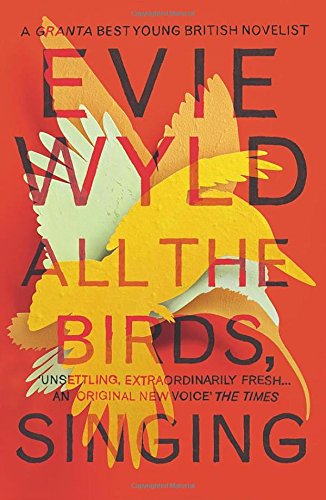
#BookReview ‘All the Birds, Singing’ by Evie Wyld #mystery

All the Birds, Singing by Evie Wyld is about secrets, now, in the past, in Australia, in England. The opening is shocking, a mutilated sheep, no description spared. Jack Whyte, a man’s name but a female character, feels threatened, fears the attack on the sheep is meant as a message for her. Evie Wyld And from here the rollercoaster starts, as we follow Jack’s current grey existence with her sheep, somewhere anonymous in England, and a dog called Dog. This story is told in alternating chapters, switching between England now, and Australia then. The story in the present goes forward, in linear time, normal time. Jack’s back story in Australia, the reasons she is where she is, is told backwards. This seemed strange to start with, but the author handles this structure elegantly and it suits the sinister tone. I didn’t guess Jack’s secret, didn’t know how it would all end.
There is a deep sense of foreboding throughout this book. Something happened: Jack is running from something, from someone, but what?  Are local children in England attacking her sheep, or is there a huge animal which roams at night? Why does she shun the locals? Why is she in England, so far from home? And is it all in her head? Should we believe her fears?
She has come from a hard world in Australia, a man’s world of sheep stations, sheep shearing, where she is the only woman, she does press-ups and has biceps to rival the men she works alongside. It feels as if she is trapped by her situation, by her life, by the sinister men which she seems to attract. At one point in Australia she moves the animals’ pen onto some thin grass so the pathetic sheep can eat “but they just stand there, a silent little group, I try to move them about, but they’re not scared of me. Resigned is what they are, and I tell them, ‘You can move around if you want to,’ waving my arms and jumping about, but they just sway a little in the hot fly air.” For a while, Jake acts like these sheep; staying where she is, swaying in the heat. But the reader knows she is in England now, so she must have run: when, where, why?
In England a neighbour advises her to go to the pub once in a while, get to know the other farmers. Don says:  “Some things you just can’t do on your own… That’s why farmers need to know each other, you help them, they help you, that’s just how it goes… because sooner or later I’m going to hit the post and be dead and then what’ll you do? Starve to death I suppose.” Yes, I believed she would rather starve.

If you like this, try:-
Restless Dolly Maunder’ by Kate Grenville
‘The Bear’ by Claire Cameron
‘Summer House with Swimming Pool’ by Herman Koch

And if you’d like to tweet a link to THIS post, here’s my suggested tweet:
#BookReview ALL THE BIRDS, SINGING by Evie Wyld http://wp.me/p5gEM4-MK via @SandraDanby