
Expectations and generalisations are an odd thing. When I first read the the blurb for The House at Silvermoor and saw it is set in a South Yorkshire mining community, I hesitated. But I decided to place my trust in the author, Tracy Rees, because I read and loved her Amy Snow. What a good decision it was. 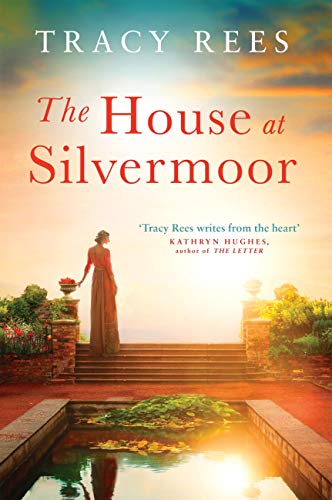 Inspired by her grandfather Len, Rees researched coal mining at the turn of the century. This research informs every page but never interferes with her story of Tommy Green from the mining village of Grindley and Josie Westgate of nearby Arden. When they are twelve they meet in a country lane, talking over a dropped bunch of bluebells. Rees is excellent at world creation: the hard grind of the mining families, the lack of options, the durability and sense of inevitability of the families, the autocratic families that rule the mines, the temptation of the unknown. Tommy is destined to work in the pits of the Sedgewick family of Silvermoor where his father and brothers work, where his brother Dan died in an accident. Josie’s father and brothers work in the nearby pits owned by Winthrop Barridge, where standards are lower, the work more hazardous, and no compensation for widows of miners killed at work. Her sisters work at the mine too, above ground, washing coal.
As the story starts, it is Tommy’s last day at school. His destiny is to work in the pits despite wanting more, something different, despite his dreams. Dismissed by his schoolteacher as the best of a bad lot and accused of false pride, Tommy is tongue-tied. ‘In quite real terms, my tongue had lodged in my throat in a glutinous lump, and I could neither swallow nor speak’. That night, in a rite of manhood, he is taken poaching at midnight by his father to Heston Manor, the rundown estate owned by Barridge and patrolled by guards. Entrance is forbidden but food is scarce so the risk is worth it. Josie’s sister Alice is marrying and she runs to her secret place in the grounds of Heston Manor to pick wildflowers. She is caught by the gamekeeper Paulson. She lies her way out of an awkward situation, runs towards home and bumps into Tommy. It is a lovely meeting between two adolescents, on the brink of their lives, both rebels, both smart enough to talk their way out of trouble, and both capable of getting themselves into trouble.
The relationship between Tommy and Josie is at the heart of this novel as they navigate the difficult paths deemed to be their fate. Both want more, both struggle with restriction and each supports the other. Into the picture come Arden shopkeeper Dulcie Embry, who inherits the village shop from her uncle and is determined to prove it is a job for a woman, and who becomes a particular friend of Josie; a mysterious ghost that haunts Heston Manor and rides a white stallion; and Lord Walter Sedgewick, son of the earl and five years younger that Tommy, who was christened on Tommy’s birthday. This connection runs throughout the story in ways I did not expect and opens up new friendships and loyalties that cross the rigidities of class.
It is the turn of the century, the promise of the 1900s brings expectations, new opportunities and tradition challenged. This is a story of love, loyalty, the fight against exploitation, the hope of goodness. It is the story of a family mystery and a romance, bound up with the rapidly changing social history of its time. Excellent. A note about the cover design; beautiful, but completely irrelevant to the story.
CLICK HERE TO READ MORE ABOUT THIS BOOK
Click the title below to read my reviews of other novels by Tracy Rees:-
AMY SNOW
DARLING BLUE
THE ELOPEMENT
THE ROSE GARDEN
If you like this, try:-
‘The Almanack’ by Martine Bailey
‘The Doll Factory’ by Elizabeth Macneal
‘The Taxidermist’s Daughter’ by Kate Mosse
And if you’d like to tweet a link to THIS post, here’s my suggested tweet:
#BookReview THE HOUSE AT SILVERMOOR by @AuthorTracyRees https://wp.me/p5gEM4-4lK via @SandraDanby





 Death is not always the end. King Richard III. Betrayed, defeated and savagely slain but Fate is not quite finished with him. He regains consciousness on Bosworth’s bloody field and concludes that the Almighty has granted him another chance to fight for his throne. About to leave the battlefield to head North, Richard is forced to take cover by the arrival of Henry Tudor and his men who are searching for his body to put on display. Suddenly the cry goes up ‘We have found the king!’ He sees Henry Tudor standing triumphant over a mauled and battered corpse and hears him whisper ‘It is done. England is mine.’ How could this be when he is not dead? Richard sidles closer; to his utter horror finds himself looking at his own body. The appearance of the mysterious monk Father Gilbert, convinces him that he is dead and now in Purgatory – and so begins Richard’s harrowing journey through the Hereafter. Through his recollections in the Afterlife, reader is witness to the key events that lead to his violent end. The man behind the myths is revealed, as is the torment of a soul who believes that his honour and reputation have been forever destroyed by the malign propaganda of the Tudors. When at last Richard learns that this has not reigned supreme through the ages, he faces a decision that will affect his soul throughout eternity.
 What is a ‘Porridge & Cream’ book? It’s the book you turn to when you need a familiar read, when you are tired, ill, or out-of-sorts, where you know the story and love it. Where reading it is like slipping on your oldest, scruffiest slippers after walking for miles. Where does the name ‘Porridge & Cream’ come from? Cat Deerborn is a character in Susan Hill’s ‘Simon Serrailler’ detective series. Cat is a hard-worked GP, a widow with two children and she struggles from day-to-day. One night, after a particularly difficult day, she needs something familiar to read. From her bookshelf she selects

 SANDRA DANBY'S BOOK REVIEWS