Tag Archives: books

My Porridge & Cream read: Carol Cooper

Today I’m delighted to welcome romance novelist Carol Cooper. Her ‘Porridge & Cream’ read is Please Don’t Eat the Daisies by Jean Kerr.

“My ‘Porridge and Cream’ book is Please Don’t Eat the Daisies by American writer Jean Kerr. First published in 1957, it is now out of print but a few copies are still available. I first read it in the 1960s, when I was perhaps about twelve. While I don’t remember the exact circumstances, it was my mother’s paperback copy, costing a princely 35 cents.
Carol CooperI do recall that my mother and I had recently arrived in the United States and were living in a studio apartment in Washington, DC, while she struggled to make ends meet. The book is a series of articles on Jean Kerr’s life as a playwright and parent, and each of the pieces made me roar with laughter at a time when real life wasn’t that funny. When I first read the book, I found it hugely entertaining on such subjects as diets, doctors, family, fashion, moving house, and the rest of everyday suburban life. It was only decades later that I could identify with Kerr’s situation as a writer working from home, and as the harassed mother of irrepressible boys.

It’s the humour that draws me back to the book again and again. It’s still witty, and it’s amazing how little it has dated in the sixty years since it first appeared. A word of warning, though: the film and the TV series weren’t nearly as good.

I tend to pick up Please Don’t Eat the Daisies when I’m tired and want to shut out the world, but don’t feel up to a challenging read. As it’s a loose collection of essays, I can dip in anywhere in the book. Many passages I don’t even need to read. I can recite them verbatim.”

Carol Cooper’s Bio
Carol Cooper is a doctor, journalist, and author. She contributes to The Sun newspaper, broadcasts on TV and radio, and has a dozen non-fiction books to her name. Her debut novel One Night at the Jacaranda got her hooked on writing contemporary fiction. This year, Hampstead Fever was picked for a prestigious promotion in WH Smith travel bookshops around the UK. More fiction is on the way.

Carol Cooper’s books
Carol CooperIt’s the sweltering summer of 2013 and the lives of six Londoners get complicated. As the temperature soars, they’re grappling with money worries, whining children, ailing parents, panic attacks, relationship woes, and temptations along the way. Emotions rise to boiling point, forcing decisions they could regret.
Hampstead Fever is a slice of multicultural London life to make you laugh, cry, and nod in recognition.
‘Hampstead Fever’ by Carol Cooper [UK: Hardwick Press]

Carol Cooper’s links
Website
‘Pills & Pillow-Talk’ blog
Twitter
Facebook
Instagram Carol Cooper

What is a ‘Porridge & Cream’ book? It’s the book you turn to when you need a familiar read, when you are tired, ill, or out-of-sorts, where you know the story and love it. Where reading it is like slipping on your oldest, scruffiest slippers after walking for miles. Where does the name ‘Porridge & Cream’ come from? Cat Deerborn is a character in Susan Hill’s ‘Simon Serrailler’ detective series. Cat is a hard-worked GP, a widow with two children and she struggles from day-to-day. One night, after a particularly difficult day, she needs something familiar to read. From her bookshelf she selects ‘Love in A Cold Climate’ by Nancy Mitford. Do you have a favourite read which you return to again and again? If so, please send me a message via the contact form here.

Carol Cooper


‘Please Don’t Eat the Daisies’ by Jean Kerr [UK: Fawcett]

Discover the ‘Porridge & Cream’ books of these authors:-
Shelley Weiner
Catherine Hokin
Judith Field

And if you’d like to tweet a link to THIS post, here’s my suggested tweet:
Why does @DrCarolCooper love PLEASE DON’T EAT THE DAISIES by Jean Kerr? http://wp.me/p5gEM4-2Oc via @SandraDanby #reading
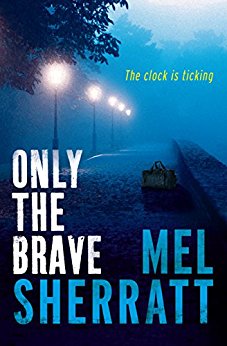
#BookReview ‘Only the Brave’ by @writermels #crime

A dead body, a bag of money, and a group of people all lying to the police and each other. Only the Brave by Mel Sherratt is third in the DS Allie Shenton books set in the Midlands city of Stoke-on-Trent. Mel SherrattThe sub-plot is a strong storyline here and it weaves in and out of the murder investigation throughout the book: Allie’s beloved sister Karen is expected to die within days. With a head full of grief, guilt, regrets and love for her sister, Allie confronts the underworld of Stoke to find the killer. Is the city’s crime lord Terry Ryder behind it all, even from his prison cell?
Mel Sherratt’s books are good value easy-read novels which get you hooked from page one and don’t let you go. As Karen lies in hospital, Allie must work out which petty criminal is lying to who and why, who has the most to gain and whose fingers are covertly dictating the action. And all the while she dreads having to question Terry Ryder in prison, the man she found herself attracted to despite all her instincts and her much-loved husband Mark. And to top it all, Allie senses someone is following her. Is her imagination running riot? Is it lack of sleep, or stress? Or is she being trailed by the attacker who put Karen into her coma seventeen years earlier?
If I have one criticism, it is that at times it moves too fast. I felt a little like a rabbit in the headlights and would have liked a few pages to catch my breath, to let the clues sink in and try to work out for myself whodunit.

Read my reviews of more books in the Allie Shenton series:-
TAUNTING THE DEAD #1ALLIE SHENTON
FOLLOW THE LEADER #2ALLIE SHENTON

If you like this, try:-
‘Beginnings’ by Helen J Christmas
‘Found’ by Harlan Coben
‘Lord John and the Private Matter’ by Diana Gabaldon

And if you’d like to tweet a link to THIS post, here’s my suggested tweet:
#BookReview ONLY THE BRAVE by @writermels via @SandraDanby http://wp.me/p5gEM4-2KW

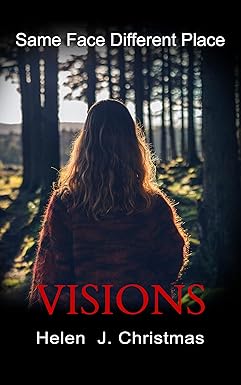
#BookReview ‘Visions’ by Helen J Christmas @SFDPBeginnings #thriller #romance

Crammed with Eighties references from Margaret Thatcher, Echo & the Bunnymen and Jane Fonda aerobics to Laura Ashley décor, Visions quickly immerses you in the world of Eleanor Chapman. Visions is part two of Eleanor’s story which started in the 1970s in Beginnings and will ultimately end far into the future. Helen J Christmas‘Same Face Different Place’ by Helen J Christmas is an ambitious thriller series focussing on a single gangland incident which has reverberations across the decades. It is a study of how to react to threats and violence, the nature of victimhood, and the power of fighting back.
There are times in Visions when it covers old ground from book one, but nevertheless the story slowly reeled me in. After the events of Beginnings, Eleanor and her son Elijah live in a caravan in a Kent village, safe from the London criminals who threatened them. Their neighbours, James Barton-Wells and his children Avalon and William become close friends. However Westbourne House, the ancestral home of the Barton-Wells family, is crumbling. When the house is declared a ruin and the repairs too expensive for James to pay, a sinister property developer offers to help. All too soon, his nasty son and equally nasty sidekick bring terror to the quiet village as the tentacles of threat from the past find Eleanor’s hiding place.
There are scenes of nasty violence which remind the reader this is not simply a story of petty crime. Eleanor, her family and new friends must face intimidation, assault, sinister stalking and abduction. At the heart of their survival is a defiance born of knowing they are right.

Click the title to read my reviews of the next books in this series:-
BEGINNINGS #1SAMEFACEDIFFERENTPLACE
PLEASURES #3SAMEFACEDIFFERENTPLACE

If you like this, try:-
‘The Truth Will Out’ by Jane Isaac
‘No Other Darkness’ by Sarah Hilary
‘Himself’ by Jess Kidd

And if you’d like to tweet a link to THIS post, here’s my suggested tweet:
#BookReview VISIONS by Helen J Christmas @SFDPBeginnings http://wp.me/p5gEM4-2q6 via @Sandra Danby

#BookReview ‘The Doll Funeral’ by Kate Hamer #mystery #suspense

The Doll Funeral by Kate Hamer is a dark, despairing and at times confusing tale of identity and the creeping links of family and genetics across the generations. It is about the difficult adoptive families, about ‘not fitting in’, and how blood families sometimes don’t work either. Ultimately, family is where you can find it and make it. Kate HamerRuby’s mother Barbara is a cleaning lady who nicks small things she thinks won’t be missed. Father Mick knocks Ruby around, forcing her to miss school until the bruises fade. Then on her thirteenth birthday, they tell her she is adopted. Ruby’s response is to run into the garden and sing for joy. Of course nothing is as simple as it appears.
Ruby, determined to find her birth parents, runs away and makes her way to the creepy home of a strange schoolfriend Tom. I found the thread of Tom, Crispin and Elizabeth rather unrealistic and at times gruesome. It does however act as an alternative take on dysfunctional families, wild children and parental neglect. The budding relationship of Tom and Ruby, two outsiders, is touching.
Ruby’s tale is alternated with that of her mother Anna who falls pregnant as a teenager, first abandoned and then reclaimed by her boyfriend. Although I empathised with Ruby, I found her viewpoint rather mature at times for 13. For me, the story of her search for family was complicated by her ability to see ghosts. She doesn’t know their names or identities, so she gives them names such as Wasp Lady and Shadow. Shadow is the most present, speaking with Ruby and passing her information. At times, Shadow seems threatening, at others like a brother/sister. When the identity of Shadow is finally revealed, it was underwhelming and an aside from the key storyline. Almost as if the author had too many good ideas and didn’t want to drop anything. That said, the cover is beautiful.
The portrayal of the forest, both Ruby and Anna grew up in the Forest of Dean, is vivid, at times both reassuring and threatening. The significance of the title, though, passed me by, and I would have liked more of Nana’s folk magic.
This is not a novel I can honestly say I enjoyed. It considers difficult, slippery topics and so, thankfully, there is no neat ending.

If you like this, try:-
‘Mobile Library’ by David Whitehouse
‘The Last of Us’ by Rob Ewing
‘Beginnings’ by Helen J Christmas

And if you’d like to tweet a link to THIS post, here’s my suggested tweet:
#BookReview THE DOLL FUNERAL by Kate Hamer via @SandraDanby http://wp.me/p5gEM4-2q1

#BookReview ‘These Dividing Walls’ by Fran Cooper @FranWhitCoop #historical

A young man arrives in Paris seeking respite from his grief, surrounding himself in the solitude of an attic flat loaned from a friend. Alongside him, his neighbours are happy and unhappy, they are getting by, they are lying to loved ones, lying to themselves. These Dividing Walls by Fran Cooper is a multi-layered story of microcosm and macrocosm, of an apartment block in Paris and its inhabitants, of city-wide anti-immigrant protests. Fran CooperA wave of racist violence enters the centre of Paris and the unfolding events are told through the lives of the residents at Number 37. Their lives converge and depart from each other, some are socially-minded, others watch from behind curtains. The young mother stretched so thin in the care of her three young children that she fears she will break. The banker who lost his job but is too ashamed to tell his wife. The homeless man who sleeps in a doorway on the street nearby. The silver-haired seller of art books who mourns her dead son. A young couple, new residents at Number 37, lock their door and turn off the television. The lives of all these people are affected by the xenophobic hatred which enters their street.
These Dividing Walls is at once a tender story and a violent one. Cooper writes with a love for Paris, a city she knows well, and this knowledge is in every sentence. A fond familiarity with Paris shines off every page, gently done, without shouting. The best book I have read this year.

If you like this, try:-
‘Quartet’ by Jean Rhys
‘An Officer and a Spy’ by Robert Harris
‘Fair Exchange’ by Michèle Roberts

And if you’d like to tweet a link to THIS post, here’s my suggested tweet:
#BookReview THESE DIVIDING WALLS by Fran Cooper @FranWhitCoop http://wp.me/p5gEM4-2KC via @SandraDanby

A poem to read in the bath… ‘We Needed Coffee But…’

There is something mesmeric about the rhythm of this poem by Matthew Welton which draws you onwards, like being tugged forward by the rope in a tug-of-war competition without your own momentum.

Matthew Welton

[photo: carcanet]

Because of copyright restrictions I am unable to reproduce the poem in full, but please search it out in an anthology or at your local library.

‘We Needed Coffee But…’

We needed coffee but we’d got ourselves convinced that the later we left it the better it would taste, and, as the country grew flatter and the roads became quiet and dusk began to colour the sky, you could guess from the way we retuned the radio and unfolded the map or commented on the view that the tang of determination had overtaken our thoughts, and when, fidgety and untalkative but almost home, we drew up outside the all-night restaurant, it felt like we might just stay in the car, listening to the engine and the gentle sound of the wind

Matthew Weldon is from Nottingham, UK. In 2003 he received the Jerwood-Aldeburgh First Collection Prize for The Book of Matthew [published by Carcanet], which was named a Guardian Book of the Year.

Listen to Matthew Welton read from ‘We Needed Coffee But…’ below.

Matthew WeltonWe Needed Coffee But…’ by Matthew Welton [UK: Carcanet] 

Read these other excerpts, and perhaps find a new poet to love:-
‘The Boy Tiresias’ by Kate Tempest
‘Runaways’ by Daniela Nunnari
‘The Roses’ by Katherine Towers

And if you’d like to tweet a link to THIS post, here’s my suggested tweet:
A #poem to read in the bath: ‘We Needed Coffee but…’ by @mtthwwltn via @SandraDanby http://wp.me/p5gEM4-2up

SaveSave

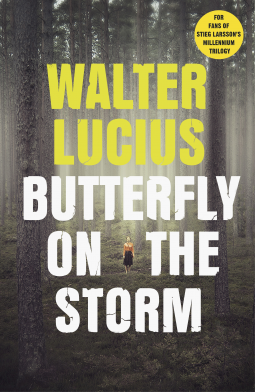
#BookReview ‘Butterfly on the Storm’ by Walter Lucius #thriller

This crime thriller is the first of a trilogy billed, as many thrillers are, as the new Millennium Trilogy. Butterfly on the Storm by Walter Lucius does feature horrific examples of abuse, it does feature a campaigning journalist, but for me it fell short of Stieg Larsson’s trilogy. Without that expectation, I would probably have enjoyed this thriller while at the same time being irritated that so much was crammed in. Walter LuciusThe action starts from page one and doesn’t stop to breathe. A young girl is the subject of a hit-and-run accident in the Amsterdam woods. In hospital, it becomes clear the girl is a young boy, dressed as a girl dancer and sexually abused by Afghan men now living in Holland. I found the portrayal of immigrant life in Holland fascinating and almost wish the author had examined this in more depth but the story spreads out to South Africa and Russia and its tentacles become confusing.
Accompanying the child to hospital is Dr Danielle Bernson who, following medical experience in Africa, is traumatized when she sees the child suffer. At the hospital, they meet journalist Farah Hafez, originally from Afghanistan, Farah’s identity was changed when she arrived as a child in Holland. She too has a lot of emotional baggage. Farah’s boss teams her with a more experienced journalist, Paul Chapelle, who she knew in Afghanistan. On the police side we have the pair of detectives assigned to the hit-and-run case, Joshua Calvino and Marouan Diba, a sort of young/old, idealistic/world-weary, good cop/bad cop pairing. There is a huge list of characters to accommodate the various storylines which include child trafficking, police corruption, political corruption, Russian violence and international terrorism. There is too much going on.
In the Millennium Trilogy, the first book had a clear distinctive story which allowed the reader to get to know the key characters which would move forward to book two. In Butterfly on the Storm, the first book feels like the episode of a television series where the ending has a hook to make you watch next week. This may work with television, but it left me feeling the novel was incomplete.

If you like this, try:-
‘Summer House with Swimming Pool’ by Herman Koch
‘The Long Drop’ by Denise Mina
‘The Accident’ by Chris Pavone

And if you’d like to tweet a link to THIS post, here’s my suggested tweet:
#BookReview BUTTERFLY ON THE STORM by Walter Lucius via @SandraDanby http://wp.me/p5gEM4-2Kf

First Edition: An Ice Cream War

Published in 1982 by Hamish Hamilton in the UK, An Ice Cream War by William Boyd is a darkly comic novel set in colonial East Africa during the Great War. It is one of the first novels by Boyd which I read, the others being A Good Man in Africa and Stars and Bars. This first edition hardback is signed by the author and selling [at time of going to print] for £175.

William Boyd

[photo: Eamonn McCabe]

William Boyd

It was shortlisted for the 1982 Booker Prize, won that year by Schindler’s Ark by Thomas Keneally, and won the John Llewellyn Rhys Prize.

The story
An Ice Cream War follows the fortunes of several disparate characters, including an expat farmer and a young English aristocrat, as they are swept up in the fighting in German East Africa during the First World War, their lives converging amid battle, betrayal, love, comedy and tragedy. Temple Smith is an American expat who runs a successful sisal plantation in East Africa, near Mount Kilimanjaro. Before war breaks out in August 1914, Smith is on cordial terms with his German half-English neighbour, Erich von Bishop. These separate strands gradually converge as the complacency of the artificial world of the British expat is swept away by war. Themes include greed, nationalism, love, and the futility of war.

The current UK edition
The current UK edition [below], published by Penguin, was re-issued in 2011. The images used on the front and back covers are from war footage from the Press Association archive. William BoydOther editions
My copy of An Ice Cream War [below] is well-thumbed, as are all my Boyd novels. William BoydThere have been many editions of this novel, here are some of the other British and US covers.

Read more about William Boyd’s books at his website.

‘An Ice Cream War’ by William Boyd [UK: Penguin] Buy at Amazon

If you like old books, check out these:-
‘The Sea The Sea’ by Iris Murdoch
‘The French Lieutenant’s Woman’ by John Fowles
‘Watership Down’ by Richard Adams

And if you’d like to tweet a link to THIS post, here’s my suggested tweet:
First Edition: AN ICE CREAM WAR by William Boyd #oldbooks via @SandraDanby http://wp.me/p5gEM4-2rN

#BookReview ‘New Boy’ by @Tracy_Chevalier #contemporary #Othello

When she arrives at school one day, Dee notices the new boy before anyone else and forsees he will have an impact on the world she lives in. Little does she know. This is Washington DC in the 1970s. A new black boy is starting his first day at an all-white school. New Boy: Othello Retold is not the usual novel you expect from Tracy Chevalier. Tracy ChevalierPart of the Hogarth Shakespeare collection of novels by contemporary writers re-telling Shakespeare’s most famous plays, it is thought-provoking, ambitious, but not totally successful. Modernising such a well-known classic drama is always going to be problematic, with readers who love or hate it. Othello, possibly Shakespeare’s most political of plays, is about love, jealousy, sexual bullying and manipulation. Difficult subjects for a school. Some reviewers think this book should be marketed to adolescents but for me, the novel’s flaw lies in its timeframe. The action takes place over one school day so the arrival of Osei and his relationship with Dee charges from flirting, friendship, commitment to caressing, whispering and hurtful jealousy between the hours of nine in the morning and four-ish in the afternoon. There is simply too much to cram into one day. I had less of a problem with the arc from flirting to jealousy, remembering the intense emotions of being pre-adolescent. However my perception of the world in which the story is set was not helped as, being English, I wasn’t aware that the top year of grade school means Dee, Osei, Ian and Mimi are 11-years old. I thought they were older.
How different it would have been to set it across Osei’s first week at school, allowing space for each character to be explored. The nastiness of bully Ian could be explored in depth, instead of passing references to his brothers whose examples of extortion he imitates, and his father who beats Ian for swearing. ‘His father had taken his belt to him early on to make clear that swearing was his domain, not his son’s.’ There is a deeper tale of manipulation & bullying trying to get out. But New Boy is shorter, at 192 pages, compared with Chevalier’s most recent novels – At the Edge of the Orchard, 305 pages; The Last Runaway, 353 pages – so no wonder the story feels constricted.

Read my reviews of Tracy Chevalier’s other novels:-
A SINGLE THREAD
AT THE EDGE OF THE ORCHARD
THE GLASSMAKER
THE LAST RUNAWAY

If you like this, try:-
‘Vinegar Girl: The Taming of the Shrew Retold’ by Anne Tyler [also part of the Hogarth Shakespeare series]
‘Foxlowe’ by Eleanor Wasserberg
‘The Lightning Tree’ By Emily Woof

And if you’d like to tweet a link to THIS post, here’s my suggested tweet:
#BookReview NEW BOY by @Tracy_Chevalier via @SandraDanby http://wp.me/p5gEM4-2JC

Great Opening Paragraph 99… ‘Couples’ #amreading #FirstPara

“‘What did you make of the new couple?’
The Hanemas, Piet and Angela, were undressing. Their bed-chamber was a low-ceilinged colonial room whose woodwork was painted the shade of off-white commercially called eggshell. A spring midnight pressed on the cold windows.”
John Updike From ‘Couples’ by John Updike 

Try one of these #FirstParas & discover a new author:-
‘The Go-Between’ by LP Hartley
‘Vanishing Acts’ by Jodi Picoult
‘True Grit’ by Charles Portis

And if you’d like to tweet a link to THIS post, here’s my suggested tweet:
#Books #FirstPara COUPLES by John Updike http://wp.me/p5gEM4-2qE via @SandraDanby