Tag Archives: contemporary novels

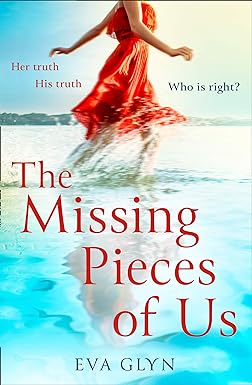
#BookReview ‘The Missing Pieces of Us’ by Eva Glyn @JaneCable #romance

The Missing Pieces of Us by Eva Glyn is a touching tale of love, self-awareness and how love persists over the years. Izzy and her daughter Claire are shopping. It is just before Christmas. The streets of Winchester are crowded and the air is icy. Izzy bumps into a tramp, a homeless man, and is sure she knows him. But when she turns round, he is gone. Eva GlynThis is the story of Izzy and Robin’s love for each other, their loss, and how they find themselves and each other again. Central to the story is a faerie tree. It is place where children leave gifts and messages for the fairies, and where the fairies leave their replies. It is a story of hope and compassion, of flawed characters, real people, finding their way out from the darkness. Beneath the faerie tree, Izzy and Robin swear eternal love to each other in 1986 but are soon after parted by circumstances. When they finally meet again, their memories of their early time together are so different: why? And whose memory is correct, whose is flawed?
This story combines a love story with suspense and a sprinkle of folklore.
This review was first published here in 2015 as ‘The Faerie Tree’ by Jane Cable. The book has since been republished by One More Chapter as ‘The Missing Pieces of Us’ by Eva Glyn, Jane Cable’s pen name.

Read my reviews of these other books by Eva Glyn:-
THE CROATIAN ISLAND LIBRARY
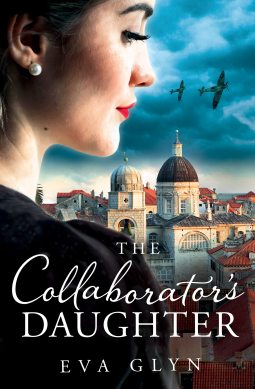
THE COLLABORATOR’S DAUGHTER

Also by Eva Glyn, writing as Jane Cable:-
ANOTHER YOU
ENDLESS SKIES
THE CHEESEMAKER’S HOUSE

If you like this, try:-
Love and Eskimo Snow’ by Sarah Holt
The Museum of You’ by Carys Bray
Please Release Me’ by Rhoda Baxter

And if you’d like to tweet a link to THIS post, here’s my suggested tweet:
#BookReview THE MISSING PIECES OF US by Eva Glyn @JaneCable https://wp.me/p2ZHJe-6YM via @SandraDanby

COMING SOON… THE NEXT BOOK I REVIEW WILL BE:- Eva Glyn
#BookReview ‘Old God’s Time’ by Sebastian Barry #contemporary #grief

Old God’s Time by Sebastian Barry is a sensitively and quietly written tale of family tragedy and loss. Beautiful, so subtle, with moments of extreme grief and love, flashes of helplessness and impending trouble. A difficult read but also enjoyable, Barry is a master of his craft. Sebastian BarryThe pace starts slowly, gently with Barry tightening the screw of perception as newly-retired policeman Tom Kettle [what a great name] is forced to remember what he has buried so deep. You may think, as I did, oh please not another story about abusive Irish priests; but this is about Tom and his beloved wife June, their children Winnie and Joe, not about the clergy. Barry dallies with our perception of what the story is about. He shows us Tom adjust to his existence without work, his flat, the changeable Irish weather, the coastline, at the same time exploring the nature of memory, lived memory, what is true and what is perception or presumption, while increasing the mystery of Tom’s past. The misty, stormy changing weather echoes this visibility/invisibility of personal truth.
Tom’s new routine is disturbed by a visit from two young detectives, uncomfortable in his presence, unsure of how to behave with such a venerable retired detective. Tom makes them cheese on toast and gives them a bed for the night. But their absence lingers in his mind as memories of an old crime resurface.
Is Tom Kettle a reliable or unreliable narrator? Is his truth believable and reliable – who is alive now, and who dead – or the confusion of an ageing memory? He sees real people, and ghosts, which suggests he is older than he is, confused, fading, vulnerable. As Tom revisits his memories again for the detectives, and in private moments on his own, the emotional story comes together. The responsibilities of husband and father stay with him, all of his time, ‘Things happened to people, and some people were required to lift great weights that crushed you if you faltered just for a moment. It was his job not to falter. But every day he faltered.’
A novel about the depth of love, it defines genre description. It is mystery, suspense, tragedy, gentle humour, contemporary, Irish history and crime but is ultimately a story of mourning lives lost and innocence destroyed. A dark read about lasting trauma, it is slow at times but please persist with it.

Read my reviews of these other novels by Sebastian Barry:-
A LONG LONG WAY
DAYS WITHOUT END #1DAYSWITHOUTEND
A THOUSAND MOONS #2DAYSWITHOUTEND

THE NEWER WORLD
THE WHEREABOUTS OF ENEAS MCNULTY
… and try the #FirstPara of THE WHEREABOUTS OF ENEAS MCNULTY

If you like this, try:-
A History of Loneliness’ by John Boyne
Last Stories’ by William Trevor
Did You Ever Have a Family’ by Bill Clegg

And if you’d like to share a link:
#BookReview OLD GOD’S TIME by Sebastian Barry https://wp.me/p2ZHJe-6Nb via @SandraDanby

COMING SOON… THE NEXT BOOK I REVIEW WILL BE:- Mick Herron

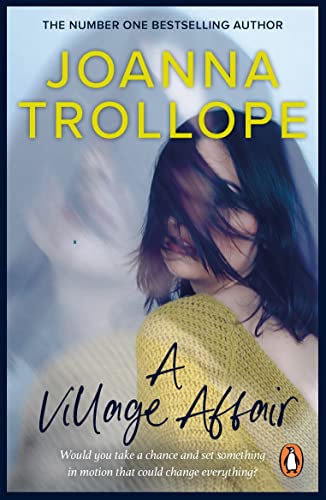
#BookReview ‘A Village Affair’ by Joanna Trollope #familysaga #rereading

The title of this Joanna Trollope novel is so clever. Yes, A Village Affair is about a love affair that takes place in a village. It’s also about a woman’s love for that village, a comfortable middle-class lifestyle and a house, and the reverberations of her subsequent love affair on such a small claustrophobic community. Joanna TrollopeWhen Alice Jordan moves to The Grey House in Pitcombe she knows at last she is living a beautiful life. The house is old and stylish, her husband successful, her three children adorable. She wishes for nothing more and fits comfortably into village routines. So why does it feel as if something is missing. When she falls in love with Clodagh Unwin, daughter of their richest neighbours, the whole village apple cart is upset and Alice’s life is suddenly the opposite of idyllic. ‘Once you had stopped letting things happen and started to make them happen, you couldn’t go back.’
Trollope charts the changes in Alice’s life through the descriptions of her homes. The stifling suburban home where she grew up, her first married home with Martin to the glorious Grey House. It is clear as she bounces from one home and one relationship to another – from smothering mother and silent father, to boring husband Martin, and Cecily, Martin’s cool garden designer mother – that Alice doesn’t know who she is or what she wants. She has fallen in love with a picture postcard image of marriage, but has married the wrong person. When she realises this and becomes open to change, making choices she has never considered before, she then must face the consequences good and bad. Her choices now affect more than just her.
First published in 1990, the story about a gay love affair has dated somewhat awkwardly. The neighbours all have a judgement about the Jordan’s marriage but that is what villages are like, everyone knows everyone else even if they don’t know them well or particularly like them. One village character feels so strongly about what’s happened that she weeps over and over again but ‘couldn’t quite describe what it was that she felts so strongly about.’ Another believes he understands more about poetry than life because, ‘life was often just too peculiar to take in.’
I first read this book thirty years ago and enjoyed again Trollope’s skill at characterization, the small details. Clodagh, in distress, becomes ‘an exotic broken bird with tattered, gorgeous plumage and splintered frail bones showing through.’ Toddler Charlie ‘who had fitted a raspberry on his finger like a thimble and was regarding it with wonder.’
It is possible to feel affronted at the now old-fashioned portrayal of a relationship between two women but this story is really about love full stop. Alice loves Clodagh but also loves her children, her parents and in some way still loves her husband. Love is never simple.

Here are my reviews of other Trollope novels:-
A PASSIONATE MAN
MUM & DAD
THE CHOIR
THE RECTOR’S WIFE

If you like this, try:-
The Lie of the Land’ by Amanda Craig
The Perfect Affair’ by Claire Dyer
Something to Hide’ by Deborah Moggach

And if you’d like to tweet a link to THIS post, here’s my suggested tweet:
#BookReview A VILLAGE AFFAIR by Joanna Trollope https://wp.me/p2ZHJe-6jI via @SandraDanby

COMING SOON… THE NEXT BOOK I REVIEW WILL BE:- Mick Herron

#BookReview ‘Clock Dance’ by Anne Tyler #contemporary #family

Every novel by Anne Tyler is a treat, I save them up, anticipate them. For me as a reader, she tells stories that seem ordinary but have exceptional depth, gentle stories which make me want to continue reading on into the night. For me as a writer, it is her I aim to emulate; her economy of word and scene, achieving depth without unnecessary diversion. So, to Clock Dance. Anne Tyler Told in three parts – 1967, 1977 and 2017 – this is the story of an ordinary woman, Willa Drake, to whom things outside normal life don’t happen. The three key events in her life – the disappearance of her mother, a marriage proposal, being widowed at 41 – are passive acts. Willa is not a proactive person. We meet her first as an eleven year-old, at home with her family; her emotionally-erratic mother, her passive, lovely father, her awkward younger sister Elaine. Willa takes on the motherly role, making a chocolate pudding, observing the ups and downs of her parents’ relationship with acute asides. At college, her boyfriend proposes to her and expects her to give up college and move across the country. In 2017, a confused phone call from the neighbour of her son’s ex-girlfriend sets in motion a chain of events that sees Willa gain a substitute grand-daughter but endanger her own marriage. Each time, Willa reacts to other people.
In Baltimore Willa and her second husband Peter move in with Denise who has been shot, and Denise’s nine-year-old daughter Cheryl and dog Airplane. It is an everyday story of a household, hospital visits, neighbours and community. Tyler’s observations of daily life are so spot-on, she tells the story in a way that makes it seem real, not a literary invention involving toil, plotting and rewriting. Without you noticing, time passes and people change so subtly it is impossible to put a finger on the point when the change started. Simple, complex, hugely perceptive.
This is a novel about meekly accepting your place in the world until the day arrives that you realise life is passing you by. Does Willa have the courage to find a new life? I was urging her on all the way. A 5* book for me.

Read my reviews of these other books by Anne Tyler:-
A SPOOL OF BLUE THREAD
FRENCH BRAID
LADDER OF YEARS
REDHEAD BY THE SIDE OF THE ROAD
VINEGAR GIRL

And read the #FirstPara of:-
DINNER AT THE HOMESICK RESTAURANT 
BACK WHEN WE WERE GROWN UPS

If you like this, try:-
‘Autumn’ by Ali Smith #1SEASONALQUARTET
‘The Stars are Fire’ by Anita Shreve
‘The Gustav Sonata’ by Rose Tremain

And if you’d like to tweet a link to THIS post, here’s my suggested tweet:
#BookReview CLOCK DANCE by Anne Tyler https://wp.me/p5gEM4-3J9 via @SandraDanby

#BookReview ‘The Love Song of Miss Queenie Hennessy’ by Rachel Joyce #contemporary

I was blown away by The Love Song of Miss Queenie Hennessy by Rachel Joyce and read it in two sittings. First, you do not need to have read The Unlikely Pilgrimage of Harold Fry before you read this. I don’t really think it matters which of the two you read first, they are companion books rather than prequel and sequel. Second, this is the most accurate portrayal of people living in a hospice that I have read, and it is not something often written about. Rachel JoyceRachel Joyce confronts head-on the fact of Queenie’s terminal illness, and that of her fellow residents at St Bernadine’s Hospice. But she doesn’t concentrate on their illnesses, she concentrates on their characters and in this way they form a colourful backdrop to Queenie’s story. They are not defined by their illnesses, and neither is Queenie. This is the story of her life, a story we learn because she is writing a long letter to Harold Fry.
Queenie is in the North-East of England, Harold is in Devon. They worked together many years ago. Queenie writes to Harold to tell him he is dying. He writes a reply, but instead of posting the letter he decides to deliver it himself and starts walking. That was the plot of The Unlikely Pilgrimage of Harold Fry, a book about Harold coming to terms with his own life.
This book is about Queenie’s life. Afraid he will not arrive before she dies, Queenie starts to write the story of her life – with the help of nun Sister Mary Inconnue who re-types Queenie’s handwritten notes. It is Queenie’s explanation of and apology for a wrong she did to Harold while they both worked at a brewery in Kingsbridge, Devon. As she nears her end, Queenie struggles to write, but Sister Mary quietly encourages her, lifts her when she is faltering, puts the notebook in her lap and tells her she has to finish her story.
It is so moving, and it is very funny. St Bernadine’s Hospice is a real place populated by real people and they are the fabric of Queenie’s life now. This is a book about death, and about life. It is about love, grief, difficult choices, and finally it is about making peace with yourself before the end.
Just read it!

Read my reviews of these other novels by Rachel Joyce:-
MAUREEN FRY AND THE ANGEL OF THE NORTH
MISS BENSON’S BEETLE
PERFECT

… and try the #FirstPara of these novels:-
MISS BENSON’S BEETLE
THE UNLIKELY PILGRIMAGE OF HAROLD FRY

If you like this, try:-
The Museum of You’ by Carys Bray
The Roundabout Man’ by Clare Morrall
Paper Cup’ by Karen Campbell

And if you’d like to share a link to THIS post, try:
#BookReview THE LOVE SONG OF MISS QUEENIE HENNESSY by Rachel Joyce via @SandraDanby http://wp.me/p5gEM4-1f5

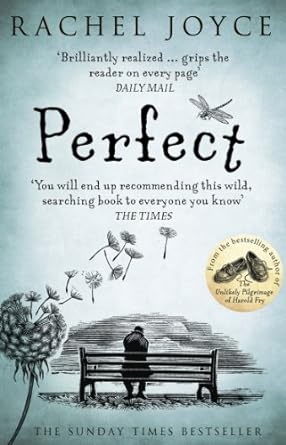
#BookReview ‘Perfect’ by Rachel Joyce #contemporary #time

In 1972, two seconds were added to time because it was Leap Year and because time was ‘out of joint’ with the movement of the Earth. It is the addition of these two seconds which causes such upheaval in the life of Byron Hemmings, an imaginative 11-year old boy, and his school friend James. Perfect by Rachel Joyce is about the impact of those two seconds, one stiflingly hot summer. Who would have thought that such a small stumble in time could disrupt so many lives? Rachel Joyce Joyce is an accomplished storyteller with a simple style which is deceptively complex. She weaves together Byron’s story with Jim’s, a troubled man who cleans tables in a supermarket café whilst battling his inner demons. Not once does she explain the link between these two stories, allowing the reader’s imagination to suggest possibilities, until right at the end when she surprises us with the truth. Car accidents feature in both strands, but neither car accident is what it seems. Both accidents are catalysts for what comes next.
The voice of the boy/almost teenager Byron is an interesting choice which allows Joyce to show us the inside of his parents’ marriage, without Byron fully understanding what he is seeing. At once he has both a child’s perception, and an adult’s. Joyce trusts the reader to believe or not believe Byron’s interpretation of things.
She has a similarly subtle approach to observation, hinting at the differences between Byron’s mother Diana, and Diana’s new friend Beverley, by how they walk. Diana’s ‘slim heels’ go “clip clip”. Beverley’s sandals follow with a “slap slap.” Diana is a wisp of a character, light, graceful and young, young in comparison with her son. Very young compared with her husband Seymour who dominates the house, despite his absence during the week, with his stern rules of do’s and don’ts. Diana’s car, a Jaguar he bought for her as a means of demonstrating his success, comes to symbolise his power over her. First she accedes to his control, then chafes against it and finally rebels.
Byron watches this with discomfort and uncertainty, unsure who this new mother, this new Diana, is. As his mother grows more mentally frail, he begins unconsciously to echo his father. He doesn’t like Beverley calling his mother ‘Di’ for example. “It was like cutting her in half.” As Diana leaves household tasks undone, he does them for her.
Joyce has a deft way of handling the mood. One moment, light-hearted, then with a sentence she twists the heartstrings and adds another small touch of mystery.  Jim learns that having a friend means laughing at things and seeing them through the friend’s eyes, as if the friend is “the part of themselves that is missing.” Do we all have something missing, which is provided by our friends and loved ones, or is it just Jim? And what happened to Jim to mess him up like this?
Perfect is about the nature of time, starting with the extra seconds and moving onto Diana’s abandonment of clocks. An exploration of whether time can heal a painful past.

Read my reviews of these other novels by Rachel Joyce:-
MAUREEN FRY AND THE ANGEL OF THE NORTH
MISS BENSON’S BEETLE
THE LOVE SONG OF MISS QUEENIE HENNESSY

… and try the #FirstPara of these novels:-
MISS BENSON’S BEETLE
THE UNLIKELY PILGRIMAGE OF HAROLD FRY

If you like this, try:-
‘Somewhere Inside of Happy’ by Anna McPartlin
The Language of Others’ by Clare Morrall
Mobile Library’ by David Whitehouse

And if you’d like to share a link to THIS post, try:
#BookReview PERFECT by Rachel Joyce via @SandraDanby http://wp.me/p5gEM4-KD