Tag Archives: Dinah Jefferies

#BookReview ‘Night Train to Marrakech’ by @DinahJefferies #mystery #Morocco

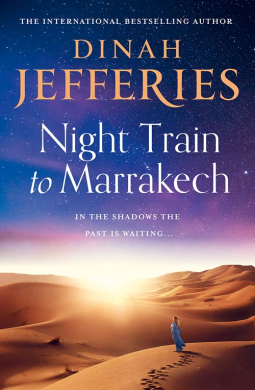
Night Train to Marrakech is last in the ‘Daughters of War’ trilogy by Dinah Jefferies and it, sort of, squares the circle. Its two years since I read the first, Daughters of War, and I was a little rusty on the three sisters, Hélène, Élise and Florence, who lived in the Dordogne during World War Two. Night Train to Marrakech is set in Morocco in 1966 and tells the story of fashion student Vicky Baudin, daughter of Élise, as she travels on the night train to meet her previously unknown grandmother. Oh, and to meet Yves St Laurent. Dinah JefferiesWhen Vicky arrives at the Kasbah du Paradis in the Atlas mountains she is puzzled by the cool welcome she receives from her grandmother Clemence. Determined to meet her fashion guru, and dismissing Clemence’s warnings to be wary of trouble, Vicky heads for the night lights. Morocco is politically unstable and while various factions fight, and foreign powers spy on the fighting, the Marrakech beautiful set including Yves St Laurent, John Paul Getty and Tabitha Pol seem to float above reality. Vicky soon sees the horrifying reality for herself and becomes entangled in situations she doesn’t understand.
Yes, Vicky and Bea, her cousin, are annoyingly naïve at times but their impulsive decisions drive the plot along and take the reader through the twists and knots of Clemence’s past and the mysteries of Vicky’s family. Reference to Victor, Vicky’s father, relate back to the first book in the trilogy. Although its possible to read Night Train to Marrakech as a standalone novel, many back references will be missed. A foreword explaining the trilogy, including summary of action and list of characters, would help.
I admit to being more fascinated by the life of Clemence than Vicky, and wish there had been more focus on her story. The second half of the novel went quicker for me, partly because of the number of secrets revealed. Marrakech is colourfully described and the Kasbah reminded me of Mary Stewart’s The Gabriel Hounds, set in a rundown Lebanese palace.
I enjoyed Daughters of War most of the trilogy, perhaps a case of one good novel being stretched too far. The three books are at heart about family, the visible and hidden connections that link relatives together, and how that familial link survives through war, distress and violence. Incidentally, and disappointingly, the train of the title features only on the front cover and in the Prologue of Night Train to Marrakech. The Kasbah du Paradis and Marrakech city have more importance to the story than the train and neither Vicky nor Clemence stand in sand dunes.

Click the title to read my reviews of the first two books in this trilogy:-
DAUGHTERS OF WAR #1DAUGHTERSOFWAR
THE HIDDEN PALACE #2DAUGHTERSOFWAR

And here are my reviews of other novels by Dinah Jefferies:-
THE TEA PLANTER’S WIFE
THE SAPPHIRE WIDOW
THE TUSCAN CONTESSA

If you like this, try:-
The Gabriel Hounds’ by Mary Stewart
The Photographer’s Wife’ by Suzanne Joinson
Summertime’ by Vanessa Lafaye

And if you’d like to tweet a link to THIS post, here’s my suggested tweet:
#BookReview NIGHT TRAIN TO MARRAKECH by @DinahJefferies https://wp.me/p2ZHJe-7uT via @SandraDanby

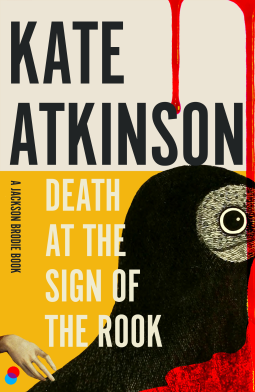
COMING SOON… THE NEXT BOOK I REVIEW WILL BE:- Kate Atkinson
#BookReview ‘The Hidden Palace’ by @DinahJefferies #WW2 #Malta

The Hidden Palace by Dinah Jefferies, second in the ‘Daughters of War’ trilogy, wasn’t quite what I expected. I felt disconnected from the first book which means it’s perfectly possible to be read as a standalone novel. Dinah JefferiesFlorence Baudin, one of the three Baudin sisters featured in Daughters of War, first in the series, has fled France leaving her sisters behind. It is 1944 and she is in England at the isolated Devon cottage of Jack, the English SOE agent who led her through France and Spain to safety. Florence is finally reunited with her mother Claudette who had stayed in England for the war. As sharp and feisty as ever, Claudette doesn’t make her daughter feel welcome but has a surprising request. Will Florence find her younger sister Rosalie who ran away from the family home in Paris in 1925? Florence, desperate to be closer to her mother, agrees despite the absence of clues, despite it being wartime.
This is a dual timeline story. 1944 with Florence, and 1925 with Rosalie Delacroix who flees Paris and goes to Malta where she finds work as a dancer. Rosalie is a more dynamic character than Florence, she makes things happen. Rosalie swaps career from dancer to journalist, publishing editor to campaigner, not all of which felt natural for her character. This is a novel of two separate stories – of aunt and niece, two decades apart – linked by genes but not impacting on each other.
Basically this tells of the search for a missing person. From the book blurb I anticipated a story set during the WW2 siege of Malta but it was late coming; at 70% through the novel Rosalie was still in 1930s. When war does come, I wanted to know more about Malta at this time. It was such a dramatic period in history and is seldom written about in fiction. Rosalie’s work as a plotter in the underground control centre during the defence of Malta is good, but slim pickings. Jefferies contrasts well the beauty of Malta with a darker underlying menace, prostitution, trafficking of women. This is an island invaded and settled by foreigners over many centuries with the looming threat of another world war. The hidden palace of the book’s title is a mesmerising maze of a building, like something out of an exotic Mary Stewart suspense novel. Is it a sanctuary or a prison. It’s a mysterious setting I was hoping would be used as a sanctuary during the war or perhaps a secret military headquarters.
The theme of unity and divisions between sisters shows how misunderstandings, if not addressed, can become impenetrable division. The deepest of bad feelings are better aired and faced, than deeply buried. Running away does not leave the old trouble behind, but also causes new problems.
I like to be immersed in characters and prefer long sections so I become emotionally involved. This story jumps around a lot between timelines which can be disorientating. The use of a cliffhanger at the end of each chapter is meant to add tension to keep the reader reading, but there needs to be a worthy pay-off each time. When chunks of years were skipped in Rosalie’s story, I wanted to know what was missing. It was like looking at a family photo album with pages torn out.
So, a bit of a curate’s egg. It didn’t advance the story of the three Baudin sisters, as I was expecting. But Rosalie’s story in Malta kept my attention.

Here are my reviews of the other books in the series:-
DAUGHTERS OF WAR #1DAUGHTERSOFWAR
NIGHT TRAIN TO MARRAKECH #3DAUGHTERSOFWAR

And here are my reviews of some of Dinah Jefferies’ other novels:-
THE TEA PLANTER’S WIFE
THE SAPPHIRE WIDOW
THE TUSCAN CONTESSA

If you like this, try:-
The Gabriel Hounds’ by Mary Stewart
The Postcard from Italy’ by Angela Petch
The Last Hours in Paris’ by Ruth Druart

And if you’d like to tweet a link to THIS post, here’s my suggested tweet:
#Books THE HIDDEN PALACE by @DinahJefferies https://wp.me/p2ZHJe-63n via @SandraDanby

COMING SOON… THE NEXT BOOK I REVIEW WILL BE:- SD Sykes

#BookReview ‘Daughters of War’ by @DinahJefferies #WW2 #adventure

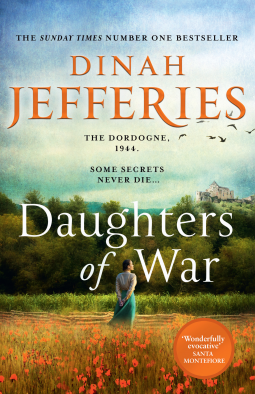
It’s a while since I read a book in gulps, not wanting to put it down, not wanting to leave the story. Daughters of War by Dinah Jefferies is the first of a World War Two trilogy about three sisters. And what characters they are, each individual, quirky, vulnerable, stubborn, brave and refreshing. I lurched from having one favourite, then another. At the end I was equally drawn to each. Dinah JefferiesIn the Dordogne live three sisters – Hélène, Élise and Florence – alone in their mother’s house during the German occupation. Hélène is the eldest, a nurse, the mother hen, the worrier. Élise is the rebel, helping the Resistance, disappearing at night. Florence, the youngest, is a gardener, a cook, a nature lover. They are tired of the war, terrified by the Germans and their increasingly violent and indiscriminate reprisals, desperate for a normal life without remembering what that might be.
Backstory is important and there are many mysteries, unspoken memories and fears, which can only by explained when something happens to trigger understanding. We see the girls’ mother Claudette, in England for the war, only through their memories but she is a pivotal character nonetheless.
The story opens in spring 1944 when the girls’ quiet life at their stone cottage in the woods is altered by two arrivals. Jack, a British Special Operations soldier, has parachuted in with orders to train the Resistance in preparation for the invasion. Tomas, a young German soldier, has deserted and is found hiding in their garden shed. What follows is a tale of innocence, love, bravery, cruelty, loyalty and honour.
Jefferies’ descriptions of the French countryside – the trees, the birds, the wildflowers, the Dordogne scenery, coupled with the descriptions of Florence’s cooking – work as a shocking juxtaposition to the horror of war in this oh so beautiful tranquil place.
A page-turner.

Here are my reviews of the next books in the series:-
THE HIDDEN PALACE #2DAUGHTERSOFWAR
NIGHT TRAIN TO MARRAKECH #3DAUGHTERSOFWAR

Read my reviews of these standalone novels by Dinah Jefferies:-
THE SAPPHIRE WIDOW
THE TEA PLANTER’S WIFE
THE TUSCAN CONTESSA

If you like this, try these:-
Dangerous Women’ by Hope Adams
The Blue Afternoon’ by William Boyd
Birdcage Walk’ by Helen Dunmore

And if you’d like to tweet a link to THIS post, here’s my suggested tweet:
#BookReview DAUGHTERS OF WAR by @DinahJefferies https://wp.me/p5gEM4-5vI via @SandraDanby

#BookReview ‘The Tuscan Contessa’ by @DinahJefferies #WW2

The Tuscan Contessa by Dinah Jefferies is a story of women at war where trust, between women, between strangers, is at the core of everything. Although the book’s title refers to Contessa Sofia de’ Corsi this is also the story of Italian-American Maxine, recruited by English special services to the fight against fascism in Tuscany. Once there and charged with assessing the ability and armaments of Italian partisans, Maxine she finds the fight is not only against the Germans but between Italian groups suspicious of each other. Dinah JefferiesIt is 1943 and in the exquisitely beautiful Tuscan countryside, trust is in short supply. Strangers may be spies or escaping Allied soldiers, the penalty for helping enemies has been followed by retaliation – massacres of villagers by the Nazis. Maxine, with her odd sounding Italian accent, must prove her worth if she is to do her job. She must also learn who to trust. When Maxine’s radio engineer James is wounded, he is sheltered by Sofia in her isolated castello. And so though very different characters, Maxine and Sofia find themselves on the same side; one is young, energetic and full of zeal, the other more cautious and concerned with protecting her husband’s legacy and castello. Neither can imagine the horrors they will see, and the risks they must take, before the war is ended.
The power of Jefferies’ story comes from the juxtaposition of the brutality and blood of war with the beauty of the Italian countryside. The stately villas of Sofia – Castello de’Corsi and in Florence – contribute both atmospherically and practically to the story, offering glimpses into the pre-war and wartime life, as well as hiding places and storage for contraband. And while the women hide their bottled fruit and vegetables, and knit secretly at night – jumpers and socks to keep the partisans warm throughout winters spent hidden in forests and caves – there is the uneasy feeling that some villagers continue to support the fascist cause and inform to the Germans. While Maxine goes on increasingly perilous missions with the partisans, Sofa must handle the unwelcome attention of a German officer whose smiles glint with the promise of sadism.
The book is the result of copious research and visits to locations and gives a clear and often difficult-to-read portrayal of real Tuscan villages during the German occupation. Jefferies shows the complicated moral dilemmas for Italians fighting first one enemy and then another, as the enemy hated at the beginning of the war becomes by 1943 the only hope of salvation. Every woman lives in a constant state of ‘not knowing’; not knowing who to trust, not knowing if a loved one is away fighting, injured, captured or dead. And meanwhile, daily life continues. Children are loved, babies are beget, love is declared and food is made and eaten. In the background is the gossip of reprisals and villagers killed, while in the foreground the women of Castello de’ Corsi continue to exist. As spring arrives with blue skies and beautiful wildflowers, the killing continues.
A moving story of women in wartime facing impossible odds, finding hidden courage and a dash of recklessness in order to fight the enemy. And the recognition of the line which, when crossed, means that your own life ceases to matter when the death of an enemy is preferable. Trust, between women, between strangers, is at the heart of everything.

And here are my reviews of some of Dinah Jefferies’ other novels:-
DAUGHTERS OF WAR #1DAUGHTERSOFWAR
THE HIDDEN PALACE #2DAUGHTERSOFWAR
NIGHT TRAIN TO MARRAKECH #3DAUGHTERSOFWAR

And these standalone novels:-
THE SAPPHIRE WIDOW
THE TEA PLANTER’S WIFE

If you like this, try these:-
The Burning Chambers’ by Kate Mosse
In Another Life’ by Julie Christine Johnson
The Tuscan Secret’ by Angela Petch

And if you’d like to tweet a link to THIS post, here’s my suggested tweet:
#BookReview THE TUSCAN CONTESSA by @DinahJefferies https://wp.me/p5gEM4-4Xa via @SandraDanby

#Bookreview ‘The Sapphire Widow’ by @DinahJefferies #historical #romance

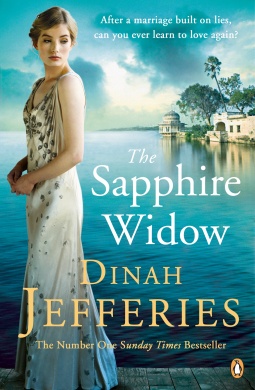
When Dinah Jefferies writes about Ceylon, you can smell it and sense it. The blossom, the flowers, the birds, she is excellent at evoking setting. The Sapphire Widow is not her strongest book, but it is nevertheless an enjoyable read. Whatever it may lack in plot – a weakness I think because the main character is the wronged one, rather than with a secret of her own to hide – it is a fascinating glimpse of mid-Thirties Ceylon and a beautiful seaside town. Dinah JefferiesIt is 1936 in Galle on the southernmost tip of Ceylon. Louisa Reeve and her husband Elliot seem to have it all except, after a series of miscarriages, a child. Louisa, who wonders if she will ever be a mother, is often alone as Elliot spends his spare time sailing with friends and on a cinnamon plantation in which he is an investor. But when tragedy hits Louisa discovers Elliot’s life, investments and hobbies were not as he told her. As she deals with one lie after another, Louisa continues to develop Sapphire, the retail emporium originally planned with Elliot and which provides the novel’s title.
Given the title I expected the gemstone business of Louisa’s father, and where Elliot worked, to be prominent in the plot. It is however lightly sketched and I felt rather short-changed. The description of the cinnamon plantation is fascinating though, as is the Galle setting, though at times it felt as if local history was being shoehorned in. Towards the end the plot went a little haywire, not what I was expecting. Frustrating, I was left feeling there was a deeper, more emotional story to be told.
An interesting read but not her finest.
CLICK HERE TO READ MORE ABOUT THIS BOOK

And here are my reviews of some of Dinah Jefferies’ other novels:-
DAUGHTERS OF WAR [#1 DaughtersOfWar]
THE HIDDEN PALACE [#2 DaughtersOfWar]

And these standalone novels:-
THE TEA PLANTER’S WIFE
THE TUSCAN CONTESSA

If you like this, try these:-
‘Beneath an Indian Sky’ by Renita d’Silva
The Gift of Rain’ by Tan Twan Eng
Quartet’ by Jean Rhys

And if you’d like to tweet a link to THIS post, here’s my suggested tweet:
#BookReview THE SAPPHIRE WIDOW by @DinahJefferies https://wp.me/p5gEM4-3xX via @SandraDanby

#BookReview ‘The Tea Planter’s Wife’ by @DinahJefferies #romance

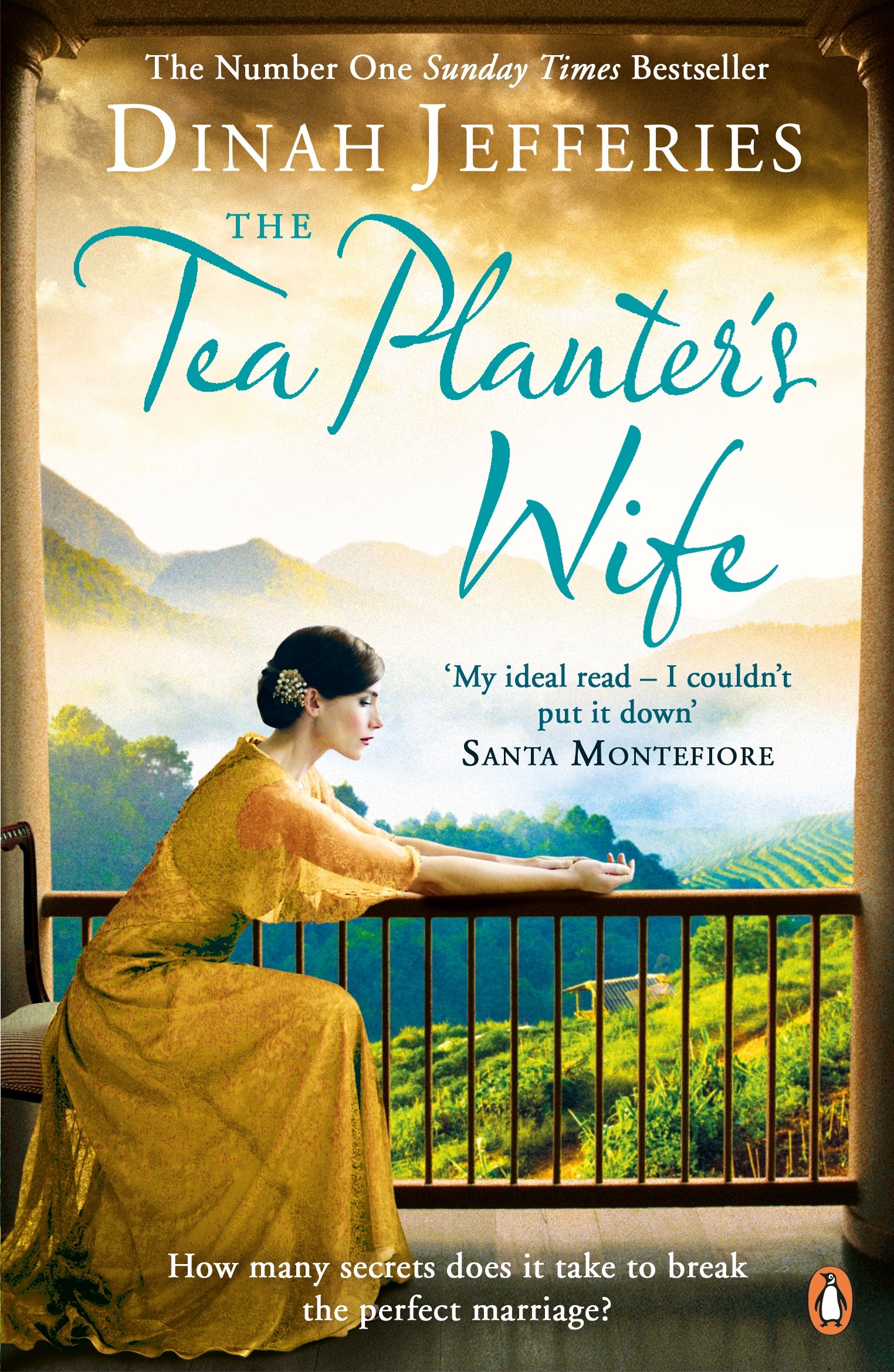
In Ceylon, between the First and Second World Wars, pre-Independence, a young wife arrives from England to join her new husband on his tea plantation. The Tea Planter’s Wife by Dinah Jefferies is a portrayal of an island riven by racial differences, a marriage riven by an inability to be honest, concluding that in the end skin colour should not matter. Dinah JefferiesAs her ship from England docks in Colombo, Gwen Hooper feels faint and is helped by a charming dark-skinned man. This is our introduction to Savi Ravasinghe, a pivotal character, a Sinhalese portrait painter who paints the rich in Ceylon, England and America. At this first meeting, Gwen demonstrates her naivety of racial tensions between Ceylon’s native Sinhalese population and the Tamil workers brought to the island by the British tea planters to work on the plantations. Soon after, trying to help an injured worker, she tramples over old sensitivities and the Raj way of doing things. I found Gwen both fascinating and a little irritating. The story is told totally from her viewpoint and, for me, her husband Laurence is rather remote. When Gwen gives birth to twins, the first, a boy, is christened Hugh. The second is a dark-skinned girl. In fear of accusations of infidelity with Savi, and rejection by her husband, Gwen panics. Her ayah Naveena takes the child to be cared for in a nearby village. Conveniently, the birth took place with only the ayah present so secrecy is assured. But Gwen lives on, haunted by her lies to her husband and her failings to her daughter.
This story hangs on the premise that Gwen feels unable to question her husband about the death of his first wife and child. When we finally get the answer in the last few pages, it seems obvious. Except of course the book is set in the late 1920s early 1930s so though obvious to a modern reader, it would not be widely known or understood at that time. To say more would give away the plot. This aside, I enjoyed this fragrant tale of the Hooper tea plantation, the difficulties faced after the Wall Street Crash, the changing times, the fashions and foods. There is a particularly unlikeable sister-in-law Verity, American vamp Christina, and bright and charming cousin-from-home Fran. The story felt alive in Ceylon. Jefferies cultivates a believable world from another time w ith the scents of cinnamon, sandalwood and jasmine combined with bullock dung, grease and rotting fish, servants dressed in white, and glamorous balls danced to the music of jazz. In contrast the short section in New York when Laurence and Gwen meet bankers and advertising men to launch the Hoopers Tea brand, seems remote and it was a relief to return to the lushness and complications of Ceylon.
CLICK HERE TO READ MORE ABOUT THIS BOOK

And here are my reviews of some of Dinah Jefferies’ other novels:-
DAUGHTERS OF WAR [#1 DaughtersOfWar]
THE HIDDEN PALACE [#2 DaughtersOfWar]

And these standalone novels:-
THE SAPPHIRE WIDOW
THE TUSCAN CONTESSA

If you like this, try these:-
‘The Gift of Rain’ by Tan Twan Eng
‘A Mother’s Secret’ by Renita d’Silva
‘The Garden of Evening Mists’ by Tan Twan Eng

And if you’d like to tweet a link to THIS post, here’s my suggested tweet:
#BookReviewTHE TEA PLANTER’S WIFE by @DinahJefferies http://wp.me/p5gEM4-2Rh via @SandraDanby