“Muriel Donnelly, an old girl in her seventies, was left in a hospital cubicle for forty-eight hours. She had taken a tumble in Peckham High Street and was admitted with cuts, bruises and suspected concussion. Two days she lay in A&E, untended, the blood stiffening on her clothes.”
‘These Foolish Things by Deborah Moggach
Tag Archives: fiction
#BookReview ‘Mrs Sinclair’s Suitcase’ by Louise Walters #romance #WW2
rs Sinclair’s Suitcase by Louise Walters is a gentle mystery of a love affair during war and its consequences for the following generations.
We follow the stories of two women: Dorothy Sinclair in 1940, and today Roberta who works at The Old and New Bookshop. Roberta is particularly fond of the secondhand stock, treasuring the notes and letters she finds hidden within their pages, wondering about the stories of the writer and the addressee. Each chapter starts with an excerpt from such a note.
The letter which starts Chapter One is dated 1941 and addressed to “My dear Dorothea” from Jan Pietrykowski in which he writes he “cannot forgive” her for “what you do, to this child, to this child’s mother, it is wrong.” The letter makes no sense to Roberta as it was written by her grandfather to her grandmother, and dated 1941 when Jan died in 1940. This is the puzzle which Roberta must unravel. What woman does Jan refer to, and what child?
Dorothy’s story starts with a plane crash. She lives on the edge of an airfield deep in the quiet Lincolnshire countryside, alone in her cottage [her husband is away at war] which she shares with two land girls. The plane crash brings the Polish pilot to her door. Nervous, Dorothy serves afternoon tea. She “watched Jan take a bite from a sandwich. His teeth were small, even and white. She noticed the way his fingers curved lightly around the sandwich. He was an elegant man… She watched him eat and he seemed unabashed, eating under her scrutiny. She, for her part, always ate guardedly. She hated the way eating contorted her face, and it made her feel exposed.” From their first meeting, he unsettles her. She is so buttoned-up; he is open, curious and confident.
There is a lot of sensuality in this tale. Despite herself, Dorothy wonders about the pilot. She does not miss her husband. When Jan visits the cottage again, she notices his “brown, lean, strong forearms and realizes how she feels… His arms were poetry.” But there is grief too, as this is wartime and what happened in the 1940s knocks on down the decades to affect Roberta, her father and her grandmother Babunia.
Here’s my review of A LIFE BETWEEN US, also by Louise Walters.
If you like this, try:-
‘At Mrs Lippincote’s’ by Elizabeth Taylor
‘The Paying Guests’ by Sarah Waters
‘After the Bombing’ by Clare Morrall
And if you’d like to tweet a link to THIS post, here’s my suggested tweet:
#BookReview MRS SINCLAIR’S SUITCASE by Louise Walters http://wp.me/p5gEM4-Na via @SandraDanby
Great Opening Paragraph… 48
“Master was a little crazy; he had spent too many years reading books overseas, talked to himself in his office, did not always return greetings, and had too much hair. Ugwu’s aunty said this in a low voice as they walked on the path. ‘But he is a good man,’ she added. ‘And as long as you work well, you will eat well. You will even eat meat every day.’ She stopped to spit; the saliva left her mouth with a sucking sound and landed on the grass.”
‘Half of a Yellow Sun’ by Chimamanda Ngozi Adiche
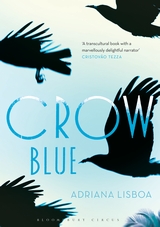
#BookReview ‘Crow Blue’ by Adriana Lisboa #contemporary
Crow Blue by Adriana Lisboa is a story of a teenage girl unravelling the mysteries of her identity. Vanja is 13, newly arrived in Colorado from Brazil, living with a man called Fernando about whom we know nothing. “I was 13. Being 13 is like being in the middle of nowhere. Which was accentuated by the fact that I was in the middle of nowhere.” Vanja’s mother dies and she leaves behind the ‘crow blue’ shells of Copacabana beach for the USA.
Her voice grabbed me from the beginning and, although at times I was a little lost with the narrative drive of her story with lots of side roads telling Fernando’s history as a freedom fighter in Brazil, Vanja’s voice kept me reading. I wanted to know the answers to the questions she was chasing on her road trip from Colorado to New Mexico.
She is on the cusp of womanhood and this gives her some nice observations of American society, words from the mouth of an innocent who is starting to see the world and people around her in a more adult way. “A woman passing my chair as she returned from the pool said I had a nice tan. When she smiled, her eyes disappeared into the folds of fat that covered her face. She looks like a feather pillow, I thought.” To Vanja, swimming pools in Colorado mean large bikinis and full-piece bathing suits; swimming pools at Copacabana, where she grew up, meant butt cheeks.
The sections on guerrilla warfare left me cold, I’m afraid. I had no idea of the history of Brazil at this time, which probably would have helped me, and I didn’t identify with the characters and their confusing code names. These sections were an intrusion into Vanja’s story.
As the road trip comes to a close and Vanja approaches her 14th birthday, she considers what it will mean to become an adult. “Fourteen was at least a nose in the adult world. And I had to unlearn all the codes I had learned to make way for others. Curiosity, for example: children had a gift for curiosity. Adults kept it chained up. In adults, curiosity shook paws, fetched balls and played dead.”
Lisboa was named on Granta’s list of ‘Best of Young Brazilian Novelists’ in 2012, she has written numerous novels and won prizes. But her name is relatively unknown here. To be fair, this book is set in the USA and is as much a comment on American society as Brazilian. It reflects our modern multi-cultural world and is a hopeful tale about finding your place in the world, finding your identity, and making a home wherever you are.
If you like this, try:-
‘Freya’ by Anthony Quinn
‘Angel’ by Elizabeth Taylor
‘Girl Runner’ by Carrie Snyder
And if you’d like to share this link, try:
#BookReview CROW BLUE by Adriana Lisboa via @SandraDanby http://wp.me/p5gEM4-DN
#BookReview ‘An Officer and a Spy’ by Robert Harris @Robert_Harris #thriller
Robert Harris is a master storyteller. Whether he turns his attention to a volcano exploding, ghost writing the memoirs of a questionable politician, the deathly politics of Rome’s Senate, or the Nazis winning the Second World War, you know you can rely on him to tell a rollicking tale based on sound handling of the historical facts. An Officer and a Spy has so many echoes of today it is uncanny.
The true story on which this novel is based too place in 1895. Don’t let the historical basis of the story deter you; this is a good old-fashioned spy story complete with forgeries, eavesdropping, surveillance and murder.The spy of the title is Captain Alfred Dreyfus, convicted as a military spy and sent to Devil’s Island. The captain is Georges Picquart, who witnesses the humiliation of Dreyfus in front of a baying mob. Picquart, who after this opening scene is promoted to run the Statistical Section of France’s Ministry of War, discovers evidence that puts Dreyfus’ conviction in doubt. His superiors dismiss his concerns and tell him to forget them. He doesn’t forget, instead undertaking his own investigations which uncover evidence of a new spy. His efforts lead him to a prison cell.
Aghast at the army’s willingness to accept a miscarriage of justice rather than the upset of a retrial, Dreyfus doesn’t stop fighting for justice. “For the first time in my life I carry hatred inside me. It is an almost physical thing, like a concealed knife. Sometimes, when I am alone, I like to take it out and run my thumb along its cold, sharp blade.”
Underlying the spy story is the fact that Dreyfus is a Jew. The anti-semitism in the French army portrayed by Harris is deeply disturbing in the light of rising right-wing extremism in Europe today against minorities.
The cause of Dreyfus is taken up by luminaries of the time, including the novelist Emile Zola, who uses the power of the press in the fight to bring Dreyfus home for re-trial. To Picquart , the army’s refusal to admit its mistake “really, it is beyond hypocrisy; it is beyond even lying; it has become a psychosis.”
Read my reviews of these other thrillers, also by Robert Harris:-
MUNICH
PRECIPICE
V2
… and try the #FIRSTPARA of THE GHOST, also by Robert Harris
If you like this, try:-
‘The Ways of the World’ by Robert Goddard #1WIDEWORLD
‘Homeland’ by Clare Francis
‘Dominion’ by CJ Sansom
And if you’d like to tweet a link to THIS post, here’s my suggested tweet:
#BookReview AN OFFICER AND A SPY by Robert Harris @Robert_Harris via @SandraDanby http://wp.me/p5gEM4-Cm
Great opening paragraph…33
“I remember, in no particular order:
– a shiny inner wrist;
– steam rising from a wet sink as a hot frying pan is laughingly tossed into it;
– gouts of sperm circling a plughole before being sluiced own the full length of a tall house;
– a river rushing nonsensically upstream, its wave and wash lit by half a dozen chasing torchbeams;
– another river, broad and grey, the direction of its flow disguised by a stiff wind exciting the surface;
– bathwater long gone cold behind a locked door.
This last isn’t something I actually saw, but what you end up remembering isn’t always the same as what you have witnessed.”
‘The Sense of an Ending’ by Julian Barnes
Great opening paragraph…32
Great Opening Paragraph… 30
“There wasn’t much to be said for the place, really, but it had a roof over it and a door which locked from the inside, which was all I cared about just then. I didn’t even bother to take in the details – they were pretty sordid, but I didn’t notice them so they didn’t depress me; perhaps because I was already at rock-bottom. I just threw my one suitcase on to the bed, took my few belongings out of it and shut them all into one drawer of the three-legged chest of drawers. Then there didn’t seem to be anything else I ought to do so I sat in the arm-chair and stared out of the window.”
‘The L-Shaped Room’ by Lynn Reid-Banks
Great opening paragraph… 29
“On Friday 25 October, exactly one week before the first body was discovered at the Dupayne Museum, Adam Dalgliesh visited the museum for the first time. The visit was fortuitous, the decision impulsive and he was later to look back on that afternoon as one of life’s bizarre coincidences which, although occurring more frequently than reason would expect, never fail to surprise.”
‘The Murder Room’ by PD James
Great opening paragraph… 27
“All day, the colours had been those of dusk, mist moving like a water creature across the great flanks of mountains possessed of ocean shadows and depths. Briefly visible above the vapour, Kanchenjunga was a far peak whittled out of ice, gathering the last of the light, a plume of snow blown high by the storms at its summit.”
‘The Inheritance of Loss’ by Kiran Desai