Tag Archives: genealogy

#BookReview ‘The End of the Day’ by Bill Clegg #contemporary

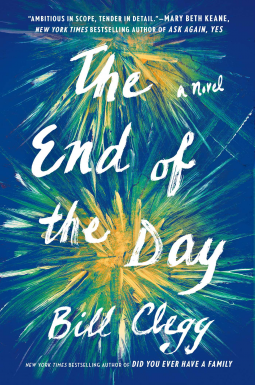
Three girls grow up living near each other in Wells, Connecticut. Dana. Jackie. Lupita. Each in a different social class. With or without wealth. With or without expectations. Privilege, no privilege. One betrayal touches their lives and has ramifications for the next generation. The End of the Day by Bill Clegg is about the fragility of loyalty when teenage bonds are tested by love, jealousy, indiscretions, secrets and lies. ‘To end a friendship, it just takes someone willing to throw it away.’ Because when a decision is taken, more than one life is affected. Bill CleggClegg has written a genealogical story wrapped up in two timelines, the years not defined but basically the Sixties and the Noughties. An elderly woman, frail and confused, sets out from New York on an excursion. Another old woman wakes in her family home to a beautiful passage of memories. A taxi driver in Hawaii ignores the repeated messages left on her mobile phone. These three are connected by a youthful flirtation, a pregnancy, arrangements made and lies told, assumptions made. A fascinating story, characters so believable, but the details lacking in clarity – perhaps because so many lies have been told. In the Noughties are mother and son Alice and Hap. Hap’s life takes two momentous turns when his father is seriously ill in hospital, the same hospital where his wife has just given birth to their baby daughter. A little girl still, significantly, without a name.
The first half is a slow read with beautiful writing that at times edged towards the self-indulgent. The book, though not long, felt long. I wanted occasional clarity of story and shorter paragraphs. I was unclear about the different houses featured – the childhood homes of Jackie and Dana and the area in which they lived. Perhaps the author knows it so well he forgot to be clear for the reader. The story moves location and year without specification which can be disorientating.
In re-reading the notes I wrote after finishing the book, I found I had twice written ‘lacking clarity’. The story is a sad one, of connections made, lost, and unknown, but for me it could be more touching with a clearer narrative spine. That said, the story stayed with me days after I finished it – always a good sign. The parallels between the generations, the vulnerability of a baby dependent on adults for the truth of its origins, the duty to protect and the urge to run from an old life. An okay story wrapped up in exquisite writing.

Here’s my review of DID YOU EVER HAVE A FAMILY?, Bill Clegg’s first novel.

If you like this, try:-
A Sudden Light’ by Garth Stein
Summertime’ by Vanessa Lafaye
We Are Water’ by Wally Lamb

And if you’d like to tweet a link to THIS post, here’s my suggested tweet:
#BookReview THE END OF THE DAY by Bill Clegg https://wp.me/p5gEM4-523 via @SandraDanby
#BookReview ‘The Sun Sister’ by Lucinda Riley #romance

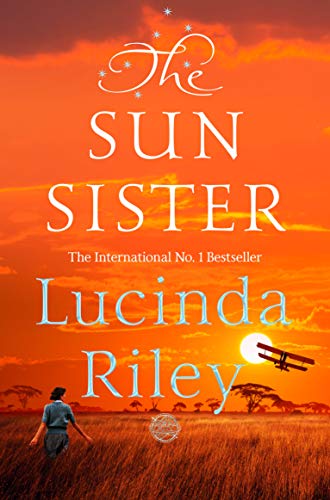
Electra, the youngest d’Aplièse sister in the Seven Sisters series of adoption mysteries by Lucinda Riley, has always seemed the most explosive personality of the siblings. And so The Sun Sister, sixth in the series and the one dedicated to telling the story of Electra’s family history, is explosive too. It’s a 5* read and a long one, 850 pages, as Riley digs deep into Electra’s African origins and the drug epidemic of today’s world. Lucinda RileySupermodel Electra seems to have it all, fame, beauty, money, rock star boyfriend, a glamorous lifestyle in Manhattan. But she also has a drink and drug habit. Her behaviour is erratic, obsessive, selfish and angry, made worse by the sudden death of her adoptive father Pa Salt and being ditched by her boyfriend Mitch. Cutting herself off from friends and family, Electra is spiralling downwards when she receives a letter from a strange woman claiming to be her grandmother.
The Sun Sister tells the story of Electra’s life now in New York 2008, interleaved with that of Cecily Huntley-Morgan, daughter of a fine New York family who, in 1938, has just been jilted by her fiance. Taking up the invitation of her glamorous and eccentric godmother Kiki Preston to escape the gossip and return with her to Africa, Cecily finds herself part of the infamous Happy Valley set living beside Lake Naivasha in Kenya. Unable to stick with Kiki’s partying and frequent hangovers, Cecily makes a friend of Katherine Stewart, soon be married to cattle rancher Bobby Sinclair, who introduces her to life in the bush and to Bobby’s friend, fellow rancher Bill Forsythe. With war approaching, Cecily finds herself in an impossible position. She must choose whether to stay in Africa or take a risky passage home to America. She stays and life presents her with tragedy and a discovery that will change the direction of her life.
Cecily’s story is told to Electra by her grandmother, Stella Jackson, a prominent black rights activist in America. With Stella’s help Electra begins to understand how being black affected her childhood in a predominantly white world. In drug rehab Electra must face up to her addictive behaviour, understand its roots and learn to live life differently. Stella insists that in order to understand her birth family, Electra must first learn about Cecily’s life in Africa
Previous novels have concentrated on the stories of the individual sister’s birth family two generations back, and I have longed to know more about the sister’s birth parents. I wanted the family connections to be immediate, more accessible, and in The Sun Sister Riley delivers. The life of Electra’s birth mother acts as plot pivot which deepens the emotion of the story. Interestingly, in the previous six books I found Electra the least sympathetic and difficult to like sister, but The Sun Sister explains how Electra became the adult she is at the beginning of this ambitious series. She has the most dramatic character curve of any of the sisters so far.
Overall, The Sun Sister is excellent though perhaps slightly too long, understandable given the difficult subjects addressed.

Read my reviews of some of the other novels in Lucinda Riley’s ‘Seven Sisters’ series:-
THE SEVEN SISTERS #1SEVENSISTERS
THE STORM SISTER #2SEVENSISTERS
THE SHADOW SISTER #3SEVENSISTERS
THE PEARL SISTER #4SEVENSISTERS
THE MOON SISTER #5SEVENSISTERS
THE MISSING SISTER #7SEVENSISTERS

… plus my reviews of these standalone novels, also by Lucinda Riley:-
THE BUTTERFLY ROOM
THE GIRL ON THE CLIFF
THE LOVE LETTER

If you like this, try:-
‘Pale as the Dead’ by Fiona Mountain #1NatashaBlake
The Ghost of Lily Painter’ by Caitlin Davis
The Irish Inheritance’ by MJ Lee

And if you’d like to tweet a link to THIS post, here’s my suggested tweet:
#BookReview THE SUN SISTER by Lucinda Riley https://wp.me/p5gEM4-4AT via @SandraDanby

#Bookreview ‘The Irish Inheritance’ by @WriterMJLee #history #genealogy

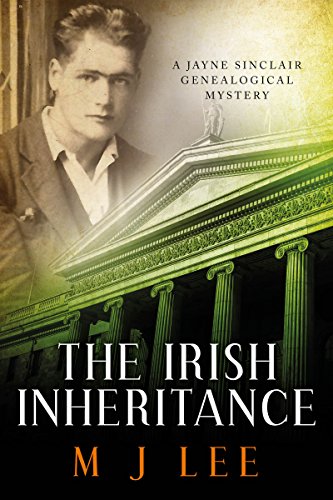
In 1921, a British soldier is killed on a hillside outside Dublin. In 2015, former police detective Jayne Sinclair, turned genealogy investigator, takes on a new client. The Irish Inheritance by MJ Lee is the first in the Jayne Sinclair series, weaving together stories of the Easter Rising in 1916 and the subsequent Irish War of Independence, with the unravelling of secrets kept for a century. MJ Lee Jayne’s client, John Hughes, was adopted and raised happily in America. Now elderly, frail and dying, he is desperate to find the truth about his birth and adoption. The key piece of evidence he has kept all his life, is a book; but he doesn’t know how he came to possess it. He kept it knowing it was a link to his birth family. Jayne must dig deep into records and think outside the box to put together the threads of John’s story. Meanwhile she is having problems at home, John Hughes’s nephew is pressuring her for results, and she has the odd feeling she is being watched.
The strongest part of this story is the Irish strand and the mystery increases as we see Jayne in 2015 researching one mundane document after another, and then read the 1920s strand telling the true story of the Irish people she is trying to discover. The questions of how war pits family and friends against each other, retained guilt, apologising for war misdeeds, truth and forgiveness, run throughout.
I wasn’t totally convinced by the threat to Jayne, it felt rather shoehorned in to add a ‘crime’ element. Perhaps not surprisingly, after the Jayne Sinclair series MJ Lee has gone on to write the Inspector Danilov series of historical crime fiction.
CLICK HERE TO READ MORE ABOUT THIS BOOK

If you like this, try:-
‘Beside Myself’ by Ann Morgan
‘The Indelible Stain’ by Wendy Percival
‘Deerleap’ by Sarah Walsh

And if you’d like to tweet a link to THIS post, here’s my suggested tweet:
#BookReview THE IRISH INHERITANCE by @WriterMJLee https://wp.me/p5gEM4-3Ex via @SandraDanby

#Bookreview ‘File under Fear’ by Geraldine Wall #genealogy #mystery

Second in the series about probate researcher turned genealogy detective Anna Ames, File Under Fear by Geraldine Wall takes off running from where the previous book left off. This is a well-written, page-turning series that combines family history, crime, family and secrets. But for me, the touchstone that makes it special is the sub-plot of Anna’s home life and her husband Harry’s dementia. If you haven’t read book one in the series, I suggest you start there to see the full emotional depth. Geraldine Wall Anna’s new contract sounds boring: to write a business report on Draycotts, the company which makes Drakes lurid orange and green drink, analysing how the family members coordinate together to run a successful business. But there is a secret element to her contract, to locate a missing person for CEO Gerald Draycott. This case sees Anna physically and emotionally intimidated and encompasses bullying, illegal smuggling and rape. An intense story with red herrings and wrong assumptions made about family members, the actual crimes being committed and in which Anna questions who to trust. Backing her up are her very likeable family and the multi-talented more-than-workmate Steve. Some of the resolutions fall into place a little conveniently at the fast-paced ending, but this is a satisfying tale.
What makes this series so different, and adds the emotional depth in spades, is Harry’s illness and how the family and friends cope. Sometimes they struggle but ultimately they manage the reality of their life with compassion, humour and love. This series is maturing nicely.

Here’s my review of the first in this series by Geraldine Wall:-
FILE UNDER FAMILY #1ANNAAMES

If you like this, try:-
Run’ by Ann Patchett
Shadow Baby’ by Margaret Forster
Deadly Descent’ by Charlotte Hinger

And if you’d like to tweet a link to THIS post, here’s my suggested tweet:
#BookReview FILE UNDER FEAR by Geraldine Wall https://wp.me/p5gEM4-3Ue via @SandraDanby

#BookReview ‘File under Family’ by Geraldine Wall #genealogy #mystery

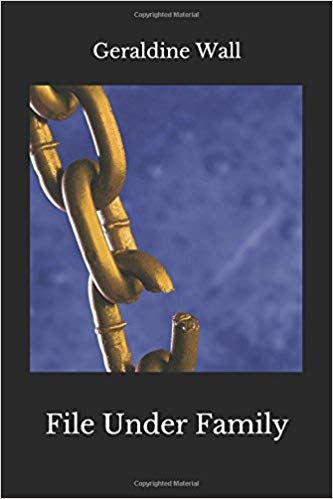
Anna Ames is a trainee probate genealogist working for Triple H, Harts Heir Hunters, and File under Family is the first in a series of genealogy mysteries about Anna by Geraldine Wall. When Margaret Clark dies Anna is charged with finding her missing heir, daughter Briony. The trail leads abroad and unleashes an international social media campaign, reveals sexual abuse in prison and considers how enthusiasm can conflict with client confidentiality. Geraldine Wall Wall introduces the character of Anna and her family life which I am sure will continue to feature throughout the series. While she faces problems balancing work with studying for her Diploma in Genealogy qualification, these are nothing when compared to Anna’s stress at home. Her husband Harry has early-onset dementia so Anna’s father George has moved in to help with caring for Harry and their two teenagers, Ellis and Faye. Faye has a new Russian boyfriend who wants to take her to Russia with him. Ellis is auditioning for a role in the school panto while George is investigating his spiritual side and writing poetry. Worst of all, as Harry’s condition gradually deteriorates he becomes increasing aggressive towards Anna. Into this walks an unattractive stranger.
I found the first couple of chapters disorientating as the story pitches straight into Anna’s day with minimal explanation of her job. But the story settles down and the mystery of Briony’s whereabouts kept me reading. I particularly liked the characters of Margaret’s friends, Joan and Diane, and the importance of Bob the dog in the family dynamics. Anna’s home life is at times a little over-complicated as each family member has their own drama. Anna is a positive character, strongly defending her own family and trying to do her best for her client, albeit crossing the line at times and getting into trouble. This only serves to endear her as a convincing character. However the last quarter of the novel, after Briony’s case is solved, seemed to meander almost as if it was merging straight into book two in the series.
Not so much a genealogical mystery, more a family drama enriched by Anna’s job as a probate genealogist.

Here’s my review of the next in this series by Geraldine Wall:-
FILE UNDER FEAR #2ANNAAMES

If you like this, try:-
‘The Cheesemaker’s House’ by Jane Cable
‘The Lie of the Land’ by Amanda Craig
The Ghost of Lily Painter’ by Caitlin Davis

And if you’d like to tweet a link to THIS post, here’s my suggested tweet:
#BookReview FILE UNDER FAMILY by Geraldine Wall https://wp.me/p5gEM4-3Aw via @SandraDanby

#BookReview The Indelible Stain by Wendy Percival #genealogy #mystery

When the key character of a novel goes on holiday or visits a picturesque place, you know something is going to happen. Genealogist Esme Quentin in The Indelible Stain by Wendy Percival goes to Devon to help a friend archive the records of a local charity for underprivileged children. Second in the Esme Quentin genealogical mysteries, this is an enjoyable story of convict history set in a beautiful Devon location. But beneath that beauty lurk fraud, lies and revenge. Hatred and bitterness reach from the past to the current day. Wendy PercivalUp early on her first morning, Esme takes a walk on the wild beach and finds a body. The woman, just alive, seems to have fallen from the cliffs. Her last words, spoken to Esme, are key to the mystery which follows. “I lied,” she says. Beside her body is an old sepia photograph. The police don’t take seriously Esme’s concerns that the woman’s last words combined with the mystery photograph indicate foul play, so Esme decides to identify the family in the photograph.
Meanwhile, Neave Shaw is worrying about her mother who has disappeared after sending a confused, possibly drunken, email. Worried and not understanding her grandmother’s dismissive attitude to Bella’s disappearance, Neave presses for answers but is interrupted by a knock on the door. It is the police. Neave arrives in Warren Quay and asks Esme for help in understanding why her mother died. Esme quickly puts a name to one of the people in the sepia photograph: Sarah Baker, a thief who was transported as a convict in 1837. Sarah’s story adds a fascinating layer of history to this whodunnit and whydunnit mystery. But what is Sarah’s link to Neave’s dead mother? And did Bella fall or was she pushed? Esme’s research into Sarah’s convict history is helped by the presence of the Mary Ann, a restored nineteenth-century sailing ship with an on-board museum about the history of convict transportation.
The last few pages move at top speed as Esme discovers hidden identities and double-crossings and races to find Neave to warn her of danger. She knows that whoever killed Bella to protect the secret will not hesitate to kill again. I would have liked to read more about Sarah Baker’s journey on a convict ship to Australia and her life there, showing some of the facts rather than having Esme discover them in a dry record search. So much tantalising history lies beneath the surface of this story. I found some elements confusing at times as the story moves so fast and also because of the number of aliases and marriages; this might have been eased by merging or dropping some minor characters, for example Ruth/Maddy, Dan/Felix. But Percival’s characterisation of some minor characters was spot on; I particularly liked retired schoolteacher Miss Hodge and Neave’s irascible grandmother Gwen.
This is a well-paced genealogical thriller enriched by its Australian and Irish links and demonstrating how the resentment of wrongdoing can persevere across the generations.

Here’s my review of the first in the Esme Quentin series, BLOOD-TIED.

If you like this, try these:-
The Seven Deaths of Evelyn Hardcastle’ by Stuart Turton
Foxlowe’ by Eleanor Wasserberg
‘The Witchfinder’s Sister’ by Beth Underdown

And if you’d like to tweet a link to THIS post, here’s my suggested tweet:
#BookReview THE INDELIBLE STAIN by Wendy Percival https://wp.me/p5gEM4-3xs via @SandraDanby

#BookReview ‘Fred’s Funeral’ by Sandy Day #genealogy #family #WW1

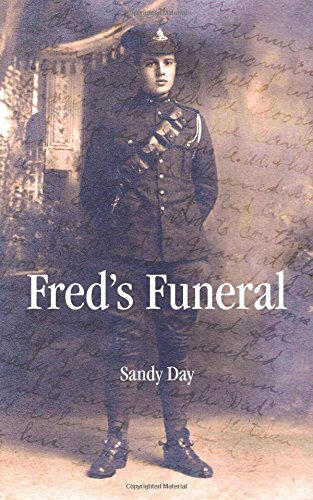
None of us have the luxury of hearing what is said about us after we are dead. In Fred’s Funeral, Canadian author Sandy Day tells the story of one soldier, returned from the First World War, who felt misunderstood and sidelined by his family. Only when he dies in 1986, seventy years after he went to war, does he observe his own funeral and find out what they really think of him. Sandy DayFred Sadler has lived his post-fighting years in one institution or another. Clearly he is suffering from some form of shell shock or Post-Traumatic Stress Disorder but this goes undiagnosed. There are periods of living in boarding houses, his family is unwilling to have him live with them, until his behaviour deteriorates and he is sent back to hospital. Now dead and trapped as an unwilling ghost, Fred observes his funeral presided over by Viola, the sister-in-law he always disliked. As the mourners sit around and share memories of Fred, he watches, frustration mounting, as he is unable to correct their observations. They portray a ‘Fred Sadler’ which he does not recognise. I kept expecting something to happen; a true memory of the war, an event, which would explain Fred’s illness and set the record straight with his family. But it didn’t come. The story is told in linear fashion; the anecdotes of Viola and the remaining family are interchanged with Fred’s reaction to these stories plus a few flashbacks to the war. Clearer signposting of these sections would make reading easier.
Day clearly captures the time and place of post-Great War Canada, a subject which is new to me. However I found the repeated digressions into the extended family history and details of the lifestyle a distraction from the main story [so many cousins, great-great grandparents and houses]. I so wanted to cut some of these unrelated sections to allow a stronger novel to push its way to the surface; simpler, more powerful. The inclusion of so many family details makes me wonder if the core of Fred’s Funeral is a memoir, inspired by a real family, from which the author feels unable to cut some relations and take the leap into pure fiction.
The portrayal of Fred’s experience at Whitby Hospital for the Insane is heart breaking, as is the disinterest of his family. For them, Fred is an embarrassment. It is a sad indictment of our treatment of soldiers returning from war and our ignorance that the effect of fighting can last a lifetime. It is easy to assume that in the 21st century this has changed, but the modern day strand of Day’s story suggests it hasn’t. It is as if Fred’s life has paused. “He banished feeling anything long ago. He feels timid. He feels tentative, like every step he takes is on a thick layer of ice and at any moment, he might crash through into a frenzy of drowning.”
At the end of the novel, there is no ‘reveal’, no surprise, and I felt a little let down. Overall, this is a thoughtful examination of how family tensions, petty jealousies and misunderstandings can spread down the generations. Gossip and guesses are transformed into ‘truth’.

If you like this, try:-
Etta and Otto and Russell and James’ by Emma Hooper
‘Wake’ by Anna Hope
‘Yuki Chan in Bronte Country’ by Mick Jackson

And if you’d like to tweet a link to THIS post, here’s my suggested tweet:
#BookReview FRED’S FUNERAL by Sandy Day https://wp.me/p5gEM4-35o via @SandraDanby

SaveSave

#BookReview ‘Bloodline’ by @FionaMountain #geneaology #mystery

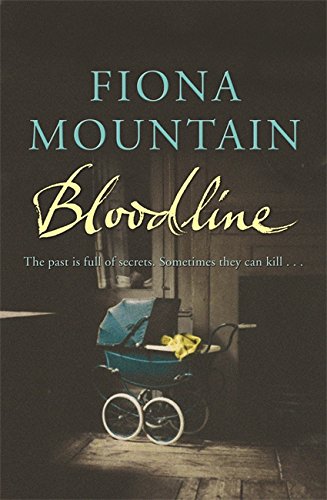
Bloodline by Fiona Mountain is a combination of genealogical mystery, murder investigation and historical examination of the Nazis. The second Natasha Blake mystery, it covers a lot of ground from its seemingly innocuous starting point when Natasha hands in her report to a client. But nothing is mentioned lightly in this book, everything has a meaning. Fiona MountainNatasha is not sure why Charles Seagrove requested this particular family tree, but knows he is unrelated to any of the people featured. The real reason for Seagrove’s interest in genealogy is at the heart of this storyline. There are many dead ends and I admit to losing track of who was who at one point but Mountain ties all the loose endings together so there is clarity at the end. At first, Natasha is simply conducting another genealogical research but everything changes when she receives an anonymous note, ‘Cinderella is in the bluebell woods at Poacher’s Dell’. Once her client is murdered with his own shotgun, Natasha feels threatened as well as puzzled.
There are many storylines to be connected including Charles Seagrove’s grand-daughter Rosa and her father Richard, Second World War land girls, and two soldiers – one German, one English – who meet in the trenches during the Christmas truce of 1914. This is a lot to handle but Mountain manages the complicated history with ease and I enjoyed trying to work out the solution.
CLICK HERE TO READ MORE ABOUT THIS BOOK AT AMAZON

And here’s my review of the first book in the Natasha Blake series:-
PALE AS THE DEAD

If you like this, try:-
‘The Lost Ancestor’ by Nathan Dylan Goodwin
‘Deadly Descent’ by Charlotte Hinger
‘Blood-Tied’ by Wendy Percival

And if you’d like to tweet a link to THIS post, here’s my suggested tweet:
#BookReview BLOODLINE by @FionaMountain via @SandraDanby http://wp.me/p5gEM4-2oY

#BookReview ‘Pale as the Dead’ by @FionaMountain #geneaology #mystery

Pale as the Dead by Fiona Mountain is an unusual mix of genealogy mystery and history, centred on the glamorous Pre-Raphaelite artists and Lizzie Siddal, the girl in the famous ‘Ophelia’ painting. Fiona MountainAncestry detective Natasha Blake meets a mysterious, beautiful young woman, Bethany, who is re-enacting the Lizzie Siddal scene for a photographer. Bethany confides in Natasha her fear that her family is cursed following the deaths of her sister and mother. After asking Natasha to research her family tree, Bethany goes missing. Has she run from a failing love affair, committed suicide, or has she been murdered?
The trail is cold. Natasha must turn detective in two senses: she searches the birth, marriage and death records, census returns and wills, to find Natasha’s ancestors; at the same time, she is being followed by someone driving a red Celica. Adam, the photographer, is also Bethany’s boyfriend but Natasha feels there is more to his story than he is telling.
The narrative wandered rather from the central story, complicated unnecessarily by Natasha’s own history and love life which added little. Perhaps this could have been avoided by telling part of the story from Lizzie Siddal’s point of view. There were so many peripheral characters, both in the present time and the historical story, that at times I lost my way. I was also unconvinced by the threat to Natasha – the red car, the break-in. These jarred, almost as if added as an afterthought to appeal to lovers of crime fiction which I think was unnecessary. The kernel of the story about Bethany and Lizzie is fascinating in its own right.

And here’s my review of the second book in the Natasha Blake series:-
BLOODLINE

If you like this, try:-
‘Deadly Descent’ by Charlotte Hinger
‘In the Blood’ by Steve Robinson
‘The Marriage Certificate’ by Stephen Molyneux

And if you’d like to tweet a link to THIS post, here’s my suggested tweet:
#BookReview PALE AS THE DEAD by @FionaMountain http://wp.me/p5gEM4-23v via @SandraDanby

#BookReview ‘The Marriage Certificate’ by Stephen Molyneux #genealogy #mystery

The Marriage Certificate by Stephen Molyneux is a mystery story combining family secrets with turn of the century British history: the Boer War, the Great War, the merchant navy, the changing role of women and attitudes to illegitimacy. Stephen MolyneuxIt is the story of two couples – the bride and groom, Louisa and John, best man Frank and bridesmaid Rose – at a wedding on January 15, 1900; their lives, loves, dangers and tragedies. Running alongside is a modern-day strand. In 2011, amateur genealogist Peter Sefton finds the marriage certificate of Louisa and John’s wedding in an antiques shop and his curiosity is piqued. As he researches the names on the certificate, we also see their lives unfolding in a rapidly-changing world as the 19th century turns into the 20th. The men leave home to fight, while the women stay at home. War brings a change of life, but social mores remain Victorian.
Meanwhile, an elderly man dies alone in London. Without relatives, Harry Williams is listed on the Bona Vacantia list of unclaimed estates. In 2011, a professional heir hunting company starts to research Williams’ life in the hope of finding distant relatives and earn a share of the money. How will Highborn Research’s investigation coincide with Peter’s? Is there a connection to Laura and John? And who will inherit Harry Williams’ money?
This is not a thrilling page-turner with rapid action on every page, instead it is a slow-burning story rooted in historical detail which, for me, came alive in the final 100 pages. Perhaps this is due to the writing style, which can be a little formal and repetitive, and the author’s tendency to include tiny details. I did wonder whether the storyline was based on real people, the genealogical detail is fascinating and it is clear the author knows the research procedure, its twists and turns. I read this over one weekend, and found myself sitting up late to read to the end. Incidentally, the last page leaves the story hanging – but don’t be tempted to look!
CLICK HERE TO READ MORE ABOUT THIS BOOK AT AMAZON

If you like this, try:-
‘The Blood Detective’ by Dan Waddell
‘Hiding the Past’ by Nathan Dylan Goodwin
‘In the Blood’ by Steve Robinson

And if you’d like to tweet a link to THIS post, here’s my suggested tweet:
#BookReview THE MARRIAGE CERTIFICATE by Stephen Molyneux via @SandraDanby http://wp.me/p5gEM4-1YO