Tag Archives: historical fiction

#BookReview ‘Fair Exchange’ by Michèle Roberts #historical

This story by English/French author Michèle Roberts starts with a woman dying, she has a secret to confess. We must wait until almost the end of the book to find out the truth. In a village near Paris, Louise is dying, it is the early 1800s, after the French Revolution and during the subsequent English/French war. Fair Exchange is the story of that secret, of Louise’s part in it and how she impacts on the lives of two other women, one English one French. Michèle RobertsIn an Author’s Note, Roberts explains the inspiration for the story: William Wordsworth’s love affair, at the beginning of the French Revolution, with Annette Vallon. This is not a true account, it is historical fiction about the romances of two couples – English poet William Saygood and Annette Villon [note the mis-spelling], and Jemima Boote [sketchily based on Mary Wollstonecraft] and Frenchman Paul Gilbert. Roberts’ telling of the story combines the detail of poverty at that time – the grinding daily life of Louise and her mother Amalie in the village of Saintange-sur-Seine near Paris – with sumptuous description. Louise is picking plums: ‘The plums were so ripe that they fell into her hands. They smelled fragrant in the warm sunlight, as though she were biting them off the tree and tasting their sweet juice. Flies rose up in clouds as she pushed into the web of branches and she beat them away from her face in clouds. They had got there first, settling, in blue glints of jewelled wings, on minute cracks in the fruit that oozed gold.’
This is a period of history about which I am ignorant. First Annette, and then Jemima, arrive in Saintange-sur-Seine, single women, and pregnant. Louise is drawn into their lives, caring for them, supporting them, observing them. Fascinating stuff.

Read my review of THE WALWORTH BEAUTY also by Michèle Roberts, and try the first paragraph of FAIR EXCHANGE.

If you like this, try:-
‘An Appetite for Violets’ by Martine Bailey
‘The Knife with the Ivory Handle’ by Cynthia Bruchman
‘Gone are the Leaves’ by Anne Donovan

And if you’d like to tweet a link to THIS post, here’s my suggested tweet:
#BookReview FAIR EXCHANGE by Michèle Roberts http://wp.me/p5gEM4-1Of via @SandraDanby
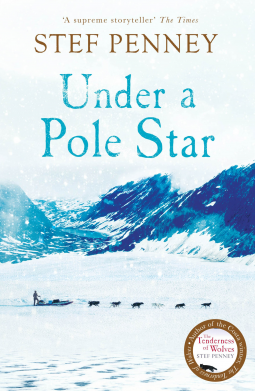
#BookReview ‘Under A Pole Star’ by Stef Penney #historical #adventure

In 1883, twelve-year-old Flora Mackie is taken by her father, captain of the Vega, a whaling ship, to the Arctic. She returns to the Arctic as a young woman, a meteorologist, heading her own expedition. ‘Under a Pole Star’ by Stef Penney is Flora’s story and that of the troubled 1891 Armitage-de Beyn expedition to Greenland. Stef PenneyThe story starts in 1948 as an American group leaves New Jersey, the purpose unclear. Onboard the plane are scientists, air force men, a television crew, a journalist, and Flora Mackie. The Snow Queen. What unfolds is the story of the two rival expeditions: the British, told by Flora, and the American, told by Jakob de Beyn, geologist with the Armitage party. It is quite a while before there is even a hint of what the controversy may be. Until then, we follow the lives of Flora in Dundee and London, and Jakob in New York, as they grow from children to adults. Finally the separate Greenland expeditions set off, unaware of each other. When Flora and Jake meet in Greenland in 1892 there is a spark between them. At this point I was unsure what the book was about – Arctic exploration, romance, a thriller?
Penney’s writing about the Arctic makes me want to go there. The ice, the light, the endless horizon. But this is not just a story of women crossing boundaries at the end of the 19th century, it is a mystery with claim and counter-claim from rival explorers. Ultimately, this is a story of what men, and women, will do to be the first to their goal.
A fascinating story which moves slowly at times with some things left unexplained. It makes me want to read more of Penney’s books, but I was left with the feeling that the story could be tighter with a stronger spine of mystery.

Read my review of THE BEASTS OF PARIS also by Stef Penney.

If you like this, try:-
The Surfacing’ by Cormac James
The Leviathan’ by Rosie Andrews
Devotion’ by Hannah Kent

And if you’d like to tweet a link to THIS post, here’s my suggested tweet:
#BookReview UNDER A POLE STAR by Stef Penney via @SandraDanby http://wp.me/p5gEM4-2bx

#BookReview ‘The French Lesson’ by @HallieRubenhold #historical

The French Lesson by Hallie Rubenhold is an entertaining account of Henrietta Lightfoot’s time in the Paris of 1792 during the French Revolution, a period of which my knowledge is scanty. This is a women’s story told with authority by social historian Rubenhold, at a time when the new order replaced the old and changed women’s lives in the process. Hallie Rubenhold Years after the event, Hettie writes her account of what happened at the request of a benefactor. As the novel opens, she is living in Brussels with the love of her life, George Allenham, 4th Baron Allenham of Herberton, expecting to be married and so calling herself Mrs Allenham. But when Allenham’s mysterious work takes him to Paris, he does not return. She receives a letter from him saying Paris is dangerous and though he must stay there for his work, she must return to England for her safety. But Hettie follows her heart to Paris.
With the Revolution threatening, she is attacked, robbed, rescued and so finds herself indebted to Mrs Grace Elliot, an English woman who survives in Paris as a lover to rich important men. Hettie is drawn into this life too. The French Lesson is an enjoyable account of a fast-paced, thrilling and bloodthirsty moment in history, combining real characters – d’Orleans, known as Philippe Égalité after the Revolution; his current mistress, Agnès de Buffon; and former mistress, Mrs Elliot – with fictional characters Hettie and Allenham.
As always in war, people are not what they seem. Hettie is driven on first by love, then by the need to survive. She is told by Mrs Elliot not ‘to trust’ and it is a hard lesson to learn.
I learned after reading The French Lesson that it is the second of a trilogy – the first is Mistress of My Fate – though I read it happily as a stand-alone novel.

If you like this, try:-
‘In Another Life’ by Julie Christine Johnson
‘An Officer and a Spy’ by Robert Harris
‘Citadel’ by Kate Mosse

And if you’d like to tweet a link to THIS post, here’s my suggested tweet:
#BookReview THE FRENCH LESSON by @HallieRubenhold via @SandraDanby http://wp.me/p5gEM4-1ZV

#BookReview ‘The Translation of Love’ by Lynne Kutsukake #WW2 #war

How to describe The Translation of Love by Lynne Kutsukake? What a charming and unusual novel it is, if at some times a trifle confusing. The setting is unusual, post-war Tokyo when the country is being run by the US General MacArthur and at times it reminded me of Rhidian Brook’s wonderful The Aftermath set in post-war Berlin. It is about war and what it does to us, how a broken society can ever begin to heal, how the young will ever be able to live a normal life, when the word normal ceases to exist. Lynne KutsukakeSensitively written, each page draws a picture of Tokyo from a different point of view – Aya, a Japanese-Canadian schoolgirl feels the odd one out in her new school; her classmate Fumi misses her elder sister who left home to find work; Sumiko has a job in a dance hall dancing with the GIs but is ashamed to tell her family what she is doing; Kondo Sensei, the teacher of the younger girls and also part-time translator and writer of letters; and Matt Matsumoto, the Japanese-American soldier who translates the letters sent to General MacArthur by Japanese citizens.
Letters are an important tool in this story which is essentially a young girl’s quest to find her sister. When Fumi finds out that Aya can write in English, she asks for her to write a letter to General MacArthur asking for his help to find her Sumiko. As the letter changes hands and Matt and a colleague become involved in searching for Sumiko, the story unfolds gently against a terrible backdrop of bomb damage, poverty, starvation, pride, culture clash and above all the determination to survive.
It was a while before all the Japanese characters, and some of the Japanese vocabulary, started to fall into place. A touching story inspired by the letters written by Japanese citizens to MacArthur, it draws a picture of a period in Japanese history of which I knew nothing.

If you like this, try:-
The Bird in the Bamboo Cage’ by Hazel Gaynor
The Aftermath’ by Rhidian Brook
Homeland’ by Clare Francis

And if you’d like to tweet a link to THIS post, here’s my suggested tweet:
#BookReview THE TRANSLATION OF LOVE by Lynne Kutsukake via @SandraDanby http://wp.me/p5gEM4-2cE

#BookReview ‘Orphans of the Carnival’ by @CarolBirch #historical

What to say about this unusual novel by Carol Birch? First, I loved part of it. Second, I didn’t realize until I got to the end that it is loosely-based on a true story. If you loved Birch’s Jamrach’s Menagerie, try this. Carol BirchA young veiled woman travels by train from Mexico to New Orleans. She is disfigured but we don’t know the exact details until quite a way into the book: this is a novel which rewards patient reading. Julia Pastrana becomes a music hall attraction – singing, dancing, playing a guitar – while undergoing examinations by doctors who proclaim her part-human. Her successive managers make the most of the doctors’ pronouncements. This is a linear narrative, Julia’s life story, driven by her search for unconditional love.
The real Julia Pastrana had large ears and nose, irregular teeth and straight black hair all over her body. Despite her obvious intelligence – she spoke three languages – the myths continued until her death. It is an indictment of the way people not considered ‘normal’ were treated in the 19th century, seeing them as attractions rather than people with feelings.
The modern-day storyline of Rose, a young woman who collects unwanted items, was, for me, an unnecessary distraction from the main story. The obvious connection between the two women is their struggle to fit into society, though Rose is more of an emotional drifter.

Click the title for a brief taster of Carol Birch’s JAMRACH’S MENAGERIE.

If you like this, try:-
‘An Appetite for Violets’ by Martine Bailey
‘The Miniaturist’ by Jessie Burton
‘Frog Music’ by Emma Donoghue

And if you’d like to tweet a link to THIS post, here’s my suggested tweet:
#BookReview ORPHANS OF THE CARNIVAL by @CarolBirch via @SandraDanby http://wp.me/p5gEM4-29G

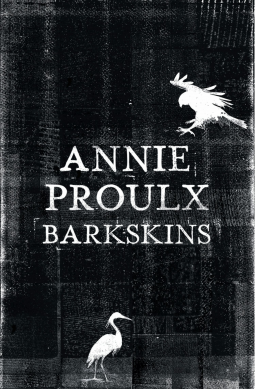
#BookReview ‘Barkskins’ by Annie Proulx #historical

This story of the North East American forests begins with two men who arrive in New France from Europe. It is 1693 and they find work wielding axes, chopping down trees. Barkskins by Annie Proulx ends in 2013 with their English, French and Indian descendants learning about the disappearance of the native trees and plants. It is a chastening story but throughout, Proulx’s descriptions of trees enable you to see and smell them. Annie ProulxProulx’s reputation precedes her: the Pulitzer Prize, Brokeback Mountain, The Shipping News etcetera. For me she is one of the classic American authors but refuses to be pigeonholed. Barkskins is a huge tome, starting with René Sel and Charles Duquet’s struggles to survive, their contrasting stories and the subsequent lives of their families. Barkskins is more the story of the forests than of the Sel and Duquet/Duke families and their subsequent timber business.
The natural world has a huge part to play in this novel. The trees breathe on every page, as the settlers fight the forests and the native Indian tribes struggle to understand the newcomers. It ticks so many boxes: indigenous culture, sea voyages, logging, trade with China, herbal remedies, Dutch merchant vessels, the plundering of nature for man’s thoughtless consumption. Each generation of the Sel and Duquet families experiences the evolution of colonial power, demand for timber for construction, war, ships and railways, and this shows us the passing centuries.
There is humour, brutality, and beautiful description of the natural world. The depth of research is clear on every page and at 736 pages, it demands patient reading. But if you allow Proulx to pull you into her stories, it is worth the commitment. But perhaps it would be more easily digestible as a trilogy of novels. There was a disproportionate amount of time spent on the lives of René Sel and Charles Duquet, while the modern-day Sels and Dukes were covered too quickly for me. At the beginning I remembered who was related to who, but as the generations passed quickly I lost track. This could easily be corrected by the addition of a family tree or character list at the front of the book. And a map.
CLICK HERE TO READ MORE ABOUT THIS BOOK

If you like this, try:-
Summertime’ by Vanessa Lafaye
The Knife with the Ivory Handle’ by Cynthia Bruchman
The Last Runaway’ by Tracy Chevalier

 And if you’d like to tweet a link to THIS post, here’s my suggested tweet:
#BookReview BARKSKINS by Annie Proulx via @SandraDanby http://wp.me/p5gEM4-24o

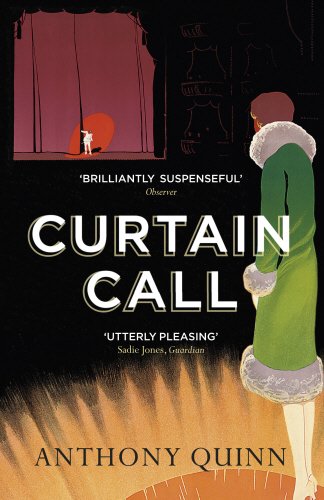
#BookReview ‘Curtain Call’ by Anthony Quinn #historical #1930s

The 1930s come alive in Curtain Call by journalist Anthony Quinn, I stepped into his world and felt as if I was there. An effortless read, I was plunged into the worlds of Stephen Wyley, artist; Nina Land, actress; the gloriously-named Madeline Farewell, hostess; Jimmy Erskine, theatre critic; and Tom Tunner, Erskine’s assistant. Anthony Quinn The setting is a time of looming war, royal crisis, blackshirts and strict homosexuality laws. It is not an easy novel to categorize: there are murders, but it is not a detective novel; we see the world of art and theatre and prostitution, but it is not a novel about art etc. Packed with period detail, with not one detail too many, this is written with a light hand and a clever plot. It starts with a romantic assignation and chance encounter in a hotel with a murderer, known in the newspapers as the Tiepin Killer. This meeting of only seconds, brings together the key characters and kickstarts the murder plotline.
Curtain Call is the predecessor, not prequel, to Quinn’s novel Freya.

Click the titles to read my review of other novels by Anthony Quinn:
FREYA
HALF OF THE HUMAN RACE
MOLLY & THE CAPTAIN
OUR FRIENDS IN BERLIN
THE RESCUE MAN
THE STREETS

If you like this, try:-
‘The Light Years’ by Elizabeth Jane Howard  #1CAZALET
At Mrs Lippincote’s’ by Elizabeth Taylor
The Heat of the Day’ by Elizabeth Bowen

And if you’d like to tweet a link to THIS post, here’s my suggested tweet:
#BookReview CURTAIN CALL by Anthony Quinn http://wp.me/p5gEM4-1Xu via @Sandra Danby

#BookReview ‘Freya’ by Anthony Quinn #historical

When I finished reading Freya I wanted to shout out to everyone around me to read it. Why? It is a story of friendship and love, truth and honesty, loyalty and betrayal. Anthony Quinn captures Freya immaculately – he seems to intuit so much women’s stuff so well – so much better than other male novelists recently writing from a female point of view. It is such a refreshing read, I hope it sells loads and wins loads. It deserves it. If you can, read it next. Anthony QuinnFreya is the story of Freya Wyley from VE Day to the 1960s via Oxford, Nuremberg, Italy and mostly London. Recently demobbed from the Wrens, at which she achieved a senior position as bomb plotter in a world with few men, she goes up to Oxford unsure if she is too ‘old’ at the age of 21 to return to study. There she finds that pre-war expectations of women re-apply again and with her customary cussedness she fights against it. With the glimmer of an opportunity, she sets out to get a break as a journalist by interviewing a reclusive war reporter who will be attending the Nuremberg war trials. She calls in a favour from her father, lies, manipulates and bravely goes forth, setting foot into the ruins of the bombed city where she is later told she should not have ventured. But that is Freya: undaunted. She is strong, true, speaks without thinking and gets into trouble because of it. Of course it is the few times in which she is not honest, either with herself or with her best friend Nancy – who she met on the night of VE day when they got ‘stinko’ together – that make the most fascinating reading.
It is a joy to read a female character who is not nice all the time, who feels real, and who I can identify with more than some sugar-sweet modern protagonists. This book fairly fizzes along, read in two days on holiday, I found myself irritated when my Kindle’s battery died because I ignored the ‘battery low’ warning.
Quinn’s sense of time is perfect, he moves seamlessly from wartime to the Sixties. All his characters have depth, flaws and are believable, and his balance of action, contemplation and setting is exact. He covers a wide variety of subjects of the time – morality and art, homosexuality offences, celebrity, political rigour – by simply allowing Freya to investigate and report. The technique of covering Freya’s investigation of an article, followed by the published article, acts as a semi-colon before the next segment of her life.

Click the title below to read my reviews of other books by Anthony Quinn:-
CURTAIN CALL
HALF OF THE HUMAN RACE
MOLLY & THE CAPTAIN
OUR FRIENDS IN BERLIN
THE RESCUE MAN
THE STREETS

If you like this, try:-
Sweet Caress’ by William Boyd
The Secrets We Kept’ by Lara Prescott
Fatal Inheritance’ by Rachel Rhys

And if you’d like to tweet a link to THIS post, here’s my suggested tweet:
#BookReview FREYA by Anthony Quinn https://wp.me/p2ZHJe-1TV via @SandraDanby

#BookReview ‘Rush Oh!’ by Shirley Barrett #historical #whaling

I didn’t know what to expect from Rush Oh! Whaling is frowned on these days and somewhat gory. But I am so pleased I read it. Shirley Barrett has drawn a setting which comes alive. Shirley Barrett Australia, New South Wales, 1908. It is the story of Mary Davidson, the daughter of a whaler, it is her memoir of one year in her family’s rural life at Eden. It is not simply a story about whaling.
The historical context is so rich, so believable. The first page introduces the vivid setting: Mary’s home with its scent of boiling blubber for five months of the year, the rib cage of a 90ft blue whale sits in the front garden surrounded by jonquils, and a footpath laid with the pulverised vertebrae of whales. In this house in Eden lives Mary with siblings and their widowed father, the famous whaler George Davidson. During the whaling season her father’s whaling crew also live with the family and Mary and her sister cook meals and do the laundry. It is a hard life, harder when the whales do not appear in the bay and the general store will not further extend the credit line. Into this scene walks John Beck, former Methodist minister, offering his services as an oarsman. So this is a family story, a whaling/nature story, and a tale of teenage love.
George Davidson is a true character, his exploits were recorded in the local newspapers of the time and whale skeletons are on display at the Eden Killer Whale Museum. The ‘Author’s Note’ explains how Barrett combined history with invention in the writing of Mary’s memoir. As it is a memoir we know Mary is writing it years after the events she depicts, and there are hints of what may befall Mary and her family after the book has finished. The last two chapters are set later in her life and fill in some of the gaps.
I don’t like gory stories and don’t like whaling, but I found the story fascinating. Man v Beast fighting for survival, with an added twist: the whaling crew is aided in its hunt of the right whales by a group of Killer whales. Any catch is shared between men and killers. Again, factually correct. So, a story of Man + Beast interacting for the benefit of both.
Oh, and I loved the illustrations too. An unusual novel, but definitely worth a try.

If you like this, try:-
All the Birds, Singing’ by Evie Wyld
A Woman Made of Snow’ by Elizabeth Gifford
The Quick’ by Lauren Owen

And if you’d like to tweet a link to THIS post, here’s my suggested tweet:
#BookReview RUSH OH! by Shirley Barrett http://wp.me/p5gEM4-1TH via @SandraDanby

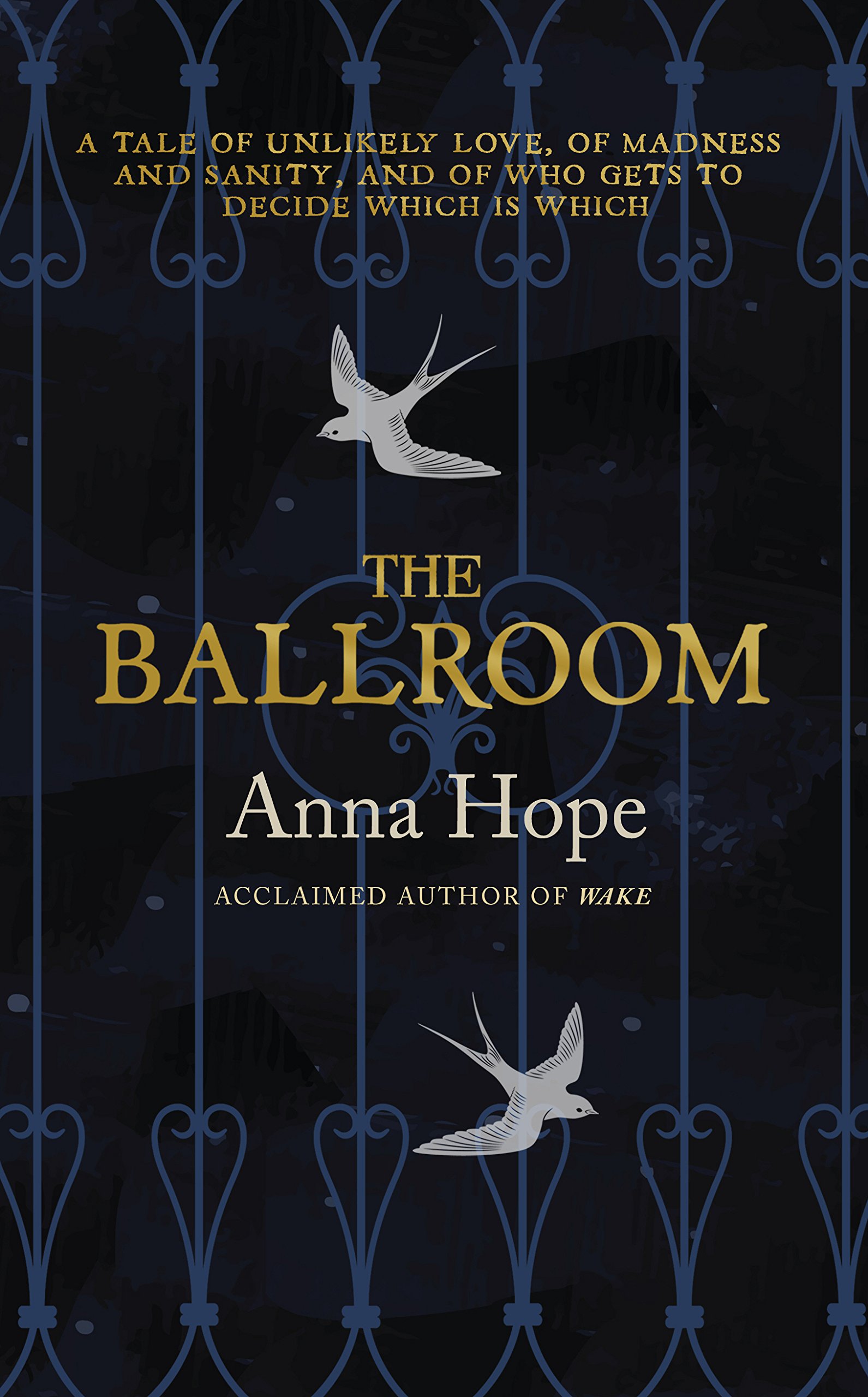
#BookReview ‘The Ballroom’ by Anna Hope #historical

It is 1911 at the end of the Edwardian era. At an asylum on the edge of the Yorkshire moors, a new patient sees an opportunity to run and takes it. As Ella runs across a field, she sees men digging a deep hole in the earth. She stumbles and one of the men reaches to help her. This is her first sight of John, and The Ballroom by Anna Hope is their story. Anna HopeElla is admitted to the asylum because she broke a window at the mill where she works. It is a mystery why John is there. Their story is told slowly as they get glimpses of each other, rare, as the men and women are kept separate apart from the Friday night dance in the ballroom. The asylum is a magnificent Victorian building and the ballroom is designed to inspire its inhabitants, to improve their spirits, with its stained glass pictures of birds and brambles, painted walls and stage for musicians. Their story is also told by Dr Charles Fuller, his interest in eugenics sets their plight into context with the times. At first he enthusiastically organises a musical programme designed to lift the spirits of the imprisoned men and women – incidentally the men work outdoors, the women shut indoors – until an experimentation with new music changes everything.
The background is a boiling hot summer, spirits and tempers run high. Hope draws such a clear picture of the asylum and the moors – helped, I think, by the fact she used a real building as her inspiration – that I can see it. This is a story of love, rather than a romance; the setting and context sometimes make for a difficult read, but throughout I was willing Ella on. You can’t but help admire the guts and determination described.

Read my review of WAKE, also by Anna Hope.

If you like this, try:-
‘The Quick’ by Lauren Owen
‘All the Birds, Singing’ by Evie Wyld
‘Burial Rites’ by Hannah Kent

And if you’d like to tweet a link to THIS post, here’s my suggested tweet:
#BookReview THE BALLROOM by Anna Hope via @SandraDanby http://wp.me/p5gEM4-1TD