Tag Archives: historical fiction

#BookReview ‘The Wolf Den’ by @Elodie_Harper #historical #Pompeii

The Wolf Den by Elodie Harper, first in the Wolf Den trilogy, is a visceral portrait of Pompeii, the wealth, the poverty, the luxury, the corruption, the art and culture. Set in a brothel, this is the story of Amara, a young Greek middle class woman sold into slavery and shipped to Italy. Amara’s story, and of her fellow she-wolves, is not pretty but this is such a dynamic tale, foul-smelling, full of abuse and also love and hope. Elodie HarperI loved the female dynamic. The strength and vulnerability of the women who live and work in the wolf den who band together as sisters, loving, bickering, competitive, supportive. But there is also mistrust and rivalry, dissembling about their real backgrounds.
Pompeii is a city of excess where there is everything to gain or lose and with that goes violence, secrecy, feuds, revenge and betrayal. Between the wealthy, between the brothel owners, the sybarites, the money lenders, the organised crime gangs. Through this minefield, the women of the wolf den must step carefully to survive, to find customers, watching each other’s backs, always searching for a man who is kind but at best not violent. It is a city of feast days, each excessive in their own way; Vinalia, the wine festival, and Saturnalia, celebrating agricultural god Saturn, are both key in the timelines of the novel. The Wolf Den is a fascinating glimpse into the life in Pompeii, Harper writes with such visceral clarity, detailing the violence and beauty with equal brightness. The novel is set in AD74, only five years before the eruption of Vesuvius destroys the city.
Negotiating the path to life improvement, one step at a time, Amara’s life is a pendulum, swinging one day good, the next bad. When bad can mean injury, cruelty, murder and good can mean a word of kindness, a gift of a necklace, a day in the brothel when the cruel master is absent. She makes tiny steps in improving her lot, making sacrifices along the way, always with a clear eye on her goal. To become a freewoman. Along the way, she learns compromise, pragmatism and loyalty, but will she find true love to guarantee survival. It’s a cruel and unequal world that Amara must navigate.
I’m so glad I stumbled upon this trilogy, it’s a rollercoaster emotional read.

Here are my reviews of the first two novels in the ‘Wolf Den’ series by Elodie Harper:-
THE HOUSE WITH THE GOLDEN DOOR #2WOLFDEN
THE TEMPLE OF FORTUNA #3WOLFDEN

If you like this, try:-
Frog Music’ by Emma Donoghue
The Fair Fight’ by Anna Freeman
A Dangerous Business’ by Jane Smiley

And if you’d like to tweet a link to THIS post, here’s my suggested tweet:
#BookReview THE WOLF DEN by @Elodie_Harper https://wp.me/p2ZHJe-736 via @SandraDanby

COMING SOON… THE NEXT BOOK I REVIEW WILL BE:- Angela Petch

#BookReview ‘The Collaborator’s Daughter’ by Eva Glyn @JaneCable #WW2 #Croatia

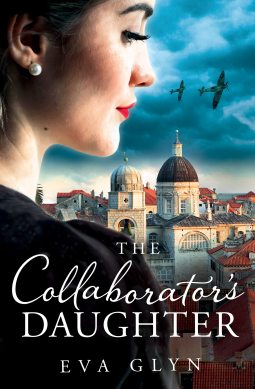
Modern-day grief and the turmoil of a wartime past are entangled for Fran in The Collaborator’s Daughter by Eva Glyn. Looking for a new start after the death of her beloved adoptive father, Fran leaves wintery England for the warmer streets of Dubrovnik. Feeling alone, vulnerable and anxious, Fran searches for the strength to look for answers. Eva GlynBrought from Yugoslavia to England as a baby at the end of the Second World War, Fran was raised by her mother to believe her father was a war hero. But Fran has recently discovered the name of Branko Milisic on a list of Nazi collaborators executed by partisan fighters in 1944. Unable to rationalise her gentle, loving mother Dragica as having loved a Nazi, Fran visits Croatia for the first time, taking small steps in discovering the history of the city where she was born. Her life is drifting. Having nursed her mother then father in their last years, raised her son and cared for grandchildren, Fran now realises she needs time for herself. But after a life of caring, being selfish is not as easy as it sounds. In her sixties, she lacks confidence and feels old, unattractive and shy.
Fran’s rebirth as an independent woman unfolds slowly, sometimes tortuously, as she treads the warm streets of Dubrovnik, shyly meeting the locals, learning their language, baking local delicacies and plucking up the courage to ask questions about her mysterious father. Fran is an introspective character and she spends a lot of time re-examining her motives, asking what-if, worrying about what she will find, summoning courage to take the next step, to ask the next question. As the grief at the recent loss of her father begins to lessen, she becomes bolder, finding strength with the new friends she has made in the beautiful city. Glyn’s descriptions of Dubrovnik are pictorial, so much so that the city almost becomes a character with a personality.
This is a compassionate telling of an emotional story about grief, about the fear of the past and ultimately about forgiveness. The truth about Branko and Dragica’s life during the Second World War seems deeply hidden, impossible to find, records lost, witnesses dead. As Fran struggles with the idea that her father was a traitor, perhaps a murderer, she is introduced to a local man who fought in the more recent Balkan War. Jadran knows what war is really like, the fear, the shame, the horror, the impossible choices, the loyalties and betrayals. Glyn cleverly juxtaposes the different wartime experiences as Fran tries to forgive a father who possibly did terrible things.
At times Fran is overcome with the enormity of what she is attempting. But with the help of her new Croatian friends, and bolstered by rallying Skype sessions with best friend Parisa back home in England, she investigates the truth, one small step at a time.
An original storyline in a country whose wartime story is read little in fiction.

Read my reviews of these other books by Eva Glyn:-
THE CROATIAN ISLAND LIBRARY
THE MISSING PIECES OF US

Eva Glyn is the pen name of author Jane Cable, here are my reviews of some of Jane’s other novels:-
ANOTHER YOU
ENDLESS SKIES
THE CHEESEMAKER’S HOUSE

If you this, try:-
‘The Last Hours in Paris’ by Ruth Druart
The Book of Lies’ by Mary Horlock
The Camomile Lawn’ by Mary Wesley

And if you’d like to tweet a link to THIS post, here’s my suggested tweet:
#BookReview THE COLLABORATOR’S DAUGHTER by Eva Glyn @JaneCable https://wp.me/p2ZHJe-6Zl via @SandraDanby

COMING SOON… THE NEXT BOOK I REVIEW WILL BE:- Joanna Trollope
#BookReview ‘World Without End’ by @KMFollett #historical #Kingsbridge

What a wonderful series this is by Ken Follett. World Without End is second in the Kingsbridge series and is intimidating purely by its size, the 1264-page paperback is like a brick. But oh so worth it. Follet has created a world to lose yourself in. I was sad when it came to an end. Ken FollettThe year is 1327. In a wood near the cathedral city of Kingsbridge, four children witness a murder. The man responsible asks for their silence and the mystery of his secret runs throughout the book. The story is a little slow to get going but throughout World Without End the lives of these four children, soon adults, are woven together, intertwined, separated and combined again. Love and ambition are at the heart of everything; sometimes aided, sometimes thwarted, by money, greed, abuse and theft. There is violence, misogyny and racism. Yes, there may be similarities in plot and character with the first book, Pillars of the Earth, but this story is set two centuries later. The historical settings make both books distinctive, in World Without End it is the coming of Black Death and Edward III’s Battle of Crécy. And of course there are similarities; Kingsbridge is the centrepiece where the cathedral, priory, bridge and annual Fleece Fair are central to everyday life. There are power struggles – between master and apprentice, prior and alderman, father and son, father and daughter, between brothers. Follett’s success with this series is the accessibility of everyday lives; we can identify with these 14th century families, their hopes and desires, jealousies, disappointments and fears.
At the heart of the story are the four children in the woods that day. Quiet, clever Merthin and his younger brother Ralph, strong and always ready for a fight. And two girls, friends; Caris, clever and confident daughter of a wool merchant, and Gwenda, the under-nourished daughter of a thief but who wants so much more from her own life. Through their daily lives, Follett shows the development of Kingsbridge into a different town. Each child faces impossible decisions, each in their own way is determined and strong. Their choices, wrong or right, govern the narrative as, too quickly, these children become adults and face one of the most traumatic times faced by England. As the Black Death creeps closer and finally reaches Kingsbridge, the villagers, monks, nuns, lords, tenant farmers and farm labourers find themselves brought equal in the shared danger.
Two more books in the series await. A Column of Fire about Kingsbridge in the 16th century, followed by The Armour of Light set at the close of the 18th century.

Click the titles to read my reviews of other Follett novels:-
THE EVENING AND THE MORNING #PREQUELKINGSBRIDGE
THE PILLARS OF THE EARTH #1KINGSBRIDGE
A COLUMN OF FIRE #3KINGSBRIDGE
THE ARMOUR OF LIGHT #4KINGSBRIDGE
NEVER

If you like this, try:-
The Last Hours’ by Minette Walters [#1 Black Death]
The Turn of Midnight’ by Minette Walters #2 Black Death
Plague Land’ by SD Sykes [#1OswalddeLacy]

And if you’d like to tweet a link to THIS post, here’s my suggested tweet:
#BookReview WORLD WITHOUT END by @KMFollett https://wp.me/p2ZHJe-6Vb via @SandraDanby

COMING SOON… THE NEXT BOOK I REVIEW WILL BE:- Verity Bright

#BookReview ‘The Shadows of London’ by @AndrewJRTaylor #Historical

When a body without a face is discovered on the site of Cat Hakesby’s latest building venture, Whitehall secretary James Marwood is ordered to investigate. The Shadows of London by Andrew Taylor is sixth in the Marwood & Lovett series that started on the night of the Great Fire of London. Andrew TaylorCat’s renovation of a city almshouse is delayed for the coroner’s verdict, putting extreme financial pressure on her architecture business. Marwood soon discovers two possible identities for the dead man – a French tutor to the daughter of the almshouse’s owner, or a civil servant at the Council of Foreign Plantations. Both suspects suggest a foreign connection to the affair. This excellent series about Restoration London is a wonderful portrayal of the squalor, smells and grime of daily reality juxtaposed with the corruption of wealth, power and politics. Stink, disguised by a clove-studded orange pomander. Meanwhile the eye of King Charles II is distracted by a young French newcomer to court, Louise de Keroualle. Surrounded by panders, English and French, who see advantage to a dalliance between monarch and maid of honour, Louise longs for a lost love and attempts in vain to stop the inevitable happening.
Set in 1671, this novel is a wonderful mixture of murder mystery, political thriller, seventeenth-century fashion [gorgeous shoes] and romantic suspense, set in the complex Restoration period. Eleven years after the restoration of King Charles to the throne and five years since the Great Fire, London still bears the marks of destruction. As Marwood investigates the murder, pulled this way and that by the demands of his political paymasters, Cat struggles to find skilled workers when all the ruined City of London is being redeveloped. The plot is complex, with modern echoes to pick up, and Taylor pulls the strings of tension this way and that. I stayed up late to finish it.
Cat remains one of my favourite fictional characters; independent, spiky, steadfast, a little solemn with endless determination. Marwood is alternately frustrating, arrogant and impulsive but also loyal, brave and honest. It is this last quality that is most pressed in The Shadows of London as, finding himself in unfamiliar territory, he questions what he is doing and why. Cat and Marwood are a brilliant pairing.
Excellent.
CLICK HERE TO READ MORE ABOUT THIS BOOK AT AMAZON

Read my reviews of the first five books in this series:
THE ASHES OF LONDON #FIREOFLONDON1… and read the first paragraph of THE ASHES OF LONDON.
THE FIRE COURT #FIREOFLONDON2
THE KING’S EVIL #FIREOFLONDON3
THE LAST PROTECTOR #FIREOFLONDON4
THE ROYAL SECRET #FIREOFLONDON5

And a World War Two novel by the same author:-
THE SECOND MIDNIGHT

If you like this, try:-
The Lady of the Ravens’ by Joanna Hickson #1QueensoftheTower
The Drowned City’ by KJ Maitland #1 Daniel Pursglove
Wakenhyrst’ by Michelle Paver

And if you’d like to tweet a link to THIS post, here’s my suggested tweet:
#BookReview THE SHADOWS OF LONDON by @AndrewJRTaylor https://wp.me/p2ZHJe-6Qd via @SandraDanby

COMING SOON… THE NEXT BOOK I REVIEW WILL BE:- HG Wells

#BookReview ‘A Gift of Poison’ by Bella Ellis #historical #crime

A Gift of Poison, fourth in the Brönte Mysteries series by Bella Ellis, does not disappoint. It is a fast-moving, threatening and spooky tale of a murderer who may be innocent. Or not. Charlotte, Emily and Anne must investigate. Bella EllisBased on a real poisoning case, The Haworth Poisoner, is a tale of innocent until proven guilty, of poison, of ghosts, of revenants returning from the grave to demand retribution. Abner Lowood – the choice of surname, echoing Lowood School, is pertinent as Charlotte is writing Jane Eyre throughout A Gift of Poison – appears at the parsonage in Haworth. He has heard that the sisters are detectors and he demands they clear his name. If they refuse to help him he will disclose their secret detecting to their father. Disgusted by Lowood but desperate to protect their father from more anguish given the rapid deterioration of Branwell’s health, they agree.
Proven innocent in court of murdering his wife, Lowood claims the continued gossip and rumour that he is guilty is ruining his life. The sisters, Branwell is now so lost and ill that he plays no role in detecting, detest and distrust Lowood. But, following the example set throughout their lives by their father, they give him the benefit of the doubt. If he has been wronged, they will prove it. But, they warn him, if they find proof that he is a murderer they will not hesitate to report their evidence to the police.
The sisters are ably assisted by Charlotte’s friend Ellen Nussey, who is staying at the parsonage when the action takes place, and by author Mrs Catherine Crowe. The latter arrives with her scientific equipment to prove that the revenant – Lowood’s wife Barbara, said to have risen from her grave to identify her murderer – is in fact a hallucination. The balance of science versus emotion, logic rather than emotion, is the first instinct of the ladies. Their search for the truth leads them to Scarborough – where a year later the real Anne Brönte was to die, and is buried – where the decision of one man holds the key.
This is a case of double bluff and triple bluff with added cruelty, deprivation and gothic hauntings. The story is set in 1847, a time when superstition was widespread. Woven into the fictional crime case are glimpses of real life. Bramwell really did set his bed on fire, while Charlotte watched Emily and Anne correct the proofs of their first novels – Wuthering Heights and Agnes Grey – soon to be published though her own The Professor was rejected.
This is the last book in the series. In an Author’s Note, Rowan Coleman, aka Bella Ellis, says farewell to her detectors. “I chose to leave them here, for now, at the moment Charlotte is sending off the manuscript for Jane Eyre and before the great waves of tragedy that were to follow all too soon, because although their lives have often been defined by sorrow, I want to celebrate the amazing victories and achievements they carved out for themselves.”
Quickly read and hugely enjoyed.

Click the title below to read my reviews of these other Bella Ellis novels:-
THE VANISHED BRIDE #1BRONTEMYSTERIES
THE DIABOLICAL BONES #2BRONTEMYSTERIES
THE RED MONARCH #3BRONTEMYSTERIES

And one by Rowan Coleman:-
THE GIRL AT THE WINDOW 

If you like this, try:-
The Secrets of Gaslight Lane’ by MRC Kasasian #4THEGOWERDETECTIVE
‘The Various Haunts of Men’ by Susan Hill #1SIMONSERRAILLER
‘The Lost Ancestor’ by Nathan Dylan Goodwin #2MORTONFARRIER

And if you’d like to tweet a link to THIS post, here’s my suggested tweet:
#BookReview A GIFT OF POISON by Bella Ellis https://wp.me/p2ZHJe-6J0 via @SandraDanby

COMING SOON… THE NEXT BOOK I REVIEW WILL BE:- Sebastian Barry
#BookReview ‘The Dead Men’ by JC Harvey @JCollissHarvey #historical

The Dead Men by JC Harvey is a rattling good tale set during the Thirty Years War. The best I’ve read for a long time. JC HarveySecond in the 17th century series about adventurer Jack Fiskardo that started with The Silver Wolf, in which we see the boy Jack become a man, the action in The Dead Men takes place between July 1630 to November 1631 when fighting was at its most brutal. There’s a useful Author Note at the beginning with a historical background to the period, which was gratefully received, as was the cast of characters. The scope of this series is huge and so needs large personalities to populate it. Jack Fiskardo is that man. Scarred, fierce, loyal, thoughtful and yes, a little intimidating, he is a fantastic hero. Yes, a romantic hero too. Harvey takes him and his band of ‘discoverers’, advance scouts in today’s military terms, across Eastern Europe to some of the most deadly fighting in the war. They stay alive, some of them, by their skills, their instincts, bravery and camaraderie. Many characters are familiar from The Silver Wolf – Zoltan, the Gemini, Ziggy, Kai as well as Mungo Sant and his ship the Guid Marie – plus new faces including Rafe Endicott, an English writer who sends reports back to London to be published in the coranto or newsletter ‘The Swedish Intelligencer.’ People at home are hungry for information about the war, the bloodshed, the victories, the murders and atrocities. And the heroes and legends.
Staying one step ahead of the front line, scrounging food, living wild in the woods from Northern Germany to Bohemia, the band of spies are on the trail of Jack’s sworn enemy Carlo Fantom. On the way, they meet friends and enemies, lovers and liars and even a pack of English actors, the Pilgrim Players who are rehearsing a much-redacted version of Romeo and Juliet. Jack and his discoverers are present at the scenes of some of the worst fighting of this period, including the destruction of Magdeburg in 1631. Along the way, Fiskardo kills many men and makes many loyal friends.
Harvey has a light hand at putting her mostly fictional characters into the historical war setting. Many of the myths really existed, including Carlo Fantom, and a horde of gold really did disappear in the middle of war.
The cast of characters is long but each is a rounded personality, a real person, from pig boy Pyotri in the Giant Mountains, on the border between Bohemia and Poland, to Victor Lopov, the timid former archivist of the Prince-Bishop of Prague.
A real joy to read.
As with the first book I found it paid to stop trying to remember all the characters and towns and allow myself to be carried along on the emotion of Jack Fiskardo’s quest. I’m now awaiting the next installment.

Here’s my review of THE SILVER WOLF, first in the Jack Fiskardo series.

If you like this, try:-
The Mermaid and Mrs Hancock’ by Imogen Hermes Gowar
The Surfacing’ by Cormac James
‘The City of Tears’ by Kate Mosse #2JOUBERT

And if you’d like to tweet a link to THIS post, here’s my suggested tweet:
#BookReview THE DEAD MEN by JC Harvey @JCollissHarvey https://wp.me/p2ZHJe-6FS via @SandraDanby

COMING SOON… THE NEXT BOOK I REVIEW WILL BE:- Suzanne Collins

#BookReview ‘Nat Tate: An American Artist 1928-1960’ by William Boyd #historical #art

A fictitious biography of a non-existent artist, this is an entertaining novella which I read in one sitting. Nat Tate: an American Artist 1928-1960 by William Boyd‪ has been on my to-read list forever. William Boyd‪What a stir it caused when it was published in 1998. The New York art world soon realised it had been set-up. The first edition appeared with endorsements from Gore Vidal and David Bowie but with hindsight the clues are there. Logan Mountstuart features as a friend of Tate and regular Boyd readers will recognise the protagonist of Boyd’s novel Any Human Heart published in 2002. So, a piece of mischief.
If you’ve read any art biography, or one of those weighty ‘exhibition books’ that accompany major art shows, the tone of this story will be familiar to you. Lots of references to famous artists, the process, the tortured creativity, the successes and setbacks – shown here by Tate’s reverence for American poet Hart Crane – the mentors, financial backers and agents. But there never was an artist called Nat Tate. The book features Tate’s art and photographs from his life but which originate for Boyd whose satire asks questions about the morals and values of the art world, as topical today as in 1998.
An enjoyable novella, beautifully-written in the style of the ‘art biography,’ a confirmation of Boyd’s flexibility and skill as a writer. A convincing hoax. Something different.

Here are my reviews of other books by William Boyd:-
ANY HUMAN HEART
LOVE IS BLIND
ORDINARY THUNDERSTORMS
SWEET CARESS
THE BLUE AFTERNOON
THE DREAMS OF BETHANY MELLMOTH
TRIO
WAITING FOR SUNRISE

… and try the first paragraph of ARMADILLO.

If you like this, try these:-
How to be Both’ by Ali Smith
The Girl in the Painting’ by Renita d’Silva
Life Class’ by Pat Barker

And if you’d like to tweet a link to THIS post, here’s my suggested tweet:
#BookReview NAT TATE: AN AMERICAN ARTIST 1928-1960 by William Boydhttps://wp.me/p2ZHJe-6tQ via @SandraDanby

COMING SOON… THE NEXT BOOK I REVIEW WILL BE:- Suzanne Collins

#BookReview ‘The Good Death’ by @SD_Sykes #historical #mystery

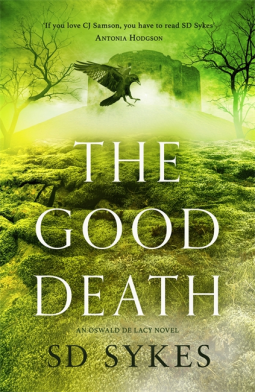
The Good Death is fifth in the Oswald de Lacy historical mystery series by SD Sykes and it feels like the last. That is only my guess but there is a ‘rounding of the circle’ to the story, answering questions raised in the first novel. I read it quickly, and sort of guessed the mystery but not quite. SD SykesThe story is told in two timelines as Oswald in 1370 sits at the bedside of his mother, who is dying. She clutches to her breast a letter which she will not show him. Instead she demands he tell her the truth of what happened in 1349 when Oswald was an eighteen-year-old novice monk, prior to where Plague Land, first novel in this series, begins. Sent by his mentor in the infirmary, Brother Peter, to gather herbs in the woods, Oswald meets a terrified girl who runs from him into a fast-flowing river where she drowns. Oswald carries her body to the village and discovers that other young girls have disappeared, never seen again, but no one in authority will investigate. Plague is reported in neighbouring villages and everyone wants to stay close to home. Only the beautiful widow Maud Woodstock listens to Oswald’s concerns and, flattered by her attention, he decides to investigate.
Brief passages are spent at Somerhill Manor in 1370 – Oswald’s mother is dying but still manipulative, his wife is bored, a house guest is irritating and his sister is jealous of the time he spends with their mother – but the bulk of the story takes place in 1349. Oswald is forced to remember an incident in his past that he would rather forget, when as a teenager he becomes an enthusiastic investigator. He jumps to conclusions based on prejudice, generalisations and gossip, putting himself in danger, but finding each possible suspect is innocent. As his list of potential murderers gets shorter, the danger to Oswald – from the murder, and also from the approaching plague – increases. But what if the murderer is someone he doesn’t know or doesn’t consider a likely suspect.
This series has got better with every book and if this is the last, it will be a loss. Sykes tells Oswald’s story in a fast-moving engaging way that is rooted in its medieval time of violence, patriarchy, misogyny and forbidden passions.
Excellent.
CLICK HERE TO READ MORE ABOUT THIS BOOK

Click the title to read my reviews of the first three books in this series:-
PLAGUE LAND #1 OSWALDDELACY
THE BUTCHER BIRD #2 OSWALDDELACY
CITY OF MASKS #3 OSWALDDELACY
THE BONE FIRE #4 OSWALDDELACY

If you like this, try:-
‘Moonlight and the Pearler’s Daughter’ by Lizzie Pook
‘Wakenhyrst’ by Michelle Paver
‘Heresy’ by SJ Parris

And if you’d like to tweet a link to THIS post, here’s my suggested tweet:
#BookReview THE GOOD DEATH by @SD_Sykes https://wp.me/p2ZHJe-6xU via @SandraDanby

COMING SOON… THE NEXT BOOK I REVIEW WILL BE:- William Boyd‪

#BookReview ‘The Winter Garden’ by @NicolaCornick #historical

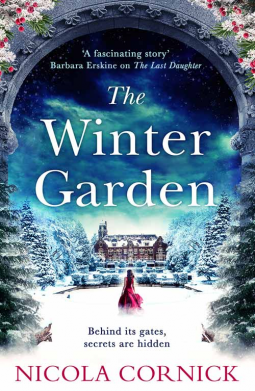
A timeslip novel that slips effortlessly between now and 1605, The Winter Garden by Nicola Cornick is an intriguing mixture of the Gunpowder Plot, garden history, archaeology and spookiness. Nicola CornickLucy, recovering from a viral illness that has forced her to give up her career as a professional violinist, is recuperating at Gunpowder Cottage, home of her absent Aunt Verity. Verity has commissioned a garden archaeologist to investigate links to the original house on the land, said to have belonged to Robert Catesby, one of the Gunpowder plotters, and his wife Catherine. Lucy, weak and depressed, is upset to find her bolthole is not as isolated as she expected. But she soon becomes pulled into the mystery of the garden and the story of the Catesbys. When Lucy gets the chills and sees the figure of a woman in a cloak and the outline of a beautiful winter garden full of snow and frost, she’s unsure if she is hallucinating and on medication that doesn’t agree with her. As Finn, the architect, and Johnny his assistant, explain more about their discoveries, Lucy finds herself pulled into the mystery and becomes a researcher of historical documents. More visions, and a dead bouquet left threateningly in her kitchen, add to the tension.
In both time narratives there is personal grief, loss and the togetherness of family and friends. Lucy is in limbo, emotional and full of indecision. Just like Catherine Catesby. Following the clues, Lucy regains her emotional strength as she asks difficult questions, faces opposition and rediscovers her bravery.
In 1605, Anne Catesby must pick up the pieces after the sudden deaths of her husband William, daughter-in-law Catherine and eldest grandson William. Her grieving son Robert, always a flighty, strong-willed boy, leaves his youngest son Robbie with his mother and disappears to London. Anne, already short of money because of fines imposed on Catholic families such as the Catesbys by King James I, struggles to live from day to day. And in the background is Anne’s brooding brother-in-law Thomas Tresham, Robert’s godfather, who is involved in the mysterious Order of the Knights Hospitallers of St John of Jerusalem. There are hints of lost treasure, which may, or may not, be buried in the garden.
I found the clues at times sketchy and unrealistic and the names of the various houses and estates added to this confusion, though Cornick is constrained at times by historical fact.
An unusual story which kept me returning to the book to read more. There’s a particularly strong cast of supporting characters including Lucy’s sister Cleo, Finn the architect with his dog Geoffrey, and brooding siblings Gabriel and Persis. The two timelines melt into each other as the mystery progresses and I didn’t, as is often the case with dual narrative novels, prefer one story to the other. Cornick is a wonderful novelist who tells a good fictional story built on strong historical foundations and doesn’t allow her historical knowledge to bully its way into the reader’s mind.

Read my reviews of these other novels by Nicola Cornick:-
THE FORGOTTEN SISTER
THE LAST DAUGHTER
THE OTHER GWYN GIRL

If you like this, try:-
‘Plague Land’ by SD Sykes #1OswalddeLacy
‘The Lady of the Ravens’ by Joanna Hickson #1QueensoftheTower
‘The French Lesson’ by Hallie Rubenhold

And if you’d like to tweet a link to THIS post, here’s my suggested tweet:
#BookReview THE WINTER GARDEN by @NicolaCornick https://wp.me/p2ZHJe-6w1 via @SandraDanby

COMING SOON… THE NEXT BOOK I REVIEW WILL BE:- Patricia M Osborne

#BookReview ‘A Dangerous Business’ by Jane Smiley #historical #mystery

Gold Rush California 1851. In Monterey, young women are going missing. Assumed to be whores, the authorities take no notice. So two prostitutes Eliza and Jean decide to investigate the disappearances. The principal suspects are their clients. A Dangerous Business by Jane Smiley is a book I didn’t want to put down, not in the way a thriller makes you want to read one more page but with a curiosity about Eliza’s prospects. Jane SmileyInspired by Edgar Allen Poe’s fictional detective Dupin – which Jean insists is pronounced ‘DuPANN’ – they begin to look for clues, looking at their surroundings more cautiously than ever before. Eliza re-reads Poe, ‘What struck her the most about Dupin was that he could look at all sorts of injury and destruction and still keep thinking in what you might call a cold and logical way.’ At times they investigate more by instinct than clue, but Smiley keeps us interested in Eliza. She is the heart of the book. She tells the story as she seeks clues in between doing business with her clients.
Life in Monterey is free and wild. People come and go without notice, ships arrive and leave, ranchers build houses in wild country, which means plenty of customers for Eliza at Mrs Parks’ establishment. The two women are unsure how many other girls are presumed to have left town but are really dead. After they find a body hidden beneath bushes, Eliza suspects everyone. The friends explore remote tracks up the hillsides on rented horses and this experience is to prove useful.
Both women are taking in a pause in their lives, rootless, with no reason to return home, they are earning a living while deciding what to do next and where to go. Eliza swings between finding the occasional client attractive and then wondering if he is the murderer. Jean, who works in a brothel for the female trade, occasionally dresses as a man and passes convincingly on the street in her disguise. She toys with the idea of a life on the stage in San Francisco. Smiley is an expert at building character layer on layer. She is also good at letting the girls’ imaginations run wild though this is not a crime story with threat and danger around every corner.
More a historical mystery than a crime novel, A Dangerous Business is a different subject for Smiley. But at the heart of the novel are her observations of women’s lives, the experience of women on the edge of civilization in Gold Rush California and what it means to be a woman alone at this time.
CLICK HERE TO READ MORE ABOUT THIS BOOK AT AMAZON

Click the title below to read my reviews of other novels by Jane Smiley:-
A THOUSAND ACRES
SOME LUCK [LAST HUNDRED YEARS #1]
EARLY WARNING [LAST HUNDRED YEARS #2]
GOLDEN AGE  [LAST HUNDRED YEARS #3]

If you like this, try:-
Frog Music’ by Emma Donoghue
The Dance Tree’ by Karen Millwood Hargrave
‘At The Edge of The Orchard’ by Tracy Chevalier

And if you’d like to tweet a link to THIS post, here’s my suggested tweet:
#BookReview A DANGEROUS BUSINESS by Jane Smiley https://wp.me/p2ZHJe-6sa via @SandraDanby

COMING SOON… THE NEXT BOOK I REVIEW WILL BE:- Rory Clements