Tag Archives: historical fiction

#BookReview ‘The Temple of Fortuna’ by @Elodie_Harper #historical #Pompeii

The final instalment of the Wolf Den trilogy by Elodie Harper doesn’t disappoint. The Temple of Fortuna follows the return journey of former brothel worker Amara from Rome via Misenum to Pompeii. She returns a very different woman from the last time she stood on the city’s streets beneath Vesuvius, having clawed her way up from slave to freedwoman and high-class courtesan. Elodie HarperIt’s been a while since I read the second book of the trilogy, The House with the Golden Door, but I slipped quickly back into Amara’s world. Moving in the highest of political circles on the arm of her patron Demetrius, and sometimes spying for him, Amara still fears the shadows and sees glimpses of poor people who remind her of her past and the dangers she faced. Every day she thinks of her daughter Rufina, left in Pompeii in the charge of slave Philos, her former lover and Rufina’s biological father, and fears for their safety. Rome is Amara’s best chance to better herself so she can raise Rufina in wealth and security. When Demetrius asks her to be his wife, Amara sales to Misenum to the house of her benefactor Pliny and then on to Pompeii. It is September AD79.
The fatal eruption of Vesuvius is a shadow throughout the trilogy but especially so in this book. As Amara’s ship approaches Pompeii, small earthquakes make the land of Campania shake. The tremors are so frequent that to the locals they become normal. Amara is reunited with her spiky daughter and we meet again friends familiar from previous books. My favourite is the female gladiator Britannicus, who has been watching over Rufina’s safety in a city where Felix, pimp and owner of the Wolf Den brothel, and Rufus, Rufina’s nominal father, are always a threat.
I admit to being impatient for the eruption to begin, this happens just past halfway but could have been much earlier. The earth trembles, dusk falls prematurely. ‘Above the mount, a black column has risen, is still rising, piercing the sky like a spear thrown from the kingdom of Vulcan, god of fire.’ From this point on, all political, business and relationship worries – will Demetrius accept Rufina as his adopted daughter, how can Amara leave Philos who she realises she still loves, how can she stop Felix extorting money from the bars she owns near the gladiator arena – disappear and the running starts. What follows is an almost eyewitness detailed report of fleeing Pompeii for Stabiae and Surrentum.
It’s impossible to review the second half of the book without spoilers. There are a number of epilogues which tie up loose ends, a little too neatly for my liking. But this is an excellent trilogy, immersive, with characters you root for. Definitely one to re-read.

Here are my reviews of the first two novels in the ‘Wolf Den’ series by Elodie Harper:-
THE WOLF DEN #1WOLFDEN
THE HOUSE WITH THE GOLDEN DOOR #2WOLFDEN

If you like this, try:-
‘A Traveller at the Gates of Wisdom’ by John Boyne
‘Glorious Exploits’ by Ferdia Lennon 
‘Shadows in the Ashes’ by Christina Courtenay 

And if you’d like to tweet a link to THIS post, here’s my suggested tweet:
#BookReview THE TEMPLE OF FORTUNA by @Elodie_Harper https://wp.me/p2ZHJe-7U6 via @SandraDanby

COMING SOON… THE NEXT BOOK I REVIEW WILL BE:- Abir Mukherjee

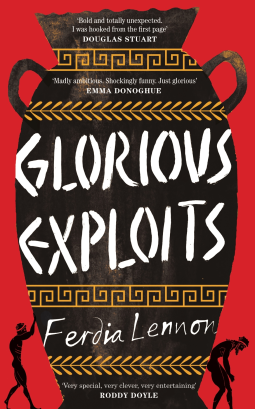
#BookReview ‘Glorious Exploits’ by Ferdia Lennon #historical #Medea #Syracuse

412BC. Syracuse, Sicily. Glorious Exploits by Ferdia Lennon is a wild ride and something of a surprise. There is the ancient setting, rattling modern dialogue and irreverent humour, a combination of ancient Syracusans and Athenians, and the tragi-comedy double act of Lampo and Gelon who decide to stage Medea with a cast of half-starved enemy soldiers. Ferdia LennonSuch a distinctive voice from the first paragraph, the story moves quickly, initially disorientating until the dialogue rhythm settled in my head and I went with the flow. With a flick of a word, Lennon turns the mood from funny to sad to hopeless, to consoling, to hopeful, to drunken to horror and pain. Lampo the narrator is not a sympathetic character, at times downright unpleasant but the story becomes addictive.
Syracuse, post-war is a city that cannot escape the memories of battle. Men walk the street with amputations and visible injuries, loved ones are dead, jobs are scarce, hundreds of Athenian soldiers are held captive in a quarry while out at sea beneath the surface are shipwrecks. ‘The sea-skins a gentle swishing blue, and it’s hard to imagine that whole forests of sunken ships lie underneath it, a second city.’ The war in question is the Peloponnesian War of 415-413BC when Athens fought the combined forces of Sparta, Syracuse and Corinth, and lost. But all is not well in Syracuse either. In Glorious Exploits, Lampo and Gelon are out-of-work potters, they raise funds for their theatre production by selling a heap of Athenian armour they find. Driven by Gelon’s love of Euripides and Lampo’s need of gold, the unlikely theatre production approaches. Costumes designed, actors auditioned, lines learned, music rehearsed. Are Gelon and Lampo a team, truly co-directors, or just two ordinary men out of their depth.
There are funny moments and episodes of horrific cruelty and ignorance. Via the ambition, idealism and naivety of these two potters, Glorious Exploits shows the impact of war on ordinary people – the foot soldiers, the angry grieving families left behind, the men on both sides following the orders of officers who escape – long after the fighting has stopped and surface wounds have healed. An enemy becomes another man just following orders. Damage hidden below the surface may, like the wrecked ships, be out of sight but it is still there and when unleashed, the unexpected can happen.
A unique voice. Something completely different.

If you like this, try:-
The Silence of the Girls’ by Pat Barker
Stone Blind’ by Natalie Haynes
The Wolf Den’ by Elodie Harper #1WolfDen

And if you’d like to tweet a link to THIS post, here’s my suggested tweet:
#BookReview GLORIOUS EXPLOITS by Ferdia Lennon https://wp.me/p2ZHJe-7OP via @SandraDanby

COMING SOON… THE NEXT BOOK I REVIEW WILL BE:- SJ Parris

#BookReview ‘The Whispering Muse’ by Laura Purcell #historical #mystery

The Whispering Muse by Laura Purcell is a haunted mystery full of suspense, superstition and danger. Set at the Mermaid, a London theatre specialising in tragedies, the story is told by Jenny Wilcox, dresser to lead actress Lilith Erikson. Laura PurcellRecruited by Mrs Dyer, wife of the theatre owner, to be dresser to Lilith, Jenny is grateful for the wage which enables her to support her three siblings at home. Left alone after their elder brother, a scene painter at the Mermaid, ran away with one of the actresses, Jenny cannot believe her luck. Until Mrs Dyer, suspecting her husband of an affair with Lilith, sends Jenny to spy on her rival. The two women vie over one man, and over a mysterious watch that seems to give power to the holder. But the previous owner of the watch, an actor, died on stage.
I raced through this book in two days; there isn’t a pause or a breath without the action progressing. Jenny finds herself involved in plots, unable to say no, beholden to her benefactor, divided by the powerful two women and unsure if she should trust either, agreeing to things she knows are wrong and dangerous, regretting she got involved. Purcell is excellent at creating a dark and menacing atmosphere in the theatre, a place ridden with superstitions that seems to crumble around them, rotting and smelling rank as the lies increase and the betrayals intensify.
This is a dark story I didn’t want to put down until I knew the ending. The theatrical world adds to the gothic setting, the costumes and special effects, the scenery and superstitions, the bitchiness. The self-obsession of the actors contrasts with the down-to-earth backstage staff who, after all, are there for the wage and cannot rock the boat when odd things begin to happen. And happen they do, as the company progresses through the season from Macbeth, The Duchess of Malfi, Antony and Cleopatra, Romeo and Juliet, finally to Faust, Part One.
One of my favourite books of 2024.

Here’s my review of THE SILENT COMPANIONS, also by Laura Purcell.

If you like this, try:-
The Night Child’ by Anna Quinn
Inheritance’ by Nora Roberts #1LostBrideTrilogy
The Lamplighters’ by Emma Stonex

And if you’d like to tweet a link to THIS post, here’s my suggested tweet:
#BookReview THE WHISPERING MUSE by Laura Purcell https://wp.me/p2ZHJe-7LT via @SandraDanby

COMING SOON… THE NEXT BOOK I REVIEW WILL BE:- Kate Atkinson

#BookReview ‘The Spice Maker’s Secret’ by Renita D’Silva @RenitaDSilva #historical #India

The Spice Maker’s Secret by Renita D’Silva is a sad, heartbreaking tale of two young women trapped by circumstance, by events beyond their control, different but in some unknown way connected. D’Silva is a magical writer about India, this time the scent, taste and power of spices is dominant. And she always writes intriguing, determined female characters, often difficult but always inspiring. Renita d'SilvaThere are two alternating timelines, of Bindu in 1930s India and Eve in 1980s London; their circumstances so different that a link between the two seems impossible. But both are trapped. Eve is weighed down by grief, struggling to leave the house, to eat, to return to a life that will never feel normal again. Bindu is weighed down by poverty, her small village suffering as drought hardens and everyone scratches a meagre survival. To protect those she loves, she takes a decision that finds her surrounded by obscene wealth, weighed down by elaborate jewellery. Bindu, the beautiful village girl who won a scholarship to college, who helps her grandmother Ajji cook wonderful curry feasts. Bindu who, according to spiteful gossipy villagers, thinks she is better than everyone else. When things get bad, Bindu remembers Wordsworth’s golden daffodils and she cooks.
Bindu’s narrative dominates and although this is good, I found myself wishing for a little more of Eve’s story before the life-changing event that shaped her world in 1980. After a start that wasn’t slow exactly but had me itching for things to develop, The Spice Maker’s Secret takes off at around 30%.
In Bindu’s India in the Thirties, the country is struggling towards independence as the world faces another global war. There are opportunities for women to be independent and Bindu wants to be one of them but instead finds herself in a traditional household; she is not allowed to mix with men, not able to enter the kitchen, forbidden to cook, daily newspapers are removed. Strong-willed, intelligent and brave, Bindu’s marriage starts to falter as she is unable to connect with her equally strong-willed husband Guru. She is expected to produce an heir, a son; but Bindu knows she is carrying a daughter. When full of despair and anger at her situation, she remembers the calm, soothing advice of her grandmother. Sometimes she listens to Ajji’s words, sometimes she doesn’t. So she makes plans to escape the elaborate mansion just as years ago she skived off school, enduring the nuns’ disapproval, to help her frail grandmother cook the catering commissions which helped them survive. But now Ajji is dead and Bindu must face childbirth alone.
D’Silva builds the tension layer by layer, chapter by chapter, passing through phases of happiness then sadness, a little hope and contentment then more sadness and happiness. It is a very emotional book.

Read my reviews of these other novels by Renita D’Silva:-
A DAUGHTER’S COURAGE
A MOTHER’S SECRET
BENEATH AN INDIAN SKY
THE GIRL IN THE PAINTING
THE ORPHAN’S GIFT
THE SECRET KEEPER
THE WAR CHILD

If you like this, try:-
The Wolf Den’ by Elodie Harper #1WolfDen
Restless Dolly Maunder’ by Kate Grenville
The Blue Afternoon’ by William Boyd

And if you’d like to tweet a link to THIS post, here’s my suggested tweet:
#BookReview THE SPICE MAKER’S SECRET by Renita D’Silva @RenitaDSilva https://wp.me/p2ZHJe-7Ip via @SandraDanby

COMING SOON… THE NEXT BOOK I REVIEW WILL BE:- Verity Bright

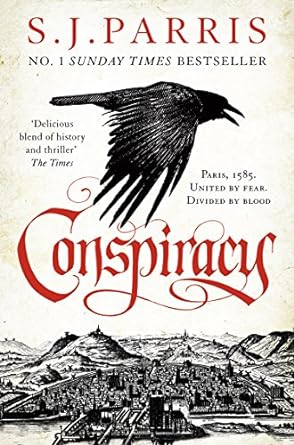
#BookReview ‘Conspiracy’ by SJ Parris @thestephmerritt #historical #crime

Paris 1585. In Conspiracy by SJ Parris, Italian philosopher spy Giordano Bruno is finding the French capital more difficult to negotiate than London. ‘God this city!… So many factions, so many plots; everyone an informer with two faces, playing one party off against the others.’ SJ ParrisFifth in this series, Bruno arrives in a Paris riven by religious fear and violence, when the reign of King Henri III is under threat from the Catholic League led by the Duke of Guise. Henri is ruled by his mother, Catherine de Medici, features regularly in scurrilous scandal sheets and seems unable to sire an heir. When a fellow priest is murdered, Bruno is drawn into the Parisian web of secrets, spies and court intrigue. Always balancing on a knife edge, Bruno must use his detecting skills to identify the murderer. He is ordered by two powerful men – neither knows of the other’s contract – to discover the truth of the murder. Bruno trusts neither and, though his knowledge of how the royal court functions is useful, he finds himself drawn deeper into danger.
A second most unexpected murder within the royal court itself threatens to reveal secrets about Henri, his wife Queen Louise, and his mother Catherine de Medici. This court is a world of courtesan spies where courtiers may be working for both sides, where everyone could be considered two-faced, their word untrustworthy. Bruno survives on his wit, bravery, and sheer damn luck. As Bruno is working for two bosses, he must also consider that everyone he meets is a spy, a double or triple agent, or may be lying to protect themselves, for ambition or for money. The plot ties itself in knots, at times the sheer number of suspects is bewildering.
I particularly enjoyed Bruno’s meetings with fellow spy Charles Paget whose wry remark that Bruno doesn’t look over his shoulder often enough would spoil some of the plot twists. The plot of Conspiracy continues some threads and recurring characters from earlier novels. Scandal and rumour combine in the echo chamber of the royal court as Bruno uncovers one conspiracy after another, or has he. Jumping to conclusions too early gets him into some scrapes and brings him into contact with a wide variety of personalities including an acting troupe I Gelosi.
These are long and complicated books and Bruno has enviable diplomatic and survival skills. The Parisian royal court is poisonous, the city is dirty and dangerous, there are sexy men, gorgeous women and gambling clerics.
A really good historical thriller. If you’re new to this series, please start with the first book to appreciate all the plot twists and themes.

Read my reviews of other books in the series:-
HERESY #1 GIORDANOBRUNO
PROPHECY #2 GIORDANOBRUNO
SACRILEGE #3 GIORDANOBRUNO
TREACHERY #4GIORDANOBRUNO

If you like this, try:-
The Burning Chambers’ by Kate Mosse #1Joubert
The Silver Wolf’ by JC Harvey #1FiskardosWar
Winter Pilgrims’ by Toby Clements #1Kingmaker

And if you’d like to tweet a link to THIS post, here’s my suggested tweet:
#BookReview CONSPIRACY by SJ Parris @thestephmerritt https://wp.me/p2ZHJe-7Hl via @SandraDanby

COMING SOON… THE NEXT BOOK I REVIEW WILL BE:- Helena Dixon

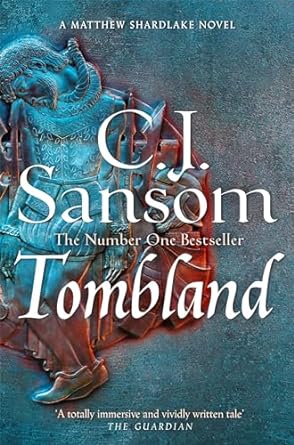
#BookReview ‘Tombland’ by CJ Sansom #Tudor #detective #crime

Before reading Tombland by CJ Sansom I knew nothing about the English rebellions in 1549. What a magnificent series this is, so often emulated but rarely equalled. And how fitting that the final Matthew Shardlake book should shed light on such a little-known uprising. CJ SansomTwo years after King Henry VIII’s death his young son Edward VI sits on the throne, but a Protector rules in his stead. With war against the Scots and a new law allowing the enclosure of land, dissent among the yeomen and farm labourers rumbles into protest into rebellion. The poorest in society find their voice to protest against injustice imposed by the wealthy.
In these uncertain times lawyer Shardlake, living a quieter life in London, is called to investigate a murder in Norfolk. The man accused is related distantly to Anne Boleyn and therefore to her daughter Princess Elizabeth. What is planned as a short visit to Norwich turns into a prolonged stay when Shardlake and his assistant Nicholas Overton are caught up in the rebellion, captured by the rebels who see them as gentlemen and therefore enemies in the fight for peasant rights against the powerful landlords. Set in a time of continuing religious changes, the introduction of Cranmer’s new English language prayer book, churches stripped bare of decoration and walls painted white, people have become used to hiding their true beliefs. As the crown has spies amongst the rebels, the rebels have their own spies. Amidst this suspicion, distrust, gossipmongering and manipulation, Shardlake must find the murderer of John Boleyn’s former wife. Able for some time to survive in the rebel camp, aiding the leader Robert Kett to ensure good law is followed, he must decide whether he is a rebel or a loyalist.
Sansom sets a complicated murder story within a patchwork of historical events, some of those described sound too violent and far-fetched to be true though the Author’s Note assures us they happened. With familiar characters – the return of Jack Barack is welcome – many new faces add their voices to the world as we see it through Shardlake’s eyes, troubled as he is that the valid demands of the protestors will be defeated. Bullied stable boy Simon. Shardlake’s former servant Josephine and her husband Edward. Goodwife Everneke who is the ‘mother’ of the Swardeston village group within the huge Mousehold Heath rebel camp outside Norwich. Isabella Boleyn, former barmaid and second wife of the accused man. Throughout it all, the honesty and goodness of Matthew Shardlake shine through. He defends the underdogs, challenges the liars and stands up to bullies. Always in pursuit of the truth, no matter how uncomfortable, how painful, how inconvenient.
Tombland is a big book, 880 pages, but I read it far quicker than I do many shorter novels, picking it up at every opportunity. And though long, I would not reduce it. This paperback has been sitting on my shelf for ages, calling to be read. From the first sentence I knew I was in a familiar place, ‘I had been in my chambers at Lincoln’s Inn when the messenger came from Master Parry, asking me to attend him urgently.’ Such a simple sentence but the voice so clearly that of Matthew Shardlake.
I had been hesitating over picking up Tombland, wanting to have one more Shardlake book left on the shelf still to be read. Oh what a treasure it is. So now I’ll go back to the beginning and read Dissolution again.

And here are my reviews of other novels by CJ Sansom:-
DOMINION
DISSOLUTION #1SHARDLAKE
DARK FIRE #2SHARDLAKE
SOVEREIGN #3SHARDLAKE
REVELATION #4SHARDLAKE
HEARTSTONE #5SHARDLAKE
LAMENTATION #6SHARDLAKE

If you like this, try:-
Three Sisters, Three Queens’ by Philippa Gregory
Cecily’ by Annie Garthwaite
‘The Lady of the Ravens’ by Joanna Hickson #1QueensoftheTower

And if you’d like to tweet a link to THIS post, here’s my suggested tweet:
#BookReview TOMBLAND by CJ Sansom #Tudor #detective https://wp.me/p2ZHJe-7z3 via @SandraDanby

COMING SOON… THE NEXT BOOK I REVIEW WILL BE:- Helena Dixon

#BookReview ‘The Glassmaker’ by @Tracy_Chevalier #historical #Venice

Enthralling from the first page to the last, The Glassmaker by Tracy Chevalier is by far the best novel I’ve read so far this year. It’s a heady mixture of beautiful glass, Venice in rich times and poor, passion, jealousy and intense competition, focusing on Orsola Rosso and her glass-making family on Murano island within the Venice lagoon through the centuries to the present day. Tracy ChevalierChevalier introduces us to the idea of time-skipping in her brief introduction. ‘The City of Water runs by its own clock. Venice and its neighbouring islands have always felt frozen in time – and perhaps they are.’ And so we follow the same family across six hundred years. In the first chapter in 1494 we meet nine-year old Orsola; this is her story, told in leaps and skips across the centuries. The second instalment of Orsola’s life is in 1574 when she is eighteen years old. Those close to her have aged similarly, only Venice is at once the same and different. Its an ingenious way to tell the story of the Rosso family, the ups and downs of the glassmaking business, their loves and losses, the wars and disease, all set within the framework of Venice and of Murano glass.
When Maestro Lorenzo Rosso dies, Orsola’s eldest brother Marco must take charge of the family business but he is impulsive and designs flamboyant impractical pieces. When contracts are lost and Marco is in his cups, Orsola learns the art of glass bead making. The business of glassmaking is always kept within the immediate family, different families have different specialities, and so matches are made for the sons and daughters of maestros according to the skill or wealth of the incomer. Orsola knows she must marry one day. Her mother and brother’s selection of the man to be her husband is pragmatic, it turns the direction of the story and influences everything that follows.
Life is lived in a bubble on Murano island; loyalties are intense but so is hatred and rivalry. While most women are mutually supportive, others are jealous and ambitious. Murano families rarely go to Venice, Venetians don’t go to Murano. None of them go to the mainland, terraferma. Above all for these families who live close to the bread line, security of employment and supply of food for the family is the primary concern. We follow the Rossos through feast and famine, war, plague, flood and Covid.
So many of Chevalier’s novels are based upon a specific craft or skill – art in The Girl with a Pearl Earring, embroidery in A Single Thread, tapestry weaving in The Lady and the Unicorn, fossil-hunting in Remarkable Creatures. The Glassmaker is another homage to skilled craftsmen who create beautiful objects that last across time.
A magical story, beautifully written. And what a gorgeous cover!

Read my reviews of other novels by Tracy Chevalier:-
A SINGLE THREAD
AT THE EDGE OF THE ORCHARD
NEW BOY
THE LAST RUNAWAY

If you like this, try:-
Disobedient’ by Elizabeth Fremantle
How to be Both’ by Ali Smith
Nat Tate: an American Artist 1928-1960’ by William Boyd

And if you’d like to tweet a link to THIS post, here’s my suggested tweet:
#BookReview THE GLASSMAKER by @Tracy_Chevalier https://wp.me/p2ZHJe-7xg via @SandraDanby

COMING SOON… THE NEXT BOOK I REVIEW WILL BE:- Victoria Hislop

#BookReview ‘Restless Dolly Maunder’ by Kate Grenville #historical

Restless Dolly Maunder by Kate Grenville tells the life story of a poor white girl who wants to be a teacher in late 19th century Australia. Dolly Maunder must gain her father’s approval to take the pupil teacher test and is determined to ask though she knows he will refuse. This beginning sums up the story of Dolly’s life which Grenville recounts until her end in 1945. Kate GrenvilleA melding of fiction with family history, memoir and feminist study, we follow the restless heroine who always wants more. At the beginning I was sympathetic with Dolly’s lot, cornered into marriage, her dreams crushed, taken to live on a windswept isolated farm. This is a portrayal of a woman who rubs against her parents, their narrow expectations, the drudgery and lack of emotion and who as a parent herself struggles with the same constraints. But when life improves and there is money, Dolly still struggles to connect with those around her.
This constant searching for something new is a classic case of grass being greener on the other side of the fence. Sometimes Dolly’s plans work out financially for the family but sometimes end in struggle and hardship. And each time her three children are uprooted, taken somewhere unfamiliar where they must start again.
Dolly was born too early, struggling for her right to be a woman in a man’s world where every legal document must be signed by a man. From farm to shop to hotel and bar, Dolly and husband Bert Russell move on as the 20th century passes from the Great War and Great Depression to the approach of the Second World war. She is a tough woman living in tough times, unwilling to reshape her ambitions and accept the good of what she has achieved, unable to soften herself to allow others to love her.
At the end of the novel the position of women in society is contextualised, viewed across three generations comparing Dolly’s life with that of her mother and her own daughter Nancy. ‘She thought of all the women she’d ever known, and all their mothers before them, and the mothers before those mothers, locked in a place where they couldn’t move.’ Dolly’s own generation, she decides, is like a hinge allowing a door to be opened, slowly at first, painful inch by painful inch, for the women who follow.
A linear story which I read quite quickly, at times admiring Dolly’s determination and sheer strength of will, but struggling with her inability to connect emotionally with anyone around her. Don’t miss the Author’s Note at the end which adds context to the story.
A sad, depressing story.

Read my review of A ROOM MADE OF LEAVES, also by Kate Grenville

If you like this, try:-
Barkskins’ by Annie Proulx
At the Edge of the Orchard’ by Tracy Chevalier
My Name is Yip’ by Paddy Crewe

And if you’d like to tweet a link to THIS post, here’s my suggested tweet:
#BookReview RESTLESS DOLLY MAUNDER by Kate Grenville https://wp.me/p2ZHJe-7wJ via @SandraDanby

COMING SOON… THE NEXT BOOK I REVIEW WILL BE:- Verity Bright

#BookReview ‘Treachery’ by SJ Parris @thestephmerritt #historical #crime

The Giordano Bruno historical mystery series by SJ Parris is into its stride now. Treachery is fourth in the series and my favourite so far. It is 1585 and Sir Francis Drake is assembling a fleet of ships to attack the Spanish. Bruno, with poet and gentleman Sir Philip Sidney, visits Plymouth as the covert expedition is about to leave. But departure is delayed by a murder on board the flagship ‘Elizabeth Bonaventure’ and Bruno agrees to solve the crime. SJ ParrisA slow-build that turns into a page-turning mystery, Parris twists the plot this way and that, suspects come, go, and return as Bruno tracks the murderer on water and on land. Plymouth is a colourful setting for the mystery. Set three years before Drake plays bowls on Plymouth Hoe as the Spanish Armada approaches, Parris weaves a complicated tale of European politics, spies, military strategy plus old-fashioned greed and revenge. Bruno follows clues in the city via an upmarket brothel to Drake’s Island in Plymouth Sound, a small fortified island reached only by boat. Or, according to local legend, through a maze of secret underground tunnels used by smugglers and villains.
Giordano Bruno, the Italian who longs for his home but cannot return, is no longer a monk but a philosopher, academic, a foreigner wherever he lives and works; all things that make him the man he is. A modern man in the sixteenth-century. ‘My face, my voice, my ideas mark me as different. Perhaps, as I have often feared, a man like me belongs everywhere and nowhere.’ Is that why he makes such a good spy, a good solver of crime? He is brave and has a poker face which is useful when confronting suspects, but is sensitive also to emotion and fear. And in the background lurk the influence of master spy Sir Francis Walsingham and political demands of Queen Elizabeth I. Parris mixes fact, particularly the lasting impact of Drake’s earlier voyages and the friends and foes, and some characters are real.
For one said to be good at solving mysteries, Bruno does have a tendency to backing his latest theory and throwing accusations around. But perhaps causing trouble is his gift as a detector as his efforts invariably upset some people, so he makes enemies but also uncovers new clues and suspects. Bruno is such a likeable hero, brave but not macho, lacking the peacock posturing of Sidney and the politicking of Drake. In his position in society as an outsider in a foreign country in politically uncertain times, he is cautious but given to moments of recklessness. It is these moments that enable Parris to kick-start the plot to a new level of tension.
A sprawling story with connections to characters from the previous books in the series, I approached the end turning pages quickly and reading into the night to finish it.
CLICK HERE TO READ MORE ABOUT THIS BOOK AT AMAZON

Read my reviews of other books in the series:-
HERESY #1GiordanoBruno
PROPHECY #2GiordanoBruno
SACRILEGE #3GiordanoBruno

If you like this, try:-
The Fire Court’ by Andrew Taylor #FireofLondon2
The Swift and the Harrier’ by Minette Walters
The Key in the Lock’ by Beth Underdown

And if you’d like to tweet a link to THIS post, here’s my suggested tweet:
#BookReview TREACHERY by SJ Parris @thestephmerritt https://wp.me/p2ZHJe-7uw via @SandraDanby

COMING SOON… THE NEXT BOOK I REVIEW WILL BE:- Dinah Jefferies
#BookReview ‘Disobedient’ by Elizabeth Fremantle #historical #art

Knowing little of the life of seventeenth-century Italian painter Artemisia Gentileschi, reading a fictionalised account of her life in Disobedient by Elizabeth Fremantle was a delight. Elizabeth FremantleIt is an absorbing read. In Rome, 1511, Fremantle creates a fierce world in which teenager Artemisia lives with her father and three brothers. Expected to accept her fate as a lesser person – she is not taught to read and write, must defer to her drunken father and isn’t consulted about decisions that affect her life – she must assist her [lesser talented] artist father while secretly painting her own work.
When her friend Piero assess a work-in-progress and says ‘Apparently, you know more than you think you do about men’s desires,’ Artemisia replies, ‘I watch. And I listen.’ Her skill, her dedication to her art, her confidence and simple difference from other subservient women, is her strength and her weakness. Men feel threatened by her or attracted to her. When her father Orazio begins a search for a husband for her, he courts Agostino Tassi in the hope that as a painter he will allow Arti to continue to paint after marriage. But Tassi is not all he seems. Arti finds herself trapped in a nightmare. Fighting against the restrictions placed on women, her only rebellion is on canvas. She paints the most disturbing, violent, incisive art that has been seen, by a man let alone by a woman. Desperate to be free of Tassi, she has two options. Marriage, or the law court.
Disobedient is an unflinching portrayal of life for women in seventeenth-century Italy, and a portrayal of one artist who refused to submit. Artemisia Gentileschi was a real person, she painted the pictures depicted in Fremantle’s novel, she was raped and tried by torture. Around the historical facts, Fremantle has constructed a compelling, emotional, heart-rending story that is uplifting and at the same time difficult to read.
Excellent. The anger and sense of injustice pours off the page.

If you like this, try:-
The Silence of the Girls’ by Pat Barker
How to be Both’ by Ali Smith
Girl in Hyacinth Blue’ by Susan Vreeland

And if you’d like to tweet a link to THIS post, here’s my suggested tweet:
#BookReview DISOBEDIENT by Elizabeth Fremantle https://wp.me/p2ZHJe-7qz via @SandraDanby

COMING SOON… THE NEXT BOOK I REVIEW WILL BE:- Fiona Leitch