Tag Archives: histfic

#BookReview ‘The Secrets of the Rose’ by Nicola Cornick @NicolaCornick #historical #timeslip #romance

The Secrets of the Rose by Nicola Cornick is a mystery that is centuries old but that poses very real dangers today. This is a really enjoyable timeslip story cleverly intertwining storylines during the 18th century Jacobite rebellion with today. Nicola CornickIn 1715 Northumberland, Dorothy Forster is having a bad day. First, an unexpected and unwanted proposal. Second, a gloriously handsome man is doggedly planning insurrection and involving her brothers in Jacobite rebellion. ‘The ridiculousness of her life struck her and made her want to laugh bitterly at the absurdity. Men. Always causing problems.’ Life at Bamburgh Hall in difficult for Dorothy; her vulnerable father has dangerous secrets, her brothers are troublemakers and the Earl of Derwentwater supports the king over the water. There is danger everywhere. And now Derwentwater asks Dorothy to give him the Rose, a talisman said to bring victory to all who follow it. It was lost centuries ago but in the time of the Crusades its last known keeper was an ancester of Dorothy. But she knows nothing of it and doesn’t have it.
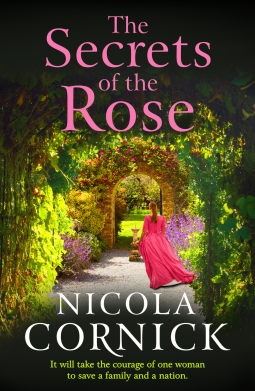
Today in Northumberland. Hannah Armstrong has returned to Bamburgh Hall, it is the house where she grew up and is now occupied by her widowed stepmother. But Diana is keeping secrets and what author Hannah planned as a flying visit to research material for a new biography turns into a longer, more complicated stay. Danger is threatening. Hannah is commissioned to write about local lighthousekeeper’s daughter Grace Darling who with her father rowed out to a sinking vessel and saved lives, but Hannah finds herself more interested in Dorothy Forster, who also lived at Bamburgh Hall. Then there is Aaron Salter, brother of Hannah’s best friend at school, who saved her life when they were teenagers. Aaron was best friend of Hannah’s brother Brandon until he wasn’t, and Hannah doesn’t know why. Her brother, always troublesome and self-seeking, is difficult to deal with so when people tell her they’ve seen him in town, she is suspicious and afraid.
There are parallels and differences between the two timelines. Both heroines are strong-willed and independent, both have a long-standing telepathic connection with an unidentified male. And both have troublesome siblings. A page-turning historical story with romance, danger, violence, chauvinism, bravery, dangerous politics and family connections, good and bad.
I really enjoyed this book. In her ‘Historical Note’ at the end, Cornick explains she has been visiting Bamburgh since she was a child. It shows on every page. It is a real place full of history, myth, politics, war and legend and Cornick has used this foundation well, adding her own inventions with a deft hand so that fact and fiction blend seamlessly.
Excellent.

Read my reviews of these other novels by Nicola Cornick:-
THE FORGOTTEN SISTER
THE FOURTH QUEEN
THE LAST DAUGHTER
THE OTHER GWYN GIRL
THE WINTER GARDEN

If you like this, try:-
‘The Wicked Cometh’ by Laura Carlin
‘The Royal Rebel’ by Elizabeth Chadwick #1JEANETTEOFKENT
‘The Cursed Wife’ by Pamela Hartshorne

And if you’d like to share a link:
#BookReview THE SECRETS OF THE ROSE by Nicola Cornick @NicolaCornick https://wp.me/p2ZHJe-ap8 via @SandraDanby

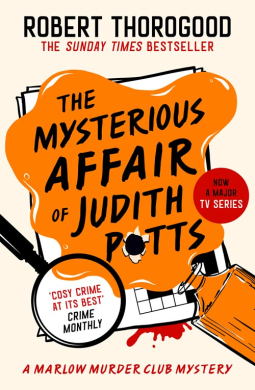
COMING SOON… THE NEXT BOOK I REVIEW WILL BE:- Robert Thorogood
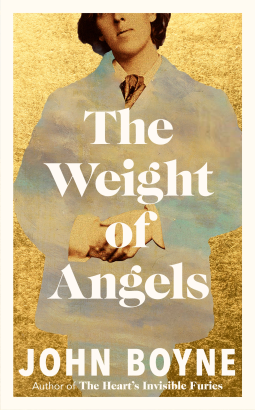
#BookReview ‘The Weight of Angels’ by John Boyne @JohnBoyneBooks #historical #OscarWilde

The Weight of Angels by John Boyne is a ‘what if’ book considering Oscar Wilde’s life if he hadn’t died in Paris in 1900 aged 46. Boyne places Oscar into the literary world of the first half of the 20th century and imagines an alternate reality of his creative output, loves, losses and mistakes and a fight for the legalisation of homosexuality. John BoyneThe action begins as Oscar prepares to attend the trial of his lover Bosie, Lord Alfred Douglas, on a charge of gross indecency. I found the first few chapters disorientating until realising that Boyne inverts Oscar and Bosie’s life stories. Only when the fictional Oscar outlives the real Oscar did I settle into the story. There are wonderful snippets of theatrical sniping and rivalry, outrageous flirting and sexual inunendo as Oscar continues his output of successful plays. His life becomes a succession of landmark events; the passing of two world wars, the deaths and coronations of kings and queens, all giving opportunities for witty exchanges and brutal insults. After the death of his loyal wife Florence he lives alone, writing successful play after successful play, until he falls in love and gets writers’ block. He tells no one. Gus is not artistic or theatrical, he is a down-to-earth teacher who encourages Oscar to exercise more and eat muesli for breakfast. This is a new Oscar who is not tormented, but happy. Can he write successfully only when he is troubled?
As Oscar ages he crosses paths with literary luminaries including Kipling, Yeats, Shaw, Eliot, Forster and the Woolfs and in Hollywood meets Katherine Hepburn. The narrative is a mix and match of style including prose, scripts, letters, newspaper articles, which allows Boyne to jump forward in time (the novel stretches from 1895 to 1952). There are some fascinating interludes. I particularly enjoyed his meetings with Emmeline Pankhurst who says, ‘It is a sad and somewhat ironic fact that for the women’s movement to succeed, we need the support of men. Particularly men with a voice.’ Boyne has particular fun when Oscar meets Virginia and Leonard Woolf, mirroring their conversation with Virginia’s stream of consciousness writing style. The funniest scene involves Oscar, Winston and Clemmie Churchill and German sexologist Magnus Hirschfeld. Oscar and Winston have agreed to cooperate with the aim of legalising homosexuality while Clemmie talks in euphemisms (those who prefer ‘the Gregorian to the Julian calendar’) much to Hirshfeld’s confusion.
The Weight of Angels is more than 600 pages long, featuring Oscar’s life as the central spine with historical markers along the way involving factual events and meetings with real people. In places it turns into a bit of a who’s who. Some are fleeting passages with characters who don’t appear again while in other sections the story flies by.
Boyne has created a new Oscar Wilde as he might have been, dying in old age and haunted by the fact that he escapes censure when other men do not. ‘There are moments when I feel suffocated beneath the weight of angels, and I wonder whether, when my own time comes, those same seraphim will carry me to my reward, or simply watch as I am punished for my sins.’
Every one of John Boyne’s book is different. He is brave, political, sensitive, adventurous and humorous. He is an author who challenges himself, and his readers.

Check my reviews of these other novels by John Boyne:-
A HISTORY OF LONELINESS
A LADDER TO THE SKY
A TRAVELLER AT THE GATES OF WISDOM
ALL THE BROKEN PLACES
STAY WHERE YOU ARE AND THEN LEAVE
THE HEART’S INVISIBLE FURIES… try the #FirstPara of THE HEART’S INVISIBLE FURIES
WATER #1ELEMENTS
EARTH #2ELEMENTS

If you like this, try:-
‘A Little Life’ by Hanya Yanagihara
‘Days Without End’ by Sebastian Barry #1DAYSWITHOUTEND
‘Love is Blind’ by William Boyd

And if you’d like to share a link:
#BookReview THE WEIGHT OF ANGELS by John Boyne @JohnBoyneBooks https://wp.me/p2ZHJe-ak9 via @SandraDanby

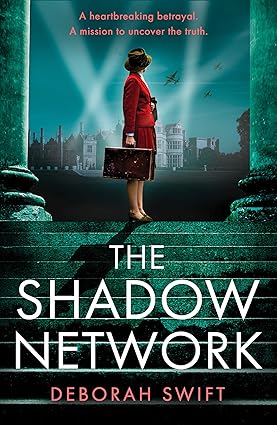
COMING SOON… THE NEXT BOOK I REVIEW WILL BE:- Deborah Swift
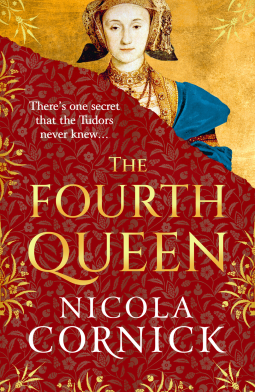
#BookReview ‘The Fourth Queen’ by Nicola Cornick @NicolaCornick #historical #timeslip #Tudor

The Fourth Queen by Nicola Cornick is my favourite book of the year. An intriguing timeslip novel split between the present day and Tudor England, the queen of the title is Anna of Cleves, the fourth wife of Henry VIII. Two women, Jenna now and Marris in in the 16th century, are bound by this one queen and one secret. To Jenna’s horror, that secret may be uncovered by a 21st century archaelogical dig. Nicola CornickEngland 1539. Three sisters. Loyalty. Betrayal. Secrets. Danger. Dissolution. After the death of Jane Seymour, King Henry VIII must marry again and a match is sought with the German princess Anna of Cleves. Marris, Bridget and Rose, the only remaining nuns at Winterhill Priory, are about to be evicted from the priory that has been their home since they were orphaned. Marris knows it is her responsibility to keep her sisters safe and so accepts an offer of marriage from the new owner of their old home. Due for demolition, the site will be rebuilt using stone from the priory by Sir William Sharington. It is to be his home, Winterhill Hall.
England, present day. Three sisters. Loyalty. Lies. Secrets. Rivalry. Jealousy. Jenna feels responsible for her two younger sisters, Bree and Molly, despite their independence. The two strands, modern and historical, are knitted together by retrocognition; the knowledge of a historical event which could not have been learned or inferred by normal means. Why does Jenna have such deep knowledge of Marris’s life? She thinks, ‘The past was such a tangled web and none of it could be allowed to come out, because once one part of it started to unravel, everything would fall apart.’ An encounter with financier Owen Power forces her to reconsider everything she thinks she knows and wants, every red line she has drawn about the past.
The Fourth Queen is by far the best timeslip novel I’ve read. Impossible to review without giving away some great twists. Bravo.

Read my reviews of these other novels by Nicola Cornick:-
THE FORGOTTEN SISTER
THE LAST DAUGHTER
THE OTHER GWYN GIRL
THE SECRETS OF THE ROSE
THE WINTER GARDEN

If you like this, try:-
‘The Queen’s Painter’ by Wendy Holden
‘Shadows in the Ashes’ by Christina Courtenay
‘The Story Spinner’ by Barbara Erskine

And if you’d like to share a link:
#BookReview THE FOURTH QUEEN by Nicola Cornick @NicolaCornick https://wp.me/p2ZHJe-9XY via @SandraDanby

COMING SOON… THE NEXT BOOK I REVIEW WILL BE:- Frances Brody
#BookReview ‘The Armour of Light’ by Ken Follett @KMFollett #historical #Kingsbridge

It is 1792 and a weaving revolution is taking place in Kingsbridge while across the Channel, the deadly French Revolution is well underway. The Armour of Light by Ken Follett, fifth in the Kingsbridge historical series (starting with prequel The Evening and The Morning), begins with a horrific accident. When Sal Clitheroe’s husband dies, she and her small son Kit move to Kingsbridge and so set in motion a chain of events leading to the Battle of Waterloo. Ken Follett
As the 18th century turns into the 19th, this is a story of great change as Britain industrialises and hovers on the brink of war, and both workers and ruling classes of Kingsbridge are affected. Kingsbridge, now a city so much more than simply a cathedral, is still recognisable from the earlier novels. Sal and her fellow workers at the spinning and weaving mills become embroiled in a power struggle with the mill owners, as first the spinning jenny and then other machines are introduced. Jobs are lost, hours are reduced, dissenters are flogged and strike-busting labourers are hired from Ireland.
The Armour of Light is a compelling story of the political times in England from 1792 to 1824 told through the eyes of Sal and Kit; yarn supplier’s son Amos Barrowfield; weaver David Shoveller or ‘Spade’; and alderman and mill owner Joseph Hornbeam. Adding to the tensions between the powerful and the downtrodden, war taxes raised to fund the battle against Napoleon mean shortages and rocketing prices. What’s more, young men are being grabbed off the street by press gangs. Kit is a key figure, growing from a child to an inventive engineer whose talents lead him on to the battlefield, bringing a youthful vigour and freshness to the age-old battles between the city cabal of powerful men and the new friendly society which stands up for the workers.
What an epic story this is, 745 pages long but I read it in five days. Not one to over-write, Follett’s prose is never flowery but always clear and dramatic. I always wanted to read just another chapter. A great continuation of the un-matched Kingsbridge series.

Click the titles to read my reviews of other Follett novels:-
THE EVENING AND THE MORNING #PREQUELKINGSBRIDGE
THE PILLARS OF THE EARTH #1KINGSBRIDGE
WORLD WITHOUT END #2 KINGSBRIDGE
A COLUMN OF FIRE #3 KINGSBRIDGE
NEVER

If you like this, try:-
‘The Lady of the Ravens’ by Joanna Hickson #1QUEENSOFTHETOWER
‘The Drowned City’ by KJ Maitland #1DANIELPURSGLOVE
‘The Warlow Experiment’ by Alix Nathan

And if you’d like to tweet a link to THIS post, here’s my suggested tweet:
#BookReview THE ARMOUR OF LIGHT by Ken Follett @KMFollett https://wp.me/p2ZHJe-8aQ via @SandraDanby

COMING SOON… THE NEXT BOOK I REVIEW WILL BE:- Verity Bright
#BookReview ‘Nero’ by Conn Iggulden #historicalfiction #RomanEmpire

Nero, first in the eponymous trilogy, is the first Conn Iggulden novel I have read. Why did I wait so long? I thoroughly enjoyed it and am now awaiting Tyrant to continue the story. Conn IgguldenNero is the title of the book but Nero the person is not named until the end. It turns out that Nero is a Roman nickname. As this is the first of the trilogy there is a lot of background – family, historical, political, emotional – to establish. Nero features three Roman emperors; Tiberius, Caligula and Claudius. The emperor we know as Nero is a child, Julius, throughout this book until he is re-named. The spine of the story belongs to Agrippina, great-granddaughter of Emperor Augustus I, sister of three brothers including Emperor Caligula, and niece of Emperor Claudius. Their line goes back to Julius Caesar. Step by step, through two husbands, threat, fear, poverty and extreme wealth, Agrippina protects Julius, son of her first husband, guarding his right to become emperor.
I am no expert on Roman history, my knowledge of Claudius is limited to the 1970s television series I, Claudius, which I enjoyed when young and am now tempted to re-visit.
AD 37, Nero begins as Agrippina’s husband Gnaeus Domitius Ahenobarbus, Barbo the celebrity charioteer and grandson of Mark Anthony, rides into Rome to face punishment possibly death. He is accused of adultery with a senator’s wife. It is the first glimpse of Agrippina’s influence, courage and ambition; if Barbo runs for the hills she and her son will be killed in revenge, if he rides to Rome to face judgement then likely he will die but she and her son may survive. Tension is on every page. Women are key characters; the wives, sisters, daughters and mothers of the Roman male elite, are victims, seducers, allies, murderers and heroes.
Agrippina is formidable, admirable in her protection of her child and of their rights, intimidating in the methods she will use to achieve security, Machiavellian in her tactical flexibility. This is a wonderful character-driven drama with a woman at the core, set within the unpredictable, lethal, cut-throat male world of Roman politics. Being unaccustomed to Roman names, I found some confusing and complicated; a family tree would be helpful. It would also be good to see the viewpoints of other female characters – particularly Agrippina’s aunt Domitia Lepida, and Messalina the wife of Claudius – to deepen the plot and add tension.
Rome at the time of Nero can be summed up in three words: treachery, ambition, danger. And it all happens at the speed of light. I loved it.
Bring on Tyrant.

If you like this, try:-
‘Sparrow’ by James Hynes
‘Glorious Exploits’ by Ferdia Lennon
‘The Wolf Den’ by Elodie Harper #1WOLFDEN

And if you’d like to share a link:
#BookReview NERO by Conn Iggulden https://wp.me/p2ZHJe-84w via @SandraDanby

COMING SOON… THE NEXT BOOK I REVIEW WILL BE:- Fiona Leitch

#BookReview ‘The Other Gwyn Girl’ by Nicola Cornick @NicolaCornick #historical

I loved The Other Gwyn Girl by Nicola Cornick. More specifically, I loved the character of Rose, sister of the more famous Nell Gwyn. Cornick has written a wonderful timeslip novel piecing together the story of the real Rose Gwyn from scarce historical documents and combining it with a modern story mirroring the major themes. Love, celebrity, betrayal, royalty, loyalty and jewellery. Nicola CornickIn 1671, famed royal mistress Nell Gwyn has come a long way from selling oranges. Her older sister however is not so lucky in love. Rose Cassells, nee Gwyn, is in prison for the third time in her life; the first time for stealing a loaf of bread, the second as a debtor. Her third imprisonment is for treason; entangled by her highwayman husband into joining a plot to steal the Crown Jewels. The plot fails. Rose is caught and imprisoned in the infamous Marshalsea prison.
The present day story is about another pair of sisters. Jess Yates, sister of TV reality star Tavy, is newly single again after separating from her boyfriend who is now in prison for fraud. Jess needs a clean break while she works out what to do with her life. She accepts Tavy’s offer of moving to Fortune Hall as housekeeper. Tavy bought this rundown mansion as the setting for her new reality television series. Longing for peace and quiet, Jess steps into a whirlwind of celebrity life. Tavy is filming a new episode and is surrounded by cameramen and hangers-on. Her team includes loyal assistant Ed and physic Francesca, Jess and Tavy’s mother Una, and Tavy’s model boyfriend Hunter. Whilst Tavy broadcasts on social media the smallest intimate details of her life at Fortune Hall where she pretends to live – she dislikes the house, regrets buying it and is away from home as often as possible – librarian and archivist Jess retreats to the house’s dusty old library. Like Nell and Rose, Jess and Tavy are personality opposites.
Connections between the two storylines seem miles apart at the beginning, though some parallels become clear quite quickly, which presents even more possibilities and increases the tension. There are satisfying flirtations and hints of romance, handsome heroes, dastardly villains and at the centre of it all, two impressive mansions.
The spine of the 17th century strand is historical truth. The two Gwyn sisters, unalike in character but bonded by blood and shared childhood, raised by a drunken widowed mother in poverty. The theft of the Crown Jewels in a plot organised by Sir Thomas Blood with the help of thief John Cassells. Blood is later mysteriously pardoned by King Charles II, lover of Nell Gwyn. John Cassells disappears. Little is known of Rose Gwyn and Cornick has used this vacuum to create a page-turning mystery with satisfying tension, betrayals, rescues, love, sacrifices and murder. The historical setting is fascinating and Cornick writes sensitively about grief, loss and regret, but also about the things women had to do at that time to survive.
The ending is surprising, satisfying, with the correct element of mystery and the receiving of just desserts. This is a wonderful read about, for me, an unfamiliar period of history.

Read my reviews of these other novels by Nicola Cornick:-
THE FORGOTTEN SISTER
THE FOURTH QUEEN
THE LAST DAUGHTER
THE SECRETS OF THE ROSE
THE WINTER GARDEN

If you like this, try:-
‘The Wicked Cometh’ by Laura Carlin
‘Disobedient’ by Elizabeth Fremantle
‘The Photographer’s Wife’ by Suzanne Joinson

And if you’d like to share a link:
#BookReview THE OTHER GWYN GIRL by Nicola Cornick @NicolaCornick https://wp.me/p2ZHJe-81n via @SandraDanby

COMING SOON… THE NEXT BOOK I REVIEW WILL BE:- Percival Everett

#BookReview ‘The Temple of Fortuna’ by Elodie Harper #historical #Pompeii

The final instalment of the Wolf Den trilogy by Elodie Harper doesn’t disappoint. The Temple of Fortuna follows the return journey of former brothel worker Amara from Rome via Misenum to Pompeii. She returns a very different woman from the last time she stood on the city’s streets beneath Vesuvius, having clawed her way up from slave to freedwoman and high-class courtesan. Elodie HarperIt’s been a while since I read the second book of the trilogy, The House with the Golden Door, but I slipped quickly back into Amara’s world. Moving in the highest of political circles on the arm of her patron Demetrius, and sometimes spying for him, Amara still fears the shadows and sees glimpses of poor people who remind her of her past and the dangers she faced. Every day she thinks of her daughter Rufina, left in Pompeii in the charge of slave Philos, her former lover and Rufina’s biological father, and fears for their safety. Rome is Amara’s best chance to better herself so she can raise Rufina in wealth and security. When Demetrius asks her to be his wife, Amara sales to Misenum to the house of her benefactor Pliny and then on to Pompeii. It is September AD79.
The fatal eruption of Vesuvius is a shadow throughout the trilogy but especially so in this book. As Amara’s ship approaches Pompeii, small earthquakes make the land of Campania shake. The tremors are so frequent that to the locals they become normal. Amara is reunited with her spiky daughter and we meet again friends familiar from previous books. My favourite is the female gladiator Britannicus, who has been watching over Rufina’s safety in a city where Felix, pimp and owner of the Wolf Den brothel, and Rufus, Rufina’s nominal father, are always a threat.
I admit to being impatient for the eruption to begin, this happens just past halfway but could have been much earlier. The earth trembles, dusk falls prematurely. ‘Above the mount, a black column has risen, is still rising, piercing the sky like a spear thrown from the kingdom of Vulcan, god of fire.’ From this point on, all political, business and relationship worries – will Demetrius accept Rufina as his adopted daughter, how can Amara leave Philos who she realises she still loves, how can she stop Felix extorting money from the bars she owns near the gladiator arena – disappear and the running starts. What follows is an almost eyewitness detailed report of fleeing Pompeii for Stabiae and Surrentum.
It’s impossible to review the second half of the book without spoilers. There are a number of epilogues which tie up loose ends, a little too neatly for my liking. But this is an excellent trilogy, immersive, with characters you root for. Definitely one to re-read.

Here are my reviews of the first two novels in the ‘Wolf Den’ series by Elodie Harper:-
THE WOLF DEN #1WOLFDEN
THE HOUSE WITH THE GOLDEN DOOR #2WOLFDEN

If you like this, try:-
‘A Traveller at the Gates of Wisdom’ by John Boyne
‘Glorious Exploits’ by Ferdia Lennon 
‘Shadows in the Ashes’ by Christina Courtenay 

And if you’d like to tweet a link to THIS post, here’s my suggested tweet:
#BookReview THE TEMPLE OF FORTUNA by Elodie Harper https://wp.me/p2ZHJe-7U6 via @SandraDanby

COMING SOON… THE NEXT BOOK I REVIEW WILL BE:- Abir Mukherjee
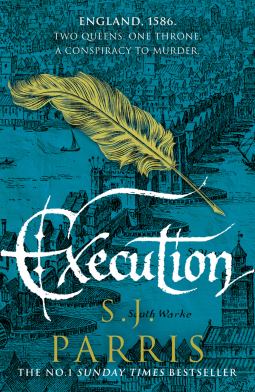
#BookReview ‘Execution’ by SJ Parris @thestephmerritt #historical #crime

Italian heretic and spy Giordano Bruno becomes embroiled in a Catholic plot to kill Queen Elizabeth I and replace her with Mary, Queen of Scots. Execution by SJ Parris, sixth in the excellent Bruno series, starts fast and doesn’t slow down. SJ ParrisBased on the true Babington Plot of 1586 to assassinate the queen, this is the best so far of this historical mystery series. Well-researched with lots of unexpected twists and turns, London seethes with threat around every corner. Bruno, keen to find patronage again in London after fleeing Paris, finds himself unable to say no to his former boss, Elizabethan spymaster Sir Francis Walsingham. He must impersonate a Spanish priest and infiltrate a group of Catholics conspiring with Mary to kill her cousin.
There are secret letters written in code, horrible torture, turncoats, double agents, a brave lady spy and a wonderful boy bodyguard Ben. Bruno the heretic must remember quickly how to say mass and give extreme unction to the dying, get one word wrong and his co-conspirators will suspect he is false. Danger lurks as Bruno goes from the grand houses of the north bank of London to the filth, flesh pots, rowdy playhouses and bear pits of the south bank. Characters reappear from his past, some more welcome than others, while the solemn forger and codebreaker Thomas Phelippes and the publican’s son Ben are fascinating additions.
Parris maintains the tension as Bruno makes errors and escapes by the skin of his teeth, all the time wondering if Walsingham has erred in his character judgement of allies within the plotters. Yes, Bruno sometimes gets it wrong. He is not perfect, he is not a professional spy. He is a philosopher who wants nothing more than to write his books and settle down with the woman he loves. But trouble always seems to find him.
A skilfully-written fictional take on a historical event. Colourful, smelly, foul and vibrant, London deserves a special mention as an additional character in Execution.

Read my reviews of other books in this series:-
HERESY #1GIORDANOBRUNO
PROPHECY #2GIORDANOBRUNO
SACRILEGE #3GIORDANOBRUNO
TREACHERY #4GIORDANOBRUNO
CONSPIRACY #5GIORDANOBRUNO
ALCHEMY #7GIORDANOBRUNO

If you like this, try:-
‘A Rustle of Silk’ by Alys Clare #1GABRIELTAVERNER
‘The Swift and the Harrier’ by Minette Walters
‘The Western Wind’ by Samantha Harvey

And if you’d like to share a link:
#BookReview EXECUTION by SJ Parris @thestephmerritt https://wp.me/p2ZHJe-7Ru via @SandraDanby

COMING SOON… THE NEXT BOOK I REVIEW WILL BE:- Rory Clements

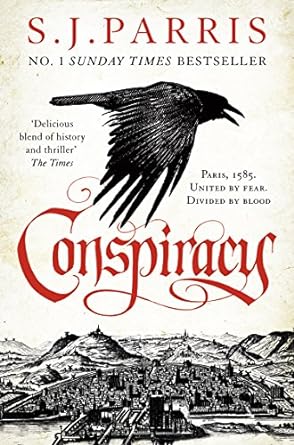
#BookReview ‘Conspiracy’ by SJ Parris @thestephmerritt #historical #crime

Paris 1585. In Conspiracy by SJ Parris, Italian philosopher spy Giordano Bruno is finding the French capital more difficult to negotiate than London. ‘God this city!… So many factions, so many plots; everyone an informer with two faces, playing one party off against the others.’ SJ ParrisFifth in this series, Bruno arrives in a Paris riven by religious fear and violence, when the reign of King Henri III is under threat from the Catholic League led by the Duke of Guise. Henri is ruled by his mother, Catherine de Medici, features regularly in scurrilous scandal sheets and seems unable to sire an heir. When a fellow priest is murdered, Bruno is drawn into the Parisian web of secrets, spies and court intrigue. Always balancing on a knife edge, Bruno must use his detecting skills to identify the murderer. He is ordered by two powerful men – neither knows of the other’s contract – to discover the truth of the murder. Bruno trusts neither and, though his knowledge of how the royal court functions is useful, he finds himself drawn deeper into danger.
A second most unexpected murder within the royal court itself threatens to reveal secrets about Henri, his wife Queen Louise, and his mother Catherine de Medici. This court is a world of courtesan spies where courtiers may be working for both sides, where everyone could be considered two-faced, their word untrustworthy. Bruno survives on his wit, bravery, and sheer damn luck. As Bruno is working for two bosses, he must also consider that everyone he meets is a spy, a double or triple agent, or may be lying to protect themselves, for ambition or for money. The plot ties itself in knots, at times the sheer number of suspects is bewildering.
I particularly enjoyed Bruno’s meetings with fellow spy Charles Paget whose wry remark that Bruno doesn’t look over his shoulder often enough would spoil some of the plot twists. The plot of Conspiracy continues some threads and recurring characters from earlier novels. Scandal and rumour combine in the echo chamber of the royal court as Bruno uncovers one conspiracy after another, or has he. Jumping to conclusions too early gets him into some scrapes and brings him into contact with a wide variety of personalities including an acting troupe I Gelosi.
These are long and complicated books and Bruno has enviable diplomatic and survival skills. The Parisian royal court is poisonous, the city is dirty and dangerous, there are sexy men, gorgeous women and gambling clerics.
A really good historical thriller. If you’re new to this series, please start with the first book to appreciate all the plot twists and themes.

Read my reviews of other books in this series:-
HERESY #1GIORDANOBRUNO
PROPHECY #2GIORDANOBRUNO
SACRILEGE #3GIORDANOBRUNO
TREACHERY #4GIORDANOBRUNO
EXECUTION #6GIORDANOBRUNO
ALCHEMY #7GIORDANOBRUNO

If you like this, try:-
‘The Burning Chambers’ by Kate Mosse #1JOUBERT
‘The Silver Wolf’ by JC Harvey #1FISKARDOSWAR
‘Winter Pilgrims’ by Toby Clements #1KINGMAKER

And if you’d like to share a link:
#BookReview CONSPIRACY by SJ Parris @thestephmerritt https://wp.me/p2ZHJe-7Hl via @SandraDanby

COMING SOON… THE NEXT BOOK I REVIEW WILL BE:- Helena Dixon
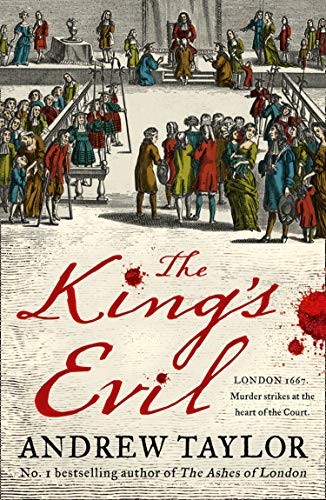
#BookReview ‘The King’s Evil’ by Andrew Taylor @AndrewJRTaylor #Historical

A body is discovered in the wrong place. A murder is worrying at any time, but in the turmoil of 1667 in the court of Charles II it is inconvenient too; further death is likely to follow. The King’s Evil is third in the ‘Fire of London’ series by Andrew Taylor. As London rises from the smoldering ruins of the fire, government administrator turned investigator James Marwood is called yet again to do the king’s secret bidding… to move the body somewhere less inflammatory. Andrew TaylorWondering why he gets into these situations, Marwood must find away to get through the following days without being murdered, by one side or the other. Complicating matters is that the man murdered is Edward Alderley, the nasty cousin of Cat Lovett who was forced to flee the dangerous Alderley in The Ashes of London. Marwood, unable to forget the fact that Cat has a very good reason for wishing her cousin dead, sets out to identify the real murderer. Complicating things are the obtuse instructions of royal insider Mr Chiffinch; the tensions at court between the King’s brother, the Duke of York, and the Duke of Buckingham; and the sensuous but manipulative Lady Quincy.
The King’s Evil gains an extra star from me for the return of Cat. Though the plotting at times threatened to head up a dead end street, Taylor pulled it around again. At times I wondered when the ‘threat to the royal family’ would become evident. Marwood is sent on errands by the tight-lipped Mr Chiffinch and the waters are often muddied. Only in the last few chapters does the significance of small events at the beginning of the book become clear.
All three books in this series have fascinated me, this is a historical period about which I shamefully know little. Taylor has the uncanny ability to write fast-moving stories with period detail, showing wounded London re-emerging as scaffolding climbs into the sky, a believable place with traces of today’s city.
Is this the last of a trilogy, or the third of a series? I don’t know.

Read my reviews of the other books in this series:
THE ASHES OF LONDON #FIREOFLONDON1… and try the first paragraph of THE ASHES OF LONDON.
THE FIRE COURT #FIREOFLONDON2
THE LAST PROTECTOR #FIREOFLONDON4
THE ROYAL SECRET #FIREOFLONDON5
THE SHADOWS OF LONDON #FIREOFLONDON6

And a World War Two novel by the same author:-
THE SECOND MIDNIGHT

If you like this, try:-
‘Dissolution’ by CJ Sansom #1SHARDLAKE
‘The Quick’ by Lauren Owen
‘Rush Oh!’ by Shirley Barrett

And if you’d like to tweet a link to THIS post, here’s my suggested tweet:
#BookReview THE KING’S EVIL by Andrew Taylor @AndrewJRTaylor https://wp.me/p2ZHJe-7ea via @SandraDanby