Tag Archives: historical fiction

#BookReview ‘The Elopement’ by @AuthorTracyRees #historical

When society beauty Rowena Blythe elopes with an unsuitable artist’s assistant, the repercussions ripple throughout the household and the local community. The Elopement, like other novels by Tracy Rees, is packed with social comment. She shows that while society in 1897 was lived under strict class differences, people were more similar than they realised. Tracy ReesRees tells the story of three women who live in close proximity to each other in Highgate, North London. Housemaid Pansy Tilney works six days a week at Garrowgate Hall, home to the Blythe family and run with a rod of iron by the mistress, Maud Blythe. Rowena, the only daughter of the house, is intended for a suitable marriage if only Maud can find a suitable husband that Rowena will deem to accept. Rowena and her best friend Verity love nothing more than to gossip, especially about those they see as unfashionable, plain, weak or boring. One of their targets is single mother Olive Westfallan. The Westfallen family lives at the opposite side of Hampstead Heath to the Blythes. There is history between the two families as the patriarchs – Rowena and Olive’s fathers – fell out long ago. Olive, who is as rich if not richer than Rowena, pays no notice to gossip about her unusual circumstances. As a single unmarried woman, she adopted a daughter Clover and gave home to a ward, Angeline. She is a working mother, as head of her own charitable foundation she helps less fortunate people take a step up in life, through education, employment or financial aid. There are not two people more different than Rowena and Olive.
Rees brings the three women together in the most unusual of circumstances. Each is facing a life-changing decision and each is prevaricating. Rowena must choose a husband. Pansy must leave Garrowgate Hall and find new employment as the man she loves holds a secret unfulfilled passion for Rowena. Olive must consider whether to accept a marriage proposal from a man she likes, perhaps loves, but isn’t sure if she loves him enough or whether his attitude to life fits hers. These are dilemmas of the time, England on the cusp of the twentieth-century saw the cause of women evolving rapidly. Rees presents opportunities to her three characters, each must be brave in making their decision.
A novel about the solidarity, and also bitchiness, of women. Not all are as they seem. Some get what they want, others don’t know what they want. As the constraints of society’s expectations are loosened, new chances become available, to rich and poor alike. Rowena, who had it all, falls in love with an unsuitable man – an artist, foreign and poor ­– and pays the price for her impetuous decision.
I’ve loved every Tracy Rees novel I’ve read so far. The Elopement didn’t disappoint. It is in fact a sequel to Rees’s The Rose Garden [see below for a link to my review] but it isn’t necessary to read the first to enjoy The Elopement. Each woman must find a way to break free of the limitations of their sex and find a brighter future. So much more than a historical romance.
CLICK HERE TO READ MORE ABOUT THIS BOOK

Click the title below to read my reviews of other novels by Tracy Rees:-
AMY SNOW
DARLING BLUE
THE HOUSE AT SILVERMOOR
THE ROSE GARDEN

If you like this, try:-
After Leaving Mr Mackenzie’ by Jean Rhys
The Walworth Beauty’ by Michèle Roberts
The Ninth Child’ by Sally Magnusson

And if you’d like to tweet a link to THIS post, here’s my suggested tweet:
THE ELOPEMENT by @AuthorTracyRees #bookreview https://wp.me/p2ZHJe-6p9 via @SandraDanby

COMING SOON… THE NEXT BOOK I REVIEW WILL BE:- William Trevor
#BookReview ‘The Cottingley Secret’ by @HazelGaynor #historical #fairies

I won a signed paperback of The Cottingley Secret by Hazel Gaynor in a Twitter promotion on #NationalNorthernWritersDay and it’s been sitting on my to-read shelf for a while. I picked it up one weekend when searching for a comforting, absorbing read, and that’s what it is. Hazel GaynorTold in dual timeline, it is partly based on the true story of the two young girls who photographed fairies at the bottom of their garden, combined with a fictional imagining of a 21st century bookbinder who inherits a bookshop in Ireland. The story is slow to start and it’s a while before the fairy connection between the two strands is established. But hang in there.
In 1917, Frances Griffiths and her mother travel from South Africa to Cottingley, Yorkshire. They will stay with Frances’ aunt, uncle and cousin while her father goes off to fight the Great War. Frances soon settles into life with her older cousin Elsie and together the two play imaginary games. Until one day Frances sees fairies beside the beck at the back of the house, ‘…the first flash of emerald, then another of blue, then yellow, glimpsed out of the corner of my eye. Not dragonflies. Not butterflies. Something else.” After confiding in Elsie, Frances blurts out her secret to her mother who doesn’t believe her. None of the adults do. What follows is an innocent attempt to prove the adults wrong, an attempt which spirals out of control. Soon Mr Arthur Conan Doyle, creator of Sherlock Holmes, is involved and the possibility of confessing their secret becomes impossible.
In present day Ireland, Olivia Kavanagh arrives in her hometown of Howth on a sad journey. Her grandfather Pappy has died. Olivia feels helpless as she visits grandmother Nana, who suffers from dementia and lives in a local nursing home. But Pappy has left a letter and a surprise for Olivia. He has left her his secondhand bookshop, Something Old, and Bluebell Cottage. But Olivia lives and works in London as a rare book restorer and is due to marry fiancé Jack in a few weeks.
This is a novel about the need for hope at a time of upheaval and uncertainty, both in the midst of war in 1917 and for Olivia in the 21st century. ‘If we believe in fairies, perhaps we can believe in anything,’ says Frances’ mother. If they can believe in the end of the war, they can believe in the return of loved ones and the resumption of normal life.
As a childhood lover of Cicely Mary Barker’s Flower Fairies, I found this novel to be a wonderful read. Gaynor knits together the wonder of the fairies with the darker themes of world war, and the modern challenges facing Olivia who is lost but doesn’t know it.

Read my reviews of these other novels by Hazel Gaynor:-
THE BIRD IN THE BAMBOO CAGE
THE LAST LIFEBOAT … and try the #FirstPara of THE LAST LIFEBOAT.

If you like this, try:-
The Mermaid and Mrs Hancock’ by Imogen Hermes Gowar
The Good People’ by Hannah Kent
The Ninth Child’ by Sally Magnusson

And if you’d like to tweet a link to THIS post, here’s my suggested tweet:
#BookReview THE COTTINGLEY SECRET by @HazelGaynor https://wp.me/p2ZHJe-6nz via @SandraDanby

#BookReview ‘A Daughter’s Courage’ by @RenitaDSilva #historical #India

A Daughter’s Courage by Renita D’Silva is the story of four girls, in India and England, separated by a hundred years. D’Silva explores how actions have consequences not only instant but generations later, not just for the person concerned but also for people unknown. What happens to Lucy and Gowri in the 1920s impacts on the contemporary lives of Kavya and Sue, one newly-widowed and feeling adrift, the other a failed Bollywood actress. Renita D'SilvaTwo girls at the beginning of the twentieth century. One rich one poor, a continent apart and in circumstances so remote from each other. Both are trapped by their circumstances. Both are mavericks who want more than their parents plan, dreaming of a life different from the one that society expects.
Gowri is the older daughter of a poor tenant farmer in India in 1924. She loves school and plans to be a teacher. But her only brother is ill and when an amazing opportunity presents itself, her parents choose her brother’s life and in exchange Gowri becomes a devadasi, a woman dedicated for life to a local temple and the goddess Yellamma. Her hopes and dreams are nothing.
In England in 1927, Lucy flirts at parties but longs to travel with her best friend. But when Ann falls in love and marries, Lucy’s dreams are abandoned. Lucy, who ‘doesn’t want to tread the path chalked out for her. She doesn’t want to follow the crowd,’ seeks a different kind of adventure. When things go wrong, Lucy marries a stranger and travels to his coffee plantation in India. With her husband James polite but cold, she obsesses over the mistakes she has made. The lives of Lucy and Gowri change forever when they are brought together as a tiger roams the woodlands.
What a fascinating read this is. A trifle slow to get going, and occasionally repetitive, I soon didn’t want to put it down. I was intrigued more by the daily lives of Gowri and Lucy and their dilemmas, than the contemporary women, but what kept me reading was the puzzle of how all four women are connected. As Kavya discovers previously-hidden letters and Lucy finds startling photographs of India, a news story hits the headlines in India. A long-forgotten temple has been discovered by a rampaging elephant, its history and ownership are in doubt.
A beautiful story of heartbreak and family, set in the fragrant and beautiful landscape of India where abuse and exploitation can be hidden in plain view.

Read my reviews of these other novels by Renita D’Silva:-
A MOTHER’S SECRET
BENEATH AN INDIAN SKY
THE GIRL IN THE PAINTING
THE ORPHAN’S GIFT
THE SPICE MAKER’S SECRET
THE WAR CHILD

If you like this, try:-
Devotion’ by Hannah Kent
Pigeon Pie’ by Nancy Mitford
Things Bright and Beautiful’ by Anbara Salam

And if you’d like to tweet a link to THIS post, here’s my suggested tweet:
#BookReview A DAUGHTER’S COURAGE by @RenitaDSilva https://wp.me/p2ZHJe-6jB via @SandraDanby

COMING SOON… THE NEXT BOOK I REVIEW WILL BE:- Joanna Trollope
#BookReview ‘Molly & the Captain’ by Anthony Quinn #historical #art

Three timelines, three studies of artist families. Molly & the Captain by Anthony Quinn is the story of one painting via three families across three centuries. It starts in Georgian Bath with the artist William Merrymount and his two daughters. His portrait of the two girls, ‘Molly & the Captain,’ intrigues through the centuries and ends up in North London in the current time. Anthony QuinnEach of the three parts stands alone, the connections revealing themselves in the final pages. In 1758, Merrymount is a renowned artist. His elder daughter Laura is a promising student and it is she who tells the family’s story through letters to her cousin. When her emotionally brittle sister Molly falls in love with the man Laura had thought to marry, their lives change. Things are not as they appear, secrets are well-hidden even within their household and Laura discovers facts she perhaps would prefer to remain unknown.
In 1889, artist Paul Stransom makes a living painting pictures of his local area, preferring to paint landscapes in parks rather than portraits. Tempted to venture abroad, perhaps to Normandy where colleagues are having success, his plans change when in Kensington Gardens he sees a mother and two young daughters, all dressed in white. When he approaches them, they disappear. Meanwhile his sister Maggie is faced with choosing to marry a man with the means to support her, or the poor man she loves.
In modern-day North London, artist Nell is preparing for an exhibition, a retrospective of her work which should bring long-overdue recognition. Her actress daughter Billie meets a young musician who she is to work with in a film. Horrified by the squat where Robbie lives, Billie suggests her mother take him into her house to replace the lodgers currently moving out of her loft. The consequences impact on all their lives.
This is a book about families, love and loyalty, about how creativity impinges on the privacy of family members and how the conflicts of success are just as difficult to deal with now as in Georgian times. Life – romance, loyalty, self-sacrifice, betrayal, opportunities, failure – always seem to get in the way.
It took me longer to read than I expected although it is not a particularly long book. The pace is slow, Quinn takes times to describe his settings with characteristic care of detail. Essentially this is a gentle mystery, a question runs throughout the three sections: what happened to the painting ‘Molly & the Captain’?
The ending has a wonderful, but gentle, twist. A thoughtful read and one I expect to gain more from on re-reading.
CLICK HERE TO READ MORE ABOUT THIS BOOK

Read my reviews of these other novels also by Anthony Quinn:-
CURTAIN CALL
FREYA
HALF OF THE HUMAN RACE
OUR FRIENDS IN BERLIN
THE RESCUE MAN
THE STREETS

If you like this, try:-
‘The Doll Factory’ by Elizabeth Macneal
The Mermaid and Mrs Hancock’ by Imogen Hermes Gowar
The Ballroom’ by Anna Hope

And if you’d like to tweet a link to THIS post, here’s my suggested tweet:
MOLLY & THE CAPTAIN by Anthony Quinn #BookReview https://wp.me/p2ZHJe-6if via @SandraDanby

COMING SOON… THE NEXT BOOK I REVIEW WILL BE:- Renita D'Silva

#BookReview ‘The Whereabouts of Eneas McNulty’ by Sebastian Barry #historical

Written in 1998, The Whereabouts of Eneas McNulty is the earliest of the books by Irish writer Sebastian Barry I’ve read so far. I came to him with A Long Long Way, shortlisted for the 2005 Booker Prize. What I didn’t realise until recently is that many of his novels are connected by their characters, all related distantly to each other. Sebastian BarryThe Whereabouts of Eneas McNulty is the sad story of a dislocated young man forced to leave Sligo, threatened with murder, blacklisted because he worked as a police officer for the Royal Irish Constabulary. When Irish independence occurs at around 100 pages, Eneas realises that following the murders he witnessed, murders by Irishmen of Irishmen in the cause of this independence, he must be either an outcast or a wanderer. And wherever he goes, he must go alone without the girl he loves. Viv, the enigmatic, beautiful, carefree girl he met on the beach.
Eneas is a simple man who makes his own way in life, looking for support from no one, but naïve in the decisions he takes and friends he makes. His banishment is symbolic of the ferocious Irish political turmoil of the early 20th century. Periodically he tries to return to his family – his parents, two brothers and sister – hoping time has healed the political separations but finding his name is still on a kill list. So he drifts, finding for work, not proud, turning his hand to what is available. “And he thinks back a little over his life and where he was born and he wonders did he make such a hames and a hash of it after all? Didn’t he just live the life given him and no more side to him than a field-mouse as God’s plough bears down to crush his nest?”
The timeline stutters through events in Eneas’ life, taking a long time over small passages of time but flashing through momentous landmarks. Wars start and end. Decades pass with barely a mention. But the language is a delight.
Eneas, an innocent in the world of early 20th century Irish politics, is afraid. There is ‘no aspirin for his fear.’ The novel is suffused in Irish history with mentions of Irish warrior hero Cú Chulainn and local Sligo landmarks such as Maeve’s Cairn at the peak of Knocknarea.
This is a novel to be read slowly and absorbed. Race through it and you will miss its beauty.

Read my reviews of these other novels by Sebastian Barry:-
A LONG LONG WAY
DAYS WITHOUT END #1DAYSWITHOUTEND
A THOUSAND MOONS #2DAYSWITHOUTEND
OLD GOD’S TIME

If you like this, try:-
The Irish Inheritance’ by MJ Lee
Love is Blind’ by William Boyd
The Heart’s Invisible Furies’ by John Boyne

And if you’d like to tweet a link to THIS post, here’s my suggested tweet:
#BookReview THE WHEREABOUTS OF ENEAS MCNULTY by Sebastian Barry https://wp.me/p2ZHJe-6aU via @SandraDanby

COMING SOON… THE NEXT BOOK I REVIEW WILL BE:- Anthony Quinn
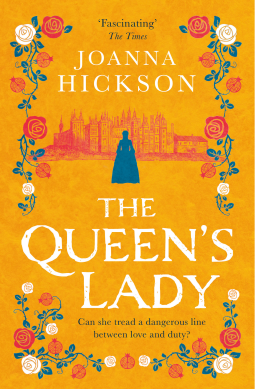
#BookReview ‘The Queen’s Lady’ by @joannahickson #historical

The Queen’s Lady by Joanna Hickson is a delightful read about a key woman behind the scenes of the Tudor crown, trusted and loved by two queens. Second in the ‘Queens of the Tower’ series, it follows Lady Joan Guildford nee Vaux who we first met in The Lady of the Ravens. Joan is now lady-in-waiting to Queen Elizabeth, wife of Henry VII and mother of Prince Arthur and Prince Henry. Joanna HicksonIt is 1502 and the story starts as Arthur, Prince of Wales, marries Princess Katherine of Aragon. There are worries for Arthur’s health and when a messenger knocks on the door late one night, he brings a request that ‘Mother Guildford’ should rush to the side of the Queen. Loyalties change overnight and friendships disappear. The storyline of the Tudors is well-known but this book shows the history from the point of view of courtiers, the way the court worked and the fragility of such positions in the gift of the king. After Arthur’s death, followed quickly by that of his queen, Henry VII becomes insular and paranoid, he listens to new advisors and fears those closest to him are treacherous. Joan’s husband Richard is accused of fraud and, despite Joan’s history as governess to countless princes and princesses, the family lose their position at court.
When reading some historical novels, I find myself questioning the history and noticing the heavy use of historical fact. Hickson’s writing is a delight, she conjures the period with a light touch. Joan is present at a series of critical events of the period – the meeting with the French king at the Field of the Cloth of Gold, the coronation of Henry VIII and marriage to Katherine of Aragon, Princess Mary’s journey to Scotland and marriage to King James, and the journey to France with Princess Margaret to marry Louis XII.
There is romance, hardship, fear, grief and new love. The ravens are still there but are not central to this story, as they were the first. It’s not clear if this is simply the sequel to the first Joan Vaux book, or whether Hickson will continue with a third.
Joan Guildford died in 1538 at the age of 75, eighteen years after the ending of this novel. So plenty more years for Hickson to imagine the life of this fascinating woman.
Don’t miss it.

Click the title to read my review of THE LADY OF THE RAVENS, first in the Queens of the Tower series.

If you like this, try:-
Winter Pilgrims’ by Toby Clements
The Forgotten Sister’ by Nicola Cornick
Cecily’ by Annie Garthwaite

And if you’d like to tweet a link to THIS post, here’s my suggested tweet:
#BookReview THE QUEEN’S LADY by @joannahickson https://wp.me/p2ZHJe-63w via @SandraDanby

#BookReview ‘The Bone Fire’ by @SD_Sykes #historical #mystery

I read The Bone Fire by SD Sykes in three days. Fourth in the Oswald de Lacy 14th century series, it’s a classic closed room murder mystery set at the time of the plague in Britain. A disease that everyone feared but no-one understood. SD SykesThirteen years after the Black Death the plague has returned to Britain. Oswald, now married with a son, decides to take his family to a castle on an isolated island in the Kent marshes. When the gates are closed for the duration of the winter, he hopes, they will be safe from infection. But one by one, the inhabitants of the gloomy, isolated castle, are killed. Murdered. And with each death, Oswald’s suspects reduce in number. The winter of 1361 turns out to be a long one. The castle is cold, the air is fetid, the food supplies are dwindling, and the temptation to venture beyond the walls into the fresh air of the marshes and woodland are overwhelming. But the risk of infection from plague, even in this empty place, are enormous.
Oswald is a complex detective. He is an uncompromising interviewer, persistent in his questioning, unafraid to threaten. But he is quick to jump to possible conclusions. At the same time he has empathy for all creatures, weak and vulnerable, human and animal, and this a strength and a weakness. Wanting to do the right thing, he brings danger to those closest to him.
This series is improving with every book. The characters are settled, the risks are higher for Oswald now he is a father and husband. There is less scene setting, the action is quicker. Sykes mixes familiar characters – Oswald’s curt selfish mother and son Hugh from Oswald’s first marriage, plus his wife and valet – with the other occupants in the castle on the Isle of Eden. Each brings their own counsel and assistance to Oswald’s investigations, sometimes useful, sometimes misguided. But one of them is a murderer.
I raced through The Bone Fire, a much quicker read than the preceding novels. The teenage Oswald has matured into a complex, mature man living through one of the most difficult times in our history who invariably chooses to take the right path rather than the easy one.
A page turner.
CLICK HERE TO READ MORE ABOUT THIS BOOK

Click the title to read my reviews of the first three books in this series:-
PLAGUE LAND
THE BUTCHER BIRD
CITY OF MASKS

If you like this, try:-
The Swift and the Harrier’ by Minette Walters
The Key in the Lock’ by Beth Underdown
The Ashes of London’ by Andrew Taylor

And if you’d like to tweet a link to THIS post, here’s my suggested tweet:
THE BONE FIRE by @SD_Sykes #bookreview https://wp.me/p2ZHJe-63C via @SandraDanby

COMING SOON… THE NEXT BOOK I REVIEW WILL BE:-Joanna Hickson

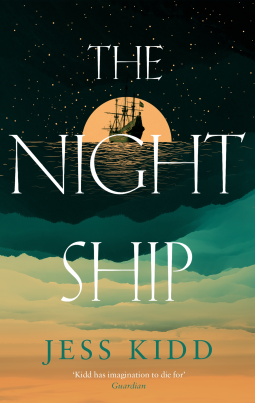
#BookReview ‘The Night Ship’ by @JessKiddHerself #historical #Batavia

The Night Ship by Jess Kidd is a strange compelling story about two orphaned children separated, but connected, by 361 years. Each thinks they see ghosts, learns legends and fights monsters. Both want to be scared, to seek out the unknown. Jess KiddIn 1628, nine-year old Mayken is aboard the magnificent Batavia, one of a fleet of ships heading from Holland to Batavia in Dutch East India (now Indonesia). She travels with her nursemaid Imke. Mayken’s mother has died of ‘the bloody flux’ and she travels to live with her father, a senior executive in the Dutch East India Company. Mayken has never met him but knows he grows red and white roses at his marble mansion, has chestnut stallions and dapple mares.
In 1989 after the death of his mother, nine-year old Gil goes to live with his grandfather who is a fisherman on the remote Beacon Island off the coast of Australia. It’s a stark place. Gil, who has only the vaguest childhood memories of both his grandfather Joss and of Beacon Island, has never known his father.
Both children explore their new surroundings, making adventures in their limited worlds. The warning ‘don’t go there’ or ‘don’t do that’ becomes an invitation to do exactly that. Both are explorers, brave in the face of the unknown, outsiders living in worlds limited in space bounded by the sea. When brutality strikes, how can they escape. Both are haunted by legend and scary stories, both make unlikely allies and enemies. Mayken discards her rich dress and wears breeches to venture below decks and, as ship’s boy Obbe, assumes a new identity. There she makes friends and enemies amongst the soldiers and sailors; these connections are vital later in the story. Gil knows he cannot leave the island without his grandfather’s permission. He finds a friend in his tortoise Enkidu and dresses up in clothes from Granny Ada’s wardrobe. When he finds a boat, inspired by stories about a shipwreck many years ago and the finds by an archaeological team digging on the island, he dreams of escape.
I loved the fond relationship between Mayken and Imke, particularly the recurring question about how Imke lost her fingertips as Mayken’s suggestions get more bizarre and gruesome. This is a welcome distraction from the bizarre and gruesome things that begin to happen aboard. Is someone making mischief, is it simply sailor’s superstitions or is there a monster aboard? Gil struggles to connect with his silent, brusque grandfather, and becomes the target of the island’s bullies. Each storyline is told only from the child’s viewpoint. Are Mayken and Gil to be trusted as reliable witnesses or has the real world become lost in their imaginations.
The Night Ship is based on the real seventeenth-century story of the voyage, shipwreck and mutiny aboard the treasure-laden ship Batavia. The fictional accounts of Mayken’s life aboard ship and then on the island they call Batavia’s Graveyard and Gil’s life on Beacon Island, the same place, explore community within and the social breakdown of small groups of people.
Slowly, slowly, this story grew on me. First, it seemed simply strange. But then the echoes in the lives of the two children begin to build and I wanted to know their endings. Beautifully-written and born from a wild imagination. This is the third book by Jess Kidd that I’ve read, each so different and impossible to predict. Sometimes a difficult read, this is also a hopeful, magical story with ultimately a positive message about the resilience of human love and kindness in the face of violence, evil and exploitation.
CLICK HERE TO READ MORE ABOUT THIS BOOK

Read my reviews of two other novels by Jess Kidd:-
HIMSELF
THE HOARDER

If you like this, try:-
Dangerous Women’ by Hope Adams
The Ship’ by Antonia Honeywell
Devotion’ by Hannah Kent

And if you’d like to tweet a link to THIS post, here’s my suggested tweet:
#BookReview THE NIGHT SHIP by @JessKiddHerself https://wp.me/p2ZHJe-5Tw via @SandraDanby

COMING SOON… THE NEXT BOOK I REVIEW WILL BE:-Dinah Jefferies

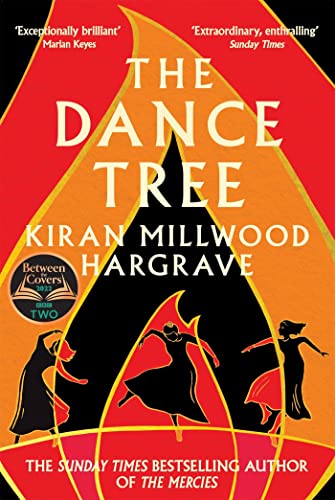
#BookReview ‘The Dance Tree’ by Kiran Millwood Hargrave #historical

The Dance Tree by Kiran Millwood Hargrave is compelling and emotional. I read it in two long sittings, unwilling to put it down. Kiran Millwood HargraveBased on a true historical event in Strasbourg in 1518 when, one hot summer, one woman started to dance and didn’t stop. Others followed. Set at a time of extreme heat, hunger, intense religious belief and superstition, The Dance Tree takes the historical event and tells the story of a group of women and their secrets.
Lisbet, heavily pregnant with her thirteenth child, having lost the previous twelve, lives on the family farm with husband Henne and mother-in-law Sophey. They scratch a living from their bees, selling honey and beeswax. They await the arrival of the baby, and of Henne’s sister Agnethe returning from seven years of punishment at a nunnery. Many things are unspoken. Lisbet, feeling secrets are kept from her, finds support with her best friend Ida. But always she feels as if the Wilers blame her for bringing bad luck to the farm, bad luck because Lisbet was born on the day of a comet, a comet which bought bad luck and starvation to the land.
So many things are unspoken. What happened before Lisbet married Henne and joined the Wiler family. What shame did Nethe commit to deserve her banishment and, now she is returned, why is there such hatred between her and Ida. Lisbet, feeling estranged from her husband and mother-in-law, struggles to make sense of what is happening. What is the family hiding from her, and why. The family has so many secrets, including the secrets Lisbet is hiding about her mother’s death.
The power balance at the Wiler house changes as the three women are left alone. Henne travels to Heidelberg to give evidence in court that their bees are free creatures in nature and are not wilfully stealing nectar from the wildflowers at the monastery. Meanwhile in town women begin dancing. First one, trance-like, hearing music that those watching cannot hear. More join in, at first a spectacle for the town’s inhabitants. But then, as more people join in, fear begins to circulate. Are they ill, are they mad. And how will the church control the hysteria.
Into the Wiler home come two lodgers, two musicians paid by the church to play music to drive the devil from the dancing women. And so the power balance shifts again in the Wiler household, especially as one of the men is a Turk, an infidel. The power of religious belief and superstition is overwhelming. Heat, poverty, hunger all increase the pressure to conform. Judgement against those who do not fit in or whose behaviour is judged sinful or simply different is uncompromising. Those wielding the power, the Twenty One, are strong men filled with pomposity and arrogance. They are quick to judge and will not hear evidence or allow people to make witness. Women’s voices are not heard.
Lisbet’s place of sanctuary is a linden tree, hidden deep in the forest in an impenetrable tangle of bushes. There she can be herself, remember her mother and grieve for her lost babies. Her mother had a tree like this near Lisbet’s childhood home, it was called a dance tree. When Lisbet visits her tree she finds peace in its solitude. At every visit she leaves a small offering, a pebble, a feather, a flower. She feels safe there but in truth there is safety nowhere. When the Twenty One sees the dancing women, decisions about what to do – to punish the women or care for them – are made individually according to the woman’s standing and position in society, obedient or sinner.
Like Hargrave’s previous novel The Mercies, this is a powerful mesmerising novel tight with tension, betrayal and threat leavened by snatches of love and togetherness. Excellent.
CLICK HERE TO READ MORE ABOUT THIS BOOK AT AMAZON

Click the title to read my review of THE MERCIES, also by Kiran Millwood Hargrave.

If you like this, try:-
Orphans of the Carnival’ by Carol Birch
The Wicked Cometh’ by Laura Carlin
Gone are the Leaves’ by Anne Donovan

And if you’d like to tweet a link to THIS post, here’s my suggested tweet:
#BookReview THE DANCE TREE by Kiran Millwood Hargrave https://wp.me/p2ZHJe-5Tk via @SandraDanby

COMING SOON… THE NEXT BOOK I REVIEW WILL BE:-
Jess Kidd

#BookReview ‘My Name is Yip’ by Paddy Crewe #historical

Through the course of his story, Yip Tolroy founds out who he is and who he isn’t. My Name is Yip by Paddy Crewe is a historical novel with a difference, a first person narrative about an extraordinary, ordinary, boy and what he learns about friendship. Paddy CreweYip is 4 ft 8 in tall and unable to speak. His father disappeared on the night of Yip’s birth and so he and his mother muddle along together. He is assumed by everyone who lives in Heron’s Creek to be slow, with no understanding of what is going on around him. But the opposite is true. Yip watches and learns. He is a great observer. He is fifteen when old gentleman Shelby Stubbs recognises Yip’s intelligence, teaches him to read and write and presents him with a portable slate and chalk which Yip uses to communicate. A new world opens up before him but he must find the courage to take the first step.
The voice at first seemed awkward, but by the third or fourth page I knew this was Yip’s own voice and the awkwardness disappeared. Yip has a clear sense of right and wrong, of kindness and cruelty. As a growing child, he sits on a stool beneath a tree outside his mother’s store and watches the world go by. Until events conspire to change his world. Set in Georgia in 1830, gold is discovered near Heron’s Creek, a man disappears and Yip commits a crime. He goes on the run with a newcomer in town, Dud Carter; a man Yip has only seen once before. ‘A tall gangly figure with a crop of hair what the rain had plastered to his short forehead.’ These unlikely companions go on a road trip, with Yip’s constant horse Gussie, facing trials and danger, learning about themselves, each other and the things man is capable of doing to man.
This is an original story with an everyman message about being true to yourself. As Yip says at the end, ‘You got to keep yourself whole & be who it was you was set here to be.’
Very different. Don’t miss it.

If you like this, try:-
Barkskins’ by Annie Proulx
At the Edge of the Orchard’ by Tracy Chevalier
Days Without End’ by Sebastian Barry

And if you’d like to tweet a link to THIS post, here’s my suggested tweet:
#BookReview MY NAME IS YIP by Paddy Crewe https://wp.me/p5gEM4-5S4 via @SandraDanby