Tag Archives: Nicola Cornick

#BookReview ‘The Other Gwyn Girl’ by @NicolaCornick #historical

I loved The Other Gwyn Girl by Nicola Cornick. More specifically, I loved the character of Rose, sister of the more famous Nell Gwyn. Cornick has written a wonderful timeslip novel piecing together the story of the real Rose Gwyn from scarce historical documents and combining it with a modern story mirroring the major themes. Love, celebrity, betrayal, royalty, loyalty and jewellery. Nicola CornickIn 1671, famed royal mistress Nell Gwyn has come a long way from selling oranges. Her older sister however is not so lucky in love. Rose Cassells, nee Gwyn, is in prison for the third time in her life; the first time for stealing a loaf of bread, the second as a debtor. Her third imprisonment is for treason; entangled by her highwayman husband into joining a plot to steal the Crown Jewels. The plot fails. Rose is caught and imprisoned in the infamous Marshalsea prison.
The present day story is about another pair of sisters. Jess Yates, sister of TV reality star Tavy, is newly single again after separating from her boyfriend who is now in prison for fraud. Jess needs a clean break while she works out what to do with her life. She accepts Tavy’s offer of moving to Fortune Hall as housekeeper. Tavy bought this rundown mansion as the setting for her new reality television series. Longing for peace and quiet, Jess steps into a whirlwind of celebrity life. Tavy is filming a new episode and is surrounded by cameramen and hangers-on. Her team includes loyal assistant Ed and physic Francesca, Jess and Tavy’s mother Una, and Tavy’s model boyfriend Hunter. Whilst Tavy broadcasts on social media the smallest intimate details of her life at Fortune Hall where she pretends to live – she dislikes the house, regrets buying it and is away from home as often as possible – librarian and archivist Jess retreats to the house’s dusty old library. Like Nell and Rose, Jess and Tavy are personality opposites.
Connections between the two storylines seem miles apart at the beginning, though some parallels become clear quite quickly, which presents even more possibilities and increases the tension. There are satisfying flirtations and hints of romance, handsome heroes, dastardly villains and at the centre of it all, two impressive mansions.
The spine of the 17th century strand is historical truth. The two Gwyn sisters, unalike in character but bonded by blood and shared childhood, raised by a drunken widowed mother in poverty. The theft of the Crown Jewels in a plot organised by Sir Thomas Blood with the help of thief John Cassells. Blood is later mysteriously pardoned by King Charles II, lover of Nell Gwyn. John Cassells disappears. Little is known of Rose Gwyn and Cornick has used this vacuum to create a page-turning mystery with satisfying tension, betrayals, rescues, love, sacrifices and murder. The historical setting is fascinating and Cornick writes sensitively about grief, loss and regret, but also about the things women had to do at that time to survive.
The ending is surprising, satisfying, with the correct element of mystery and the receiving of just desserts. This is a wonderful read about, for me, an unfamiliar period of history.

Read my reviews of these other novels by Nicola Cornick:-
THE FORGOTTEN SISTER
THE LAST DAUGHTER
THE WINTER GARDEN

If you like this, try:-
‘The Wicked Cometh’ by Laura Carlin
‘Disobedient’ by Elizabeth Fremantle
The Photographer’s Wife’ by Suzanne Joinson

And if you’d like to tweet a link to THIS post, here’s my suggested tweet:
#BookReview THE OTHER GWYN GIRL by @NicolaCornick https://wp.me/p2ZHJe-81n via @SandraDanby

COMING SOON… THE NEXT BOOK I REVIEW WILL BE:- Percival Everett

#BookReview ‘The Winter Garden’ by @NicolaCornick #historical

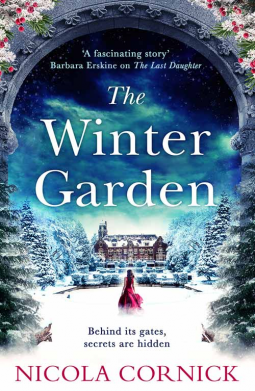
A timeslip novel that slips effortlessly between now and 1605, The Winter Garden by Nicola Cornick is an intriguing mixture of the Gunpowder Plot, garden history, archaeology and spookiness. Nicola CornickLucy, recovering from a viral illness that has forced her to give up her career as a professional violinist, is recuperating at Gunpowder Cottage, home of her absent Aunt Verity. Verity has commissioned a garden archaeologist to investigate links to the original house on the land, said to have belonged to Robert Catesby, one of the Gunpowder plotters, and his wife Catherine. Lucy, weak and depressed, is upset to find her bolthole is not as isolated as she expected. But she soon becomes pulled into the mystery of the garden and the story of the Catesbys. When Lucy gets the chills and sees the figure of a woman in a cloak and the outline of a beautiful winter garden full of snow and frost, she’s unsure if she is hallucinating and on medication that doesn’t agree with her. As Finn, the architect, and Johnny his assistant, explain more about their discoveries, Lucy finds herself pulled into the mystery and becomes a researcher of historical documents. More visions, and a dead bouquet left threateningly in her kitchen, add to the tension.
In both time narratives there is personal grief, loss and the togetherness of family and friends. Lucy is in limbo, emotional and full of indecision. Just like Catherine Catesby. Following the clues, Lucy regains her emotional strength as she asks difficult questions, faces opposition and rediscovers her bravery.
In 1605, Anne Catesby must pick up the pieces after the sudden deaths of her husband William, daughter-in-law Catherine and eldest grandson William. Her grieving son Robert, always a flighty, strong-willed boy, leaves his youngest son Robbie with his mother and disappears to London. Anne, already short of money because of fines imposed on Catholic families such as the Catesbys by King James I, struggles to live from day to day. And in the background is Anne’s brooding brother-in-law Thomas Tresham, Robert’s godfather, who is involved in the mysterious Order of the Knights Hospitallers of St John of Jerusalem. There are hints of lost treasure, which may, or may not, be buried in the garden.
I found the clues at times sketchy and unrealistic and the names of the various houses and estates added to this confusion, though Cornick is constrained at times by historical fact.
An unusual story which kept me returning to the book to read more. There’s a particularly strong cast of supporting characters including Lucy’s sister Cleo, Finn the architect with his dog Geoffrey, and brooding siblings Gabriel and Persis. The two timelines melt into each other as the mystery progresses and I didn’t, as is often the case with dual narrative novels, prefer one story to the other. Cornick is a wonderful novelist who tells a good fictional story built on strong historical foundations and doesn’t allow her historical knowledge to bully its way into the reader’s mind.

Read my reviews of these other novels by Nicola Cornick:-
THE FORGOTTEN SISTER
THE LAST DAUGHTER
THE OTHER GWYN GIRL

If you like this, try:-
‘Plague Land’ by SD Sykes #1OswalddeLacy
‘The Lady of the Ravens’ by Joanna Hickson #1QueensoftheTower
‘The French Lesson’ by Hallie Rubenhold

And if you’d like to tweet a link to THIS post, here’s my suggested tweet:
#BookReview THE WINTER GARDEN by @NicolaCornick https://wp.me/p2ZHJe-6w1 via @SandraDanby

COMING SOON… THE NEXT BOOK I REVIEW WILL BE:- Patricia M Osborne
#BookReview ‘The Last Daughter’ by @NicolaCornick #historical

A modern-day disappearance is combined with myths and a famous historical mystery, knit together in The Last Daughter by Nicola Cornick. Nicola CornickThis is a time-slip story involving true characters in history, a magical stone – the Lovell Lodestar – and the legend of The Mistletoe Bride. The latter is story of sorrow and grief attributed to many English mansions and stately homes in which a bridegroom and his bride, tired of dancing at their wedding, play hide and seek. She disappears and is never found until a skeleton is discovered many years later. It is eleven years since Caitlin Warren disappeared, presumed dead. Her twin sister Serena still struggles to move on from her loss, a feeling magnified by the lack of evidence and Serena’s worry that the cognitive amnesia she has suffered since that night may obscure the truth. When a skeleton is discovered during an archaeological dig at Minster Lovell, the country house where the sisters’ grandparents lived and where Caitlin disappeared, the memories come flooding back. Told in two timelines – Serena, present day; and Anne FitzHugh in the 15th century. Anne’s mother is from the powerful Neville family, a major power during the Wars of the Roses. Five-year old Anne is to be betrothed to eight-year-old Francis Lovell, best friend of Richard of Gloucester, younger brother to the Yorkist King Edward IV. History combines with myth when Anne is told the ghostly story of The Mistletoe Bride who disappears into a different place, a different time.
Serena returns to Minster Lovell Hall in Oxfordshire in an attempt to confront her hidden memories and to be interviewed by the police. There she encounters old friends and visits her grandfather Dick, now suffering from dementia. How can Serena in the 21st century be connected to Anne FitzHugh and what bearing could this have on Caitlin’s disappearance?
A complex story full of so many twists, mysteries and myths that I occasionally floundered. When I surrendered to the flow of the story and stopped worrying about a few gaps and implausible connections, the pages flew by. I finished it wondering if the story would be stronger with slightly less myth and more of Anne and Francis.

Read my review of these other novels by Nicola Cornick:-
THE FORGOTTEN SISTER
THE OTHER GWYN GIRL
THE WINTER GARDEN

If you like this, try:-
The Dream Weavers’ by Barbara Erskine’
The Almanack’ by Martine Bailey
The Cursed Wife’ by Pamela Hartshorne

And if you’d like to tweet a link to THIS post, here’s my suggested tweet:
#BookReview THE LAST DAUGHTER by @NicolaCornick https://wp.me/p5gEM4-5ri via @SandraDanby

#BookReview ‘The Forgotten Sister’ by @NicolaCornick #historical

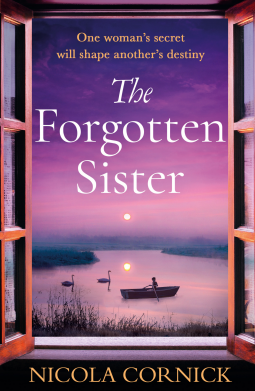
The Forgotten Sister by Nicola Cornick is a retelling of the Tudor love triangle of Queen Elizabeth I, Robert Dudley and Dudley’s wife Amy Robsart. The death of Amy has intrigued historians for centuries: did she fall downstairs, or was she pushed? Did her husband arrange her murder so he could marry the queen? Tudor history is mashed together with time travel and all kinds of mystical goings-on. Nicola CornickCornick has fun with her explanation of events, telling the story in dual timelines and mirroring Tudor characters with a contemporary circle of celebrities. At first, I found this irritating and was diverted from the story by trying to match up modern personalities with their Tudor equivalent. But when I stopped doing that, I sank into this easy-to-read story which I read over a weekend.
Lizzie Kingdom is a television personality with a clean-cut image. Her best friend is Dudley Lester, wild boy and former boy band member of Call Back Summer. When Dudley’s wife Amelia falls down the stairs to her death at their country house, Oakhanger Hall, Lizzie is suspected of having an affair with Dudley. Her ‘good girl’ image is in tatters and the press is hunting her. Lizzie’s story races along, she quickly discards her sycophantic group of followers and retreats to a country house she inherited but has rarely visited. And there we start to understand the mystical ability which Lizzie possesses connecting her with events in the past simply by touching an object – known as psychometry, or token object reading.
The romantic sub-plot sparks into life when Lizzie accidentally touches Arthur Robsart, the quiet rather stolid older brother of Amelia. Never before has her psychometric ability worked on a person. Arthur and his sister Anna suspect Lizzie of responsibility for the disappearance in odd circumstances of their younger brother Johnny. With the police seeking her again, this time for possible murder, Lizzie must choose whether to use the ability she has previously used only to remember her dead mother. To say more will give away the plot.
This was a fun read though populated with some unpleasant characters who were difficult to like. I was left wondering what the story would have been like if the viewpoints had been expanded to four. Cornick tells the story only via Amy Robsart and Lizzie Kingdom and shows us nothing of the events as experienced by Queen Elizabeth I [Lizzie’s equivalent] or Amelia Lester [Amy’s modern-day equivalent]. After Amelia’s death, Lizzie is crucified on social media, I was left wondering if Queen Elizabeth knew, or cared about, the gossip surrounding Dudley’s, and her own, guilt in Amy’s death.
A note on the cover, yet again another cover design which, though attractive, bears little connection with the story.

Read my reviews of these other novels by Nicola Cornick:-
THE LAST DAUGHTER
THE OTHER GWYN GIRL
THE WINTER GARDEN

If you like this, try:-
Kings and Queens’ by Terry Tyler
The Lady of the Rivers’ by Philippa Gregory
Last Child’ by Terry Tyler

And if you’d like to tweet a link to THIS post, here’s my suggested tweet:
#BookReview THE FORGOTTEN SISTER by @NicolaCornick https://wp.me/p5gEM4-4JT via @SandraDanby