Tag Archives: novels set in Ireland

#BookReview ‘Earth’ by John Boyne @JohnBoyneBooks #Elements #contemporary

Evan Keough is a handsome, talented famous footballer. Accused of being an accessory to rape, he becomes notorious. It is up to the reader to work out the truth of Evan’s evidence, his back story, the stories he gives to his mother and to priest Ifechi. Earth by John Boyne is second in his Elements quartet and, like its predecessor Water, is another small book with a powerful story. John BoyneLike Willow in Water, Evan’s past story is revealed in pieces. As a boy on the remote Irish island first introduced in Water, Evan is unable to be who or what he wants to be. He knows he is gay. He is certain he wants to be a painter. Unfortunately he is better at football, which he hates but which his  father loves, and is a moderate artist.
A theme that runs through the first two books in the Elements quartet is complicity in guilt, about burying deeply the moral instinct of right and wrong, and dealing with the consequences as time passes. It is about bearing a grudge. Throughout the story I didn’t know if Evan was truthful or not, never knew what he was hiding. His back story is brutal at times and difficult to read. Evan’s down-to-earth upbringing is contrasted with the wealth he encounters in London and in the world of professional football. The theme of earth runs throughout the book, the burial of the dead, earth as a hiding place, of being grounded to the earth of losing a foothold, of the final return of a traveller to the soil of their homeland.
I can’t say I enjoyed reading Earth, the first of John Boyne’s books that I can say that about. It is a truthful, awkward, shameful and sad book about a young man who can’t find his place in life, who is horribly abused and exploited. I remain unclear about culpability. Boyne purposely blurs the line between lies and truth, both in the evidence given in court and discussion on social media. In today’s world, the presence or absence of data on a mobile phone can win or lose a criminal trial, and public speculation about guilt and innocence is often based on ideas not fact where the loudest voices are heard.
A disturbing social commentary.

Click the title to read my reviews of these other novels by John Boyne:-
A HISTORY OF LONELINESS
A LADDER TO THE SKY
A TRAVELLER AT THE GATES OF WISDOM
ALL THE BROKEN PLACES
STAY WHERE YOU ARE AND THEN LEAVE
THE HEART’S INVISIBLE FURIES… Curious? Read the #FirstPara of THE HEART’S INVISIBLE FURIES here.
WATER #1ELEMENTS

If you like this, try:-
Nutshell’ by Ian McEwan
‘Lean Fall Stand’ by Jon McGregor
‘Days Without End’ by Sebastian Barry #1DAYSWITHOUTEND

And if you’d like to tweet a link to THIS post, here’s my suggested tweet:
#BookReview EARTH by John Boyne @JohnBoyneBooks https://wp.me/p2ZHJe-7s0 via @SandraDanby

COMING SOON… THE NEXT BOOK I REVIEW WILL BE:- Helena Dixon
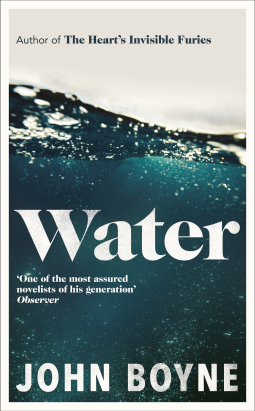
#BookReview ‘Water’ by John Boyne @JohnBoyneBooks #Elements #contemporary

Who is Willow Hale? When Vanessa Carvin arrives on an unnamed Irish island, she changes her name to Willow and shaves her head. Can she simply disappear or will her past follow her? Water by John Boyne is first in his Elements quartet. It is a small book with a powerful story. John BoyneVanessa is escaping a truly horrendous time but at heart she knows she must acknowledge the choices she made throughout a difficult marriage. On the island she hopes to escape notice, but few people live there and everyone is curious about the newcomer. Her landlord is invisible, her daughter Rebecca is ghosting her messages, her nearest neighbour is nosy. She does connect with local priest Ifechi, Bananas the cat and neighbouring young farmer Luke. ‘I can call myself Willow Hale till the cows come home but, underneath, I’m still Vanessa Carvin. I just can’t let anyone know.’
Slowly as Vanessa remembers, her story becomes clearer. The offence committed by her husband, what she did and didn’t do during this time. Families were broken, not only families of the victims but also the family of the guilty party. Actions have consequences. John Boyne writes with such intensity of emotion and spareness on the page, he takes you straight into Vanessa’s shoes. It takes distance, isolation on an almost empty island surrounded by sea, for Vanessa to admit what happened.
I’m intrigued to see how the books in this quartet of novellas are linked; by theme, character, setting? At the end of Water, Willow says, ‘The elements – water, fire, earth, air – are our greatest friends, our animators. They feed us, warm us, give us life, and yet conspire to kill us at every juncture.’ Earth is next.
Sensitive. Bold. Excellent.

Click the title to read my reviews of these other novels by John Boyne:-
A HISTORY OF LONELINESS
A LADDER TO THE SKY
A TRAVELLER AT THE GATES OF WISDOM
ALL THE BROKEN PLACES
STAY WHERE YOU ARE AND THEN LEAVE
THE HEART’S INVISIBLE FURIES… Curious? Read the #FirstPara of THE HEART’S INVISIBLE FURIES here
EARTH #2ELEMENTS

If you like this, try:-
Old God’s Time’ by Sebastian Barry
Did You Ever Have a Family’ by Bill Clegg
My Name is Lucy Barton’ by Elizabeth Strout

And if you’d like to tweet a link to THIS post, here’s my suggested tweet:
#BookReview WATER by John Boyne @JohnBoyneBooks https://wp.me/p2ZHJe-7rt via @SandraDanby

COMING SOON… THE NEXT BOOK I REVIEW WILL BE:- John Boyne
#BookReview ‘The Whereabouts of Eneas McNulty’ by Sebastian Barry #historical

Written in 1998, The Whereabouts of Eneas McNulty is the earliest of the books by Irish writer Sebastian Barry I’ve read so far. I came to him with A Long Long Way, shortlisted for the 2005 Booker Prize. What I didn’t realise until recently is that many of his novels are connected by their characters, all related distantly to each other. Sebastian BarryThe Whereabouts of Eneas McNulty is the sad story of a dislocated young man forced to leave Sligo, threatened with murder, blacklisted because he worked as a police officer for the Royal Irish Constabulary. When Irish independence occurs at around 100 pages, Eneas realises that following the murders he witnessed, murders by Irishmen of Irishmen in the cause of this independence, he must be either an outcast or a wanderer. And wherever he goes, he must go alone without the girl he loves. Viv, the enigmatic, beautiful, carefree girl he met on the beach.
Eneas is a simple man who makes his own way in life, looking for support from no one, but naïve in the decisions he takes and friends he makes. His banishment is symbolic of the ferocious Irish political turmoil of the early 20th century. Periodically he tries to return to his family – his parents, two brothers and sister – hoping time has healed the political separations but finding his name is still on a kill list. So he drifts, finding for work, not proud, turning his hand to what is available. “And he thinks back a little over his life and where he was born and he wonders did he make such a hames and a hash of it after all? Didn’t he just live the life given him and no more side to him than a field-mouse as God’s plough bears down to crush his nest?”
The timeline stutters through events in Eneas’ life, taking a long time over small passages of time but flashing through momentous landmarks. Wars start and end. Decades pass with barely a mention. But the language is a delight.
Eneas, an innocent in the world of early 20th century Irish politics, is afraid. There is ‘no aspirin for his fear.’ The novel is suffused in Irish history with mentions of Irish warrior hero Cú Chulainn and local Sligo landmarks such as Maeve’s Cairn at the peak of Knocknarea.
This is a novel to be read slowly and absorbed. Race through it and you will miss its beauty.

Try a taster, read the #FirstPara THE WHEREABOUTS OF ENEAS MCNULTY

Read my reviews of these other novels by Sebastian Barry:-
A LONG LONG WAY
DAYS WITHOUT END #1DAYSWITHOUTEND
A THOUSAND MOONS #2DAYSWITHOUTEND
OLD GOD’S TIME
THE NEWER WORLD

If you like this, try:-
The Irish Inheritance’ by MJ Lee #1JAYNESINCLAIR
Love is Blind’ by William Boyd
The Heart’s Invisible Furies’ by John Boyne

And if you’d like to share a link:
#BookReview THE WHEREABOUTS OF ENEAS MCNULTY by Sebastian Barry https://wp.me/p2ZHJe-6aU via @SandraDanby

COMING SOON… THE NEXT BOOK I REVIEW WILL BE:- Anthony Quinn

#BookReview ‘The Guest List’ by Lucy Foley #crime #thriller

The Guest List by Lucy Foley is a cracking crime mystery set on an isolated Irish island. The guests are there for the wedding of the year – magazine entrepreneur Jules Keegan is marrying reality TV star Will Slater. What follows is a closed room mystery recognisable from Agatha Christie novels. From the beginning you wonder, who in this group of thirty-somethings is going to be killed? Who is the killer and why? Lucy FoleyFoley expertly plays with our expectations, manipulating our first impressions of the characters as they are introduced. Old friends. Family. School days rituals. Hidden jealousies. Secret wrongs. The atmosphere on the exposed windswept island with its treacherous bogs, cliffs, caves and haunting churchyard is cranked up to full notch. We experience the weekend wedding almost hour by hour as each key character tells their own story, with the narrative chopping forwards to the present during the ceremony and reception. This switching of viewpoint and timeframe can be very sudden but it does ramp up the tension. The murder takes place quite late in the timeline making this more a psychological thriller, building up to the killing you know will happen.
The basic plot questions are – how well does Jules know her husband-to-be? What exactly happened on the stag weekend? What were the rituals at the public school attended by the groom and ushers? And why is Olivia, Jules’s sister and bridesmaid, clearly not coping with life? The options for victim and murderer are extended beyond the bridal group with Charlie, Jules’ best friend, and his wife Hannah; and bridal organiser and host Aoife and chef husband Freddie. Foley presents lots of hints about the past and secret resentments, I guessed a couple quite early on but this didn’t stop me turning the pages.
Read this over a weekend when you need an easy-to-read distraction.

Read my reviews of these other Lucy Foley novels:-
MURDER AT THE GRAND ALPINE HOTEL #1MARPLE
THE HUNTING PARTY
THE INVITATION
THE PARIS APARTMENT

If you like this, try:-
The Animals at Lockwood Manor’ by Jane Healey
Chosen Child’ by Linda Huber
Summer House with Swimming Pool’ by Herman Koch

And if you’d like to share a link:
#BookReview THE GUEST LIST by Lucy Foley https://wp.me/p5gEM4-4M2  via @SandraDanby

#BookReview ‘The Heart’s Invisible Furies’ by John Boyne @JohnBoyneBooks #historical #Ireland

From the first sentence I was entranced. The Heart’s Invisible Furies by John Boyne starts with such an opening sentence, full of conflict, hypocrisy, resentment and hope, it made me want to gobble up the pages and not put the book down. I wasn’t disappointed. John BoyneThe Heart’s Invisible Furies is the life story of one man, Cyril Avery, but also of a country and its attitudes to sexuality. The story starts in Goleen, Ireland, in 1945; a country riven by loyalty to, and hatred of, the British, at the same time in thrall to its Catholic priests whose rules were hypocritical, illogical and cruel. Cyril narrates his story, starting with how his 16-year old mother was denounced in church by the family priest for being single and pregnant. She was thrown out of church and village by the priest and disowned by her family. On the train to Dublin she meets a teenager, Sean, also heading for the big city. Wanting to help someone so obviously alone, Sean offers to let Catherine stay at his digs until she finds lodging and a job. These first friends she make are some of the most important in her life, and re-appear at important times also in Cyril’s life. Catherine gives birth and, as she carefully arranged, her baby is taken by a nun and placed with a waiting adoptive family. We the readers therefore know the identity and story of Cyril’s birth mother from page one; he doesn’t. As he grows from quiet boy to quiet teenager, falling in love at the age of seven with Julian, Cyril begins to lead a life of lies and shame forced on him by Ireland’s attitude to homosexuality and his inability to be true to himself. Cyril negotiates the first 30 years of his life, trapped between lying in order to stay safe or being truthful and getting arrested. Then he finds himself at the marriage altar. What happens next changes his life in so many ways, ways in which don’t become fully apparent until the last third of the novel.
This could be a depressing novel. It isn’t. It is charming and funny, but can turn on a sixpence and make you gasp with anger, despair or sadness. The characterisation is masterful. I particularly enjoyed Cyril’s adoptive mother Maude Avery, a chain-smoking novelist who detests the growing popularity of her books; his adoptive father Charles Avery who starts off being an awful snob with a talent for unintentional insults; and Mrs Goggin, who runs the tearoom at the Irish parliament with a rod of iron.
I loved this book. Honest, sad, laugh-out-loud funny, touching, with paragraphs I just had to read out aloud to my husband. It is about being true to yourself, the need for honesty in relationships, and the power of love. My favourite book of the year so far.

Read the #FirstPara of THE HEART’S INVISIBLE FURIES.

…and my reviews of these other novels by John Boyne:-
A HISTORY OF LONELINESS
A LADDER TO THE SKY
A TRAVELLER AT THE GATES OF WISDOM
ALL THE BROKEN PLACES
STAY WHERE YOU ARE & THEN LEAVE
WATER #1ELEMENTS
EARTH #2ELEMENTS

If you like this, try:-
‘A Little Life’ by Hanya Yanagihara
‘How to be Both’ by Ali Smith
‘Tipping the Velvet’ by Sarah Waters

And if you’d like to tweet a link to THIS post, here’s my suggested tweet:
#BookReview THE HEART’S INVISIBLE FURIES by John Boyne @JohnBoyneBooks https://wp.me/p5gEM4-3iJ via @SandraDanby

#BookReview ‘The Good People’ by Hannah Kent #historical #folklore

The Good People by Hannah Kent is a powerful second novel from a writer whose debut was outstanding. It is a tale of rural people in a poor community where superstition and folklore become entangled with one woman’s grief, with tragic results. Conflicting systems of thought come into play – folklore, religion, medicine and legal – and fail to make sense of what happens to Nóra Leahy. The power of the story lies not in black versus white, or logic and education versus peasant superstition, it lies in its characters. Hannah KentCounty Kerry, Ireland, 1826. An isolated village, where gossip goes around and around, where people survive on milk and potatoes and burn turf on the fire. A place where petty grievances are not forgotten, there is no money to pay the doctor, but there are still random acts of kindness. In such a poor community, what happens when the unthinkable happens, where the doctor and priest have no explanation or solution?
The Good People is based on true events, a court case which did happen. In the same year in which her daughter died, Nóra’s husband drops dead in the field leaving her alone to care for her four-year-old grandson Micheál. He cannot walk or speak and neither the doctor nor the priest can offer hope. So Nóra keeps him hidden from the village gossips in the fear that his deformities may be an indication of fairy interference. Unable to cope alone, Nóra employs 14-year-old Mary to milk the cow and fetch the water, and principally to care for Micheál. Soon Mary hears the whispers at the well, that the unnatural child of Nóra Leahy is to blame for the poor harvest, the hens not laying, the thin milk. So Nóra asks Nance Roche for help. Nance is the wise woman of the valley, she knows the plants, the cures, and she talks to the Good People… the fairies.
When Nance suggests the screaming, fitting, feeble child is not really Micheál but a changeling left in his place by the fairies, the three women become embroiled in cures to banish ‘the fairy’. The darkness of the cures attempted on a disabled and sick child is disturbing and, ultimately tragic. The events unfold slowly through the stories of Nóra, Mary and Nance. The writing is beautiful and every page is steeped in the folklore of rural Ireland, this bleak village where poor people live at the edge of survival. It is impossible not to connect with the three women, each so different, while at the time seeing the inevitability of what is to come.
A little historical context. In 1801 the Act of Union was enacted which ended a separate parliament in Dublin with government switching to Westminster. In 1823 in Ireland, Daniel O’Connell began to set up Catholic associations around the country, seeking a repeal of the Act of Union. In 1826 an ‘old woman of very advance age’ known as Anne/Nance Roche was indicted for the wilful murder of Michael Kelliher/Leahy at the summer Tralee assizes in Co. Kerry.
A compelling read.

Read my reviews of Hannah Kent’s two other novels:-
BURIAL RITES
DEVOTION

If you like this, try:-
The Western Wind’ by Samantha Harvey
‘Master of Shadows’ by Neil Oliver
All the Birds, Singing’ by Evie Wyld

And if you’d like to tweet a link to THIS post, here’s my suggested tweet:
#BookReview THE GOOD PEOPLE by Hannah Kent via @SandraDanby http://wp.me/p5gEM4-2×7

#BookReview ‘Himself’ by Jess Kidd #mystery #contemporary

I loved Himself by Jess Kidd from the first page. It defies pigeonholing: at once a literary crime mystery, a fond comic tale of an Irish village, an investigation of long-buried secrets of murder and illegitimacy.Jess KiddJess Kidd is a refreshing new voice, I don’t remember enjoying a debut novel this much since Hannah Kent’s Burial Rites though the two books are completely different.
In 1976 Mahony walks into the village of Mulderrig, seeking the truth of his birth twenty-six years earlier. From the forest around the village, and the houses within it, the dead walk out to greet him. They are a silent cast throughout the book, do they hold the answer to the mystery?
Kidd has created a village which feels alive, filled by a cast of characters so clearly drawn, and which swirls between the horrific beating of a nurse, downright nastiness, belly laughs and hallucinogenic drugs. The cast includes a pinched, controlling priest; a wizened old actress who organizes the village play from her wheelchair; a bogeyman who reputedly lives in the forest; and a pub landlord who tries to court the Widow Farelly, a nurse who has the sourest disposition visible to everyone except him. Mahony grew up in a Dublin orphanage, knowing only that he was left there as a baby with a letter marked ‘For when the child is grown’. What he reads in this letter sends him to Mulderrig to find out what happened to his mother, Orla, in 1950.
Did she disappear, running away to a better life, as most of the villagers tell him; or was she murdered? And why was she so hated by her neighbours?
As Mahony, Bridget Doosey, Shauna Burke and the indefatigable Mrs Cauley investigate his origins, the true nastiness of the village emerges.

And see my reviews of these two other novels by Jess Kidd:-
THE HOARDER
THE NIGHT SHIP

If you like this, try:-
‘A History of Loneliness’ by John Boyne
‘Ghost Moth’ by Michele Forbes
‘After the End’ by Clare Mackintosh

And if you’d like to tweet a link to THIS post, here’s my suggested tweet:
#BookReview HIMSELF by Jess Kidd via @SandraDanby http://wp.me/p5gEM4-23K

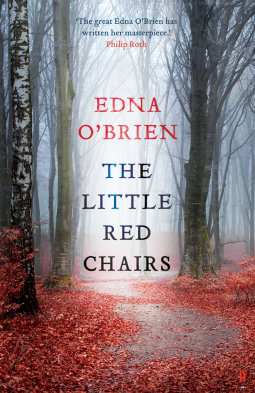
#BookReview ‘The Little Red Chairs’ by Edna O’Brien #war

The Little Red Chairs by Edna O’Brien is a fictional portrait, a ‘what if’ scenario: what if a war criminal, a Balkan war lord, was on the run and pitched up in a small town in the West of Ireland. What if the locals took him at face value. What if one woman saw him as a way to bring a child into her childless marriage. What if his true identity was revealed. What then… would happen to the woman. This is the story of Fidelma, to reveal more about her would be to giveaway the drama of the book. She is a sad character, unsatisfied with her lot, reaching for the unattainable and ultimately suffering for her need. Edna O’BrienThis book has attracted some outstanding reviews, but I hesitated. It sat for a while on my Kindle before I read it, I think because the subject matter is depressing and intimidating. O’Brien’s writing is at times flowing and lyrical especially when describing nature, at times her structure is a little wavy and the story a little flabby. Some passages are horrifying in their brutality, the war flashbacks are vivid. I find violence, when left to the imagination, more effective than violence written on the page or acted on stage.
I never really settled into reading this book. It is split into three parts, each with a different personality. The portrayal of small town life in Ireland in the first half was so full of sketchy characters I got confused. I longed for a simpler format to allow the moral dilemma to come through. In part two, Fidelma is in London, searching for healing, and for answers. She cleans a City tower block, and works in a kennel for abandoned greyhounds. At The Centre, where Fidelma goes for support, we hear the stories of abused refugees and asylum seekers, they are victims of war, genocide and physical assault and sexual abuse. For me, their stories sit uncomfortably alongside Fidelma’s own self-created dilemma and, I think because of this, I was left oddly untouched. In part three, Fidelma goes to see Vlad in The Hague at the war crimes tribunal. I admit to not understanding her motivation in going there, but it is a conversation in a bar with a victim of genocide which finally prompts Fidelma to complete the circle and return to Ireland to see the other victim in all this – her husband.
The power of O’Brien’s topic is undeniable. Is it a comment on our gullibility, how we can all be taken in by appearances; or a comment on how we avoid confrontation, not wanting to be the person to say the difficult thing, the one thing which afterwards people say ‘I thought that too.’ It is also a comment on a society which punishes and isolates the victim.

If you like this, try:-
‘Dominion’ by CJ Sansom
‘The Aftermath’ by Rhidian Brook
‘A Long Long Way’ by Sebastian Barry

And if you’d like to tweet a link to THIS post, here’s my suggested tweet:
#BookReview THE LITTLE RED CHAIRS by Edna O’Brien via @SandraDanby http://wp.me/p5gEM4-1TY

#BookReview ‘Brooklyn’ by Colm Tóibín #historical #romance

I absolutely love Brooklyn and give it 5*, which I rarely do. For me, 5* means true excellence. There is a spareness to the writing of Colm Tóibín which includes essential detail and excludes extraneous. I would not wish a single word to be changed or paragraph to be deleted, no passages seem surplus to requirement or confusing, no characters’ names are forgotten. Colm TóibínThere is no dramatic action, no mystery, no cliffhanger, simply the story of a young Irish girl who goes to Brooklyn and what happens to her there. Yes there is romance, but not in the commercial fiction sense of the term. Romance is just one element of the story.
It is 1950s rural Ireland. It is arranged by her elder sister and a family priest, that Eilish should go to America. It is deemed she has few prospects in Ireland. Brooklyn is a wonderful portrayal of 1950s Ireland and America, the attitudes, the social mores, the prejudices.
The drama comes from observing Eilish’s every step, her every thought, wondering what she will do next. The drama is in the small things. She feels so real. I wanted to say, ‘take a risk’ and ‘don’t’ and ‘go for it’. From the first few pages I was reeled in until I could not put the book down.
This is the sort of book which, having finished it, I almost wish I hadn’t read it; only so I can re-

Read my reviews of these other novels by Colm Tóibín:-
NORA WEBSTER
HOUSE OF NAMES

If you like this, try:-
Old God’s Time’ by Sebastian Barry
‘Water’ by John Boyne #1ELEMENTS
Shrines of Gaiety’ by Kate Atkinson

And if you’d like to share a link to THIS post, try:
#BookReview BROOKLYN by Colm Tóibín http://wp.me/p5gEM4-1TQ via @SandraDanby 

#BookReview ‘Butterfly Barn’ by Karen Power #romance #Ireland

Reading this book was like sitting down with a crowd of girlfriends for a long-delayed get-together. In Butterfly Barn by Karen Power, Ireland leaps off the page, present in the speech of the characters, the scenery and the ‘feel’ of the book. Karen PowerThis is an easy book to read in that the pages turned quickly, but it deals with difficult topics: infant mortality, grief, betrayal, guilt. Like many Irish authors, Karen Power writes with a connection to the Catholic faith and – though I am not in the least bit religious – this did not interfere with my enjoyment of the tale. It is a women’s novel, about women, their strength, their suffering, their mutual support and above all the way they deal with what life throws at them.
On a transatlantic flight, Grace gets talking to the lady in the next seat. A friendship is forged which sees them re-united in Bayrush, Ireland, where Grace’s best friend Jessie is expecting twins. Grace is engaged to Dirk and all looks happy, until Jack – a teenage crush – returns home from Dubai.
This is the first of a series of this wide cast of characters, at times a little too wide for me. I admit to losing track of some of the more distant relations of Grace, Jessie and Kate, but I look forward to the next instalment.

If you like this, try:-
‘The Last Days of Rabbit Hayes’ by Anna McPartlin
‘The House at the Edge of the World’ by Julia Rochester
‘Somewhere Inside of Happy’ by Anna McPartlin

And if you’d like to share a link, try:
#BookReview BUTTERFLY BARN by Karen Power http://wp.me/p5gEM4-1EO via @SandraDanby