Tag Archives: Pat Barker

#BookReview ‘The Voyage Home’ by Pat Barker #historical #myths

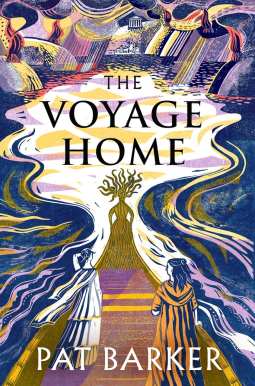
A dirty, realistic, unflinching portrayal of the women taken hostage by the Greek victors at Troy, The Voyage Home by Pat Barker is unputdownable. I didn’t expect anything less having devoured the first two books in this trilogy, The Silence of the Girls and The Women of Troy.Pat BarkerProphetess Cassandra, taken as war booty by King Agamemnon, is on the boat home; to Agamemnon’s home that is, not hers. After the battle, Cassandra and her maid Ritsa sail away from Troy towards Greece. Awaiting them are Queen Clytemnestra, who has governed in her husband’s absence, and his two remaining children Orestes and Electra. The post-war story told by these three women is familiar after many conflicts. Murder, abduction, rape, abuse, torture, child killing, looting, destruction, triumphalism. All have suffered during this ten-year-long men’s war. Cassandra, the priestess daughter of Trojan king Priam, may wear silk and decorate her hair with flowers, but she is as much a slave as Ritsa who was a noblewoman before her capture. Plagued by visions of her captor’s death, and her own, Cassandra is at times emotionally disturbed, at others she is defiant. Clytemnestra, full of vengeance for her husband’s sacrifice of their daughter Iphigenia – in tribute to the gods in return for a fair wind to war – must smile and welcome his concubine to her home. But what a home; plagued by the long-dead voices, handprints and footprints of child ghosts, the palace is an unsettling place.
Witty and, in places, bloodthirsty, Barker writes about the abuse of these women with a delicacy and empathy that makes the pages turn quickly. I read this in two days. She writes with anger and disgust that seems modern, but these are age-old tales of men’s brutality. In a palace full of nightmares, murder is planned. These three women, slave and non-slave, are seeking retribution. But what is revenge? Is it a universal truth. Does it mean the same to each of these woman. Justice. Murder. Survival against the odds. Peace. The ability to rise each morning without fear. Does it mean striking the fatal blow yourself or watching someone else? I don’t see this as a feminist re-telling in which weak men receive their come-uppance. Barker shows the men are arrogant, conniving, self-seeking and brutal. The women can be strong, brutal, selfish and unlikeable too.
A brilliant end to this trilogy. Pat Barker brings mythology to life, making it relevant for life today. One to think about for days afterwards. Highly recommended.

Read my reviews of other Pat Barker novels:-
THE SILENCE OF THE GIRLS #1WOMENOFTROY
THE WOMEN OF TROY #2WOMENOFTROY
LIFE CLASS #1LIFECLASS
TOBY’S ROOM #2LIFECLASS
NOONDAY #3LIFECLASS
ANOTHER WORLD
BLOW YOUR HOUSE DOWN
DOUBLE VISION
UNION STREET

If you like this, try:-
‘House of Names’ by Colm Tóibín
‘Stone Blind’ by Natalie Haynes
Sparrow’ by James Hynes

And if you’d like to tweet a link to THIS post, here’s my suggested tweet:
#BookReview THE VOYAGE HOME by Pat Barker https://wp.me/p2ZHJe-8Gl via @SandraDanby

COMING SOON… THE NEXT BOOK I REVIEW WILL BE:- Robert Thorogood

#BookReview ‘The Women of Troy’ by Pat Barker #historical #myths

The Women of Troy is the second of the Trojan War novels by Pat Barker, telling the post-war story of Trojan woman Briseis, a trophy of war owned by Achilles. I loved the first, The Silence of the Girls, but wanted to hear the stories of more of the women. That’s what we get in this second book. Pat BarkerBriseis, now pregnant with Achilles’ child, is again narrator along with a new male voice, that of Pyrrhus, eldest son of Achilles and Briseis’ stepson. Now Achilles is dead Briseis belongs to Alcimus, charged by Achilles before his death with caring for his unborn child.
The story starts with Pyrrhus inside the wooden horse, constructed by the Greeks, to trick the Trojans. ‘Inside the horse’s gut: heat, darkness, sweat, fear. They’re crammed in, packed as tight as olives in a jar.’ It is Pyrrhus who kills Priam, king of the Trojans, and that murder echoes throughout The Women of Troy. As storms rage – punishment of the victorious Greeks by the Gods for their impious behaviour – the army and its captives are now trapped on the beach waiting for a chance to sail home. This enclosure at close quarters raises emotions, tensions, jealousies and pride. As Alcimus arranges games – chariot racing, archery, spear throwing, wrestling – Briseis acts as a mother-figure for the other women, all now slaves.
Barker explores the after-effects of war on the Trojan women during these empty days – Hecuba, widow of Priam, and Cassandra, her daughter; Andromache, wife of Hector now concubine to Pyrrhus – high-born Trojan women now slaves in the households of their Greek victors, as concubines, whores, cooks and housemaids.
The story is about survival on the edge of despair when women are secondary creatures deemed without opinions or rights, exploring how women individually and collectively find ways to live. There is bravery, despair, foolishness, obsession and madness. When the actions of Pyrrhus are questioned, Briseis must remember the events of one night when Achilles was alive. ‘Both of us [Briseis and Cassandra, another witness] were women – and a woman’s testimony is not considered equal to a man’s. In a court of law, if a man and woman disagree it’s almost invariably his version of events that’s accepted. And that’s in a courtroom – how much more so in this camp where all the women were Trojan slaves and the only real law was force.’
But this is also the story of Pyrrhus, a young man who struggles to match the reputation of a father he never felt close to, a father lauded as a God. These were brutal times when small mistakes were punished by death and Pyrrhus, who has few friends, takes risks and makes bad decisions.
This book works as a standalone story as well as companion to The Silence of the Girls. Both are magnificent examples of storytelling by an author at the peak of her writing. Faithful to the myths, Barker is an inventive writer who adds her own interpretations and twists.
Excellent, I whizzed through this in no time. Will there be a third novel? I hope so.

Read my reviews of other Pat Barker novels:-
THE SILENCE OF THE GIRLS #1WOMENOFTROY
LIFE CLASS #1LIFECLASS
TOBY’S ROOM #2LIFECLASS
NOONDAY #3LIFECLASS
DOUBLE VISION
ANOTHER WORLD
BLOW YOUR HOUSE DOWN
UNION STREET

If you like this, try:-
These Dividing Walls’ by Fran Cooper
A Thousand Acres’ by Jane Smiley
Vinegar Girl’ by Anne Tyler

And if you’d like to tweet a link to THIS post, here’s my suggested tweet:
#BookReview THE WOMEN OF TROY by Pat Barker https://wp.me/p5gEM4-5sm via @SandraDanby

#BookReview ‘Union Street’ by Pat Barker #motherhood #women

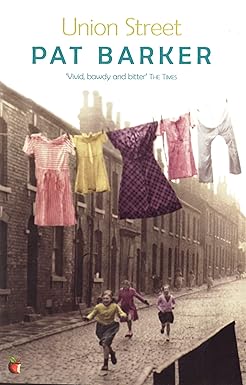
Uncompromising, unbelievably sad and harsh, Union Street by Pat Barker does not hide the uncomfortable truths of poverty in North-East industrial England. This is the story of eight women who live on Union Street from teenager Kelly Brown to Alice Bell in her eighties and though each story is told individually, like the lives of the women, the stories interweave. An honest book about women struggling to hold life, family and home together, while retaining pride and some of their own individuality. Some succeed in this, others don’t. Pat Barker This is not a book about idealised motherhood. It is about putting bread on the table for your children no matter how you do it; including beating your husband to get his pay packet before he spends it on booze. These women are tough because they have to be; the choices are the cake factory, charring, and prostitution. Many marry young to feckless husbands because they are pregnant. This is not a light read; it features scenes of rape and backstreet abortion that somehow make the prostitution a lighter route. The language is often strong and some of the descriptions are difficult to read; but it is an honest book, bleak and realistic.
The spine throughout the book is Iris King, she appears in each story and is the one most aware of other women’s lives and offers support and a word of kindness when needed. But Iris is the toughest woman in the street. Three weeks after marrying Ted, he knocks her around because she is ironing his shirts when he gets home from work when he was expecting his supper. “After he’d gone, she sat down and took stock… When he came back she was waiting for him behind the door with the meat chopper in her hand. The blow glanced off him, though there was enough blood around to scare the pair of them stiff. It didn’t stop him hitting her again, but it did free her from the fear. She never lost her self-respect.” It is that self-respect which separates Iris from the other women.
This is the first novel by Booker Prize winner Barker, but such is the excellence of the prose

For my reviews of other Pat Barker novels, click the title below:-
ANOTHER WORLD
BLOW YOUR HOUSE DOWN
DOUBLE VISION
LIFE CLASS #1LIFECLASS
TOBY’S ROOM #2LIFECLASS
NOONDAY #3LIFECLASS
THE SILENCE OF THE GIRLS #1WOMENOFTROY
THE WOMEN OF TROY #2WOMENOFTROY
If you like this, try:-
‘Orphans of the Carnival’ by Carol Birch
‘In the Midst of Winter’ by Isabel Allende
‘These Dividing Walls’ by Fran Cooper

And if you’d like to tweet a link to THIS post, here’s my suggested tweet:
#BookReview UNION STREET by Pat Barker https://wp.me/p5gEM4-3rH via @SandraDanby

#BookReview ‘The Silence of the Girls’ by Pat Barker #historical #myths

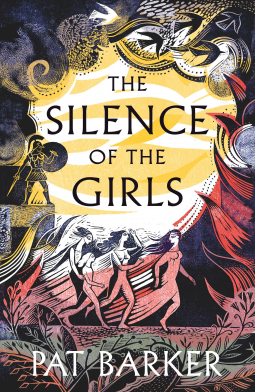
What a tumult of emotions this book unleashes. The Silence of the Girls by Pat Barker is a re-telling of the Trojan War from the viewpoint of Briseis, a captured Trojan queen who is enslaved in the Greek camp and claimed by Achilles as a prize of war. No matter that he killed her husband and brothers; that was the way things worked. Women were chattels without a voice, without feelings. Pat BarkerThis is not a simple retelling of a myth, it is a comment on the danger of male-dominated warfare fuelled by anger, hate and a sense of competition while the women are treated as possessions. The first action of a conquering army was to slaughter all babies and pregnant women, to prevent more males being born which may be future enemies. Barker has long written about war, and about women; now she combines the two with a microscopic focus on Briseis. It is an emotional story, overwhelming at times. Some women adapt, others collapse; some fall in love with their captors. The details of daily life are steeped in realism – the butchering, the piss, the blood – and Barker makes you believe it all.
Structurally, the [albeit, short] sections that didn’t work for me were those told by Achilles. I was disappointed to leave Briseis and resented the intrusion of a male voice. In preference I would have preferred to hear from other women – Hecamede perhaps, Ritsa or Iphis – in the style of Barker’s first novel Union Street where the stories of the women intertwine so by the end of the book you have a full picture.
At the beginning I worried about getting my Homer and classical history references straight, but realised this was taking me away from Briseis’s story. As soon as I stopped trying to remember The Iliad, I became entirely wrapped up in the book. Pat Barker never disappoints. She writes with passion, anger and earthiness about war and is a writer who never shirks from the difficult stuff.
This is the first book in the Women of Troy trilogy.

Read my reviews of other Pat Barker novels:-
THE WOMEN OF TROY #2WOMENOFTROY
LIFE CLASS #1LIFECLASS
TOBY’S ROOM #2LIFECLASS
NOONDAY #3LIFECLASS
ANOTHER WORLD
BLOW YOUR HOUSE DOWN
DOUBLE VISION
UNION STREET

If you like this, try:-
‘The House of Names’ by Colm Tóibín
‘Glorious Exploits’ by Ferdia Lennon
‘White Chrysanthemum’ by Mary Lynn Bracht

And if you’d like to tweet a link to THIS post, here’s my suggested tweet:
#BookReview THE SILENCE OF THE GIRLS by Pat Barker https://wp.me/p5gEM4-3An via @SandraDanby

#BookReview ‘Blow Your House Down’ by Pat Barker #thriller

The words that immediately come to mind after finishing Blow Your House Down by Pat Barker are negative: unflinching, bleak, dark and depressing. This is a dark story of the women preyed upon by a killer, women living on the edge, surviving by selling their bodies to men at a time when prostitutes are being murdered. But other words also came to mind as I dwelled on the book afterwards: friendship, community, solidarity, defiance, vulnerability, strength. Slim, I read it in one sitting on a rainy afternoon, this is a powerful, compelling read. It pulls you into the women’s stories, makes you feel at one with them. Pat BarkerBlow Your House Down is set in a Northern Town in the 1980s. The timing and setting draw inevitable links with the Yorkshire Ripper who preyed on prostitutes and lone women in the north and was arrested and convicted in 1981. Frightened but driven by the need for rent money or to feed their children, the women continue to walk the streets as the face of one of their own, Kath, the killer’s latest victim, looks down at them from a giant poster. The detail of their ordinary lives is described, starting with Brenda who settles her daughters in bed in preparation to going out with her friend Audrey. Their first call is the Palmerston, the pub where the women gather for a drink before going out onto the streets as a pair. There is a camaraderie, a spirit of just-get-on-with-it. We see some of Brenda’s back story, how she tried working at the nearby chicken factory where the women sing to cope with their grizzly job, how she has been let down by men and is trying to manage on her own.
Barker shows no sentimentality for the women, she describes their lives simply and allows the characters to elicit the reader’s sympathy. Like the chickens lined up on the production line, the women walk up and down the streets, trying to support each other by taking note of number plates. The police sit by, watching, using the women as bait to catch the killer. The men have no voice, they are portrayed as liars, weak and pathetic, except for one whose breath smells of the violet sweets he eats.
“You do a lot of walking in this job. More than you might think. In fact, when I get to the end of a busy Saturday night, it’s me feet that ache. There, that surprised you, didn’t it?” Part 3 starts with Jean, whose lover Carol, thought to have gone to London, has been identified as the latest victim. Jean sets out to entrap the killer. “I want to catch the bastard more than most.”
The language is unstinting and graphic, particularly of the sex scenes. The women’s dialogue is in the vernacular which makes them feel real. The tension rises as you wonder which woman will be killed next; each time a women gets into a car with a stranger you think ‘is it him?’ and this drives you to read on.
An accomplished novel published in 1984, it is difficult to appreciate this was only Barker’s second novel. Read it, you will not forget it.

For my reviews of other Pat Barker novels, click the title below:-
ANOTHER WORLD
DOUBLE VISION
LIFE CLASS #1LIFECLASS
TOBY’S ROOM #2LIFECLASS
NOONDAY #3LIFECLASS
THE SILENCE OF THE GIRLS
THE WOMEN OF TROY
UNION STREET

If you like this, try:-
‘The Fair Fight’ by Anna Freeman
‘The Taxidermist’s Daughter’ by Kate Mosse
‘The Killing Lessons’ by Saul Black

And if you’d like to tweet a link to THIS post, here’s my suggested tweet:
#BookReview BLOW YOUR HOUSE DOWN by Pat Barker https://wp.me/p5gEM4-3e6 via @SandraDanby

#BookReview ‘Double Vision’ by Pat Barker #war #contemporary

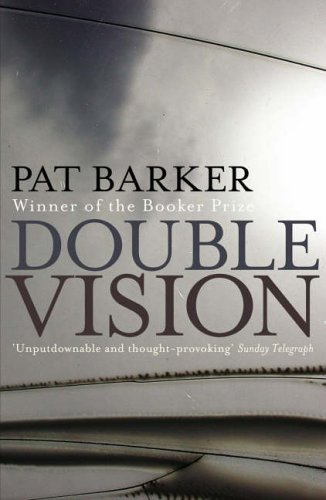
This is different from a lot of the war fiction by Pat Barker in that it deals with the aftermath of war rather than life during war. Double Vision is set in Barker’s NE England, with both countryside and city drawn clearly. Pat BarkerWar reporter Stephen Sharkey returns to the NE to stay in his brother’s isolated holiday cottage, he has resigned his job and plans to write a book. It seems idyllic, peaceful, but his dreams are full of war memories, particularly the body of a girl discovered in a Sarajevo ruin, raped and murdered. Kate Frobisher, widow of Sharkey’s war photographer colleague Ben, is a sculptor. She is struggling too, with being alone, and with injuries sustained in a car accident. Kate’s progress with the sculpture of a man, with the deadline looming, forms the spine of this novel.
This is not a love story in that there is no romance but it is a story about the love of family, of community, of responsibility. And it is also about the opposite of love: hate, as done to the girl in that Sarajevo ruin. The horrors that man does to man, in wartime and ordinary time, and whether forgiveness and love can redeem those horrors.
Barker populates her story with a tightly-drawn circle of characters, puts them into relationships, then mixes things up. Kate cannot physically cope with the work required to sculpt and so hires a man to do the heavy lifting, a man recommended by the local vicar Alec. Justine, the sister of the local vicar, is a part-time nanny for Sharkey’s nephew, she and Sharkey become lovers. Then there is Stephen’s brother Robert and his wife Beth, on the outside their life in a beautiful country house seems beautiful. But is it? And who is Peter, the gardener/labourer who becomes Kate’s assistant, who seems to lurk quietly in the background.
There is a tension underlying this story but it is not a thriller, there is not a murderer lurking in the shadows, but Barker makes you want to read on, to find out what happens to these people. I love Pat Barker’s writing, she has a minimal style which reminds me of Hemingway. She seems incapable of writing an unnecessary word. Here’s one small example: ‘His sleep was threadbare, like cheap curtains letting in too much light.’ I know just what she means.

For my reviews of other Pat Barker novels, click the title below:-
ANOTHER WORLD
BLOW YOUR HOUSE DOWN
LIFE CLASS #1LIFECLASS
TOBY’S ROOM #2LIFECLASS
NOONDAY #3LIFECLASS
UNION STREET
THE SILENCE OF THE GIRLS
THE WOMEN OF TROY

If you like this, try:-
‘Casting Off’ by Elizabeth Jane Howard
‘The Aftermath’ by Rhidian Brook
‘The Little Red Chairs’ by Edna O’Brien

And if you’d like to tweet a link to THIS post, here’s my suggested tweet:
#BookReview DOUBLE VISION by Pat Barker http://wp.me/p5gEM4-1VJ by @SandraDanby

#BookReview ‘Another World’ by Pat Barker #WW1

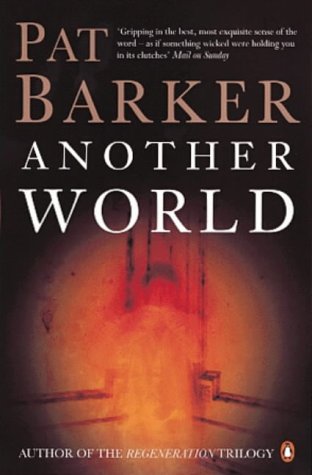
World War One, a speciality of Pat Barker, is present in every page of this tale of war veteran 101-year old Geordie, living through his final days with his grandson Nick. Woven through Geordie’s story are the threads of Nick’s life, his extended family involving wife, step son and half-siblings. In the modern day there are tensions between siblings, as there were between Geordie and his brother. Pat BarkerPat Barker is an author who does not flinch from showing the human reactions that in real life we prefer to hide: sibling jealousy, sibling hate and underlying it all, selfishness. How these emotions affect this family, from 101-year old Geordie to his great-grandson Jasper, a toddler, is fascinating and often a difficult read.
A sideline from the main story is the life of the family who lived in the house where Nick has just moved with pregnant wife Fran, Fran’s son Gareth, and Fran and Nick’s son Jasper. Also visiting is Miranda, Nick’s daughter. I said the family ties were twisted. Tidying an overgrown rose on the wall of the house, Nick unveils a plaque labelled ‘Fanshawe’. This is the name of the family who lived in this house, Fanshawe made his money from armaments. When parents and children strip wallpaper off the walls, they unveil a portrait of a family. Is it the Fanshawes, or is it them? And so Barker introduces the ghostly strand with uncanny echoes between then and now.
This is a slim volume, read quickly, but not so quickly as to miss the delicacy of Barker’s writing. Here is Nick on his grandfather: ‘Nick feels he’s never known him, not because they’ve been distant from each other – far from it – but because they’ve been too close. It’s like seeing somebody an inch away, so that if you were asked to describe them you could probably manage to recall nothing more distinctive than the size of the pores in their nose.’
A slim volume with such acute observations about human nature, Another World makes you feel uncomfortable and ask questions of yourself. I read every novel Barker writes. Her ‘Regeneration’ trilogy, including the 1995 Booker Prize-winning The Ghost Road, is a must.

For my reviews of other Pat Barker novels, click the title below:-
BLOW YOUR HOUSE DOWN
DOUBLE VISION
LIFE CLASS #1LIFECLASS
TOBY’S ROOM #2LIFECLASS
NOONDAY #3LIFECLASS
THE SILENCE OF THE GIRLS
THE WOMEN OF TROY
UNION STREET

If you like this, try:-
‘The Lie’ by Helen Dunmore
‘Wake’ by Anna Hope
‘A Long Long Way’ by Sebastian Barry

And if you’d like to tweet a link to THIS post, here’s my suggested tweet:
#BookReview ANOTHER WORLD by Pat Barker http://wp.me/p5gEM4-1NY by @SandraDanby

#BookReview ‘Noonday’ by Pat Barker #WW2 #historical

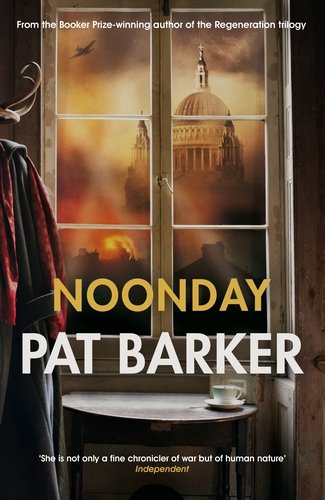
It seems inevitable that the final novel in a trilogy which started with the Great War should end with the Blitz, and that the theme should be death. Death, grief, guilt at being alive, guilt at longing for death, and guilt at wishing another dead. Noonday is a fitting end to the ‘Life Class’ trilogy by Pat Barker, the tale of three young artists – Elinor Brooke, Paul Tarrant and Kit Neville – which started on the verge of the Great War in Life Class, and continued through the war in Toby’s Room. But although the context is war, there are a lot of other things going on. Pat BarkerThe story opens with Elinor at the country home of her mother, who is dying. The assorted relatives wait, in the scorching heat, for death to arrive. Also present is Kenny, an evacuee sent from London to avoid death by bombing. So, the shadow of death is present from the very first page. Don’t forget about Kenny, he is important, particularly in the impact he has on Paul Tarrant – now Elinor’s husband. Paul’s connection with this sorry out-of-place boy leads him to a meeting with a medium, Bertha Mason. This is a story thread criticised by some readers as being irrelevant – and perhaps it is in that it doesn’t connect with either Elinor or Kit – but for me it falls within the theme of grief in war when it is common to not see the body of your loved one. Death, in war, surrounds everyone daily, is expected daily, but is not easier to accept. Perhaps it is understandable that in these circumstances, without a body to bury, communicating with ghosts becomes popular.
As with Life Class and Toby’s Room, the lives of the three protagonists are entwined like snakes. Elinor and Kit are London ambulance drivers, Paul is an air raid warden by night and official war artist by day. The Blitz is the fourth character on the page. The final third of the book is an intense description of the firebombing of the City, an experience which Barker describes with simplicity, urgency, and not a spare word.
Barker is one of my favourite living authors because she writes with such detail about small things, seemingly insignificant ordinary things, but which in her hands and in the context of her story, add layers of meaning. She pays equal attention to the lives of her three main protagonists, the interaction of their lives, and how their desires and motivations impact on each other. She does not step away from sharing an unpleasant thought or action, she tells it as it is, and for this she is a clear voice in a modern world of fiction in which characters often seem too ‘nice’. But that is not realistic and it is not Pat Barker’s way.

For my reviews of other Pat Barker novels, click the title below:-
ANOTHER WORLD
BLOW YOUR HOUSE DOWN
DOUBLE VISION
LIFE CLASS #1LIFECLASS
TOBY’S ROOM #2LIFECLASS
THE SILENCE OF THE GIRLS
THE WOMEN OF TROY
UNION STREET

If you like this, try:-
‘Mrs Sinclair’s Suitcase’ by Louise Walters
‘The Paying Guests’ by Sarah Waters
‘Midnight in Europe’ by Alan Furst

And if you’d like to tweet a link to THIS post, here’s my suggested tweet:
#BookReview NOONDAY by Pat Barker via @SandraDanby http://wp.me/p5gEM4-1Rf

#BookReview ‘Toby’s Room’ by Pat Barker #WW1 #historical

As the second book of a trilogy by Pat Barker, Toby’s Room can be read also as a standalone novel. The Toby of the title is the brother art student Elinor Brooke, whose story is told in Life Class. This story starts further back in time with a secret shared by the siblings, something not hinted at in the first book. In fact this whole book is about secrets, things hidden for shame, war too horrible to talk about, fear and emotions to be ashamed of, and things simply not spoken. Society was very different then, pragmatism coloured everyday lives, people did what they had to and tried to forget the bad things. Pat BarkerToby is reported ‘Missing, Believed Killed’, a parcel of his belongings is returned. Elinor believes the true story is being hidden and enlists fellow art student Paul Tarrant – who returned from Ypres injured and is now an official war artist – to help. She believes another war artist, Kit Neville, who served with Toby, must know the truth but refuses to say. Kit suffered a horrific face injury and is being treated at Queen Mary’s Hospital in Sidcup. Visiting Kit there they find not only Kit but Henry Tonks, their intimidating professor at the Slade School of Art.
The facial reconstructions at Sidcup are well documented, not least by the medical drawings of patients by Tonks and his team. Once again, Barker uses a true story and seamlessly inserts her fictional characters. And yet again, Barker combines a study of individuals at war while considering the role of art in conflict. As official war artists, Kit and Paul struggle with the limitations they are given, the portrayal of reality is forbidden. As I read every page of this book, the image which stayed in my mind was Paul Nash’s ‘We Are Making a New World’ (see below).

Paul Nash

(c) Tate; Supplied by The Public Catalogue Foundation

For my reviews of other Pat Barker novels, click the title below:-
ANOTHER WORLD
BLOW YOUR HOUSE DOWN
DOUBLE VISION
LIFE CLASS #1LIFECLASS
NOONDAY #3LIFECLASS
THE SILENCE OF THE GIRLS
THE WOMEN OF TROY
UNION STREET

If you like this, try:-
‘Stay Where You Are and Then Leave’ by John Boyne
The Inheritance of Solomon Farthing’ by Mary Paulson-Ellis
‘The Ways of the World’ by Robert Goddard

And if you’d like to tweet a link to THIS post, here’s my suggested tweet:
#BookReview TOBY’S ROOM by Pat Barker via @SandraDanby http://wp.me/p5gEM4-1Qx

#BookReview ‘Life Class’ by Pat Barker #WW1 #historical

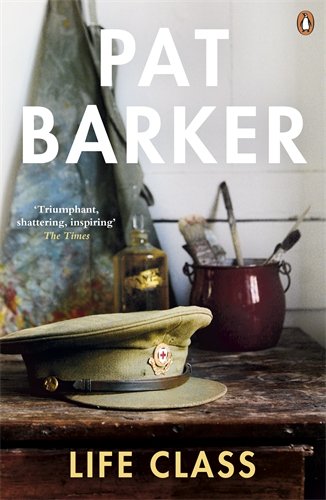
Pat Barker is one of my top five novelists. She writes sparingly with not a word wasted, but creates a world so real with detail and characterization. Life Class is the first of her #LifeClass trilogy of novels which tell the story of brother and sister Elinor and Toby, and Elinor’s fellow art students Paul and Kit, through the Great War. I first read this book when it was published in 2007 and devoured it. I have re-read it now to refresh my memory of the story and characters, before I read the newly published third volume of the trilogy, Noonday. Pat BarkerThe story starts in 1914 in a life-drawing class at the Slade School of Art in London. The class is taken by Professor Henry Tonks, a real-life character, artist and surgeon. Barker weaves her fictional story around the true story of Tonks, the Slade, and the outbreak of the Great War. For student Paul Tarrant, the presence of Tonks is intimidating, as he struggles to find his identity as an artist. This is a novel about young people and their journey from youth to maturity via art and love, brutally influenced by the horrors of war. Interwoven with Paul’s story – he volunteers as an ambulance driver and goes to Ypres, working in a hospital – is that of Elinor Brooke, fellow art student. Elinor’s journey to adulthood is different, given that she is a woman at a time when middle-class women are not expected to have a career. She remains in London, continues to paint and mixes with the society group of Lady Ottoline Morrell, another true character, mixing with pacifists, conscientious objectors and the Bloomsbury Group.
Essentially, this is a triangular love story set into the structure of war. As the students struggle to define themselves as artists, their safe world collapses around them and the abnormal becomes normal. As Paul undertakes gruesome nursing tasks, he questions the purpose of war art and what it can achieve. As his life becomes surreal, so he is cast adrift from his former life without context to judge either his ability as an artist, or his humanity in the face of war. Are some things simply too horrific to paint?

For my reviews of other Pat Barker novels, click the title below:-
ANOTHER WORLD
BLOW YOUR HOUSE DOWN
DOUBLE VISION
TOBY’S ROOM #2LIFECLASS
NOONDAY #3LIFECLASS
THE SILENCE OF THE GIRLS
THE WOMEN OF TROY
UNION STREET

If you like this, try:-
‘A Long Long Way’ by Sebastian Barry
‘The Lie’ by Helen Dunmore
‘Wake’ by Anna Hope

And if you’d like to tweet a link to THIS post, here’s my suggested tweet:
#BookReview LIFE CLASS by Pat Barker http://wp.me/p5gEM4-1Q3 via @SandraDanby