Tag Archives: romance

#BookReview ‘The Lost Lights of St Kilda’ by Elisabeth Gifford #historical

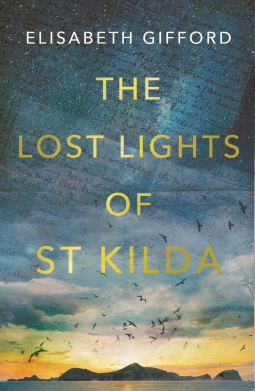
Told in two timelines, 1927 and 1940, this a story of love – between two people, and for an island and an endangered way of life. In The Lost Lights of St Kilda by Elisabeth Gifford, the beautiful yet harsh landscape of the island is made vividly alive. This is a delight to read, a novel about love, trust, betrayal and forgiveness. Elisabeth GiffordIn 1940 Fred Lawson, a Scottish soldier from the 51st Highland Division, is imprisoned at Tournai, captured at St Valery in retreat as other soldiers were being evacuated at Dunkirk. Through the darkest moments of fighting, his memories of St Kilda sustain him. ‘It was your face that had stayed with me as we fought in France. It was you who’d sustained me when we were hungry and without sleep for nights as we fought the retreating action back towards the Normandy coast.’ Fred escapes and heads for Spain, forced to trust strangers, not knowing who is a friend and who is an informer, but drawn on by his memories of St Kilda.
At the same moment in Scotland, a teenage daughter longs to know more of her birth. Says Rachel Anne, ‘My mother says I am her whole, world, and she is mine, but all the same I would still like to know at least the name of my father.’
In 1927, geology student Fred travels to the remote Scottish island of St Kilda with his university friend Archie Macleod whose father owns the island. No one knows that three years later the island will be abandoned, the population on the edge of starvation. Archie, the laird’s son, has a privileged position on the island. As a teenage boy he played with the island children, play acting at the work their fathers do, learning their future trades – farming, catching puffins and fulmars – on the dangerous cliffs. And he flirts with Chrissie Gillies. But by the time Archie returns to the island in 1927 with Fred, he has developed an arrogance and a liking for whisky. Over the long summer months, Fred falls in love with the island and with Chrissie. Everything changes when tragedy strikes.
This is a beautiful read, contrasting the softness and closeness of romance with the harsh facts of life as the difficulties of island survival are laid bare. Life in the summer months seems an idyll of isolation and peace, a return to the basics of life that matter. But inevitably winter approaches and, as the real world is complicated, a misunderstanding occurs. But hope is never abandoned. Despite being separated by the years and by lies, Fred and Chrissie never forget each other.

Read my review of A WOMAN MADE OF SNOW also by Elizabeth Gifford.

If you like this, try:-
Days Without End’ by Sebastian Barry
Rush Oh!’ by Shirley Barrett
After the Party’ by Cressida Connolly

And if you’d like to tweet a link to THIS post, here’s my suggested tweet:
#BookReview THE LOST LIGHTS OF ST KILDA by Elisabeth Gifford @elisabeth04liz  https://wp.me/p5gEM4-4yq via @SandraDanby

#BookReview ‘The House on the Shore’ by Victoria Howard @VictoriaHoward_ #romance

The House on the Shore by Victoria Howard starts off seeming to be a conventional romance and turns into a satisfying suspense story set in a beautiful, remote Western Scottish loch. The remoteness is central to the plot. Victoria HowardAfter a love affair turns sour, Anna MacDonald leaves Edinburgh for her remote croft, once her grandmother’s, beside Loch Hourn in the Western Highlands. She longs for peace and quiet to write her book. Tigh na Cladach, a two bedroom cottage alone at the end of a twelve mile track, is her bolt hole where she hopes to nurse her injured pride and heart. When she arrives, an unknown yacht is anchored in the bay. On board is a rather handsome American sailor, stranded as he waits for a part to repair his engine. A combative relationship develops between the two; Anna resents the intrusion of Luke Tallantyre but is driven to help by the local community spirit; Luke bridles at the prickly, aggressive woman he must rely on for help. Meanwhile, Alistair Grant, heir to the Killilan Estate which borders Anna’s land, and who was a teenage friend of hers, returns from his life of luxury in the South of France to run the estate. But Grant’s plans for change upset the villagers. In echoes of the Highland Clearances of the 18th century, rents are raised, livelihoods threatened, sensitivities ignored. Anna inspired, begins to write a novel set during this troubled time, imagining her croft and what happened there.
The pace of the modern-day story changes when her tyres are slashed and someone takes a pot shot at her with a shotgun. Romance becomes romantic suspense. I confess during some romantic passages – eg. ‘his broad suntanned chest’ – I wished for less not more, but that is personal taste. The pace of the story was good alternating between Anna’s historical novel, the political dispute about the Estate’s future, the dark threats, and the growing romance.
This is modern day suspense story, mirroring the unique history of the region, with a touch of romance; rather than a page turning psychological thriller. An enjoyable read which I whizzed through on holiday, guessing the identity of the real villain but not working out the motivation.

If you like this, try:-
Love and Eskimo Snow’ by Sarah Holt
Please Release Me’ by Rhoda Baxter
The Lost Letters of William Woolf’ by Helen Cullen

And if you’d like to tweet a link to THIS post, here’s my suggested tweet:
#BookReview THE HOUSE ON THE SHORE by Victoria Howard @VictoriaHoward_ https://wp.me/p5gEM4-4uf via @SandraDanby

A poem to read in the bath… ‘Valediction’ by Seamus Heaney #poetry #love

The poems that touch me are those that distil a feeling, an experience, an emotion, into a simple few lines. Seamus Heaney was a master of this technique. In Valediction, from the 1966 collection Death of a Naturalist, the absence of a woman is felt keenly. It is a love poem, short and honest, longing for the return of his love.

Seamus Heaney

[photo: thepoetryfoundation.org]

Because of copyright restrictions I am unable to reproduce the poem in full, but please search it out in an anthology or at your local library.

‘Valediction’

Lady, with the frilled blouse
And simple tartan skirt,
Since you left the house
Its emptiness has hurt
All thought.

Seamus HeaneyBUY THE BOOK

Read these other excerpts and find a new poet to love:-
Happiness’ by Stephen Dunn
May-Day Song for North Oxford’ by John Betjeman
I Loved Her Like the Leaves’ by Kakinonoto Hitomaro

And if you’d like to tweet a link to THIS post, here’s my suggested tweet:
A #poem to read in the bath: ‘Valediction’ by Seamus Heaney https://wp.me/p5gEM4-4bN via @SandraDanby

#BookReview ‘The Secrets We Kept’ by @laraprescott #Cold War #Pasternak

The Secrets We Kept by Lara Prescott is a mixture of Cold War thriller, romance and the true story of the publication of Dr Zhivago by Boris Pasternak. Set in the 1950s, this novel is about the power of the written word. So powerful that two nations try to outwit the other as a big new novel is set to be published; neither has any regard for the effects of their plans on the author. Lara PrescottThe two worlds are radically different, Prescott builds both convincingly. I can see Pasternak’s vegetable garden at his dacha, I can hear the typewriters in the Typing Pool at The Agency on National Mall in Washington DC. It is important to note that this is a blend of real events, real people and total fiction.
Irina is American, a first generation Russian-American, her father left behind in the Soviet Union as his pregnant wife departed for a new life in America. Irina’s Mama is a dressmaker, speaking Russian to Irina at home while making elaborate dresses for Russian immigrants. Irina never meets her father. Always an outsider, when she goes for a job interview in a typing pool Marla wears a skirt made for her by Mama. She gets the job in the Typing Pool at The Agency (the CIA) because she has something different to offer; she is trained for extra duties in the evening, acting as a messenger and learning tradecraft to avoid detection. Her job is at The Agency’s Soviet Russia Division, the ‘SR’.
In Moscow, Boris Pasternak is writing a novel and reading it aloud to his lover, Olga. One day Pasternak, deemed a threat by the authorities, is sent a warning: Olga is sent to a work camp for three years. When she returns home, his novel is finished. It is Dr Zhivago.
The Secrets We Kept is a fascinating read, a glimpse into the true story of Dr Zhivago’s publication and the role of the CIA in disseminating it to Soviet citizens. Structurally the pace did not hold up and slowed each time the story moved to Boris and Olga. But some interesting areas are covered – the treatment of homosexuals in the workplace and sexual manipulation between the ranks, the assimilation of first generation Americans, and the American obsession with communism.
Set at the time of Sputnik, Prescott is good at the contemporary culture, politics and the atmosphere of rivalry and impending threat of the Soviet Union. The clothes, the food, the films, the parties. The typists see and hear but don’t repeat, but are as capable of analysing and doing the jobs that the men are doing.
The ending fizzled out, perhaps because the book tries to do so much, possibly too much.
CLICK HERE TO READ MORE ABOUT THIS BOOK

If you like this, try:-
An Officer and a Spy’ by Robert Harris
‘The Translation of Love’ by Lynne Kutsukake
The Museum of Broken Promises’ by Elizabeth Buchan

And if you’d like to tweet a link to THIS post, here’s my suggested tweet:
#BookReview THE SECRETS WE KEPT by Lara Prescott https://wp.me/p5gEM4-4tg via @SandraDanby

A poem to read in the bath… ‘Out Chasing Boys’ by Amanda Huggins #poetry

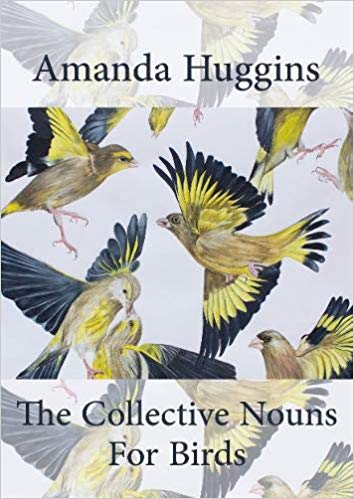
Recently published is this small poetry chapbook, The Collective Nouns for Birds by Amanda Huggins, with 24 poems. Huggins is an award-winning writer of flash fiction and short stories, so knowing her skill with the short form I looked forward to this first poetry chapbook with anticipation. And I wasn’t disappointed. I’ve chosen the first poem in the book as it struck a chord from my own childhood. I can smell the salt in the breeze, hear the lapping of the summer waves on the shore and taste the tang of vinegar as I lick my fingers after eating haddock and chips. Amanda HugginsThis poem is subject to copyright restrictions. Please search for the full poem in an anthology or at your local library. A ‘poetry chapbook’ is a slim pamphlet of poems, usually no more than 40 pages.

‘Out Chasing Boys’
We spent summer on the seafront,
two stranded mermaids
killing time.
We rolled up our jeans,
carried our shoes,
blew kisses at the camera
in the photo booth.
Always out, chasing boys,
as if we had forever.

Read my reviews of other work by Amanda Huggins:-
Novellas
ALL OUR SQUANDERED BEAUTY
CROSSING THE LINES
THE BLUE OF YOU
Short stories
AN UNFAMILIAR LANDSCAPE
BRIGHTLY COLOURED HORSES
EACH OF US A PETAL
SCRATCHED ENAMEL HEART
SEPARATED FROM THE SEA

Read these other excerpts and find a new poet to love:-
A Thousand Years You Said’ by Lady Heguri
The Cinnamon Peeler’ by Michael Ondaatje
‘After a Row’ by Tom Pickard

And if you’d like to tweet a link to THIS post, here’s my suggested tweet:
#Poetry ‘Out Chasing Boys’ by Amanda Huggins @troutiemcfish https://wp.me/p5gEM4-4v6 via @SandraDanby

#BookReview ‘The Museum of Broken Promises’ by @elizabethbuchan #thriller #spy

The Museum of Broken Promises by Elizabeth Buchan is a disjointed story of Cold War romance and its lingering after-effects decades later. Promises are made and broken, by everyone. The title is misleading, as the sections at the museum in present day in Paris act as bookends to the crucial story in Eighties story in Czechoslovakia. Elizabeth BuchanIt is 1985, Prague. After the death of her father, student Laure takes a job as an au pair in Paris moving to Prague with her employers. It is the Cold War and the once beautiful city is shabby and grey, an unsettling place to live where the threat of imprisonment or violence always lingers. Laure cares for two small children while their father Petr works, he is an official at a pharmaceuticals company and in a privileged position enabling him to bring a foreigner to work in the country, and their mother Eva is ill. Gradually Laure explores the streets and finds a marionette theatre. There she is enchanted by the folklore tales of the puppets; and she meets Tomas, lead singer in a rock band.
Resistance against the repressive regime in Czechoslovakia is low key, expressed through the arts. In this way, the book reminded me of Tom Stoppard’s play Rock and Roll which tells the story of rock band The Plastic People of the Universe. The Museum of Broken Promises is a story of a young student who falls in love with a bad boy who describes himself as a ‘rock soldier making war on the party’. But these words – soldier, war – are used in a student resistance sense, not actual war. This is quiet resistance rather than terrorism, but is none the weaker for this. Songs and marionettes can spread important messages of defiance, as Laure finds  when she goes to a rock concert. Singing and dancing can be subversive. As someone says, it is ‘giving into forbidden yearning and loyalties. Tasting resistance like wine on the tongue’. Laure’s time in Prague echoes throughout her later life and leads her to open her museum in Paris, inviting mementoes from strangers, objects that represent broken promises.
The Museum of Broken Promises is a slow moving contemplative story, without the pace of a thriller despite its Cold War setting and the constant threat to anyone who speaks or behaves out of turn. This lack of propulsion makes it seem a longer book than it is and I wanted it to have some bite. The story moves back and forth from Prague to Paris and more than once I wasn’t sure where Laure was. This adds to the sense that nothing is what it seems.
Laure is an innocent who is sometimes stupidly naïve, unknowingly putting other people in danger. It is an example of the idealism and irreverence of youth ignoring advice. As she is warned on her arrival in Prague, don’t ask questions, don’t answer questions.

If you like this, try:-
‘If I Knew You Were Going to be This Beautiful, I Never Would Have Let You Go’ by Judy Chicurel
The Bone Church’ by Victoria Dougherty
Hangover Square’ by Patrick Hamilton

And if you’d like to tweet a link to THIS post, here’s my suggested tweet:
#BookReview THE MUSEUM OF BROKEN PROMISES by @elizabethbuchan https://wp.me/p5gEM4-4sA via @SandraDanby

#BookReview ‘The Confession’ by Jessie Burton #romance #contemporary

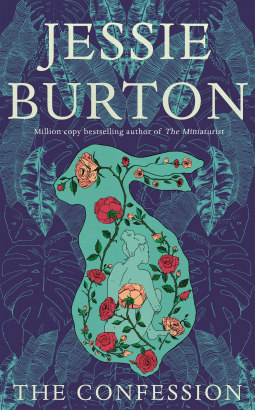
The Confession by Jessie Burton is her third novel after The Miniaturist, her successful debut. The Confession is a contemporary romance about relationships; mother/daughter, romantic, between friends. Are daughters destined to repeat the mistakes of their mothers, even if they have never met? Jessie BurtonThis is a dual timeline novel. In 2017, Rose Simmons never knew her mother, who left when she was a baby. Rose’s father has always been tight-lipped until now when he tells Rose that the famous but reclusive novelist Constance Holden may have the answers. Frightened of scaring off Constance with awkward questions, Rose instead gets a job as maid/companion for the reclusive novelist, now in her seventies and crippled by arthritis. Unexpectedly Rose comes to like and admire Connie so the longer she works for her the more impossible it is to admit to her deception [she is known to Connie as Laura Brown]. And all the time she wonders if Connie can see her mother’s face in her own. In 1982, we see the story of her mother and Connie. Part-time waitress and artist’s model Elise Morceau meets the enigmatic Connie on Hampstead Heath. When Connie’s first novel is made into a film, the two women go to LA. That’s where the lies start, the cracks appear. Connie is working, Elise is a hanger-on who learns to surf. The turning point comes when she begins to doubt Connie’s love.
At times, Elise and Rose were inter-changeable in my head. Both women are immature, unsure who they are, searching for something they cannot define except that they don’t have it. Elise is in her early twenties, while Rose is in her thirties. I had some sympathy with Rose’s boyfriend Joe and best friend Kelly who both lost patience with her. Both Rose and Elise seem to play at being adults, thinking they are the centre of the world, not understanding that their own actions also leave ripple effects that cause pain to other people. They obsess about being hurt but do not recognise the hurt they cause. Mother and daughter are both passive characters, drifting in their own lives, running away rather than confront difficult situations. Principally, the novel is about life choices, taking responsibility for one’s own life and own choices [and being passive, not making decisions, is a personal choice].
At the beginning I felt for Rose and her absence of self-identity, ‘I didn’t have a mum, and I’d never had her, so how could I miss something I’d never really lost?… I don’t tell people about the yearning. The wonder. I tell them, You can’t miss what you never had!’ But the pace of the first quarter is very slow, it picks up once Rose, aka Laura Brown, starts working for Connie in Hampstead. Ironically Rose finds her sense of self through the very mode of her deception; by creating a new personality and life for herself, assuming the face of Laura that she presents to Connie, Rose begins to understand who she is.
After really enjoying The Miniaturist, sadly The Confession left me feeling underwhelmed.

Read my review of THE MINIATURIST.

If you like this, try:-
Ghost Moth’ by Michele Forbes
‘If I Knew You Were Going to be This Beautiful, I Never Would Have Let You Go’ by Judy Chicurel
The Girl on the Cliff’ by Lucinda Riley

And if you’d like to tweet a link to THIS post, here’s my suggested tweet:
#BookReview THE CONFESSION by Jessie Burton https://wp.me/p5gEM4-46b via @SandraDanby

#BookReview ‘Our Souls at Night’ by Kent Haruf #love #loneliness

Our Souls at Night by Kent Haruf is a simple, straight talking, touching book about loneliness, love and longing late in life. One day Addie Moore suggests to her neighbour Louis Waters that he visit her house each night and sleep in her bed. Both are in their seventies, widowed, lonely and don’t know each other well. Acknowledging Addie’s bravery in asking the question, Louis arrives with his pyjamas and toothbrush in a bag. Kent HarufAnd so starts this touching novel about relationships, family and morality. Addie and Louis sleep side-by-side, not touching. They ignore the glances of neighbours, fearing censure. But the townsfolk nod and smile at them, while their own children disapprove. And so one generation seeks to control another.
When their new dynamic is disrupted by the arrival of Addie’s six-year-old grandson Jamie, Addie and Louis’s relationship enters a new stage. Jamie’s parents have separated and he is distressed. Addie’s son Gene has asked his mother to help. This new three-person family begins to slowly to heal itself, starting slowly by visiting a family of new born mice in Louis’ shed.
This is a short read, manageable in one sitting. The language is beautiful. Addie’s suggestion does not contain one redundant word. “I mean we’re both alone. We’ve been by ourselves for too long. For years. I’m lonely. I think you might be too. I wonder if you would come and sleep in the night with me. And talk.”
Haruf is non-judgmental; he doesn’t point fingers at the small-minded criticism, he simply shows how friendship can be a saviour for the elderly, lonely and forgotten.
A word about dialogue. There are no speech marks and I missed them. In some places it was difficult to know who was speaking, which made me stop and think and took me away from the emotion of the story. Which was a pity.
This is the first book by Haruf that I have read, and the last he wrote; now I’ll seek out the others. It was made as a film in 2017 featuring Robert Redford and Jane Fonda.

If you like this, try:-
‘The Only Story’ by Julian Barnes
‘The Stars are Fire’ by Anita Shreve
‘A Sudden Light’ by Garth Stein

And if you’d like to tweet a link to THIS post, here’s my suggested tweet:
#BookReview OUR SOULS AT NIGHT by Kent Haruf https://wp.me/p5gEM4-3rz via @SandraDanby

#BookReview ‘The Sleeping Beauty’ by Elizabeth Taylor #classic #love

Reading this novel is like taking a long deep breath of air when your lungs are bursting. The Sleeping Beauty by Elizabeth Taylor is about beauty and is loosely based on the fairy story – a man rescuing a woman – but with real people who have faults, irritations, fantasies and vanities, whose prejudices and past lives inconveniently do not go away. Elizabeth Taylor In the small seaside town of Seething, Vinny Tumulty visits an old friend, Isabella, whose husband has recently died. He wants to support her through difficult times, but Isabella fancies she is falling in love with him. Vinny, however, sees a stranger walking on the beach and, without seeing her clearly, knows she is beautiful. We learn later that Emily’s face has been reconstructed, plastic surgery necessary after a car accident caused by her drunken brother-in-law. Emily’s widowed sister Rose tells Vinny that, since her accident, Emily looks and behaves like a completely different person. To Rose, Emily’s face is untrue; to Vinny, it is beautiful.  He becomes obsessed with her. ‘My plans for today are to hang about hoping for a glimpse of her, to have my heart eaten away by the thought of her; to feel my blood bounding maddeningly, ridiculously, like a young boy’s; to despair; to realise the weight of my misery and hunger with each step I take.’
Vinny is in his fifties but behaves as if this is his first love. In contrast, Isabella’s son twenty-something Laurence picks up a girl at the cinema. Not knowing how to make the first move and kiss her, he experimentally takes Betty’s hand. ‘Her skin was rough, her nails so short that he wondered if she bit them, and hoped she did. He did not want a young lady too tranquil, too defined.’ This scene is mirrored later when Emily is top-and-tailing gooseberries; she puts her hand into the basket as Vinny does too, and they touch. ‘He felt the involuntary tremor before the tension, the shocked leap of her blood which she could not control. ‘Even her arms are blushing,’ he thought.’
Is Laurence falling in love with reality, and Vinny with an image? Neither knows the woman he is courting, has hardly had a conversation with her. It is halfway through the novel before Emily says more than a single sentence at a time. Taylor shows the gradual, patient steps that Vinny takes towards Emily; brief words exchanged, moments of silence stretching ahead. It is a cautious middle-aged love where hope of finding love has long passed. There is a sensuality, a thin seedling struggling to grow despite the aridity of the earth.
As usual, Taylor is excellent on everyday detail of people and things. ‘The streets were almost empty. An obviously betrothed couple stood looking in at the lighted window of a furniture shop at a three-piece suite labelled ‘Uncut Moquette’.’ And I loved the scene where Isabella and her friend Evalie are checking the racing results and doing tapestry badly, with their faces covered with clay face packs; and Laurence enters the room, bemused. This is a slow, contemplative novel, beautifully written, which in places made me stop and smile.
CLICK HERE TO READ MORE ABOUT THIS BOOK AT AMAZON

Read my reviews of other books by Elizabeth Taylor:-
A VIEW OF THE HARBOUR
A WREATH OF ROSES
ANGEL
AT MRS LIPPINCOTE’S
IN A SUMMER SEASON

If you like this, try:-
‘Mobile Library’ by David Whitehouse
‘A Life Between Us’ by Louise Walters
‘The Gustav Sonata’ by Rose Tremain

And if you’d like to tweet a link to THIS post, here’s my suggested tweet:
#BookReview THE SLEEPING BEAUTY by Elizabeth Taylor https://wp.me/p5gEM4-3ru via @SandraDanby

#BookReview ‘Touch Not The Cat’ by Mary Stewart #romance #suspense

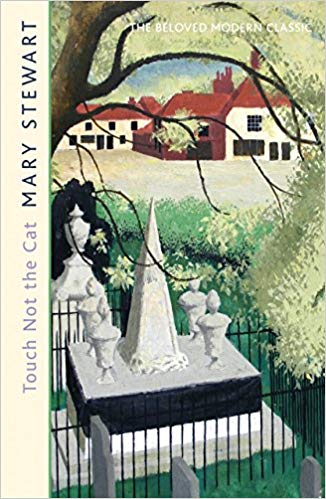
Published in 1976 – around the time I was borrowing my mother’s copies of Mary Stewart’s The Moon-Spinners and My Brother Michael and reading them voraciously – I had never read Touch Not the Cat until now. Like all Stewart’s novels, there is adventure and romance with a slice of the supernatural. I can’t think of any other novels like them. The Ashley family in Touch Not the Cat own Ashley Court and have an unusual gift running through the generations: they are telepathic with each other. Mary Stewart Narrator Bryony is working at a hotel in Madeira when she receives a telepathic message from her anonymous ‘lover’ to go to her father who is staying at a clinic in Germany. When Bryony arrives her father is dead, killed in a hit-and-run road accident. His last words to a friend, who wrote them down verbatim, are a warning to Bryony. ‘Tell Bryony. The cat, it’s in the cat on the pavement. The map. The letter. In the brook. Tell Bryony. My little Bryony to be careful. Danger.’ She returns home to Ashley Court in England to look for the answers but finds surprises and danger. I found the beginning an odd introduction to the Ashley family, the house, the history, coupled with a diary excerpt at the end of each chapter, dating from the nineteenth century. The significance of this becomes clear later, but for a long while I read it without getting a lot from it. There are a lot of mysteries, lies and contradictions to unravel. Even Bryony is not certain of the identity of her telepathic lover, though she knows it must be a blood relative so guesses it is one of her three cousins; twins Ellory and James, or their younger brother Francis. As Bryony unravels the meaning of her father’s warning, she realises the twins are not beyond committing murder in order to steal her inheritance. Could one of them be her telepathic lover?
The title of the novel is an old Scottish motto which Stewart gives to the fictional Ashley family. The cat is relevant but I didn’t guess the significance until the very end. A well-written novel; old-fashioned in that it starts slowly and builds gradually, but deserves patience. It includes gothic features such as churchyard scenes, shadowy figures, storm and flooding; which Bryony mocks, ‘Robed nuns and ancient houses and secret passages, the paraphernalia that Jane Austen had laughed at in Northanger Abbey.’ An unusual romantic mystery that makes me want to re-read all Stewart’s books, including the Arthurian series.
CLICK HERE TO READ MORE ABOUT THIS BOOK AT AMAZON

Click the title to read my reviews of other Mary Stewart novels:-
MY BROTHER MICHAEL
THE IVY TREE
THE GABRIEL HOUNDS
THIS ROUGH MAGIC
THORNYHOLD

If you like this, try these:-
The Vanishing of Audrey Wilde’ by Eve Chase
The Wicked Cometh’ by Laura Carlin
The Last of Us’ by Rob Ewing

And if you’d like to tweet a link to THIS post, here’s my suggested tweet:
#BookReview TOUCH NOT THE CAT by Mary Stewart https://wp.me/p5gEM4-3Vc via @SandraDanby