Tag Archives: romance

#BookReview ‘Winter of the Heart’ by EG Parsons #historical #romance

Winter of the Heart by EG Parsons is a good old-fashioned romance about bad choices and second chances involving a heroine who is afraid to love again, a widower grieving for what he has lost and a violent husband, set in post-Civil War South Carolina. EG Parsons In 1876,Megan Connors starts a new life as a schoolteacher on a ranch at Willow Creek. Finding the children eager to learn, she hopes her dreams of a good life are coming true. Except for her boss, the rude ranch owner Charles Donavan, glamorous neighbour Alicia who expects to marry Charles, and a ghostly presence. When romance starts to blossom, Megan must admit she is not free to marry. When her former husband William arrives to claim her, Megan must leave with him and return to their home in Clearwater, Virginia.
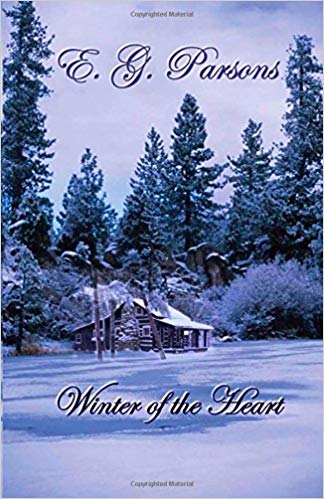
The second half of the novel is a tale of survival. Megan plans her escape from William’s house but with winter approaching she gets lost and wanders into the mountains. Encounters with a bear, bandits and snow leave her almost dead. Meanwhile Charles realises his behaviour to Megan was harsh. He leaves his ranch and with the help of confidential investigator James Marshall, investigates Megan’s story. Marshall sends a man into the mountains to search for Megan but, growing impatient, Charles follows. Is Megan dead, or is she sheltering in one of the remote homesteads cut off by snow until spring comes.
I read this quickly on a plane and thoroughly enjoyed it.
CLICK HERE TO READ MORE ABOUT THIS BOOK

If you like this, try:-
‘Barkskins’ by Annie Proulx
The Knife with the Ivory Handle’ by Cynthia Bruchman
‘Summertime’ by Vanessa Lafaye

And if you’d like to tweet a link to THIS post, here’s my suggested tweet:
#BookReview WINTER OF THE HEART by EG Parsons https://wp.me/p5gEM4-3yz via @Sandra Danby
#Bookreview ‘The Clockmaker’s Daughter’ by Kate Morton #historical #romance

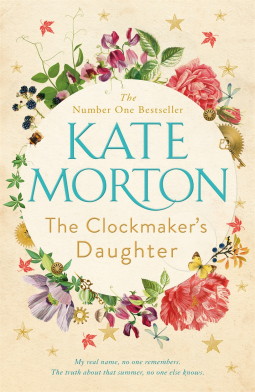
Kate Morton is strongest when writing about houses, houses with history, atmospheric, beautiful, brooding houses. Birchwood Manor in The Clockmaker’s Daughter is haunted by what happened there. A death, a theft, a drowning. The truth is a complicated tale of twists and turns, Morton gives us numerous characters from slices of history from a Pre-Raphaelite group of artists to National Trust-like ownership today. Kate Morton
The mystery starts from page one, the Prologue, told in the voice of an unknown woman remembering her arrival at Birchwood Manor with Edward. When the rest of the house party leave, ‘I had no choice; I stayed behind.’ Is she a ghost? Cut straight to today and archivist Elodie who unpacks an old leather satchel finds inside a photograph of a woman and an intriguing sketchbook. Leafing through the pages she stops dead, seeing a drawing of a house she knows though she has never been there. It featured in a bedtime story told by her mother. Is it a real place? Does it have magical powers as local tales suggest? ‘It is a strange house, built to be purposely confusing. Staircases that turn at unusual angles, all knees and elbows and uneven treads; windows that do not line up no matter how one squints at them; floorboards and wall panels with clever concealments.’
The mysteries of the drawing, the house, the girl in the photograph and a missing blue diamond are told in multiple viewpoints from 1862 to today. Four big mysteries to unravel means complicated threads woven between the years and the characters and I was tempted to keep notes of who said what and lost track of the year, a couple of times. At the end, I was left with a couple of outstanding questions but nothing to spoil my enjoyment of the book. I found the title rather misleading as Birdie the clockmaker’s daughter, though being one of the key characters, is not the only essential component. The house though is at the centre of everything.
We follow the story of Elodie, whose mother died when she was six and who is about to be married. Of Birdie, who lost her mother when she was four and was left with a baby farmer and trained as a pickpocket. Of Ada Lovegrove who is essentially abandoned by her parents who bring her from India and dump her at Birchwood House, now a school for young ladies. Of Leonard Gilbert, survivor of the Great War, who comes to Birchwood to write a biography of the Pre-Raphaelite artist Edward Radcliffe. Of Jack Rolands who is living now at Birchwood and seems to be searching for something. Of Lucy Radcliffe, Edward’s little sister, and my favourite character. Lucy, a curious little girl, encouraged by her brother to improve her mind by reading, was ‘learning fast that she knew a lot less about her own motivations than she did about the way the internal combustion engine worked.’
Piece by piece, Elodie unravels the true story. The story switches quickly between narrators which can be disorientating and it is only towards the end that some links fit into the bigger picture which makes it a little frustrating. Morton does not write short novels, this is 592 pages, and at times I wanted to cut superfluous detail to get to the meat of the story. A beautiful cover, though.
CLICK HERE TO READ MORE ABOUT THIS BOOK

And here’s my review of another novel by Kate Morton:-
THE DISTANT HOURS

If you like this, try
‘The Man Who Disappeared’ by Clare Morrall
‘The Silent Companions’ by Laura Purcell
‘The Ballroom’ by Anna Hope

And if you’d like to tweet a link to THIS post, here’s my suggested tweet:
#BookReview THE CLOCKMAKER’S DAUGHTER by Kate Morton https://wp.me/p5gEM4-3yi via @SandraDanby

#BookReview ‘The Seven Sisters’ by Lucinda Riley #romance

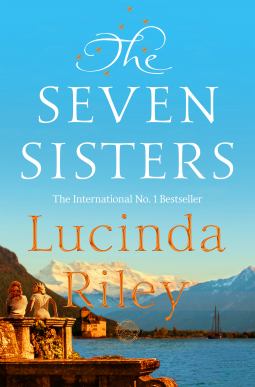
In its scope, The Seven Sisters by Lucinda Riley reminds me of Eighties family mega-stories, paperbacks as thick as doorstops. This is the first in a series; the first five are already published. I recommend suspending your ‘instinct for the literal’ and throwing yourself into the world of the book. Some of the story set-up seems unrealistic – unbelievable wealth, mysterious father, beautiful adopted sisters – this is not a normal world. But I quickly became caught up in the historical story. Lucinda RileyPa Salt has died suddenly; he is the fabulously wealthy, secretive, reclusive adoptive father to six sisters whose origins are a mystery. Only when he has gone do they realise they should have asked him for information. Each of the sisters is given a clue and a letter. Also in the envelope is a triangular-shaped tile. The Seven Sisters is the story of the eldest D’Aplièse sister. Maia’s clue is a map reference that takes her to a crumbling mansion in Rio de Janeiro in Brazil where she meets an enigmatic elderly woman.
The book came alive for me with the story, eighty years earlier, of Izabela Rosa Bonifacio. Izabela, daughter of a nouveau riche coffee merchant in Rio, is facing an arranged marriage. Desperate to see more of the world before she settles down to a stifling life of marriage to a husband she doesn’t love, she persuades her father and fiancé to allow her to travel to Paris with her friend, Maria Elisa, daughter of architect Heitor da Silva Costa. This section of the novel enthralled me; the design and sculpting of the Cristo sculpture for the top of the Corvocado mountain, all based on historical fact.
I connected with Izabela in a way I didn’t with Maia. Maia uncovers the story of Izabela with the help of Brazilian author Floriano Quintelas, whose latest novel Maia has translated into French. In the course of her research, Maia must face the shadows of her own past, her regrets and shame, in order to move on. I enjoyed Izabela’s story but at the back of my mind I queried its relevance to Maia; Izabela was too old be her mother. I missed a direct connection to Maia and this frequently took me out of the world of the story.
That connection does come but as the story finished I was left with almost as many questions as at the beginning. The last chapter is devoted to the second sister, Ally, with new mysteries for the second book in the series.

Read my reviews of some of the other novels in Lucinda Riley’s ‘Seven Sisters’ series:-
THE STORM SISTER #2SEVENSISTERS
THE SHADOW SISTER #3SEVENSISTERS
THE PEARL SISTER #4SEVENSISTERS
THE MOON SISTER #5SEVENSISTERS
THE SUN SISTER #6SEVENSISTERS
THE MISSING SISTER #7SEVENSISTERS

… plus my reviews of these standalone novels, also by Lucinda Riley:-
THE BUTTERFLY ROOM
THE GIRL ON THE CLIFF
THE LOVE LETTER

If you like this, try:-
‘The Ship’ by Antonia Honeywell
‘Yuki Chan in Bronte Country’ by Mick Jackson
‘The Sapphire Widow’ by Dinah Jefferies 

And if you’d like to tweet a link to THIS post, here’s my suggested tweet:
#BookReview THE SEVEN SISTERS by Lucinda Riley https://wp.me/p5gEM4-3IB via @SandraDanby

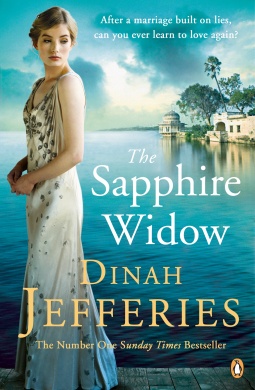
#Bookreview ‘The Sapphire Widow’ by @DinahJefferies #historical #romance

When Dinah Jefferies writes about Ceylon, you can smell it and sense it. The blossom, the flowers, the birds, she is excellent at evoking setting. The Sapphire Widow is not her strongest book, but it is nevertheless an enjoyable read. Whatever it may lack in plot – a weakness I think because the main character is the wronged one, rather than with a secret of her own to hide – it is a fascinating glimpse of mid-Thirties Ceylon and a beautiful seaside town. Dinah JefferiesIt is 1936 in Galle on the southernmost tip of Ceylon. Louisa Reeve and her husband Elliot seem to have it all except, after a series of miscarriages, a child. Louisa, who wonders if she will ever be a mother, is often alone as Elliot spends his spare time sailing with friends and on a cinnamon plantation in which he is an investor. But when tragedy hits Louisa discovers Elliot’s life, investments and hobbies were not as he told her. As she deals with one lie after another, Louisa continues to develop Sapphire, the retail emporium originally planned with Elliot and which provides the novel’s title.
Given the title I expected the gemstone business of Louisa’s father, and where Elliot worked, to be prominent in the plot. It is however lightly sketched and I felt rather short-changed. The description of the cinnamon plantation is fascinating though, as is the Galle setting, though at times it felt as if local history was being shoehorned in. Towards the end the plot went a little haywire, not what I was expecting. Frustrating, I was left feeling there was a deeper, more emotional story to be told.
An interesting read but not her finest.
CLICK HERE TO READ MORE ABOUT THIS BOOK

And here are my reviews of some of Dinah Jefferies’ other novels:-
DAUGHTERS OF WAR [#1 DaughtersOfWar]
THE HIDDEN PALACE [#2 DaughtersOfWar]

And these standalone novels:-
THE TEA PLANTER’S WIFE
THE TUSCAN CONTESSA

If you like this, try these:-
‘Beneath an Indian Sky’ by Renita d’Silva
The Gift of Rain’ by Tan Twan Eng
Quartet’ by Jean Rhys

And if you’d like to tweet a link to THIS post, here’s my suggested tweet:
#BookReview THE SAPPHIRE WIDOW by @DinahJefferies https://wp.me/p5gEM4-3xX via @SandraDanby

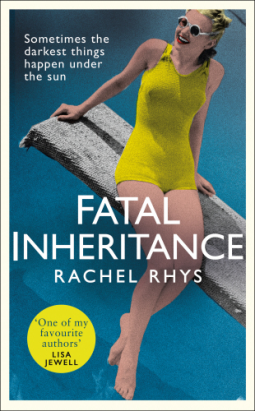
#BookReview ‘Fatal Inheritance’ by Rachel Rhys #romance #glamour

Fatal Inheritance by Rachel Rhys is a mystery set in the South of France three years after the end of World War Two. This is a glamorous place of sun and colours and beauty but which hides wartime shade and recriminations, canker beneath the luxury and smiles. Rachel RhysWhen Eve Forrester receives a solicitor’s letter promising ‘something to her advantage’, she leaves her husband in England and travels to Cap d’Antibes. Clifford disapproves of her journey, he thinks it inappropriate, a waste of time, doubts the veracity of the will of this mysterious Mr Guy Lester who Eve does not know. But Eve defies her husband and goes anyway, curious, listening to the inner voice which tells her there is more to life. This is a novel where you want to shout to the heroine, to encourage her onwards, to have strength to take a new path.
Eve inherits a part-share in the Villa La Perle at Cap d’Antibes, near neighbours are the Duke and Duchess of Windsor. Eve, in her ‘make do and mend’ clothing, is thrown into a glamorous social whirl of people she finds awkward, dismissive and arrogant. Rhys draws a layered picture of society where obvious wealth may hide troubled finances, make up and lipstick covers bruises, and smiles hide venom. It is a place where the locals avoid people and businesses which ‘helped’ the German occupiers, where memories of the war are fresh. In the middle of this, Eve struggles to understand her inheritance while delaying Guy Lester’s family from signing papers to sell the villa. And all the time, Eve wonders what Clifford is doing at home, knowing he disapproves of her being there, knowing he worries about the cost.
An entertaining novel in a beautiful, flawed setting – neatly mirroring the flawed people – not quite suspense, not quite a romance in the conventional sense. Rhys writes about women particularly well, not just Eve but the housekeeper Mrs Finch, actress Gloria Hayes, and fellow tourist Ruth Collett. I liked Eve, disliked her husband, and chuckled when the ‘love interest’ switched between surly to over-attentive. If I have one query, it is the solution to the mystery which comes rather out of left-field and left me feeling a little cheated. The ending, though, is unbelievably poignant. A great beach read.

And here’s my review of MURDER UNDER THE TUSCAN SUN, also by Rachel Rhys

If you like this, try:-
‘The Night Child’ by Anna Quinn
‘The Audacious Mendacity of Lily Green’ by Shelley Weiner
‘The Paying Guests’ by Sarah Waters

And if you’d like to tweet a link to THIS post, here’s my suggested tweet:
#BookReview FATAL INHERITANCE by Rachel Rhys https://wp.me/p5gEM4-3qA via @SandraDanby

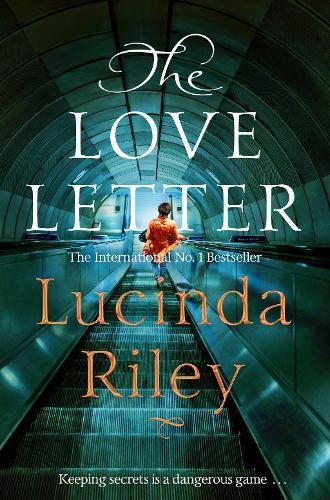
#BookReview ‘The Love Letter’ by Lucinda Riley #romance #suspense

The Love Letter by Lucinda Riley is a tightly written combination of mystery and romance unravelling the truths of a long ago love affair. Nothing and no one are as they first seem. As one secret is unveiled, so is another mystery. Lucinda RileyWhen 95-year old actor Sir James Harrison dies, journalist Joanna Haslam attends the memorial service where an incident with a frail elderly lady sets this story in motion. When a few days later Joanna receives a package from the lady, Rose, she visits her to ask questions only to find Rose has died. Is there a story here to write which will win her promotion on her tabloid newspaper? Untangling the truth from the lies turns out to be much more complicated and dangerous than Jo could ever have imagined.
Meanwhile Zoe Harrison, the actor’s grand-daughter, carer, and now facing life as a single mother with her son Jamie, receives a call from the former love of her life, Art. It is a while before the storylines of Jo and Zoe combine. The real identity of Art remains secret for quite a while though I had guessed before the reveal. Jo meanwhile has little luck in love and, after past betrayals, has difficulty trusting. There is a fully coloured-in cast of supporting characters – just enough, not too many – including Jo’s editor Alec and childhood friend Simon. Needless to say, everyone is pulled into the plot by the end.
About two-thirds of the way through what I thought was the plot solution turned out to be wrong and there was still a way to go. Although a bit confusing in parts as the intricate story flits from London to Ireland and France, I thoroughly enjoyed the spy element and the theatrical musical background of Sir James plus two good female leads in Jo and Zoe. More than just a romance, even if the plot gets slightly silly by the end. Definitely a page turner, I read it in two days on holiday.

Read my reviews of the first six novels in Lucinda Riley’s ‘Seven Sisters’ series:-
THE SEVEN SISTERS #1SEVENSISTERS
THE STORM SISTER #2SEVENSISTERS
THE SHADOW SISTER #3SEVENSISTERS
THE PEARL SISTER #4SEVENSISTERS
THE MOON SISTER #5SEVENSISTERS
THE SUN SISTER #6SEVENSISTERS
THE MISSING SISTER #7SEVENSISTERS

… plus my reviews of these standalone novels, also by Lucinda Riley:-
THE BUTTERFLY ROOM
THE GIRL ON THE CLIFF

If you like this, try:-
Vanishing Acts’ by Jodi Picoult
The House at the Edge of the World’ by Julia Rochester
Angel’ by Elizabeth Taylor

And if you’d like to tweet a link to THIS post, here’s my suggested tweet:
#BookReview THE LOVE LETTER by Lucinda Riley https://wp.me/p5gEM4-3xJ via @SandraDanby

#BookReview ‘Our Friends in Berlin’ by Anthony Quinn #WW2

Our Friends in Berlin by Anthony Quinn tells a story of London in World War Two seldom told. It is a spy novel but not a thriller. It focuses on the individuals concerned and has a deceptive pace which means the threats, when they come, are more startling. Jack Hoste is not who he seems to be. He is not a tax inspector; he is not looking for a wife. He is a special agent who tracks down Nazi spies. And at night he is an ARP warden. Anthony Quinn The juxtaposition of Hoste’s life of secrets is set nicely against that of Amy Strallen who works at the Quartermaine Marriage Bureau. Ordinary life does go on in London during the Luftwaffe bombing and Amy must match clients together, a matter of instinct rather than calculation. In order to be matched with the right person, clients are asked to tell the truth about what they are seeking, truths which may have been disguised or hidden until now. Client requests include ‘a lady with capital preferred’ and ‘not American’. Then one day she meets a new client who seems oddly reluctant to explain what he is looking for. The client is Jack Hoste and he doesn’t want a wife, he is searching for Marita Pardoe, a suspected Nazi sympathiser and friend of Amy in the Thirties. What unfolds is a story of spying, gentle romance, betrayal, fanaticism and the life of living in a bombed city.
Jack and Amy seem to run on parallel tracks, veering towards and then away from each other, both romantically unsure, both allow the real world to get in the way. And get in the way it does, in the shape of Marita. Quinn is excellent at building characters, he makes you care for them and that’s what keeps you reading. In a time of war, decisions are often made recklessly but Jack and Amy draw back from doing this. Both are people of honour, making the secrets they must keep and the lies they must tell all the more pertinent. The nature of truth is a theme wriggling its way through every page.
Anthony Quinn is a favourite author of mine, his novels are each quite different and I will read everything he writes. I read this one quickly.

Read my reviews of these other novels also by Anthony Quinn:-
CURTAIN CALL
FREYA
HALF OF THE HUMAN RACE
MOLLY & THE CAPTAIN
THE RESCUE MAN
THE STREETS

If you like this, try:-
‘Mrs Sinclair’s Suitcase’ by Louise Walters
‘The Paying Guests’ by Sarah Waters
‘The Heat of the Day’ by Elizabeth Bowen

And if you’d like to tweet a link to THIS post, here’s my suggested tweet:
#BookReview OUR FRIENDS IN BERLIN by Anthony Quinn https://wp.me/p5gEM4-3pl via @SandraDanby

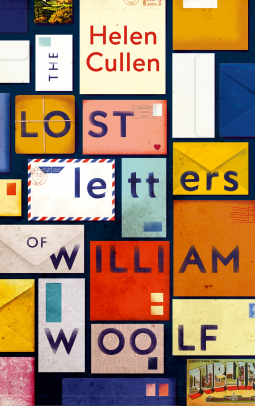
#BookReview ‘The Lost Letters of William Woolf’ by Helen Cullen @wordsofhelen #romance

I admit to loving the premise of this book when I first heard about it. A Dead Letter Depot where researchers reunite lost letters with senders and recipients. The Lost Letters of William Woolf by Helen Cullen left me wishing for more. It promised to be a novel about letters and mystery and turned into one focussed on a struggling marriage, which was not what I expected. Helen CullenWilliam’s marriage to Clare has gone stale and to avoid confronting what must change, he becomes obsessed by his work at the Dead Letter Depot and in particular the letters from someone called Winter addressed to ‘My Great Love’. In his vulnerable state, William begins to imagine that he may be that person and sets out to find her. Interspersed with this task we see William correctly fulfil his role, taking a lost fossil to the correct museum for example.
I switched between liking the character of William with being frustrated at his unrealistic romanticism, and could understand Clare’s frustrations. Ditto, she seemed impatient and too inclined to throw stones in a glasshouse. Clearly they were not communicating, ironic in a book about writing letters, and neither completely held my sympathy.
So what kept me reading? The lost letters, the mystery of Winter’s identity and to whom she was writing. And there lies one disappointment: the solution to Winter’s was such an anti-climax I had to flick back through the book to find an earlier reference in order to appreciate the revelation. I had two other disappointments. As much as I loved the concept of the Dead Letter Depot, a small voice in my head kept saying: it isn’t real, it wouldn’t get funding, it should be one man at a desk not a department with enough staff or budget for a Fancy Dress Fundraiser, and shouldn’t the lost letters be old not recently posted. I was also unclear of the timeline of the story. William and Clare feel like a 21st century couple living in the 1980s, pre-mobiles, pre-tablets. Something jarred and it would not go away.
This novel could have been so much more if there was less about the fragile relationship between William and Clare and more about the Dead Letter Depot, William’s fellow workers and the cases they worked on. But it is nicely written and if you are looking for an easy-to-read romance for your holiday, you will probably love it.

If you like this, try:-
‘Butterfly Barn’ by Karen Power
‘Forever Fredless’ by Suzy Turner
‘Girl in Trouble’ by Rhoda Baxter

And if you’d like to tweet a link to THIS post, here’s my suggested tweet:
#BookReview THE LOST LETTERS OF WILLIAM WOOLF by Helen Cullen @wordsofhelen https://wp.me/p5gEM4-3oH via @SandraDanby

A poem to read in the bath… ‘Along the field as we came by’

Best known for A Shropshire Lad, the poems of AE Housman reflect the dooms and disappointments of youth in the English countryside. Popular throughout the Victorian and Edwardian periods running up to the Great War, this two stanza poem by Housman transitions from first romantic love to death and grief, followed by hope and new love. It was his simplicity of style that appealed, and his nostalgic nature settings.

Here is the first verse.

‘Along the field as we came by
A year ago, my love and I,
The aspen over stile and stone
Was talking to itself alone.
‘Oh, who are these that kiss and pass?
A country lover and his lass;
Two lovers looking to be wed;
And time shall put them both to bed,
But she shall lie with earth above,
And he beside another love.’


‘The Picador Book of Funeral Poems’ ed. by Don Paterson [UK: Picador]

Read these other excerpts, and perhaps find a new poet to love:-
‘Cloughton Wyke I’ by John Wedgwood Clarke
‘Elegy’ by Carol Ann Duffy
‘Sometimes and After’ by Hilda Doolittle

And if you’d like to tweet a link to THIS post, here’s my suggested tweet:
A #poem to read in the bath: ‘Along the field as we came by’ by AE Housman https://wp.me/p5gEM4-3dN via @SandraDanby

#BookReview ‘The Tea Planter’s Wife’ by @DinahJefferies #romance

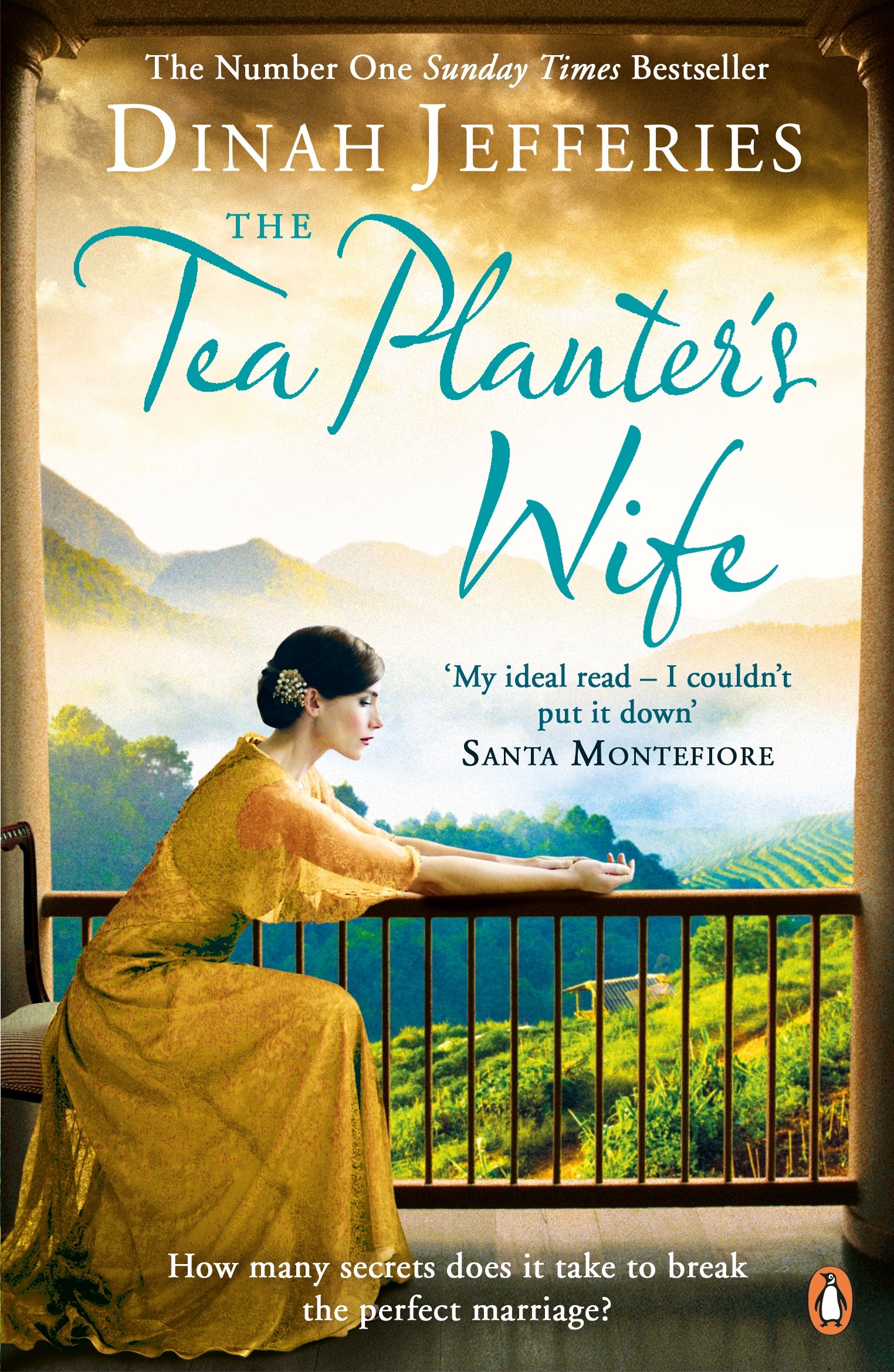
In Ceylon, between the First and Second World Wars, pre-Independence, a young wife arrives from England to join her new husband on his tea plantation. The Tea Planter’s Wife by Dinah Jefferies is a portrayal of an island riven by racial differences, a marriage riven by an inability to be honest, concluding that in the end skin colour should not matter. Dinah JefferiesAs her ship from England docks in Colombo, Gwen Hooper feels faint and is helped by a charming dark-skinned man. This is our introduction to Savi Ravasinghe, a pivotal character, a Sinhalese portrait painter who paints the rich in Ceylon, England and America. At this first meeting, Gwen demonstrates her naivety of racial tensions between Ceylon’s native Sinhalese population and the Tamil workers brought to the island by the British tea planters to work on the plantations. Soon after, trying to help an injured worker, she tramples over old sensitivities and the Raj way of doing things. I found Gwen both fascinating and a little irritating. The story is told totally from her viewpoint and, for me, her husband Laurence is rather remote. When Gwen gives birth to twins, the first, a boy, is christened Hugh. The second is a dark-skinned girl. In fear of accusations of infidelity with Savi, and rejection by her husband, Gwen panics. Her ayah Naveena takes the child to be cared for in a nearby village. Conveniently, the birth took place with only the ayah present so secrecy is assured. But Gwen lives on, haunted by her lies to her husband and her failings to her daughter.
This story hangs on the premise that Gwen feels unable to question her husband about the death of his first wife and child. When we finally get the answer in the last few pages, it seems obvious. Except of course the book is set in the late 1920s early 1930s so though obvious to a modern reader, it would not be widely known or understood at that time. To say more would give away the plot. This aside, I enjoyed this fragrant tale of the Hooper tea plantation, the difficulties faced after the Wall Street Crash, the changing times, the fashions and foods. There is a particularly unlikeable sister-in-law Verity, American vamp Christina, and bright and charming cousin-from-home Fran. The story felt alive in Ceylon. Jefferies cultivates a believable world from another time w ith the scents of cinnamon, sandalwood and jasmine combined with bullock dung, grease and rotting fish, servants dressed in white, and glamorous balls danced to the music of jazz. In contrast the short section in New York when Laurence and Gwen meet bankers and advertising men to launch the Hoopers Tea brand, seems remote and it was a relief to return to the lushness and complications of Ceylon.
CLICK HERE TO READ MORE ABOUT THIS BOOK

And here are my reviews of some of Dinah Jefferies’ other novels:-
DAUGHTERS OF WAR [#1 DaughtersOfWar]
THE HIDDEN PALACE [#2 DaughtersOfWar]

And these standalone novels:-
THE SAPPHIRE WIDOW
THE TUSCAN CONTESSA

If you like this, try these:-
‘The Gift of Rain’ by Tan Twan Eng
‘A Mother’s Secret’ by Renita d’Silva
‘The Garden of Evening Mists’ by Tan Twan Eng

And if you’d like to tweet a link to THIS post, here’s my suggested tweet:
#BookReviewTHE TEA PLANTER’S WIFE by @DinahJefferies http://wp.me/p5gEM4-2Rh via @SandraDanby