Tag Archives: tracy chevalier

#BookReview ‘The Glassmaker’ by @Tracy_Chevalier #historical #Venice

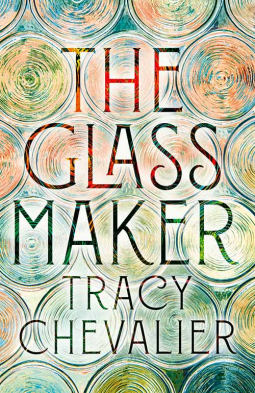
Enthralling from the first page to the last, The Glassmaker by Tracy Chevalier is by far the best novel I’ve read so far this year. It’s a heady mixture of beautiful glass, Venice in rich times and poor, passion, jealousy and intense competition, focusing on Orsola Rosso and her glass-making family on Murano island within the Venice lagoon through the centuries to the present day. Tracy ChevalierChevalier introduces us to the idea of time-skipping in her brief introduction. ‘The City of Water runs by its own clock. Venice and its neighbouring islands have always felt frozen in time – and perhaps they are.’ And so we follow the same family across six hundred years. In the first chapter in 1494 we meet nine-year old Orsola; this is her story, told in leaps and skips across the centuries. The second instalment of Orsola’s life is in 1574 when she is eighteen years old. Those close to her have aged similarly, only Venice is at once the same and different. Its an ingenious way to tell the story of the Rosso family, the ups and downs of the glassmaking business, their loves and losses, the wars and disease, all set within the framework of Venice and of Murano glass.
When Maestro Lorenzo Rosso dies, Orsola’s eldest brother Marco must take charge of the family business but he is impulsive and designs flamboyant impractical pieces. When contracts are lost and Marco is in his cups, Orsola learns the art of glass bead making. The business of glassmaking is always kept within the immediate family, different families have different specialities, and so matches are made for the sons and daughters of maestros according to the skill or wealth of the incomer. Orsola knows she must marry one day. Her mother and brother’s selection of the man to be her husband is pragmatic, it turns the direction of the story and influences everything that follows.
Life is lived in a bubble on Murano island; loyalties are intense but so is hatred and rivalry. While most women are mutually supportive, others are jealous and ambitious. Murano families rarely go to Venice, Venetians don’t go to Murano. None of them go to the mainland, terraferma. Above all for these families who live close to the bread line, security of employment and supply of food for the family is the primary concern. We follow the Rossos through feast and famine, war, plague, flood and Covid.
So many of Chevalier’s novels are based upon a specific craft or skill – art in The Girl with a Pearl Earring, embroidery in A Single Thread, tapestry weaving in The Lady and the Unicorn, fossil-hunting in Remarkable Creatures. The Glassmaker is another homage to skilled craftsmen who create beautiful objects that last across time.
A magical story, beautifully written. And what a gorgeous cover!

Read my reviews of other novels by Tracy Chevalier:-
A SINGLE THREAD
AT THE EDGE OF THE ORCHARD
NEW BOY
THE LAST RUNAWAY

If you like this, try:-
Disobedient’ by Elizabeth Fremantle
How to be Both’ by Ali Smith
Nat Tate: an American Artist 1928-1960’ by William Boyd

And if you’d like to tweet a link to THIS post, here’s my suggested tweet:
#BookReview THE GLASSMAKER by @Tracy_Chevalier https://wp.me/p2ZHJe-7xg via @SandraDanby

COMING SOON… THE NEXT BOOK I REVIEW WILL BE:- Victoria Hislop
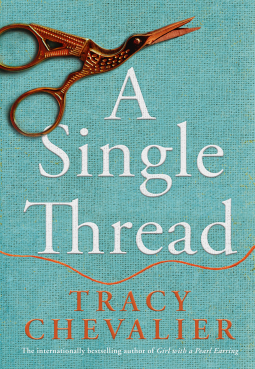
#BookReview ‘A Single Thread’ by Tracy Chevalier #historical

Winchester in 1932 is the setting for Tracy Chevalier’s latest novel, A Single Thread. Chevalier is the most reliable novelist I know, time and again she writes books I grow to love and to re-read. She is the true example of an iceberg novelist. The depth and detail of her research is invisible, hidden below the surface of the written word, but it is there nonetheless informing every sentence so the reader is confident that the description of various embroidery stitches is accurate. Chevalier has written about fossil hunters, weavers, runaway slaves, orchardists and a famous Dutch painter. In A Single Thread the story involves Winchester Cathedral, bell ringing and embroidery. Tracy ChevalierViolet Speedwell escapes her mother’s house in Southampton by getting a transfer to work in the Winchester office. Her mother is an emotional bully and Violet is desperate to get away, but not expecting it to be quite so difficult to survive alone on a typist’s salary. Lonely, desperate to make a success of her move, Violet looks for something to occupy her time so she does not have to sit with the other spinsters in the drawing room of her boarding house. One day she steps into the cathedral and finds her way blocked by an officious woman. Today, it is explained, is the Presentation of the Embroideries. Violet joins the broderers stitching kneelers and cushions for the hard benches, and meets two women who will be influential in her story; fellow borderer Gilda Hill, and genius embroidery designer Louisa Pesel.
Chevalier draws a picture of an English city in the years after the Great War, as families still grieve for their lost ones and women have to dance together for the shortage of male partners. And whilst the last war cannot be escaped, the shadow of fascism lurks in Europe. Violet is a surplus woman, her brother and fiancé killed in the war, but she rebels against the idea of devoting the rest of her life to caring for her bitter mother. Hence the move to Winchester. There she finds employment, friendship and, possibly, love. Both activities described in detail – the embroidery and the bell ringing – are detailed, complex and build slowly, layer on layer, each preceding stitch or note needing to be exact before the next one is attempted. This is reflected in Violet’s own life; only when she makes peace with her past, her mother’s grief for her lost son George, Violet’s own grief for her fiancé Laurence, the mind-numbing boredom of her job, can she move on to the next layer of her life.
Like all Chevalier’s novels, this is a thoughtful read about a time of great change involving women’s emancipation and independence, where women frown on other women who act against convention. If you like fast-moving stories then this may not be for you. I thought it was delightful and read it quickly, suspecting how it may end and – almost – being correct. But not quite.

Read my reviews of Tracy Chevalier’s other novels:-
AT THE EDGE OF THE ORCHARD
NEW BOY
THE GLASSMAKER
THE LAST RUNAWAY

If you like this, try:-
After the Party’ by Cressida Connolly
These Dividing Walls’ by Fran Cooper
Smash All the Windows’ by Jane Davies

And if you’d like to tweet a link to THIS post, here’s my suggested tweet:
#BookReview A SINGLE THREAD by https://wp.me/p5gEM4-40S via @SandraDanby

#BookReview ‘New Boy’ by @Tracy_Chevalier #contemporary #Othello

When she arrives at school one day, Dee notices the new boy before anyone else and forsees he will have an impact on the world she lives in. Little does she know. This is Washington DC in the 1970s. A new black boy is starting his first day at an all-white school. New Boy: Othello Retold is not the usual novel you expect from Tracy Chevalier. Tracy ChevalierPart of the Hogarth Shakespeare collection of novels by contemporary writers re-telling Shakespeare’s most famous plays, it is thought-provoking, ambitious, but not totally successful. Modernising such a well-known classic drama is always going to be problematic, with readers who love or hate it. Othello, possibly Shakespeare’s most political of plays, is about love, jealousy, sexual bullying and manipulation. Difficult subjects for a school. Some reviewers think this book should be marketed to adolescents but for me, the novel’s flaw lies in its timeframe. The action takes place over one school day so the arrival of Osei and his relationship with Dee charges from flirting, friendship, commitment to caressing, whispering and hurtful jealousy between the hours of nine in the morning and four-ish in the afternoon. There is simply too much to cram into one day. I had less of a problem with the arc from flirting to jealousy, remembering the intense emotions of being pre-adolescent. However my perception of the world in which the story is set was not helped as, being English, I wasn’t aware that the top year of grade school means Dee, Osei, Ian and Mimi are 11-years old. I thought they were older.
How different it would have been to set it across Osei’s first week at school, allowing space for each character to be explored. The nastiness of bully Ian could be explored in depth, instead of passing references to his brothers whose examples of extortion he imitates, and his father who beats Ian for swearing. ‘His father had taken his belt to him early on to make clear that swearing was his domain, not his son’s.’ There is a deeper tale of manipulation & bullying trying to get out. But New Boy is shorter, at 192 pages, compared with Chevalier’s most recent novels – At the Edge of the Orchard, 305 pages; The Last Runaway, 353 pages – so no wonder the story feels constricted.

Read my reviews of Tracy Chevalier’s other novels:-
A SINGLE THREAD
AT THE EDGE OF THE ORCHARD
THE GLASSMAKER
THE LAST RUNAWAY

If you like this, try:-
‘Vinegar Girl: The Taming of the Shrew Retold’ by Anne Tyler [also part of the Hogarth Shakespeare series]
‘Foxlowe’ by Eleanor Wasserberg
‘The Lightning Tree’ By Emily Woof

And if you’d like to tweet a link to THIS post, here’s my suggested tweet:
#BookReview NEW BOY by @Tracy_Chevalier via @SandraDanby http://wp.me/p5gEM4-2JC

#BookReview ‘At the Edge of the Orchard’ by @Tracy_Chevalier #historical

Tracy Chevalier is a ‘must buy’ author for me and At the Edge of the Orchard does not disappoint. It is a story about roots – of family and trees – about the pioneers who populated built America’s mid-west and west coast, battling swamp and mountains. Most importantly it is about apples. Tracy ChevalierThe scent of the fruit imbues every page. But this is not a romantic story. The Goodenough family live an at-times brutal life as they try to establish an apple orchard in Ohio’s Black Swamp in 1838. Love them or hate them, the apples affect the direction of their lives.
The story started slowly for me as we hear the family’s daily life told by mother Sadie and father James. The two are so antagonistic that you wonder how they ever married. They battle the elements, each other and Sadie’s need for applejack, to put food in the mouths of their surviving children. In winter they wade through mud, in summer they battle swamp fever. Sadie is an almost completely unsympathetic character, hiding in a bottle while her husband hides with his apples. The children, if they survive, are adults before their time.
The story really took off for me when we hear what happens to Robert, the youngest son, who one day simply walks away from the farm. Fifteen years later he is an itinerant worker on boats and even in the Gold Rush, before a chance meeting in California with a plant collector [the real William Lobb] changes his life. He writes home to the family in the Black Swamp, but hears nothing. Is his family dead? Why did he really leave? Can Robert leave behind the apple legacy and become his own man? Will he ever shake off memories of his difficult upbringing and forge close relationships himself? Having seen the Californian sequoias which Robert discovers, I loved the second half of this book.

Read my reviews of Tracy Chevalier’s other novels:-
A SINGLE THREAD
NEW BOY
THE GLASSMAKER
THE LAST RUNAWAY

If you like this, try:-
‘The Knife with the Ivory Handle’ by Cynthia Bruchman
‘If I Knew you were going to be this Beautiful, I never would have let you go’ by Judy Chicurel
‘Time will Darken It’ by William Maxwell

And if you’d like to tweet a link to THIS post, here’s my suggested tweet:
#BookReview AT THE EDGE OF THE ORCHARD by @Tracy_Chevalier via @SandraDanby http://wp.me/p5gEM4-2dY

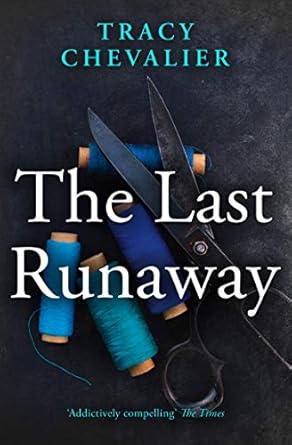
#BookReview ‘The Last Runaway’ by @Tracy_Chevalier #historical

Tracy Chevalier is so skilled at getting under the skin of the protagonist in a specific period whether it’s a 19th century fossil collector or a 15th century Belgian weaver, you always believe her. Honor Bright is a real person from page 1 of The Last Runaway and you are rooting for her. Tracy ChevalierThe book tackles a difficult subject: the rights and wrongs of helping escaping slaves, and the moral issue this poses for Ohio’s Quakers. Honor struggles to understand this sometimes frightening new country with its huge skies and geometrical roads, forthright people and different social rules. Even the air seems strange. “I feel when I am in it as if the air around me has shifted and is not the same air I breathed and moved in back in England, but is some other substance,” she writes to her parents.
Chevalier does her research thoroughly, but feels no need to wave the depth of her research in her reader’s face. Instead it informs every simple description. Woven throughout the book is Honor’s sewing of quilts. Even this is different in Ohio where Honor’s calm nature and precise sewing is admired by the local hat-wearing ladies, but her needle workmanship is deemed overly exact for the local Quaker ladies who prefer to quickly sew appliqué quilts rather than take time to plan traditional patchwork designs.
Strong women play a key role in the book. Honor is a strong character, though perhaps she does not know it. Belle Mills, the local milliner is strong too. Honor describes Belle, “If women were meant to look like doves these days, Belle resembled a buzzard.” The quilt Honor most admires is owned and made by Mrs Reed, a small black woman who decorates her hat with fresh wildflowers.

Read my reviews of Tracy Chevalier’s other novels:-
A SINGLE THREAD
AT THE EDGE OF THE ORCHARD
NEW BOY
THE GLASSMAKER

If you like this, try:-
‘The Signature of All Things’ by Elizabeth Gilbert
‘The Knife with the Ivory Handle’ by Cynthia Bruchman
‘Summertime’ by Vanessa Lafaye

And if you’d like to tweet a link to THIS post, here’s my suggested tweet:
#BookReview THE LAST RUNAWAY by @Tracy_Chevalier via @SandraDanby https://wp.me/p2ZHJe-1iN