Tag Archives: women’s fiction

A poem to read in the bath… ‘What I Learned From My Mother’ by Julia Kasdorf #poetry

Written in 1992 by American poet Julia Kasdorf, What I Learned From My Mother is a poem that crosses time, languages, cultures and continents. Its message is familiar to all women. The rituals of death and grieving, of condolence, of a kind word, flowers and chocolate cake and the blessing of your presence. Julia Kasdorf

This poem is subject to copyright restrictions. Please search for the full poem in an anthology or at your local library.

‘What I Learned From My Mother’

I learned from my mother how to love
the living, to have plenty of vases on hand
in case you have to rush to the hospital
with peonies cut from the lawn, black ants
still stuck to the buds. I learned to save jars
large enough to hold fruit salad for a whole
grieving household, to cube home-canned pears
and peaches, to slice through maroon grape skins
and click out the sexual seeds with a knife point.

Julia KasdorfBUY THE BOOK

Read these other excerpts and find a new poet to love:-
‘Invictus’ by WE Henley 
Runaways’ by Daniela Nunnari
Valediction’ by Seamus Heaney 

And if you’d like to tweet a link to THIS post, here’s my suggested tweet:
A #poem to read in the bath: ‘What I Learned From My Mother’ by Julia Kasdorf  https://wp.me/p5gEM4-4ch via @SandraDanby

#BookReview ‘Charlotte Brontë A Life’ by Claire Harman #biography

How did Charlotte Brontë create the character of Jane Eyre? Was Villette really based on a doomed love affair in Brussels? How much of the real author is in these novels? If you have read Charlotte Brontë’s books, you will have asked yourself these questions. The biography Charlotte Brontë: A Life by Claire Harman provides some fascinating answers. Claire HarmanThis is the first biography of Brontë I have read and I wish I had read it sooner. Harman tells the enthralling story of the family whose losses, grief, hardship, isolation and disappointments populate the novels of the three sisters – Charlotte, Emily and Anne. It is impossible to write about Charlotte without writing about the family, and particularly about Emily, Anne and brother Branwell. Everyone knows the headline facts about the Brontës – Haworth parsonage, mother and siblings dying, Branwell’s addiction, and the imaginary kingdoms of Angria and Dondal in which the children lose themselves. But Harman makes the history accessible, telling the life of Charlotte in chronological order starting briefly with her father Patrick.
There are clear references to real life appearing in the novels and Harman casts light on the writing process of Charlotte and her sisters. For a novelist, this is required reading. Some of Charlotte’s experiences written about in letters appear directly in her novels, along with paragraphs lifted from journals and lines and passages lifted from works earlier abandoned. Harman extensively quotes Elizabeth Gaskell – who wrote the first biography of Charlotte Brontë published in 1857, based largely on Charlotte’ letters sent to her friend Ellen Nussey – and Charlotte’s correspondence with friends and her London publisher.
It is a tragic story but Harman is never over-sentimental. She is excellent at pairing characters, incidents and emotions in the novels with Charlotte’s real life.
A must read for anyone who is a fan of the Brontë novels.

If you like this, try:-
The Girl at the Window’ by Rowan Coleman
Miss Austen’ by Gill Hornby
‘The Vanished Bride’ by Bella Ellis #1BronteMysteries

And if you’d like to tweet a link to THIS post, here’s my suggested tweet:
#BookRreview CHARLOTTE BRONTË: A LIFE by Claire Harman https://wp.me/p5gEM4-3Xi via @SandraDanby

#BookReview ‘Miss Benson’s Beetle’ by Rachel Joyce #adventure

What an uplifting read is Miss Benson’s Beetle by Rachel Joyce, an author who never fails to deliver a read that is both thoughtful and chuckle-out-loud. It is a tale of failure, friendship, the spirit of adventure and never-say-die. Above all it is a story of not giving up, never allowing yourself to be defeated. Rachel Joyce Margery Benson has never fit in, never married. It is 1950 and she is a teacher at a girls’ school, mocked and ridiculed by pupils, never liked by colleagues. Alone now after the death of her aunts who raised her after the death of her parents, she knows she lacks self-worth but doesn’t know how to change things. The one thing that gives her pleasure is remembering time spent as a child with her father who encouraged her to read. Her favourite book was Incredible Creatures, an illustrated guide to extinct and ‘never found’ animals. Margery fell in love with a gold beetle suspected to be living on the Pacific island of New Caledonia.
A sequence of events sets the middle-aged Margery on an ocean liner bound for Australia in search of both the beetle and a purpose for her life. After interviewing and rejecting three unsuitable people for the job of her assistant, Margery is resigned to travelling alone. Until she is joined at the last minute by probably the most unsuitable of the three applicants, Enid Pretty. ‘Her hair was a stiff puff with the perky hat pinned on top; about as useful in terms of sun protection as a beer mat on her head.’ Unbeknown to both women, they are being followed by someone else. And unbeknown to Margery, Enid has another reason for wanting to leave the country in a hurry.
I read this at a pace as the women negotiate prejudice, snobbishness, barriers and phobias. Joyce doesn’t spare the at times graphic detail of two unsuitable women on a tropical island facing cyclones, eels, hunger and illness, trekking through the jungle, in search of a beetle that probably doesn’t exist.
A joyful book.
CLICK HERE TO READ MORE ABOUT THIS BOOK

Read my reviews of these other novels by Rachel Joyce:-
MAUREEN FRY AND THE ANGEL OF THE NORTH
PERFECT
THE LOVE SONG OF MISS QUEENIE HENNESSY

And read here the first paragraph of THE UNLIKELY PILGRIMAGE OF HAROLD FRY

If you like this, try:-
The Signature of All Things’ by Elizabeth Gilbert
Doppler’ by Erlend Loe
Highland Fling’ by Nancy Mitford

And if you’d like to tweet a link to THIS post, here’s my suggested tweet:
#BookReview MISS BENSON’S BEETLE by Rachel Joyce https://wp.me/p5gEM4-4UW via @SandraDanby

#BookReview ‘The Distance Between Us’ by Maggie O’Farrell #contemporary

Two strangers, both with troubled personal lives, are thousands of miles apart. The Distance Between Us by Maggie O’Farrell is about Stella in London and Jake in Hong Kong and how these two people so far distant, geographically and emotionally, can come together. This novel is basically a romance with two layers of mystery intertwined. Maggie O’FarrellIt starts at Chinese New Year when Jake is caught in a horrendous crowd crush with his girlfriend Mel and her friend Lucy. Mel is badly injured, Lucy is dead. When a doctor tells Jake that Mel will not live through the night, he agrees to her wish to marry.
In London, Stella is walking home across Waterloo Bridge when she sees a solitary figure walking towards her, a red-haired man. The sight of him triggers a flight instinct and she flees home to Scotland. Not to her family in Edinburgh and Musselburgh, but to work in a remote country hotel. She avoids the telephone calls from her sister Nina. The truth behind Stella’s panic and the significance of the red-haired man is a long time coming, too long really.
In Hong Kong, Mel survives and Jake travels to the UK with her to stay with her family. Jake thinks this is a visit, planning to return to his job in Hong Kong as a film production assistant. But Mel wants a white wedding. Saying he wants to travel to Scotland to research the identity of his father, he was raised in Hong Kong by his British mother, Jake heads north in search of a village called Kildoune. His mother gave him this surname, named after the father he has never known. Kildoune, it turns out, is not a village but a hotel. The hotel where Stella now works. And so the two storylines come together. As with any romance, the two main characters come together, step away, and dance around each other as Stella’s history is unveiled.
A note about the chapter-less structure. The storyline skips back and forth from viewpoint to viewpoint, present day to past, so quickly I felt dizzy at times. It was confusing for the first third or so of the book and I wished for conventional chapters, after that it remained mildly irritating.
The Distance Between Us is O’Farrell’s third novel but it feels more like an earlier novel, perhaps written before her successful debut After You’d Gone. The storyline of Jake’s hunt for his father is left unfinished; the character development of Nina is thin which makes her behaviour as an adult difficult to understand; and I lost track of the family histories of both Jake and Stella with parents, grandparents and friends making a total of too many characters that don’t contribute to the main narrative.
CLICK HERE TO READ MORE ABOUT THIS BOOK

Read the first paragraph of AFTER YOU’D GONE.

If you like this, try these:-
‘The Roundabout Man’ by Clare Morrall
‘Another You’ by Jane Cable
Summertime’ by Vanessa Lafaye

And if you’d like to tweet a link to THIS post, here’s my suggested tweet:
#BookReview THE DISTANCE BETWEEN US by Maggie O’Farrellhttps://wp.me/p5gEM4-3×9 via @SandraDanby

#BookReview ‘Mum & Dad’ by Joanna Trollope #familysaga

I remember reading Joanna Trollope’s novels in the Eighties – The Choir, A Village Affair, A Passionate Man, The Rector’s Wife – and loving them. Somehow, I stopped reading her and I can’t remember why. These weren’t strictly her first novels, she’d previously published a number of historical novels under the pen name Caroline Harvey. So now I come to Mum & Dad. I devoured it in a couple of days, partly because it is set in a part of Spain I know very well, and partly because Trollope is a master storyteller. Joanna TrollopeWhen her husband Gus has a stroke, Monica’s three children descend to their parents’ vineyard in Southern Spain. Gus and Monica have lived near Ronda for twenty-five years; it is their home, but they are distanced from their children who have children of their own, busy lives and marital tensions. The eldest Sebastian runs a cleaning company with his wife, Anna, who has never got on with her mother-in-law. Katie is a lawyer who, with husband Nic, must deal with a bombshell dropped by one of their three daughters at an inconvenient time. And Jake, with partner Bella and toddler Mouse, seems to deal lightly with the truth and is oddly eager to move to Spain and help out his father.
The problem is, Monica is not sure any more what she wants. She loves her house in Spain but struggles with her irascible grumpy husband; she is terrified of what his stroke will do to his personality, and to their life. Their life there seems so settled. They run the vineyard and their house with the help of Pilar and a team of Spanish workers. Gus is proud of the awards his wines have won, and Monica loves her early morning cup of tea looking at the view south to Gibraltar. But now all this is under threat. Each of the three children arrives at the vineyard with their own ideas of what is best for Monica and Gus, and for themselves. What none of them anticipate is the way long-held resentments, jealousies and misunderstandings will affect what happens next.
Trollope is a master at showing the complexities of ordinary people, the things they don’t know about themselves, and the way families inter-act by sticking with good and bad habits ingrained by time as the normal way of communicating. When something happens, like Gus’s stroke, those habits are broken. Trollope turns a magnifying glass on petty jealousies, unrealistic expectations and lies told that are bigger than they first seem. She gets under the skin of how families react to challenges, how choices made by one member of the family affect everyone else, and where responsibilities lay.
The solution found at the end is perhaps a little too easy but this is a positive story about how lack of communication and the fissures this causes over the years, can be rectified with a little forgive and forget.
You can expect to read a lot more reviews here of Joanna Trollope’s books as I starting re-read them from the beginning.
CLICK HERE TO READ MORE ABOUT THIS BOOK

Here are my reviews of other Trollope novels:-
A VILLAGE AFFAIR
THE CHOIR

If you like this, try:-
The Cheesemaker’s House’ by Jane Cable
The Language of Flowers’ by Vanessa Diffenbaugh
The Little House’ by Philippa Gregory

And if you’d like to tweet a link to THIS post, here’s my suggested tweet:
MUM & DAD by Joanna Trollope #bookreview https://wp.me/p5gEM4-4Kd via @SandraDanby

#Bookreview ‘The Lady of the Ravens’ by @joannahickson #Historical

It is England, just after the War of the Roses. The Lady of The Ravens by Joanna Hickson starts with the new Tudor King Henry VII on the throne and the country awaiting his marriage rumoured to be to Elizabeth of York, older sister of the Princes in the Tower. The marriage is intended to heal divisions between the two warring factions after Henry’s defeat of King Richard III at Bosworth Field, so allowing peace to settle on the land. But of course it is not that simple. Joanna HicksonTwenty-four year old Joan Vaux is a servant to the princess and follows her to court on her marriage to the king. Watching the childbirth experiences of Queen Elizabeth, her own sister and other women of the court marry and bear children – some dying in the process – Joan develops a phobia of childbirth. But the king requires his courtiers to be married and a husband for Joan is proposed, but the situation is complicated as while she dithers a proposal is received from an unexpected source. Joan must make her choice, a decision which echoes throughout her life.
Joan has an affinity with the ravens, starting from when as a child she first saw the ravens at the Tower of London. Their presence there is said to herald a continued royal reign; their absence means trouble. And so the birds become a bellweather for the state of the nation in a politically turbulent time in Europe. Now living in luxurious married quarters at the Tower, the adult Joan admires these clever glossy black birds; but someone does not share her view. Their nest boxes are destroyed and set on fire. Her new husband refuses to give credence to her suspicions.
Meanwhile the country’s political future is vulnerable as the Yorkist threat to regain the throne from the usurper Henry has not disappeared. As heir, young Prince Arthur grows and his betrothal to the Spanish princess approaches but this is threatened as a Yorkist pretender to the throne gains support from England’s enemies. Joan is an observer at the highest level of the court, privy to secrets, defender of ravens, confidante of the queen.
Occasional modern phraseology – toddler, doggy treats – wrenched me out of the period and off the page but the character of Joan drew me straight back. A novel for lovers of Tudor historical mysteries this is the story of one woman, her family, choices, strengths and vulnerabilities in a country riven by war but where peace is fragile and the wrong choice can mean banishment, poverty or death.
After I finished reading it, I learned that The Lady of the Ravens is the first in the Queen of the Tower series. Good!

And here’s my review of the second book in the series:-
THE QUEEN’S LADY #2QUEENSOFTHETOWER

If you like this, try:-
Girl in Hyacinth Blue’ by Diana Vreeland
The Last Hours’ by Minette Walters
The French Lesson’ by Hallie Rubenhold

And if you’d like to tweet a link to THIS post, here’s my suggested tweet:
#BookReview THE LADY OF THE RAVENS by @joannahickson https://wp.me/p5gEM4-4tP via @SandraDanby

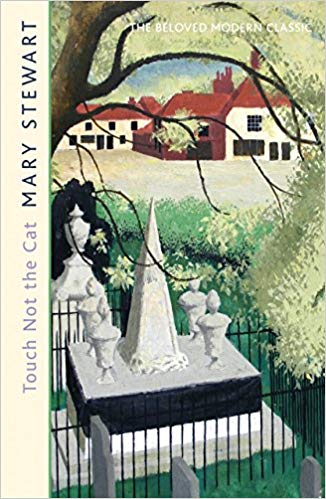
#BookReview ‘Touch Not The Cat’ by Mary Stewart #romance #suspense

Published in 1976 – around the time I was borrowing my mother’s copies of Mary Stewart’s The Moon-Spinners and My Brother Michael and reading them voraciously – I had never read Touch Not the Cat until now. Like all Stewart’s novels, there is adventure and romance with a slice of the supernatural. I can’t think of any other novels like them. The Ashley family in Touch Not the Cat own Ashley Court and have an unusual gift running through the generations: they are telepathic with each other. Mary Stewart Narrator Bryony is working at a hotel in Madeira when she receives a telepathic message from her anonymous ‘lover’ to go to her father who is staying at a clinic in Germany. When Bryony arrives her father is dead, killed in a hit-and-run road accident. His last words to a friend, who wrote them down verbatim, are a warning to Bryony. ‘Tell Bryony. The cat, it’s in the cat on the pavement. The map. The letter. In the brook. Tell Bryony. My little Bryony to be careful. Danger.’ She returns home to Ashley Court in England to look for the answers but finds surprises and danger. I found the beginning an odd introduction to the Ashley family, the house, the history, coupled with a diary excerpt at the end of each chapter, dating from the nineteenth century. The significance of this becomes clear later, but for a long while I read it without getting a lot from it. There are a lot of mysteries, lies and contradictions to unravel. Even Bryony is not certain of the identity of her telepathic lover, though she knows it must be a blood relative so guesses it is one of her three cousins; twins Ellory and James, or their younger brother Francis. As Bryony unravels the meaning of her father’s warning, she realises the twins are not beyond committing murder in order to steal her inheritance. Could one of them be her telepathic lover?
The title of the novel is an old Scottish motto which Stewart gives to the fictional Ashley family. The cat is relevant but I didn’t guess the significance until the very end. A well-written novel; old-fashioned in that it starts slowly and builds gradually, but deserves patience. It includes gothic features such as churchyard scenes, shadowy figures, storm and flooding; which Bryony mocks, ‘Robed nuns and ancient houses and secret passages, the paraphernalia that Jane Austen had laughed at in Northanger Abbey.’ An unusual romantic mystery that makes me want to re-read all Stewart’s books, including the Arthurian series.
CLICK HERE TO READ MORE ABOUT THIS BOOK AT AMAZON

Click the title to read my reviews of other Mary Stewart novels:-
MY BROTHER MICHAEL
THE IVY TREE
THE GABRIEL HOUNDS
THIS ROUGH MAGIC
THORNYHOLD

If you like this, try these:-
The Vanishing of Audrey Wilde’ by Eve Chase
The Wicked Cometh’ by Laura Carlin
The Last of Us’ by Rob Ewing

And if you’d like to tweet a link to THIS post, here’s my suggested tweet:
#BookReview TOUCH NOT THE CAT by Mary Stewart https://wp.me/p5gEM4-3Vc via @SandraDanby

My Porridge & Cream read @carol_warham #books #romance

Today I’m delighted to welcome romance novelist Carol Warham. Her ‘Porridge & Cream’ read is The Shell Seekers by Rosamunde Pilcher.

“The paperback cover is creased and bent and its pages are yellowing, almost looking tobacco stained. But, this well-thumbed novel [below] has been on my book shelf for about twenty years. Nothing would induce me to discard my copy of The Shell Seekers by Rosamunde Pilcher, not even the offer of a brand new copy. Carol Warham

“This lovely story sustained me through the years of family stress and trauma – all thankfully over and everyone is very happy. When life was proving too much and I needed an escape this was my ‘go to’ book.

“The story revolves around Penelope Keeling, daughter of a well-known artist, and mother of three very different children. Olivia is both tough and vulnerable, Noel is careless and ruthless. The eldest daughter, Nancy, is embittered by greed and jealousy. Penelope’s most treasured possession is her father’s painting of ‘The Shell Seekers’ which depicts her as a child. This painting is now worth a small fortune and that knowledge throws her family into disarray.

“This gentle story follows the slightly bohemian Penelope and Antonia and Danus, the young people, who become central to her life. It moves between the beautiful county of Cornwall and busy London, as each chapter is given over to the different characters whose lives are woven around her. Eventually Penelope feels she must make the decision about the painting and where it should go.

“This is a novel, which I could escape into and gave me many hugs.”
BUY
Carol Warham’s Bio
Writing has been Carol’s love since childhood. She started by making small comics for her dolls, progressed to training as a journalist for a short while. Once the family had grown up Carol settled down to writing and published short stories, poems and holiday articles. In recent years she has become a judge in the short story section for the HysteriaUK competition and also for the RNA’s romance novel of the year. These days she is very involved volunteering for the Huddersfield Literature Festival and writing her second novel. Carol lives in Yorkshire, surrounded by some beautiful countryside, which is ideal for her other passion of walking, often with a dog called Sam. This lovely area is the location for her first novel, Resolutions.

Carol Warham’s links
Facebook
Twitter
Blog
Publisher

Carol Warham’s latest book
Carol WarhamCarly Mitchell returns to the small town of Yeardon in Yorkshire almost a year after running away on her wedding day. Now she wants to try to make amends with Steve, his family, and the townspeople who had prepared a huge party to celebrate her New Year’s Eve wedding. She intends to stay only for a few days at the Resolution Hotel. However, her plans change when Steve’s father is taken ill, and she steps in to help. This also means having to deal with Steve’s antagonism since he has never forgiven her for humiliating him. A further complication comes in the form of Ben Thornton, the local doctor, to whom Carly feels an immediate attraction. They enjoy getting to know each other and falling in love, until a famous model from Ben’s past arrives in the town, and stays at the hotel. Steve attempts to get his revenge on Carly by driving a wedge between her and Ben, and by threatening to reveal what he knows about Ben’s troubled past unless Carly leaves town. The resolution lies in Carly’s hands as she struggles between wanting to flee or staying with the man she loves.
BUY
What is a ‘Porridge & Cream’ book? It’s the book you turn to when you need a familiar read, when you are tired, ill, or out-of-sorts, where you know the story and love it. Where reading it is like slipping on your oldest, scruffiest slippers after walking for miles. Where does the name ‘Porridge & Cream’ come from? Cat Deerborn is a character in Susan Hill’s ‘Simon Serrailler’ detective series. Cat is a hard-worked GP, a widow with two children and she struggles from day-to-day. One night, after a particularly difficult day, she needs something familiar to read. From her bookshelf she selects ‘Love in A Cold Climate’ by Nancy Mitford. Do you have a favourite read which you return to again and again? If so, please send me a message.

Discover the ‘Porridge & Cream’ books of these authors:-
Julie Ryan’s choice is ‘The Magus’ by John Fowles
Simon Fairfax chooses ‘Heller with a Gun’ by Louis L’Amour
Night Watch’ by Terry Pratchett is chosen by Rhoda Baxter

And if you’d like to tweet a link to THIS post, here’s my suggested tweet:
Why does romance author @carol_warham re-read THE SHELL SEEKERS by Rosamunde Pilcher? #books https://wp.me/p5gEM4-3Z7 via @SandraDanby

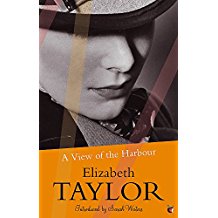
#BookReview ‘A View of the Harbour by Elizabeth Taylor #historical

Set in Newby, a small seaside town, just after the Second World War, A View of the Harbour by Elizabeth Taylor is an ensemble novel focussing on a small cast of characters. There is love and betrayal, friendship and duty, loneliness and death. Not a great deal happens, in terms of action, but the shifts in relationships in this place where everything seems to revolve around the harbour are what kept me reading. Elizabeth TaylorThere are seven key characters whose lives impact on each other in positive and negative ways. A middle-aged doctor, Robert, and his wife Beth seem to get through life without taking too much notice of each other. Their neighbour, divorcee Tory, is Beth’s best friend and Robert’s lover. A fact Beth seems unaware of, though their elder daughter Prudence knows and resents. Invalid and gossip Mrs Bracey makes hell of the lives of her two daughters, Maisie and Iris, but somehow knows everything that is happening. War widow Lily Wilson lives above the creepy, dusty Waxworks Exhibition, she used to run with her husband. Like much of Newby the museum is closed for the off-season, waiting the new life, energy and money expected by the arrival of springtime visitors.  Into this midst comes Bertram Hemingway, an out of season visitor, amateur artist, and something of a hit with the local ladies.
Each character is lonely, bereft, in a place where war is still evident; in absences, in debris washed up on the shore, in the general shabbiness of everything and everyone. Everything seems to happen slowly in Newby, like the lapping of the waves against the shore. Taylor introduces Prudence as she sits at her bedroom window looking out at her view of the harbour, “… various lights spread out over the cobblestones, the lamp above the door of this house, the doctor’s house, and the pavement shining red under the serge-draped windows of the Anchor; nearer the sea wall, lamps cast down circles of greenish light encompassed by blackness. And always there was the sound she no longer heard, since she had been hearing it from the beginning, water lapping unevenly against stone, swaying up drunkenly, baulked, broken, retreating.” Taylor uses this limited geography – plus the pub, the Braceys’ secondhand clothes shop and the museum – to show women surviving, often without men. First published in 1947, Taylor shows a community of women who get by because of, and sometimes despite, each other and in this it reminded by of Pat Barker’s Union Street, not published until 1982.
A View of the Harbour is both a bleak read and a funny one. I particularly enjoyed the letters written to Tory by her son, Edward, who is at boarding school; and the gauche awkward meetings between Prudence and her bookish beau Geoffrey.
CLICK HERE TO READ MORE ABOUT THIS BOOK AT AMAZON

Read my reviews of other books by Elizabeth Taylor:-
ANGEL
A WREATH OF ROSES
AT MRS LIPPINCOTE’S
IN A SUMMER SEASON
THE SLEEPING BEAUTY

If you like this, try:-
‘Hangover Square’ by Patrick Hamilton
‘Fred’s Funeral’ by Sandy Day
The Vanishing of Audrey Wilde’ by Eve Chase

And if you’d like to tweet a link to THIS post, here’s my suggested tweet:
#BookReview A VIEW OF THE HARBOUR by Elizabeth Taylor https://wp.me/p5gEM4-3OW via @SandraDanby

#BookReview ‘Amy Snow’ by @AuthorTracyRees #historical

When eight-year old Aurelia Vennaway runs outside to play in the snow on a January day in 1831, she finds a baby, blue, abandoned and barely alive. She takes the baby home and, despite opposition from her parents, demands they keep the baby. Aurelia really is that precocious. She names the baby Amy. Amy Snow by Tracy Rees is about two lost girls, each lost in different ways who through their friendship find strength to face the lot given to them by life at a time when women had few individual rights. Tracy ReesThis is the story of a secret, well-hidden and unveiled by a series of letters. The two girls grow up together. Aurelia lives a privileged life and Amy stays on in the large house, first as a servant and then companion to her friend. She is treated harshly by Aurelia’s parents, but is looked after by Cook and under-gardener Robin. The two girls support each other as they grow up. Amy gains an education and learns how to be a lady, but when Aurelia faints, a weak heart is diagnosed. When Aurelia dies in her early twenties, Amy is thrown out of the house where she was discovered in the snow. ‘Staying here where you were not welcome. Schemer! Vagabond! Baseborn!’ shouts Lord Vennaway.
But Aurelia has not abandoned Amy. In a package entrusted to the keeping of the local schoolteacher and given to her after the funeral, Any finds money, a green silk stole and a letter. It is the first of many. In a recreation of the treasure trails she invented for her young friend when they were children, Amy must now follow Aurelia’s trail of clues. The subterfuge is necessary, Aurelia insists in her first letter, but does not explain why. So Amy travels to London and looks for a mysterious bookshop, trying to second-guess Aurelia’s clues, unsure where the path will lead, knowing only she must find the next letter. What is the secret Aurelia is protecting and why can’t she confide in Amy while she is alive? Each letter apologises for giving no answers. The trail takes Amy from London to Twickenham, Bath and York. The nature of the secret becomes obvious well before Amy realizes it, but this doesn’t stop the urge to read to the end.
There is some lovely description of the houses and the fashions of the time, and I particularly liked Ariadne Riverthorpe who was much more than she seemed. In contrast the family in Twickenham, the Wisters, are idealised. As the story progressed, the letter device came to see rather false. Also, given the title of the book, I expected the main narrative to be about Amy’s origins so when these are briefly explained at the end, it seems like a bit of an afterthought.
CLICK HERE TO READ MORE ABOUT THIS BOOK

Click the title below to read my reviews of other novels by Tracy Rees:-
DARLING BLUE
THE ELOPEMENT
THE HOUSE AT SILVERMOOR
THE ROSE GARDEN

If you like this, try:-
‘After Leaving Mr Mackenzie’ by Jean Rhys
‘Angel’ by Elizabeth Taylor
‘The Distant Hours’ by Kate Morton

And if you’d like to tweet a link to THIS post, here’s my suggested tweet:
#BookReview AMY SNOW by @AuthorTracyRees http://wp.me/p5gEM4-2TL via @SandraDanby