Tag Archives: women’s fiction

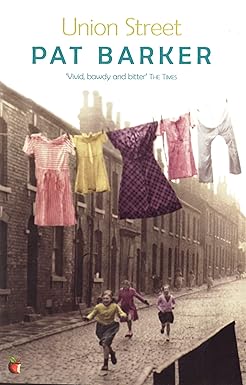
#BookReview ‘Union Street’ by Pat Barker #motherhood #women

Uncompromising, unbelievably sad and harsh, Union Street by Pat Barker does not hide the uncomfortable truths of poverty in North-East industrial England. This is the story of eight women who live on Union Street from teenager Kelly Brown to Alice Bell in her eighties and though each story is told individually, like the lives of the women, the stories interweave. An honest book about women struggling to hold life, family and home together, while retaining pride and some of their own individuality. Some succeed in this, others don’t. Pat Barker This is not a book about idealised motherhood. It is about putting bread on the table for your children no matter how you do it; including beating your husband to get his pay packet before he spends it on booze. These women are tough because they have to be; the choices are the cake factory, charring, and prostitution. Many marry young to feckless husbands because they are pregnant. This is not a light read; it features scenes of rape and backstreet abortion that somehow make the prostitution a lighter route. The language is often strong and some of the descriptions are difficult to read; but it is an honest book, bleak and realistic.
The spine throughout the book is Iris King, she appears in each story and is the one most aware of other women’s lives and offers support and a word of kindness when needed. But Iris is the toughest woman in the street. Three weeks after marrying Ted, he knocks her around because she is ironing his shirts when he gets home from work when he was expecting his supper. “After he’d gone, she sat down and took stock… When he came back she was waiting for him behind the door with the meat chopper in her hand. The blow glanced off him, though there was enough blood around to scare the pair of them stiff. It didn’t stop him hitting her again, but it did free her from the fear. She never lost her self-respect.” It is that self-respect which separates Iris from the other women.
This is the first novel by Booker Prize winner Barker, but such is the excellence of the prose

For my reviews of other Pat Barker novels, click the title below:-
ANOTHER WORLD
BLOW YOUR HOUSE DOWN
DOUBLE VISION
LIFE CLASS #1LIFECLASS
TOBY’S ROOM #2LIFECLASS
NOONDAY #3LIFECLASS
THE SILENCE OF THE GIRLS #1WOMENOFTROY
THE WOMEN OF TROY #2WOMENOFTROY
If you like this, try:-
‘Orphans of the Carnival’ by Carol Birch
‘In the Midst of Winter’ by Isabel Allende
‘These Dividing Walls’ by Fran Cooper

And if you’d like to tweet a link to THIS post, here’s my suggested tweet:
#BookReview UNION STREET by Pat Barker https://wp.me/p5gEM4-3rH via @SandraDanby

#BookReview ‘The Girl in the Painting’ by @RenitaDSilva #historical #India

When Renita D’Silva writes about India, it comes alive on the page. Her books are dual timeline family mysteries combining a modern day narrator with historical events set in India. With her latest, The Girl in the Painting, D’Silva tackles guilt, forgiveness and sati – when a husband dies, his widow burns with his body on the funeral pyre. It is her emotionally toughest novel yet and handled with sensitivity and balance. Renita D’SilvaThis is the story of three women – Margaret, Archana and Emma – pre-Great War in England, India in 1918 and England 2000. At the beginning, each woman is introduced in short chapters which made me long to dwell a while with each in turn, rather than jumping around. I was puzzled at how these three women, so different from each other, could be connected. Each has a deep sense of duty that, despite a longing to make her own decisions, is an anchor to a sometimes unwelcome, difficult, reality. Yet being impulsive and taking decisions without consideration for others often has far-reaching consequences. The early 20thcentury was a pivotal time in world history and a period of rapid change in the lives of women. Margaret’s family is separated tragically by war, Archana’s by impulsive love; both separations deeply affect these two young girls and reverberate throughout their whole lives. It is Emma in modern-day England who faces a moral and emotional decision of her own, who travels to India with her daughter to cast light on the story.
The emotional connection really kicked in for me when Margaret and Archana meet at the halfway point in the book. From that point, I didn’t want to put the book down. The parallel struggles in Margaret and Archana’s early lives, even though thousands of miles apart, demonstrate the commonality of being human. Tragedy does not strike the undeserving, the old, the unlikeable, the lazy; it strikes everyone without selection. But D’Silva’s story is not about tragedy; it is about what comes next, about taking a deep breath and moving forward.
There is an evocative portrayal of Archana’s village life, the daily grind of poverty juxtaposed with the fertility of flowers and fruits, exotic colours and birds; and the picture of slum children in Bombay who live beside the railway tracks. Neither is romanticised. I also enjoyed Margaret’s time as an artist and her transition to India, using her art as a promotional tool in the fight for Independence. The story covers a lot of history and there were times when I would have liked to immerse myself in a period, but the characters move onwards.
Given the title, The Girl in the Painting, I assumed the front cover design was of the specific painting. In fact there are a number of portraits in the novel and in my imagination none looks like the cover. So I prefer to think it is a portrait of Margaret in the garden at Charleston, welcomed by the Bloomsbury Group, free to allow her art to flourish, free to

Read my reviews of these other novels by Renita D’Silva:-
A DAUGHTER’S COURAGE
A MOTHER’S SECRET
BENEATH AN INDIAN SKY
THE ORPHAN’S GIFT
THE SPICE MAKER’S SECRET
THE WAR CHILD

If you like this, try:-
The Sapphire Widow’ by Dinah Jeffries
The Photographer’s Wife’ by Suzanne Joinson
Somewhere Inside of Happy’ by Anna McPartlin

And if you’d like to tweet a link to THIS post, here’s my suggested tweet:
#BookReview THE GIRL IN THE PAINTING by @RenitaDSilva https://wp.me/p5gEM4-3Tk via @SandraDanby

#BookReview ‘Clock Dance’ by Anne Tyler #contemporary #family

Every novel by Anne Tyler is a treat, I save them up, anticipate them. For me as a reader, she tells stories that seem ordinary but have exceptional depth, gentle stories which make me want to continue reading on into the night. For me as a writer, it is her I aim to emulate; her economy of word and scene, achieving depth without unnecessary diversion. So, to Clock Dance. Anne Tyler Told in three parts – 1967, 1977 and 2017 – this is the story of an ordinary woman, Willa Drake, to whom things outside normal life don’t happen. The three key events in her life – the disappearance of her mother, a marriage proposal, being widowed at 41 – are passive acts. Willa is not a proactive person. We meet her first as an eleven year-old, at home with her family; her emotionally-erratic mother, her passive, lovely father, her awkward younger sister Elaine. Willa takes on the motherly role, making a chocolate pudding, observing the ups and downs of her parents’ relationship with acute asides. At college, her boyfriend proposes to her and expects her to give up college and move across the country. In 2017, a confused phone call from the neighbour of her son’s ex-girlfriend sets in motion a chain of events that sees Willa gain a substitute grand-daughter but endanger her own marriage. Each time, Willa reacts to other people.
In Baltimore Willa and her second husband Peter move in with Denise who has been shot, and Denise’s nine-year-old daughter Cheryl and dog Airplane. It is an everyday story of a household, hospital visits, neighbours and community. Tyler’s observations of daily life are so spot-on, she tells the story in a way that makes it seem real, not a literary invention involving toil, plotting and rewriting. Without you noticing, time passes and people change so subtly it is impossible to put a finger on the point when the change started. Simple, complex, hugely perceptive.
This is a novel about meekly accepting your place in the world until the day arrives that you realise life is passing you by. Does Willa have the courage to find a new life? I was urging her on all the way. A 5* book for me.

Read my reviews of these other books by Anne Tyler:-
A SPOOL OF BLUE THREAD
FRENCH BRAID
LADDER OF YEARS
REDHEAD BY THE SIDE OF THE ROAD
VINEGAR GIRL

And read the first paragraphs of:-
DINNER AT THE HOMESICK RESTAURANT 
BACK WHEN WE WERE GROWN UPS

If you like this, try:-
‘Autumn’ by Ali Smith
‘The Stars are Fire’ by Anita Shreve
‘The Gustav Sonata’ by Rose Tremain

And if you’d like to tweet a link to THIS post, here’s my suggested tweet:
#BookReview CLOCK DANCE by Anne Tyler https://wp.me/p5gEM4-3J9 via @SandraDanby

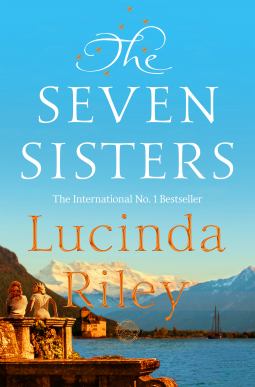
#BookReview ‘The Seven Sisters’ by Lucinda Riley #romance

In its scope, The Seven Sisters by Lucinda Riley reminds me of Eighties family mega-stories, paperbacks as thick as doorstops. This is the first in a series; the first five are already published. I recommend suspending your ‘instinct for the literal’ and throwing yourself into the world of the book. Some of the story set-up seems unrealistic – unbelievable wealth, mysterious father, beautiful adopted sisters – this is not a normal world. But I quickly became caught up in the historical story. Lucinda RileyPa Salt has died suddenly; he is the fabulously wealthy, secretive, reclusive adoptive father to six sisters whose origins are a mystery. Only when he has gone do they realise they should have asked him for information. Each of the sisters is given a clue and a letter. Also in the envelope is a triangular-shaped tile. The Seven Sisters is the story of the eldest D’Aplièse sister. Maia’s clue is a map reference that takes her to a crumbling mansion in Rio de Janeiro in Brazil where she meets an enigmatic elderly woman.
The book came alive for me with the story, eighty years earlier, of Izabela Rosa Bonifacio. Izabela, daughter of a nouveau riche coffee merchant in Rio, is facing an arranged marriage. Desperate to see more of the world before she settles down to a stifling life of marriage to a husband she doesn’t love, she persuades her father and fiancé to allow her to travel to Paris with her friend, Maria Elisa, daughter of architect Heitor da Silva Costa. This section of the novel enthralled me; the design and sculpting of the Cristo sculpture for the top of the Corvocado mountain, all based on historical fact.
I connected with Izabela in a way I didn’t with Maia. Maia uncovers the story of Izabela with the help of Brazilian author Floriano Quintelas, whose latest novel Maia has translated into French. In the course of her research, Maia must face the shadows of her own past, her regrets and shame, in order to move on. I enjoyed Izabela’s story but at the back of my mind I queried its relevance to Maia; Izabela was too old be her mother. I missed a direct connection to Maia and this frequently took me out of the world of the story.
That connection does come but as the story finished I was left with almost as many questions as at the beginning. The last chapter is devoted to the second sister, Ally, with new mysteries for the second book in the series.

Read my reviews of some of the other novels in Lucinda Riley’s ‘Seven Sisters’ series:-
THE STORM SISTER #2SEVENSISTERS
THE SHADOW SISTER #3SEVENSISTERS
THE PEARL SISTER #4SEVENSISTERS
THE MOON SISTER #5SEVENSISTERS
THE SUN SISTER #6SEVENSISTERS
THE MISSING SISTER #7SEVENSISTERS

… plus my reviews of these standalone novels, also by Lucinda Riley:-
THE BUTTERFLY ROOM
THE GIRL ON THE CLIFF
THE LOVE LETTER

If you like this, try:-
‘The Ship’ by Antonia Honeywell
‘Yuki Chan in Bronte Country’ by Mick Jackson
‘The Sapphire Widow’ by Dinah Jefferies 

And if you’d like to tweet a link to THIS post, here’s my suggested tweet:
#BookReview THE SEVEN SISTERS by Lucinda Riley https://wp.me/p5gEM4-3IB via @SandraDanby

My Porridge & Cream read: @janedavisauthor #books #literaryfiction

Today I’m delighted to welcome novelist Jane Davis. Her ‘Porridge & Cream’ read is The Prince of Tides by Pat Conroy.

“My list of favourite novels may change, but it is always topped by Pat Conroy’s, The Prince of Tides. Ignore the terrible film version – the book has everything. Family secrets, flawed characters, a doomed love affair.

“I read it for the first time many years before I contemplated writing, but it was books like this (and here I include the novels of John Irving and Michael Chabon) that must have sowed the seed.

“The first thing to say is that my choice is not your typical comfort read. The quote ‘We read to know that we are not alone’ is attributed to at least three different people. Perhaps that’s because it’s a universal truth. I find myself drawn to books about misfits and underdogs. (My latest ‘new favourite book’, Leonard and Hungry Paul by Ronan Hession, considers how gentle people survive in a world that is fast-paced and competitive.)

Jane DavisThe Prince of Tides has the power to transport the reader from the very first line.

My wound is geography. It is also my anchorage, my point of call.

“We know immediately that it is a novel about place. In fact, it’s a story where the setting is key. What unfolds in this epic and multi-layered family saga couldn’t have happened anywhere else. We know that a man is torn. Place is part of the narrator. It’s impossible for him to separate himself from it, and his family is part of its history. He is damaged, and it pains him to remain, but he cannot tear himself away.

I grew up slowly beside the tides and marshes of Colleton.

“To me, those lines are hypnotic. They seem to be saying, ‘Breathe. Pace yourself.’ Trust is established – or lost – so quickly. I can hear the narrator’s voice. He’s speaking directly to me. I don’t yet know the name Tom Wingo, but already I’m committed to accompanying him wherever his journey takes him. It is that simple.

“Because the story is told partly through conversations with Tom’s sister’s Savannah’s psychiatrist, it’s a story in which cause and effect is very much in evidence. In order to save his sister, Tom must break the promise that his mother extracted from her three children: never to reveal what happened on the island that night a man they refer to as “Callanwolde” escaped from prison. The call to action happens at a point when Tom has just learned that his wife is having an affair with a colleague, and so we meet him at what is already a low ebb. This may be a challenging read, but it’s also a story of survival, healing, honour and redemption. There is a sense that order is restored, and that is where the ‘comfort’ comes from.

“Odd though it may seem, I have never read another book by Pat Conroy. The Prince of Tides is so perfect, I’d be afraid of being disappointed. Instead, I return to it time and time again and never fail to uncover something that I’ve missed.”
Amazon UK

Jane Davis’s Bio
After her first novel Half-Truths and White Lies won an award established to find ‘the next Joanne Harris’, it took Jane a little while to work out that all she really wanted to be was a slightly shinier version of herself. Seven further novels followed, which straddle contemporary, historical, literary and women’s fiction genres, and have earned her comparisons to authors such as Kate Atkinson, Maggie O’Farrell and Jodi Picoult. Jane’s favourite description of fiction is ‘made-up truth’.

Jane Davis’s links
Website
Facebook 
Twitter
Pinterest
Get a FREE copy of her time-slip, photography-themed eBook, I Stopped Time, when you sign up to her mailing list

Jane Davis’s latest book
Jane DavisIt has taken conviction to right the wrongs.
It will take courage to learn how to live again.
For the families of the victims of the St Botolph and Old Billingsgate disaster, the undoing of a miscarriage of justice should be a cause for rejoicing. For more than thirteen years, the search for truth has eaten up everything. Marriages, families, health, careers and finances.

Finally, the coroner has ruled that the crowd did not contribute to their own deaths. Finally, now that lies have been unravelled and hypocrisies exposed, they can all get back to their lives.

If only it were that simple.
Amazon UK

What is a ‘Porridge & Cream’ book? It’s the book you turn to when you need a familiar read, when you are tired, ill, or out-of-sorts, where you know the story and love it. Where reading it is like slipping on your oldest, scruffiest slippers after walking for miles. Where does the name ‘Porridge & Cream’ come from? Cat Deerborn is a character in Susan Hill’s ‘Simon Serrailler’ detective series. Cat is a hard-worked GP, a widow with two children and she struggles from day-to-day. One night, after a particularly difficult day, she needs something familiar to read. From her bookshelf she selects ‘Love in A Cold Climate’ by Nancy Mitford. Do you have a favourite read which you return to again and again? If so, please send me a message.

Discover the ‘Porridge & Cream’ books of these authors:-
Rob V Biggs loves ‘Wind in the Willows’ by Kenneth Grahame
Linda Huber loves ‘A Cry in the Night’ by Mary Higgins Clark
Sue Moorcroft loves ‘A Town Like Alice’ by Nevil Shute

 And if you’d like to tweet a link to THIS post, here’s my suggested tweet:
Why does author @janedavisauthor re-read A PRINCE OF TIDES by PAT CONROY? #books https://wp.me/p5gEM4-3Br via @SandraDanby

A poem to read in the bath… ‘Because I could not stop for Death’

This lyrical poem by Emily Dickinson sees the poet meet Death who, as a gentleman caller, takes a leisurely carriage drive with her. It was first published posthumously under the title ‘The Chariot’ in Poems: Series 1 in 1890, the edition assembled and edited by her friends Mabel Loomis Todd and Thomas Wentworth Higginson.

Here are the first two verses.
‘Because I could not stop for Death –
He kindly stopped for me –
The Carriage held but just Ourselves –
And Immortality.

We slowly drove – He knew no haste
And I had put away
My labor and my leisure too,
For His Civility.’

The poem has since been set to music by Aaron Copland as the twelfth song of his cycle The Twelve Poems of Emily DickinsonEmily Dickinson

Emily Dickinson


‘The Picador Book of Funeral Poems’ ed. by Don Paterson [UK: Picador]

Read these other excerpts, and perhaps find a new poet to love:-
‘Happiness’ by Stephen Dunn
‘Lost Acres’ by Robert Graves
‘The Roses’ by Katherine Tempest

And if you’d like to tweet a link to THIS post, here’s my suggested tweet:
A #poem to read in the bath: ‘Because I could not stop for Death’ by Emily Dickinson https://wp.me/p5gEM4-3dG via @SandraDanby

#BookReview ‘Whistle in the Dark’ by Emma Healey #mystery #suspense

Whistle in the Dark by Emma Healey begins with an ending; a sixteen-year old girl, lost in the Peak District, has been found and is in hospital with her parents. Healey tells the story of the aftermath as Jen, Lana’s mother, tries desperately to unravel the truth of what happened to her daughter. In the face of Lana’s reluctance to speak, Jen’s desperation evolves into obsession and the story circles into myth, obfuscation and misunderstanding. For the reader, there is a lot to unravel. Emma HealeyTold entirely from Jen’s POV, by halfway through I was beginning to question Jen’s state of mind and whether she was an unreliable narrator. There is a lot of smoke and shadows in the telling of this story, interwoven with the crystals of Jen’s friend Grace, the fibs of Lana’s schoolfriend Bethany, the pragmatic questioning and Instagram comments by Jen’s mother Lily, and Jen’s fertile imagination. There were times when it felt a little like being whizzed around in a washing machine. But through it all shines Healey’s ability to draw pictures with words, “The heavy summer foliage that lined the motorway seemed to have taken on its own light, as if the sun had splintered into a thousand pieces and hung, glowing, on the trees. The whites of things, of dresses and china cups and tablecloths, was dazzling.”
I admit there were times in the final third when I just wanted the story to get on with it, to find out where Lana had been for those four missing days. I became as mystified as Jen and could understand her distraction, her inability to judge the truth of what was happening around her as Healey loads on the mysteries. Did Lana return home with an invisible friend? Or a ghost? Jen reads speculation online that something mystical had happened to Lana; she was abducted by aliens, had taken the stairs down to Hell, or stepped into a time circle. This was coupled with my feeling of indulgence on the part of the author, that some short anecdotes were included because they were interesting rather than essential. And then comes a wonderful snippy sentence that brings you back to the heart of everything; for example, when Jen is driving north, “Well, if she cried enough, Jen thought, at least she might not need to wee again for another forty miles.”
An interesting read. A study of the parental difficulties caring for a troubled teenager, where the line stands between caring and invasion of privacy, of how and when to trust a troubled adolescent and when to step in. A veritable minefield. Lana has a history of cutting and an overdose attempt before the disappearance; post-disappearance, Jen alternates between anger and frustration, and treading on eggshells. The online stalking, the shadowing on the walk to school, the listening at the bedroom door, all reinforce the lesson that a snooper often finds something unexpected, something worse, something that should remain private until revealed. A reminder that often the most simple explanation is true.
An interesting read and competent second novel, but not a compelling page-turner like Healey’s wonderful debut Elizabeth is Missing. 

And read my review of ELIZABETH IS MISSING, also by Emma Healey.

If you like this, try:-
‘Reservoir 13’ by Jon McGregor
‘Himself’ by Jess Kidd
‘Doppler’ by Erlend Loe

And if you’d like to tweet a link to THIS post, here’s my suggested tweet:
#BookReview WHISTLE IN THE DARK by Emma Healey https://wp.me/p5gEM4-3hx via @SandraDanby

First Edition: Rebecca

Never out of print, Rebecca by Daphne du Maurier is loved for its opening line: “Last night I dreamt I went to Manderley again.” It is a timeless combination of romance, jealousy, intimidation, mystery & death. First published in 1938 it was an immediate hit and sold nearly 3 million copies between 1938 and 1965. Ultimately, there are a lot of secondhand editions out there. It has been translated into Chinese, French, Italian, Japanese, Russian, German, Portugese, Spanish, Persian, Hungarian, Romanian, Polish, Greek, Latvian, Dutch and Czech. That’s quite a list. Daphne du Maurier

This first UK edition [above right] comes with a Menabilly headed letter from du Maurier which briefly discusses her Christmas and New Year, and is signed ‘Yours sincerely, Daphne du Maurier’. Rare, it is for sale [at time of going to press] by John Atkinson Books for £2,750.

The story
A naïve young woman marries wealthy older widower Maxim. When he takes her to his home, Manderley, the unnamed narrator, the young wife, learns about the first Mrs de Winter, Rebecca. Housekeeper Mrs Danvers continually tries to undermine the second Mrs de Winter, showing her contempt for the young woman, her inefficiency, her mousiness, her naivety. Believing Maxim still loves Rebecca, the new wife is encouraged by Mrs Danvers to wear a replica of one of Rebecca’s dresses to a costume ball.

The film
The best known film adaptation of Rebecca is the 1940 movie starring Laurence Olivier and Joan Fontaine. Daphne du MaurierDirected by Alfred Hitchcock, Rebecca won 11 Oscar nominations and won two – for Best Picture and Cinematogrophy. Watch the trailer here.

https://youtu.be/t3YJcW2UQiw

Daphne du MaurierVarious television adaptations include the 1979 BBC production [above] starring Jeremy Brett as Maxim, Joanna David as the second Mrs de Winter, and Anna Massey as Mrs Danvers. Watch the first episode here.

In 1997, a Carlton Television production [below] cast Joanna David’s daughter, Emilia Fox, as the second Mrs de Winter, with Charles Dance as Maxim and Diana Rigg as Mrs Danvers. Daphne du Maurier

Other editions

Read here why Rebecca is the ‘Porridge & Cream’ comfort read of novelist Jane Lambert.

Daphne du Maurier


‘Rebecca’ by Daphne du Maurier [UK: Virago]

If you like old books, check out these:-
‘Jane Eyre’ by Charlotte Bronte
‘A Passage to India’ by EM Forster
‘Watership Down’ by Richard Adams

And if you’d like to tweet a link to THIS post, here’s my suggested tweet:
First Edition: REBECCA by Daphne du Maurier #oldbooks https://wp.me/p5gEM4-39q via @SandraDanby

#BookReview ‘Vanishing Acts’ by @JodiPicoult #contemporary

This is the first book by Jodi Picoult which I have read, so I wasn’t sure what to expect. I would describe Vanishing Acts as long, intriguing, multi-layered. Is it the greatest? No, but it makes me want to read more of her books. Her multiple-perspectives mean you get a 360° view of a situation and see how different people view the same thing, something we are not always privy to in real life. Jodi PicoultDelia Hopkins lives in New Hampshire with her widowed father Andrew and her daughter Sophie. She works with her own search-and-rescue bloodhound to find missing people. She is about to marry Eric, a friend since childhood. Everything seems happy, except for strange dreams which she cannot explain. ‘I am little, and he has just finished planting a lemon tree in our backyard. I am dancing around it. I want to make lemonade, but there isn’t any fruit because the tree is just a baby. How long will it take to grow one? I ask. A while, he tells me. I sit myself down in front of it to watch. He comes over and takes my hand. Come on, grilla, he says. If we’re going to sit here that long, we’d better get something to eat.’ Fitz, a journalist, who also grew up with Delia and Eric, cannot explain the significance of the lemon tree. But the puzzles keep coming, after a policeman knocks on the door and arrests her father for kidnapping.
This is a story about repressed memory and triggered memory, the difference of which is central to the court case which is the core of this novel. It is about trust, instinct and loyalty and how sometimes the hardest thing to do is the right thing to do.
It is a long book and some sections felt over-written, a style I sometimes find with American authors; using two metaphors where one will do. But the plotting is excellent and the rope of tension pulls you mercilessly onwards. My paperback [below] is an American edition by Washington Square Press, it changes typeface for each different point of view which I found surprisingly irritating.

And read the first paragraphs of VANISHING ACTS and NINETEEN MINUTES, both by Jodi Picoult.

If you like this, try:-
‘Somewhere Inside of Happy’ by Anna McPartlin
‘Something to Hide’ by Deborah Moggach
‘Crow Blue’ by Adriana Lisboa

And if you’d like to tweet a link to THIS post, here’s my suggested tweet:
#BookReview VANISHING ACTS by @JodiPicoult via @SandraDanby http://wp.me/p5gEM4-2uE

#BookReview ‘The Last of the Greenwoods’ by Clare Morrall #contemporary

Clare Morrall is so good at writing about people on the margins. In The Last of the Greenwoods, Johnny and Nick Greenwood are estranged brothers who live separately in two abandoned, adjacent railway carriages; with shared kitchen and bathroom. They are adept at avoiding each other. Clare MorrallNick lives in Aphrodite on the right, Johnny in Demeter on the left. Aphrodite has horizontal blinds at the windows, open at a slant so someone inside can look out but no-one outside can see in. Demeter’s windows are unknowable with permanently drawn curtains. The carriages sit amidst trees and shrubs, hidden from the main road in Bromsgrove, West Midlands. They have been the brother’s world since they were boys. Until one day, into the lives of these emotionally separated but geographically close brothers comes a letter which reignites haunted memories. “The floor is vibrating under his feet, there’s a sensation of motion, as if the train has started to move. What’s happening? Is he slipping backwards, losing his place in the present and tumbling back to the past? How can this be?”
The letter is from their older sister, Debs; the sister who was murdered when the boys were children. As the brothers consider whether the letter is real, a fake, or a joke we learn more about their background via Zohra, the postwoman who delivered the letter. Zohra has a past of her own which she tries to forget. What brings together these seemingly disparate story strands? Trains? And what effects change in the lives of the Greenwoods and Zohra? Trains.
Slowly, with exquisite and often humorous detail, Morrall unravels the mysteries of the past, building a picture of these people’s lives. They are ordinary people but in telling their story she makes them extraordinary, reminding us that the life of each of us has a story to tell and that elements of life can be repetitive. “Are they doomed to repeat the same mistakes over and over again – play, replay, round and round on an endless loop?”
Running throughout is the question of verifiable identity: the woman who returns could be Deb, or Deb’s friend Bev pretending to be Debs; and who are the girls who harassed Zohra on social media, did they use their real names or not? The brothers consider how they can accept Debs, do they need evidence, DNA proof, or can they trust their instincts? And why are the two brothers not talking?
Another masterful Morrall novel.
CLICK HERE TO READ MORE ABOUT THIS BOOK AT AMAZON

Click the title to read my reviews of these other novels by Clare Morrall:-
AFTER THE BOMBING
NATURAL FLIGHTS OF THE HUMAN MIND
THE LANGUAGE OF OTHERS
THE MAN WHO DISAPPEARED
THE ROUNDABOUT MAN

Read the first paragraph of ASTONISHING SPLASHES OF COLOUR here.

If you like this, try:-
‘If I Knew You Were Going to be This Beautiful, I Never Would Have Let You Go’ by Judy Chicurel
‘The Lie of the Land’ by Amanda Craig
‘Skin Deep’ by Laura Wilkinson

And if you’d like to tweet a link to THIS post, here’s my suggested tweet:
#BookReview THE LAST OF THE GREENWOODS by Clare Morrall https://wp.me/p5gEM4-3iT via @SandraDanby