Tag Archives: World War Two

#BookReview ‘The Skylark’s Secret’ by @FionaValpy #WW2

Aultbea, a small fishing village on the shores of Loch Ewe on the west coast of Scotland, was transformed during World War Two into a Royal Navy base for the Arctic convoys. Into this true history Fiona Valpy weaves the fictional story of Flora Gordon in The Skylark’s Secret. Fiona ValpyIn 1977, Lexie Gordon returns to Loch Ewe from London after the death of her mother Flora. Lexie arrives home a single mother to baby Daisy, her West End singing career broken because of her damaged vocal chords. She feels a failure, gossiped about by the locals, seen as an outsider. Living in her mother’s cottage, she becomes curious about the father she never met and who her mother never spoke freely about.
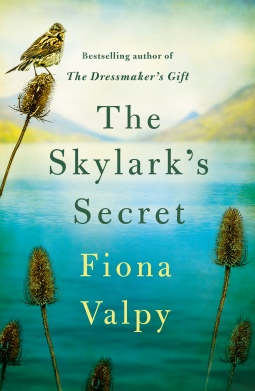
In this dual timeline story, the narrative alternates clearly between Lexie in the Eighties and Flora in 1940-1944. Flora lives with her widowed father, Iain, gamekeeper for local estate Ardtuath House, in a quiet village where the toughest enemy is the weather. Then one day a fleet of warships arrive, the first of many. Loch Ewe is to become the temporary base for the Home Fleet. As thousands of navy ratings and officers arrive, Iain and Flora hope her brother Ruaridh will be aboard one of the destroyers. The convoys are to change life by the loch forever. Flora and her two friends Bridie and Mairi enlist in the Wrens as drivers. Laird’s son Alec also returns home with an English girlfriend. When Alec admits his lifelong love for Flora, the two young people must face the disapproval of the intimidating laird. With both Alec and Ruaridh on separate ships accompanying the Arctic convoy of merchant ships sailing for Russia, Flora fears for their lives. Meanwhile, a group of evacuees arrive from Glasgow, including two ragamuffins who lodge with bossy but kind-hearted Moira Carmichael.
Valpy unravels the story of Flora’s war years, the hardships, the danger, the exhilarating moments of freedom when the two young men arrive home safe. But always on the horizon is the next convoy which must face the twin dangers of Arctic ice and marauding U-boats. In 1978, Lexie must make a place for herself and Daisy in the community which includes her mother’s old friend Bridie, Lexie’s schoolfriend Elspeth, and fisherman Davy. She feels a stranger and takes to walking the hills, remembering times with her mother, trying to find her place in the world.
This is a story of wartime courage, romantic entanglements, fear, grief and gratitude for sacrifices made. A well-researched book that shows that research with a light hand on the page, allowing the fictional story room to breathe. Excellent.

If you like this, try:-
Mrs Sinclair’s Suitcase’ by Louise Walters
The Paying Guests’ by Sarah Waters
Another You’ by Jane Cable

And if you’d like to tweet a link to THIS post, here’s my suggested tweet:
#BookReview THE SKYLARK’S SECRET by @FionaValpy https://wp.me/p5gEM4-53P via @SandraDanby

#BookReview ‘The Bird in the Bamboo Cage’ by @HazelGaynor #WW2

What an engrossing story this is if you’re looking for a world to lose yourself in, a world more horrific and frightening than we can ever imagine. A war story that is at times both traumatic and heart-warming, The Bird in the Bamboo Cage by Hazel Gaynor tells the story of a teacher and pupil interned in China during World War Two, a story often forgotten and seldom told. Hazel GaynorBased on the true story of a real school – the China Inland Mission’s Chefoo School in Yantai, Shandong province in northern China – as the Japanese army invades and school life is changed overnight. Gaynor tells her fictionalised story through the viewpoints of teacher Elspeth Kent and pupil Nancy ‘Plum’ Plummer. Elspeth is struggling to write a letter of resignation, intending to return home and join the war effort, when war arrives at the school gates. At first Chefoo School proudly continues to operate under armed guard but after the Japanese attack of Pearl Harbour in December 1941 and the entry of America into the war, the school is moved to Temple Hill internment camp and later to Weihsien. At each step, privations, hardships, hunger, threat and sexual exploitation threaten teachers, pupils and the wider camp community.
Elspeth and Plum offer different perspectives on what is happening and we see the growing friendship and respect between the two women, because Plum starts off a child and grows as a woman unable to remember her mother, unsure if she will ever see her parents again. The teachers truly are ‘in loco parentis’ when the school is relocated and the children learn to support each other, to endure hardship by recognising there is always someone worse off than you and that everyone is a person in their own right [pupils, teachers, guards, fellow internees, night soil women] with their own hopes, dreams and fears. They face hunger, theft and personal attack. Gaynor portrays the school’s protestant ethic with a light hand, instead making Elspeth Brown Owl of Chefoo’s Guides and using the Girl Guide Handbook’s mottos as a thematic skeleton. For each new challenge they meet there is a guiding motto to help them face what must be done.
I am not a lover of all ends being neatly tied and certainly this book is not perfect – chunks of time pass in brief summary paragraphs and at times the action seems delayed with detail of the school day – but Gaynor has created a world of prisoners and enemy that made me want to read on. Of course, we know how the war ended but we so want to know what happens to each pupil and teacher.
Essentially this is a novel about the strength and value of friendship and loyalty, the love that binds people together and enables them to survive horrific situations.

Read my reviews of these other novels by Hazel Gaynor:-
THE COTTINGLEY SECRET
THE LAST LIFEBOAT … and try the #FirstPara of THE LAST LIFEBOAT.

If you like this, try:-
White Chrysanthemum’ by Mary Lynn Bracht
The Translation of Love’ by Lynn Kutsukake
The Gift of Rain’ by Tan Twan Eng

And if you’d like to tweet a link to THIS post, here’s my suggested tweet:
#BookReview THE BIRD IN THE BAMBOO CAGE by @HazelGaynor https://wp.me/p5gEM4-4ZN via @SandraDanby

#BookReview ‘The Tuscan Contessa’ by @DinahJefferies #WW2

The Tuscan Contessa by Dinah Jefferies is a story of women at war where trust, between women, between strangers, is at the core of everything. Although the book’s title refers to Contessa Sofia de’ Corsi this is also the story of Italian-American Maxine, recruited by English special services to the fight against fascism in Tuscany. Once there and charged with assessing the ability and armaments of Italian partisans, Maxine she finds the fight is not only against the Germans but between Italian groups suspicious of each other. Dinah JefferiesIt is 1943 and in the exquisitely beautiful Tuscan countryside, trust is in short supply. Strangers may be spies or escaping Allied soldiers, the penalty for helping enemies has been followed by retaliation – massacres of villagers by the Nazis. Maxine, with her odd sounding Italian accent, must prove her worth if she is to do her job. She must also learn who to trust. When Maxine’s radio engineer James is wounded, he is sheltered by Sofia in her isolated castello. And so though very different characters, Maxine and Sofia find themselves on the same side; one is young, energetic and full of zeal, the other more cautious and concerned with protecting her husband’s legacy and castello. Neither can imagine the horrors they will see, and the risks they must take, before the war is ended.
The power of Jefferies’ story comes from the juxtaposition of the brutality and blood of war with the beauty of the Italian countryside. The stately villas of Sofia – Castello de’Corsi and in Florence – contribute both atmospherically and practically to the story, offering glimpses into the pre-war and wartime life, as well as hiding places and storage for contraband. And while the women hide their bottled fruit and vegetables, and knit secretly at night – jumpers and socks to keep the partisans warm throughout winters spent hidden in forests and caves – there is the uneasy feeling that some villagers continue to support the fascist cause and inform to the Germans. While Maxine goes on increasingly perilous missions with the partisans, Sofa must handle the unwelcome attention of a German officer whose smiles glint with the promise of sadism.
The book is the result of copious research and visits to locations and gives a clear and often difficult-to-read portrayal of real Tuscan villages during the German occupation. Jefferies shows the complicated moral dilemmas for Italians fighting first one enemy and then another, as the enemy hated at the beginning of the war becomes by 1943 the only hope of salvation. Every woman lives in a constant state of ‘not knowing’; not knowing who to trust, not knowing if a loved one is away fighting, injured, captured or dead. And meanwhile, daily life continues. Children are loved, babies are beget, love is declared and food is made and eaten. In the background is the gossip of reprisals and villagers killed, while in the foreground the women of Castello de’ Corsi continue to exist. As spring arrives with blue skies and beautiful wildflowers, the killing continues.
A moving story of women in wartime facing impossible odds, finding hidden courage and a dash of recklessness in order to fight the enemy. And the recognition of the line which, when crossed, means that your own life ceases to matter when the death of an enemy is preferable. Trust, between women, between strangers, is at the heart of everything.

And here are my reviews of some of Dinah Jefferies’ other novels:-
DAUGHTERS OF WAR #1DAUGHTERSOFWAR
THE HIDDEN PALACE #2DAUGHTERSOFWAR
NIGHT TRAIN TO MARRAKECH #3DAUGHTERSOFWAR

And these standalone novels:-
THE SAPPHIRE WIDOW
THE TEA PLANTER’S WIFE

If you like this, try these:-
The Burning Chambers’ by Kate Mosse
In Another Life’ by Julie Christine Johnson
The Tuscan Secret’ by Angela Petch

And if you’d like to tweet a link to THIS post, here’s my suggested tweet:
#BookReview THE TUSCAN CONTESSA by @DinahJefferies https://wp.me/p5gEM4-4Xa via @SandraDanby

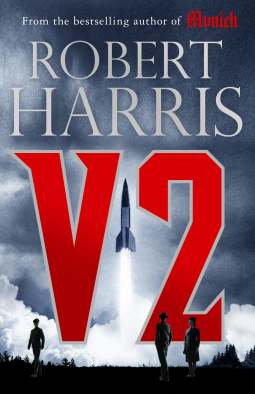
#BookReview ‘V2’ by @Robert_Harris #WW2 #thriller

Mostly written during the 2020 virus lockdown, V2 by Robert Harris is a World War Two thriller like no other I have read – and I’ve read a few. I’ve been a Harris fan since the beginning with Fatherland. V2 is different because it tells two stories – the technical development of the V2 rockets, and five days in November 1944 when the lives of a German rocket engineer and British spy are changed by this weapon. Robert HarrisHarris skilfully handles truth, fiction, engineering details and mathematical calculations, adding two fictional characters to create a page turning story. The V2 rocket is placed firmly at the centre of this book. Without it, there would be no story. Originally conceived by scientists as a space project, the V2 was a hateful weapon that inspired fear. Unlike its predecessor the V1 which could be seen and heard before it descended giving time to take cover, the V2 hit without warning. It was also highly unreliable, going off-target, exploding at launch, crashing at sea, killing the people who built it – slave labourers – and launch crews.
The story opens as rocket engineer Dr Graf is trying to concentrate on pre-launch missile checks on the Dutch coast at Scheveningen. He is interrupted by the arrival of a Nazi officer. The rocket is launched. In London, WAAF officer Kay Caton-Walsh emerges from a bathroom wrapped in a towel. Her assignation with her married lover ends when the V2 lands on their building. Harris’s tightly plotted story sees Kay moved from London-based photo reconnaissance, studying launch sites of the rockets, to Mechelen in Belgium. There she and a team of female mathematicians calculate the flight trajectory of the rocket, tracking it backwards to identify the launch site for Allied fighter-bombers to target. As Dr Graf is pressured to launch rockets more frequently than is safe, Kay can’t shake the feeling she is being followed through the strange shadowy streets of Mechelen.
Occasionally the technical details get in the way of the story but what is most fascinating are the portrayals of the German and British leadership at a time when the end of the war seemed to be approaching. Doubts and regrets by some on the German side are balanced by fanatical demands and obsessive management from the SS. In London, key decisions about the defence of the nation are influenced by an extra-marital affair. On both sides, the men at the top making the decisions seem apart from real life. An excellent read, it is a race against time as Kay and her colleagues try to identify the launch locations and Dr Graf is questioned by the Gestapo. I raced through it.
I was fascinated to read the Author’s Note at the end, explaining the inspiration behind the book. In September 2016, Harris read an obituary in The Times of 95-year old Eileen Younghusband, formerly a WAAF officer at Mechelen.

Read my reviews of these other thrillers, also by Robert Harris:-
AN OFFICER AND A SPY
MUNICH

If you like this, try:-
The Accident’ by Chris Pavone
The Second Midnight’ by Andrew Taylor
The Farm’ by Tom Rob Smith

And if you’d like to tweet a link to THIS post, here’s my suggested tweet:
#BookReview V2 by @Robert_Harris https://wp.me/p5gEM4-4Rs via @SandraDanby

#BookReview ‘Transcription’ by Kate Atkinson #WW2

Few of the characters in Transcription by Kate Atkinson are who they seem to be. A novel of the Second World War, Transcription suggests that the ripples of wartime secrecy spread out through the following years so that outstanding lies and betrayals are eventually repaid. Many years later. Kate AtkinsonIn 1940, Juliet Armstrong intends to join one of the women’s armed forces when she receives a letter on government notepaper and is summoned to an interview. After being informed by telegram that she has got the, still unspecified, job, Juliet boards a bus which takes her to Wormwood Scrubs prison, now converted into government offices. There she works in Registry, shuffling files around, until Perry Gibbons says, ‘I need a girl’ and Juliet finds herself working for Perry’s MI5 counter-fascism team at a flat in Dolphin Square.
Told across two timelines, 1940 and 1950 – with a brief glimpse at 1981 in the prologue and epilogue – Transcription has a huge cast of characters, most of whom I confused and, I suspect, Atkinson wishes me to confuse. Some characters are spies with cover names, some are only described and have no name while others seem innocent, too innocent to actually be innocent. If this is all confusing, it is meant to be. That is Atkinson’s point. This is a story about the importance of truth and how lies, which seem pragmatic and normal in wartime, are still lies. And that the most obvious traitors are not always the ones to be worried about.
The 1940 storyline covers the MI5 operation. At first, Juliet’s job is type up transcripts of bugged conversations between fascist supporters in the next door flat; later she takes on the persona of Iris to infiltrate a group of fascist agitators. Sometimes she fluffs her lines, sometimes she is impulsive and gets into trouble. At all times she feels isolated and unsure of the value of what she is doing. She is also a young woman and looks for signs of interest from the men surrounding her. In 1950, while working in the Schools Department of the BBC making educational radio programmes with titles such as ‘Can I Introduce You To?’ and ‘Have You Met?’, she sees familiar faces from her wartime days and the past revisits her.
Atkinson excels at the small detail which makes these workplaces convincing, creating believable relationships between Juliet and radio engineer Cyril at Dolphin Square, and with junior programme engineer Lester Pelling at the BBC. I enjoyed this book but wouldn’t describe it as a page turner. I’m not sure I liked Juliet but she held enough fascination for me as I tried to figure out what she did and didn’t believe in. I was never totally sure if I believed in her.
The Author’s Note at the end of the book is fascinating and perhaps would have served better as a Foreword. So, in summary, not my favourite Atkinson novel but not a bad one either.

Click the title to read my reviews of these other books by Kate Atkinson:-
A GOD IN RUINS
LIFE AFTER LIFE
BIG SKY #5JACKSONBRODIE
DEATH AT THE SIGN OF THE ROOK #6JACKSONBRODIE
NORMAL RULES DON’T APPLY
SHRINES OF GAIETY

If you like this, try:-
The Heat of the Day’ by Elizabeth Bowen
After the Party’ by Cressida Connolly
Shelter’ by Sarah Franklin

And if you’d like to tweet a link to THIS post, here’s my suggested tweet:
#BookReview TRANSCRIPTION by Kate Atkinson https://wp.me/p5gEM4-4cx via @SandraDanby

#BookReview ‘The Rescue Man’ by Anthony Quinn #WW2 #historical

The Rescue Man, debut novel of Anthony Quinn, is slow moving tale of a man changed by war. Set in Liverpool throughout World War Two, it is clearly a love letter to the city by Liverpool-born Quinn. It focusses on a love triangle between a historian and two photographers. Anthony Quinn Tom Baines is a quiet architectural historian in his late thirties. He lives in the past, researching a book about Liverpool’s buildings which he somehow never manages to finish. In 1939, his mentor recommends he research a misunderstood Liverpool architect, Peter Eames who mysteriously committed suicide leaving his work never properly recognised.
When war breaks out Baines volunteers as a rescue man, working in teams to extract people and bodies from the bombed buildings he was supposedly cataloguing for his book. This experience, and the people he works with, have a profound impact and slowly his life changes. His language coarsens, thanks to mixing with the men on his team, and in response to his publisher’s request to speed up his research of the city’s buildings before they are destroyed by bombs, he meets husband and wife photographers Richard and Bella.
The romance is a long time coming and the first half of the book seems to meander along without urgency, Tom is a quiet, academic unassuming man and I had to work at sticking with the book. I wondered what there was in him which attracted the bright flower, Bella.
Tom Baines says, ‘It was only when war came and I started doing rescue woke that I sort of… woke up.’ Unfortunately the book is a third through before we reach 1940 and the bombing of Liverpool and two-thirds through before the pace picks up. There is a sense of time being suspended until the final quarter of the book is reached and, as the brutality of the bombing clears street after Liverpool street and many of the historic buildings Baines was meant to catalogue are reduced to rubble, Tom hits crisis point.
The pace is not helped as the story of Peter Eames is told via diary extracts which are stop start with substantial gaps. The themes of wartime destruction – not only of buildings, but of trust between family, lovers and friends – are mirrored between the Eames and Baines timelines. Architect Eames builds, rescue man Baines negotiates the rubble left by the Luftwaffe’s bombing raids. And both are key players in love triangles where trust is betrayed and marriage vows broken.
This is Anthony Quinn’s debut novel and though thoughtful like his later books, it lacks their narrative pace. If you are familiar with Liverpool, which I’m not, it will be a more fulfilling read. There is no doubt about Quinn’s beautiful writing, simply that the subject – and the perhaps over-use of the Liverpool setting – did not hold me. Not his best book but well worth reading if you know his later work such as Freya.

Read my reviews of these other books by Anthony Quinn:-
CURTAIN CALL
FREYA
HALF OF THE HUMAN RACE
MOLLY & THE CAPTAIN
OUR FRIENDS IN BERLIN
THE STREETS

If you like this, try:-
The Slaves of Solitude’ by Patrick Hamilton
‘Homeland’ by Clare Francis
Life After Life’ by Kate Atkinson

And if you’d like to tweet a link to THIS post, here’s my suggested tweet:
#BookReview THE RESCUE MAN by Anthony Quinn https://wp.me/p5gEM4-4Gx via @SandraDanby

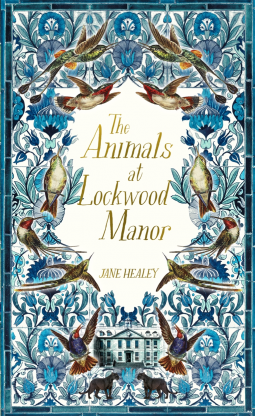
#BookReview ‘The Animals at Lockwood Manor’ by Jane Healey @Healey_Jane #mystery #WW2

As soon as I read the premise of The Animals at Lockwood Manor by Jane Healey, I was intrigued. It is 1939, war is declared, and a decision is taken to move the exhibits from the Natural History Museum to safety. Hetty Cartwright is charged with moving the mammal collection to a country house where they, and she, will stay for the duration of the war. Jane HealeyLockwood Manor is one of those atmospheric houses in literature that will stay with you after you read it. Crumbling, dusty and dirty, it has rats and secret rooms, ghost stories and scandal. It is an extra character in this story and in fact has a clearer presence than some of the peripheral characters who perhaps could have been deleted. Hetty arrives with her cargo of taxidermy animals in display cases plus catalogues and samples to find a mixed welcome from the manor’s servants who see the new arrivals as extra work. The irascible lord of the manor welcomes them then disappears, he is seen briefly at mealtimes and when ushering his latest girlfriend from the house. At first Hetty, charged with the care of the mammals, is kept busy arranging, cleaning and organising. Then she finds an ally in the lord’s daughter, Lucy, who though mentally fragile, finds peace amongst the animals. Hetty and Lucy, with their vulnerabilities and lack of confidence, have almost inter-changeable voices.
Then Hetty hears noises at night and starts to find animals not in their correct place in the morning. So when a case of hummingbirds is opened and the tiny stuffed treasures disappear, it becomes clear that something sinister lurks in the house. Is it a ghost, a mischief maker or a burglar? The odious Lord Lockwood and the equally unlikeable housekeeper are dismissive of Hetty’s fears, adding to her feeling of incompetence. This is part ghost mystery, part love affair, part family history. Hetty suspects everyone, first of mischief but she soon comes to realise it is something altogether more dangerous. Feeling vulnerable in her own job and not wanting to admit she can’t cope, she vascillates over writing to her boss in London. The delay is costly.
I remained conflicted about this book to the end. The clever idea is hindered by a slow pace and repetitive description, there are many beautiful passages which do not add to the plot. The final quarter raced along well enough though I still skipped some paragraphs, but I was left feeling I had read a nineteenth century Gothic story set in the Victorian era not World War Two. The absence of war from Lockwood Manor is such that the story might have been set at another time, the wartime setting is wasted. The introduction of a voice from outside the house would rectify this omission, perhaps from someone at the museum, adding conflict, moving the plot along and strengthening the feeling that Lockwood Manor exists in an abnormal bubble.
Read it for the descriptions of the house, the brooding atmosphere and for the way Hetty likens everyone she meets to an animal. ‘Lucy had been called a dove by her father but, as a mammal lover, I thought that she rather reminded me of a cat somehow, in her glamour and warm smiles’.

If you like this, try:-
The Wicked Cometh’ by Laura Carlin
‘The Hoarder’ by Jess Kidd
Whistle in the Dark’ by Emma Healey

And if you’d like to tweet a link to THIS post, here’s my suggested tweet:
#BookReview THE ANIMALS AT LOCKWOOD MANOR by Jane Healey @Healey_Jane https://wp.me/p5gEM4-4EE via @SandraDanby

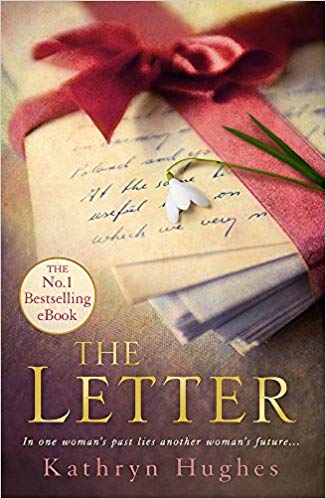
#BookReview ‘The Letter’ by Kathryn Hughes #mystery #adoption

The idea for The Letter by Kathryn Hughes is enticing; the lives of two women, forty years apart, linked by a letter found in the pocket of an overcoat at a charity shop. What follows is a dual storyline – about an abused wife and her road to freedom, and a young woman in love for the first time as war breaks out. Kathryn HughesThis is a story about two couples. In 1974, Tina Craig works in an office during the week and on Saturdays she volunteers at a charity shop to get out of the house, away from her abusive husband Rick. Staying, though she knows she must leave, Tina listens to the advice of friends but continues to excuse and forgive Rick’s behaviour. Until a mysterious letter found in the pocket of coat sets her off on the trail of the people involved. The letter is sealed and stamped but never posted. Why. When she opens and reads the letter she starts to think about Billy, who wrote the letter in 1939 as war broke out, and about Chrissie, the woman who never received his letter.
In the summer of 1939, Chrissie and Billy fall in love in the last days of peace. As Billy is called up, Chrissie faces the cultural judgements of the day combined with her bullying father.
Tina’s pursuit for the truth of the letter leads her across Manchester and to Ireland. Hughes tackles heart breaking subjects – forced adoption, Irish nunneries, bullying parents, domestic abuse – perhaps too many. The ending is predictable via a number of coincidences, facts fall into place and old hurts forgotten. Despite its frustrations, I enjoyed this story though I did long for more showing and less telling.
If you like your endings neatly tied up, you will enjoy this. A good read for holidays.

If you like this, try:-
‘The House on the Shore’ by Victoria Howard
‘The House Across the Street’ by Lesley Pearse
‘Touch Not The Cat’ by Mary Stewart

And if you’d like to tweet a link to THIS post, here’s my suggested tweet:
#BookReview THE LETTER by Kathryn Hughes https://wp.me/p5gEM4-4CH via @SandraDanby

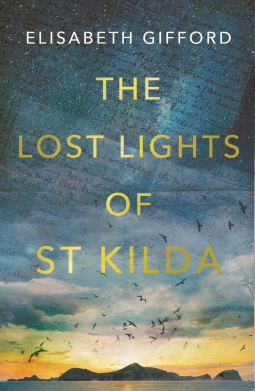
#BookReview ‘The Lost Lights of St Kilda’ by Elisabeth Gifford #historical

Told in two timelines, 1927 and 1940, this a story of love – between two people, and for an island and an endangered way of life. In The Lost Lights of St Kilda by Elisabeth Gifford, the beautiful yet harsh landscape of the island is made vividly alive. This is a delight to read, a novel about love, trust, betrayal and forgiveness. Elisabeth GiffordIn 1940 Fred Lawson, a Scottish soldier from the 51st Highland Division, is imprisoned at Tournai, captured at St Valery in retreat as other soldiers were being evacuated at Dunkirk. Through the darkest moments of fighting, his memories of St Kilda sustain him. ‘It was your face that had stayed with me as we fought in France. It was you who’d sustained me when we were hungry and without sleep for nights as we fought the retreating action back towards the Normandy coast.’ Fred escapes and heads for Spain, forced to trust strangers, not knowing who is a friend and who is an informer, but drawn on by his memories of St Kilda.
At the same moment in Scotland, a teenage daughter longs to know more of her birth. Says Rachel Anne, ‘My mother says I am her whole, world, and she is mine, but all the same I would still like to know at least the name of my father.’
In 1927, geology student Fred travels to the remote Scottish island of St Kilda with his university friend Archie Macleod whose father owns the island. No one knows that three years later the island will be abandoned, the population on the edge of starvation. Archie, the laird’s son, has a privileged position on the island. As a teenage boy he played with the island children, play acting at the work their fathers do, learning their future trades – farming, catching puffins and fulmars – on the dangerous cliffs. And he flirts with Chrissie Gillies. But by the time Archie returns to the island in 1927 with Fred, he has developed an arrogance and a liking for whisky. Over the long summer months, Fred falls in love with the island and with Chrissie. Everything changes when tragedy strikes.
This is a beautiful read, contrasting the softness and closeness of romance with the harsh facts of life as the difficulties of island survival are laid bare. Life in the summer months seems an idyll of isolation and peace, a return to the basics of life that matter. But inevitably winter approaches and, as the real world is complicated, a misunderstanding occurs. But hope is never abandoned. Despite being separated by the years and by lies, Fred and Chrissie never forget each other.

Read my review of A WOMAN MADE OF SNOW also by Elizabeth Gifford.

If you like this, try:-
Days Without End’ by Sebastian Barry
Rush Oh!’ by Shirley Barrett
After the Party’ by Cressida Connolly

And if you’d like to tweet a link to THIS post, here’s my suggested tweet:
#BookReview THE LOST LIGHTS OF ST KILDA by Elisabeth Gifford @elisabeth04liz  https://wp.me/p5gEM4-4yq via @SandraDanby

#Bookreview ‘Hitler’s Secret’ by Rory Clements #thriller #WW2

Fourth in the Tom Wilde World War Two spy mysteries, Hitler’s Secret by Rory Clements hits the ground running and keeps the pages turning. The secret in question is a ten-year old girl who may or may not be the love child of Hitler. Klara has a false identity and is hidden but is now in imminent danger of exposure and murder. Rory ClementsWilde travels to Berlin disguised as a German-American motorcycle manufacturer in search of a business deal. His cover enables him to meet allies and search for Klara. Unsure of his mission from the beginning, Wilde imagines that everyone can see through his false identity, everyone is planning to kill him. Clements tells the story at breakneck speed, flicking from viewpoint to viewpoint. Martin Bormann, Hitler’s gatekeeper wants Klara dead and despatches a henchman, Otto Kalt. But it seems everyone touched by Klara’s story is at risk of death. As Wilde closes in on Klara’s hiding place, so do her killers. What ensues is a tense chase north across Germany towards the promised sanctuary of Sweden. And at all times it is assumed Hitler is unaware of the girl’s existence. But who else knows the secret?
At the heart of this story is trust. Believing loyalty expressed at time of war can be a treacherous decision and at times Tom feels everyone has an agenda except him. Even his allies have their own motivations, their own friends and loyalties. Expecting to collect a ‘package’ in Berlin, he is horrified to find he is collecting a girl; he feels duped and used by his spy chiefs. And as Tom runs, it is impossible for him to identify his pursuers. His judgement is seriously challenged and he trusts no-one. What is on the surface a matter of shaming the perfect Adolf Hitler, so popular with his German female citizens, is at the same time a fight between the most elite of German officials.
Familiar characters from earlier books in the series recur: Tom’s partner Lydia, American diplomat Jim Vandenberg and Wilde’s contact at British intelligence, Philip Eaton. History professor Wilde is an affecting amateur spy, diligently learning the role he is assigned but relying on his instincts to get him out of trouble. Of course, the best laid plan can go wrong but this time the plan is not organised in advance and Tom is on his own. He will sink or swim and the few he trusts do not know if he is alive or dead.

Click the title to read my reviews of the other books in the Tom Wilde series:-
CORPUS #1TOMWILDE
NUCLEUS #2TOMWILDE
NEMESIS #3TOMWILDE

A PRINCE AND A SPY #5TOMWILDE
THE MAN IN THE BUNKER #6TOMWILDE
THE ENGLISH FUHRER #7TOMWILDE

And from the Sebastian Wolff series:-
MUNICH WOLF #1SEBASTIANWOLFF

If you like this, try:-
The Ways of the World’ by Robert Goddard
Munich’ by Robert Harris
Five Days of Fog’ by Anna Freeman

And if you’d like to tweet a link to THIS post, here’s my suggested tweet:
#BookReview HITLER’S SECRET by Rory Clements https://wp.me/p5gEM4-47r via @SandraDanby