Tag Archives: World War Two

#BookReview ‘The Garden of Evening Mists’ by Tan Twan Eng #Malaya

This is another enchanting novel by Malaysian author Tan Twan Eng. The Garden of Evening Mists focuses on the post-Second World War period in Malaya. Tan Twan EngThe Japanese occupiers have gone and local communist fighters are challenging British rule. In the hills of the Cameron Highlands, next to a tea plantation, lies a delicate Japanese garden created by Nakamura Aritomo, a man who was once gardener to the Emperor of Japan. Decades later when Yun Ling Teoh retires as a Supreme Court judge in Kuala Lumpur, she re-visits the garden at Yugiri. This is her story.
In the 1950s Emergency, the people who lived in Malaya’s hill villages grew to fear the communists. Homes were raided and destroyed, people killed, women raped. This is the setting in which Yun Ling first visits Yugiri to ask Aritomo to build a traditional Japanese garden in memory of her sister Yun Hong. This is a novel about memory, things remembered and things denied, and about loyalty. Yun Ling’s loyalty to her sister who was killed in a Japanese labour camp and her guilt that she could have done more to save her, and loyalty to Arimoto who she loved and thought she knew.
Judge Teoh returns to Yugiri as an old woman approaching death, many years after Arimoto walked into the jungle and never returned. She is forced to relive her past when a historian arrives to assess Arimoto’s engravings. As she relives the years of her imprisonment at the hands of the Japanese, and the post-war years when she first worked at Yugiri’s garden, Judge Teoh questions her perceptions of the past. This time, there is no avoiding the truth.
Tan Twan Eng discusses big issues. He explores the moral dilemmas of war and peace after war, considering the murderous actions of the Japanese at war, the same Japanese who love traditional gardens and the rituals of archery. This novel is rich in history, both of the Japanese Occupation of Malaya, the labour camps, lost war treasure, and of the Emergency. The lush countryside is offset by the tales of horror and abuse told. As with Tan Twan Eng’s first novel, The Gift of Rain, the beauty of the setting is juxtaposed with cruelty and violence.
A deep, thought-provoking and at times difficult novel, the writing is beautiful.

Read the first paragraph of THE GARDEN OF EVENING MISTS.

And here are my reviews of two other novels by Tan Twan Eng:-
THE GIFT OF RAIN
THE HOUSE OF DOORS

If you like this, try:-
‘The Aftermath’ by Rhidian Brook
‘Homeland’ by Clare Francis
‘The Book of Lies’ by Mary Horlock

And if you’d like to tweet a link to THIS post, here’s my suggested tweet:
#BookReview THE GARDEN OF EVENING MISTS by Tan Twan Eng http://wp.me/p5gEM4-2qf via @SandraDanby

#BookReview ‘Shelter’ by Sarah Franklin #WW2

This book is full of trees. The Forest of Dean to be exact. Shelter by Sarah Franklin is the story of two outsiders who find themselves in the forest during World War Two. As they struggle to survive, to learn about their surroundings, how to get by from day to day, each finds a way to live the rest of their lives. Sarah FranklinEarly in 1944 in Coventry, Connie Granger’s life is changed in the course of one night. Escaping the bombing, city-girl Connie takes a job with the Women’s Timber Corps. Unable to follow her dreams, she resents the change of direction.  Sent to the Forest of Dean for her training, she turns out to be so good the manager keeps her on. Meanwhile, in the forest, a prisoner-of-war camp is built for Italian soldiers captured during fighting in Africa. Neither prisoner Seppe, nor Connie, know one tree from another but together they learn to fell trees and work timber. And they get to know each other.
The themes of nature, change and new birth are strong throughout Shelter, symbolised not just by the trees but by the growth of Joe, Connie’s baby, and the increasingly fluency of Seppe’s English. Both are odd-ones-out. Both feel they don’t ‘fit’. Except in the forest. Connie lodges in the cottage of farmer Amos, who worries for the life of his absent soldier son Billy. Seppe, though he lives in the camp, exploits the lax guards and spends more time amongst the trees. These three, with timber manager Frank and his wife Joyce, completes the cast of characters.
The story of the wartime lumberjills was fascinating. This is a well-written debut novel by a writer brave enough to allow Connie to be determined and selfish, unsure, selfish again, before working out what she wants. There is something honest in Connie’s selfishness which makes her seem real. The switching around of the timeline at the beginning was unnecessarily confusing, but after that the story swung along as Connie transforms from someone who doesn’t recognise bluebells as she walks through a wood, to a woman who stops to watch a hawk swoop in for the kill.

Read my review of HOW TO BELONG also by Sarah Franklin.

If you like this, try:-
‘Homeland’ by Clare Francis
‘Another You’ by Jane Cable
‘After the Bombing’ by Clare Morrall

And if you’d like to tweet a link to THIS post, here’s my suggested tweet:
#BookReview SHELTER by Sarah Franklin http://wp.me/p5gEM4-2MI via @SandraDanby 

#BookReview ‘The Gift of Rain’ by Tan Twan Eng #WW2 #Malay

If you are searching for another world in which to immerse yourself, then this novel will fit the requirement. The Gift of Rain by Tan Twan Eng will suit anyone interested in the Malay Peninsula and its history in World War Two. It is at times tender, brutal, harsh and uplifting. It is a story of love, family, war, of defeat and acceptance. Tan Twan Eng The story opens as Philip Hutton, an elderly man living in a stately house on Penang, an island off the west coast of Malaysia. To his door comes an elderly, frail Japanese woman. They have never met before, but know one person who made an impact on their lives. Endo-san, a Japanese man, once lived on a tiny island near Istana, the Hutton family home. The Gift of Rain is the story of the relationship between Endo-san, a master, sensei, of aikijutsu, and his teenage pupil Philip immediately preceding the Japanese invasion of Malaya in 1941 and the following years of occupation.
There are many subtle layers to this tale which left me moved and thirsty for more facts about this period of history. It poses many difficult questions. Like the best novels dealing with war, it challenges you to be honest: what would I have done? It is easy to over-simplify war into ‘them and us’, ‘right and wrong’. At the heart of the story is the island of Penang and the transition of Georgetown, its major town, from a pre-war bustling multi-cultural port to an occupied territory at the mercy of torture and abuse by the Japanese. Some of it is difficult reading, all the more as the place seems alive. The traditions, the cultures, the nature are described vividly. The mix of nationalities on the island is at once its strength but, when war arrives, provide the cracks exploited by the occupiers. Philip is the youngest son of his father with his second wife, a Chinese woman. His two half-brothers and half-sister are English. Philip’s full name is Philip Arminius Choo-Hutton. This mix of races causes tensions, suspicion and betrayal throughout his life.
The Gift of Rain was longlisted for the Booker Prize in 2007. The Garden of Evening Mists by Tan Twan Eng, about the period in Penang shortly after the end of World War Two, was shortlisted for the Booker Prize in 2012.

Here are my reviews of other books by Tan Twan Eng:-
THE GARDEN OF EVENING MISTS …and read the first paragraph HERE.
THE HOUSE OF DOORS

If you like this, try:-
‘The Translation of Love’ by Lynne Kutsukake
‘Moon Tiger’ by Penelope Lively
‘Exposure’ by Helen Dunmore

And if you’d like to tweet a link to THIS post, here’s my suggested tweet:
#BookReview THE GIFT OF RAIN by Tan Twan Eng via @SandraDanby http://wp.me/p5gEM4-2pW

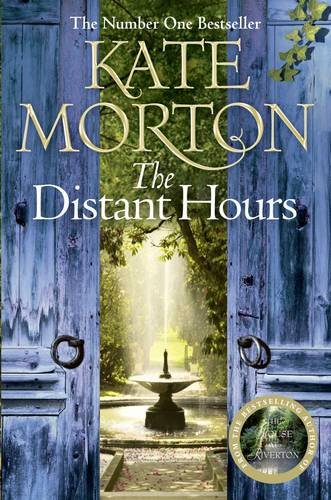
#BookReview ‘The Distant Hours’ by Kate Morton #historical #romance #WW2

If ever there was a novel in which a house plays the role of a character, this is it. The Distant Hours by Kate Morton is told in two strands, World War Two and the Nineties, involving the three Blythe sisters in Kent at Milderhurst Castle and a South London mother and daughter, Meredith and Edie. They all are connected by the war, the house, and the truth of what really happened when Juniper Blythe was abandoned by her lover in 1941. Kate Morton This is a brick of a book [678 pages], like Morton’s other novels. A little too long for me, the story meanders at times through past and present until it works towards the final mystery. What a mystery, an ingenious storyline and an unpredictable final twist. The story starts when a letter arrives for Edie’s mother, a letter lost for decades, a letter dating from wartime when Meredith was a schoolgirl evacuated to Kent. Edie is fascinated by her mother’s history, but her mother does not talk of it. They are not close, and Edie feels unable to press for information. So she sets off to investigate on her own.
At the centre of the story is the house, and what a house it is: beautiful, crumbling, representative of a time past. When Edie visits the castle in 1992 for the first time, she thinks: ‘Have you ever wondered what the stretch of time smells like? I can’t say I had, not before I set foot inside Milderhurst Castle, but I certainly know now. Mould and ammonia, a pinch of lavender and a fair whack of dust, the mass disintegration of very old sheets of paper. And there’s something else, too, something underlying it all, something verging on rotten or stewed but not. It took me a while to work out what that smell was, but I think I know now. It’s the past.’ Living there, Edie finds the three Blythe sisters, alone after the death of their father.
Morton writes brilliantly about the war years, conjuring up life at this vast castle and in the village of the same name. Running throughout is a mysterious, ghostly, spooky thread based on Raymond Blythe’s best-selling book The True History of the Mud Man. ‘The moat has begun to breathe. Deep, deep, mired in the mud, the buried man’s heart kicks wetly.’
Is the book set at Milderhurst Castle? Is the Mud Man based on a true story? The book is yet another connection between Edie and the castle, she loved it as a child after being given a library copy when ill by her mother. And so the concentric circles tighten.
CLICK HERE TO READ MORE ABOUT THIS BOOK AT AMAZON

And here’s my review of another novel by Kate Morton:-
THE CLOCKMAKER’S DAUGHTER

If you like this, try these books with atmospheric houses:-
‘A Sudden Light’ by Garth Stein
A Traveller at the Gates of Wisdom’ by John Boyne
‘The Other Eden’ by Sarah Bryant

And if you’d like to tweet a link to THIS post, here’s my suggested tweet:
#BookReview THE DISTANT HOURS by Kate Morton http://wp.me/p5gEM4-1YD  via @SandraDanby

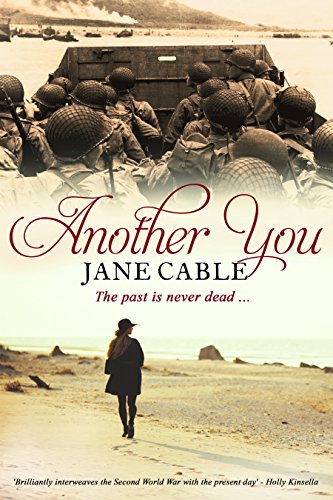
#BookReview ‘Another You’ by @JaneCable #contemporary #romance

Novels rooted in a particular area where the place and scenery come alive off the page are favourites of mine. Studland Bay in Dorset, England is a beautiful part of the country, a dramatic coastline which is an ideal for a dramatic story. In Another You, Jane Cable uses the place to great effect. Key action scenes take place at the looming chalk cliffs, the Old Harry rocks, the sand dunes and heath. Jane CableThe time in which the story is set is cleverly chosen too, the sixtieth anniversary of preparations for the D-Day landings, preparations which took place along the south coast of England. It is a time full of memories, grief, regret and gratitude.
In this place and time, Cable sets her story. Marie is chef at The Smugglers, the pub she owns with her husband Stephen, from whom she is separated. Jude their son, a student, lives at the pub and helps out. Despite its popularity, the pub’s finances are not good and there is not enough cash to pay suppliers. Marie doesn’t understand what is happening and is stressed by this and having to deal with her difficult husband. This human story plays out alongside rehearsals for a commemorative re-enactment of Exercise Smash, the exercises conducted to rehearse for the Normandy landings. There are strangers in town, in the pub, soldiers, tanks, tourists. One day walking among the dunes, Marie meets an American soldier Corbin. Entranced by his old-fashioned manners, Marie looks for Corbin again but his presence is unpredictable, he appears and disappears. Marie also meets George, an elderly local gentleman who actually fought at D-Day, and his businessman son Mark; and then there is Paxton, another American serviceman based at a nearby tank museum, who entrances Marie and with whom she starts an affair.
Will Marie self-destruct before she confronts her husband? Will she ask Paxton why he can’t sleep at night, or Jude why he is so unhappy. Her frequent migraines and love of a glass of brandy make her an unreliable narrator, at times she is unable to see the way forward from her situation or question some of her wilder assumptions. Throughout this time, the voice of reason belongs to George. At times I found the story disorientating. In the middle of a migraine, Marie’s sense of the real is blurred, is she remembering real things, having visions, hallucinating, seeing ghosts, blacking out? Mark is a breath of fresh air in the midst of this emotional turmoil. When Marie first meets him, he is tying up his sailing dinghy. Somehow the sea, the waves and wind symbolise a freedom from the troubles on land.
A strong recurring theme throughout Jane Cable’s fiction is the way past and present inter-connect, decisions made years earlier are re-visited, things which happened to an older generation has significance today. This check-and-balance keeps the pages turning quickly.

Read my reviews of Jane’s other books:-
THE CHEESEMAKER’S HOUSE
ENDLESS SKIES

Also by Jane Cable, writing as Eva Glyn:-
THE COLLABORATOR’S DAUGHTER
THE CROATIAN ISLAND LIBRARY
THE MISSING PIECES OF US

If you this, try:-
‘In Another Life’ by Julie Christine Johnson
‘Sweet Caress’ by William Boyd
‘Freya’ by Anthony Quinn

And if you’d like to tweet a link to THIS post, here’s my suggested tweet:
#BookReview ANOTHER YOU by @JaneCable via @SandraDanby http://wp.me/p5gEM4-2ke

My Porridge & Cream read: Sue Moorcroft

Today I’m delighted to welcome contemporary women’s novelist Sue Moorcroft.

“I wish I still had my dad’s copy of A Town Like Alice. It was one of those Reader’s Digest leather-bound books, bright red with gold. Sadly, I lent it to someone. Sue MoorcroftA Town Like Alice was the first adult book I read. I was nine. I watched the film one afternoon with Dad and he told me he had the book. As a bookworm, when the film finished the obvious thing to do was locate it in the bookcase and carry it off to my room. If I close my eyes I can still see the red ribbon to mark reading progress and the dark blue and white pattern on the inner cover.

In A Town Like Alice Nevil Shute taught me a lot about storytelling. He showed me that a story arc doesn’t have to contain a mystery (Famous Five) or a school (Malory Towers) and can be set against the ugliness of war and yet contain one of the most beautiful love stories I’ve ever read. That love can triumph over seemingly impossible odds, even over man’s inhumanity to man. It taught me a lot about characters having flaws and acting like real people, too, when Joe and Jean finally found each other again and realised they still had their own issues to deal with.

I bought the book again when I lost touch with Dad’s copy. It wasn’t in print so I had to buy it second-hand but I reread it every few years, whenever I feel it’s faded in my mind enough that I’ll enjoy it all over again. I wouldn’t like to guess how many times I’ve lived the story of Jean and Joe!

A Town Like Alice began a lifelong love affair with the works of Nevil Shute. I have every one, even those published posthumously. The social niceties are a bit dated, now, but every one is a great story.”

Sue Moorcroft’s Bio
Award-winning author Sue Moorcroft writes contemporary women’s fiction with occasionally unexpected themes. A past vice chair of the Romantic Novelists’ Association and editor of its two anthologies, Sue also writes short stories, serials, articles, writing ‘how to’ and is a creative writing tutor. She’s won a Readers’ Best Romantic Read Award and the Katie Fforde Bursary.

Sue Moorcroft’s links
Website
Blog
Facebook
Twitter
Instagram

Sue Moorcroft’s latest book
Sue MoorcroftFor Ava Bliss, it’s going to be a Christmas to remember …
On a snowy December evening, Sam Jermyn steps into the life of bespoke hat maker Ava Blissham. Sparks fly, and not necessarily good ones. Times are tough for Ava – she’s struggling to make ends meet, her ex-boyfriend is a bully, and worst of all, it’s nearly Christmas. So when Sam commissions Ava to make a hat for someone special, she makes a promise that will change her life. She just doesn’t know it yet …

‘The Christmas Promise’ by Sue Moorcroft [UK: Harper Collins]


Porridge & Cream


What is a ‘Porridge & Cream’ book? It’s the book you turn to when you need a familiar read, when you are tired, ill, or out-of-sorts, where you know the story and love it. Where reading it is like slipping on your oldest, scruffiest slippers after walking for miles. Where does the name ‘Porridge & Cream’ come from? Cat Deerborn is a character in Susan Hill’s ‘Simon Serrailler’ detective series. Cat is a hard-worked GP, a widow with two children and she struggles from day-to-day. One night, after a particularly difficult day, she needs something familiar to read. From her bookshelf she selects ‘Love in A Cold Climate’ by Nancy Mitford. Do you have a favourite read which you return to again and again? If so, please send me a message via the contact form here.

Discover the ‘Porridge & Cream’ books of these authors:-
Claire Dyer
JG Harlond
Shelley Weiner

Sue Moorcroft


‘A Town Like Alice’ by Nevil Shute [UK: Vintage Classics]

And if you’d like to tweet a link to THIS post, here’s my suggested tweet:
Why does @SueMoorcroft love A TOWN LIKE ALICE by Nevil Shute? http://wp.me/p5gEM4-260 via @SandraDanby #reading

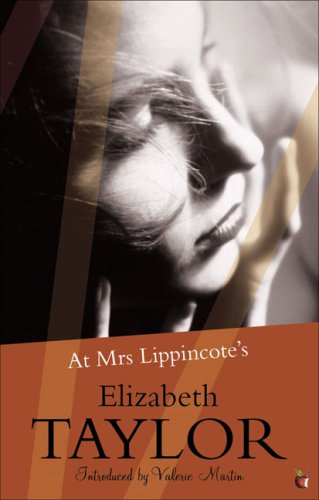
#BookReview ‘At Mrs Lippincote’s’ by Elizabeth Taylor #historical

Oh the delight at discovering a new author. I can’t remember where I stumbled across Elizabeth Taylor, but she seems to be the “novelist’s novelist” with fans ranging from Valerie Martin and Kingsley Amis to Sarah Waters, Jilly Cooper and Elizabeth Jane Howard. At Mrs Lippincote’s is Taylor’s debut novel, first published in 1945. Elizabeth TaylorIt is a minutely observed account of a family in wartime, following the story of Roddy who, posted away from London, rents a house from a widow, Mrs Lippincote. The landlady remains ever-present in the house through her family photographs on the mantelpiece and her possessions in the cupboards. Julia’s life has a transitory feel, she is where she is because of her husband and war, war which is ever-present on every page, and she is curious about the life of the Lippincote family. This is not a war novel about bombs and sirens, it is the snapshot of a normal family living in abnormal times.
The Davenants live at Mrs Lippincote’s with their sickly, seven-year-old book-obsessed son Oliver, and Roddy’s cousin Eleanor. Eleanor, in love with her cousin, finds new friends via a fellow schoolteacher. Julia becomes close to the Wing Commander, Roddy’s boss, while Oliver makes friends with the boss’s daughter Felicity. The latter is an expert at identifying the type of military aircraft flying overhead, a revelation for Oliver who is in the process of re-living the life of Alan Breck Stewart in RL Stevenson’s Kidnapped. His love of books is shared with his mother who constantly refers her real life situation to that of the Brontes and their fictional characters.
Roddy in turn is exasperated by his wife. ‘When he had married Julia, he had thought her woefully ignorant of the world; had looked forward, indeed, to assisting her development. But she had been grown up all the time; or, at least, she had not changed. The root of the trouble was not ignorance at all, but the refusal to accept. ‘If only she would!’ he thought now, staring at her; ‘If only she would accept.’ At a time when women are, for the second time in decades, assuming the jobs of men during wartime, Julia is trapped in a domestic life determined for her by her husband and his boss.
There are 11 Elizabeth Taylor novels waiting to be read, plus numerous short stories, and this makes me happy.

Read my reviews of other books by Elizabeth Taylor:-
A VIEW OF THE HARBOUR
A WREATH OF ROSES
ANGEL
IN A SUMMER SEASON
THE SLEEPING BEAUTY

If you like this, try:-
‘The Paying Guests’ by Sarah Waters
‘The Light Years’ by Elizabeth Jane Howard #1CAZALET
‘Life After Life’ by Kate Atkinson

And if you’d like to tweet a link to THIS post, here’s my suggested tweet:
#BookReview AT MRS LIPPINCOTE’S by Elizabeth Taylor via @SandraDanby http://wp.me/p5gEM4-1Pf

#BookReview ‘A Hero in France’ by Alan Furst #thriller #WW2

France 1941, British bombers fly every night to Germany, many aircraft don’t make it back home. The aircrew parachuting into Occupied France must somehow find their way home in order to fight again. A Hero in France by Alan Furst is a story of that individual battle within the wider war, seen from different sides by two ordinary men. This is the beginning of the French Resistance. Alan FurstThe man known as Mathieu – we don’t know his real name or identity until the very end of the book, this is the name by which he is known to his Resistance cell – escorts airmen along the north-south escape lines into Vichy France and onwards to Spain. Old clothes are sourced at jumble sales, innocent-looking shops serve as message drops, and a schoolgirl delivers messages by bicycle. In the beginning it was successful and relatively simple, but now the German command in Paris realizes there is a big problem. Word is getting around about the Resistance and people want to join, but how does Mathieu know who is genuine and who is a German spy?
In Hamburg, Otto Broehm, senior inspector of the police department, is transferred to the Kommandantur in Paris to stop the flow of downed airmen being returned to the UK by French people, working together in coordinated groups.
This is a huge subject and a story much-told, but by focussing on a few personalities and what happens to them, Alan Furst writes an engaging story which I read over a weekend. It is a low-key study of personalities, rather than a page-turning thriller.

Read my review of MIDNIGHT IN EUROPE, also by Alan Furst.

If you like this, try:-
‘Inflicted’ by Ria Frances
‘After the Bombing’ by Clare Morrall
‘The Paying Guests’ by Sarah Waters

And if you’d like to tweet a link to THIS post, here’s my suggested tweet:
#BookReview A HERO IN FRANCE by Alan Furst http://wp.me/p5gEM4-21g via @SandraDanby

A poem to read in the bath… ‘Elegy of a Common Soldier’

We are all used to the ‘War Poets’ of the Great War, but perhaps not so aware of poets writing about the Second World War. Dennis B Wilson’s Elegy of a Common Soldier was written at a time between the trenches in Normandy and being in hospital in Swansea in 1944 and conjures up the horrible detail of war juxtaposed with nature and what was once normal. Quite arresting.

[photo: dennisbwilsonpoetry.com]

[photo: dennisbwilsonpoetry.com]

I was unaware of his work until I read an article in The Sunday Times Magazine about Mr Wilson’s reunion with a branch of the family he didn’t know existed: his father, novelist Alexander Wilson, had actually been married to four woman at the same time, producing numerous children. So in his late eighties, Dennis B Wilson discovered new relatives, including actress Ruth Wilson. She says of the poet: ‘As a wounded soldier in the Second World War, he bore witness to so many things, including the D-Day landings, all of which he wrote about in his poetry. I feel I have kindred spirits in my new-found family, I certainly do with Dennis. It may have taken this long to find each other, but I’m so pleased we have.’

If you have an online subscription to The Times, you can read the full article here.

[photo: dennisbwilsonpoetry.com]

[photo: dennisbwilsonpoetry.com]

‘Elegy of a Common Soldier’
The cold, unsheltered nights in dismal rain;
Exhausted men, who long for sleep in in vain;
Confusion, noise and smoke, foul-reeking mud,
And countless shattered bodies, oozing blood;
The pain before the final choking breath;
The vile decay, the sickly smell of death,
Which does not come triumphant or in rest
But suddenly, unheralded, or dress’d
In guise of hedgerow, tree or growing wheat,
Or lurks amid the flow’rs beneath your feet.

Because of copyright restrictions I am unable to reproduce the poem in full, but please search it out in an anthology or at your local library.

For more information about Dennis B Wilson’s poetry, click here for his website.

elegy of a common soldier and other poems by dennis b wilson 26-10-15


Elegy of a Common Soldier and Other Poems’ by Dennis B Wilson [UK: Kultura] 

Read these other excerpts and find a new poet to love:-
‘Sometimes and After’ by Hilda Doolittle
‘Winter Song’ by Wilfred Owen
‘Name’ by Carol Ann Duffy

And if you’d like to tweet a link to THIS post, here’s my suggested tweet:
A #poem to read in the bath: ‘Elegy of a Common Soldier’ by Dennis B Wilson http://wp.me/p5gEM4-1Ps via @SandraDanby

SaveSave

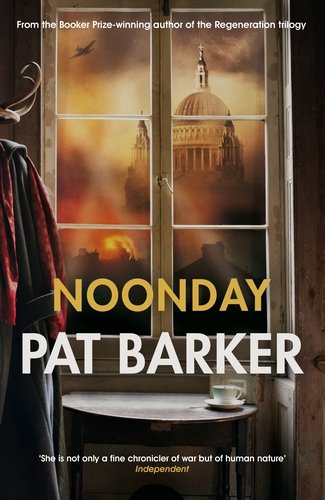
#BookReview ‘Noonday’ by Pat Barker #WW2 #historical

It seems inevitable that the final novel in a trilogy which started with the Great War should end with the Blitz, and that the theme should be death. Death, grief, guilt at being alive, guilt at longing for death, and guilt at wishing another dead. Noonday is a fitting end to the ‘Life Class’ trilogy by Pat Barker, the tale of three young artists – Elinor Brooke, Paul Tarrant and Kit Neville – which started on the verge of the Great War in Life Class, and continued through the war in Toby’s Room. But although the context is war, there are a lot of other things going on. Pat BarkerThe story opens with Elinor at the country home of her mother, who is dying. The assorted relatives wait, in the scorching heat, for death to arrive. Also present is Kenny, an evacuee sent from London to avoid death by bombing. So, the shadow of death is present from the very first page. Don’t forget about Kenny, he is important, particularly in the impact he has on Paul Tarrant – now Elinor’s husband. Paul’s connection with this sorry out-of-place boy leads him to a meeting with a medium, Bertha Mason. This is a story thread criticised by some readers as being irrelevant – and perhaps it is in that it doesn’t connect with either Elinor or Kit – but for me it falls within the theme of grief in war when it is common to not see the body of your loved one. Death, in war, surrounds everyone daily, is expected daily, but is not easier to accept. Perhaps it is understandable that in these circumstances, without a body to bury, communicating with ghosts becomes popular.
As with Life Class and Toby’s Room, the lives of the three protagonists are entwined like snakes. Elinor and Kit are London ambulance drivers, Paul is an air raid warden by night and official war artist by day. The Blitz is the fourth character on the page. The final third of the book is an intense description of the firebombing of the City, an experience which Barker describes with simplicity, urgency, and not a spare word.
Barker is one of my favourite living authors because she writes with such detail about small things, seemingly insignificant ordinary things, but which in her hands and in the context of her story, add layers of meaning. She pays equal attention to the lives of her three main protagonists, the interaction of their lives, and how their desires and motivations impact on each other. She does not step away from sharing an unpleasant thought or action, she tells it as it is, and for this she is a clear voice in a modern world of fiction in which characters often seem too ‘nice’. But that is not realistic and it is not Pat Barker’s way.

For my reviews of other Pat Barker novels, click the title below:-
ANOTHER WORLD
BLOW YOUR HOUSE DOWN
DOUBLE VISION
LIFE CLASS #1LIFECLASS
TOBY’S ROOM #2LIFECLASS
THE SILENCE OF THE GIRLS
THE WOMEN OF TROY
UNION STREET

If you like this, try:-
‘Mrs Sinclair’s Suitcase’ by Louise Walters
‘The Paying Guests’ by Sarah Waters
‘Midnight in Europe’ by Alan Furst

And if you’d like to tweet a link to THIS post, here’s my suggested tweet:
#BookReview NOONDAY by Pat Barker via @SandraDanby http://wp.me/p5gEM4-1Rf