Tag Archives: WW2

#BookReview ‘The Other Side of the Bridge’ by Mary Lawson #contemporary #smalltown

Mary Lawson is one of those exceptional authors whose way with language seems deceptively simple. With ease, she summarises complex feelings in few words. The Other Side of the Bridge is Lawson’s second published novel, and was longlisted for the Booker Prize. Mary Lawson It is the story of two brothers, in childhood, in adulthood in the remote rural Canadian community of Struan. There is little to do in Struan except farm, to do anything else means leaving for the big city of Toronto. The eldest, Arthur, is a tall farm boy, quiet, most like his father. Not great with words, nevertheless he watches and doesn’t miss much. His younger brother Jake is smaller, lithe, good-looking, the apple of his mother’s eye. With a gift for the gab, Jake thinks nothing of fibbing. He is the risk taker. Arthur, always with an eye on his mother’s fragile emotional state, tries to steer Jake from trouble. But trouble always finds Jake. When new tenants rent the neighbouring farmhouse, both brothers are interested in the teenage girl who arrives with her widowed father.
Twenty years later is the story of teenager Ian, son of Struan’s doctor. He takes a Saturday job helping Arthur, now married, on the family farm. Ian’s motivation is the chance of spending moments near Laura, Arthur’s wife, with whom he is besotted. The story moves backwards and forwards in time zones, always told from a male perspective. I most enjoyed reading Arthur’s point of view, far from being an introverted giant of a man who struggled at school, he has a strong moral core with deep emotions.
The story of the two brothers is intertwined with so much else. The cultural history of the local native American community, the role of German prisoners of war as farm workers during World War Two, the secondary role of women in the home and the dominance of the husband, the financial challenges of rural farming. The differences pre- and post-war are obvious and subtle, as experienced and observed by Ian in the Sixties.
Here are two examples of Lawson’s prose. On the onset of autumn: ‘During the day the sun was still hot but as soon as it dipped down behind the trees the warmth dropped out of the air like a stone.’ On wishing something had been left unsaid: ‘Desperate to find a way round the unalterable fact that once you have said something, it is said. Once it has left your lips, you cannot take it back.’
Picked off the to-read pile, I read this immersive book in two days. What a masterful author Mary Lawson is. A 5* read for me.

Here’s my review of A TOWN CALLED SOLACE, also by Mary Lawson.

If you like this, try:-
Amy & Isabelle’ by Elizabeth Strout
Natural Flights of the Human Mind’ by Clare Morrall
Clock Dance’ by Anne Tyler

And if you’d like to tweet a link to THIS post, here’s my suggested tweet:
#BookReview THE OTHER SIDE OF THE BRIDGE by Mary Lawson https://wp.me/p2ZHJe-7Ta via @SandraDanby

COMING SOON… THE NEXT BOOK I REVIEW WILL BE:- Rory Clements

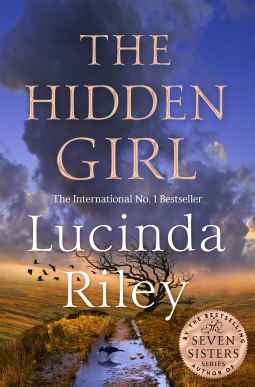
#BookReview ‘The Hidden Girl’ by Lucinda Riley & Harry Whittaker #suspense #mystery

The Hidden Girl by Lucinda Riley & Harry Whittaker is a story of family secrets across the generations, love and shame, jealousy and courage. Sweeping from the wild and beautiful Yorkshire moors to the horrors of occupied Poland in World War Two, it covers huge themes. Lucinda Riley & Harry WhittakerTwo teenage girls grow up as neighbours on the wild Yorkshire moors. Fifteen when the story begins, Leah Thompson is quiet and shy. She loves the moors, the Brontës, the wildness and doesn’t realise how beautiful she is. Desperate to help her mother Doreen support her father, who is crippled by arthritis and unable to work, Leah helps out at the nearby farmhouse where Rose Delancey is attempting to restart her career as an artist. Rose has two children. Miles, a dark-haired loner who haunts the moors with his camera when he’s home from university. His adopted younger sister Miranda, who is at school with Leah, is brash but vulnerable, and longs to escape the boring moors. Into this rural world, Rose’s nephew Brett arrives for the summer holidays. Travelling from his school at Eton, Miles and Miranda are unaware of their cousin’s existence. They’ve never met his father David Cooper, Rose’s estranged brother, who is a wealthy businessman. Teenage hormones become entangled and hearts are broken.
When a chance encounter catapults Leah into the glamorous international world of modelling, Miranda is determined to find wealth and success too. Ironically both women find themselves the focus of controlling, possessive men; a disturbing theme throughout the book. The story sweeps from Yorkshire to the South of France, New York to Milan, taking in the worlds of international modelling, photography and art. This is a story of the misuse of power, abuse, betrayal and violence that travels across the generations to the modern day. Told through the eyes of Leah and Miranda, and of brother and sister David and Rosa in World War Two Poland, this is an immersive novel to sink into. It reminded me of Penny Vincenzi’s doorstop-sized novels which lock you into the world of the characters so you can’t stop turning the pages. Except this has a harder edge.
The first Lucinda novel I’ve read since her death, The Hidden Girl is a rewrite by her son Harry of an earlier Lucinda novel. It has the clear identity of a Lucinda book, her voice is clear throughout. There is though more looseness in storyline with some of the most important action reported rather than shown directly, which makes it feel rushed and at a distance. The themes are familiar from the Seven Sisters series: truth in relationships, abuse of power, family secrets, hidden pasts and repressed violence. With myriad twists, turns, misunderstandings and betrayals, it filled an entire weekend’s reading.

Read my reviews of the first seven novels in Lucinda Riley’s ‘Seven Sisters’ series:-
THE SEVEN SISTERS #1SEVENSISTERS
THE STORM SISTER #2SEVENSISTERS
THE SHADOW SISTER #3SEVENSISTERS
THE PEARL SISTER #4SEVENSISTERS
THE MOON SISTER #5SEVENSISTERS
THE SUN SISTER #6SEVENSISTERS
THE MISSING SISTER #7SEVENSISTERS

… plus my reviews of these standalone novels, also by Lucinda Riley:-
THE BUTTERFLY ROOM
THE LOVE LETTER
THE GIRL ON THE CLIFF

If you like this, try:-
Inheritance’ by Nora Roberts #1LOSTBRIDETRILOGY
‘Water’ by John Boyne #1ELEMENTS
‘Nutshell’ by Ian McEwan

And if you’d like to tweet a link to THIS post, here’s my suggested tweet:
#BookReview THE HIDDEN GIRL by Lucinda Riley & Harry Whittaker https://wp.me/p2ZHJe-8ya via @SandraDanby

COMING SOON… THE NEXT BOOK I REVIEW WILL BE:- Susanna Kearsley
#BookReview ‘The Silent Resistance’ by Anna Normann #WW2

The German occupation of Norway is a new World War Two location for me so I was looking forward to reading The Silent Resistance by Anna Normann. It tells the story of three generations of women in one family who live outside the town of Haugesund. Anna NormannAnni Odland’s husband Lars is a seaman on the Atlantic convoys. She survives day to day with her young daughter Ingrid in an isolated house outside town, and Guri, Anni’s goat-keeping mother-in-law who lives at a nearby farm. They are tough women. Haugesund is a coastal place where wives are used to the absences of their seafaring men. But Lars was at sea when the Germans attacked and hasn’t been home since. This a woman’s story of bravery under duress, of resisting the enemy despite living under occupation, being at constant risk of danger or betrayal, while caring for her innocent but curious daughter. Woven through its pages is the eternal wartime conflict of romance.
The ugliness of war contrasts starkly with the beauty of the Norwegian coast. Normann examines what constitutes loyalty, and betrayal, in wartime circumstances. The family’s life changes when a German is billetted at Anni and Ingrid’s home. Anni’s story is intense, showing her loyalty to Ingrid and her determination to continue her work with the local resistance group. But she has limited power, must take decisions in impossible circumstances and decide between compromises that only have bad outcomes. A brave woman. At all times she seeks to protect Ingrid’s innocence, an almost impossible task when children are plunged into such a nightmare scenario. When the war ends, Ingrid is seven and can remember nothing but war. Anni has disappeared and no one can answer Ingrid’s questions.
The first three-quarters of the wartime story is told in detail, the later explanation of the decades after the war in contrast seems rushed. Action takes place from the 1940s to 1980s. Viewpoints are concentrated on Anni and Ingrid at varying points through the decades, often going back and forth in time. A chronological order might have maintained for longer the mystery of Anni’s destiny and explore the impact on the family of Anni and Lars’ decisions. I also longed to hear a contrasting point of view from outside the family, to add depth to the portrayal of life under German rule and an outsider’s view of the family.
The Silent Resistance is an emotional story of the cruelty of war and the separations it forces. Even those who fight for their country are not immune to unjustified wrongs. There is a heartbreaking twist that defies belief that it actually happened. The Author’s Note at the end supplies vital historical context.

If you like this, try:-
‘The Collaborator’s Daughter’ by Eva Glyn
‘The Guernsey Literary & Potato Peel Pie Society’ by Mary Ann Shaffer & Annie Barrows
Daughters of War’ by Dinah Jefferies #1DAUGHTERSOFWAR

And if you’d like to tweet a link to THIS post, here’s my suggested tweet:
#BookReview THE SILENT RESISTANCE by Anna Normann https://wp.me/p2ZHJe-8zv via @SandraDanby

COMING SOON… THE NEXT BOOK I REVIEW WILL BE:- Lucinda Riley & Harry Whittaker

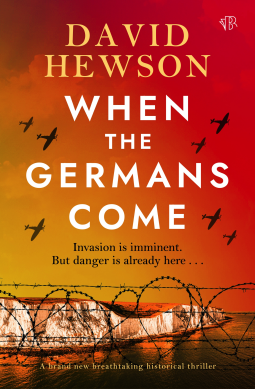
#BookReview ‘When the Germans Come’ by David Hewson #WW2 #thriller

Dover in 1940 is a town on the edge of invasion, hovering, waiting. When the Germans Come by David Hewson is a World War Two story not cut from the usual cloth of wartime thrillers. David HewsonSet in the East Kent garrison town, the part of Britain nearest to France and  suspected to be the landing point when the Germans come, this is a murder mystery. After the evacuation of some mothers and children, most locals stay put surrounded by the military and by chancers arriving in town to make a living from the soldiers. For the locals, determined not to be turned out of their homes by Nazis, it’s a matter of when not if the Germans invade. ‘No one cares a damm about anything except Jerry and when he’s going to come.’
Hewson takes his time establishing the state of play in the town, who is who. The two central characters are Louis Renard, English despite the French name, he is a Scotland Yard detective who suffered a head injury during the Dunkirk evacuation and is newly arrived in Dover. Renard is living with his elderly aunt and still suffers from flashbacks to Dunkirk and a terrible case he was investigating in London. Canadian foreign correspondent Jessica Marshall arrives in town looking for an edgy story, something to make her name.
Both are treated with suspicion as foreigners, incomers, by the military and the locals, considered possible German informers or spys. Renard is restricted in his job by the lack of support, no coroner, no pathologist, just a desk, a telephone and a willing junior. Marshall is suffocated by the reporting restrictions imposed by Captain David Shearer at Dover’s Ministry of Information. Renard is curious about Shearer, ‘He appeared to have a remit which ran far wider than controlling information in and out of the town.’ Better to do your job and don’t ask questions, is the unspoken advice to Renard. Marshall is similarly limited by Shearer, allowed only to write puff pieces to raise morale.
The pace increases when the body of a woman is found in a top secret location. It is a clifftop hideout designed for use as a resistance cell if the worst happens, one of Churchill’s Auxiliary Units. Renard and Marshall ignore warnings to stay clear of the site. Annoyed the body is moved and the location cleaned, both ask awkward questions, both just want to do their job. But this is wartime and in Dover there are layers of secrets, the military installations, the newcomers like Shearer and local criminals looking to make money from war. And spies. Spies for the allies, possibly spies for the Germans. The harder Renard and Marshall push for the truth, the quicker the cracks appear.
When the Germans Come is a detective story set during wartime when priorities are transformed. What is more important, the war or the murder of a woman? Moral dilemmas are explored as everyday dislikes and resentments intensify during wartime, movement and information restrictions imposed, prejudices reinforced. It is cauldron of rumour in which assumptions take flight. Through it all, Renard never forgets he is first and foremost a policeman. He refuses to allow war to stop him doing his job and in the process finds himself again after the horror of Dunkirk.
Slow to start, the tension tightens and tightens until I read late into the night. The ending is so abrupt, I suspect another Louis Renard installment.

Read my review of THE GARDEN OF ANGELS, also by David Hewson.

If you like this, try:-
Corpus’ by Rory Clements #1TOMWILDE
The Secret Shore’ by Liz Fenwick
The Silence in Between’ by Josie Ferguson

And if you’d like to tweet a link to THIS post, here’s my suggested tweet:
#BookReview WHEN THE GERMANS COME by David Hewson https://wp.me/p2ZHJe-8xr via @SandraDanby

COMING SOON… THE NEXT BOOK I REVIEW WILL BE:- Anna Normann

#BookReview ‘The Silence in Between’ by Josie Ferguson @Inky_Josie #WW2 #BerlinWall

The Silence in Between by Josie Ferguson is a book that stays with you long after you’ve finished it. Telling the stories of a mother and daughter in 1940s and 1960s Berlin, it is an emotional, sad and realistic story of the long-lasting effects of war on the women left at home while the men went to fight. Josie FergusonLisette and her daughter Elly are alike in their love of music. But while Elly can hear the personal music of everyone she meets, a sensory skill that gives her an insight into character and personality, her mother Lisette has lost her voice and her music. It is 1961 and Lisette has given birth to her second child, Axel, who she knows immediately is her favourite. When Axel is kept in hospital for tests, Lisette goes home overnight to recover. But in the morning a wall has appeared in Berlin, dividing the Soviet-managed sector from that of the Allies. Lisette is in East Germany. Axel’s hospital is in the West. The trauma, helplessness, fear and anger are well-expressed and hard-hitting. Lisette’s oldest child, Elly, is sixteen, a troubled teenager who feels unloved by her mother. The loss of Axel and the torment of her mother makes Elly look with new eyes at the world around her; she takes a courageous and impulsive decision.
In the wartime segment, 1938-1946, Lisette is a teenager going to dances with her girlfriends and wishing her best friend Julius would kiss her. But as first her father then Julius and other schoolfriends go to fight, Lisette sees the world through new eyes. First her father is declared missing in action and her mother Rita begins to act strangely, forgetful with empty blank moments. Lisette becomes the responsible adult in the flat, despite her young age, caring for her mother and elderly neighbour Frau Weber. Then Julius returns on leave and is a haunted man, a shadow of the boy she waved goodbye to, unable to forget the things he has seen and done. And suddenly the war is being lost as the Soviets enter Berlin and no woman is safe.
This is not an easy read but despite this I found myself reading just one more chapter, wanting to know what happens to Lisette and Elly. Both face impossible choices; decisions that will stay with them whatever the outcome, with repercussions stretching into the unimagined future.
A very affecting novel, showing the post-war trauma of the defeated nation and a reminder that German women were victims too.

If you like this, try:-
‘The Aftermath’ by Rhidian Brook
White Chrysanthemum’ by Mary Lynn Bracht
Homeland’ by Clare Francis

And if you’d like to tweet a link to THIS post, here’s my suggested tweet:
#BookReview THE SILENCE IN BETWEEN by Josie Ferguson @Inky_Josie https://wp.me/p2ZHJe-8en via @SandraDanby

COMING SOON… THE NEXT BOOK I REVIEW WILL BE:- Fiona Leitch
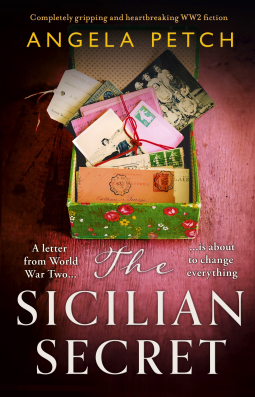
#BookReview ‘The Sicilian Secret’ by Angela Petch #WW2 #romance

Angela Petch knows how to tell a good World War Two romance. Her latest The Sicilian Secret blends a wartime romance with a 1973 mystery about parentage. There are lots of surprises along the way and a fascinating portrayal of Sicily during the Allied invasion of 1943. Angela Petch When Paige Caister’s beloved Aunt Florence dies suddenly, she inherits not only Squirrels cottage in Suffolk where Paige grew up with Flo, but also a box of mementoes. There is a necklace, a note to Paige which is unfinished and promising to ‘tell you everything,’ and an old airmail letter addressed to someone called Joy. This box sets Paige off on a journey of discovery, away from the life she thought she wanted.
The two major locations in this novel – rural Suffolk, and the south-eastern corner of Sicily – are vividly drawn. Mourning her aunt, Paige is thankful for the love of the Suffolk countryside, the trees and foxes, the kingfishers, that Flo gave her. As Paige follows the at first incomprehensible clues, she finds herself heading for Sicily seeking answers to questions she doesn’t really know.
In 1927 we meet a young Italian-British man, born in London to parents who recently emigrated from Sicily. Savio, called a ‘dirty Tally’ by schoolmates, wonders what it would be like to be a proper Italian, born in Sicily. When war breaks out, Savio and his parents are interned as ‘enemy aliens’ on the Isle of Man. Telling everyone that he was born in London and is English, Savio is ignored. He responds with his fists and is punished. His luck changes when a sympathetic British officer recognises his courage, resilience and determination.
In 1943, Lady Joy Harrison, leaves her over-bearing mother to take up an offer with a secret Government organisation. Tall and not ‘a girl’s girl,’ Joy’s fluent Italian leads her to a tough outdoor base in Scotland where she meets a young Italian determined to prove himself. What happens next is a time-old story of love in wartime; intense, real, fleeting, full of love and despair. Two characters, bonded by their difficulty in fitting in with society’s expectations, must decide whether to risk being true to themselves.
This is dual-timeline novel told from four perspectives; Joy, Savio, Paige and Florence. The story moves slowly at first as the author builds the picture, but the pace picks up as Paige’s investigation takes her to Italy. The ending is rather abrupt and the mystery perhaps predictable, but the journey of the wartime characters is engaging. The need to find out what happened to Joy and Savio made me read the book quickly over a weekend. This is a book to sink into and lose yourself in.

Here are my reviews of other novels also by Angela Petch:-
THE GIRL WHO ESCAPED
THE POSTCARD FROM ITALY
THE TUSCAN SECRET

If you like this, try:-
The Collaborator’s Daughter’ by Eva Glyn
‘The Secret Shore’ by Liz Fenwick
Love in a Time of War’ by Adrienne Chin #1FrySisters

And if you’d like to tweet a link to THIS post, here’s my suggested tweet:
#BookReview THE SICILIAN SECRET by Angela Petch https://wp.me/p2ZHJe-89Y via @SandraDanby

COMING SOON… THE NEXT BOOK I REVIEW WILL BE:- Robert Thorogood

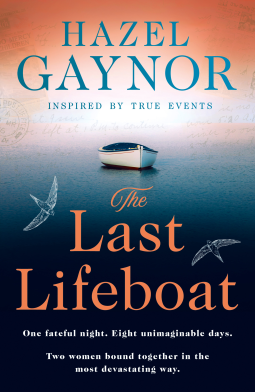
#BookReview ‘The Last Lifeboat’ by @HazelGaynor #WW2

What an emotional rollercoaster this book is. I’ve read a lot of fiction set during World War Two but The Last Lifeboat by Hazel Gaynor is a new take on wartime conflict and its effect on ordinary people. Children are being evacuated on ships, sent to safety in Canada, travelling in convoy across the Atlantic where German u-boats wait to attack. When the worst happens, Gaynor asks what does it take to survive?Hazel GaynorEngland 1940. After a short first chapter set in the lifeboat immediately after the u-boat attack, the story tracks back four months earlier. Alice King is a schoolteacher-now-librarian in Kent, a quiet job in a quiet place, but she longs to do something with her life. In London, widow Lily Nicholls considers the hard decision to send her two children, Georgie ten and younger brother Arthur, on an evacuation ship to Canada. Invasion threatens and the Blitz is just beginning. Lily struggles with competing fears, that her children may be killed in the bombing expected in London or that having sent them away for their safety they may die en-route or stay in Canada so she will never see them again. Lily is a daily help at a household in Richmond. Her employer Mrs Carr has already sent her two eldest children privately to Canada and the third, Molly, will go as soon as she’s recovered from a horse-riding accident. Deciding to register Georgie and Arthur and decide nearer the time, Lily queues next to a woman who introduces herself as mother of five Ada Fortune.
When Lily says goodbye to her children, she hands them into the care of ‘Auntie Alice,’ an escort with the Children’s Overseas Reception Board [CORB]. It is Alice’s first journey and she is excited, nervous, and worried about her pregnant sister Kitty left home alone. When the ship is torpedoed at night by a German u-boat there is enormous confusion. It is dark, disorientating, most people are asleep, distress drills forgotten. Alice finds herself the lone woman in a lifeboat of men and seven children, some from her own group, others are strangers. Thirty-five souls.
The story unfolds – and we already know Alice will be adrift in a lifeboat – through the eyes of Alice and Lily. It’s a slow mover at first as the scene is set but after the sinking, both women are waiting. One is hoping for rescue not daring to think of the alternative, the other hopeful then despairing, finally angry. Gaynor is especially good at writing the children, their characters, their influence on the adults, their bravery and ability to look beyond the horrible present up to the stars in the sky.
Inspired by the real life sinking in September 1940 of a vessel carrying ‘seavacuees,’ child refugees, Gaynor has brought new air to a story that made headlines and generated many letters of complaints when it happened, but is unfamiliar today. I’ve not been disappointed by a novel by Hazel Gaynor yet, she’s fast becoming one of my must-read authors.

Try the #FirstPara of THE LAST LIFEBOAT.

Read my reviews of these other novels by Hazel Gaynor:-
THE BIRD IN THE BAMBOO CAGE
THE COTTINGLEY SECRET

If you like this, try:-
The Collaborator’s Daughter’ by Eva Glyn
The Garden of Angels’ by David Hewson
A Beautiful Spy’ by Rachel Hore

And if you’d like to tweet a link to THIS post, here’s my suggested tweet:
#BookReview THE LAST LIFEBOAT by @HazelGaynor https://wp.me/p2ZHJe-7au via @SandraDanby

COMING SOON… THE NEXT BOOK I REVIEW WILL BE:- Suzanne Collins

#BookReview ‘One Moonlit Night’ by Rachel Hore @Rachelhore #WW2

Life can turn on a sixpence and that’s what happens to Maddie and her two small daughters in the Blitz. One Moonlit Night by Rachel Hore doesn’t start with a glimpse of the main character’s ordinary life before the change happens. It starts with a shock… a family made homeless by a bomb. Rachel HoreAlone in the midst of chaos, her husband Philip has been missing for ten months since the British army’s retreat from Dunkirk, Maddie takes Sarah and Alice to Knyghton in Norfolk to stay with Philip’s elderly Aunt Gussie. Maddie is caught in limbo, unable to grieve for Philip, unable to make decisions, not accepting his probable death, while living in an isolated country house – where Philip spent his childhood – which is the focus of long-held rumour and superstition in the nearby village.
Trying to make a living as a book illustrator, Maddie is seldom without a pencil and paper. But when she draws the face of an unfamiliar young girl, enigmatic, mysterious, she doesn’t know where her inspiration came from. Instinctively she keeps her drawing secret, not wanting to upset the fragile atmosphere at Knyghton. A secret is being kept, by Aunt Gussie, Philip’s cousin Lyle who runs the Knyghton farm, by family retainers, the Fleggs, and Maddie is sure it surrounds this mysterious young woman.
Bookended by a Prologue and Epilogue both set in 1977, Hore tells the stories of Maddie and Philip during World War Two with a flashback to their meeting in 1934. Many of the book’s themes are established in this pre-war section. Wild animals, painted by Maddie, but shot by Philip; children raised while parents are absent; the sharing of some secrets and the keeping of others. It is a complex, emotional story as Maddie, who flees to Knyghton seeking sanctuary instead finds unexplained silences, whispers and rumours she fears are aimed at Philip. Meanwhile Philip, having survived a massacre of British troops by the German army, attempts to find a way home. Philip’s sections are tense, forlorn and at times hopeless, a vivid portrayal of soldiers fleeing through Occupied and Vichy France.
This is a slow-burning story which rewards the reader’s perseverance as tension in the final third picks up and Maddie finally finds some answers. It’s a book which rewards further reading as layers of information, missed on first reading, become significant.

Click the title to read my reviews of two other books by Rachel Hore:-
A BEAUTIFUL SPY
A WEEK IN PARIS
THE HIDDEN YEARS
THE LOVE CHILD

If you like this, try:-
‘The Book of Lies’ by Mary Horlock
The Tuscan Secret’ by Angela Petch
The Skylark’s Secret’ by Fiona Valpy

And if you’d like to tweet a link to THIS post, here’s my suggested tweet:
#BookReview ONE MOONLIT NIGHT by Rachel Hore @Rachelhore https://wp.me/p5gEM4-5PJ via @SandraDanby

#BookReview ‘The Rose Code’ by @Kate_Quinn #WW2 #Bletchley

The Rose Code by Kate Quinn is the first book I’ve read by this author. I was drawn in by the WW2 setting and promise of mystery, but it’s much more than that. There are two timelines; 1947 as the royal wedding of Princess Elizabeth approaches, and 1939 at the outbreak of war. At its centre are three young women who don’t quite fit into their worlds. War introduces something new to their lives. Opportunity. Advancement. Recognition. Friendship. Home. Kate QuinnMabs has grown up in Shoreditch but longs to escape. She follows her own plan of improvement – reading the classics, copying the accents of assistants in upper class shops – with the long-term aim of rescuing her younger sister Lucy from poverty. Osla is a Canadian society girl, rich, pretty, labelled as a dim deb who trains as a riveter to make Hurricanes. Both have mysterious interviews and are sent on a train journey to ‘Station X’. This turns out to be a large country mansion – Bletchley Park – where secret war work is undertaken. Both must sign the Official Secrets Act before they are admitted. At their lodgings, they meet Beth, downtrodden daughter of their strict religious landlady Mrs Finch.
Beth’s skill at crosswords is recognised and soon all three girls are working at ‘BP’. In their jobs – typing, translating, decoding – the three girls get to know each other and, despite the rules of secrecy, they learn how gossip inside ‘BP’ works. Soon they are promoted, learning top secret information before it is transmitted to government, before even Churchill. And with knowledge comes power, and danger.
We follow the three through romances – Osla with young naval officer, Prince Philip of Greece – and bombings. There is something to like and dislike about each woman making them realistic, rounded characters. Mab was my favourite, Osla slightly irritating, while Beth changes the most throughout the course of the book. The 1947 strand becomes a hunt for a traitor as the Cold War gets colder and a former WW2 ally becomes the enemy. The girls must revisit their wartime secrets to question the nature of truth and loyalty, to each other and to their country.
The Second World War is often thought of as a time of liberation for women doing the jobs of men and in some ways it was; but Quinn shows this was a transitory advantage – temporary, class driven, certain jobs only – and women were still ultimately dependant on a man in so many ways. As the women look back at their former lives we see how much, and how little, has changed for them.
Some of the coding puzzles went straight over my head but that didn’t really matter. The Bletchley setting is great, the gossip of the weekly scandal rag, the familiar names dropped – Alan Turing, Joan Clarke – the book club and 3am kidneys on toast. I’m not sure the 1947 royal wedding deadline adds much to the narrative, there’s enough threat without it. As I was getting towards the end of the book and was interrupted, I snatched up the book again at the next possible opportunity.

Here are my reviews of other novels by Kate Quinn:-
THE BRIAR CLUB
THE ROSE CODE

If you like this, try:-
Life After Life’ by Kate Atkinson
Another You’ by Jane Cable
Life Class’ by Pat Barker

And if you’d like to tweet a link to THIS post, here’s my suggested tweet:
#BookReview THE ROSE CODE by @Kate_Quinn https://wp.me/p5gEM4-5lQ via @SandraDanby

#BookReview ‘A Beautiful Spy’ by Rachel Hore @Rachelhore #WW2 #spies

Rachel Hore is one of my favourite go-to authors when I want well-written, thoughtful escapism. Her latest is A Beautiful Spy, a pre-Second World War spy story based on a real case involving the infiltration of a communist spy cell. Rachel HoreAt a garden party in the summer of 1928, Minnie Gray is bored. She’s there with her mother who is trying to fix up her up with another young man, when she notices a striking young woman. When the enigmatic Miss Pyle asks if Minnie would consider working for the government, Minnie recognises a chance to escape her mother’s suffocating attention and her boring job at the Automobile Association.
Minnie meets Captain Max Knight, ‘M’, and is recruited as a member of British Intelligence’s M Section with the code name M/12. She moves to London, finds a flat and a part-time secretarial job. Her first task is to attend meetings of the local Friends of the Soviet Union group and volunteer to help. Her new life must be kept a secret from her Tory-supporting family and boyfriend, Raymond.
What follows is Minnie’s progressive immersion in the British Communist Party. Always a self-reliant person, Minnie begins to struggle with the secrecy. Feeling she belongs nowhere, living her life in disconnected bubbles of people who are unaware of each other, she seeks out new friends at a hockey club that she can be herself with. Minnie’s career as a spy has a up and down trajectory, most of the time nothing happens, and she feels she is failing her bosses. But all the time she is cementing her reputation as a reliable, trustworthy secretary and this pays off when she is asked to take secret money to communist supporters in India. Minnie meticulously keeps records, writes reports for M and tries to be nosy while seeming disinterested. As the tension increases and she feels watched, the danger she is risking becomes real and not a game.
Hore added her own imagination to the factual story of real-life spy Olga Gray who spied for Maxwell Knight of British Intelligence and whose testimony helped to convict a number of communists in 1938 for treachery. Using a true story as the foundation of a novel has its advantages and disadvantages. At times the story pauses, for exposition or perhaps because there were periods in the real life Gray’s story when not a lot happened, and this means the flow of tension can seem stop-start.
I really enjoyed A Beautiful Spy. It’s the sort of novel I wish I could find more often. It certainly means I’ll be reading the non-fiction books mentioned by Hore in her Author’s Note at the end.

Click the title to read my reviews of other books by Rachel Hore:-
A WEEK IN PARIS
ONE MOONLIT NIGHT
THE HIDDEN YEARS
THE LOVE CHILD

If you like this, try:-
After the Party’ by Cressida Connolly
Midnight in Europe’ by Alan Furst
The Ways of the World’ by Robert Goddard

And if you’d like to tweet a link to THIS post, here’s my suggested tweet:
#BookReview A BEAUTIFUL SPY by Rachel Hore @Rachelhore https://wp.me/p5gEM4-5lL via @SandraDanby