Yearly Archives: 2016

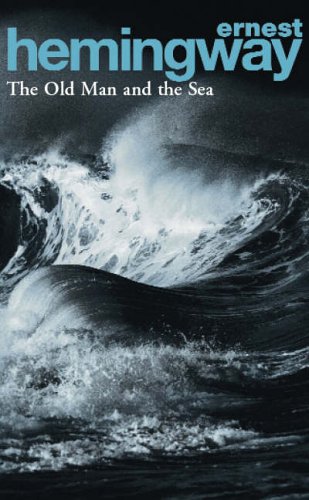
Great Opening Paragraph 83… ‘The Old Man and the Sea’ #amreading #FirstPara

“He was an old man who fished alone in a skiff in the Gulf Stream, and he had gone eighty-four days now without taking a fish. In the first forty days a boy had been with him. But after forty days without a fish the boy’s parents had told him that the old man was now definitely and finally salao, which is the worst form of unlucky, and the boy had gone at their orders in another boat which caught three good fish the first week. It made the boy sad to see the old man come in each day with his skiff empty and he always went down to help him carry either the coiled lines or the gaff and harpoon and the sail that was furled around the mast. The sail was patched with flour sacks and, furled, it looked like the flag of permanent defeat.”
Ernest Hemingway From ‘The Old Man and the Sea’ by Ernest Hemingway

And here are the #FirstParas from other novels by Hemingway:
A FAREWELL TO ARMS
FOR WHOM THE BELL TOLLS
TO HAVE AND HAVE NOT

Try one of these #FirstParas & discover a new author:-
‘I’ll Take You There’ by Joyce Carol Oates
‘The Impressionist’ by Hari Kunzru
‘That They May Face the Rising Sun’ by John McGahern

And if you’d like to tweet a link to THIS post, here’s my suggested tweet:
#Books #FirstPara THE OLD MAN AND THE SEA by Ernest Hemingway http://wp.me/p5gEM4-1Us via @SandraDanby 

#BookReview ‘Pretty Baby’ by @MaryKubica #mystery #suspense

Don’t be fooled by the cover photograph, this is not a thriller about trains. Pretty Baby by Mary Kubica is a psychological tale of parenting, grief, abuse, and husbands and wives who stop communicating and stop interacting. At times I had to take a gulp and accept some situations which seemed unrealistic to me, it was either that or put the book down. Mary KubicaHeidi and Chris live with their daughter Zoe in Chicago. One freezing wintery day, running for a train, Heidi spots a homeless girl with a baby. She hesitates, wondering whether to say something, and then the girl is gone. Wishing she had helped, Heidi looks out for the girl the next day… and takes her home. Zoe sees it as an invasion of her space, Chris worries about who the girl – Willow, with baby Ruby – really is, and whether she poses a threat to his family and property. Both are right to be worried.
At times I grew impatient with Heidi for indulging herself and impatient for Chris to show some intuition and see what was really going on. Unfortunately Chris is a bit of a stereotype, the hard-working banker husband who spends more time at work than home, fending off the glamorous co-worker. Zoe’s thoughts we do not hear. For me, Willow is the most interesting character and I would have liked to read more about her relationship with Matthew. Concentrating more on Willow’s story, rather than Heidi’s would make this a completely different book.
Unfairly, I think, the publisher compares Pretty Baby to Gillian Flynn and Paula Hawkins [in other words, to Gone Girl and The Girl on the Train, giants of their genre]. But they are page-turners whereas the pace of this story is slower, allowing the various threads to unfold. What kept me turning the page? What is Willow hiding? When will Chris or Zoe speak out? How far will Heidi go to help a stranger and why is she risking everything?
CLICK HERE TO READ MORE ABOUT THIS BOOK

Read my reviews of two other novels by Mary Kubica:-
DON’T YOU CRY
THE GOOD GIRL

If you like this, try novels:-
The Girl on the Train’ by Paula Hawkins
Gone Girl’ by Gillian Flynn
‘Stolen Child’ by Laura Elliot

And if you’d like to tweet a link to THIS post, here’s my suggested tweet:
#BookReview PRETTY BABY by @MaryKubica via @SandraDanby http://wp.me/p5gEM4-1T5

#BookReview ‘Brooklyn’ by Colm Tóibín #historical #romance

I absolutely love Brooklyn and give it 5*, which I rarely do. For me, 5* means true excellence. There is a spareness to the writing of Colm Tóibín which includes essential detail and excludes extraneous. I would not wish a single word to be changed or paragraph to be deleted, no passages seem surplus to requirement or confusing, no characters’ names are forgotten. Colm TóibínThere is no dramatic action, no mystery, no cliffhanger, simply the story of a young Irish girl who goes to Brooklyn and what happens to her there. Yes there is romance, but not in the commercial fiction sense of the term. Romance is just one element of the story.
It is 1950s rural Ireland. It is arranged by her elder sister and a family priest, that Eilish should go to America. It is deemed she has few prospects in Ireland. Brooklyn is a wonderful portrayal of 1950s Ireland and America, the attitudes, the social mores, the prejudices.
The drama comes from observing Eilish’s every step, her every thought, wondering what she will do next. The drama is in the small things. She feels so real. I wanted to say, ‘take a risk’ and ‘don’t’ and ‘go for it’. From the first few pages I was reeled in until I could not put the book down.
This is the sort of book which, having finished it, I almost wish I hadn’t read it; only so I can re-

Read my reviews of these other novels by Colm Tóibín:-
NORA WEBSTER
HOUSE OF NAMES

If you like this, try:-
Old God’s Time’ by Sebastian Barry
Water’ by John Boyne #1Elements
Shrines of Gaiety’ by Kate Atkinson

And if you’d like to tweet a link to THIS post, here’s my suggested tweet:
#BookReview BROOKLYN by Colm Tóibín http://wp.me/p5gEM4-1TQ via @SandraDanby 

A poem to read in the bath… ‘Happiness’

Happiness is a state we all aspire to but today there are heightened expectations of happiness, more children are said to be unhappy, depressed, disappointed, disaffected. This poem by the American Stephen Dunn [below] suggests a pragmatic approach to life.

Stephen Dunn

[photo: stephendunnpoet.com]

Because of copyright restrictions I am unable to reproduce the poem in full, but please search it out in an anthology or at your local library.

‘Happiness’
A state you must dare not enter
                  With hopes of staying,
Quicksand in the marshes, and all
 

The roads leading to a castle
That doesn’t exist.

For more about Stephen Dunn and his other poetry, click here for his website. His collection Different Hours won the Pulitzer Prize for Poetry in 2001.

Stephen Dunn


Different Hours’ by Stephen Dunn [WW Norton & Company] 

Read these other excerpts and find a new poet to love:-
‘Oxfam’ by Carol Ann Duffy
‘Digging’ by Seamus Heaney
‘The Cinnamon Peeler’ by Michael Ondaatje

And if you’d like to tweet a link to THIS post, here’s my suggested tweet:
A #poem to read in the bath: ‘Happiness’ by Stephen Dunn http://wp.me/p5gEM4-1Mf via @SandraDanby

SaveSave

#BookReview ‘A Death in the Dales’ by Frances Brody @FrancesBrody #cosycrime

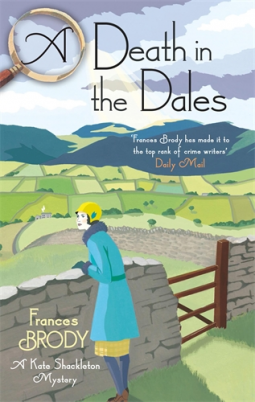
This was a book picked at random purely because of the beautiful cover design and the title. Frances Brody is a new author for me, I had never heard of her Kate Shackleton series. Inadvertently, I chose her latest, A Death in the Dales, the seventh Shackleton book. Now I plan to go back to the beginning. I didn’t struggle for lack of backstory, so I don’t think this is a series which must be read in order. Frances BrodyIt is 1926, Leeds, and Kate Shackleton’s niece is recovering from diptheria. Aunt and niece arrive in the Yorkshire Dales village of Langcliffe in the middle of the May Day celebrations, both in need of a holiday. There they are greeted by two men – the local doctor who has offered the loan of his recently deceased Aunt Freda’s house to Kate, and an elderly local man who presses into Kate’s hands a mysterious box. And so starts the unravelling of a murder, 10 years previously, of which Freda was a witness. Freda believed the wrong man was convicted and sentenced to death.
There is a lot going on in this story: the wrongly convicted murderer, the disappearance of a young farm boy, the courting of Kate by Freda’s nephew, the doctor, Lucian, another suspicious death, love entanglements and local secrets. Brody efficiently weaves together the various threads, setting murder against the beautiful but harsh backdrop of the Yorkshire Dales. There are lovely snippets of 1920s life, the cars, the fashion, the food, the Yorkshire dialect, and the aftermath of the Great War.
More than just a detective story, a period drama with strong female characters, a thoughtful reflection of the impact of the war on the lives of everyone, in city and country.

Read my reviews of these other Kate Shackleton novels:-
DYING IN THE WOOL #1KATESHACKLETON … and read the #FirstPara HERE
A SNAPSHOT OF MURDER #10KATESHACKLETON
DEATH AND THE BREWERY QUEEN #12KATESHACKLETON
A MANSION FOR MURDER #13KATESHACKLETON

If you like this, try:-
‘Agatha Raisin and the Quiche of Death’ by MC Beaton #1AGATHARAISIN
‘Cover Her Face’ by PD James #1ADAMDALGLIESH
‘An Uncertain Place’ by Fred Vargas #8COMMISSAIREADAMSBERG

And if you’d like to tweet a link to THIS post, here’s my suggested tweet:
#BookReview A DEATH IN THE DALES by Frances Brody @FrancesBrody http://wp.me/p5gEM4-1TM via @SandraDanby

#BookReview ‘Rush Oh!’ by Shirley Barrett #historical #whaling

I didn’t know what to expect from Rush Oh! Whaling is frowned on these days and somewhat gory. But I am so pleased I read it. Shirley Barrett has drawn a setting which comes alive. Shirley Barrett Australia, New South Wales, 1908. It is the story of Mary Davidson, the daughter of a whaler, it is her memoir of one year in her family’s rural life at Eden. It is not simply a story about whaling.
The historical context is so rich, so believable. The first page introduces the vivid setting: Mary’s home with its scent of boiling blubber for five months of the year, the rib cage of a 90ft blue whale sits in the front garden surrounded by jonquils, and a footpath laid with the pulverised vertebrae of whales. In this house in Eden lives Mary with siblings and their widowed father, the famous whaler George Davidson. During the whaling season her father’s whaling crew also live with the family and Mary and her sister cook meals and do the laundry. It is a hard life, harder when the whales do not appear in the bay and the general store will not further extend the credit line. Into this scene walks John Beck, former Methodist minister, offering his services as an oarsman. So this is a family story, a whaling/nature story, and a tale of teenage love.
George Davidson is a true character, his exploits were recorded in the local newspapers of the time and whale skeletons are on display at the Eden Killer Whale Museum. The ‘Author’s Note’ explains how Barrett combined history with invention in the writing of Mary’s memoir. As it is a memoir we know Mary is writing it years after the events she depicts, and there are hints of what may befall Mary and her family after the book has finished. The last two chapters are set later in her life and fill in some of the gaps.
I don’t like gory stories and don’t like whaling, but I found the story fascinating. Man v Beast fighting for survival, with an added twist: the whaling crew is aided in its hunt of the right whales by a group of Killer whales. Any catch is shared between men and killers. Again, factually correct. So, a story of Man + Beast interacting for the benefit of both.
Oh, and I loved the illustrations too. An unusual novel, but definitely worth a try.

If you like this, try:-
All the Birds, Singing’ by Evie Wyld
A Woman Made of Snow’ by Elizabeth Gifford
The Quick’ by Lauren Owen

And if you’d like to tweet a link to THIS post, here’s my suggested tweet:
#BookReview RUSH OH! by Shirley Barrett http://wp.me/p5gEM4-1TH via @SandraDanby

#BookReview ‘The Ballroom’ by Anna Hope #historical

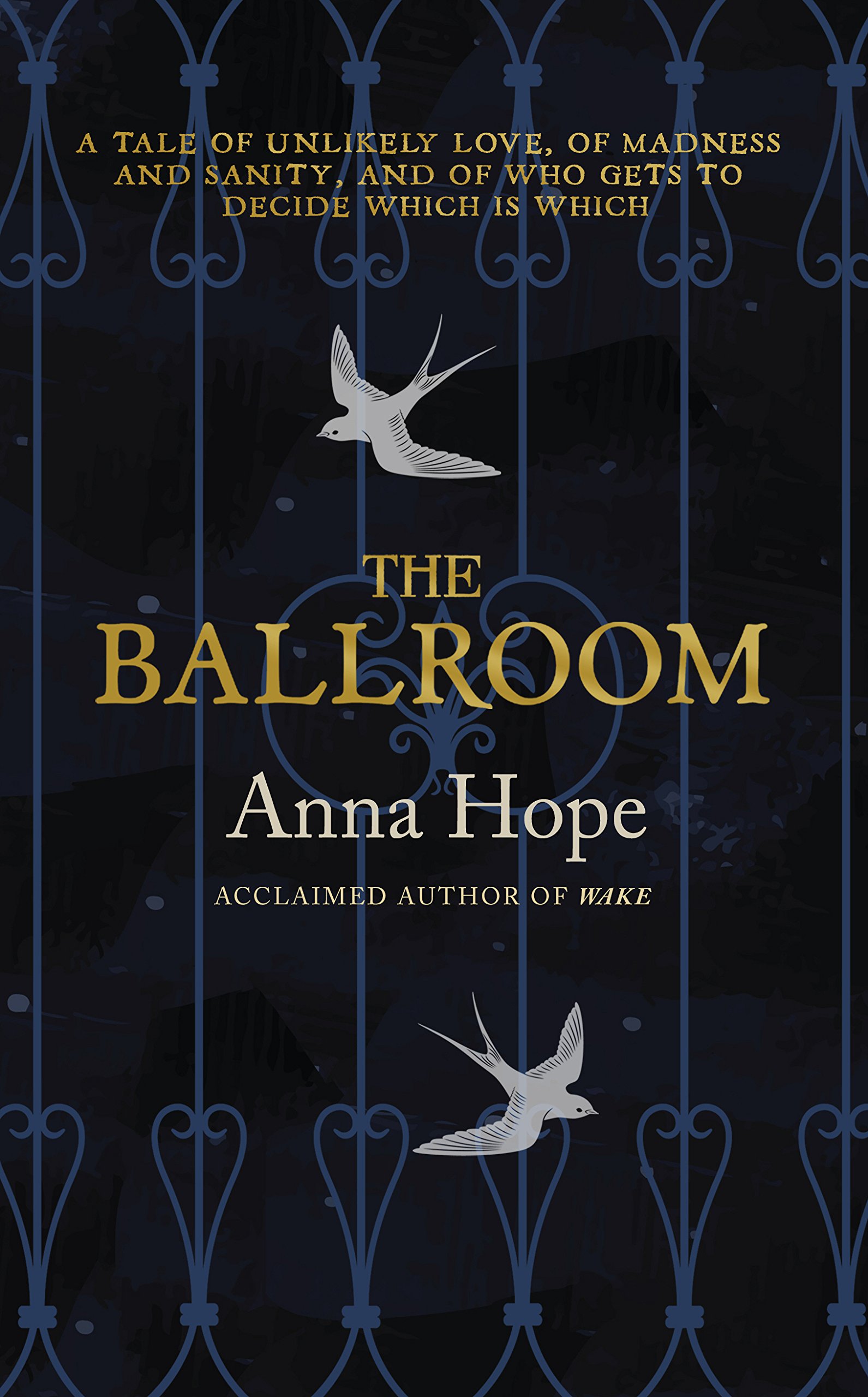
It is 1911 at the end of the Edwardian era. At an asylum on the edge of the Yorkshire moors, a new patient sees an opportunity to run and takes it. As Ella runs across a field, she sees men digging a deep hole in the earth. She stumbles and one of the men reaches to help her. This is her first sight of John, and The Ballroom by Anna Hope is their story. Anna HopeElla is admitted to the asylum because she broke a window at the mill where she works. It is a mystery why John is there. Their story is told slowly as they get glimpses of each other, rare, as the men and women are kept separate apart from the Friday night dance in the ballroom. The asylum is a magnificent Victorian building and the ballroom is designed to inspire its inhabitants, to improve their spirits, with its stained glass pictures of birds and brambles, painted walls and stage for musicians. Their story is also told by Dr Charles Fuller, his interest in eugenics sets their plight into context with the times. At first he enthusiastically organises a musical programme designed to lift the spirits of the imprisoned men and women – incidentally the men work outdoors, the women shut indoors – until an experimentation with new music changes everything.
The background is a boiling hot summer, spirits and tempers run high. Hope draws such a clear picture of the asylum and the moors – helped, I think, by the fact she used a real building as her inspiration – that I can see it. This is a story of love, rather than a romance; the setting and context sometimes make for a difficult read, but throughout I was willing Ella on. You can’t but help admire the guts and determination described.

Read my review of WAKE, also by Anna Hope.

If you like this, try:-
‘The Quick’ by Lauren Owen
‘All the Birds, Singing’ by Evie Wyld
‘Burial Rites’ by Hannah Kent

And if you’d like to tweet a link to THIS post, here’s my suggested tweet:
#BookReview THE BALLROOM by Anna Hope via @SandraDanby http://wp.me/p5gEM4-1TD

#BookReview ‘The Farm’ by @tomrobsmith #thriller #mystery

The Farm by Tom Rob Smith is the best thriller I’ve read this year, one of those ‘who do I believe?’ scenarios. It’s an ordinary day for Daniel until his mobile rings. It’s his father. “Your mother’s sick… She’s not well… She’s been imagining things.” His mother is in hospital, he says, she’s been committed. As Daniel prepares to fly to Sweden where his parents live, his father calls again; his mother is missing. Tom Rob SmithHis mobile rings again, it is his mother. She says his father is lying. Who to believe?
And so starts The Farm, a book which questions the parent/sibling relationship, lies told within the family, and how far a family can be stretched before it breaks. It is a story of a Swedish woman and her English husband retiring to a farm in rural Sweden, looking for a new start, an active retirement, anticipating being part of a close-knit community.
Tilde arrives in London and tells Daniel that his father is lying. She is not ill, she is in danger, she has discovered crimes, lies, irregularities. At all times she carries an old leather satchel which she says is full of evidence.
Who to believe?
Life on the farm is not as they hoped. Tilde says they have no money, the neighbours are brusque and cold, and the behaviour of her husband Chris has changed. Tilde becomes concerned for the adopted daughter of a neighbour, Håkan, a powerful man both physically and locally in the community, who becomes a new friend for Chris. Crimes have been committed, Tilde says. The community is keeping secrets, and she feels threatened. Her husband seems to be conspiring with Håkan. Tilde is afraid.
Chris tells Daniel that his mother has suffered a psychotic episode, that her behaviour has changed, that she may turn violent. That she is imagining things.
Daniel does not know who to believe. His reaction to his mother and father’s stories are coloured by the fact that he too has lied to them, by withholding from them the truth of his sexuality and his current relationship.
CLICK HERE TO READ MORE ABOUT THIS BOOK AT AMAZON

If you like this, try:-
‘The Accident’ by Chris Pavone
‘Slow Horses’ by Mick Herron #1SloughHouse
I Refuse’ by Per Petterson

And if you’d like to tweet a link to THIS post, here’s my suggested tweet:
#BookReview THE FARM by @tomrobsmith via @SandraDanby http://wp.me/p5gEM4-1IR

#BookReview ‘The Children Act’ by Ian McEwan #contemporary #family

The first page of this book by Ian McEwan is a classic, an intense study of Fiona Maye, High Court judge, a family law specialist, married, childless. The Children Act is the story of a slice of her life and how an upset with her husband coincides with a particular case. Each event impacts on the other and I was left considering how our legal system expects consistent wisdom from its judges when they have human frailties. Ian McEwan Before the story starts, there is a quotation from the Children Act, the piece of law according to which Judge Maye must compose her judgements: ‘When a court determines any question with respect to… the upbringing of a child… the child’s welfare shall be the court’s paramount consideration.’ But for Fiona Maye, her involvement with this case goes beyond the courtroom.
Adam is a teenager whose religious upbringing prevents him having a blood transfusion as part of his treatment for leukaemia. Fiona Maye routinely moves from one case to the next, digesting complicated information in an efficient, calm and clinical manner, but something about Adam’s situation is different. Her judgement will effectively decide if Adam shall live or die. She doesn’t know it, but it will also have implications for her own life. Is her decision affected by the fact that, nearing sixty, she is starting to feel her childlessness? As she hides from the stress of her husband’s departure in search of sexual adventure, she buries herself in her documents, in Adam’s case. Does personal judgement combine with her judicial process? Doesn’t it always?
This is a slim book about a difficult subject. McEwan writes without a spare word but his prose is more emotional and intense because of that. He concentrates on the two storylines – Adam’s medical situation, and Fiona’s separation from her husband – without extraneous detail about Fiona’s life. The legal case is set out somewhat drily, but then the law is dry. This is not a John Grisham legal thriller, it is a considered fictional examination of what it is like for a lawmaker to sit in judgement while at the same time retaining the humanity which qualified the judge for the job in the first place.
This cover is my hardback version, a Christmas 2014 gift which has been languishing on my shelf until a friend asked me for my opinion. Why did I wait so long to pick it up?

Read the first paragraph of THE CHILDREN ACT here

Try these reviews of other McEwan novels:-
MACHINES LIKE ME
NUTSHELL

If you like this, try:-
‘A Little Life’ by Hanya Yanagihara
‘The Signature of All Things’ by Elizabeth Gilbert
‘The House at the Edge of the World’ by Julia Rochester

And if you’d like to tweet a link to THIS post, here’s my suggested tweet:
#BookReview THE CHILDREN ACT by IAN MCEWAN via @SandraDanby http://wp.me/p5gEM4-1RB

Great Opening Paragraph 82… ‘Dinner at the Homesick Restaurant’ #amreading #FirstPara

“While Pearl Tull was dying, a funny thought occurred to her. It twitched her lips and rustled her breath, and she felt her son lean forward from where he kept watch by her bed. “Get…” she told him. “You should have got…”
Anne TylerFrom ‘Dinner at the Homesick Restaurant’ by Anne Tyler

Here’s the #FirstPara of BACK WHEN WE WERE GROWN UPS, also by Anne Tyler.

Read my reviews of these other novels by Anne Tyler:-
A SPOOL OF BLUE THREAD 
CLOCK DANCE
FRENCH BRAID
LADDER OF YEARS
REDHEAD BY THE SIDE OF THE ROAD
VINEGAR GIRL

Try one of these #FirstParas & discover a new author:-
The Philosopher’s Pupil’ by Iris Murdoch 
Mara and Dann’ by Doris Lessing 
Affinity’ by Sarah Waters

And if you’d like to tweet a link to THIS post, here’s my suggested tweet:
#Books #FirstPara DINNER AT THE HOMESICK RESTAURANT by Anne Tyler http://wp.me/p5gEM4-1Tb via @SandraDanby