Author Archives: sandradan1

Unknown's avatar

About sandradan1

Novelist. I blog about writing, reading and everything to do with books and writing them at http://www.sandradanby.com/. Come and visit me!

My Porridge & Cream read… @CarmenRadtke1 #books #cozymysteries

Today I’m delighted to welcome Carmen Radtke, writer of cozy historical mysteries. Her ‘Porridge & Cream’ read is Carpe Jugulum by Terry Pratchett.

“Picking my “Porridge & Cream” book made me realise how many writers give me endless comfort and entertainment. In the end, Terry Pratchett prevailed (sorry, Georgette Heyer, Agatha Christie, Joan Hess and Bill Bryson). At least half a dozen of his witches and night watch novels have seen me through richer and poorer, sickness and health. But the one I reread most often is Carpe Jugulum, although The Fifth Elephant, Feet of Clay and Jingo come a close second.

Carmen Radtke

‘Carpe Jugulum’ by Terry Pratchett – Carmen’s edition

“I discovered it aged twenty on my new boyfriend’s bookshelf. Two hours later he complained that I was still reading. Yeah, right … What makes this (and its companions) so irresistible is the sheer fun and inventiveness of the Discworld, its hilarious characters and madcap situations. But underneath the comedy lurks a darker side which itself contains a world of wisdom, a sense of justice and how life could be. In Carpe Jugulum, the witches of Lancre find themselves up against a new breed of vampires who’ve been invited by Lancre’s idealistic king. But once you have vampires – or vampyres – in the castle, they’re almost impossible to defeat. As with most of Terry Pratchett’s later novels, there is that sense of anger and despair underneath the funny façade. It’s the same kind of anger that propels most of my own writing, in the best possible way. I must have read this novel eight times or more and it still holds me spellbound. This isn’t just a book, it’s a treasure.”

Carmen Radtke

‘Carpe Jugulum’ by Terry Pratchett – current Corgi edition

BUY THE BOOK

Carmen’s Bio
Carmen Radtke is a published novelist and short story writer. She writes mostly cozy historical mysteries, although she’s also working on a contemporary cozy.

Carmen’s links
Website
Twitter
Facebook
BookBub
Goodreads

Carmen’s latest book
Carmen Radtke1931. A sea voyage from Australia to England is a dream come true for Jack, Frances, and Uncle Sal – until murder most foul stirs up a storm.
BUY THE BOOK

What is a ‘Porridge & Cream’ book? It’s the book you turn to when you need a familiar read, when you are tired, ill, or out-of-sorts, where you know the story and love it. Where reading it is like slipping on your oldest, scruffiest slippers after walking for miles. Where does the name ‘Porridge & Cream’ come from? Cat Deerborn is a character in Susan Hill’s ‘Simon Serrailler’ detective series. Cat is a hard-worked GP, a widow with two children and she struggles from day-to-day. One night, after a particularly difficult day, she needs something familiar to read. From her bookshelf she selects ‘Love in A Cold Climate’ by Nancy Mitford. Do you have a favourite read which you return to again and again? If so, please send me a message.

Discover the ‘Porridge & Cream’ books of these authors:-
Lizzie Chantree’s choice is ‘The Hobbit’ by JRR Tolkien
Rhoda Baxter chooses ‘Night Watch’ by Terry Pratchett
The Hitchhiker’s Guide to the Galaxy by Douglas Adams is chosen by Lexi Rees

And if you’d like to tweet a link to THIS post, here’s my suggested tweet:
Why does #cozymysteries author @CarmenRadtke1 re-read CARPE JUGULUM by Terry Pratchett? #books https://wp.me/p5gEM4-529 via @SandraDanby

#BookReview ‘The Winter of the Witch’ by @arden_katherine #fantasy #folklore

What a barnstorming end to a trilogy this is. The Winter of the Witch is the final part of the Winternight trilogy by Katherine Arden, a bewitching at times bewildering combination of Russian history, folklore, magic and fantasy. It’s the sort of book with depths that reward re-reading, weaving connections with the first two books into a finale that is both satisfying and heart-wrenching. Katherine ArdenThese are books about fitting in, and not fitting in, of being different, and finding your own way in a complicated sometimes mystifying world. Arden sets her tale in medieval Russia, adds layers of magic and Russian myth, woven together with the true story of the Battle of Kulikovo in 1380. She handles such a complex mixture with an assured, inspired hand. In my 2017 review of the first book, The Bear and the Nightingale, I described it as ‘not an easy read, but rewarding’ and I repeat that again for The Winter of the Witch. You have to pay attention, make connections, take fictional leaps of imagination, but you are rewarded.
As Vasya’s magical powers grow, so do the dangers to the traditional ways of life in old ‘Rus. No longer a girl but a hardened fighter, a young woman determined to do what is right, but still not immune to doubt, indecision and to love. As she performs more magic she knows she is danger of losing her grip on real life, of descending into madness, but must decide whether to save herself or to save those she loves. Vasya is an inspiring heroine, throwing herself into adventures against the will and advice of those around her, finding allies in unexpected places and facing enemies with a brave heart. My favourite characters included Solovey, Vasya’s magnificent bay stallion, and Ded Grib, the tiny mushroom chyert.
Moscow is burning and Vasya is to be burnt at the stake as a witch. If she can escape, she must leave behind everyone and everything she loves. Meanwhile a dark priest in Moscow is evangelising the people against the old ways and the chyerti, the folklore spirits,  while the Tatars are threatening war against ‘Rus. Grand Prince Dimitri must unite the Russian princes to defend their lives.
I’m sad to finish these books but now I will revisit them again, this time reading them back-to-back in the hope of understanding more of the complex layers of folklore. The world-building reminds me of Tolkien and Pullman in its depth and breadth.

Read my reviews of the other books in this trilogy:-
THE BEAR AND THE NIGHTINGALE #1WINTERNIGHT
THE GIRL IN THE TOWER #2WINTERNIGHT

If you like this, try:-
Children of Blood and Bone’ by Tomi Adeyemi
La Belle Sauvage’ by Philip Pullman
In Another Life’ by Julie Christine Johnson

And if you’d like to tweet a link to THIS post, here’s my suggested tweet:
#BookReview THE WINTER OF THE WITCH by @arden_katherine https://wp.me/p5gEM4-54J via @SandraDanby

A poem to read in the bath… ‘What I Learned From My Mother’ by Julia Kasdorf #poetry

Written in 1992 by American poet Julia Kasdorf, What I Learned From My Mother is a poem that crosses time, languages, cultures and continents. Its message is familiar to all women. The rituals of death and grieving, of condolence, of a kind word, flowers and chocolate cake and the blessing of your presence. Julia Kasdorf

This poem is subject to copyright restrictions. Please search for the full poem in an anthology or at your local library.

‘What I Learned From My Mother’

I learned from my mother how to love
the living, to have plenty of vases on hand
in case you have to rush to the hospital
with peonies cut from the lawn, black ants
still stuck to the buds. I learned to save jars
large enough to hold fruit salad for a whole
grieving household, to cube home-canned pears
and peaches, to slice through maroon grape skins
and click out the sexual seeds with a knife point.

Julia KasdorfBUY THE BOOK

Read these other excerpts and find a new poet to love:-
‘Invictus’ by WE Henley 
Runaways’ by Daniela Nunnari
Valediction’ by Seamus Heaney 

And if you’d like to tweet a link to THIS post, here’s my suggested tweet:
A #poem to read in the bath: ‘What I Learned From My Mother’ by Julia Kasdorf  https://wp.me/p5gEM4-4ch via @SandraDanby

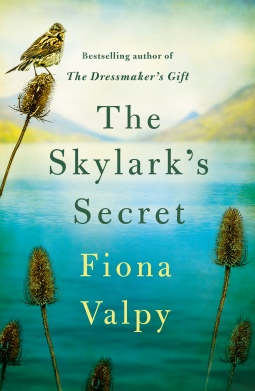
#BookReview ‘The Skylark’s Secret’ by Fiona Valpy @FionaValpy #WW2

Aultbea, a small fishing village on the shores of Loch Ewe on the west coast of Scotland, was transformed during World War Two into a Royal Navy base for the Arctic convoys. Into this true history Fiona Valpy weaves the fictional story of Flora Gordon in The Skylark’s Secret. Fiona ValpyIn 1977, Lexie Gordon returns to Loch Ewe from London after the death of her mother Flora. Lexie arrives home a single mother to baby Daisy, her West End singing career broken because of her damaged vocal chords. She feels a failure, gossiped about by the locals, seen as an outsider. Living in her mother’s cottage, she becomes curious about the father she never met and who her mother never spoke freely about.
In this dual timeline story, the narrative alternates clearly between Lexie in the Eighties and Flora in 1940-1944. Flora lives with her widowed father, Iain, gamekeeper for local estate Ardtuath House, in a quiet village where the toughest enemy is the weather. Then one day a fleet of warships arrive, the first of many. Loch Ewe is to become the temporary base for the Home Fleet. As thousands of navy ratings and officers arrive, Iain and Flora hope her brother Ruaridh will be aboard one of the destroyers. The convoys are to change life by the loch forever. Flora and her two friends Bridie and Mairi enlist in the Wrens as drivers. Laird’s son Alec also returns home with an English girlfriend. When Alec admits his lifelong love for Flora, the two young people must face the disapproval of the intimidating laird. With both Alec and Ruaridh on separate ships accompanying the Arctic convoy of merchant ships sailing for Russia, Flora fears for their lives. Meanwhile, a group of evacuees arrive from Glasgow, including two ragamuffins who lodge with bossy but kind-hearted Moira Carmichael.
Valpy unravels the story of Flora’s war years, the hardships, the danger, the exhilarating moments of freedom when the two young men arrive home safe. But always on the horizon is the next convoy which must face the twin dangers of Arctic ice and marauding U-boats. In 1978, Lexie must make a place for herself and Daisy in the community which includes her mother’s old friend Bridie, Lexie’s schoolfriend Elspeth, and fisherman Davy. She feels a stranger and takes to walking the hills, remembering times with her mother, trying to find her place in the world.
This is a story of wartime courage, romantic entanglements, fear, grief and gratitude for sacrifices made. A well-researched book that shows that research with a light hand on the page, allowing the fictional story room to breathe. Excellent.

If you like this, try:-
Mrs Sinclair’s Suitcase’ by Louise Walters
The Paying Guests’ by Sarah Waters
Another You’ by Jane Cable

And if you’d like to tweet a link to THIS post, here’s my suggested tweet:
#BookReview THE SKYLARK’S SECRET by Fiona Valpy @FionaValpy https://wp.me/p5gEM4-53P via @SandraDanby

#BookReview ‘The Missing Pieces of Nancy Moon’ by Sarah Steele #mystery

If you’re looking for a little escapism, a trip to the Riviera of the Sixties, then The Missing Pieces of Nancy Moon by Sarah Steele is for you. A family mystery spanning two generations is unravelled by Flo, Nancy Moon’s great-niece, who treads in her aunt’s footsteps across Europe following the clues. It all starts with a photograph. Sarah Steele Told in two timelines, it is Nancy’s story that came alive for me and I would have been happy if the book had focussed solely on Nancy. Brimming with nostalgia for life in the 1960s, the Riviera, Paris, Nice, Venice, Capri, Steele tells of Nancy’s trip as companion to Pea, a teenage girl sidelined by her distracted artist father and disinterested step-mother. It is clear Nancy is running from something and, though this is billed as a historical romance, it is essentially a tale of grief and moving on.
Clearing her grandmother’s house after her death, Flo finds a photograph of her grandma Peggy and three friends. One is a complete stranger. The next discovery is a cache of dressmaking envelopes. Each is dated and inside are cut-out dress pieces and other momentoes left by Great-Aunt Nancy, photographs, postcards and oddments. Flo has never heard of Nancy Moon. Why was she never spoken of? Flo, grieving not only for the death of Peggy but for the break-up of her marriage and the loss of a baby, decides to follow Nancy’s trail across Europe.
The motif of dressmaking patterns is underlined by Steele’s beautiful descriptions of Sixties dresses, swimsuits and fabrics. We see Nancy wearing the original version of the home-made garment, and then Flo following in her footsteps wearing a contemporary version of the same outfit. At the beginning there are so many characters introduced that it’s disorientating. It took me a while to unravel them until halfway through when I realised I simply wanted to read Nancy’s story.
So, an intriguing story idea weakened by the sudden switching of narrator and timeline intended to introduce mystery. The simple addition of chapter headings with the year and location would help. In truth I figured out the mystery very early on. How much stronger this would be as a single viewpoint, traditional historical narrative without the coincidences and neat solutions of Flo’s storyline.
I was pleased I stuck with the story, despite the slow beginning. There is plenty to admire in the writing and the locations are beautiful, a real piece of escapism for armchair travellers.

If you like this, try:-
The Lost Letters of William Woolf’ by Helen Cullen
On a Night Like This’ by Barbara Freethy
The Art of Baking Blind’ by Sarah Vaughan

And if you’d like to tweet a link to THIS post, here’s my suggested tweet:
#BookReview THE MISSING PIECES OF NANCY MOON by Sarah Steele https://wp.me/p5gEM4-53k via @SandraDanby

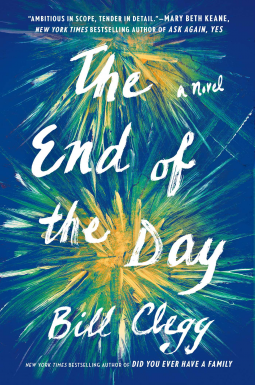
#BookReview ‘The End of the Day’ by Bill Clegg #contemporary

Three girls grow up living near each other in Wells, Connecticut. Dana. Jackie. Lupita. Each in a different social class. With or without wealth. With or without expectations. Privilege, no privilege. One betrayal touches their lives and has ramifications for the next generation. The End of the Day by Bill Clegg is about the fragility of loyalty when teenage bonds are tested by love, jealousy, indiscretions, secrets and lies. ‘To end a friendship, it just takes someone willing to throw it away.’ Because when a decision is taken, more than one life is affected. Bill CleggClegg has written a genealogical story wrapped up in two timelines, the years not defined but basically the Sixties and the Noughties. An elderly woman, frail and confused, sets out from New York on an excursion. Another old woman wakes in her family home to a beautiful passage of memories. A taxi driver in Hawaii ignores the repeated messages left on her mobile phone. These three are connected by a youthful flirtation, a pregnancy, arrangements made and lies told, assumptions made. A fascinating story, characters so believable, but the details lacking in clarity – perhaps because so many lies have been told. In the Noughties are mother and son Alice and Hap. Hap’s life takes two momentous turns when his father is seriously ill in hospital, the same hospital where his wife has just given birth to their baby daughter. A little girl still, significantly, without a name.
The first half is a slow read with beautiful writing that at times edged towards the self-indulgent. The book, though not long, felt long. I wanted occasional clarity of story and shorter paragraphs. I was unclear about the different houses featured – the childhood homes of Jackie and Dana and the area in which they lived. Perhaps the author knows it so well he forgot to be clear for the reader. The story moves location and year without specification which can be disorientating.
In re-reading the notes I wrote after finishing the book, I found I had twice written ‘lacking clarity’. The story is a sad one, of connections made, lost, and unknown, but for me it could be more touching with a clearer narrative spine. That said, the story stayed with me days after I finished it – always a good sign. The parallels between the generations, the vulnerability of a baby dependent on adults for the truth of its origins, the duty to protect and the urge to run from an old life. An okay story wrapped up in exquisite writing.

Here’s my review of DID YOU EVER HAVE A FAMILY?, Bill Clegg’s first novel.

If you like this, try:-
A Sudden Light’ by Garth Stein
Summertime’ by Vanessa Lafaye
We Are Water’ by Wally Lamb

And if you’d like to tweet a link to THIS post, here’s my suggested tweet:
#BookReview THE END OF THE DAY by Bill Clegg https://wp.me/p5gEM4-523 via @SandraDanby

#BookReview ‘The Streets’ by Anthony Quinn #historical #sociology

The Streets by Anthony Quinn is part sociology, part history, part mystery, part political discussion. Set in the 1880s, it sets a fictional tale within true history, the sort of thing hated by historians themselves who fear that readers will believe it is all true. They should credit we readers with the ability to recognize fiction from fact. This is a story encompassing poverty, pride, crime, corruption, community and, almost, eugenics. Anthony QuinnDavid Wildeblood has a new job. He is an inspector, a fact-collector, charged with touring the North London borough of Somers Town, conducting interviews and collating information to be published in Henry Marchmont’s weekly news sheet The Labouring Classes of London; living conditions, work, income, religion, diet, pastimes, crime, health etc. Marchmont is based on Henry Mayhew’s London Labour and the London Poor and Charles Booth’s Life and Labour of the People of London. At first Wildeblood is an outsider and woefully naïve, until he stumbles on costermonger Jo. Soon Wildeblood learns the argot, the alleys to avoid, and how to best submit his report to Marchmont’s loyal assistant Mr Rennert. Then he stumbles onto a scheme in which criminal landlords defraud their tenants, refuse to repair their properties then clear the streets for redevelopment leaving the inhabitants homeless. When a local man organizes a protest, he is later found drowned in the river. Wildeblood is warned by a reporter friend, Clifford Paget of The Chronicle, that his life may be in danger but he continues to investigate.
Wildeblood’s time in Somers Town is juxtaposed with his, albeit tenuous, relationship with his wealthy godfather Sir Martin Elder and Kitty, his daughter. The two stories come together as he recognizes a connection between a social charity providing poor city dwellers with a day trip to the countryside, and what is happening in Somers Town. The tentacles of property exploitation, fraud and social engineering spread around London. At times the sociology and politics of the author intruded into my head and the exposition distracted me from the story but, like all Quinn’s novels, the characters are a delight.
The description of The Streets as a ‘thriller’ though, is misleading. This is a thoughtful considered novel. Well-researched, it feels as if this book is close to the author’s heart; perhaps too close. For me, it was a slower, worthy read, compared with his other novels and less accessible.
CLICK HERE TO READ MORE ABOUT THIS BOOK

Read my reviews of these other novels also by Anthony Quinn:-
CURTAIN CALL
FREYA
HALF OF THE HUMAN RACE
MOLLY & THE CAPTAIN
OUR FRIENDS IN BERLIN
THE RESCUE MAN

If you like this, try:-
‘The Walworth Beauty’ by Michèle Roberts
‘The Penny Heart’ by Martine Bailey
‘Birdcage Walk’ by Helen Dunmore

And if you’d like to tweet a link to THIS post, here’s my suggested tweet:
#BookReview THE STREETS by Anthony Quinn https://wp.me/p5gEM4-3e2 via @SandraDanby

SaveSave

#BookReview ‘The Midnight Library’ by @matthaig1 #contemporary

I loved the concept of The Midnight Library by Matt Haig as soon as I read the blurb. A young woman finds herself in the mysterious midnight library where she can choose a book, live a version of her life as it might have been and so mend the regrets and disappointments she has with her life already lived. Matt HaigNora Seed has had a horrible day and wishes she was dead. She has let everyone, including herself, down. Her brother isn’t talking to her. She’s lost her job. And her cat is dead. ‘Every move had been a mistake, every decision a disaster, every day a retreat from who she’d imagined she’d be. Swimmer. Musician. Philosopher. Spouse. Traveller. Glaciologist. Happy. Loved.’ She has a long list of things she can’t do and no list of what she has achieved.
Instead of dying Nora meets the enigmatic Mrs Elm, librarian at Nora’s school nineteen years ago. Between life and death, explains Mrs Elm, there is a library. ‘Every book provides a chance to try another life you could have lived. To see how things would be different if you had made other choices.’ In a kind of literary Sliding Doors combined with It’s a Wonderful Life, Nora walks into lives she may have lived. Each life contains people and places Nora knows but who she feels out-of-touch with or is assumed to have a knowledge or skill she doesn’t possess. Consequently, she spends a fair amount of time fibbing and winging her way through situations, trying to keep her rather strange secret and lying to people she is supposed to care about. The deal with the midnight library is that if she feels disappointment in the life she is sampling, she will be returned to the library.
In a predictable character curve, in each life Nora visits she learns something about herself. Some lives we see in detail, others in half a page. This left me unsatisfied. I wanted more, for her to stay longer in situations, to see what she learned. I was left feeling this is a novel combined with a mental health guide to living with depression and regrets. Matt Haig is a successful non-fiction author about the subject but sadly I finished this novel feeling I had bought a novel and been given a self-help guide. In some places, the exposition got in the way of Nora’s story. That said, Haig has a light hand at writing comedy and there are some wonderful moments that made me chuckle. One being Nora’s telephone conversation with her film star boyfriend. The other is when she finds out what being a ‘spotter’ in the Arctic really means.

Read my reviews of these other Matt Haig novels:-
THE HUMANS
HOW TO STOP TIME

If you like this, try:-
In the Midst of Winter’ by Isabel Allende
The Lie of the Land’ by Amanda Craig
The Perfect Affair’ by Claire Dyer

And if you’d like to tweet a link to THIS post, here’s my suggested tweet:
#BookReview THE MIDNIGHT LIBRARY by @matthaig1 https://wp.me/p5gEM4-50r via @SandraDanby

#BookReview ‘Charlotte Brontë A Life’ by Claire Harman #biography

How did Charlotte Brontë create the character of Jane Eyre? Was Villette really based on a doomed love affair in Brussels? How much of the real author is in these novels? If you have read Charlotte Brontë’s books, you will have asked yourself these questions. The biography Charlotte Brontë: A Life by Claire Harman provides some fascinating answers. Claire HarmanThis is the first biography of Brontë I have read and I wish I had read it sooner. Harman tells the enthralling story of the family whose losses, grief, hardship, isolation and disappointments populate the novels of the three sisters – Charlotte, Emily and Anne. It is impossible to write about Charlotte without writing about the family, and particularly about Emily, Anne and brother Branwell. Everyone knows the headline facts about the Brontës – Haworth parsonage, mother and siblings dying, Branwell’s addiction, and the imaginary kingdoms of Angria and Dondal in which the children lose themselves. But Harman makes the history accessible, telling the life of Charlotte in chronological order starting briefly with her father Patrick.
There are clear references to real life appearing in the novels and Harman casts light on the writing process of Charlotte and her sisters. For a novelist, this is required reading. Some of Charlotte’s experiences written about in letters appear directly in her novels, along with paragraphs lifted from journals and lines and passages lifted from works earlier abandoned. Harman extensively quotes Elizabeth Gaskell – who wrote the first biography of Charlotte Brontë published in 1857, based largely on Charlotte’ letters sent to her friend Ellen Nussey – and Charlotte’s correspondence with friends and her London publisher.
It is a tragic story but Harman is never over-sentimental. She is excellent at pairing characters, incidents and emotions in the novels with Charlotte’s real life.
A must read for anyone who is a fan of the Brontë novels.

If you like this, try:-
The Girl at the Window’ by Rowan Coleman
Miss Austen’ by Gill Hornby
‘The Vanished Bride’ by Bella Ellis #1BronteMysteries

And if you’d like to tweet a link to THIS post, here’s my suggested tweet:
#BookRreview CHARLOTTE BRONTË: A LIFE by Claire Harman https://wp.me/p5gEM4-3Xi via @SandraDanby

My Porridge & Cream read… @MaggieCobbett #books #Yorkshire

Today I’m delighted to welcome Yorkshire novelist Maggie Cobbett. Her ‘Porridge & Cream’ read is The Beloved Vagabond by William J Locke.

The Beloved Vagabond by William J Locke has been a favourite of mine since childhood. The now tatty illustrated edition, published in 1922, belonged to my father and we used to read it together. It is that memory that often draws me back to it, together with the fact that Paragot, the main character, (as depicted in the wonderful illustrations by Jean Dulac, see below), bears more than a passing resemblance to Dad as he would have liked to be. An artist, writer and rover at heart, he was trapped for most of his life in mundane occupations that kept him in Yorkshire.” Maggie Cobbett

Maggie Cobbett

Paragot in Paris

Maggie’s Bio
Born in Leeds, Maggie studied modern languages at the University of Manchester and then spent many years teaching in the UK and abroad, taking every opportunity to travel more extensively in the holidays. Since taking early retirement and now based back in Yorkshire with her family, she writes short stories, articles, reviews, ‘fillers’ and even the occasional poem. Until the pandemic struck, she also appeared regularly as a ‘village regular’ on Emmerdale.

Maggie’s links
Workhouse Orphan at Facebook
Website
Amazon 

Maggie’s latest book
Maggie CobbettMaggie explains, “Workhouse Orphan, inspired by a brave young man way back in my family history and dedicated to him, tells the story of a boy forced at a very tender age to leave his siblings behind in their grim London workhouse and work down a Yorkshire coal mine. Despite the hardships he encounters, he never loses sight of his wish to reunite the family. While not originally intended to be a book for children – it’s actually suitable for anyone with an interest in social history – I’ve been told by parents that it’s made a good bedtime read and given their own offspring cause to realise how lucky they are!”
BUY THE BOOK

What is a ‘Porridge & Cream’ book? It’s the book you turn to when you need a familiar read, when you are tired, ill, or out-of-sorts, where you know the story and love it. Where reading it is like slipping on your oldest, scruffiest slippers after walking for miles. Where does the name ‘Porridge & Cream’ come from? Cat Deerborn is a character in Susan Hill’s ‘Simon Serrailler’ detective series. Cat is a hard-worked GP, a widow with two children and she struggles from day-to-day. One night, after a particularly difficult day, she needs something familiar to read. From her bookshelf she selects ‘Love in A Cold Climate’ by Nancy Mitford. Do you have a favourite read which you return to again and again? If so, please send me a message.

Discover the ‘Porridge & Cream’ books of these authors:-
Julia Thum’s choice is ‘The Little White Horse’ by Elizabeth Goudge
Lexi Rees chooses ‘The Hitchhiker’s Guide to the Galaxy’ by Douglas Adams
The Shell Seekers’ by Rosamund Pilcher is chosen by Carol Warham

And if you’d like to tweet a link to THIS post, here’s my suggested tweet:
Why does Yorkshire author @MaggieCobbett re-read THE BELOVED VAGABOND by William J Locke? #books https://wp.me/p5gEM4-4Yt via @SandraDanby