Author Archives: sandradan1

Unknown's avatar

About sandradan1

Novelist. I blog about writing, reading and everything to do with books and writing them at http://www.sandradanby.com/. Come and visit me!

#BookReview ‘The Believers’ by Zoe Heller #contemporary

The Believers by Zoe Heller is the story of a New York family and how serious illness challenges each person to consider in what they believe. The Litvinoffs are a Jewish family used by Heller as a prism to question our beliefs, not just religious but also motherhood, fidelity and politics. Zoe HellerThe story starts with the meeting of English student Audrey and American lawyer Joel, at a party in London in the Sixties. The action then shifts swiftly to 2002. Audrey and Joel live in New York, he is a prominent and outspoken radical lawyer, she does good works. They have two daughters, Rose and Karla, and adopted son Lenny. On the day he is due to appear in court representing a controversial defendant, Joel has a stroke. As he lays in a coma, Heller shows each of the family confronting the situation, its impact on their own lives, or not as the case may be. None of the characters are particularly likeable, and the storyline can be difficult in places, but I found the pages turned quickly as I wanted to know the ending. Of course, like life, there is no neat finale only more life to follow as the stories of the family continue.
Audrey is a deliciously outspoken and brutal mother to her daughters, though she mollycoddles her son to a ridiculous degree. Rosa is re-discovering her Jewish roots, having been raised in a non-observant Jewish family. We follow her exploration of the oddities of Orthodoxy, as she wrestles with the concept of accepting things she doesn’t understand. Karla, unhappily married and trying for a baby, is the recipient most frequently of Audrey’s caustic tongue. Not looking for an affair, she nevertheless stumbles into one, and has difficulty believing and accepting her suitor could possibly be attracted to her. Lenny is a drug addict who believes in nothing except his next hit. Meanwhile, Joel in his hospital bed is the cog of the wheel around which they all move.
I was left loving Heller’s writing, she has a wonderful turn of phrase. ‘Depression, in Karla’s experience, was a dull, inert thing – a toad that squatted wetly on your head until it finally gathered the energy to slither off. The unhappiness she had been living with for the last ten days was quite a different creature. It was frantic and aggressive. It had fists and fangs and hobnailed boots. It didn’t sit, it assailed. It hurt her.’
But, I finished the book dissatisfied with the story. Audrey’s Englishness did not come into play, except in the first chapter which feels unrelated to the rest of the book, and she seems unnecessarily harsh and unfair without real justification. What made her so bitter? Something which happened between the Prologue in 1962, and the main story in 2002? The big surprise, when it comes, is perhaps predictable to everyone except Audrey.

Read the opening paragraph of NOTES ON A SCANDAL, also by Zoe Heller.

If you like this, try:-
Purity’ by Jonathan Franzen
‘A Spool of Blue Thread’ by Anne Tyler
‘A Little Life’ by Hanya Yanagihara

And if you’d like to tweet a link to THIS post, here’s my suggested tweet:
#BookReview THE BELIEVERS by Zoe Heller http://wp.me/p5gEM4-2BZ via @SandraDanby 
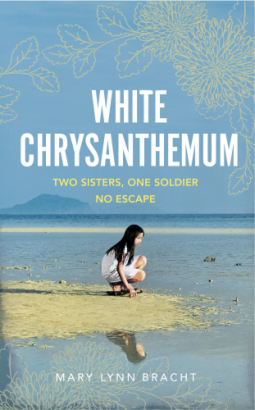
#BookReview ‘White Chrysanthemum’ by Mary Lynn Bracht‪ #WW2

It’s not often that I find myself using the words ‘delightful’ and ‘harrowing’ in the same book review, but here they are. White Chrysanthemum by Mary Lynn Bracht is the harrowing story of two Korean sisters separated during World War Two; one snatched to become a ‘comfort woman’ for Japanese soldiers, the other saved by her older sister’s actions. Mary Lynn BrachtIt is difficult to read of the violence, the arrogance, the misuse of power and the humiliation of this piece of war history – still being publicised and discussed – but this is leavened by the magical water sequences. Sixteen-year old Hana is a haenyeo, a female diver of the sea, she is taught by her mother, in the family tradition, to dive deep, hold her breath and withstand the cold. When she is abused, she retreats to her memories. She is a tough cookie.
One day, she and her mother are diving, their father is away fishing, and her younger sister Emiko sits on the beach, guarding the buckets that contain their day’s catch from interested seagulls; then Japanese soldiers arrive. Desperate to stop them taking her sister to a life of captivity, Hana races out of the water and distracts them. Throughout Hana’s capture and enforced slavery, at the most horrific moments of fear and violation, the thing that anchors her to the idea of survival is the thought of her sister, learning to dive, the memory of the water, the smell of the sea. “Hana is lying on the bottom of the ocean, looking upward at the sunlight shimmering above the surface. The great ocean’s heartbeat pulses against her eardrums. The current caresses her skin. A heaviness on her chest is an old ship’s anchor she has found. She hugs it close to weigh her down.”
Emi, Hana’s eleven-year old sister, is too young to understand what is happening when Hana is taken away. It is Emi’s story, told looking back when she is herself a grandmother, which brings contemporary perspective to the microscopic detail of Hana’s story. The complicated war history of this region is clarified as we learn of Emi’s silence about her experiences in World War Two and the Korean War which followed. Such is her shame she has never told her two children that they had an aunt. But once a year Emi travels to Seoul to take part in the Wednesday Demonstration to demand official recognition for the ‘comfort women’.
The bibliography at the end of the book is testament to the author’s research but this never weighs heavily in the story. When a little historical exposition is necessary, Bracht adds it with a light hand. This is a solemn book with flashes of beauty and love which give you hope to read to the end. I admired Hana’s strength and honour. And I did not guess the ending. A delightful read.

If you like this, try:-
‘The Translation of Love’ by Lynne Kutsukake
‘The Aftermath’ by Rhidian Brook
‘The Gift of Rain’ by Tan Twan Eng

And if you’d like to tweet a link to THIS post, here’s my suggested tweet:
#BookReview WHITE CHRYSANTHEMUM by Mary Lynn Bracht‪ https://wp.me/p5gEM4-3hH via @SandraDanby

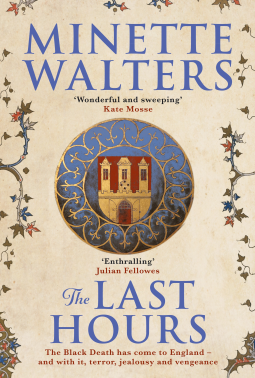
#BookReview ‘The Last Hours’ by Minette Walters #historical

I cannot remember when I last read a novel by Minette Walters although her psychological crime thrillers occupy a considerable section of my bookshelf. As soon as I read the blurb for The Last Hours, I was fascinated. What could  Walters do with a historical drama based on the Black Death of 14th century England? I wasn’t disappointed. Minette WaltersThe Last Hours tells the story of the Develish demesne in Devon in 1348 when infectious illness spread rapidly and threatened to wipe out the 200 bonded serfs, servants and family. What did take me by surprise is that The Last Hours is only the first instalment of the story, so there is the unexpected anticipation of the next book now to enjoy.
The first character we meet, pre-infection, is Eleanor. The only daughter of Sir Richard and Lady Anne of Develish, she watches preparations for the departure of her father and his retinue as they travel to meet the neighbouring lord to whose son Eleanor is promised. Eleanor seems at once fascinated by and repelled by a serf, Thaddeus Thurkell, who she distains for his illegitimacy. As a first chapter it sets up the relationships and future action in such a detailed way, I found myself re-reading it for clues. Because, though this is a historical novel, never forget it is written by Walters, author of The Scold’s Bridle and The Ice House.
Mystery, deceit, betrayal, lies and gruesome horror are a part of the story of how Lady Anne marshalls the population of Develish, family, stewards, servants and serfs alike, to survive when infection threatens to engulf them. Thaddeus is a key character, educated, tough and inspiring, he becomes a key figure when Sir Richard’s party returns from its visit to the neighbouring Bradmayne estate. Facing disease, Lady Anne must decide how to save the lives of the majority. Her knowledge of basic medical practices and herbal remedies, gleaned for her girlhood in a nunnery, enable her to reorganise Develish for survival. Walters does not lighten her descriptions of the Black Death; its symptoms, the corpses and infection are explicitly described but not in a sensationalist way, instead they add tension to the plot. Can this group of people possibly survive when whole Devonshire villages are dead and packs of wild dogs roam the countryside? How can you protect yourself from infection when the source of the disease is unknown and there is no help from outside?
The storyline is handled with expert timing. Just at the point where I wondered where the next threat would come from, Walters splits the storyline in two. After a suspicious death of a teenage boy, Thaddeus takes a group of five youths across the moat to explore the surrounding countryside to assess the threat from bandits and disease, and search for food. Meanwhile Eleanor’s behaviour is becoming more extreme, her hatred for her mother and the serfs make daily life difficult for all in such a confined space. Indulged by her father, Eleanor has grown to be a selfish, arrogant, ungrateful young woman who believes in her own superiority and expects special treatment even in such abnormal times.
As well as a historical study of the disease, The Last Hours also examines the social changes of the time, as serfs become educated and, encouraged by Lady Anne, consider a life independent of the feudal system. Walters has written two Black Death novels, the second is The Turn of Midnight.

Read my reviews of two other historical novels by Minette Walters:-
THE TURN OF MIDNIGHT #2BLACKDEATH
THE PLAYERS
THE SWIFT AND THE HARRIER

If you like this, try:-
‘Gone are the Leaves’ by Anne Donovan
‘At the Edge of the Orchard’ by Tracy Chevalier
‘The Taxidermist’s Daughter’ by Kate Mosse

And if you’d like to tweet a link to THIS post, here’s my suggested tweet:
#BookReview THE LAST HOURS by Minette Walters https://wp.me/p5gEM4-35D via @SandraDanby

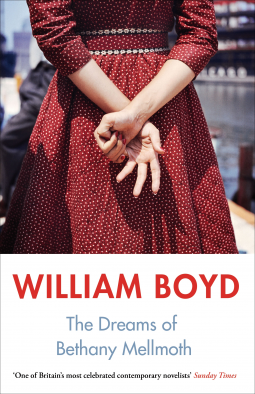
#BookReview ‘The Dreams of Bethany Mellmoth’ by William Boyd #shortstories

Partly good and partly disappointing: The Dreams of Bethany Mellmoth, the latest collection of short stories by William Boyd, is a bit of a curate’s egg. The shorter the stories, the more satisfying. William BoydOrganised in three parts, the first comprises seven short stories. If asked for my favourite from Part 1, I would say the first, ‘The Man Who Liked Kissing Women’. Ludo Abernathy is an art dealer who has foresworn affairs, his previous dalliances having finished three marriages. Now, he sticks to kissing women. Except when he can’t resist the temptation of making a killing on a Lucien Freud painting.
The title story, the longest in the anthology, makes up Part 2. It is more novella than short story, and I almost wish Boyd had developed it as such with a full plotline rather than letting Bethany Mellmoth drift from scene to scene. Bethany is a naïve twenty-something who drifts from boyfriend to boyfriend, dreaming of what she can do with her life but failing to make it happen. Each time it goes wrong, she gives up and moves back with her mother. It was a pleasant read but I’m unclear of Boyd’s central message – perhaps, the over-reliance of young drifters on parents rather than being truly independent – which meant I felt no urgency to read to the end. Of course I did. Bethany’s drifting started to annoy me; perhaps that was Boyd’s point?
Part 3 comprised one story, ‘The Vanishing Game: An Adventure’ which stopped abruptly. It starts off well: Alec Dunbar is an actor who keeps being called to auditions, mistakenly for Alexa Dunbar. His bad day improves when an actress who is waiting for an audition for the same film, offers him £1000 to deliver a package for her to Scotland. Dunbar’s road journey is peppered with references to the various films he has appeared in, and this is humorous. But the action becomes increasingly oddball, and the ending was disappointing. I prefer stories and novels that don’t tie up all the loose ends, but this one finished with too much remaining unexplained.

Read my reviews of:
ANY HUMAN HEART
LOVE IS BLIND
NAT TATE: AN AMERICAN ARTIST 1928-1960
ORDINARY THUNDERSTORMS
SWEET CARESS
THE BLUE AFTERNOON
TRIO
WAITING FOR SUNRISE
… and try the first paragraph of ARMADILLO

If you like this, try:-
‘All the Rage’ by AL Kennedy
‘The Story’ ed. Victoria Hislop
‘The Milk of Female Kindness’ ed. Kasia James

‘The Dreams of Bethany Mellmoth’ by William Boyd [UK: Viking]

And if you’d like to tweet a link to THIS post, here’s my suggested tweet:
#BookReview THE DREAMS OF BETHANY MELLMOTH by William Boydhttps://wp.me/p5gEM4-3jD via @SandraDanby

SaveSave

SaveSave

SaveSave

SaveSave

#BookReview ‘The Cursed Wife’ by Pamela Hartshorne #historical

London 1590. The Cursed Wife by Pamela Hartshorne starts with two un-named women in a room; one alive, one dead. And then follows the story of two women who meet as children, Cat and Mary, mistress and maid. Page by twisting page the story of Cat and Mary unfolds as, you can’t help but wonder, which one dies and which lives. Pamela HartshorneMistress Mary Thorne sometimes forgets she is cursed. It is 1590 and she steps out into the rain to buy herbs for an ill maid, little knowing her life will be changed. Two stories are told in parallel; from 1562 when the two girls first meet, and 1590 when their paths cross again in London. There is a tug of power between the two as fortunes rise and fall; Cat is envious of what Mary has, while Mary feels guilt at every small slight she has made in her life.
In 1562, Mary is a gentleman’s daughter; orphaned by sickness, she is put into a cart to be taken to the house of a distant cousin where she has been offered shelter. Her solace is Peg, the small wooden doll given to her by her father. When a mob of urchins sets on the cart, one girl grabs Peg and in her haste Mary pushes her. The girl falls and dies. An old woman who sees it happen, curses Mary saying the truth of what she has done will haunt her for the rest of her life. Mary arrives at Steeple Tew, the manor of her relations, and there meets the daughter of the house, Cat. Mary is to be her maid. The two girls become companions, though a pecking order is retained as they grow into young women, until sickness again enforces a change of circumstances.
This is a novel about social mobility, up as well as down, and adjusting to life’s events. It is about destiny; making your own, or expecting it as a right. Cat is an over-indulged child who becomes a spoiled young woman used to everything in life. Though is too simplistic to say Cat is selfish and Mary a saint, you do feel that Cat will always be dissatisfied with her lot. Mary thinks, “Cat sees the world not through a window as others do, but in a looking glass that reflects back what she wishes to see.”
A dark tale of bitterness, blame, jealousy and resentment, the two girls are mirror images of each other, but inverted. Both start as gentleman’s daughters, both are brought low by circumstances, one adapts, the other does not. This is a curiously modern novel with a young woman confident of her entitlement, regardless of her actions and choices. Everyone, the story makes clear, has choices and must live by those, accepting responsibility for one’s own life.
Hartshorne is a brilliant writer of atmosphere. When Cat marries George, the two girls move to Haverley Court. Though it is newly-built, Mary sees threats everywhere. “To me, the house was a living creature, watching me slyly. Its shadows tiptoed behind me as I walked through it. I would feel them like a breath on the back of my neck and my skin would prickle.” Adding to the haunted atmosphere is the doll Peg, a kind of bellwether, whose painted face changes its expression forewarning of events happening to Mary.
The Elizabethan setting is full of wonderful detail from food to under-garments, but there were times when it became a little too much.

If you like this, try:-
‘The Penny Heart’ by Martine Bailey
‘At First Light’ by Vanessa Lafaye
‘The Knife with the Ivory Handle’ by Cynthia Bruchman

And if you’d like to tweet a link to THIS post, here’s my suggested tweet:
#BookReview THE CURSED WIFE by Pamela Hartshorne https://wp.me/p5gEM4-3i1 via @SandraDanby

#BookReview ‘The Western Wind’ by Samantha Harvey #historical

In 15th century Somerset, a village is isolated between high ground and a river. Various attempts to find funding and the skills to build a bridge have foundered, and with it the village’s hopes of prosperity. Then in the early hours of Shrove Saturday, the body of a villager is swept away by the river and everyone looks to the priest for answers. The Western Wind by Samantha Harvey is a contemplative, slow burn about John Reve, the priest, his care for the villagers of Oakham, and the persistent questions of his visiting rural dean about the death of Thomas Newman. Samantha HarveyThe story timeline is chopped up and told backwards, which adds to the mystery. The novel starts with the sighting of the body and the finding of a green shirt in the bulrushes. This is a sign, Reve says, that Newman’s soul has crossed into heaven. Only at the end, do we find out the truth of what really happened. The dean is a threat; we never know his name, and only at the end are we given a physical description of him. He suggests to Reve that as this is the season of confession, a pardon be issued to anyone confessing in the next three days. This, he hopes, will enable him to tell the archdeacon that the death was investigated and the village is full of church-going people who are faithful penitents. He tells Reve: ‘You’re the parish priest – your word weighs a hundred times a normal man’s, two hundred times a woman’s, three hundred times a child’s. Your word is a silver weight in the palm. Your word is worth trading money for. It would cut like a stone through water.’ But what is a parish to do if a priest fails in his office and then compounds that failure with lies; and worse, encourages a parishioner to lie. Everyone in the village is affected by what has happened. Reve has a privileged position, he listens to the confessions of all the villagers; he knows their secrets. But to whom does he tell his own secrets? Unsure of his actions and feeling threatened by the dean’s relentless questions, he asks God to send the western wind as a sign of approval and to blow away the spirits.
There are all sorts of themes going on here. The fine line between religion and superstition. The hypocrisy and lies of religion and its priests. The honesty and doggedness of the rural poor and their willingness to believe in symbols and spirits as well as God. It considers the practice of confession, that allows a person to sin in the knowledge that they will be blessed by the priest afterwards.
This is a careful, restrained novel – as fitting its contemplative clerical narrator – rich in descriptive detail. But at times I wishes it moved a little faster or was a little shorter. Told entirely from Reve’s point of view, it might perhaps have benefited from another voice. I also found the ending rather abrupt.

If you like this, try:-
‘Reservoir 13’ by John McGregor
‘Master of Shadows’ by Neil Oliver
‘Under a Pole Star’ by Stef Penney

And if you’d like to tweet a link to THIS post, here’s my suggested tweet:
#BookReview THE WESTERN WIND by Samantha Harvey https://wp.me/p5gEM4-37m via @SandraDanby

Great Opening Paragraph 107… ‘Such a Long Journey’ #amreading #FirstPara

“The first light of morning barely illuminated the sky as Gustad Noble faced eastwards to offer his orisons to Ahura Mazda. The hour was approaching six, and up in the compound’s solitary tree the sparrows began to call. Gustad listened to their chirping every morning while reciting his kusti prayers. There was something reassuring about it. Always, the sparrows were first; the cawing of the crows came later.”
Rohinton Mistry From ‘Such a Long Journey’ by Rohinton Mistry 

Try one of these #FirstParas & discover a new author:-
‘The Adventures of Huckleberry Finn’ by Mark Twain
‘Illywhacker’ by Peter Carey
‘The Bell Jar’ by Sylvia Plath

And if you’d like to tweet a link to THIS post, here’s my suggested tweet:
#Books #FirstPara SUCH A LONG JOURNEY by Rohinton Mistry via http://wp.me/p5gEM4-2xt @SandraDanby

#BookReview ‘Brightly Coloured Horses’ by Amanda Huggins @troutiemcfish #shortstories

‘Twenty-seven very short human stories’ it says on the cover of Brightly Coloured Horses by Mandy Huggins. Many of them are competition winners. This is the first anthology by this Yorkshire writer, but these are not the stories of a beginner. She is a talented writer of the human state of mind who chooses every single word with care, and makes every single word work hard to convey its meaning. It has to in a flash fiction story; there is no space for indulgence on the part of the writer. Amanda HugginsWomen, and men, fall in love, out of love, they grieve for what they have lost or never had, their attraction is instant, fading or lustful opportunity, they feel cherished, desired or neglected. I’ve chosen three stories to discuss. Huggins is excellent on the many shades of the human relationship and the titular ‘Brightly Coloured Horses’ is a key example. Marielle and Hugh arrive in Paris for a romantic weekend. ‘The food was mediocre: the bread was yesterday’s and their omelettes were overcooked. She smiled, and said it was fine, and they both drank too much wine because they knew it wasn’t.’ Their disengagement with each other is familiar to anyone whose relationship has broken down. Marielle knows what is happening, wills it not to, wonders why they are in Paris and decides to make her own memories of the city.
My favourites in this collection were often the shortest. ‘Flight Path’ is barely 100 words but conjures up such a clear picture of a place and a moment in time. To describe it is to spoil its effect, so I won’t. It is the first story in the collection, quite rightly.
I chose ‘Kisses’ as my third story, based purely on its opening line: ‘Kevin Healey’s kisses tasted like dunked biscuits.’ Julie is in Tesco when she sees a man she last saw, and kissed, at a teenage Christmas party. Huggins explores the memory of lost teenage years, the yearning promise of something that never was, the hesitant wonder if it could be again.

Read my reviews of other work by Amanda Huggins:-
Novellas
ALL OUR SQUANDERED BEAUTY
CROSSING THE LINES
THE BLUE OF YOU
Short stories
AN UNFAMILIAR LANDSCAPE
EACH OF US A PETAL
SCRATCHED ENAMEL HEART
SEPARATED FROM THE SEA
Poetry
THE COLLECTIVE NOUNS FOR BIRDS

If you like this, try:-
‘The Story’ ed. by Victoria Hislop
‘All the Rage’ by AL Kennedy
Normal Rules Don’t Apply’ by Kate Atkinson

And if you’d like to tweet a link to THIS post, here’s my suggested tweet:
#BookReview BRIGHTLY COLOURED HORSES by Amanda Huggins @troutiemcfish https://wp.me/p5gEM4-3lS via @SandraDanby

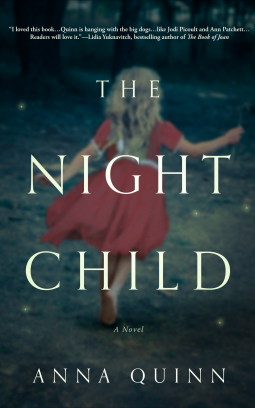
#BookReview ‘The Night Child’ by Anna Quinn #mystery

The Night Child by Anna Quinn caught me by surprise and took off racing from the first page so that I read half the book at my first sitting. But it is not a thriller, it was simply that I didn’t want to stop reading. I confess to selecting the book on my Kindle having forgotten the book blurb; perhaps I should do that more often. Anna QuinnNora Brown teaches teenagers about Shakespeare and poetry; so she knows about the imagination, imagery and dreams. Then one day at work, floating in front of her she sees the face of a blue-eyed girl, a face without a body. Quinn writes about Nora’s fear, panic, guilt, shame, with an insight into the private mind and this made me believe Nora from page one. Seeking answers, she talks to a psychiatrist and so starts an unravelling of Nora’s past, a past buried so deep she had no idea of its existence. As the revelations pick up pace, she must deal with a damaged teenager at school, decide whether to confront her unfaithful husband Paul, and reassure her six-year-old daughter Fiona. Stress layered on top of stress, which makes the child’s face appear more often. Soon she hears the accompanying voice too.
Why have Nora’s difficulties started now? Is there a connection with Fiona, who has just celebrated her sixth birthday? Is the trigger to do with Nora’s own sixth birthday? At the root of it all, perhaps not surprisingly, is the death of her mother and the subsequent abandonment by her father. The only constant in her life is her younger brother James. Raised by their grandfather in Ireland, Irish myths and Catholic saints are woven throughout Nora’s story. The present day action takes place between Thanksgiving in November 1996 and February 1997.
This is the sort of book which makes you think ‘please not that’ and turn the page to see if you have guessed correctly. The subject is not new but Quinn approaches it from a fresh angle which shows how the impact of childhood unhappiness can be repressed only to reappear with a vengeance decades later. I liked Nora. She is not a victim. At first she is afraid she is going ‘crazy’. Her primal instinct is to protect her own child, she constantly reassures Fiona that she loves her ‘beyond the stars and back’. But as the memories begin to return thick and fast in her sessions with psychiatrist David, things also unravel at home as Paul accuses her of being ‘a zombie’. David reminds her that she is in control but to ‘be careful not to scare yourself’. Where will the memories lead her and will she be able to cope?
I really enjoyed this book. It came as a bolt out of the blue after having read a series of historical novels. It is a powerful and sensitive portrayal of emotional damage and a person’s capacity to face it and recover. This is a debut, but I would never have guessed, it is written with a steady hand and full heart. The juxtaposition of Quinn’s beautiful prose, and her subject matter, is startling.
CLICK HERE TO READ MORE ABOUT THIS BOOK

If you like this, try:-
‘The Hoarder’ by Jess Kidd
‘The Crows of Beara’ by Julie Christine Johnson
‘Something to Hide’ by Deborah Moggach

And if you’d like to tweet a link to THIS post, here’s my suggested tweet:
#BookReview THE NIGHT CHILD by Anna Quinn https://wp.me/p5gEM4-36G via @SandraDanby

A poem to read in the bath… ‘After a Row’ by Tom Pickard #poetry #nature

Winter Migrants by poet Tom Pickard is a collection of poetry and prose, starting with the prize-winning sequence ‘Lark & Merlin’, an erotic pursuit over the hills and fells of the poet’s Northern-English homeland. In truth, I could have selected anything from this slim volume, but ‘After a Row’ just caught my mood today.

Tom Pickard

[photo: carcanet.co.uk]

Because of copyright restrictions I am unable to reproduce the poem in full, but please search it out in an anthology or at your local library.

‘After a Row’
A lapwing somersaults spring,
Flips over winter and back.

After a fast walk – my limbs
The engine of thought – up long hills
Where burn bubbles into beck and clough to gill

Tom Pickard

BUY THE BOOK

Read these other excerpts, and perhaps find a new poet to love:-
‘Sometimes and After’ by Hilda Doolittle
‘Cloughton Wyke 1’ by John Wedgwood Clarke
‘Forgetfulness’ by Hart Crane

And if you’d like to tweet a link to THIS post, here’s my suggested tweet:
A #poem to read in the bath: ‘After a Row’ by @tompickardpoet http://wp.me/p5gEM4-2UD via @SandraDanby

SaveSave

SaveSave