Author Archives: sandradan1

Unknown's avatar

About sandradan1

Novelist. I blog about writing, reading and everything to do with books and writing them at http://www.sandradanby.com/. Come and visit me!

#BookReview ‘A Life Between Us’ by Louise Walters @Louisewalters12 #mystery

Survivor’s guilt, revenge, memory tricks, childhood friendship and rivalry are at the centre of this family drama. In A Life Between Us by Louise Walters, forty-something Tina visits the grave of twin sister Meg each week and holds conversations with her. Louise WaltersTina has buried a secret so deep even her husband doesn’t know it. Only one other person was there when Meg died, the twins’ Aunt Lucia. But this is a complicated family with so many stories of betrayal, flight, lies, secrets and denials that until the end I was waiting for someone else to appear as a witness.
The first half was a slow-burn and I longed to get to the first turning point of the story, which when it came was not a surprise. This slow-burn means this is not a psychological thriller but a study of the long-term effects on children violently bereaved, survivor guilt, misplaced memory and grief. We are told the story via multiple viewpoints: Tina, then and now; Tina’s childhood letters; Tina’s husband Keaton who loves his wife but struggles to cope with her depression and guilt; and Aunt Lucia, then and now. For me, this was too many viewpoints and too many characters, making it rather involved and at times repetitive.
Walters’ story involves a large family and perhaps the story would be stronger with less siblings. Certainly the absent Robert and jailbird Ambrose added little to Tina’s story, and her parents are virtually invisible. The device of Tina’s childhood letters to cousin Elizabeth in California became repetitive and irritating, it is so difficult to write in the voice of a child. I also found myself sympathising with Aunt Lucia who is portrayed as something of a harridan in a dysfunctional family, though she too has experienced difficult times which she has kept secret.
An at times long-winded story which, at its heart, explores something deep, difficult and sensitive.

Here’s my review of MRS SINCLAIR’S SUITCASE also by Louise Walters.

If you like this, try:-
‘Please Release Me’ by Rhoda Baxter
‘The Stars are Fire’ by Anita Shreve
‘Sometimes I Lie’ by Alice Feeney

And if you’d like to tweet a link to THIS post, here’s my suggested tweet:
#BookRreview A LIFE BETWEEN US by Louise Walters @LouiseWalters12 http://wp.me/p5gEM4-2Tw via @SandraDanby

#BookReview ‘Autumn’ by Ali Smith #SeasonalQuartet #contemporary

Uplifting, enlightening, funny, clever, depressing, sad and heartwarming. The mischievous Autumn by Ali Smith is an ingenious novel, the first of the ‘Seasonal Quartet’ telling the story of the UK fragmented after the post-Brexit vote in 2016, when ugliness and prejudice rose to the surface setting brother against sister, friend against friend, dividing streets, neighbourhoods and towns, a binary split with each side convinced it is right and the other, wrong. Ali SmithDaniel Gluck is 101 years old and in a nursing home, we see from his wonderful lyrical dreams that he teeters on the edge of death. Smith builds her world around Mr Gluck and Elisabeth Demand who, with her mother Wendy, lived next door to Daniel when Elisabeth was a child. Their relationship starts in 1993. Elisabeth, aged eight, must interview a neighbour for a homework project. Her mother is not keen and tries to bribe her to invent a neighbour instead. The following day Elisabeth meets Mr Gluck and, despite her mother’s misgivings (single man, dodgy, must be gay, might be unsafe etc) they become firm friends. Now he is 101 and she tells a lie to the nursing home – yes, she is his grand-daughter – in order to gain a visitor’s pass. She sits by his bed and reads Brave New World.
Smith compares and contrasts modern life with past times in the twentieth-century, we see modern life through Elisabeth’s storyline countered by Daniel’s memories and dreams, and his interpretations of books, art and song for the child Elisabeth. The story wings its way through contemporary references from television antiques programmes and passport applications to celebrity Christine Keeler, sculptor Barbara Hepworth and pop artist Pauline Boty.
This is all very interesting but, with the lightest of hands, Smith gives a warning about the danger of nationalism, populism and the easy appeal of accepting political lies rather than asking difficult questions of the politicians and ourselves. One passage in particular underlines it all: Daniel’s younger sister Hannah is captured in Nice, France, in 1943 despite carrying papers which identify her as Adrienne Albert.
Running throughout are the themes of truth v lies [juxtaposed often, with lies often being throwaway and easy whilst truth can be awkward and difficult to say] and identity. There is a hilarious passage where Elisabeth tries to renew her passport application at the Post Office, an all-too-believable portrayal of officialdom. Some of the historical sections, particularly about Keeler and Boty, seemed rushed and I would have liked more of Daniel’s songwriting background which was mentioned fleetingly.
Short, at 272 pages, Autumn can be read in one sitting. It is a joy to read. Next in the quartet comes Winter.
Autumn was shortlisted for the 2017 Booker Prize.

Click the title to read my reviews of other books by Ali Smith:-
WINTER #2SeasonalQuartet
SPRING #3SeasonalQuartet
SUMMER #4SeasonalQuartet
COMPANION PIECE #5SeasonalQuartet
HOW TO BE BOTH

If you like this, try:-
‘Moon Tiger’ by Penelope Lively
‘Darktown’ by Thomas Mullen
‘Shelter’ by Sarah Franklin

And if you’d like to tweet a link to THIS post, here’s my suggested tweet:
#BookReview AUTUMN by Ali Smith http://wp.me/p5gEM4-2SX via @SandraDanby

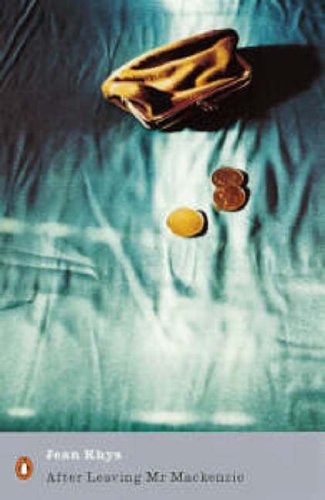
#BookReview ‘After Leaving Mr Mackenzie’ by Jean Rhys #historicalfiction

A slim novel, After Leaving Mr Mackenzie is the second novel by Jean Rhys, published in 1931. Semi-autobiographical, it tells the story of a young woman [if a woman in her mid-thirties can be called young] who faces up to the realities of life after a love affair ends. The title is not strictly true because Julia did not leave Mr Mackenzie, he left her. Jean Rhys She moves to a cheap hotel room where the furnishings are faded and the only decoration is a poor painting which she assumes must have been left in lieu of debt by a previous tenant. Where Rhys excels is her description of the small details, drawing a picture of Julia’s surroundings and her moods. ‘She found pleasure in memories, as an old woman might have done. Her mind was a confusion of memory and imagination. It was always places that she thought of, not people. She would like thinking of the dark shadows of houses in a street white with sunshine; or of trees with slender black branches and young green leaves, like the trees of a London square in spring; or of a dark-purple sea, the sea of a chromo or of some tropical country that she had never seen.’ Like the title of the novel, it is not always clear what is true and what is imagination.
After the death of her baby and the breakdown of her marriage, which is not really explained, Julia survives in Paris thanks to the men she dates. They give her cash, buy her clothes, pay for her lodging; in this, Julia is similar to Marya in Rhys’ first novel Quartet. This novel takes a step further in that when her maintenance payments stop, Julia takes action to help her situation. After unsuccessfully asking Mr Mackenzie for cash, she is helped by a stranger, Mr Horsfield. Julia buys new clothes and a train ticket to London where she visits her sister who cares for their dying mother.
This is a study of one woman’s desperate situation and her dependency on others. Julia is a sad woman with a past, shabby, as if wearing a sign around her neck saying ‘trouble’. The delight in reading this book is how Rhys tells Julia’s story, as much as the story itself.
CLICK HERE TO READ MORE ABOUT THIS BOOK AT AMAZON

Here’s my review of another novel by Jean Rhys:-
QUARTET

If you like this, try:-
Orphans of the Carnival’ by Carol Birch
Birdcage Walk’ by Helen Dunmore
‘The Duchess’ by Wendy Holden

And if you’d like to tweet a link to THIS post, here’s my suggested tweet:
#BookReview AFTER LEAVING MR MACKENZIE by Jean Rhys via @SandraDanby http://wp.me/p5gEM4-2d7 

My Porridge & Cream read: Toni Jenkins

Today I’m delighted to welcome novelist Toni Jenkins. Her ‘Porridge & Cream’ read is Eat Pray Love by Elizabeth Gilbert.

“My sister-in-law heard about a book in early 2008 she thought I might like and gave me a copy of Eat Pray Love, by Elizabeth Gilbert. It has become a precious companion and the book that I turn to most. It always spurs me on to make courageous decisions in my life.
Toni JenkinsIt’s about an American woman in her thirties who decides her perfectly normal life is unfulfilling and leaves her husband and home to find herself abroad, travelling to Italy to find love in food, to India for enlightenment, and to Bali for love and peace. I re-read it, or at least parts of it, at least once a year. It’s one of those books where you feel as if you’re reading your own thoughts. There’s a real comfort in reading again how Elizabeth overcame her challenges. I also love the way she uses language so I get a double-whammy of the feel-good factor every time I delve back in.

I particularly enjoy the first third of the book as it’s based in Italy, my favourite country. It’s also where she’s just starting out on her journey to re-create her new life and you can feel the rawness coming through in her words. I particularly love the way she personifies Depression and Loneliness. She writes:
I say to them, “How did you find me here? Who told you I had come to Rome?”
Depression, always the wise guy, says, “What – you’re not happy to see us?”
“Go away,” I tell him.
Loneliness, the more sensitive cop, says, “I’m sorry, ma’am. But I might have to tail you the whole time you’re traveling. It’s my assignment.”

Toni Jenkins’ Bio
Toni Jenkins was born in New Zealand in 1970. After graduating with a BA Honours degree in Education, she bought a one-way ticket to the UK and so began her love affair with the northern hemisphere. She has been writing all her life, beginning with poetry, short stories and quotes and later moving into novels. Toni wrote her first novel in her early thirties, with her second being penned in an Italian village during her ‘mature gap year’. The Sender is her third and the first to be published. She is currently working on two further novels – The Gift is at editing stage and Benevolence is under development.

Toni Jenkins’ links
Twitter
Facebook
Website
Linked In

Toni Jenkins’ books
Toni Jenkins

The Sender follows the journey of a mysterious and inspiring unsigned card, linking the lives of four women from different backgrounds and cities who are all facing unique adversities. The card instructs each woman to hold it in their possession for six months before choosing another woman in need of its empowering quality to send it to, and invites them all to meet in Edinburgh two years from the date of its inception. The card seems to hold an extraordinary quality that helps the women face their challenges head-on, though none of them can imagine who the anonymous sender is or why they were the chosen ones.
‘The Sender’ by Toni Jenkins [UK: New Generation]

What is a ‘Porridge & Cream’ book?

Toni JenkinsIt’s the book you turn to when you need a familiar read, when you are tired, ill, or out-of-sorts, where you know the story and love it. Where reading it is like slipping on your oldest, scruffiest slippers after walking for miles. Where does the name ‘Porridge & Cream’ come from? Cat Deerborn is a character in Susan Hill’s ‘Simon Serrailler’ detective series. Cat is a hard-worked GP, a widow with two children and she struggles from day-to-day. One night, after a particularly difficult day, she needs something familiar to read. From her bookshelf she selects ‘Love in A Cold Climate’ by Nancy Mitford. Do you have a favourite read which you return to again and again? If so, please send me a message via the contact form here.

Discover the ‘Porridge & Cream’ books of these authors:-
Renita d’Silva
Linda Huber
Judith Field

Toni Jenkins


‘Eat Pray Love’ by Elizabeth Gilbert [UK: Bloomsbury]

And if you’d like to tweet a link to THIS post, here’s my suggested tweet:
Why does @tonijenkinsauth love EAT PRAY LOVE by @GilbertLiz http://wp.me/p5gEM4-2Sf via @SandraDanby #amreading

#BookReview ‘The Blue Flower’ by Penelope Fitzgerald #historical

If ever there is a book to persevere with, to have patience with, and to go back and re-read again, it is The Blue Flower by Penelope Fitzgerald. When I bought it, I didn’t realize it was the last novel by the Booker prize winner; published five years before her death in 2000 aged 83. For someone about to read it, it can seem a trifle intimidating. Penelope FitzgeraldSet in 18th century Germany, Fitzgerald tells her imagining of the teenage story of real German poet and philosopher Fritz von Hardenberg, later called Novalis. He is a young man so self-contained, so absorbed in his thoughts, that I wondered where the drama would arise. But it does, because he falls in love.
The Blue Flower is a short novel, 223 pages. The chapters are concise [mostly only two or three pages each] and this encouraged me to ‘just read another’ and so, gradually, almost without realizing, I fell into the story. Fitzgerald recreates this particular time in German history with a delicacy that, despite the language and sometimes confusing names, makes the people become real.
It is 1794 and Fritz, an idealistic and passionate student of philosophy and writer of poems, stays with some family friends and meets their youngest daughter, Sophie von Kühn. Love is instant for Fritz and, despite a little bemusement on the part of Sophie, and astonishment by his siblings and friends, he proves himself constant.
It is the sort of novel that, when you are reading it you ‘get’ it but afterwards, when trying to describe it to someone else, you struggle to grasp it. I still do not really understand the meaning of the blue flower. But although the deeper meaning may elude me, there are passages I love. Particularly the opening chapter when a guest arrives at the Hardenberg house in Kloster Gasse; it is washday, the annual occasion for washing personal and household linen, and his arrival effects an introduction to the household. This starts a juxtaposition which runs throughout the novel, of the ordinary everyday mundanity of life alongside Fritz’s poetic sensibilities. He calls twelve-year old Sophie his Philosophy, his guardian spirit. Knowing he must wait for her, he trains as an official in the salt mines and Fitzgerald treats us to some of the practicalities and science of this industry.
This is not a lazy read. Be prepared to invest something into it yourself. Fitzgerald does not put it all onto the page, she expects the reader to think, to research, to work it out, as she did when writing. If each book is the visible bit of an iceberg above the waterline, with the research submerged, The Blue Flower is the snowball on top of the iceberg.

Read my review of OFFSHORE, also by Penelope Fitzgerald.

If you like this, try this:-
‘The Ballroom’ by Anna Hope
‘The Past’ by Tessa Hadley
‘Gone are the Leaves’ by Anne Donovan

And if you’d like to tweet a link to THIS post, here’s my suggested tweet:
#BookReview THE BLUE FLOWER by Penelope Fitzgerald https://wp.me/p5gEM4-2Zr via @SandraDanby

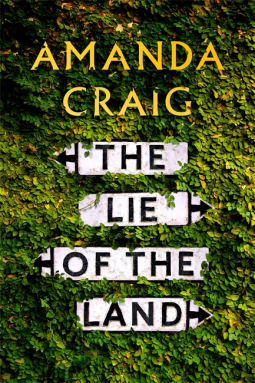
#BookReview ‘The Lie of the Land’ by @AmandaPCraig #contemporary

A simple yet deceptively nuanced story of modern times, The Lie of the Land by Amanda Craig is full of the contrasts and comparisons thrown up by ordinary life. The Bredins, Quentin and Lottie, have agreed to divorce after his infidelity but cannot afford to. Unable to sell their London house, they rent it out instead and move to Devon to a dank dark creepy farmhouse where they must manage to live together. Amanda CraigWhat happens over the next year is unexpected and changes all their lives forever. This is a funny, mysterious and sometimes sad story of a city family in the country where, instead of leaving their problems behind, they find they are magnified. There is truth in the old adage, you cannot run from your problems.
What happened to the previous tenant of Home Farm? Who is the mysterious tramp in the local pub? And is Lottie really having an affair with a local architect. Meanwhile, Quentin’s father is dying and his mother is stoically coping. Lottie’s son Xan works in the nearby pie factory where, as well as finding himself a Polish girlfriend, he makes friends with Dawn, the daughter of the Bredin’s cleaner. Dawn, who seems downtrodden, obese and introverted, can play the piano like an angel. Craig has written a character-driven novel with a community of characters to make Devon feel at once cozy and familiar while being secretive and insulated. Where contrasts are expected between urban and rural life, there are often likenesses. There are several sub-plots cleverly woven into the main family narrative, of caring for elderly parents, bullying, childlessness, rural phone and broadband reception, Polish workers and urban snobbishness about country life.
I particularly liked sheep farmer’s wife Sally Verity, whose job as a social worker sees her move around the countryside, cleverly knitting together people and stories. Lottie’s mother Marta, though she stays in London, is another link between generations, locations and storylines. Only when I had finished the book did I learn that some of the characters appear in other novels by Craig, something which did not affect my understanding or enjoyment of the book.

If you like this, try:-
‘Himself’ by Jess Kidd
‘My Husband the Stranger’ by Rebecca Done
‘Ghost Moth’ by Michèle Forbes

And if you’d like to tweet a link to THIS post, here’s my suggested tweet:
#BookReview THE LIE OF THE LAND by @AmandaPCraig http://wp.me/p5gEM4-2Pp via @SandraDanby

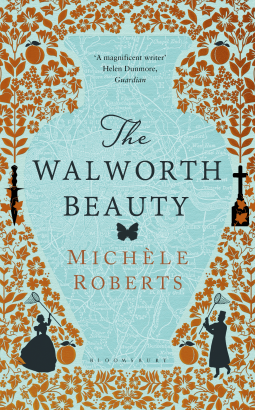
#BookReview ‘The Walworth Beauty’ by Michèle Roberts #historical

From the first page, I knew this was going to be one of those reads rich in historical scents and sensations, a story to lose yourself in. The Walworth Beauty by Michèle Roberts is set in the London district of Walworth, just south of the River Thames and part of the Borough of Southwark. It tells the story of Joseph Benson in 1851 and Madeleine in 2011, 160 years apart but experiencing so many similar things. Michèle RobertsMadeleine loses her job as a lecturer of English literature, as a result she moves to a garden flat in Apricot Place, Walworth. She is delicately attuned to the history of London, walking its streets and seeing Virginia Woolf walking ahead of her, Hilda Doolittle passing her by, and, in a basement kitchen in Lamb’s Conduit Street, a mistress instructing her new housemaid. Just how closely Madeleine is connected to the past becomes clearer in the second half of the story as she explores Walworth, researching its local history and meeting her new neighbours.
Joseph and his family live in a rented house in Lamb’s Conduit Street. He works for sociologist Henry Mayhew, researching the working conditions and social backgrounds of prostitutes in Walworth. Joshua is a contradictory character, perhaps a man of his time with contemporary attitudes and assumptions about women. Still mourning his idolised first wife Nathalie, he is outwardly respectable but has money problems. He is a spendthrift and betrays Cara his second wife [and Nathalie’s older sister] by visiting prostitutes, viewing it as a necessity so Cara will not conceive again, rather than unfaithfulness. His research takes him to a house in Apricot Place where he meets landlady Mrs Dulcimer, an exotic brown-skinned woman who Joshua mistakes for a madam but who in fact helps struggling young women to establish themselves with jobs and homes.
The theme of classification runs throughout this novel, the formal type of labelling as in Mayhew’s study and the Dewey Decimal labelling system for libraries, but also the informal way of labelling people, pre-judging, jumping to conclusions. Mayhew classifies prostitutes as criminals and it is with this view that Joseph conducts his first research. In meeting Mrs Dulcimer, however, he learns the true stories of struggle and abandonment in the lives of many of the women he labels so easily as whores. He is an unreliable judge of women’s characters, however, even those closest to him.
We see similar classifications in Madeleine’s story in modern-day Walworth. There are themes of grief, longing for what is out of reach, women’s position in society and men’s attitudes towards women and sexuality. Judgements based on class and sex. The two storylines are connected in places by hints of ghosts or presences, which I found a little unsatisfactory. This is a novel about the different parts of society, some isolated, some overlapping like a Venn diagram, and as true today as in Victorian London.
I enjoyed unpicking the connections between 1851 and 2011, handled so delicately that it would be easy to pass them by. Such as Mrs Dulcimer’s missing earring, surrendered as an identifying token at the Foundling Hospital when she handed in her baby, is seen by Madeleine in a display at the Foundling Museum. There are countless examples like this of mirrored details and parallel experiences, connecting Joseph and Mrs Dulcimer with Madeleine.
The Walworth Beauty is one of the most enjoyable books I have read this year and is worth re-reading to absorb the beautiful detail written by a novelist entwined with her story and subject.
CLICK HERE TO READ MORE ABOUT THIS BOOK AT AMAZON

Read my review of FAIR EXCHANGE also by Michèle Roberts, and try the First Paragraph here.

If you like this, try:-
‘Frog Music’ by Emma Donoghue
‘Birdcage Walk’ by Helen Dunmore
The Western Wind’ by Samantha Harvey

And if you’d like to tweet a link to THIS post, here’s my suggested tweet:
#BookReview THE WALWORTH BEAUTY by Michèle Roberts http://wp.me/p5gEM4-2SQ via @SandraDanby

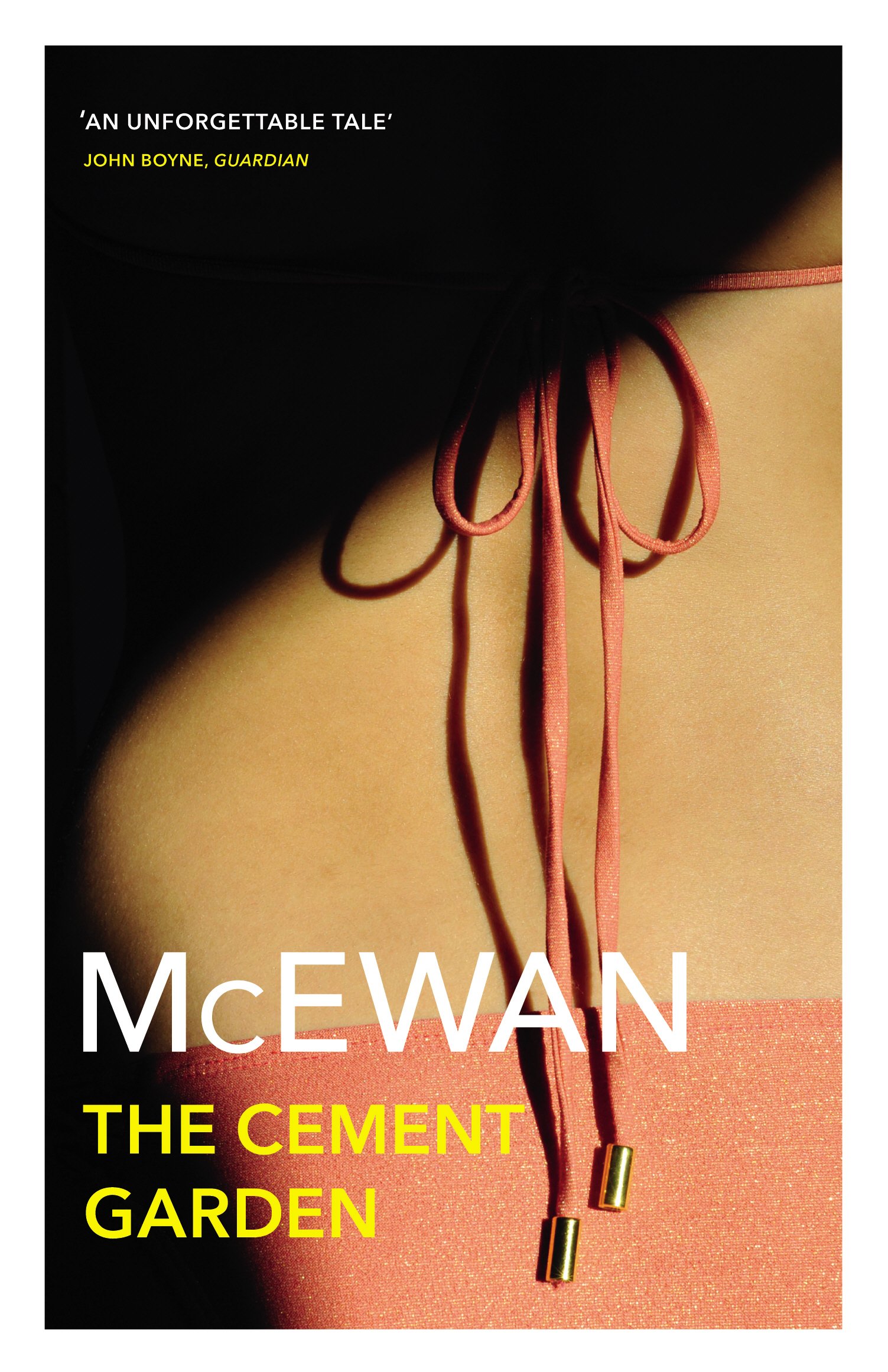
Great Opening Paragraph 102… ‘The Cement Garden’ #amreading #FirstPara

“I did not kill my father, but I sometimes felt I had helped him on his way. And but for the fact that it coincided with a landmark in my own physical growth, his death seemed insignificant compared with what followed. My sisters and I talked about him the week after he died, and Sue certainly cried when the ambulance men tucked him up in a bright-red blanket and carried him away. He was a frail, irascible, obsessive man with yellowish hands and face. I am only including the little story of his death to explain how my sisters and I came to have such a large quantity of cement at our disposal.”
Ian McEwan From ‘The Cement Garden’ by Ian McEwan 

Read my reviews of these other novels by McEwan:-
MACHINES LIKE ME
NUTSHELL
THE CHILDREN ACT

And try two more McEwan #FirstParas:-
ENDURING LOVE
THE CHILDREN ACT

Try one of these #FirstParas & discover a new author:-
‘Rebecca’ by Daphne du Maurier
‘The Other Boleyn Girl’ by Philippa Gregory
‘Freedom’ by Jonathan Franzen

And if you’d like to tweet a link to THIS post, here’s my suggested tweet:
#Books #FirstPara THE CEMENT GARDEN by Ian McEwan http://wp.me/p5gEM4-2se via @SandraDanby

#BookReview ‘The Garden of Evening Mists’ by Tan Twan Eng #Malaya

This is another enchanting novel by Malaysian author Tan Twan Eng. The Garden of Evening Mists focuses on the post-Second World War period in Malaya. Tan Twan EngThe Japanese occupiers have gone and local communist fighters are challenging British rule. In the hills of the Cameron Highlands, next to a tea plantation, lies a delicate Japanese garden created by Nakamura Aritomo, a man who was once gardener to the Emperor of Japan. Decades later when Yun Ling Teoh retires as a Supreme Court judge in Kuala Lumpur, she re-visits the garden at Yugiri. This is her story.
In the 1950s Emergency, the people who lived in Malaya’s hill villages grew to fear the communists. Homes were raided and destroyed, people killed, women raped. This is the setting in which Yun Ling first visits Yugiri to ask Aritomo to build a traditional Japanese garden in memory of her sister Yun Hong. This is a novel about memory, things remembered and things denied, and about loyalty. Yun Ling’s loyalty to her sister who was killed in a Japanese labour camp and her guilt that she could have done more to save her, and loyalty to Arimoto who she loved and thought she knew.
Judge Teoh returns to Yugiri as an old woman approaching death, many years after Arimoto walked into the jungle and never returned. She is forced to relive her past when a historian arrives to assess Arimoto’s engravings. As she relives the years of her imprisonment at the hands of the Japanese, and the post-war years when she first worked at Yugiri’s garden, Judge Teoh questions her perceptions of the past. This time, there is no avoiding the truth.
Tan Twan Eng discusses big issues. He explores the moral dilemmas of war and peace after war, considering the murderous actions of the Japanese at war, the same Japanese who love traditional gardens and the rituals of archery. This novel is rich in history, both of the Japanese Occupation of Malaya, the labour camps, lost war treasure, and of the Emergency. The lush countryside is offset by the tales of horror and abuse told. As with Tan Twan Eng’s first novel, The Gift of Rain, the beauty of the setting is juxtaposed with cruelty and violence.
A deep, thought-provoking and at times difficult novel, the writing is beautiful.

Read the first paragraph of THE GARDEN OF EVENING MISTS.

And here are my reviews of two other novels by Tan Twan Eng:-
THE GIFT OF RAIN
THE HOUSE OF DOORS

If you like this, try:-
‘The Aftermath’ by Rhidian Brook
‘Homeland’ by Clare Francis
‘The Book of Lies’ by Mary Horlock

And if you’d like to tweet a link to THIS post, here’s my suggested tweet:
#BookReview THE GARDEN OF EVENING MISTS by Tan Twan Eng http://wp.me/p5gEM4-2qf via @SandraDanby

First Edition: The Secret Garden

First published as a US serial in The American Magazine beginning in 1910, The Secret Garden by Frances Hodgson Burnett [below] was first published as a book in 1911. The American edition by Stokes [below] featured illustrations by Maria Louise Kirk, while illustrations in the British edition published by Heinemann were by Charles Heath Robinson. Burnett was born in Manchester, England in 1849 but after the death of her father, she emigrated with her family to the Knoxville, Tennessee, USA in 1865. Frances Hodgson BurnettRead more about the Stokes first edition at Bauman Rare Books.

The story
Mary Lennox, born at the turn of the twentieth century to wealthy British parents in India who do not want her, is cared for by servants. After the death of her parents she is sent to England to Yorkshire, to live with her Uncle Archibald at Misselthwaite Manor. There she is bad-tempered and dislikes everything about her new home until Martha, a maid, tells her the story of Mrs Craven who loved her private walled garden of roses. When his wife died, Mr Craven locked the garden and buried the key. As Mary wonders about the secret garden, her humour and behaviour improves and she makes friends with the gardener. When she finds the key, Mary’s brother Dickon helps Mary to learn about gardening, plants and wildlife. Then one night, exploring a cry in the night, she discovers a boy living in a hidden bedroom. This is Colin, her cousin, who has a damaged spine. She tells Colin of the secret garden and when they visit it together, Colin finds his weak legs can stand after all.

The film
The 1993 film The Secret Garden starred Kate Maberly, Heydon Prowse, Andrew Knott, John Lynch and Maggie Smith. Exterior shots of Misselthwaite Manor were shot at Allerton Castle in Yorkshire, internal scenes at Fountains Hall near Ripon. Watch the film trailer.

Other editions

Read here why The Secret Garden is the ‘Porridge & Cream’ comfort read of novelist Laura Wilkinson.

Frances Hodgson Burnett


‘The Secret Garden’ by Frances Hodgson Burnett [UK: Virago] Buy now

If you like old books, check out these:-
‘An Ice Cream War’ by William Boyd
‘The French Lieutenant’s Woman’ by John Fowles
‘Watership Down’ by Richard Adams

And if you’d like to tweet a link to THIS post, here’s my suggested tweet:
First Edition: THE SECRET GARDEN by Frances Hodgson Burnett #oldbooks http://wp.me/p5gEM4-2TQ via @SandraDanby