Author Archives: sandradan1

Unknown's avatar

About sandradan1

Novelist. I blog about writing, reading and everything to do with books and writing them at http://www.sandradanby.com/. Come and visit me!

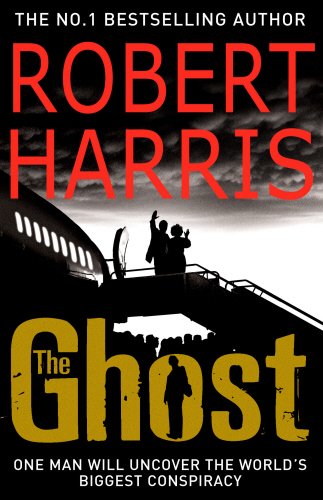
Great Opening Paragraph 86… ‘The Ghost’ #amreading #FirstPara

“The moment I heard how McAra died I should have walked away. I can see that now. I should have said, ‘Rick, I’m sorry, this isn’t for me, I don’t like the sound of it,’ finished my drink and left. But he was such a good storyteller, Rick – I often thought he should have been the writer and I the literary agent – that once he’d started talking there was never any question I wouldn’t listen, and by the time he had finished, I was hooked.”
Robert HarrisFrom ‘The Ghost’ by Robert Harris

Read my reviews of these other thrillers, also by Robert Harris:-
AN OFFICER AND A SPY
MUNICH
V2

Try one of these #FirstParas & discover a new author:-
Far From the Madding Crowd’ by Thomas Hardy 
That They May Face the Rising Sun’ by John McGahern 
Bel Canto’ by Ann Patchett 

And if you’d like to tweet a link to THIS post, here’s my suggested tweet:
#Books #FirstPara THE GHOST by Robert Harris #books via @SandraDanby http://wp.me/p5gEM4-1V9

#BookReview ‘The Marriage Certificate’ by Stephen Molyneux #genealogy #mystery

The Marriage Certificate by Stephen Molyneux is a mystery story combining family secrets with turn of the century British history: the Boer War, the Great War, the merchant navy, the changing role of women and attitudes to illegitimacy. Stephen MolyneuxIt is the story of two couples – the bride and groom, Louisa and John, best man Frank and bridesmaid Rose – at a wedding on January 15, 1900; their lives, loves, dangers and tragedies. Running alongside is a modern-day strand. In 2011, amateur genealogist Peter Sefton finds the marriage certificate of Louisa and John’s wedding in an antiques shop and his curiosity is piqued. As he researches the names on the certificate, we also see their lives unfolding in a rapidly-changing world as the 19th century turns into the 20th. The men leave home to fight, while the women stay at home. War brings a change of life, but social mores remain Victorian.
Meanwhile, an elderly man dies alone in London. Without relatives, Harry Williams is listed on the Bona Vacantia list of unclaimed estates. In 2011, a professional heir hunting company starts to research Williams’ life in the hope of finding distant relatives and earn a share of the money. How will Highborn Research’s investigation coincide with Peter’s? Is there a connection to Laura and John? And who will inherit Harry Williams’ money?
This is not a thrilling page-turner with rapid action on every page, instead it is a slow-burning story rooted in historical detail which, for me, came alive in the final 100 pages. Perhaps this is due to the writing style, which can be a little formal and repetitive, and the author’s tendency to include tiny details. I did wonder whether the storyline was based on real people, the genealogical detail is fascinating and it is clear the author knows the research procedure, its twists and turns. I read this over one weekend, and found myself sitting up late to read to the end. Incidentally, the last page leaves the story hanging – but don’t be tempted to look!
CLICK HERE TO READ MORE ABOUT THIS BOOK AT AMAZON

If you like this, try:-
‘The Blood Detective’ by Dan Waddell
‘Hiding the Past’ by Nathan Dylan Goodwin
‘In the Blood’ by Steve Robinson

And if you’d like to tweet a link to THIS post, here’s my suggested tweet:
#BookReview THE MARRIAGE CERTIFICATE by Stephen Molyneux via @SandraDanby http://wp.me/p5gEM4-1YO

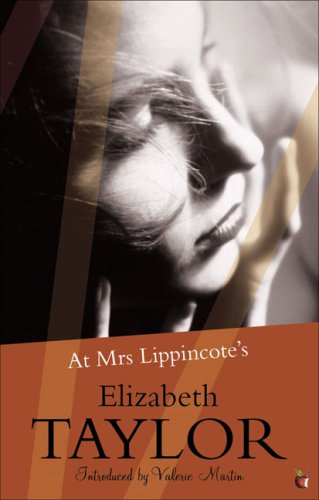
#BookReview ‘At Mrs Lippincote’s’ by Elizabeth Taylor #historical

Oh the delight at discovering a new author. I can’t remember where I stumbled across Elizabeth Taylor, but she seems to be the “novelist’s novelist” with fans ranging from Valerie Martin and Kingsley Amis to Sarah Waters, Jilly Cooper and Elizabeth Jane Howard. At Mrs Lippincote’s is Taylor’s debut novel, first published in 1945. Elizabeth TaylorIt is a minutely observed account of a family in wartime, following the story of Roddy who, posted away from London, rents a house from a widow, Mrs Lippincote. The landlady remains ever-present in the house through her family photographs on the mantelpiece and her possessions in the cupboards. Julia’s life has a transitory feel, she is where she is because of her husband and war, war which is ever-present on every page, and she is curious about the life of the Lippincote family. This is not a war novel about bombs and sirens, it is the snapshot of a normal family living in abnormal times.
The Davenants live at Mrs Lippincote’s with their sickly, seven-year-old book-obsessed son Oliver, and Roddy’s cousin Eleanor. Eleanor, in love with her cousin, finds new friends via a fellow schoolteacher. Julia becomes close to the Wing Commander, Roddy’s boss, while Oliver makes friends with the boss’s daughter Felicity. The latter is an expert at identifying the type of military aircraft flying overhead, a revelation for Oliver who is in the process of re-living the life of Alan Breck Stewart in RL Stevenson’s Kidnapped. His love of books is shared with his mother who constantly refers her real life situation to that of the Brontes and their fictional characters.
Roddy in turn is exasperated by his wife. ‘When he had married Julia, he had thought her woefully ignorant of the world; had looked forward, indeed, to assisting her development. But she had been grown up all the time; or, at least, she had not changed. The root of the trouble was not ignorance at all, but the refusal to accept. ‘If only she would!’ he thought now, staring at her; ‘If only she would accept.’ At a time when women are, for the second time in decades, assuming the jobs of men during wartime, Julia is trapped in a domestic life determined for her by her husband and his boss.
There are 11 Elizabeth Taylor novels waiting to be read, plus numerous short stories, and this makes me happy.

Read my reviews of other books by Elizabeth Taylor:-
A VIEW OF THE HARBOUR
A WREATH OF ROSES
ANGEL
IN A SUMMER SEASON
THE SLEEPING BEAUTY

If you like this, try:-
‘The Paying Guests’ by Sarah Waters
‘The Light Years’ by Elizabeth Jane Howard #1CAZALET
‘Life After Life’ by Kate Atkinson

And if you’d like to tweet a link to THIS post, here’s my suggested tweet:
#BookReview AT MRS LIPPINCOTE’S by Elizabeth Taylor via @SandraDanby http://wp.me/p5gEM4-1Pf

#BookReview ‘A Hero in France’ by Alan Furst #thriller #WW2

France 1941, British bombers fly every night to Germany, many aircraft don’t make it back home. The aircrew parachuting into Occupied France must somehow find their way home in order to fight again. A Hero in France by Alan Furst is a story of that individual battle within the wider war, seen from different sides by two ordinary men. This is the beginning of the French Resistance. Alan FurstThe man known as Mathieu – we don’t know his real name or identity until the very end of the book, this is the name by which he is known to his Resistance cell – escorts airmen along the north-south escape lines into Vichy France and onwards to Spain. Old clothes are sourced at jumble sales, innocent-looking shops serve as message drops, and a schoolgirl delivers messages by bicycle. In the beginning it was successful and relatively simple, but now the German command in Paris realizes there is a big problem. Word is getting around about the Resistance and people want to join, but how does Mathieu know who is genuine and who is a German spy?
In Hamburg, Otto Broehm, senior inspector of the police department, is transferred to the Kommandantur in Paris to stop the flow of downed airmen being returned to the UK by French people, working together in coordinated groups.
This is a huge subject and a story much-told, but by focussing on a few personalities and what happens to them, Alan Furst writes an engaging story which I read over a weekend. It is a low-key study of personalities, rather than a page-turning thriller.

Read my review of MIDNIGHT IN EUROPE, also by Alan Furst.

If you like this, try:-
‘Inflicted’ by Ria Frances
‘After the Bombing’ by Clare Morrall
‘The Paying Guests’ by Sarah Waters

And if you’d like to tweet a link to THIS post, here’s my suggested tweet:
#BookReview A HERO IN FRANCE by Alan Furst http://wp.me/p5gEM4-21g via @SandraDanby

#BookReview ‘Mothering Sunday’ by Graham Swift #historical

The title of Mothering Sunday by Graham Swift refers to the day on which the story takes place, rather to any essay about motherhood. It is March 30, 1924, Mothering Sunday, when servants are given the day off to visit their mothers. A young woman, an orphan and servant, meets a young man from a neighbouring house, who is betrothed to another woman. It is to be their last assignation before his marriage. Graham SwiftThis is a slim book, a novella, beautifully-written. I wasn’t sure at the beginning, I found the first page and the reference to Fandango the racehorse a little odd. But once I got past that, I read it in one sitting on an airplane.
It is a story about telling stories. This story is told by a novelist in her nineties who is used to be interviewed and asked repetitively about her life as a writer: when did she become a writer? The answer lies on Mothering Sunday in 1924. This is a treatise about the class system of the time, about sex and sensuality, about rebellion and about bucking the system. Jane – the housemaid and novelist – is a keen reader and with the permission of her master, she borrows books from his library. She prefers boys’ stories, adventure tales, and then she stumbles on Joseph Conrad and is smitten. Her reading sets her apart from her master, and her lover Paul. The Mothering Sunday on which the events happen takes place at a time of great transition between the wars, as the role of women was widening. Books give Jane a route out of her servile world, away from sex with the master’s son without hope of subsequent marriage, to a job as an assistant in a bookshop.
We only see the story from Jane’s point of view, Young Jane and Old Jane. Is she telling the truth, embroidering the story for fictional effect, layering on the emotions of the tragedy that occurs that sunny March afternoon?
A masterpiece, again by Swift. It stayed with me and will be re-read.
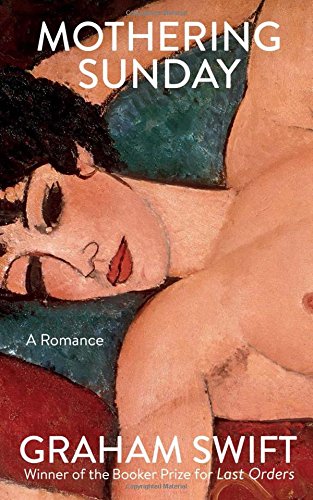
An aside, this hardback edition has the most wonderful cover design: a detail from Reclining Nude [red nude] 1917-18 by Modigliani. It will look well on my bookshelves for years to come.
CLICK HERE TO READ MORE ABOUT THIS BOOK AT AMAZON

Here’s my review of Swift’s HERE WE ARE.

If you like this, try:-
The Whereabouts of Eneas McNulty’ by Sebastian Barry
My Name is Lucy Barton’ by Elizabeth Strout
Lean Fall Stand’ by Jon McGregor

And if you’d like to tweet a link to THIS post, here’s my suggested tweet:
#BookReview MOTHERING SUNDAY by Graham Swift via @SandraDanby http://wp.me/p5gEM4-1XD

#BookReview ‘Foxlowe’ by Eleanor Wasserberg @e_wasserberg #contemporary

‘It’s hard to resist the pull of the shoal.’ Foxlowe is a strange, sinister book by Eleanor Wasserberg about the group dynamic of adults who should know better, experienced and observed by children who learn from this parenting and either accept or rebel. If they rebel, they have the Bad inside them. Eleanor WasserbergThis is not an easy read, not so much because of the story but I found the writing style obscure. The narrator is Green, a girl who grows up as part of the Family, a cult, living in a house called Foxlowe on a deserted moor. They share everything, their way of life is steeped in the land and ley lines. They have everything they will ever need at Foxlowe, there is no need to become a Leaver. Green knows no other life, has nothing with which to compare it.
For the first 15% [I read on Kindle] I struggled with a lack of clarity, an avalanche of seemingly unconnected facts. For example, ‘The Scattering is something we learned from the Time of Crisis. Remember that the Bad had come inside the walls.’ Characters have before and after names, which added to my confusion. It seemed like an alternative world, given the double sunset at Summer Solstice, and I couldn’t help comparing it with the opening technique of dystopian novels which got me straight away. The first page of The Hunger Games, for example, which starts with an intensely personal moment which lets you into the strange world in which it is set.
Once I reached 20% of Foxlowe, I was skipping the vague bits and the lack of dialogue punctuation – a pet hate of mine – and so turned the pages quicker. It is the story of a commune, the Family, where the outside world is excluded by means of myth, abuse and scare stories. Gradually I pieced the facts together. Despite my original confusion, it is not an alternative world; they have a car and drive to the supermarket. Some are painters or craftsmen who earn money, others grow vegetables and raise animals. This then is a conscious decision on the part of the adults to be there. The children are either born there, or more sinister, appear to be stolen from outside. This is the story of Green, a girl of undefined age, and that of Blue, who arrives at Foxlowe as a babe in arms. The arrival of Blue, and a man called Kai who remembers Foxlowe in earlier times, changes everything.
There are three parts, the second told by the adult Jess/Green, sandwiched between two Green childhood sections. The third part and Epilogue are truly dark and disturbing, with the sense of inherited abuse.

If you like this, try:-
‘Crow Blue’ by Adriana Lisboa
‘A History of Loneliness’ by John Boyne
‘The Quarry’ by Iain Banks

And if you’d like to tweet a link to THIS post, here’s my suggested tweet:
#BookReview FOXLOWE by @e_wasserberg http://wp.me/p5gEM4-212 via @SandraDanby

A poem to read in the bath… ‘Elegy of a Common Soldier’

We are all used to the ‘War Poets’ of the Great War, but perhaps not so aware of poets writing about the Second World War. Dennis B Wilson’s Elegy of a Common Soldier was written at a time between the trenches in Normandy and being in hospital in Swansea in 1944 and conjures up the horrible detail of war juxtaposed with nature and what was once normal. Quite arresting.

[photo: dennisbwilsonpoetry.com]

[photo: dennisbwilsonpoetry.com]

I was unaware of his work until I read an article in The Sunday Times Magazine about Mr Wilson’s reunion with a branch of the family he didn’t know existed: his father, novelist Alexander Wilson, had actually been married to four woman at the same time, producing numerous children. So in his late eighties, Dennis B Wilson discovered new relatives, including actress Ruth Wilson. She says of the poet: ‘As a wounded soldier in the Second World War, he bore witness to so many things, including the D-Day landings, all of which he wrote about in his poetry. I feel I have kindred spirits in my new-found family, I certainly do with Dennis. It may have taken this long to find each other, but I’m so pleased we have.’

If you have an online subscription to The Times, you can read the full article here.

[photo: dennisbwilsonpoetry.com]

[photo: dennisbwilsonpoetry.com]

‘Elegy of a Common Soldier’
The cold, unsheltered nights in dismal rain;
Exhausted men, who long for sleep in in vain;
Confusion, noise and smoke, foul-reeking mud,
And countless shattered bodies, oozing blood;
The pain before the final choking breath;
The vile decay, the sickly smell of death,
Which does not come triumphant or in rest
But suddenly, unheralded, or dress’d
In guise of hedgerow, tree or growing wheat,
Or lurks amid the flow’rs beneath your feet.

Because of copyright restrictions I am unable to reproduce the poem in full, but please search it out in an anthology or at your local library.

For more information about Dennis B Wilson’s poetry, click here for his website.

elegy of a common soldier and other poems by dennis b wilson 26-10-15


Elegy of a Common Soldier and Other Poems’ by Dennis B Wilson [UK: Kultura] 

Read these other excerpts and find a new poet to love:-
‘Sometimes and After’ by Hilda Doolittle
‘Winter Song’ by Wilfred Owen
‘Name’ by Carol Ann Duffy

And if you’d like to tweet a link to THIS post, here’s my suggested tweet:
A #poem to read in the bath: ‘Elegy of a Common Soldier’ by Dennis B Wilson http://wp.me/p5gEM4-1Ps via @SandraDanby

SaveSave

#BookReview ‘Agatha Raisin and the Quiche of Death’ by @mc_beaton #cosycrime

When a newly-retired PR executive arrives in the Cotswolds expecting a quiet retirement, she finds real life in Carsley is not as she expected. First of all, no-one likes her. Second, no-one seems to give a fig about who she is. Third, she is bored. And so begins Agatha Raisin and the Quiche of Death, first in this addictive series by MC Beaton. MC BeatonDesperate to make friends, she enters a village baking competition. Except Agatha can’t bake. So she buys a quiche and enters it as her own. So what, you may think. Lots of people probably do that. But when the competition judge dies of poisoning, Agatha is the key suspect. Desperate to clear her name, she turns detective.
And so a new crime series is born, featuring an overweight, pompous and self-important woman who always thinks she knows best. Why is this series so good? Because Agatha always gets her come-uppance and the story is very funny. A circle of village characters – her cleaner Doris, the vicar’s wife Mrs Bloxley, the deliciously disgusting elderly couple the Boggles, the real policeman Bill Wong – and London PR friend Roy, all contribute warning voices when Agatha gets carried away with her theories. And, there are lots of references to Agatha Christie. A policeman warns her: “You really must leave investigations to the police. Everyone has something to hide, and if you are going to go around shoving your nose into affairs which do not concern you, you are going to be hurt.” In true Agatha fashion, she ignores him.
This is a long series, lots more to read.

Read my reviews of some of the other novels in the Agatha Raisin series:-
AGATHA RAISIN AND THE VICIOUS VET #2AGATHARAISIN
AGATHA RAISIN AND THE POTTED GARDENER #3AGATHARAISIN
AGATHA RAISIN AND THE WALKERS OF DEMBLEY #4AGATHARAISIN
AGATHA RAISIN AND THE MURDEROUS MARRIAGE #5AGATHARAISIN

If you like this, try:-
‘ELIZABETH IS MISSING’ by Emma Healey
THE LOVE SONG OF MISS QUEENIE HENNESSY’ by Rachel Joyce
THE HUMANS’ by Matt Haig

And if you’d like to tweet a link to THIS post, here’s my suggested tweet:
#BookReview AGATHA RAISIN AND THE QUICHE OF DEATH by @mc_beaton http://wp.me/p5gEM4-1IY via @SandraDanby

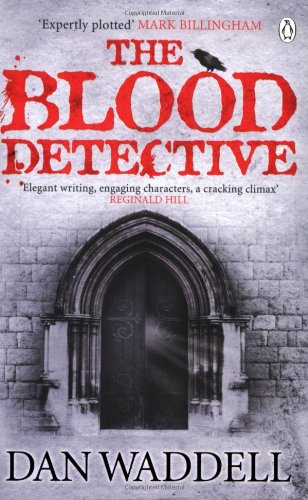
#BookReview ‘The Blood Detective’ by Dan Waddell #genealogy #crime #mystery

I raced through The Blood Detective, a hybrid mixture of crime and genealogy mystery. Author Dan Waddell is also a journalist and genealogist, having written The Genealogy Handbook to accompany the Who Do You Think You Are? television series. So, he knows his stuff and it shows. Dan Waddell Usually a crime novel features a lead detective and team, here we have two lead characters: Detective Chief Inspector Grant Foster, and genealogist Nigel Barnes.
Waddell’s plotting is ingenious. The past really does come back to haunt the present. There is a serial killer in West London who leaves a clue carved into the skin of his victims. This clue prompts DCI Foster to call on the specialist help of researcher Barnes. The murder hunt takes parallel paths: Foster chases living suspects, Barnes searches the archives for the true 1879 story of a serial killer, his victims and their descendants. What is the link? The final chapters are a thrilling race against time.
I really enjoyed this. The linking of historical and present-day crime was clever, and the characterization was convincing and not of the stereotypical detective form. An enjoyable mixture of fast-moving crime novel with genealogical research and historical gems about this particular part of London, its transformation from Victorian times to the 21st century, and its dark history of crime.

Here’s my review of the second book in this series by Dan Waddell:-
BLOOD ATONEMENT #2BLOODDETECTIVE

If you like this, try:-
In the Blood’ by Steve Robinson
Innocent Blood’ by PD James
The Irish Inheritance’ by MJ Lee #1JayneSinclair

And if you’d like to tweet a link to THIS post, here’s my suggested tweet:
#BookReview THE BLOOD DETECTIVE by Dan Waddell via @SandraDanby http://wp.me/p5gEM4-1Tp

Great Opening Paragraph 85… ‘The Pelican Brief’ #amreading #FirstPara

“He seemed incapable of creating such chaos, but much of what he saw below could be blamed on him. And that was fine. He was ninety-one, paralyzed, strapped in a wheelchair and hooked to oxygen. His second stroke seven years ago had almost finished him off, but Abraham Rosenberg was still alive and even with tubes in his nose his legal stick was bigger than the other eight. He was the only legend remaining on the Court, and the fact that he was still breathing irritated most of the mob below.”
John Grisham From ‘The Pelican Brief’ by John Grisham 

Read these #FirstParas also by John Grisham:-
THE LAST JUROR
THE RAINMAKER

Try one of these #FirstParas & discover a new author:-
‘Diary of an Ordinary Woman’ by Margaret Forster
‘To Have and Have Not’ by Ernest Hemingway
‘Bel Canto’ by Ann Patchett

And if you’d like to tweet a link to THIS post, here’s my suggested tweet:
#Books #FirstPara THE PELICAN BRIEF by @JohnGrisham http://wp.me/p5gEM4-1V5 via @SandraDanby