Category Archives: book reviews

My Porridge & Cream read: Kelly Clayton

Today I’m delighted to welcome crime author Kelly Clayton.  Her ‘Porridge & Cream’ read is Naked in Death by JD Robb, pen name of Nora Roberts.

“I first read Naked In Death over 15 years ago. I was reading a considerable number of books a week and was a regular visitor to the local library. I read most genres but was buried deep in a Nora Roberts phase at the time. I was searching through the Nora books when I realised I had read them all. Panic! So I kept looking along the alphabetical shelf, and almost the next author was JD Robb [Nora Roberts’ pen name for her crime series]. Kelly Clayton
The book, Naked In Death, was the first of a series and it sounded good – set slightly in the future, it followed a New York homicide detective, Eve Dallas. I borrowed it as part of that week’s haul and headed home. I was back at the library the next day for the following two books in the series. The In Death books cover crime, slight sci-fi element (but very subtle), romance, friendship, the destructive nature of humans and how the past doesn’t have to define us. Eve Dallas is a tortured kick-ass heroine with a horrific past. It’s about survival. Enter a gorgeous billionaire with a shady background and the glamour ramps up. There are now almost fifty books in the series, and I have read nearly every one.

I have re-read the original trilogy, which is Naked In Death, Glory In Death and Immortal in Death too many times to recall. I reach out for it to lose myself in a fascinating world. If I could be a fictional character, then it would be Eve, yes, even with her horrific past.  I love the characters, old friends you look forward to reconnecting with. I adore how we see Eve, damaged and mistrusting, grow and blossom but never, ever losing her most ragged edges.
I want to reread them – right now!”

Kelly Clayton’s Bio
Kelly Clayton has lived on the Channel Island of Jersey for most of her life but is originally from Scotland. She lives in a house overlooking the sea with her husband and 3 cats. Kelly is the author of the ‘Jack Le Claire Mystery’ series and, under her penname of Julia Hardy, Fortune’s Hostage.

Kelly Clayton’s links
Author website
Amazon Author page
Facebook
Twitter

Kelly Clayton’s latest book
Kelly Clayton England, 1813 Greed, deception and lust. Miss Eloise Camarthon is no ordinary debutante, she wants to live her life on her own terms. But Eloise is wealthy in her own right and a target for those with her fortune in their sights. Benedict Warrington, the Earl of Rothsea, has come to London in search of answers to a family tragedy. He meets the beguiling Eloise, and a dangerous chain of events is set in motion. Circumstances force an ultimatum, which threatens to change the course of Eloise’s future. Benedict is on the trail of a vicious murderer but finds more than he bargained for as the deaths mount up. Can he protect Eloise, or will one of them be the killer’s next victim?
Fortune’s Hostage’ by Julia Hardy [UK: Stanfred Publishing]

What is a ‘Porridge & Cream’ book? It’s the book you turn to when you need a familiar read, when you are tired, ill, or out-of-sorts, where you know the story and love it. Where reading it is like slipping on your oldest, scruffiest slippers after walking for miles. Where does the name ‘Porridge & Cream’ come from? Cat Deerborn is a character in Susan Hill’s ‘Simon Serrailler’ detective series. Cat is a hard-worked GP, a widow with two children and she struggles from day-to-day. One night, after a particularly difficult day, she needs something familiar to read. From her bookshelf she selects ‘Love in A Cold Climate’ by Nancy Mitford. Do you have a favourite read which you return to again and again? If so, please send me a message.

Kelly Clayton‘Naked in Death’ by JD Robb [UK: Piatkus]

Discover these ‘Porridge & Cream’ books:-
Simon Fairfax chooses ‘Heller With A Gun’ by Louis L’Amour
Caroline James re-reads ‘The Old Wives’ Tale’ by Arnold Bennett
Claire Dyer loves ‘The Guernsey Literary and Potato Peel Society’ by Mary Ann Shaffer and Annie Burrows

And if you’d like to tweet a link to THIS post, here’s my suggested tweet:
Why does crime writer @kellyclayton01 re-read NAKED IN DEATH by JD Robb each year#books https://wp.me/p5gEM4-3xC via @SandraDanby

#BookReview ‘Things Bright and Beautiful’ by @anbara_salam #historical #adventure

How to describe Things Bright and Beautiful by Anbara Salam? It is a tale of the 1950s set on a Pacific island where the author authentically creates the sweltering heat, the humidity, the tropical jungle and the natives. It is a claustrophobic tale of differing religious beliefs where confusion, conviction and malaria bring about an unexpected ending. I wasn’t sure what to expect from this book, it was a wild card choice and I really enjoyed it. Anbara SalamBea and Max Hanlon arrive on Advent Island in the remote New Hebrides as Max takes up his post as island missionary to spread the word to the heathen natives. It is not what they expected. Bea is soon picking rat droppings from their bag of rice while Max deals with a lack of clocks making scheduling a morning service difficult. Not to mention the group praying and singing at night, this ‘dark praying’ is intended to expel dark spirits and is done outside the Mission House whilst Max and Bea attempt to sleep. The authorial tone is at first fond and humorous as Bea and Max face up to their difficulties shackled by language differences and the late arrival of their trunks. They are literally thrown in at the deep end. Bea negotiates the many taboos and starts a kitchen garden. I particularly enjoyed the description of one mysterious vegetable as ‘hedge’. But their house is their own, until the previous missionary reappears unannounced. The always-humming Marietta cannot take a hint and tramps around as if she owns the place. She is the grit on which the story takes a dark and threatening turn.
Two small criticisms. There are so many peripheral characters with island names that I ceased to remember who was who. And at times the island dominated character and plot.
If you are looking for a novel in which to lose yourself, this is it. An atmospheric, spooky and at times downright yucky tale of how religion can turn quickly into fanaticism. It is about a fight for survival in a world which starts off as a dream and ends as a nightmare. I enjoyed Bea’s journey as she adapts to her new world, makes the best of things, makes friends, ignores the silliest taboos and gets herself into trouble.
In the jungle, is it the fittest that survive or the cleverest? A highly imaginative debut.
CLICK HERE TO READ MORE ABOUT THIS BOOK AT AMAZON

If you like this, try:-
‘The Signature of All Things’ by Elizabeth Gilbert
‘How to Stop Time’ by Matt Haig
‘Then She Was Gone’ by Lisa Jewell

And if you’d like to tweet a link to THIS post, here’s my suggested tweet:
#BookReview THINGS BRIGHT AND BEAUTIFUL by @anbara_salam https://wp.me/p5gEM4-3qL via @SandraDanby

#BookReview ‘Elmet’ by Fiona Mozley #contemporary

A powerful book about the nature of family in today’s society, Elmet by Fiona Mozley is also about our relationship with the earth, nature, and existence without the trappings of modern life. Except it is impossible to escape completely. Fiona MozleyThe narrator, fourteen-year-old Daniel Oliver, is walking north in pursuit of an unnamed someone. As Daniel walks on, we see flashbacks to what happened before he set off on his journey. Danny’s life with his sister Cathy is split into two parts: living with Granny Morley beside the seaside where their father and mother are, separately, occasional visitors to the house; then later, living in a wood with Daddy, in a house hand-built, foraging off the land. At the beginning the descriptions of the rural landscape made me think this was a historical setting but Elmet is set today, making the circmstances of the family more disturbing. They live off the land and the money earned bare knuckle fighting by Daddy, John Smythe. They live on the margins; the children are home-schooled, and receive payment in kind [a carton of orange juice from the milkman, chops from the butcher] for favours done. Daniel and Cathy visit a neighbour’s house each morning for lessons, though it is not clear how Vivien knows John or what favour he has done her. It is a story of hints and implications, expecting the reader to wonder and explore possible gaps in the children’s history without knowing all the facts. Sometimes this worked, at other times I felt it made me miss some of the subtleties.
The story gathers pace as the odious Mr Price, a local landowner, appears on the scene with his two equally odious sons. His mistreatment of the Smythe family is echoed by the exploitation of farmworkers and tenants not only by Price but by other local farmers and landlords. As the downtrodden gather together at the Smythe house in the woods, a plan is devised to face up to the bullies. Watching it all are Smythe’s two teenage children, almost but not quite adults, understanding some of what is happening but not the implications or cost. Both are still discovering their own identities and there is a degree of gender confusion; while Cathy prefers the outdoors and reacts first with fists flying, Daniel is the homemaker.
While some of the characters are thinly-drawn – Price, Vivien – Mozley writes poetically about the wilderness of nature, the trees, plants and animals, the passing of the seasons. She creates a visual picture of the house in the woods, of Cathy plucking a mallard, of Daniel cooking eggs and bacon. But for me the plot stumbles rather than flows and would have been helped by a little more exposition about the children’s mother and why their father is determined to take them away from their regular lives. Though Daniel’s observations are beautiful he is an unconvincing narrator, his voice too mature and sophisticated for a home-educated teenager. The transition from his thoughts – “It was as if Daddy and I had sprouted from a clot of mud and splintered roots and they had oozed from pure minerals in crystalline sequence” – to vernacular dialogue and the use of ‘wandt’, dindt’ and ‘doendt’ jarred.
The book closes without a natural ending, simply a pause in proceedings, as life meanders its course for Daniel. An elegiac read, beautiful if flawed, it covers a lot of moral questions for today. Families living on the margins of society and their right to choose to live how they want, the exploitation of the poor by the wealthy, family love and loyalty when faced with extreme threat, and what happens when you take justice into your own hands. A promising debut. Shortlisted for the 2017 Booker Prize.

If you like this, try:-
‘Himself’ by Jess Kidd
‘Reservoir 13’ by Jon McGregor
‘The Western Wind’ by Samantha Harvey

And if you’d like to tweet a link to THIS post, here’s my suggested tweet:
#BookReview ELMET by Fiona Mozley https://wp.me/p5gEM4-3qF via @SandraDanby

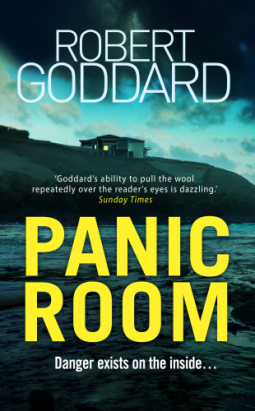
#BookReview ‘Panic Room’ by Robert Goddard #thriller

Panic Room by Robert Goddard starts in the voice of someone unnamed, someone who feels safe in a beautiful, calm place, who wants to stay there forever but who knows that is unrealistic. It made me ask so many questions: who is the speaker, where is this safe place and why isn’t it forever? Robert GoddardIt’s a while before we learn the identity of the first speaker. We are next introduced to Don Challenor, an ordinary middle-aged bloke, an estate agent who has been sacked, who is given a temporary job by his ex- wife Fran. To prepare for sale a multi-million property, Wortalleth West in Cornwall, for a client of Fran’s. Don jumps in his vintage MG to drive west, not realising how his life will change.
In the house he sets about his job, taking photos and measurements in order to prepare the sales brochure. Except the dimensions of one room don’t make sense. There is a mystery void. A steel door which cannot be opened. Is it a panic room? Why is it there? What’s in it? Is it dangerous? Could someone be inside, watching? Or are they trapped? Why not simply ask the owner of the house? Of course, nothing is that straightforward. And so the search to solve the riddle begins.
This is a cracking thriller which starts slowly and winds up and winds up as all the disparate threads of story begin to fall into place. It is an old-fashioned thriller with a conflicted but strong heroine, a disillusioned male hero who rediscovers his strength and guile, an arch villain who cannot be fathomed because he seems too nice and reasonable, and a couple of thugs who don’t worry about the trail they leave. Add in a Cornish witch, a kidnapping and a disappearing teenager, and you begin to wonder how on earth it will all make sense.
Goddard draws a beautiful picture of the Cornish coastline, it will make you want to go there… just not to Wortalleth West. You don’t have to work hard, just sit back and let this master thriller writer take you on a journey of family lies and disappearance, manipulation and fraud, big finance, global warming and cutting edge science. It will not be what you expected.

Read my reviews of Goddard’s other books:-
THE FINE ART OF INVISIBLE DETECTION #1UMIKOWADA
THE WAYS OF THE WORLD #1WIDEWORLDTRILOGY
THE CORNERS OF THE GLOBE #2WIDEWORLDTRILOGY
THE ENDS OF THE EARTH #3 WIDEWORLDTRILOGY
THIS IS THE NIGHT THEY COME FOR YOU #1SUPERINTENDENTTALEB

If you like this, try:-
‘An Officer and a Spy’ by Robert Harris
‘The Travelers’ by Chris Pavone
‘Purity’ by Jonathan Franzen

And if you’d like to tweet a link to THIS post, here’s my suggested tweet:
#BookReview PANIC ROOM by Robert Goddard https://wp.me/p5gEM4-3iz via @SandraDanby

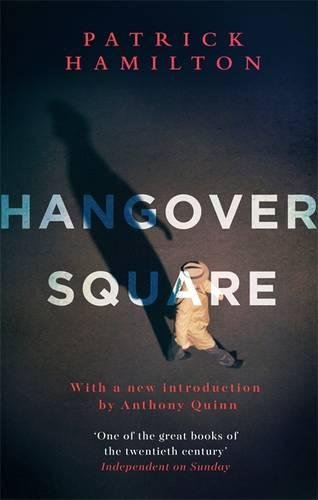
#BookReview ‘Hangover Square’ by Patrick Hamilton #WW2 #historical

Hangover Square by Patrick Hamilton, first published in 1941, is deservedly being re-discovered as a perceptive portrayal of people getting-by, living in the low rent district of Earls Court, London, months before war is declared. It is the mournful tale of one man’s hopeless love for a woman who exploits him relentlessly, his inability to see her for what she is, and the battle of his psyche, half of which is telling him to commit murder. Patrick HamiltonGeorge Harvey Bone loves Netta Longdon despite, or perhaps because of, her disdain for him. ‘When she had finished making up, she went into the sitting room to change her shoes, and he followed her. He was always following her, like her shadow, like a dog.’ This is a novel about love, about living on the edge, and schizophrenia, and about the underbelly of a city paused on the brink of war.
The story flicks back and forth in George’s head between his lucid moments planning a new life in Maidenhead when he will stop drinking, and what happens after the ‘click’ in his head – a blackout or loss of sense of time and place – when he realizes the only solution is to kill Netta. George is put-upon by Netta and her circle of friends, he buys drinks, brings food, and they tolerate his company only when he can contribute something. Netta goes to Brighton with George, not to be with him but because she hopes he can introduce her to someone useful. George, bless him, fails to see this. ‘She was wildly, wildly, lovely that night. He looked across the table at her, and she was violets and primroses again.’ Netta and her heartless group of friends exploit George mercilessly and he allows them to do it.
Hamilton’s Earls Court is a seedy place where people get-by on little money, living in rented rooms or boarding houses, scrounging off others, seemingly without jobs to go to. Netta goes to bed in the small hours, rises at eleven in the morning with a hangover – the Hangover Square of the title – then navigates her day via pubs, bars and restaurants or drinking from a bottle of gin provided by a friend. Brighton – London-by-the-Sea – brings a breath of fresh air but, as is always the way, George’s problems follow him there. There is a lovely section when he plays golf, a successful round which gives him the confidence to woo Netta. ‘He wasn’t going to get drunk. She could drink if she wanted to, but he wasn’t going to – at least only a little. He was going to keep his head.’ The irony, of course, is that George is schizophrenic and has another psychotic episode.
This novel is very funny in places, in others the action can seem slow to progress, but I found myself willing George to tell Netta where to go. He is the sort of character you want to take by the hand. Of course, he is unable to stand up to Netta’s rude and ungrateful behaviour and it is the uncertainty of what he will do, where he will go, and whether his schizophrenic murder plans will come to fruition, which made this such an absorbing read.

Read my review of THE SLAVES OF SOLITUDE, another World War Two novel by the same author, and click here to try the #FirstPara of THE SLAVES OF SOLITUDE.

If you like this, try:-
The Heat of the Day’ by Elisabeth Bowen
Midnight in Europe’ by Alan Furst
At Mrs Lippincote’s’ by Elizabeth Taylor

And if you’d like to tweet a link to THIS post, here’s my suggested tweet:
#BookReview HANGOVER SQUARE by Patrick Hamilton http://wp.me/p5gEM4-2EQ via @SandraDanby 

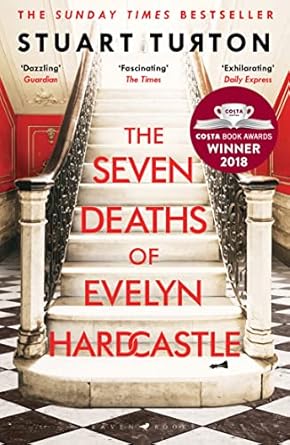
#BookReview ‘The Seven Deaths of Evelyn Hardcastle’ by Stuart Turton #crime #thriller

The Seven Deaths of Evelyn Hardcastle by Stuart Turton is a whodunnit version of Groundhog Day set at a country house party. There is a twist: the Bill Murray character must live each day in a different body, a host, and solve a murder or never escape back to his normal life. I found this to be a tortuous, convoluted and mystifying plot, impossible to review without giving away clues (intentionally or not), but I will have a go. Stuart TurtonIf you like conventional detective stories which follow the rules of crime fiction, presenting a challenge to be solved, this may not be for you. If you like going on a mystery journey where nothing is as it seems, you will like it. Mysteries work when the reader has something to cling onto, to make them identify with a character, to make them care, to give them someone to root for. This story has so many unknowns I spent most of the story in a state of confusion. Like Coco Chanel dressing for the evening and then removing two elements to ensure she wasn’t over-dressed, I finished this book wishing the author had undertaken a similar cutting exercise. The solution to the murder, and the fate of the protagonist were not the elements I found most fascinating; I enjoyed the challenge faced by Aiden – if that is his true name – when he inhabits the body of a host, a stranger. The obese body but sharp mind of Lord Ravencourt; the over-excited Jonathan Derby who acts without thinking and molests the chambermaids; the beaten-up butler who knows a lot but lays in bed drifting in and out of consciousness.
The list of characters is so long – with too many similar names, Millicent/Madeline, Daniel/Donald – plus others who are simply unnamed background extras, I couldn’t remember which each one was. This is complicated by the fact that the hero – whose name might be Aiden Bishop – doesn’t know who is who either. He doesn’t know who can he trust, who has he already met at Blackheath House, and who he knew before arriving at the party – as he also has amnesia about his real identity and previous life. Two/three other people are also experiencing this mobile bodied state, and Aiden is competing with them to solve the crime. Because only one, he is told by the mysterious fancy dress Plague Doctor, will survive. Oh and there’s a mysterious footman too who may or may not be trying to kill Aiden. Oddly, none of the other time-trapped people appear in Aiden’s body.
By a quarter through I was seriously confused and becoming seriously irritated. Is this a story best read in one sitting, so you are better able to remember all the twists and obfuscations? But the book is not short, 528 pages. Or could it be that there is just too much going on? A closed room mystery, each day repeating itself, a hero with amnesia who must relive each day in a different host body and be influenced by the stranger’s body and personality, a murder that happens every night meaning the victim cannot be rescued, a competition to solve the murder in order to survive, obtuse threats from sinister unidentifiable figures, key characters introduced rather late in the game. There is no doubting the planning skills of the author but at times I did suspect he set out to wilfully confuse rather than tease the reader. I ran through various scenarios: is it a game show, is it a wind-up like Candid Camera, is Aiden the murderer and doesn’t know it, is Aiden the murderer and cleverly duping everyone?
Ambitious, overwhelming, fantastical, mysterious, I can’t help but admire the ambition of the author and the scope of his story. Hidden beneath the machinations are two serious questions: how far will a person go in order to escape an intolerable situation, and is it ever possible to escape your own past? A Marmite book: love it or hate it.

If you like this, try these:-
‘Himself’ by Jess Kidd
‘The Last of Us’ by Rob Ewing
‘Curtain Call’ by Anthony Quinn

And if you’d like to tweet a link to THIS post, here’s my suggested tweet:
#BookReview THE SEVEN DEATHS OF EVELYN HARDCASTLE by Stuart Turton https://wp.me/p5gEM4-3kf via @SandraDanby

#BookReview ‘Love is Blind’ by William Boyd #historical

When a new novel by William Boyd features a male protagonist, my first thought ‘is it another Logan Mountstuart’ with a feeling of anticipation. But Love is Blind is not another version of Any Human Heart. It tells the story of Brodie Moncur, a young Scottish piano tuner who travels Europe as he seeks warmer climes and the love of his life. William BoydBoyd is on good form and I raced through Love is Blind, enveloped in Brodie’s end of 19thcentury/early 20thcentury story. Told almost exclusively from Brodie’s viewpoint, plus some of the letters he writes and receives, we see the world and the people he meets through his eyes so, as he falls in with thieves the sense of impending doom increases. He is a likeable, believeable character, son of a fire-and-brimstone alcoholic preacher, living in a time of great change as motor cars appear on the road and the signs of war increase but when consumption kills. The details of Brodie’s piano tuning are fascinating, these skills are the passport to his travels, getting him into and out of trouble, enabling him to earn money wherever he finds himself.
When the story starts in 1894 Brodie is a piano tuner for Channon & Co in Edinburgh. Offered a job at the Channon shop in Paris, he takes the opportunity to escape his oppressive father and so falls in with John Kilbarron, a fading Irish concert pianist who comes to rely on Brodie’s magical skills with his tuning tools. The major difficulties of Brodie’s story are established in Paris. He falls in love with Lika Blum, would-be Russian opera singer, who may or may not be in a relationship with Kilbarron. And he starts to cough up blood.
Consumption is diagnosed and Brodie travels to Nice in search of a warmer climate, unable to work, leaving Lika behind. From the beginning, Brodie pursues Lika rather than the other way round, she insists on secrecy and is enigmatic when pressed for details of her earlier life. Warning signs that are obvious to the reader but to which Brodie is blind, the blindness of the title, are everywhere. Lika does not share many secrets and there is no authorial voice to fill in her backstory. He is a young man in love/lust and cannot see what seems to be staring him in the face. He writes a succession of letters which, given the need for secrecy, are foolhardy. So when trouble finds him, in the shape of Kilbarron’s thuggish brother Malachi, it is not a surprise.
The character of Lika is lightly drawn but that is perhaps because Brodie knows so little about her. They arrange assignations in hotel rooms and on riverbanks, passing notes to each other and sharing significant glances. The affair continues as the Kilbarron party moves to St Petersburg, Russia, to perform a programme for a new wealthy benefactor. It is here that the cracks start to appear in the Kilbarron/Moncur relationship.
The final part of the book was less satisfactory for me. The Prologue to the story is a short letter written in 1906 by a woman called Page from an address in the Andaman Islands, Indian Empire, in which Brodie Moncur is briefly mentioned. In Part VII, Brodie is living at Deemer’s Hotel, Port Blair, the Andamans. I found his encounter with ethnologist Page Arbogast and their research trip to the Nicobar Islands superfluous.

Read my reviews of:
ANY HUMAN HEART
NAT TATE: AN AMERICAN ARTIST 1928-1960
ORDINARY THUNDERSTORMS
SWEET CARESS
THE BLUE AFTERNOON
THE DREAMS OF BETHANY MELLMOTH
TRIO
WAITING FOR SUNRISE
… and try the first paragraph of ARMADILLO

If you like this, try these:-
‘After the Bombing’ by Clare Morrall
‘The Translation of Love’ by Lynne Kutsukake
‘Exposure’ by Helen Dunmore

And if you’d like to tweet a link to THIS post, here’s my suggested tweet:
#BookReview LOVE IS BLIND by William Boydhttps://wp.me/p5gEM4-3we via @SandraDanby

#BookReview ‘The Ashes of London’ by @AndrewJRTaylor #Historical

1666 and a fire starts in London, soon to devastate the medieval City of London. Watching the flames, a young man notices a boy in a ragged shirt who is standing so close as to risk to his life. When he pulls the boy to safety, he finds it is not a boy but a young woman. She bites him and escapes, though he intends only to help. And so are introduced the two key characters in The Ashes of London by Andrew Taylor. Andrew TaylorThis is not a novel about the Fire of London, rather a political mystery involving murder in the turbulent years following the execution of King Charles I, the English Civil War, the Commonwealth and subsequent Restoration of King Charles II. In the ruins of St Paul’s a body is found, differing from other mortalities for its thumbs tied together behind the man’s back. This is the sign of those who committed Regicide by signing the death warrant of Charles I. Though in hiding, these traitors are still active, lurking in the shadows.
The account of London burning is written vividly, so vivid I could imagine myself there, smell the charred timber and smoke. We see it through the eyes of two people. James Marwood, clerk, son of a traitor, is required by his superiors to investigate on their behalf. Catherine Lovett, a wealthy young woman lodges with the family of her mother but secretly searches for her father, a Regicide. Her position becomes precarious when her uncle seeks to marry her to a suitable man, one she detests. She flees and, at risk of discovery, Cat hides her identity with a false name. She is a bright woman who adapts to her changing circumstances, has a great presence of mind and is not afraid to defend herself when threatened. I particularly enjoyed her interest in architecture, something which brings her into the wider circle of Master Hakesby and Dr (Christopher) Wren as the new design for St Paul’s takes shape. She has a skill of fine draughtsmanship, and helps Master Hakesby who suffers from the ague.
We learn the story as seen by Marwood and Cat; the author controls what we know and don’t know. As they are aware of other things happening outside their circle, but not of the detail – of surviving traitors helping each other, of powerful men borrowing and lending money, of the scientifically-minded Charles II and his circle of influencers – so the reader realizes more is going on behind the scenes than is written on the page. Which adds to the mystery. This was a complex political time. We watch Marwood tread a delicate path as he tries to protect his elderly weak-witted Regicide father from persecution whilst also obeying his employer, Master Williamson, editor of The London Gazette. It is a time of whispers, gossip in the coffee houses, of secret meetings and spies standing behind screens the better to eavesdrop.
The paths of Marwood and Cat almost cross a number of times and as neither knows the true identity or intentions of the other, the reader is in a privileged position. When they do meet, the outcome is unexpected.
This is not a page-turning thriller or a crime novel, more a historical mystery. Taylor takes time to develop his characters and to show his location, the Restoration context is fascinating. Though a slow-burn I read this book quickly, finishing it and wanting to read its sequel, The Fire Court. That is always a good sign.
CLICK HERE TO READ MORE ABOUT THIS BOOK AT AMAZON

Try the first paragraph of THE ASHES OF LONDON here.

Read my reviews of the next books in this series:
THE FIRE COURT #FIREOFLONDON2
THE KING’S EVIL #FIREOFLONDON3
THE LAST PROTECTOR #FIREOFLONDON4
THE ROYAL SECRET #FIREOFLONDON5
THE SHADOWS OF LONDON #FIREOFLONDON6

And a World War Two novel by the same author:-
THE SECOND MIDNIGHT

If you like this, try:-
‘The Witchfinder’s Sister’ by Beth Underdown
‘The Last Hours’ by Minette Walters
‘The Western Wind’ by Samantha Harvey

And if you’d like to tweet a link to THIS post, here’s my suggested tweet:
#BookReview THE ASHES OF LONDON by Andrew Taylor https://wp.me/p5gEM4-3p2 via @SandraDanby

#BookReview ‘Our Friends in Berlin’ by Anthony Quinn #WW2

Our Friends in Berlin by Anthony Quinn tells a story of London in World War Two seldom told. It is a spy novel but not a thriller. It focuses on the individuals concerned and has a deceptive pace which means the threats, when they come, are more startling. Jack Hoste is not who he seems to be. He is not a tax inspector; he is not looking for a wife. He is a special agent who tracks down Nazi spies. And at night he is an ARP warden. Anthony Quinn The juxtaposition of Hoste’s life of secrets is set nicely against that of Amy Strallen who works at the Quartermaine Marriage Bureau. Ordinary life does go on in London during the Luftwaffe bombing and Amy must match clients together, a matter of instinct rather than calculation. In order to be matched with the right person, clients are asked to tell the truth about what they are seeking, truths which may have been disguised or hidden until now. Client requests include ‘a lady with capital preferred’ and ‘not American’. Then one day she meets a new client who seems oddly reluctant to explain what he is looking for. The client is Jack Hoste and he doesn’t want a wife, he is searching for Marita Pardoe, a suspected Nazi sympathiser and friend of Amy in the Thirties. What unfolds is a story of spying, gentle romance, betrayal, fanaticism and the life of living in a bombed city.
Jack and Amy seem to run on parallel tracks, veering towards and then away from each other, both romantically unsure, both allow the real world to get in the way. And get in the way it does, in the shape of Marita. Quinn is excellent at building characters, he makes you care for them and that’s what keeps you reading. In a time of war, decisions are often made recklessly but Jack and Amy draw back from doing this. Both are people of honour, making the secrets they must keep and the lies they must tell all the more pertinent. The nature of truth is a theme wriggling its way through every page.
Anthony Quinn is a favourite author of mine, his novels are each quite different and I will read everything he writes. I read this one quickly.

Read my reviews of these other novels also by Anthony Quinn:-
CURTAIN CALL
FREYA
HALF OF THE HUMAN RACE
MOLLY & THE CAPTAIN
THE RESCUE MAN
THE STREETS

If you like this, try:-
‘Mrs Sinclair’s Suitcase’ by Louise Walters
‘The Paying Guests’ by Sarah Waters
‘The Heat of the Day’ by Elizabeth Bowen

And if you’d like to tweet a link to THIS post, here’s my suggested tweet:
#BookReview OUR FRIENDS IN BERLIN by Anthony Quinn https://wp.me/p5gEM4-3pl via @SandraDanby

My Porridge & Cream read: Paula Harmon

Today I’m delighted to welcome murder mystery author Paula Harmon. Her ‘Porridge & Cream’ read is Onions in the Stew by Betty MacDonald. This is the second Betty MacDonald book featured in the series following Anybody can do Anything which was chosen by Judith Field in 2015. Read what Judith said here.

“Dad handed me Onions in the Stew by Betty MacDonald when I was an adult saying, ‘you must read this’. Feeling rebellious, I left it on the shelf for a while. Besides, this copy is old and a bit musty, its paper cover long gone. But one day I came across it, remembered how funny (even when poignant) her other books were and took it down.

“Now I read it at least once a year. Why? Because although it covers a period of time I didn’t experience and a place I’ve never visited, it is one of those books that describes things that never change, finds humour in the most difficult of situations and makes me laugh. Also, it takes place on an island, and I have a soft spot for islands.

Onions in the Stew starts during WWII as Betty seeks a home in Seattle for herself, her new husband, two pre-teen daughters, a cat and a dog. Finally, the MacDonalds hear about a house with its own beach on Vashon Island. Who among us won’t have met schmoozing estate agents; started packing with such organisation and ending up stuffing things in anywhere; endured strange neighbours, guests who won’t leave, dubious handymen. Even more recognisable, despite the passing of over seventy years are Betty’s two daughters as they drag the whole family through the trauma of adolescence.

“When I first read the book my children were still small. Now they are seventeen and nineteen. I think reading Onions in the Stew was one of those things that helped me put some perspective on their teenage years and find the humour in them. I haven’t many books which make me chuckle but this is one of them. Old and musty as it is [below], it is definitely a keeper.”

Paula Harmon’s Bio
Paula Harmon, is a Chichester University graduate who has lived in Dorset since 2005. She is a civil servant, married with two children. Paula has several writing projects underway and wonders where the housework fairies are, because the house is a mess and she can’t think why.

Paula Harmon’s Latest Book
Paula HarmonIt’s AD 190. Romano-Briton Lucretia is determined that her get-rich-quick scheme will not be undermined by minor things like her husband’s death, dubious imposters or her married daughter’s fascination with a celebrity gladiator. But when the deaths start to mount up, wise-woman Tryssa starts to ask awkward questions.
‘Murder Britannica’ by Paula Harmon [UK: January Press]

Paula Harmon’s Links
Blog
Amazon Author page
Goodreads
Facebook
Twitter

What is a ‘Porridge & Cream’ book? It’s the book you turn to when you need a familiar read, when you are tired, ill, or out-of-sorts, where you know the story and love it. Where reading it is like slipping on your oldest, scruffiest slippers after walking for miles.

Cat Deerborn is a character in Susan Hill’s ‘Simon Serrailler’ detective series. Cat is a hard-worked GP, a widow with two children and she struggles from day-to-day. One night, after a particularly difficult day, she needs something familiar to read. From her bookshelf she selects ‘Love in A Cold Climate’ by Nancy Mitford. Do you have a favourite read which you return to again and again? If so, please send me a message.

Paula Harmon


Onions in the Stew’ by Betty MacDonald [UK: George Mann Books]

Discover the ‘Porridge & Cream’ books of these authors:-
Rachel Dove chooses ‘Dead Until Dark’ by Charlaine Harris
Claire Dyer chooses ‘The Guernsey Literary and Potato Peel Pie Society’ by Mary Ann Shaffer and Annie Burrows
Julie Christine Johnson chooses ‘Pride and Prejudice’ by Jane Austen

And if you’d like to tweet a link to THIS post, here’s my suggested tweet:
Why does murder mystery writer @PaulaHarmon789 re-read ONIONS IN THE STEW by Betty MacDonald each year#books https://wp.me/p5gEM4-3vK via @SandraDanby