#BookReview ‘Wolf’ by Mo Hayder #thriller #crime

I am new to Mo Hayder and her detective Jack Caffrey so didn’t know what to expect from Wolf. This was a spine-tingling ride from page one. Mo HayderI read the book over two days, putting it down for a break but unable to resist picking it up again. I do not like being frightened but I do like tension, and Hayder knows her subject her so well that I could feel the depth of her knowledge behind every word. So from the disturbing beginning with five-year-old Amy who gets lost in the woods, I stuck with it. And I am glad I did. I will now go back to the beginning and read her debut novel Birdman, the first in the Jack Caffrey series. Wolf is the seventh.
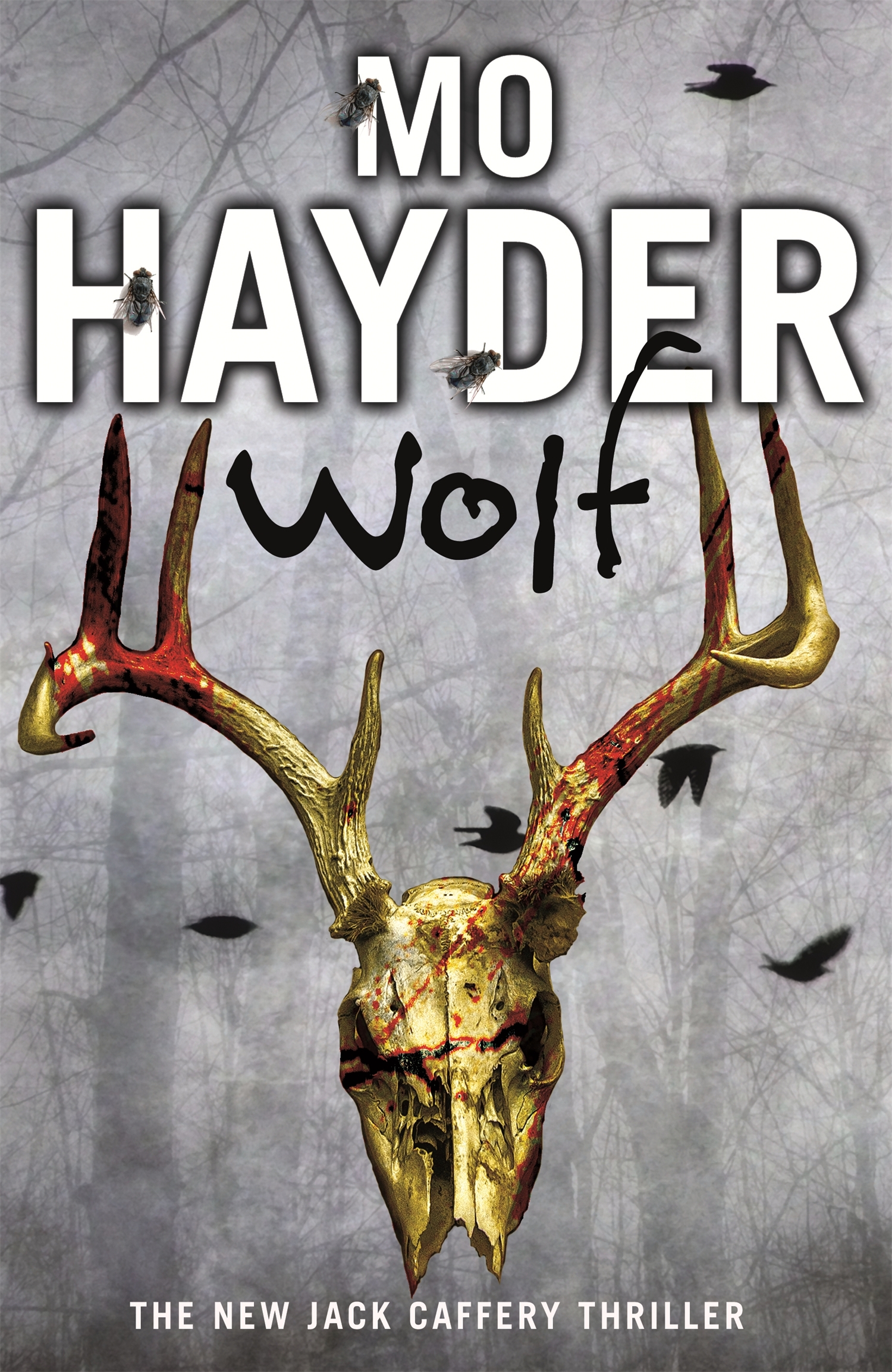
The story centres on the Anchor-Ferrers family: Oliver who has just had heart surgery, replacing a heart valve with that of a pig; his wife Matilda; and troubled daughter Lucia. Oliver needs to convalesce after his surgery and so the family go to their isolated country house, the location 14 years previously of the murder of two teenagers, one of them Lucia’s boyfriend. The house and the family’s memories of what happened are central to the story of Wolf. We piece together facts about the past and present, as Hayder feeds the reader the information in an expert manner calculated to add to the tension. What exactly did happen to Lucia’s boyfriend, what is Oliver’s mysterious job, has the murderer being released from prison, what is Wolf, and why does Hayder start the story with Amy?
The big question for me: why is this family still living in the isolated house with all its bad memories?

If you like this, try:-
Wilderness’ by Campbell Hart #1ARBOGAST
Shroud for a Nightingale’ by PD James #4ADAMDALGLIESH
‘Snow White Must Die’ by Nele Neuhaus

And if you’d like to tweet a link to THIS post, here’s my suggested tweet:
#BookReview WOLF by Mo Hayder http://wp.me/p5gEM4-QE via @SandraDanby

#BookReview ‘The Accident’ by @callytaylor #thriller

The Accident by CL Taylor is the story of an abusive relationship, an accident and a mental breakdown. The action takes place in 1990-1992 and the present day. The tension winds up in both strands so you don’t want to put down the book. I found myself picking up my Kindle every spare five minutes, just to read a few more pages. There is a sense of expectant horror: ‘surely that’s not going to happen,’ ‘surely she’s not going to do this, or that.’ CL TaylorCharlotte, the fifteen year old daughter of Sue and Brian Jackson, is in a coma. Apparently she stepped off the pavement in front of a bus. As Sue and Brian sit by their daughter’s hospital bed, they disagree about what happened. Brian thinks it’s an accident, Sue worries Charlotte had some sort of problem she couldn’t discuss with her parents. And so begins the re-telling of Sue’s dark past, about the demons she struggles with, and the determination she has to fight the past interfering with her present life. The unravelling of the truth puts pressure on the Jacksons’ marriage and Sue’s sanity. The two parents deal with the tragedy in their own way and Sue, emotionally vulnerable, starts to imagine all sorts of scenarios.
From the first page, the pace is fast. “Coma. There’s something innocuous about the word, soothing almost in the way it conjures up the image of a dreamless sleep. Only Charlotte doesn’t look as though she’s sleeping to me.” It is every parent’s nightmare: an accident, a coma. But Sue must unravel the mystery without any help from Charlotte.
CLICK HERE TO READ MORE ABOUT THIS BOOK AT AMAZON

Read my reviews of these other thrillers by CL Taylor:-
THE ESCAPE
THE LIE

If you like this, try:-
Jellyfish’ by Lev D Lewis
‘The Bone Church’ by Victoria Dougherty
‘Wolf Winter’ by Cecilia Ekback

And if you’d like to tweet a link to THIS post, here’s my suggested tweet:
#BookReview THE ACCIDENT by @callytaylor http://wp.me/p5gEM4-Wj via @SandraDanby 

#BookReview ‘After the Bombing’ by Clare Morrall #WW2

I am a huge Clare Morrall fan and wasn’t disappointed by After the Bombing.  As with all Morrall’s novels, the observations of character are spot-on and so poignant. She peoples her novels with characters who feel real. Clare MorrallTwin story strands tell the story of Alma Braithwaite, before and after the bombing of her school near Exeter in May 1942, and in 1963 in a modern world which has moved on from the war. But Alma still remembers. “She’s conscious of sitting on a swing that has been steady for a long time and is starting to move again, gently but perceptibly, backwards and forwards, disturbing her equilibrium.”
The novel opens with the British bombing of Lübeck in March 1942, the raid which famously made Hitler pick up a copy of the Baedecker tourist guide and select at random the English cities of Bath, Norwich, York, Canterbury, and Exeter. That is how 15-year old Alma and her schoolfriends Curls, Giraffe and Natalie are forced to run from Merrivale, the boarding house at their girls’ school Goldwyns on the outskirts of Exeter, to the bomb shelter. When they emerge, Merrivale has gone.
The four girls, in that unspecified limbo between girl and woman, lodge in a mens’ hall of residence at the nearby university, living alongside male students for the first time. The influences there change their lives just as much as the bombing did, with freedoms they have never guessed exist, and the gentle presence of mathematics lecturer Robert Gunner. They are introduced by the men to the Lindy Hop, a vibrant, energetic dance which the girls, though initially nervous and suspicious, come to love dancing.
War is ever-present, a character of its own. There is a poignant scene where Alma and her brother Duncan, on a brief visit home from the war in an unspecified hot country, go back to their family home in Exeter after their parents’ death. Searching for some semblance of normality, they try to play tennis on the grass court. The grass has grown too long but they play anyway, and in their diving for the balls and their laughter, the reader gets a glimpse of their pre-war life and a sign of how everything is now different… after the bombing.
There are parallels in the 1942 and 1963 storylines: a concert which never takes place, flirtations, unexpected death and unexpected love. One of those books which, when I finished it, I wanted to re-read immediately.
CLICK HERE TO READ MORE ABOUT THIS BOOK AT AMAZON

Read my review of these other novels by Clare Morrall:-
NATURAL FLIGHTS OF THE HUMAN MIND
THE LANGUAGE OF OTHERS
THE LAST OF THE GREENWOODS
THE MAN WHO DISAPPEARED
THE ROUNDABOUT MAN

Read the first paragraph of ASTONISHING SPLASHES OF COLOUR here.

If you like this, try:-
Freya’ by Anthony Quinn
At Mrs Lippincote’s’ by Elizabeth Taylor
The Aftermath’ by Rhidian Brook

And if you’d like to tweet a link to THIS post, here’s my suggested tweet:
#BookReview AFTER THE BOMBING by Clare Morrall via @SandraDanby http://wp.me/p5gEM4-W4

#BookReview ‘Frog Music’ by Emma Donoghue #historical

I came to Frog Music knowing nothing about it other than it was written by Emma Donoghue who wrote Room. So it was something of a surprise to discover Frog Music is a historical crime story set in San Francisco in 1876 and loosely based on true events. Emma DonoghueI loved it. Every page pulses with the colour of the time. In the summer of 1876, San Francisco is a vibrant and bustling city living through an intense heatwave and smallpox epidemic. Donoghue starts her story with the murder of Jenny Bonnet, frog-catcher, who is shot through an open window. Her friend Blanche Beunon, a burlesque dancer, must find the murderer and avoid being killed herself, whilst tracking down her own missing baby. The pace is fast and San Francisco is portrayed as a third character; switching from the bawdy House of Mirrors where Blanche dances, to smelly noisy Chinatown where she lives.
The notion of chance is explored. What if the two women had never met. One day, Blanche is knocked down in the street by a young man on a bicycle. “Black anterlish handbars, that’s all she has time to glimpse before the gigantic spokes are swallowing her skirts.” Except it is not a young man, it is a young woman wearing trousers. Jenny continues to dress this way despite being pursued by the law and attracting disapproval wherever she goes. To the end, Jenny remains a bit of a mystery to Blanche and to the reader, “…As if Jenny has a prickly city self who gets into slanging matches in bars, and a country self who’s at rest, somehow.”
Donoghue tells the story in two parallel threads which alternate. First is the story of Jenny’s death at San Miguel Station, a dusty settlement outside the city, and Blanche’s struggle to identify the murderer. The second narrative tells how the two women met and the events which occurr before they arrive at the rural saloon where the murder takes place. Blanche is not an amateur detective, she is simply a woman who sees her friend murdered. She is determined to find the murderer, before the murderer kills her.
Blanche moves in a world on the edge of society, just a day’s work from hunger or homelessness. The line between hunger and honesty, deceit or crime and a full stomach, is one Blanche becomes familiar with. She wants a better life, as a woman she is ambitious and saves her money, but her life choices make her vulnerable and her decisions come back to haunt her.
This is a very assured creation of a colourful period in history, peppered with French influence, dialect and songs.

Read my reviews of these other Donoghue novels:-
AKIN
THE PULL OF THE STARS
THE WONDER

Read the first paragraph of ROOM.

If you like this, try:-
Barkskins’ by Annie Proulx
The Last Runaway’ by Tracy Chevalier
Summertime’ by Vanessa Lafaye

And if you’d like to tweet a link to THIS post, here’s my suggested tweet:
#BookReview FROG MUSIC by Emma Donoghue http://wp.me/p5gEM4-TH via @SandraDanby

Great opening paragraph 53… ‘Hard-Boiled Wonderland and the End of the World’ #amreading #FirstPara

“The elevator continued its impossibly slow ascent. Or at least I imagined it was ascent. There was no telling for sure: it was so slow that all sense of direction simply vanished. It could have been going down for all I knew, or maybe it wasn’t moving at all. But let’s assume it was going up. Merely a guess. Maybe I’d gone up twelve stories, then down three. Maybe I’d circled the globe. How would I know?”
Haruki MurakamiFrom ‘Hard-Boiled Wonderland and the End of the World’ by Haruki Murakami

Read these #FirstParas from other books by Haruki Murakami:-
DANCE DANCE DANCE
NORWEGIAN WOOD
THE WIND-UP BIRD CHRONICLE

Try one of these #FirstParas & discover a new author:-
‘Mara and Dann’ by Doris Lessing
‘The Ghost Road’ by Pat Barker
‘The L-Shaped Room’ by Lynn Reid Banks

And if you’d like to tweet a link to THIS post, here’s my suggested tweet:
#Books #FirstPara HARD-BOILED WONDERLAND AND THE END OF THE WORLD by Haruki Murakami http://wp.me/p5gEM4-m9 via @SandraDanby

#BookReview ‘The Aftermath’ by @Rhidianbrook #WW2

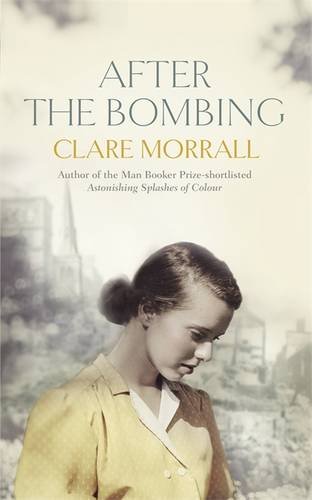
1946. Post-war Germany, Hamburg. The Aftermath by Rhidian Brook is a gentle novel with an emotionally difficult core: the adjustment of two families, one German one English, to the landscape of rubble a year after the end of the Second World War. Broken country, broken families, broken minds. The title refers to the aftermath of the war and also to the aftermath of events in the lives of both families. Both are grieving and are in new territory, geographically and emotionally. They are proud and unsure. Together, will they heal? Rhidian BrookThe English family: Colonel Lewis Morgan is occupied with the Occupied while his newly-arrived wife Rachael prevaricates, “I don’t know. It was suffix and prefix to her every other thought. This indecision was becoming her signature.” Their son Edmund has no such doubts, facing a challenging encounter with the teenage girl upstairs involving a glimpse of knickers and a steaming pisspot, he then ventures beyond the house’s garden into forbidden territory and meets the local feral youth.
The German family: Herr Lubert, a widower, and his daughter move upstairs when the Morgans arrive in the requisitioned house. Ironically Stefan Lubert is an architect, surrounded by broken buildings, but works instead in a factory while waiting for his papers to arrive which will allow him to practise again. School is closed so Frieda is on the ‘rubble runs’, clearing bricks and rubbish, where she mixes with the feral youth.
They all make their own adjustments to the new situation and for a while it is a quiet, polite tussle for power. Rachael makes changes in the house; she moves plants and drapes a modest cloth over a nude sculpture. She sets herself rules about not fraternising with the Germans, who she believes need punishing. She disagrees with Herr Lubert about a Mies van der Rohe chair which he explains is a Bauhaus design, functionality stripped to simplicity. She says it is uncomfortable.
It is as if each family is trying the other on for size, it is a fascinating observation of ordinary people in extraordinary times. Lewis reflects on the logic of the tasks he must perform: “They blow up a soap factory which employed two thousand Germans, made something everyone needed and had no military value whatsoever and, in return, the Russians send the Germans bread. It was like balancing Hell’s ledger.”
The cover of the book is an attractive, calm monotone and the story is also told in a calm tone; but underneath the emotions are building. As the initial discomfort eases, passion rises.

Read my review of another Rhidian Brook novel:-
THE TESTIMONY OF TALIESIN JONES

If you like this, try:-
The Translation of Love’ by Lynne Kutsukake
Homeland’ by Clare Francis
The Ways of the World’ by Robert Goddard

And if you’d like to tweet a link to THIS post, here’s my suggested tweet:
#BookReview THE AFTERMATH by @Rhidianbrook via @SandraDanby http://wp.me/p5gEM4-So

Great opening paragraph 52… ‘Astonishing Splashes of Colour’ #amreading #FirstPara

“At 3.15 every weekday afternoon, I become anonymous in a crowd of parents and child-minders congregating outside the school gates. To me, waiting for children to come out of school is a quintessential act of motherhood. I see the mums – and the occasional dads – as yellow people. Yellow as the sun, a daffodil, the submarine. But why do we teach children to paint the sun yellow? It’s a deception. The sun is white-hot, brilliant, impossible to see with the naked eye, so why do we confuse brightness with yellow?” Clare MorrallFrom ‘Astonishing Splashes of Colour’ by Clare Morrall

Read my reviews of these other novels by Clare Morrall:-
AFTER THE BOMBING
NATURAL FLIGHTS OF THE HUMAN MIND
THE LANGUAGE OF OTHERS
THE LAST OF THE GREENWOODS
THE MAN WHO DISAPPEARED
THE ROUNDABOUT MAN

Try one of these #FirstParas & discover a new author:-
‘Tipping the Velvet’ by Sarah Waters
‘The Secret History’ by Donna Tartt
‘Queen Camilla’ by Sue Townsend

And if you’d like to tweet a link to THIS post, here’s my suggested tweet:
#Books #FirstPara ASTONISHING SPLASHES OF COLOUR by Clare Morrall http://wp.me/p5gEM4-mc via @SandraDanby

Great opening paragraph… 52

clare morrall - astonishing splashes of colour 10-6-13“At 3.15 every weekday afternoon, I become anonymous in a crowd of parents and child-minders congregating outside the school gates. To me, waiting for children to come out of school is a quintessential act of motherhood. I see the mums – and the occasional dads – as yellow people. Yellow as the sun, a daffodil, the submarine. But why do we teach children to paint the sun yellow? It’s a deception. The sun is white-hot, brilliant, impossible to see with the naked eye, so why do we confuse brightness with yellow?”
‘Astonishing Splashes of Colour’ by Clare Morrall

To read an interview in The Independent with Clare Morrall about her latest book, After the Bombing, click here.

COMING SOON: my review of After the Bombing.

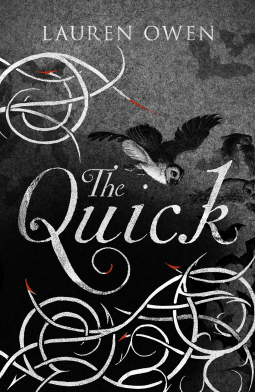
#BookReview ‘The Quick’ by Lauren Owen @pioneers_o #historical

The Quick by Lauren Owen is a gothic tale about a brother and sister from Yorkshire. The story moves between Aiskew Hall – where we first meet Charlotte and James as children – and London; both settings atmospheric, both drawn so clearly you can smell the air. This book will reward re-reading: only after I had finished the last page did I go back to the beginning and appreciate the menace of the first sentence, “There were owls in the nursery when James was a boy.” Lauren Owen Aiskew is ever-present. When they are older and far from home, Charlotte reminds James “… how the air smelled green in spring, and smoke-grey in autumn, how on April mornings the mists would lift slowly, leaving a blue haze behind.”
This book has a really slow build. It starts with a prologue, an excerpt from 1890, which I read and then immediately forgot. I enjoyed Part One about the childhood of James and Charlotte at Aiskew, their mother dead, their father absent, Charlotte teaching James his alphabet by chalking the letters onto flagstones, playing games in the secrets of the big house. When the siblings are parted as James goes to university and then to London, the story starts to move a little quicker. I started to feel expectant, waiting for something to happen. Which of course, it does, and it is creepy and not what I was expecting. For me the story really gets going when Charlotte comes to London. After that, the action comes thick and fast. The tension in the second half is more like a film, making the first part of the book feel as if the author was feeling her way into the story.
Definitely one to read again. And I can see it on television.
CLICK HERE TO READ MORE ABOUT THIS BOOK AT AMAZON

If you like this, try:-
Frog Music’ by Emma Donoghue
The Penny Heart’ by Martine Bailey
Orphans of the Carnival’ by Carol Birch

And if you’d like to tweet a link to THIS post, here’s my suggested tweet:
#BookReview THE QUICK by Lauren Owen @pioneers_o via @SandraDanby http://wp.me/p5gEM4-Rj

#BookReview ‘Holes’ by Louis Sachar #YA #mystery

Holes by Louis Sachar has been sitting on my shelf forever but I picked it up this week when I exhausted my Kindle’s battery. How lovely to hold an actual book again. I know this is a book for tweens, but I’d heard such good things about it that I wanted to see for myself. Louis Sachar I loved the premise: that Stanley is wrongly found guilty of stealing a pair of trainers and is sent to a juvenile correction camp where the punishment is to dig a hole a day. Five feet deep and five feet wide. Every day. It is supposed to be character-building, but Stanley thinks there is another agenda. “There is no lake at Camp Green Lake. There once was a very large lake here, the largest lake in Texas. That was over a hundred years ago. Now it is just a dry, flat wasteland.”
It is a story about finding out who you are, standing up to bullies and finding your bravery. “Out on the lake, rattlesnakes and scorpions find shade under rocks and in the holes dug by the campers.”
Woven in with the day-to-day tale of hole-digging is the background to Stanley’s unlucky family; unluckiness blamed on his no-good-dirty-rotten-pig-stealing-great-great-grandfather. Stanley is a kind of every-boy, who helps a boy worse off than himself and ends up challenging the system.  And Sachar ties up the loose-ends brilliantly.
Not just for kids.
CLICK HERE TO READ MORE ABOUT THIS BOOK

Read my review of THE CARDTURNER, also by Louis Sachar.

If you like this, try:-
The Ship’ by Antonia Honeywell
The Choir’ by Joanna Trollope
The Mystery of Three Quarters’ by Sophie Hannah #3Poirot

And if you’d like to tweet a link to THIS post, here’s my suggested tweet:
#BookReview HOLES by Louis Sachar http://wp.me/p5gEM4-K1 via @SandraDanby